The Most Centralized Giant in the Crypto World Starts Selling the 'Decentralized AI' Dream

比推Published on 2026-01-05Last updated on 2026-01-05

Abstract

Tether, the highly centralized issuer of the USDT stablecoin, reported $13 billion in profit in 2024—far exceeding the combined revenues and losses of major AI firms like OpenAI and Anthropic. With only 150 employees, Tether earns primarily by investing user funds in U.S. Treasury bonds, profiting from the interest without paying users any yield. Now, Tether is aggressively investing in AI. It loaned over $600 million to Northern Data, Europe’s largest GPU cloud provider with over 10,000 Nvidia H100 GPUs. It also released QVAC Genesis, a massive open-source AI training dataset, and acquired Blackrock Neurotech, a brain-computer interface company, for $200 million. Total AI-related investments approach $1 billion, with potential additional deals in robotics sector. Despite its centralized control over USDT reserves and lack of external audits, Tether promotes a “decentralized AI” vision—advocating for local AI operation and individual data ownership. Critics find this ironic, given Tether’s opaque governance. Tether’s move into AI may stem from concerns over declining Treasury yields and a desire to position itself as a tech innovator. Unlike AI startups burning billions without clear profitability, Tether uses stablecoin profits to fund speculative AI bets—insulating itself from sector risks while gaining influence. The article suggests that in 2026, the best business model in AI might be not doing AI at all, but rather funding it with profits from a separate, lucrative ve...

Author: Curry, Deep Tide TechFlow

Original Title: The AI Industry Welcomes a Cash-Rich Tether


Tether earned $13 billion in 2024.

You might not have a clear idea of this number. Let me put it another way: OpenAI had $3.7 billion in revenue in 2024 but lost $5 billion. Anthropic had $1 billion in revenue and also lost $5 billion.

The combined losses of these two legitimate AI companies are still less than what Tether earned in a year.

Tether has 150 employees, while OpenAI has over 3,000. The per capita output difference is roughly:

60 times.

How does Tether make money? When you buy 1 USDT, they take $1 and use it to buy U.S. Treasury bonds. The interest from the bonds goes to them, not you.

The essence of this business is that Tether doesn't pay interest. Banks pay interest on savings, but Tether doesn't. You hold USDT, and you get zero interest. They use your money to buy U.S. Treasury bonds and earned $7 billion in interest in 2024 alone.

150 people managing over $130 billion in Treasury bonds, doing nothing, and the interest just rolls in.

Who wouldn't want to lie back with a business like this?

But with so much money, it has to be spent. Tether has chosen a direction:

AI.

And they’re not just casually investing in a few projects to tick a box.

First, computing power.

Running AI requires GPUs—the more, the better, and the more expensive, the better. Tether loaned over $600 million to a German company called Northern Data.

What does this company do?

It’s Europe’s largest GPU cloud service provider. They have over 10,000 Nvidia H100 GPUs—the same ones OpenAI used to train GPT, each costing $20,000 to $30,000.

The cluster formed by these GPUs ranks 26th in the global TOP500 supercomputer list. With this $600 million investment, Tether essentially bought an AI training base in Europe.

Next, data.

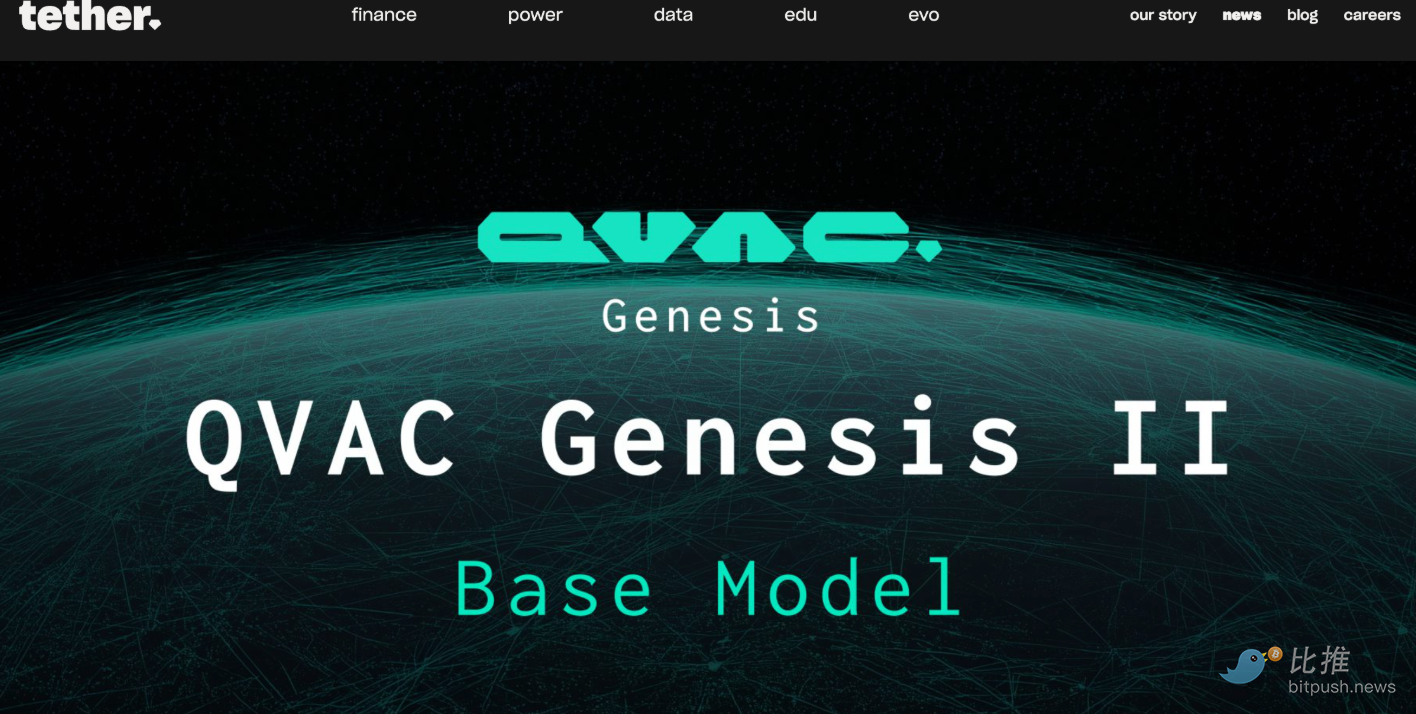
Training AI requires feeding it data. Last week, Tether released a dataset called QVAC Genesis, covering 19 disciplines including mathematics, physics, chemistry, and computer science. They claim it’s the world’s largest open-source AI training dataset.

Keep in mind that OpenAI and Anthropic’s training data are not public. Tether is releasing theirs for free, available to anyone.
Then comes the even more sci-fi part.

In April 2024, Tether spent $200 million to acquire a company called Blackrock Neurotech. The name includes "Blackrock," but it has no relation to the asset management giant BlackRock.

This company works on brain-computer interfaces. They implant chips into human brains, allowing paralyzed individuals to type with their thoughts, control wheelchairs, and operate robotic arms. It sounds like science fiction, but they’ve been doing it since 2008—eight years before Musk’s Neuralink.

How impressive is this company?

Out of the 35 people worldwide who have brain-computer interface chips implanted, 31 use Blackrock’s technology. In 2016, a fully paralyzed patient used their device to control a robotic arm and fist-bump Obama. The chip implanted in the sensory cortex allowed him to "feel" the president’s hand.

Last year, this brain-computer interface company enabled an ALS patient to "speak" again. The chip in his brain translated his thoughts into speech at a rate of 62 words per minute.

Tether spent $200 million to become the majority shareholder of this company.

Combined, Tether has invested nearly $1 billion in AI-related fields. Rumor has it they’re also negotiating with a German robotics company, offering $1.2 billion. If that deal goes through, their total investment could reach $2 billion.

What does this mean?

Anthropic raised $3.5 billion in funding in 2024. Tether’s investment alone is almost half of what a top-tier AI company raised in a year.

OpenAI spent $6.7 billion on R&D in the first half of 2025. Tether, with just a fraction of its profits, can play the role of a major investor in the AI world.

Why is a stablecoin company getting into AI?

We think there are two possibilities.

The first is anxiety. The Fed is cutting interest rates, and Treasury yields are falling. In 2024, they earned $7 billion in interest just by lying back. From 2025 onward, it might not be so easy. Even money-printing machines need new stories.

The second is ambition. The whole world is talking about AI—investors, media, politicians. If you say you’re a stablecoin company, no one pays attention. But if you say you’re working on AI, brain-computer interfaces, and humanoid robots, then you’re:

A tech leader.

The most amusing part?

Tether’s slogan for its AI endeavors is "decentralization," "local operation," and "returning intelligence to individuals."
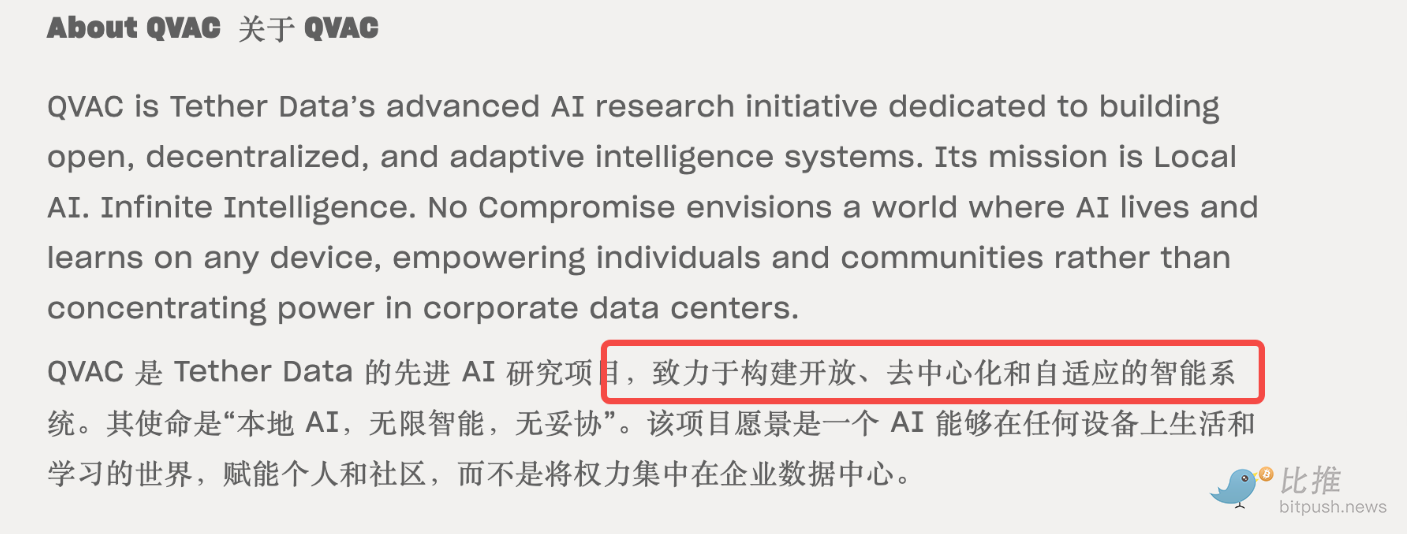
But Tether itself is the most centralized company in the crypto world.

They decide how many coins to issue, how much reserve capital to hold. In ten years of operation, they’ve never been audited. Only they know where users’ money is.

Now, this company wants to teach the world what "decentralized AI" means.

It’s a bit like a casino owner offering classes on how to quit gambling.

Not that it’s impossible.

After all, OpenAI is still losing money and isn’t expected to break even until 2029. Anthropic is in a similar situation, aiming for 2028. Sam Altman is fundraising everywhere, and Dario Amodei is doing the same. The two companies have lost a combined $10 billion and are still telling stories to investors.

Tether doesn’t need to tell stories. The money is already in their pocket.

What’s the biggest challenge in the entire AI industry? The business model.

How to make money? No one knows. When will it make money? No one knows. Can it make money? No one knows.

Tether doesn’t have this problem. Their business model is:

Not doing AI.

They use the money earned from stablecoins to invest in AI. If the investment succeeds, it’s foresight. If it fails, it’s a learning expense. Either way, it doesn’t affect their core business.

Those doing AI are losing money; those not doing AI are making money. Those doing AI are fundraising; those not doing AI are investing.

The best AI business model in 2026 might just be not doing AI.

First, get your money-printing machine in order.


Original link:https://www.bitpush.news/articles/7600174

Related Questions

QHow much profit did Tether make in 2024, and how does it compare to major AI companies like OpenAI and Anthropic?

ATether made a profit of $13 billion in 2024. In comparison, OpenAI had revenue of $3.7 billion but lost $5 billion, while Anthropic had revenue of $1 billion and also lost $5 billion. Combined, the losses of these two major AI companies were less than Tether's profit.

QWhat is Tether's core business model that generates such significant profits?

ATether's core business model involves issuing the USDT stablecoin. When users buy 1 USDT, Tether receives 1 US dollar and uses it to purchase U.S. Treasury bonds. The interest earned on these bonds is kept by Tether, as they do not pay any interest to USDT holders. In 2024, Tether earned $7 billion in interest from this strategy.

QWhat are some key AI-related investments Tether has made, and what is their significance?

ATether has made several significant AI-related investments, including a $600 million+ loan to Northern Data, Europe's largest GPU cloud service provider with over 10,000 Nvidia H100 GPUs. They also released the QVAC Genesis dataset, claimed to be the world's largest open-source AI training data, and acquired Blackrock Neurotech, a brain-computer interface company, for $200 million. Their total AI investments approach $1 billion, with potential additional deals like a $1.2 billion German robotics company.

QWhy is Tether, a centralized stablecoin company, investing in AI and promoting 'decentralized AI'?

ATether is investing in AI likely for two reasons: anxiety over declining U.S. Treasury yields threatening their profit model, and ambition to position themselves as a tech leader in the booming AI field. Despite being a highly centralized company (controlling USDT issuance and reserves without audits), they promote 'decentralized AI' as a strategic narrative to gain relevance and influence in the tech industry.

QWhat ironic contrast does the article highlight about Tether's role in the AI industry?

AThe article highlights the irony that Tether, which profits massively from its stablecoin business without engaging in AI development, is investing in AI while major AI companies like OpenAI and Anthropic are losing billions. Tether doesn't face the AI industry's core problem of finding a sustainable business model; instead, it uses its stablecoin profits to fund AI ventures, making 'not doing AI' a profitable strategy to finance AI investments.

Related Reads

SemiAnalysis Dissects Huawei's Kirin 9030: Process Technology Halted, So They Folded the Chip

SemiAnalysis has published a detailed teardown report on the HiSilicon Kirin 9030 Pro chipset found in Huawei's Mate 80 Pro. Fabricated using SMIC's most advanced N+3 node without EUV lithography, the analysis reveals significant technical achievements and strategic shifts. The report indicates SMIC's N+3 has achieved transistor density comparable to TSMC's N6 (113.4 vs 107.7 MTr/mm²), primarily through aggressive use of Self-Aligned Quadruple Patterning (SAQP) for its metal layers. This results in a notably small 32.5nm M0 metal pitch. However, SemiAnalysis notes this achievement comes with significantly higher process complexity, cost, and potential yield challenges compared to competitors using more advanced tools. The Kirin 9030 design maximizes this constrained density. While its GPU performance has improved ~70% and matches Qualcomm's 2022 flagship level, the CPU core's IPC lags behind current top-tier designs from Apple and Qualcomm, a gap attributed to the underlying manufacturing technology rather than design capability. Facing long-term restrictions on advanced tools, Huawei is charting a new path. The report highlights the company's "LogicFolding" roadmap, a 3D stacking technique aimed at shortening signal paths to boost performance and efficiency. The goal is to reach 5GHz frequency and a projected density of 295 MTr/mm² by 2031. SemiAnalysis concludes that export controls have not halted China's chip progress but have fundamentally altered its trajectory, making it more expensive and complex. This has spurred innovation in alternative areas like 3D stacking and domestic EDA tool development, with Huawei's supply chain also beginning to integrate Chinese memory from CXMT.

marsbit33m ago

SemiAnalysis Dissects Huawei's Kirin 9030: Process Technology Halted, So They Folded the Chip

marsbit33m ago

How Will the Price Move Before SpaceX's Next Share Unlock?

TL;DR Investors buying SPCX after SpaceX's IPO are not simply investing in a typical tech stock. It’s a high-valuation asset driven by Musk's narrative, Starlink, and space transport potential, but with a key twist: a very small initial float of ~4% has led to significant post-listing price appreciation. The current price action reflects a timing gap. Before the first lock-up expiration (estimated around August, subject to official confirmation), scarcity and high demand could continue to push prices up. Short-term bulls focus on low float, FOMO, and potential index inclusion. However, bears point to the supply dynamics that will change post-lockup. Existing shareholders still hold over 95% of shares, which will be released in stages starting from the first unlock window. This introduces future selling pressure from low-cost holders. The upcoming Q2 earnings report is a critical catalyst before the unlock. It will test whether the company's fundamentals can justify the current ~$2.1T valuation. Strong results could support the pre-unlock momentum, while weak figures could amplify concerns about future supply. The trading thesis is shifting from immediate scarcity ("can't buy enough") to evaluating future absorption capacity ("who will buy when more supply hits"). The path ahead hinges on the specifics of the unlock schedule, Q2 earnings performance, and whether anticipated passive index buying materializes.

marsbit54m ago

How Will the Price Move Before SpaceX's Next Share Unlock?

marsbit54m ago

Bitcoin Short-Term Bullish Structure Validated, HYPE Low-Entry Window Opens | Guest Analysis

**Market Analysis Summary (Week of June 2026)** **Overall Market Context:** The market environment is exceptionally complex, with the unexpected US-Iran agreement and the reopening of the Strait of Hormuz triggering a global asset repricing and significant volatility. This heightened noise underscores the importance of a structured analytical framework. **Bitcoin (BTC) Analysis & Strategy:** * **Current Status:** The price has climbed above $65,000, currently in a rebound phase (segment 38-39) following a complex 12-segment correction from the May high of $82,850. * **Key Levels:** * **Primary Resistance:** $69,500–$70,500. A successful breakout above $65,000 targets this zone. * **Primary Support:** $65,000 (immediate), followed by $59,000–$60,000 and $55,000. * **Weekly Outlook & Strategy:** The focus is on the confirmation of the $65,000 level. * **Bullish Scenario (Hold $65K):** A move toward the $69.5K–$70.5K resistance zone is anticipated, which is a potential area for initiating medium-term short positions. * **Bearish Scenario (Break below $65K):** A retest of the $60,000–$62,000 support range is likely. * **Medium-Term Strategy:** Currently neutral. Plan to establish short positions (up to 60% allocation) either in the $69.5K–$70.5K resistance zone upon signs of rejection, or on a confirmed breakdown below $65,000 and further below $59K–$60K. * **Short-Term Strategy:** Utilize 30% capital for scalping opportunities based on support/resistance levels, using 30/60-minute charts. **HYPE Analysis & Strategy:** * **Current Status:** The price has stabilized around $52 after a four-segment decline from the June high of $75.87 and is now in a rebound (segment 50-51). * **Key Levels:** * **Primary Resistance:** $62.50–$64.57. Watch for potential rejection here to form a lower high. * **Primary Support:** $52–$55.50, followed by $47–$49. * **Weekly Outlook & Strategy:** Adopt a "buy on dips, avoid chasing rallies" approach. * **Core View:** Monitor the price action and potential formation of a lower high ("endpoint 51") in the $62.50–$64.57 resistance zone. * **Short-Term Strategy:** Consider light long positions (max 30% allocation) if the price finds support and shows reversal signals in the $52–$54.50 or deeper $47–$49 support zones, confirmed by proprietary quantitative bottom signals. **Trade Review:** Last week's HYPE short-term long trade, executed based on proprietary "Price Difference" and "Momentum" model signals, yielded a profit of approximately 11.88%. The entry was near $54.39 and exit near $60.85. **Risk Management Reminder:** Always set an initial stop-loss upon entry. Move stop-loss to breakeven at +1% profit, then trail it upwards to lock in gains as the trade progresses. *Disclaimer: All analysis, models, and strategies are based on personal technical analysis for educational purposes only, not investment advice. The market carries inherent risk.*

Odaily星球日报58m ago

Bitcoin Short-Term Bullish Structure Validated, HYPE Low-Entry Window Opens | Guest Analysis

Odaily星球日报58m ago

Bitcoin Short-Term Bullish Structure Validated, HYPE Accumulation Window Opens | Guest Analysis

**Bitcoin and HYPE Market Analysis: Short-Term Outlook and Trading Strategies** This market analysis examines Bitcoin (BTC) and HYPE amid volatile conditions, providing short-term outlooks and specific trading strategies. **Key Outlooks:** * **Bitcoin (BTC):** Focus is on whether BTC's recent move above $65,000 holds. A successful breakout could lead to a test of the $69,500-$70,500 resistance zone, where medium-term short positions are considered. A failure, breaking below $65,000, may trigger a decline towards the $59,000-$60,000 support area. * **HYPE:** The token completed a four-wave correction and is now rebounding. The key resistance zone is $62.5-$64.57. The trading strategy is "buy on dips," looking for entry opportunities near the $52-$54.5 or deeper $47-$49 support zones, pending confirmation from proprietary models. **BTC Trading Strategy:** * **Medium-term:** Primarily looking to establish short positions (up to 60% allocated capital) if price rallies to the $69,500-$70,500 resistance area and shows signs of reversal. Alternative plans involve initiating shorts on a breakdown below $65,000. * **Short-term:** Allocate up to 30% capital for intraday "spread" trades based on support/resistance levels on 30/60-minute charts. **HYPE Trading Strategy:** * **Short-term:** Adopt a dip-buying approach. Consider light long positions (under 30% capital) when price tests key support levels ($52-$54.5 or $47-$49) and shows stabilization, confirmed by proprietary "Price Spread" and "Momentum Quant" models. **Trade Recap:** The analysis reviews a successful HYPE long trade from the previous week, executed at ~$54.39 and closed at ~$60.85 for an ~11.88% gain, based on signals from the aforementioned models. **Risk Management Emphasis:** The article stresses strict capital allocation (under 30-60%), immediate initial stop-loss placement, and a trailing stop-loss protocol to lock in profits as trades move favorably. ***Disclaimer:** All analysis, models, and strategies are for educational purposes based on technical analysis, not investment advice. Markets are volatile; trade with caution.*

marsbit1h ago

Bitcoin Short-Term Bullish Structure Validated, HYPE Accumulation Window Opens | Guest Analysis

marsbit1h ago

Trading

Spot
Futures

Hot Articles

Discussions

Welcome to the HTX Community. Here, you can stay informed about the latest platform developments and gain access to professional market insights. Users' opinions on the price of AI (AI) are presented below.

活动图片