The End of Old Cryptography: How Ethereum is Preparing for the Era of Quantum Computing

cryptonews.ruPublished on 2026-08-25Last updated on 2026-08-25

Abstract

Ethereum developers have proposed a new system for handling staking deposits, aiming to future-proof the network against the potential threat of quantum computers. Currently, Ethereum's security relies on elliptic curve cryptography, which could be broken by sufficiently powerful quantum machines capable of deriving private keys from public ones. While estimates of the timeline for this threat vary, with Google research in March 2026 suggesting it could be closer than previously thought, major blockchains are proactively preparing. The new proposal introduces a more flexible deposit contract capable of accepting keys of various types and lengths, identified by a scheme label. It also changes how deposit data is communicated within the network's layers. Crucially, the transition plan involves a three-phase process to ensure a controlled and predictable shift, initially disabling new deposits, then re-enabling the current format, and finally permanently switching to new post-quantum cryptography in a future update. The proposal is currently a draft with no set implementation date. It represents a strategic move to build infrastructure in advance, rather than a direct solution for existing accounts. Analysis notes that Ethereum is structurally vulnerable to a "store now, decrypt later" attack, as public keys revealed in past transactions remain permanently on-chain. This proposal prepares for a signature algorithm change but does not address the risk to keys already exposed.

Ethereum developers have proposed a new method for accepting staking deposits—a system through which network participants lock their ETH to become validators and verify transactions. The primary goal of the change is to preemptively protect against quantum computers, which in the future could theoretically break modern cryptography. The proposal was published on August 23, 2026, by developers Kevaundray Wedderburn, Tom Wambsgans, and Thomas Coratger.

Why This is Necessary at All

Currently, the security of Bitcoin, Ethereum, and most other cryptocurrencies relies on elliptic curve cryptography. In simple terms: it's a mathematical mechanism that allows proving that a transaction was sent by the wallet owner without revealing their private key. No existing computer is capable of breaking this protection yet.

The problem is that quantum computers are fundamentally different from conventional ones and can solve certain mathematical problems thousands of times faster. If such a machine becomes sufficiently powerful, it could compute a private key from a public one—and forge someone else's signature.

How Close Is This?

Opinions on this matter vary. In March 2026, Google published research indicating that breaking the cryptography of Bitcoin and Ethereum would require less than 500,000 qubits—20 times fewer than previously assumed. In other words, the assessment of the real threat has moved significantly closer over the past year.

Meanwhile, MicroStrategy founder Michael Saylor believes there will be no real threat to Bitcoin for at least another ten years—according to him, there is a consensus among cybersecurity specialists on this. Analytical company Grayscale holds a similar view: in its assessment, for investors today, the quantum threat is more a matter of trust in the system than an immediate technical danger to Bitcoin at the moment.

Regardless, major blockchains are not waiting for the problem to become real. Post-quantum protection is already being tested by Solana and XRP Ledger, and the Ethereum Foundation itself presented its own roadmap for transitioning to new cryptography back in February 2026—a plan spanning several years.

What the New Proposal Changes

The new deposit contract makes the system more flexible: it can accept keys of different types and lengths—up to 8,192 bytes, not just the format currently used (48 bytes). Each deposit receives its own label—a scheme identifier indicating exactly which type of cryptography was used. Label "0" is reserved for the current key format—the one already used by all active validators. The other labels are currently free: they will be assigned to specific post-quantum algorithms once developers choose them.

The way deposit data enters the network also changes. Instead of the old method of storing contribution records, they will now be transmitted via a separate message channel between the two network layers—the one that executes transactions and the one that coordinates and confirms them. This is a technical restructuring "under the hood" that does not affect how an ordinary user makes a deposit.

A safety mechanism is also built-in—a three-stage switching mode. Initially, accepting new deposits is disabled. Then the network enables the current key format—it continues to work as before. And only at the third stage, via a separate future upgrade, the old format is permanently disabled—without the possibility of reverting back. This is intentional: the transition to new cryptography must be manageable and predictable, not a sudden, one-time switch.

The Bottom Line

For now, this is only a draft, and there is no specific implementation date. But the very fact of such a proposal's appearance shows: the industry is laying the groundwork for transitioning to post-quantum protection in advance, even before quantum computers become a real danger—just in case assessments like Google's from March continue to shift the threat timeline closer.

AI Opinion

From a machine data analysis perspective, the logic behind the new technical proposal is one that HashTelegraph has already examined using the example of Google's March research: Ethereum is structurally vulnerable to the so-called "resting state" attack. A public key for an account, once revealed in a transaction, remains visible on the blockchain forever—a malicious actor does not need to intercept anything in advance; it is enough to wait until a quantum computer becomes sufficiently powerful and compute the private key from the data already accumulated on the chain. This fundamentally differentiates Ethereum from Bitcoin, where the risk is limited to the narrow window of the transaction itself.

The new deposit contract does not directly address this threat—it only prepares the infrastructure for a change in the signature algorithm. Whether the format's flexibility will provide sufficient protection for the already-published keys of millions of existing accounts, or if a separate key rotation mechanism will be required, is a question that falls outside the scope of the proposal itself.

end-content

Trending Cryptos

Related Questions

QWhat is the main purpose of the new deposit contract proposal for Ethereum staking?

AThe main purpose is to future-proof the network against quantum computers by creating a flexible system that can support different types and lengths of cryptographic keys, preparing for the eventual transition to post-quantum cryptography.

QAccording to a March 2026 Google study cited in the article, how does the quantum computer threat to Bitcoin and Ethereum cryptography compare to earlier estimates?

AThe study suggested that breaking the cryptography would require less than 500,000 qubits, which is 20 times less than what was previously assumed. This brings the estimated timeline for a potential threat significantly closer.

QHow does the proposed three-phase switching mechanism for the new deposit contract work?

AThe three-phase mechanism is designed for a controlled transition. First, acceptance of new deposits is disabled. Then, the network re-enables the current key format. Finally, a future separate update permanently disables the old format, making the switch predictable and not a sudden, one-time event.

QFrom an AI/data analysis perspective presented in the article, why is Ethereum structurally more vulnerable to a 'resting state' quantum attack compared to Bitcoin?

AEthereum is more vulnerable because once a public key is revealed in a transaction, it remains visible on the blockchain forever. An attacker can later use a sufficiently powerful quantum computer to derive the private key from this permanently stored public data. In Bitcoin, the public key exposure is typically limited to the specific transaction window, reducing the long-term attack surface.

QWhat key limitation of the new deposit contract proposal does the article's 'AI Opinion' section point out?

AThe AI analysis points out that the new contract does not directly address the threat to millions of existing accounts whose public keys are already exposed on the blockchain. It only prepares the infrastructure for a future change in signature algorithms, leaving open the question of whether a separate key rotation mechanism will be needed for protection.

Related Reads

U.S. 'Operation Economic Outcast' Targets Iran's Crypto Sector, Over $100 Million in Oil-Related Payments Allegedly Facilitated via Cryptocurrency

U.S. Treasury Launches "Operation Economic Outcast," Sanctions Iran's Crypto Sector On August 24, the U.S. Treasury Department initiated "Operation Economic Outcast," a government-wide economic campaign against Iran. As part of this, the Office of Foreign Assets Control (OFAC) issued a sectoral sanctions determination targeting digital assets under Executive Order 13902, significantly expanding its authority. The Treasury stated that Iran is increasingly using cryptocurrency as a "tool of choice" to evade sanctions and support transactions linked to the Islamic Revolutionary Guard Corps (IRGC). Concurrently, OFAC sanctioned Ukrainian-Emirati broker Ivan Obukhov and his company, Foscom FZE. The Treasury alleges that since 2023, Obukhov has processed over $100 million in cryptocurrency payments to facilitate oil sales on behalf of the IRGC-Quds Force. Nearly 60 other entities, individuals, and vessels involved in nuclear procurement, cyber operations, and oil revenue networks were also sanctioned. This move marks an escalation from prior actions against specific exchanges, now establishing a broad basis to sanction any foreign entity deemed to operate in or support Iran's digital asset sector. Treasury Secretary Scott Bessent warned that any entity engaging economically with the Iranian regime will face the full reach of U.S. power, calling the operation an "economic D-Day" aimed at isolating Tehran.

marsbit6m ago

U.S. 'Operation Economic Outcast' Targets Iran's Crypto Sector, Over $100 Million in Oil-Related Payments Allegedly Facilitated via Cryptocurrency

marsbit6m ago

Is Your Account Still Blocked? Rosfinmonitoring Gets Direct Access to SBP and 'Mir'

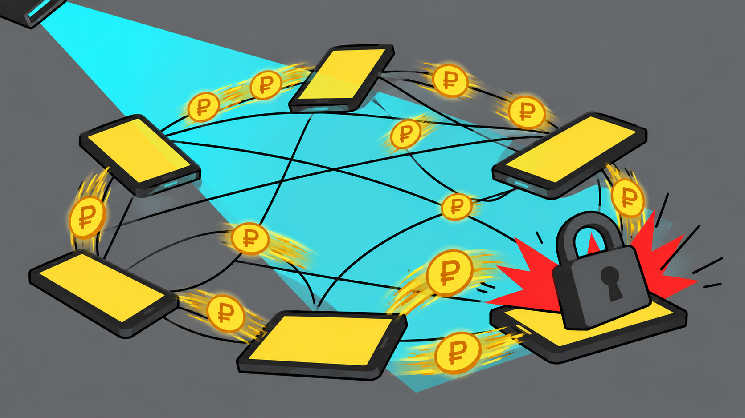
Starting September 1, 2026, Russia's Federal Law No. 461-FZ grants Rosfinmonitoring (the Federal Financial Monitoring Service) direct access to transaction data from the National Payment Card System (NSPK), the operator of the Mir payment card system and the Faster Payments System (SBP). This allows the agency to bypass individual banks when reconstructing transaction trails for anti-money laundering (AML) purposes. The data, provided free of charge and without requiring customer consent or court orders, includes information on operations via SBP, the unified QR-code, and Mir cards, with no minimum transaction threshold. Customers will not be notified when their data is shared. The law does not introduce new taxes, automatic account freezes, or new enforcement powers. If suspicious activity is identified under existing AML laws, existing procedures with banks and law enforcement will apply. The agreement's specific terms between Rosfinmonitoring and NSPK, including the scope and historical depth of accessible data, are not public. The change centralizes access to a vast volume of domestic payments, potentially speeding up financial investigations. However, it also creates a single point of concentration for sensitive data and reduces transparency for cardholders, as customers are not informed about data requests. Observers note a global trend of expanding supervisory powers, with differences in the Russian model being the non-public agreement and the lack of customer notification.

cryptonews.ru9m ago

Is Your Account Still Blocked? Rosfinmonitoring Gets Direct Access to SBP and 'Mir'

cryptonews.ru9m ago

Solana Price Forecast Hits $110 as Bitwise's BSOL Posts Record Trading Volume

Solana (SOL) price is testing a critical resistance zone between $102-$103, having recently risen above $100 and now trading at $101.36. Technical analysis indicates a bullish but cautious trend, with the Parabolic SAR signaling a bullish short-term trend and the MACD gaining momentum. The price is within a rising wedge pattern, suggesting a potential breakout or sharper pullback. Key bullish factors include sustained, record-high network activity, with Solana processing over 1 billion transactions for the fourth consecutive week. Strong institutional demand is also evident, as Bitwise's Solana ETF (BSOL) recorded its highest-ever daily trading volume of over $108 million, contributing to significant daily inflows into SOL ETFs. However, caution is warranted. A major whale unstaked and transferred over 45,000 SOL, realizing a $3.3 million loss. Additionally, long-dated futures are trading at a discount to spot prices, indicating some long-term trader skepticism. **Price Forecast:** * **Bullish Case (Target: $110):** A confirmed daily close above the $102-$103 wedge resistance, supported by strong network usage and ETF inflows, could propel SOL towards $110. * **Bearish Risk (Support: $93-$95):** A rejection at resistance and a breakdown from the rising wedge's support could see the price retreat to the $93-$95 zone, especially if the whale's exit signals broader caution. In conclusion, the outlook is balanced between strong fundamental demand and emerging caution from large holders. The price action around the $102-$103 resistance will be decisive in determining the next significant move.

cryptonews.ru9m ago

Solana Price Forecast Hits $110 as Bitwise's BSOL Posts Record Trading Volume

cryptonews.ru9m ago

Trading

Spot

Hot Articles

Discussions

Welcome to the HTX Community. Here, you can stay informed about the latest platform developments and gain access to professional market insights. Users' opinions on the price of ETH (ETH) are presented below.

活动图片