TaiJi Completes $3.5 Million Strategic Financing with Participation from Castrum Capital, Becker Ventures, and Coinvestor Ventures

marsbitPublished on 2026-06-02Last updated on 2026-06-02

Abstract

TaiJi, an AI-driven market intelligence platform for Web3, has completed a $3.5 million strategic funding round. The investment was led by Castrum Capital, Becker Ventures, and Coinvestor Ventures. The funds will be allocated to product R&D, upgrading its AI inference engine, building a multi-agent analysis system, improving market data infrastructure, expanding its global community, and advancing ecosystem partnerships, particularly within the BSC ecosystem. TaiJi aims to transform how users understand the Web3 market by moving beyond simple data display. It integrates market data, on-chain signals, liquidity changes, social sentiment, and news events into a unified AI system. This system generates structured event inferences, impact pathways, risk assessments, and follow-up indicators. The platform's core approach involves a multi-agent framework where specialized agents (Market, On-chain, Sentiment, Risk, Event) collaboratively analyze disparate signals to produce coherent market intelligence. Its initial product will feature modules including Market Intelligence, a Scenario Engine for AI-powered event analysis, an Impact Map, Risk Signals, and a personalized user dashboard called "My TaiJi." TaiJi emphasizes that it does not custody user assets, execute trades, provide investment advice, or promise returns. Following this funding round, the company plans to accelerate product development and testing, gradually rolling out its core features to the broader Web3 market.

Author: TaiJi

Financing Amount

TaiJi announced today the completion of a $3.5 million strategic financing round. The funds will primarily be used for product R&D, AI inference engine upgrades, multi-Agent analysis system development, improvement of market data infrastructure, global community expansion, and advancement of ecosystem partnerships.

As the Web3 market enters a new stage characterized by higher frequency, greater complexity, and being more event-driven, users are no longer confronted with just price charts and news feeds. Macroeconomic events, project developments, TGEs, on-chain fund flows, liquidity changes, social media sentiment, and community behavior are collectively influencing market structure and asset performance.

TaiJi aims to provide a new way of understanding the market: not just displaying data, but transforming market trends, on-chain signals, news events, and social sentiment into analyzable, trackable, and reviewable market inference outcomes.

Investing Institutions

This strategic round saw participation from Castrum Capital, Becker Ventures, and Coinvestor Ventures.

TaiJi stated that this financing will not only support the platform's continuous iteration in technology and product but will also help TaiJi advance its product development, community growth, and ecosystem cooperation within the BSC ecosystem. In the future, TaiJi will continue to build more comprehensive intelligent market infrastructure centered around AI market analysis, on-chain signal identification, risk assessment, and event inference capabilities.

Project Introduction

TaiJi is building an AI-driven on-chain market intelligence network on the BSC ecosystem. The platform integrates market data, on-chain fund flows, liquidity changes, social sentiment, news events, and project dynamics into a unified AI inference system, helping users generate structured event scenarios, impact pathways, risk assessments, and follow-up observation metrics.

Unlike traditional market tools, TaiJi is not merely an AI-generated interface but is constructing an intelligent analysis system for the Web3 market. The platform continuously aggregates market data, on-chain fund flows, liquidity changes, social sentiment, and project events, forming a native market data network that updates in real-time. Simultaneously, it accumulates data on changes in assets, capital, narratives, risks, and user attention following events, establishing a reviewable dataset of event responses.

Building on this, TaiJi employs a multi-Agent inference framework to collaboratively process different types of market signals. Market Agents, On-chain Agents, Sentiment Agents, Risk Agents, and Event Agents work together to analyze event impacts, transforming fragmented information into structured impact pathways, risk judgments, and subsequent observation indicators.

The first phase of TaiJi's product will revolve around the following core modules:

  • Market Intelligence: Aggregates market data, on-chain data, social sentiment, and news events to form a real-time market intelligence layer.
  • Scenario Engine: Generates AI-inferred outcomes based on market events, helping users understand the potential multi-dimensional impacts of events.
  • Impact Map: Visualizes the impact of events on assets, narratives, liquidity, risk pathways, and market attention.
  • Risk Signals: Identifies on-chain fund flow changes, liquidity volatility, anomalous transactions, and potential risk signals.
  • My TaiJi: Stores user watchlists, historical inferences, market observations, and personalized metrics.

TaiJi stated: "The Web3 market is transitioning from mere price trading into a new stage driven by events, narratives, data, and on-chain behavior. TaiJi aims to integrate signals scattered across market data, on-chain activity, social media, and news into an AI-native market inference system, enabling users to more quickly understand how events affect assets, liquidity, risk, and market sentiment."

With the completion of this funding round, TaiJi will accelerate product revision and testing progress, gradually opening core functionalities such as AI inference, market intelligence, impact maps, risk signals, and user workstations, while continuing to expand its product footprint within the BSC ecosystem and the global Web3 market.

About TaiJi

TaiJi is an AI-native on-chain market intelligence platform for the Web3 market, aggregating market data, on-chain signals, social sentiment, and event information to help users generate structured market inferences, impact pathways, risk alerts, and follow-up observation indicators.

TaiJi does not custody user assets, execute trades on behalf of users, provide investment advice, or promise returns.

Trending Cryptos

Related Questions

QWhat is the total amount of strategic funding TaiJi raised and which investment institutions participated in this round?

ATaiJi raised $3.5 million in strategic funding. The investment round saw participation from Castrum Capital, Becker Ventures, and Coinvestor Ventures.

QWhat is the primary goal or vision of the TaiJi platform according to the article?

ATaiJi aims to provide a new way of understanding the Web3 market by integrating market data, on-chain signals, news events, and social media sentiment into an AI-powered deduction system. This transforms fragmented information into structured event analysis, impact pathways, risk assessments, and follow-up observation indicators, helping users analyze, track, and review market movements.

QOn which blockchain ecosystem is TaiJi primarily building its AI-driven on-chain market intelligence network?

ATaiJi is building its AI-driven on-chain market intelligence network primarily on the BSC (Binance Smart Chain) ecosystem.

QWhat are the five core modules that TaiJi's first-phase product will focus on?

AThe five core modules for TaiJi's first-phase product are: Market Intelligence, Scenario Engine, Impact Map, Risk Signals, and My TaiJi (a personalized user workspace).

QAccording to the article, what does TaiJi explicitly state it does NOT do for its users?

ATaiJi explicitly states that it does not custody user assets, execute trades on behalf of users, provide investment advice, or promise any returns.

Related Reads

Conversation with Co-founder of Hyperdash: Why is Hyperliquid Still Severely Undervalued?

Interview Summary with Hanson Birringer, Co-founder of Hyperdash: Why Hyperliquid Remains Undervalued In an interview on *The Rollup*, Hanson Birringer, Co-founder and Chief Revenue Officer of Hyperdash—a trading data analytics platform for Hyperliquid—shared his investment thesis on the Hyperliquid ecosystem. He described Hyperliquid as a pure play on three key crypto super-trends: perpetual contracts, real-world assets (RWAs), and stablecoins. The platform is an open-source, decentralized, and high-performance financial system uniquely positioned to bridge traditional institutional capital with decentralized finance. Birringer highlighted Hyperliquid's leadership in perpetual DEX trading and its recent innovation of RWA perpetual contracts. He emphasized the significance of USDC becoming a core quoting asset, which, by allocating 90% of its backend yield from assets like US treasuries to a protocol buyback fund, creates substantial, programmatic buy pressure for the Hype token. He addressed regulatory challenges, noting that Hyperliquid's policy team is actively engaging with US regulators like the CFTC to establish clear rules for decentralized venues. Once achieved, regulated brokers could route orders directly to Hyperliquid's backend, tapping into its low-cost liquidity layer. Regarding revenue, Birringer was optimistic, citing the immense size of traditional financial markets. Even capturing a small fraction of global trading volume in products like RWA perpetuals could lead to exponential growth for the protocol. The recently launched Grayscale Hyperliquid ETF, seeded by their SPV (Hyper Holdings Global), provides a compliant on-ramp for institutional investors drawn to the clear "cash flow + token buyback" model. Finally, he discussed Hyperdash's acquisition of Imperator, enhancing its data and node infrastructure to serve both retail traders and traditional asset managers. His bullish case rests on Hyperliquid's potential to provide unprecedented global access to dollar-based capital markets. He struggled to articulate a bear case, seeing the long-term trends of internet adoption and financial inclusion as powerful tailwinds.

marsbit52m ago

Conversation with Co-founder of Hyperdash: Why is Hyperliquid Still Severely Undervalued?

marsbit52m ago

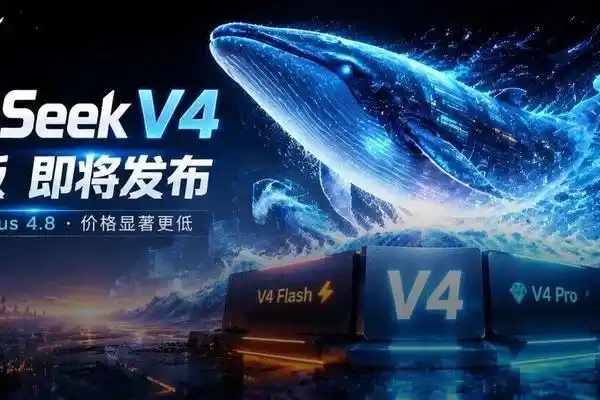
DeepSeek V4 'Full-Blooded Edition' Leaked, Could Be Released As Early As Tomorrow

The highly anticipated full release of DeepSeek V4 is imminent, expected to launch as early as tomorrow after nearly three months of waiting. A select group has already received access to the GA (General Availability) beta, which includes two versions: DeepSeek V4 Flash and DeepSeek V4 Pro. Early testers report that V4's overall performance is close to the level of Opus 4.8, with coding capabilities rivaling GPT-5.6 Sol. Its agent abilities are significantly enhanced, and 3D/SVG generation has improved notably. While it may not surpass the recently released Kimi K3 in performance, its expected price point is significantly lower. The official release will introduce a new "peak/off-peak" pricing model for its API. For example, deepseek-v4-pro will cost $0.87 per million output tokens during standard times and $1.74 during peak hours. The flash version is even more aggressive at $0.28/$0.56 per million tokens, with cached input tokens priced extremely low at $0.0028. This makes V4 a strong contender in terms of cost-effectiveness, potentially offering Opus-level capabilities at a fraction of the cost, continuing DeepSeek's reputation as a "price disruptor" in the AI market. Initial demos showcasing V4's capabilities have begun circulating, including generated 3D simulation games, HTML games blending elements of Minecraft and No Man's Sky, and classic games like a "Cut the Rope" clone. The final GA version is set to replace the older deepseek-chat and deepseek-reasoner models, which will be retired on July 24th.

marsbit1h ago

DeepSeek V4 'Full-Blooded Edition' Leaked, Could Be Released As Early As Tomorrow

marsbit1h ago

WEEX Labs Weekly Observation: The 'Power Restructuring' of AI Infrastructure and the 'Deep Dive Movement' into the Real Economy

WEEX Labs Weekly Review: AI Infrastructure's "Power Restructuring" and the "Deep Dive" into the Real Economy Mid-July 2026 marks a pivotal shift in the global AI industry. The allocation of computing power is transferring from cloud giants to compute resource owners, while the core value of AI is solidifying around its penetration into physical industry, moving beyond the race for model parameters. The era of fragmented model development is over, replaced by a capital-intensive, integrated chain driven by hard tech. Key developments this week include Meta's planned entry into the cloud computing market with "MetaCompute." This move by social media giants with massive GPU clusters challenges traditional cloud providers like AWS, integrating compute, models, and data into one-stop services, which will squeeze smaller rental providers and shift enterprise focus towards underlying model ecosystems. Chinese foundational models like DeepSeek-V4 and Tencent's Hy-3 are pushing towards "utility" status through open-source releases and extreme cost reductions via MoE architectures. This lowers entry barriers for enterprises, allowing them to focus resources on private deployment and deep business integration. Embodied intelligence, particularly humanoid robots, is transitioning from lab demos to real-world factory applications, driven by policies promoting large-scale, practical deployment in logistics and manufacturing. The value focus is shifting from spectacle to stable industrial data and real operational efficiency. Global governance, through forums like WAIC, is evolving from theoretical ethics to practical operational frameworks for "Sovereign AI," raising geopolitical compliance barriers and making auditability and data sovereignty core design requirements from the outset. WEEX Labs Insights: The current transformation shows AI's prosperity is deeply embedding into the fabric of global manufacturing. Strategic recommendations include: 1) leveraging open-source models for private, proprietary knowledge bases; 2) maintaining cloud provider diversity to avoid vendor lock-in from integrated model ecosystems; and 3) seeking opportunities in the "embodied infrastructure" supporting robots, such as data collection, industrial simulation, and factory AI adaptation services.

marsbit1h ago

WEEX Labs Weekly Observation: The 'Power Restructuring' of AI Infrastructure and the 'Deep Dive Movement' into the Real Economy

marsbit1h ago

Is WEEX TradFi Reliable? What You Should Know Before Your First Trade of U.S. Stock Tokens

In recent years, cryptocurrency users have expanded their focus beyond Bitcoin and Ethereum to include popular traditional financial (TradFi) assets like Nvidia, Apple, and Tesla stocks. This shift raises key questions: What do these TradFi assets represent on crypto trading platforms? How do they differ from traditional stock ownership? And how can users assess the reliability of platforms offering such products? TradFi products, such as those offered by WEEX TradFi (including NVDA, MSFT, AAPL, TSLA, and QQQ tokens), are blurring the lines between crypto and traditional markets. They allow users to trade based on the price movements of traditional assets within a familiar digital asset trading environment. However, it's crucial to understand that trading a "stock token" is not equivalent to owning the actual stock. Users are participating in price speculation, not gaining shareholder rights like dividends or voting. A key feature of these products is 7x24 trading, offering flexibility beyond traditional market hours. While convenient, this also introduces unique risks, such as potential liquidity gaps and volatility when underlying markets are closed. For users evaluating TradFi products, reliability hinges on transparency and risk management. Critical factors include understanding the product mechanism, how prices track the underlying assets, and the associated risks—especially when using leverage. Popular stocks and indices are still subject to company performance, macroeconomic shifts, and sector trends. Ultimately, TradFi represents a new gateway connecting crypto users to global markets. The future points toward integrated trading environments where the distinction between "crypto investor" and "traditional investor" fades. For newcomers, a platform's reliability stems not from promises, but from a clear understanding of the product, a comprehensive view of risks, and informed judgment of the platform's capabilities.

marsbit1h ago

Is WEEX TradFi Reliable? What You Should Know Before Your First Trade of U.S. Stock Tokens

marsbit1h ago

Trading

Spot

Hot Articles

What is DOGE M

Doge Matrix ($doge m): The New Breed of Community-Driven Cryptocurrency Introduction In the ever-evolving landscape of cryptocurrency, new projects constantly emerge, each aiming to capture the interest of investors and enthusiasts alike. One of the latest entrants to this domain is Doge Matrix, represented by the ticker symbol $doge m. This project has attracted attention thanks to its roots in the popular meme culture surrounding Dogecoin, establishing its place within the web3 space. This article aims to provide a comprehensive analysis of Doge Matrix, covering its overview, creator, investors, functionality, timeline, and notable aspects. What is Doge Matrix ($doge m)? Doge Matrix is a community-driven cryptocurrency project that seemingly builds upon the widespread appeal of Dogecoin, a digital currency known for its Shiba Inu mascot and its meme origins. While the overarching objectives of Doge Matrix are not extensively defined, it is characterised by a commitment to harnessing community involvement and support. Unlike traditional cryptocurrencies that often emphasise utility or intrinsic value through underlying technologies, Doge Matrix positions itself within a space that embraces the cultural phenomenon of cryptocurrencies, particularly appealing to those who resonate with the ethos of meme-based assets. Drawing on the strengths of the Dogecoin community, Doge Matrix operates as part of a broader ecosystem, inviting participation and engagement from users who share an interest in cryptocurrency and the digital landscape. Who is the Creator of Doge Matrix ($doge m)? The identity of the creator of Doge Matrix remains unknown. This lack of transparency is not an uncommon occurrence in the cryptocurrency space, where some projects are launched without revealing the identities of their founders. The absence of information regarding the founding team can raise questions among potential investors about the project’s accountability and direction. Who are the Investors of Doge Matrix ($doge m)? As it stands, there is no publicly available information detailing the investors or investment foundations that back Doge Matrix. The project appears to rely primarily on community support rather than institutional investment. This model aligns with the community-driven nature of the initiative, fostering an environment where the direction of the project is shaped by its participants rather than being dictated by a select few financial backers. How Does Doge Matrix ($doge m) Work? The specifics regarding the operational mechanisms of Doge Matrix are somewhat vague, reflecting a broader trend of projects in the meme coin space where innovative functionalities are not always clearly articulated. Nonetheless, Doge Matrix seems designed to tap into the existing cryptocurrency ecosystem by encouraging user participation while tapping into the familiar cultural references associated with Dogecoin. Its potentially unique characteristics derive from community interactions rather than technological advancements, emphasising shared experiences and collaboration among token holders. While the exact innovations have not been explicitly outlined, the project appears to create a space where community members can engage, share ideas, and propel the project's potential forward. Timeline of Doge Matrix ($doge m) Reflecting on the project’s timeline reveals notable events that have defined its journey thus far: November 25, 2024: Doge Matrix reached its all-time high value, marking a significant milestone in its early history. January 1, 2025: Conversely, Doge Matrix hit its all-time low value, illustrating the volatility often associated with cryptocurrencies, especially in the early stages of a project's lifecycle. Ongoing: The project continues to be actively traded and supported by its community, although specific future milestones or objectives have yet to be disclosed. Key Points About Doge Matrix ($doge m) Community Focus At the heart of Doge Matrix is a commitment to community engagement. The project thrives on the premise of collaboration and shared objectives among its members, emphasising the importance of collective effort. Unlike centralised projects that often have a defined leadership structure, Doge Matrix at present showcases a more fluid approach to governance, where every community member's voice matters. Volatility The cryptocurrency market is notorious for its volatility, and Doge Matrix is no exception. Its price history reflects significant fluctuations between high and low values, which is typical of many new cryptocurrencies but underscores the risks associated with investment in emerging tokens. Lack of Detailed Information One of the most striking features about Doge Matrix is the scarcity of detailed information regarding its technological underpinnings and operational mechanisms. This ambiguity necessitates that potential investors conduct thorough due diligence before engaging with the project. Conclusion In summary, Doge Matrix ($doge m) illustrates a new wave of cryptocurrency projects that lean heavily on community engagement and cultural relevance. While lacking in certain specifics—such as clear leadership, defined objectives, and detailed functionality—the project has managed to generate interest within the crypto community, leveraging the established appeal of meme culture. As with any investment in the cryptocurrency space, understanding the inherent risks and conducting comprehensive research is essential for potential participants. Doge Matrix stands as a reminder of the dynamic, sometimes unpredictable nature of the crypto industry, marked by constant evolution and enthusiasm for community-driven initiatives.

570 Total ViewsPublished 2025.02.03Updated 2025.02.03

What is DOGE M

What is $M

Understanding Mantis ($M): A New Era in Cross-Chain Interoperability In the continually evolving landscape of Web3 and cryptocurrency, new projects strive to offer innovative solutions aimed at enhancing the user experience and expanding functional possibilities within the decentralised financial ecosystem. One such project garnering attention is Mantis ($M), a pioneering protocol founded on the principles of cross-chain interoperability and intent-based settlements. This article delves into the essential aspects of Mantis, including its core functionality, creators, investment backing, innovative features, and critical milestones. What is Mantis ($M)? Mantis is described as a multi-domain intent settlement protocol that simplifies cross-chain interactions, enabling users to execute complex financial transactions across various blockchain platforms seamlessly. The protocol operates through three primary layers: Intent Expression: Users can articulate their transaction goals using natural language facilitated by the DISE LLM, an advanced AI language model. For instance, a user might express a desire to swap Ethereum (ETH) for Solana (SOL) with a specific slippage tolerance of 1%. Execution: This layer employs a network of solvers that compete to fulfil user intents. Transactions are executed using mechanisms such as Coincidence of Wants (CoWs) and Order Flow Auctions (OFAs), which ensure that user demands are met optimally. Settlement: Leveraging the Inter-Blockchain Communication (IBC) protocol, Mantis enables atomic cross-chain transactions, allowing users to operate across various supported chains, including Ethereum, Solana, and Cosmos. Mantis is engineered to introduce native yield generation for idle assets, employing cryptographic proofs to maintain the integrity of transactions throughout the entire process. Creators & Development Team Mantis was conceived by the Composable Foundation, a research-driven organisation notable for its emphasis on blockchain interoperability solutions. This foundation collaborates with esteemed academic institutions, including Harvard University and the University of Lisbon, contributing to extensive research and development efforts that inform Mantis's architecture and functionality. The Composable Foundation’s commitment to fostering innovation in the blockchain space positions Mantis as a robust solution for the growing demand for interoperability among multiple blockchain networks. Investors & Backing While specific details about individual investors have not been publicly disclosed, Mantis enjoys substantial backing from various entities, including: Ecosystem grants from IBC-enabled chains, which support the protocol's growth and integration within decentralised finance ecosystems. Strategic partnerships with infrastructure providers that enhance Mantis's network capabilities and deployment strategies. Funding through the Composable Foundation's treasury, ensuring sustained financial support for ongoing development and operational costs. These collaborative efforts reflect a consensus among stakeholders about the importance of enhancing cross-chain functionality and the potential utility of Mantis's infrastructural innovations. Key Innovations Mantis sets itself apart through several pioneering innovations that enhance its functionality and utility: Chain-Agnostic Intents: Users can initiate transactions from any supported chain while settling on another. This flexibility empowers users, driving increased interaction among different platforms. AI-Powered Interface: The integration of DISE LLM allows users to conduct complex DeFi operations using natural language, thereby simplifying interactions and making blockchain technology accessible to a broader audience. Cross-Domain MEV Capture: Mantis creates an internal market for maximal extractable value (MEV) through competitions among solvers. This innovative approach allows for greater efficiency and value extraction in complex transactions. Modular Settlement Layer: The protocol supports various verification methods, including zero-knowledge proofs and optimistic rollups, providing a versatile framework that can adapt to emerging blockchain technologies. Historical Timeline Mantis's development is marked by several critical milestones that chart its trajectory and growth: | Year | Milestone | |————|————————————————————————-| | 2022 | Initial concept development within the Composable Foundation's research division. | | Q3 2024 | Launch of the testnet with bridging capabilities between Solana and Ethereum. | | Q1 2025 | Anticipated Token Generation Event (TGE) alongside the mainnet launch. | | Q2 2025 | Expected integration of DISE LLM and expansion of cross-chain capabilities. | | 2025 H2 | Planned support for over 15 chains through further IBC upgrades. | This timeline outlines Mantis's evolution, from conceptual discussions to active implementation and future growth phases. Ecosystem Growth Strategy Mantis's strategy for ecosystem growth includes several initiatives designed to encourage user participation and developer engagement: Credits System: Users can earn protocol credits by providing liquidity and engaging in referral programmes. These credits are redeemable for incentives in the future, fostering a robust user community. Modular Software Development Kit (SDK): This toolkit empowers developers to create applications based on intent-driven models utilising Mantis's infrastructure, thus promoting innovation within its ecosystem. Governance Model: As the protocol matures, $M token holders will have a voice in protocol governance, allowing them to vote on proposed upgrades and changes, thereby enhancing community engagement and decentralisation. Mantis represents a significant advancement in the realm of cross-chain architecture. By seamlessly integrating advanced AI algorithms with a robust settlement framework, Mantis seeks to tackle the problems of fragmentation within multi-chain ecosystems. Its innovative approach prioritises improved user experiences while adhering to the foundational principles of decentralisation and security, setting a new standard for the future interoperability of blockchain technologies. As Mantis continues its journey of growth and implementation, it promises to be a project to watch closely in the competitive landscape of Web3 and decentralised finance. With its focus on crossing boundaries and elevating user engagement, Mantis is poised to be an integral part of the future developments in the cryptocurrency space.

93 Total ViewsPublished 2025.03.18Updated 2025.03.18

What is $M

Discussions

Welcome to the HTX Community. Here, you can stay informed about the latest platform developments and gain access to professional market insights. Users' opinions on the price of M (M) are presented below.

活动图片