# Satellite Related Articles

HTX News Center provides the latest articles and in-depth analysis on "Satellite", covering market trends, project updates, tech developments, and regulatory policies in the crypto industry.

Three Rounds in a Row, Shanghai Gives Birth to a $10 Billion Satellite Internet Unicorn

Shanghai-based semiconductor company Sixic has raised a new strategic investment round, securing backing from investors including Xinhuanet Venture Capital and Tongding Group, with continued support from existing investors. This marks the company's third disclosed financing this year, following a 1.5 billion RMB raise in February, officially cementing its status as a new Shanghai unicorn with a valuation exceeding 10 billion USD. The financing comes amid a dynamic period for China's commercial aerospace sector. Recent milestones include a successful controlled landing of a rocket first stage, signaling a path toward lower launch costs, and the establishment of a national Commercial Aerospace Innovation Consortium comprising 271 entities. Sixic stands out as the only 6G satellite internet baseband chip company within this consortium. The article highlights a market shift from a focus on rockets and satellites towards recognizing the value of the terminal and connectivity layer, essential for completing the commercial loop. Satellite internet, integral to 6G and commercial aerospace, is entering an industrial phase with clear policy support, including China's pioneering allocation of 6GHz spectrum for 6G R&D. Sixic specializes in 5G/6G satellite communication baseband chips, a highly complex segment. Unlike terrestrial communication, satellite chips must address challenges like high Doppler shift and signal loss. The company's technological validation is a key driver for investment. It has secured product certifications from leading global smartphone manufacturers, new energy vehicle makers, and communication module companies. A strategic partnership with ZTE was announced in March to collaborate on 6G NTN satellite internet. The company has achieved a full technical verification loop, from lab tests to in-orbit validation, including successfully demonstrating 5G NTN standard-based HD video calls via satellite in 2025. It maintains a 100% first-pass success rate for chip tape-outs and possesses full-stack in-house R&D capabilities. Sixic's strategy focuses on ASIC development for future commercial-scale, power-efficient consumer devices like smartphones. Its early and deep involvement in industry standards and constellation planning creates a significant competitive barrier. Looking ahead, Sixic's opportunity extends beyond chips into modules and terminal ecosystems. It has developed a full range of baseband SoC solutions and provides reference designs to help partners launch products quickly. The recent release of the CM7620 broadband satellite communication module at MWC Shanghai completes its "chip-module-terminal" portfolio. This latest funding round represents a strategic bet on the foundational communication capabilities that will underpin the next generation of 6G and satellite internet value chains.

marsbit07/14 05:25

Three Rounds in a Row, Shanghai Gives Birth to a $10 Billion Satellite Internet Unicorn

marsbit07/14 05:25

Behind SpaceX's $2 Trillion Market Cap: Why Does Musk Always Have the Next Move Planned?

On June 12th, SpaceX debuted on the Nasdaq, reaching a valuation that briefly touched $2 trillion. This marked the culmination of a 24-year journey from its founding in 2002, driven by Elon Musk's frustration at the high cost of buying rockets. The company's path was defined by early failures, with its first three Falcon 1 launches ending in explosions before a successful 2008 flight opened the era of commercial spaceflight. Key to its model was a fixed-price NASA contract, incentivizing cost reduction. SpaceX mastered rocket reusability, first achieving a Falcon 9 landing in 2015, which drastically cut launch costs. This enabled its profitable Starlink satellite internet constellation, envisioned years before reusability was proven, to create an internal market for frequent launches. Similarly, the next-generation Starship rocket was in development long before its first flight, with its business case evolving from Mars colonization to supporting the emerging concept of in-orbit data centers for AI—a story now central to its valuation. The company's recent IPO, a reversal of its long-standing "no IPO" stance, is funding this ambitious "space-based compute" vision. While major tech players like Google, Blue Origin, and others are investing heavily, significant technical and cost hurdles remain. Ultimately, SpaceX's history is one of creating its own demand: first with Starlink and now with space-based AI compute, betting that its next rocket will enable its next giant market.

marsbit06/17 04:45

Behind SpaceX's $2 Trillion Market Cap: Why Does Musk Always Have the Next Move Planned?

marsbit06/17 04:45

The Foundation of SpaceX's Trillion-Dollar Valuation: Who is Dividing Up Musk's Annual Tens of Billions in Capital Expenditure?

SpaceX's trillion-dollar valuation is built on its three core businesses: Starlink (profitable, 60% of revenue), rockets (driving down launch costs), and AI (a major investment area). This creates a financial cycle: Starlink funds rocket development, which enables low-cost launches for AI hardware, generating future revenue. This cycle fuels annual capital expenditures of tens of billions, flowing to a vast supply chain. Suppliers are categorized by their replaceability. The first group includes irreplaceable players like NVIDIA (GPU/CUDA ecosystem), Eutelsat (critical radio spectrum), Filtronic (specialized amplifiers), Materion (strategic beryllium), and STMicroelectronics (antenna chips). The second group consists of hard-to-replace suppliers due to high switching costs, such as Honeywell (flight control), Carpenter Technology (specialty alloys), Hexcel (carbon fiber), Broadcom (data exchange), and Linde (industrial gases). The third group comprises high-volume, cost-critical suppliers for mass-produced items like Starlink terminals. Key names include Wistron NeWeb (primary manufacturer) and several A-share companies like Shenzhen Sunway (connectors), Pies New Materials (forgings), Western Superconducting (alloys), and Yingliu (castings). Other niche players include Trimble (timing), Astronics (power distribution), and CTS (thermal management). The article argues that investing in these suppliers, rather than SpaceX stock directly, offers an alternative opportunity. The rationale is threefold: procurement is just beginning to scale, SpaceX's IPO brings new transparency to its supply chain, and the situation mirrors early stages of past "super terminal" ecosystems like Apple or Tesla. While risks exist (commodity cycles, geopolitical factors, technology shifts), the core thesis is that SpaceX's massive, ongoing procurement will translate into reliable revenue for its key suppliers, regardless of its own stock price volatility.

marsbit06/16 04:05

The Foundation of SpaceX's Trillion-Dollar Valuation: Who is Dividing Up Musk's Annual Tens of Billions in Capital Expenditure?

marsbit06/16 04:05

Missed Out on SpaceX's IPO? Take a Look at SpaceX's Complete Supply Chain

SpaceX is now public, but its high valuation and losses may deter some investors. However, the real opportunity, as seen with Apple, Tesla, and Nvidia, may lie in its extensive supply chain. SpaceX, funded primarily by its profitable Starlink service, spends hundreds of billions annually on components for its rockets, satellites, and planned orbital AI data centers, creating significant revenue streams for suppliers. Key suppliers are categorized by their indispensability. The first group includes irreplaceable players like **NVIDIA** (GPUs for AI supercomputers), **Eutelsat (SATS)** (spectrum rights), **Filtronic** (millimeter-wave amplifiers), **Materion (MTRN)** (beryllium alloys), and **STMicroelectronics (STM)** (phased array chips). The second category comprises suppliers costly to replace due to long certification cycles or deep integration, such as **Honeywell (HON)** (flight controls), **Carpenter Technology (CRS)** (specialty steel), **Hexcel (HXL)** (carbon fiber), **Broadcom (AVGO)** (data switching), and **Linde** (industrial gases). The third group involves high-volume, cost-critical manufacturers for mass-produced items like Starlink terminals. Major players here include Taiwanese contract manufacturer **Wistron NeWeb (6285)** and several Chinese-listed firms: **Sunway Communication (300136)**, **Parker Advanced Materials (605123)**, **Western Superconducting (002149)**, and **Yingliu Co., Ltd. (603308)**. Other niche providers include **Tianyin Electromechanical**, **Tongyu Communication**, **Trimble (TRMB)**, **Astronics (ATRO)**, and **CTSH**. The timing is now relevant because: 1) SpaceX's procurement is accelerating with plans for 100 launches in 2026, 30 million Starlink terminals, and orbital data centers. 2) Its IPO has brought unprecedented transparency to its supply chain. 3) This phase mirrors early days of the Tesla supply chain boom. The investment thesis shifts from betting on SpaceX's stock to betting on the steady, order-book-driven revenues of its essential suppliers. Risks remain, such as commodity cycles, geopolitical factors, and technological shifts, but the supply chain offers a potentially less speculative path to participate in SpaceX's growth.

marsbit06/16 03:36
Missed Out on SpaceX's IPO? Take a Look at SpaceX's Complete Supply Chain

marsbit06/16 03:36

SpaceX's $1.75 Trillion IPO: A Quick Guide to 17 Related Stocks

**Title: SpaceX's $1.75 Trillion IPO: Analysis of 17 Related Stocks** SpaceX is set to IPO on Nasdaq with a $1.75 trillion valuation. The real value driver is Starlink, contributing 61% of Q1 revenue with high margins. Its valuation heavily depends on future execution, including user growth despite falling ARPU. Key stocks have already surged pre-IPO. Tesla (TSLA, +10%) is a primary beneficiary due to deep integration with SpaceX in chip design and AI. Rocket Lab (RKLB, +89%) is seen as a "mini-SpaceX," but faces risk from potential Neutron rocket delays. AST SpaceMobile (ASTS) competes in the same satellite-to-phone market as Starlink. Firefly (FLY, +70%) is a strong government contractor in lunar services. Partners like EchoStar (SATS), Planet Labs (PL), and T-Mobile (TMUS) will see revaluation. Suppliers like Qualcomm (QCOM, +57%) are critical ecosystem "picks and shovels." Investment vehicles like DXYZ (+80%) hold significant SpaceX stakes but trade at high premiums, which may collapse post-IPO. Redwire (RDW) is highlighted as an under-the-radar "pick and shovel" play in space components, with growth in defense contracts and microgravity pharmaceuticals. The article warns that much of the positive news is already priced in, and a post-IPO sell-off is possible. Large IPOs often underperform initially. Key risks include Starship delays, ARPU decline, and unforeseen black swan events affecting Elon Musk or space operations. Investors are advised to focus on companies with solid fundamentals and manage overall sector exposure carefully.

marsbit05/28 09:12

SpaceX's $1.75 Trillion IPO: A Quick Guide to 17 Related Stocks

marsbit05/28 09:12

Valuation Trillion-Dollar SpaceX, Who Is the "Only Affordable Alternative"?

"Rocket Lab (RKLB), dubbed the 'only alternative' to the trillion-dollar SpaceX, surged nearly 7% after hours following a strong Q1 2026 earnings report. Revenue hit $200.3M, up 63.5% YoY, with adjusted gross margins rising to 43%. The stock has gained 240% over the past year. Investors see Rocket Lab as replicating SpaceX's proven path: first mastering small rockets, then developing larger, reusable ones. Its 'Electron' rocket is the world's only frequently launched, reliable small launch vehicle, with successful ocean recoveries. The key to its future valuation is the 'Neutron' medium-lift rocket, currently in development and targeting a late-2026 debut. Designed to compete with SpaceX's Falcon 9, Neutron features innovations like the fixed 'HungryHippo' payload fairing for easier reuse. Beyond launch, Rocket Lab mirrors SpaceX's ecosystem approach, with its 'Space Systems' business (satellite components) contributing nearly 70% of revenue. While SpaceX's estimated $1.75-2T valuation dwarfs Rocket Lab's ~$45B, this gap represents the investment opportunity. If Neutron succeeds, Rocket Lab could transition from a small launch leader to the world's second provider of reusable medium-lift capability. The major risk is that Neutron has not yet flown. Any significant delays or failures in its development or first launch could severely pressure the company's current valuation, which heavily prices in Neutron's success."

Odaily星球日报05/08 13:53

Valuation Trillion-Dollar SpaceX, Who Is the "Only Affordable Alternative"?

Odaily星球日报05/08 13:53

When Bitcoin Miners Take to Space

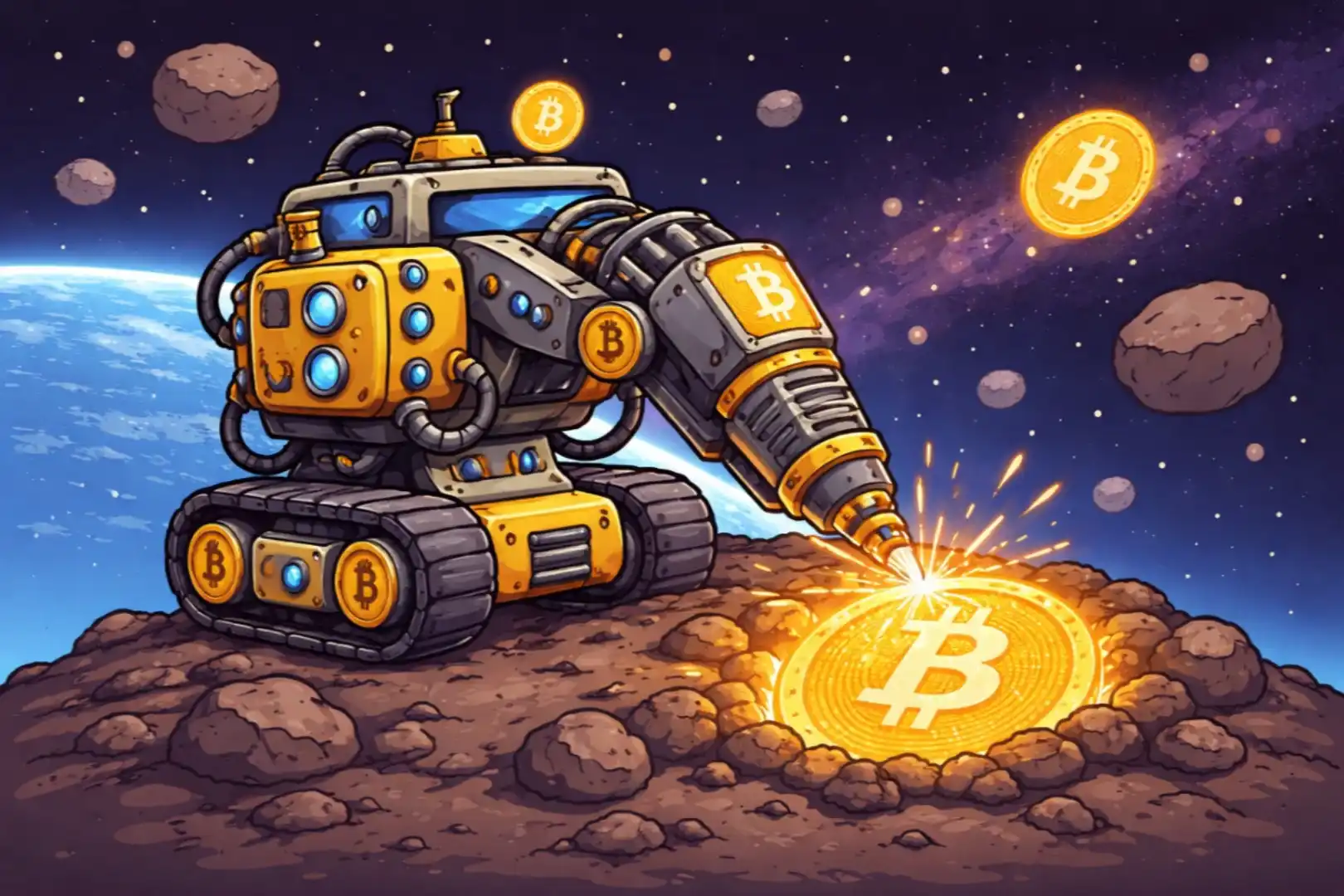
SpaceX is reportedly preparing for a historic IPO with a target of $1.75 trillion, while simultaneously advancing plans to deploy AI data centers in orbit, leveraging space’s vacuum for cooling and solar energy for power. This has sparked interest in whether Bitcoin mining—also energy-intensive and dependent on computing hardware—could also move to space. The core idea involves placing mining ASICs on the back of solar panels in orbit, using abundant solar energy to power mining operations. Heat dissipation in vacuum, a key challenge, is manageable through thermal radiation, and communication with mining pools is feasible with low latency via low Earth orbit satellites. However, the economics remain prohibitive. Launch costs, currently around $2,720 per kilogram via Falcon 9, make mining payloads financially unviable. Estimates suggest that with current technology, the payback period would exceed 100 years. SpaceX’s Starship may eventually reduce launch costs below $200/kg, making space mining more feasible. Companies like Starcloud—backed by NVIDIA and top VCs—are already testing orbit-based computing, including AI and planned Bitcoin mining experiments. Others, like SpaceChain and Cryptosat, focus on secure blockchain nodes and cryptographic services in space rather than mining. While orbital mining is not yet economically competitive with terrestrial operations, it represents a long-term vision for radically reducing energy costs and expanding the infrastructure of decentralized networks beyond Earth.

marsbit04/01 03:49

When Bitcoin Miners Take to Space

marsbit04/01 03:49

After Sending NVIDIA AI Servers into Space, This Space Startup Now Sets Its Sights on Bitcoin Mining

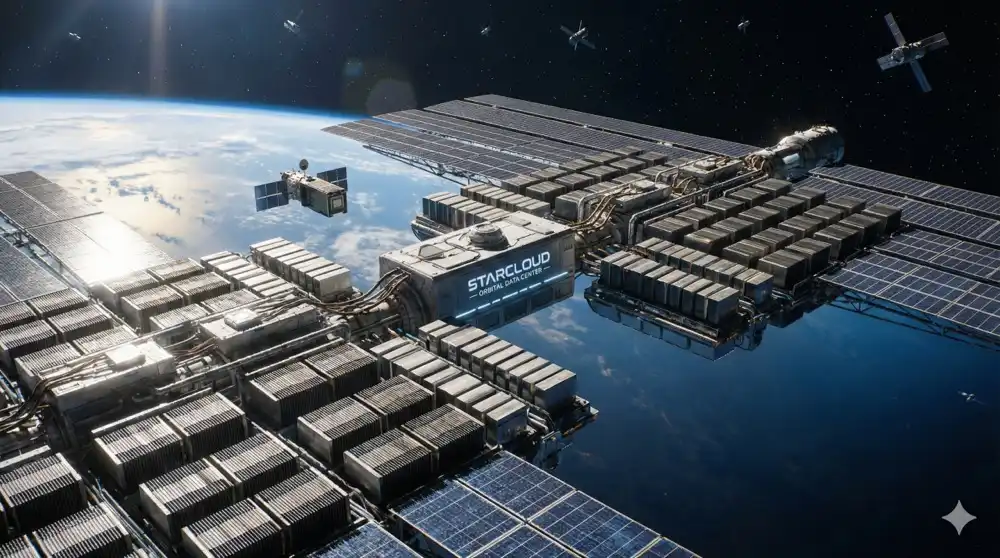
A space computing startup, Starcloud, is expanding its ambitions after successfully sending NVIDIA AI servers into orbit. The company now plans to launch Bitcoin mining operations into space, aiming to leverage the advantages of the extraterrestrial environment. CEO Philip Johnston revealed that Starcloud intends to deploy Bitcoin ASIC hardware on its Starcloud-2 satellite, scheduled for launch in 2026. If successful, it would mark the first-ever Bitcoin mining operation in space. The company believes space offers significant benefits, including near-limitless solar energy, reduced cooling costs due to extreme environmental conditions, and freedom from terrestrial energy constraints and regulatory pressures. However, the economic viability remains uncertain due to high launch costs, hardware durability challenges in high-radiation environments, and rapidly evolving mining technology. While the initiative may currently hold more symbolic than practical value, it reflects a growing trend of extending blockchain and computing infrastructure beyond Earth. Starcloud, backed by investors like a16z and Sequoia, has already made strides by training an AI model in orbit using an NVIDIA H100 GPU. The company, along with others like Google and SpaceX, is part of a broader movement to develop space-based data centers, signaling that the next frontier for AI and computing may indeed be in orbit.

marsbit03/10 05:33

After Sending NVIDIA AI Servers into Space, This Space Startup Now Sets Its Sights on Bitcoin Mining

marsbit03/10 05:33

活动图片