# Democratization Related Articles

HTX News Center provides the latest articles and in-depth analysis on "Democratization", covering market trends, project updates, tech developments, and regulatory policies in the crypto industry.

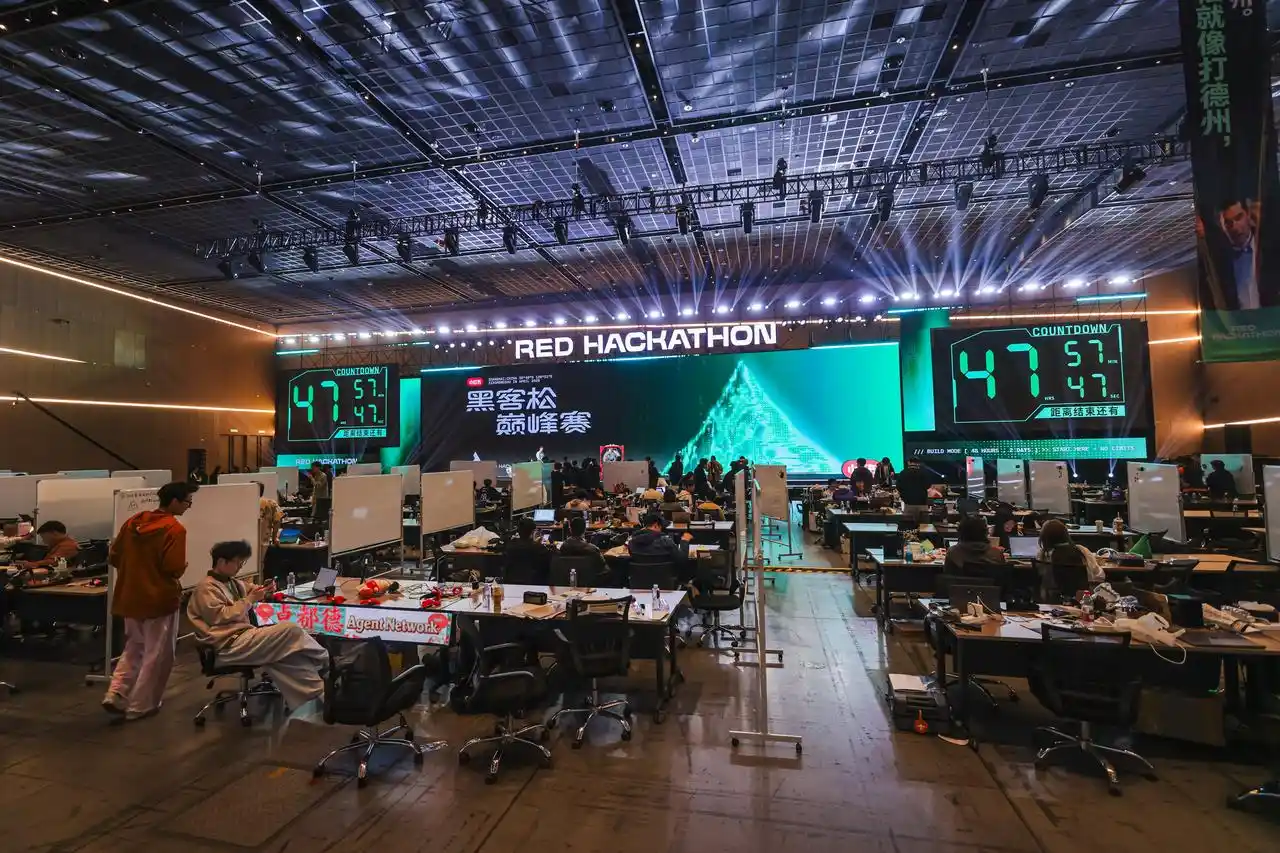
More and More People Are Using Xiaohongshu as an AI Incubator

"More and more people are turning Xiaohongshu into an AI incubator," observes an article exploring a shift in China’s tech innovation landscape. The AI wave is no longer dominated by experienced tech experts; instead, young people—often with humanities backgrounds, and increasingly Gen Z or even younger—are driving creativity. This reflects a broader trend: AI is transforming entrepreneurship from a capital-heavy, top-down model into a lightweight, accessible process. The rise of "AI Native" creators was highlighted at a recent Xiaohongshu hackathon, where diverse teams showcased projects targeting highly specific, everyday problems—from AI-generated PPT improvements to brain-controlled wheelchairs and apps that simplify communication with hairstylists. The winning project, "Pocket Guitar," offers a portable, user-friendly music tool that mimics real guitar playing. These innovators embrace a "Build in Public" approach: they share ideas, progress, and failures openly on Xiaohongshu, turning development into a collaborative, community-driven process. This method helps validate demand, recruit team members, and grow user bases organically. For instance, one 23-year-old founder assembled a distributed team through technical discussions on the platform, while a 13-year-old award winner used AI to learn coding and solve real-world problems. Two key factors enable this movement: AI democratization (lowering technical barriers) and the power of social communities (enabling open collaboration and instant feedback). Xiaohongshu, originally a lifestyle and shopping guide platform, has thus evolved into a vital innovation infrastructure. It connects creators with real user needs, facilitates low-cost prototyping, and fosters a culture of co-creation. This shift signals a new era of innovation—defined not by grand narratives and scale, but by granular insights, individual creativity, and trust-based community support. Xiaohongshu’s role is expanding from answering "what to buy" to "what to create," positioning it as a potential "App Store for the AI era."

marsbit04/17 03:06

More and More People Are Using Xiaohongshu as an AI Incubator

marsbit04/17 03:06

Unlocking Unicorn Tickets: From Robinhood to MSX, An On-Chain Experiment in Pre-IPO Democratization

"Unicorn Ticket Opening: From Robinhood to MSX, A Chain-Based Pre-IPO Equality Experiment" The article explores the emerging trend of using tokenization to democratize access to Pre-IPO shares of high-value unicorn companies like SpaceX, OpenAI, and ByteDance. While RWA (Real World Asset) tokenization has already brought traditional assets like bonds and stocks on-chain, the primary market for pre-IPO equities remains largely inaccessible to retail investors. Two main approaches are emerging: 1. **Perpetual Contracts (exemplified by Hyperliquid):** Offers synthetic exposure to a company's valuation through derivatives, providing low barriers and high liquidity but lacking direct ownership of the underlying asset and carrying regulatory uncertainty. 2. **Tokenized Equity Mirrors (exemplified by Robinhood Europe and MSX):** Uses a compliant structure where a regulated third-party custodian (like Republic) holds the actual shares in an SPV (Special Purpose Vehicle). This SPV's equity is then tokenized and distributed to investors. This method, though more complex to implement, provides legally protected ownership rights and a direct claim on the equity. The collaboration between MSX and Republic to launch a Pre-IPO专区 (dedicated zone) in the Asia market, following Robinhood's earlier experiment, is highlighted as a key development. It aims to bridge the gap for Asian investors, offering access to tokenized shares of top unicorns with a low entry threshold (e.g., 10 USDT). The core narrative is that blockchain technology is creating a new "1.5-level market" between the closed primary market and the public secondary market. This democratizes access for users seeking pre-IPO growth红利 (dividends) while also providing private companies and early shareholders with access to a new, global pool of incremental capital and liquidity options. The conclusion notes that while the underlying technology is mature, the success of this model depends on clear regulatory paths, reliable risk mechanisms, and effective liquidity matching between institutions and retail users. The year 2026 is seen as a critical juncture to determine if this becomes a mainstream asset class or remains a conceptual experiment.

比推03/04 09:41

Unlocking Unicorn Tickets: From Robinhood to MSX, An On-Chain Experiment in Pre-IPO Democratization

比推03/04 09:41

活动图片