Robinhood and Its Peers, Once Anti-Wall Street, Now Cater to the Wealthy

marsbitPublished on 2026-04-14Last updated on 2026-04-14

Abstract

A new trend is emerging among commission-free trading platforms like Robinhood, eToro, Revolut, and Public.com. Once known for democratizing finance and appealing to young retail investors, these firms are now aggressively targeting wealthy clients with premium services. They are introducing high-end credit cards, exclusive concierge services, wealth management, trust accounts, and luxury perks such as airport lounge access, VIP event invitations, and fine dining experiences. This strategic shift aims to retain users as they grow older and accumulate wealth, preventing them from moving to traditional Wall Street institutions. For instance, Robinhood’s user median age has risen from 31 to 36 over the past five years, with over 300,000 users now holding more than $100,000 in assets. The company offers a premium platinum credit card with a $695 annual fee and concierge support for users with over $1 million in assets. However, this move toward elitism contrasts with their original anti-Wall Street branding, making the transition challenging. Critics also point out that their premium offerings often don’t match established competitors like American Express or Chase Sapphire. Despite these hurdles, platforms continue to expand high-value services, betting that enhanced user experience and investment-focused rewards will foster loyalty among affluent customers.

Written by: Charlie Wells, Paulina Cachero

Compiled by: Chopper, Foresight News

Those trading apps that became famous for commission-free trades, fractional shares, and meme stocks, touting 'financial democratization,' are now going elite.

Robinhood, eToro, Revolut, and Public.com, once labeled as platforms for 'young people trading from their parents' basements,' are now offering investors airport lounge access, dinners, and F1 viewing perks. They are launching premium credit cards with annual fees of $695, providing exclusive concierge services for clients with million-dollar account balances, and venturing into complex tax planning, wealth management, and even trust accounts to compete with traditional legacy institutions.

A few months ago, when 29-year-old David Easterwood used his hefty 17-gram Robinhood Gold Card to buy a cowboy hat, the store clerk told him, 'You must be rich.'

And he is. The Phoenix-based retail trader registered for Robinhood as soon as he came of age in 2019, making his first trade in a few shares of Ford, followed by stocks like McDonald's. He said his account 'exploded' in 2023. According to an account screenshot he provided to Bloomberg News, he had made over $885,000 in profits since September of that year.

Beyond owning the Robinhood credit card, Easterwood also has access to Robinhood's concierge service, available only to users with assets exceeding $1 million or those with high platform activity.

'Whether I have a hundred bucks or a hundred million in my account,' he said, 'I'm staying with Robinhood.'

David Easterwood used his Robinhood Gold Card to buy this cowboy hat

As their user base ages and accumulates wealth, this is precisely the atmosphere these trading platforms are trying to create. During the pandemic, platforms like Robinhood built a young, anti-establishment, anti-Wall Street image with their low costs, 'financial democratization,' and appeal to retail investors.

The median age of Robinhood users has risen from 31 five years ago to 36 today. The company now has over 300,000 clients with assets exceeding $100,000, an increase of more than 250% since 2022.
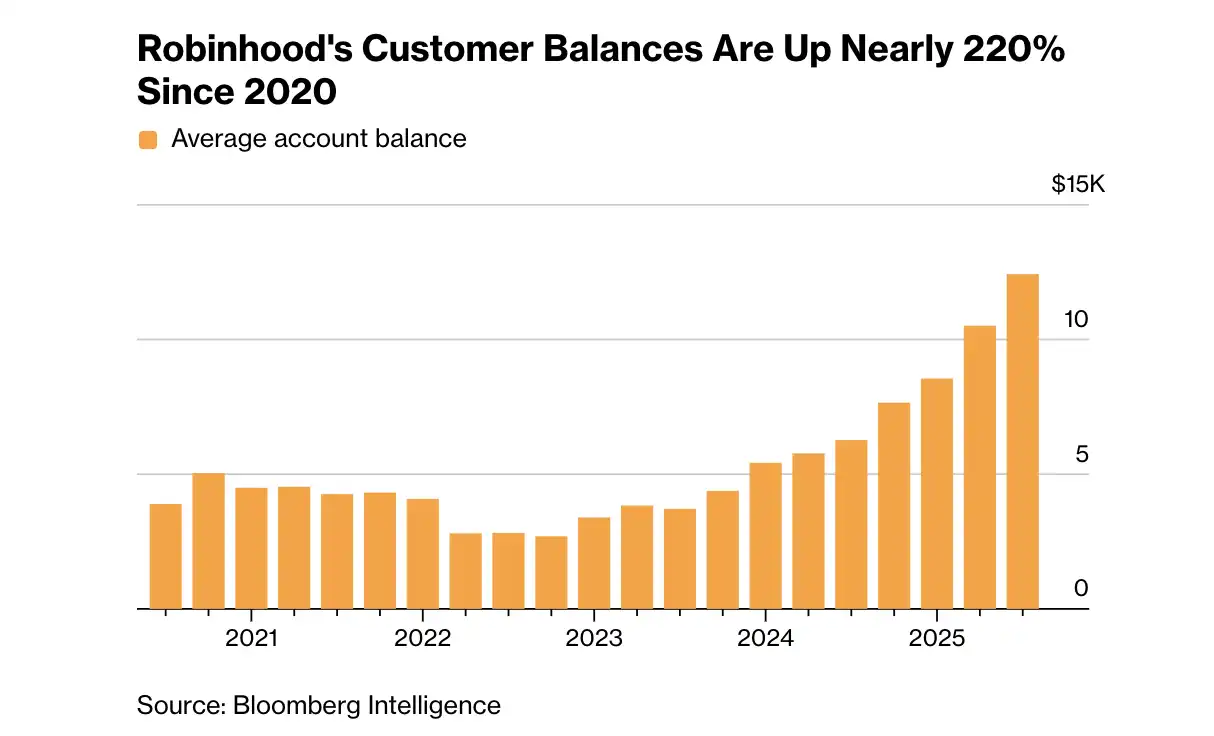
Public stated that its invite-only concierge service for users with assets over $500,000 or high trading activity continues to grow. eToro's membership club program offers similar high-end perks, with membership surpassing 720,000 by the end of last year, up from 579,000 a year earlier.

The evolution of these brokerage apps' products reflects both how former startups are catching up with their maturing users and the K-shaped divergence forming in many developed economies: those with limited funds get basic services, while those holding substantial assets, even if their wealth started with meme stocks, are fiercely competed for by financial institutions and enjoy various preferential treatments.

Public.com hosted a small dinner in New York in 2025, inviting members and content creators to discuss product updates and upcoming launches

'The core of our strategy is to ensure that users who build wealth on the platform don't leave,' said Deepak Rao, Vice President and General Manager of Robinhood Money. These companies don't want the clients they've painstakingly nurtured to流失 to large Wall Street wealth management institutions like Goldman Sachs, JPMorgan Chase, or Citigroup.

Abigail Sussman, a professor of marketing at the University of Chicago Booth School of Business, said this transformation is difficult, especially as brokerage apps pivot to a premium positioning that contradicts their initial brand image of 'democratizing finance.'

'It's much easier for a brand to go from high-end to mass market,' Sussman said. While a high-end fashion brand moving downmarket might dilute the brand, it already has established prestige; it's much harder for a fast-fashion retailer to move upmarket. 'Going the other way, building that high-end image and status is much more difficult.'

Nevertheless, these platforms are pushing forward with full force.

The invitation to Robinhood's launch event for its platinum card and other premium services read: 'Experience our new offerings from a first-class perspective, empowering every generation to achieve their financial goals.' The event was held at the TWA Hotel at New York's JFK Airport, unveiling a credit card with a $695 annual fee made of 99.9% pure platinum, as well as custodial and trust accounts for children.

Robinhood CEO Vlad Tenev launched the Robinhood Platinum Credit Card in New York in March

London-based fintech Revolut is aggressively moving into private banking and plans to launch more products targeting high-balance users. The company is also hiring multilingual private bankers to serve high-net-worth individuals, cross-sell products, and provide financial advice.

Public's COO, Stephen Sikes, said better data, content, and AI tools are making people more comfortable managing tens of millions of dollars on their own. The company has hired concierge specialists to communicate with high-value clients, build relationships, and optimize their experience.

Meanwhile, eToro CEO Yoni Assia said the platform's premium membership program is due for an upgrade. Currently, Diamond members, the highest tier for those with assets over $250,000, receive access to select sporting event tickets, airport lounge access, and a Visa card that offers stock rebates on spending.

'Ultimately, I want eToro to be your family office,' Assia said.
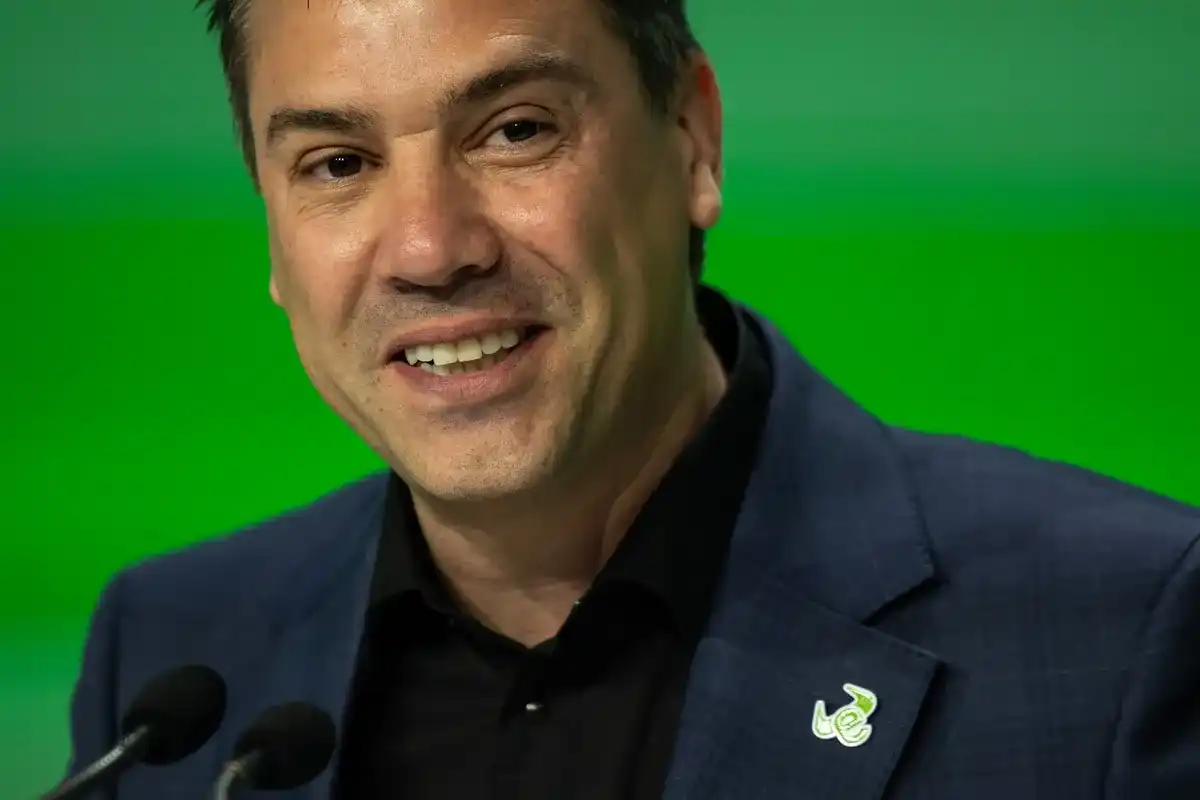
eToro CEO Yoni Assia

These emerging platforms face fierce competition from legacy Wall Street institutions that have served the wealthy for centuries. They retain generational clients through one-on-one dedicated services, access to private investments, and estate planning. At the same time, traditional banks, sitting on trillions in client assets, are also optimizing their own apps, eroding the core advantage of digital-only platforms. In this industry, great experience and marketing are far less important than trust.

And trust has been a long-standing issue for these digital brokerages. Robinhood faced major setbacks after its user base exploded during the pandemic. In 2021, the Financial Industry Regulatory Authority fined it $70 million for reasons including misleading customers and lack of internal controls, among others. Robinhood neither admitted nor denied the allegations but said it had made numerous improvements. In 2024, eToro agreed to pay $1.5 million to settle charges from the U.S. Securities and Exchange Commission that it operated as an unregistered broker-dealer and clearing agency.

The benefits of Robinhood's new platinum card are very similar to popular products from American Express and JPMorgan Chase: 5% cash back on dining, $250 in DoorDash credits annually, 10% back on hotels and rental cars, free Robinhood Gold membership, and a $250 annual credit for autonomous ride-hailing.

Ted Rossman, a senior industry analyst at Bankrate who focuses on credit cards, said this premium card doesn't surpass its competitors.

'To be honest, this card isn't as good as the Amex Platinum or the Chase Sapphire,' Rossman said. For example, the DoorDash credits have many restrictions and are far less valuable than they appear.

But Nick Ewen, Senior Editorial Director at The Points Guy, pointed out that the Robinhood card offers a different kind of value: 'Other points don't appreciate, but Robinhood's design is for you to invest long-term for growth.'

This is also why 32-year-old Polish investor John Ostrowski sticks with his eToro card. He opts for a 4% rebate in Mercedes-Benz stock, values its dividends, and says the card brings a new sense of identity.

'It's a social talking point,' he said. 'My dad uses an Amex, I use an eToro card.'

An eToro members-only event held in Dubai

However, even with the high-end光环, novelty isn't enough for some users. Some services intended to increase loyalty have backfired.

'They assigned me a CPA to help with taxes,' said 42-year-old Jason Sabshon from New York, who qualifies for Robinhood's concierge service. The platform's logic is that proper tax planning can enhance investment returns, and handling taxes within the investment process can reduce the burden at tax time. But Sabshon wasn't convinced: 'They said the person was from a company I'd never heard of. I wasn't very comfortable with that.'

Kai Schukowski, a 39-year-old man from Dubai, has accounts with multiple brokerages but says none treat their top clients as well as eToro. A few months ago, he was invited to a high-end event hosted by the platform at the Belcanto restaurant atop the Dubai Opera House, gathering top traders and executives, with an露天 reception offering views of the world's tallest building, the Burj Khalifa.

What impressed him was that the event was upscale and stylish, and there were genuinely wealthy people present. He said, 'They weren't just influencers or people trying to get famous; they were real, wealthy people.'


Related Questions

QWhat is the original brand image of trading apps like Robinhood, eToro, Revolut, and Public.com, and how is it changing?

ATheir original brand image was built on being anti-Wall Street, offering commission-free trading, fractional shares, and meme stocks to democratize finance for retail investors, often associated with young people trading from their parents' basements. This image is now shifting towards elitism as they introduce premium services like airport lounges, exclusive events, high-end credit cards, and wealth management tools to cater to wealthier clients.

QWhat specific premium services are these trading platforms offering to their high-value users?

AThey offer services such as airport lounge access, exclusive dinners, F1 racing event tickets, high-end credit cards (e.g., Robinhood's $695 annual fee platinum card), elite concierge services for users with over $1 million in assets, tax planning, wealth management, and trust accounts.

QHow has the user demographic of Robinhood changed over the past five years, and what does this indicate?

ARobinhood's median user age has increased from 31 to 36 over the past five years, and the platform now has over 300,000 clients with assets exceeding $100,000, a growth of more than 250% since 2022. This indicates that their user base is aging and accumulating more wealth, driving the platform's shift towards serving affluent customers.

QWhat challenges do these platforms face in transitioning from a 'democratizing finance' image to a premium service model?

AThe transition is challenging because building a high-end brand image and status is much harder than moving from premium to mass market. Their original anti-elitist, democratic brand identity conflicts with their new elite-focused services, making it difficult to establish trust and credibility as a premium provider compared to traditional Wall Street institutions.

QHow do traditional Wall Street institutions compete with these emerging trading platforms, and what advantages do they hold?

ATraditional institutions like Goldman Sachs, JPMorgan, and Citigroup compete by offering personalized one-on-one services, access to private investments, estate planning, and multi-generational client relationships. They hold advantages in long-established trust, extensive experience serving wealthy clients, and improving their own digital apps to rival the core strengths of digital-only platforms.

Related Reads

Will the Next Crypto Bull Run Start with On-Chain Trading of SpaceX?

This article presents a scenario-based forecast for the crypto industry from 2026 to 2029, arguing that the next major cycle will be driven not by technological narratives but by legal access to real-world assets. The author predicts that by mid-2026, pre-IPO perpetual contracts for top private companies like SpaceX, OpenAI, and Anthropic on platforms like Hyperliquid will become the primary gateway for accessing quality assets, as most crypto-native tokens fail to capture real value. The much-hyped AI x Crypto intersection largely fails except for prediction markets, which thrive on betting on AI model supremacy. By 2027, public blockchain foundations are forced to choose between catering to retail speculation or building compliant infrastructure for institutions, with many opting for the latter. Growth in stablecoins and tokenized private credit/equity hits a "triple ceiling" due to regulatory and political uncertainty rather than market demand. The pivotal shift is forecast for 2028. A major liquidation event in pre-IPO perpetuals exposes the structural flaw of synthetic markets lacking a real underlying asset anchor. In response, regulatory changes finally allow the public solicitation of private securities resales to verified accredited investors. This creates a legitimate secondary market for real company equity, which then becomes the core asset class of the new bull market, relegating synthetic perps to a niche role. By 2029, the industry becomes "boring" but foundational. Tokens without claims on real cash flows or assets cease trading. Stablecoin growth is steady but politically capped. Crypto infrastructure fades from view as it gets absorbed into traditional finance backends. The article's central thesis is that the key bottleneck for crypto's next phase is legal and regulatory channels for real asset ownership, not technology.

marsbit1h ago

Will the Next Crypto Bull Run Start with On-Chain Trading of SpaceX?

marsbit1h ago

The Value Distribution of Stablecoins

**Summary: The Value Distribution of Stablecoins** The article argues that stablecoins are evolving from mere trading tools into broader channels for dollar access. It divides the stablecoin ecosystem into four layers to analyze how value is distributed: 1. **Issuance Layer:** Mints stablecoins, holds reserve assets, and captures the spread between reserve yield and user costs (e.g., Tether, Circle). This layer currently earns the largest profit margin. 2. **Infrastructure Layer:** Connects stablecoins to the traditional financial system, handling fiat on/off-ramps, banking integration, compliance (KYC/AML), and asset management (e.g., Bridge, BVNK). This is the "unglamorous" but critical work, building the essential bridges between crypto and real-world finance. 3. **Acquiring/Distribution Layer:** Integrates stablecoins into merchant systems, manages payment flows, and provides enterprise financial software (e.g., Stripe, Coinbase). They act as the access point for businesses. 4. **Application Layer:** The end-users and businesses that ultimately use stablecoins for payments, settlements, or as a store of value. They benefit from convenience but have little pricing power. The core thesis is that while the issuance layer currently dominates profits, the often-overlooked **infrastructure layer holds significant long-term potential**. The real challenge and barrier to mass adoption is not the on-chain transfer of stablecoins (which is simple), but the complex "last mile" integration into existing business workflows, banking systems, and regulatory frameworks across different countries. Companies in this layer are currently in a "land grab" phase, investing heavily to build networks, secure bank partnerships, and establish compliance pathways. While their position is currently pressured by the profitable issuers above and distribution platforms below, the article suggests that if stablecoins become a default financial rail for businesses, the infrastructure providers who have done the hard work of integration will ultimately gain strong pricing power and become entrenched, essential players.

marsbit8h ago

The Value Distribution of Stablecoins

marsbit8h ago

The Value Distribution of Stablecoins

The Value Distribution of Stablecoins The article argues that stablecoins are evolving from a mere trading tool into a broad "dollar channel." It analyzes the industry's value chain through four layers: 1. **Issuance Layer (e.g., Tether, Circle):** The top layer that mints stablecoins, holds reserve assets, and captures the thickest interest rate spread. 2. **Infrastructure Layer (e.g., Bridge, BVNK):** Connects stablecoins to the traditional financial system, handling critical but complex "dirty work" like fiat on/off-ramps, banking integration, compliance (KYC/AML), and cross-border settlement. 3. **Acquiring/Distribution Layer (e.g., Stripe, Coinbase):** Embeds stablecoins into merchant systems, manages payment flows, and integrates with enterprise software. 4. **Application Layer:** End-users and businesses that ultimately use stablecoins for payments, settlement, or storing value. The author posits that while the issuance layer currently captures the most profit, the most overlooked and potentially critical layer is infrastructure. The core challenge for stablecoin adoption isn't the on-chain transfer (which is simple), but bridging the gap between blockchain and the real-world financial system. This involves solving practical problems for businesses: fiat conversion, reconciliation, tax handling, and user onboarding. Infrastructure companies are currently in a difficult "land-grab" phase—building networks, securing banking relationships, and achieving compliance country-by-country. They face pressure from both the profitable issuance layer above and distribution platforms below. However, the author suggests this layer is building a crucial moat. Once stablecoins become a default business rail, the infrastructure players who have done the hard work of integration may gain significant, durable value and pricing power.

链捕手8h ago

The Value Distribution of Stablecoins

链捕手8h ago

Trading

Spot
Futures
活动图片




