# AI-Native Related Articles

HTX News Center provides the latest articles and in-depth analysis on "AI-Native", covering market trends, project updates, tech developments, and regulatory policies in the crypto industry.

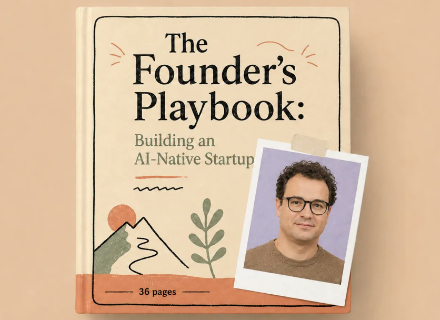
Anthropic Major Release: "The Founder's Playbook" - All 4 Stages of Entrepreneurship, Completely Reimagined with AI

**Anthropic Releases "The Founder's Playbook," Reimagining the Four Stages of Startups with AI** The logic of entrepreneurship is being fundamentally reshaped by AI. Anthropic's new handbook, "The Founder's Playbook: Building an AI-Native Startup," defines the AI-native startup as a new species: not a traditional company with AI tools, but a venture driven by AI from day one. The founder's role is transforming from a hands-on builder to a conductor or architect, orchestrating AI agents for execution while focusing on high-level judgment and strategy. Anthropic outlines a product matrix of Claude tools for different tasks: Claude Chat for interactive research, Claude Code for generating production-ready code, and Claude Cowork for automating knowledge-intensive workflows. The handbook structures the startup lifecycle into four stages, detailing core goals, pitfalls, and AI applications for each: 1. **Idea Stage**: Focuses on validating a real problem. The core challenge is avoiding confirmation bias. AI practices include using Claude as a "structured devil's advocate" to challenge assumptions and for automated market/competitor research. 2. **MVP Stage**: Aims to gather early signals of Product-Market Fit (PMF). Key risks are technical debt and scope creep due to rapid AI-assisted development. Recommended AI uses include maintaining project memory documents (e.g., CLAUDE.md), using Claude Code for structured coding, and automating user feedback analysis. 3. **Launch Stage**: Centers on establishing scalable growth, operations, and compliance. Challenges include accelerating technical debt and founders becoming bottlenecks. AI should be used to build an "operating system" for launch—automating routine tasks (scheduling, reporting, content) and code audits—freeing founders for critical decisions. 4. **Scale Stage**: Focuses on achieving sustainable business operations. The main challenge is delegating operational control. AI should be leveraged for differentiated marketing, operational optimization, and building competitive moats through data network effects. The handbook concludes that in the AI era, "Can we build it?" is no longer the primary constraint. The advantage shifts back to foundational strengths: **insight, judgment, and a deep understanding of a specific problem and audience.**

marsbit05/22 13:58

Anthropic Major Release: "The Founder's Playbook" - All 4 Stages of Entrepreneurship, Completely Reimagined with AI

marsbit05/22 13:58

YC Partner: How to Build a Self-Evolving AI-Native Company

YC Partner Tom Blomfield argues that the future lies in building AI-native companies designed as self-evolving systems, not just applying AI to traditional, hierarchical "Roman legion" structures. The core idea is to extract and codify all organizational knowledge—scattered across emails, Slack, documents, and human minds—into a central, AI-readable "company brain." This enables the creation of recursive AI loops that sense changes (from emails, support tickets, data), make decisions, execute via tools, and learn from feedback, all with minimal human intervention. YC exemplifies this with an agent that monitors failed queries, autonomously diagnoses the issue (e.g., needing a new database or index), writes code, submits it for review, and deploys fixes—optimizing the company while founders sleep. This shift redefines organizational structure: the bottleneck becomes token usage and context quality, not headcount. Middle management for coordination is largely obsolete. The critical human roles are individual contributors (ICs) and those handling high-risk, real-world judgments at the system's edge. Key steps include recording all organizational activity for AI, creating self-improving artifacts (like an AI-generated, living handbook), and treating internal software as temporary and disposable, while preserving valuable business context and data. The fundamental question for founders is whether to build their company as this new type of intelligent, self-optimizing system from the start.

marsbit05/20 06:36

YC Partner: How to Build a Self-Evolving AI-Native Company

marsbit05/20 06:36

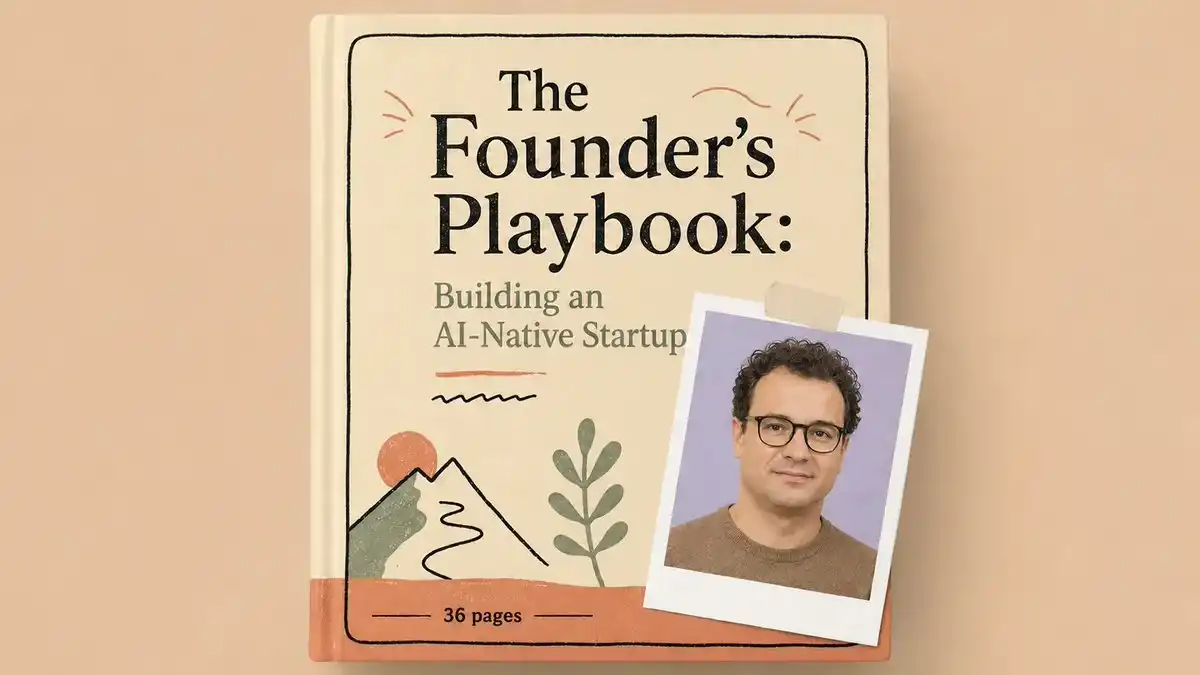
Anthropic Founder's Handbook: How to Build an AI-Native Company!

Anthropic has released "The Founder's Playbook: How to Build an AI Native Company," a guide that reimagines the startup lifecycle (Ideation, MVP, Launch, Scale) for 2026-era AI capabilities. The core thesis is that AI is fundamentally changing how ideas become reality, shifting the founder's role from an individual contributor to an orchestrator of AI agents. This lowers execution barriers, allowing domain experts (e.g., in medicine, law, education) to build products without deep technical skills, as AI can handle prototyping, coding, research, and operations. However, the playbook warns that easier prototyping increases the risk of building products no one needs, emphasizing that validation, not just building, is critical. It highlights that AI enables small teams to possess capabilities once reserved for large organizations, compressing functions like development, marketing, and support. This challenges traditional competitive advantages based on organizational size. For AI-native companies, sustainable moats will not come from the AI model alone but from deep domain knowledge, user data flywheels (behavioral fingerprints from real usage), and workflow lock-in that makes switching costly. Ultimately, the guide signals a shift in focus from raw model capability to how AI fundamentally reshapes company structure, processes, and competitive strategy. An AI-native company is defined not by using AI tools but by embedding AI into its core operational DNA from inception.

marsbit05/19 03:54
Anthropic Founder's Handbook: How to Build an AI-Native Company!

marsbit05/19 03:54

YC Partner Reveals: Building an AI-Native Company from Scratch

"YC Partner Reveals: Building an AI-Native Company from Scratch" YC partner Diana Hu argues that true AI-native companies operate 1000x faster than incumbents, not by using AI for mere efficiency, but by making it the company's core operating system. This requires a fundamental shift: companies must become "queryable" to AI, with all workflows and communications generating data for AI to learn from, creating a "closed-loop" system for continuous optimization. For example, an AI agent with access to tickets, code, meetings, and customer feedback can analyze past performance and autonomously plan future engineering cycles, dramatically increasing output. In product development, the new paradigm is the "AI software factory": humans write specifications and tests, while AI agents generate the code. This transparent, data-driven model renders traditional middle management obsolete. Future AI-native companies will consist of three roles: Independent Contributors (who build/operate with AI), Directly Responsible Individuals (who own outcomes), and the AI Founder who leads by example. The critical shift is maximizing token usage over headcount. A small, AI-augmented team can outperform large traditional teams. Startups have a key advantage: they can design their entire culture and systems around AI from day one, unburdened by legacy processes. The core takeaway: Founders must personally experience AI's transformative power. The future belongs to those who embed AI into their company's DNA from the start.

marsbit05/15 01:12

YC Partner Reveals: Building an AI-Native Company from Scratch

marsbit05/15 01:12

Three Years Later: How Has AI Evolved from a 'Chat Tool'?

Three years ago, AI was primarily seen as a novel tool for chatting, image generation, and entertainment—products like ChatGPT, Midjourney, and Character.AI were used more for demonstration than daily reliance. The evolution occurred in two major phases. First, AI became embedded into established applications like CapCut, Canva, and Notion, transforming from a feature into core infrastructure. Platforms diverged: ChatGPT aimed to become a super-app entry point for consumer internet use, while Claude evolved into a professional operating system for knowledge work, creating sticky platform flywheels through integration into calendars, email, and workflows. The true breakthrough emerged recently as AI shifted from generating content to executing tasks autonomously. AI agents like OpenClaw now decompose goals, retrieve information, process data, and deliver results without human intervention. Simultaneously, "Vibe Coding" tools (e.g., Cursor, Replit) enable AI to build entire software products based on human-defined objectives. This progression toward autonomous action is naturally aligning AI with Web3. Blockchain offers machine-native interfaces, programmable assets, and 24/7 operational capability, allowing AI to execute and settle transactions trustlessly without human intermediaries. Together, AI and Web3 are forming the foundational stack for the next internet—where AI acts, and Web3 enables seamless, auditable machine-to-machine coordination and commerce.

marsbit03/20 03:00

Three Years Later: How Has AI Evolved from a 'Chat Tool'?

marsbit03/20 03:00

Beyond Coding: AI is Reshaping the World in These 10 Overlooked Sectors

Author:出海去孵化器. The rules of the startup game have fundamentally changed. Y Combinator's (YC) 2026 Spring "Request for Startups" (RFS) signals a clear shift: AI-native is now the foundational logic for building the next generation of giants. This new wave is not just about generating content but about solving complex problems and reshaping the physical world. YC highlights 10 key sectors: 1. **Cursor for Product Managers:** AI-native systems to revolutionize product discovery, moving from fragmented feedback to generating full feature outlines and prototypes. 2. **AI-Native Hedge Funds:** Funds built from the ground up with AI agents performing deep analysis and making autonomous trading decisions. 3. **AI-Native Agencies:** Service companies (design, marketing, legal) using AI to deliver results with software-like margins and scalability. 4. **Stablecoin Financial Services:** Building compliant, high-yield financial services (savings, tokenized assets) on stablecoins at the intersection of DeFi and TradFi. 5. **Modern Metal Mills:** Using AI-driven production planning and management to make domestic manufacturing faster, cheaper, and more efficient. 6. **AI for Government:** Tools to help governments process digital applications and data efficiently, overcoming bureaucratic bottlenecks. 7. **AI Guidance for Physical Work:** Real-time AI assistants via smart devices to guide and train workers in skilled trades and field service. 8. **Large Spatial Models:** Developing models that understand physical space and geometry as a first principle, not just through language, to enable true AGI. 9. **Infra for Government Fraud Hunters:** AI systems to automate the detection and litigation of large-scale fraud in government spending. 10. **Make LLMs Easy to Train:** Critical infrastructure (APIs, databases, dev tools) to abstract away the immense complexity of training and managing large AI models.

marsbit02/09 12:46

Beyond Coding: AI is Reshaping the World in These 10 Overlooked Sectors

marsbit02/09 12:46

活动图片