Spicy Review|Is the "Most Emotionally Valuable" Post Here? Could STRC Be the Next LUNA?

Foresight NewsPublished on 2026-06-26Last updated on 2026-06-26

Abstract

Here is an English summary of the article (under 1500 characters): This article from the spicy commentary series "LaPing" covers three key stories in the crypto world for the week. First, during a sharp market downturn in June where BTC fell over 20%, a Reddit post on r/Cryptocurrency rallying against "Fear, Uncertainty, and Doubt (FUD)" went viral. The comment section became a hub for retail traders to share memes and encouragement, with many advocating holding (HODLing) through the volatility, embodying the "be fearful when others are greedy" mantra. Second, it examines the situation with STRG (Strategy's perpetual preferred stock), which has "de-pegged," trading around $76 vs. its $100 face value, a ~25% discount. The concern is whether Michael Saylor's company, MicroStrategy, can sustain the $1.2 billion annual dividend payment, given its ~$1.4 billion cash reserve. While analysts note STRG is fundamentally different from the catastrophic LUNA collapse—as Saylor isn't obligated to pay the dividend—risks remain. If MicroStrategy's (MSTR) common stock investors feel their capital is being prioritized for STRG dividends, it could hurt MSTR demand. Third, the article analyzes the online persona of "Chuan Mu," a trader famous for turning $500 into $1 million during the 2023 ORDI inscription boom and again with short positions in 2025. An analysis of his 1,828 tweets reveals his success stems from a top-down analytical framework, asking systemic questions like "Where will t...


Written by: Nicky, Foresight News


Welcome back to "Spicy Review," where we take you through those "inspiring, de-pegging, and insider selling" moments in the crypto world every week.


Three things happened this week: "Reddit bros cheer each other up during the bear market, Could Strategy's STRC be the next LUNA?, and a trader's 1,828 tweets get dug up."


This Month's "Most Emotionally Valuable" Post


June saw a sharp decline in the cryptocurrency market. BTC fell over 20% for the month, breaking below the key $60,000 level, with market sentiment hitting rock bottom at one point.
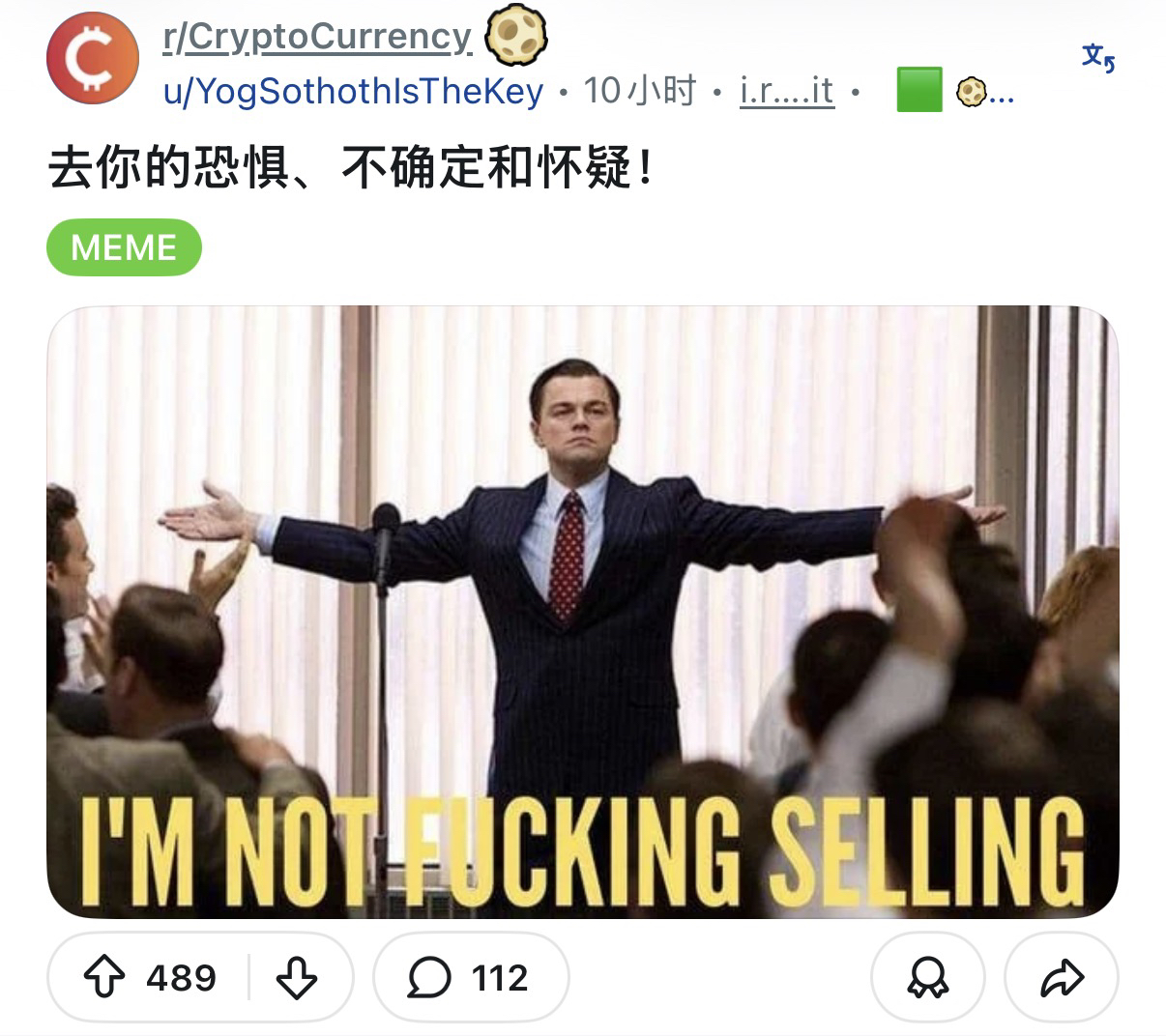


On the Reddit CryptoCurrency subreddit, someone made a post containing just one sentence:


"Screw your Fear, Uncertainty, and Doubt!"


The comment section instantly became a venting ground for retail sentiment:


"FUD is for noobs, diamond hands just keep DCAing."


Netizen's spicy comment: "This is the post with the most emotional value this month."
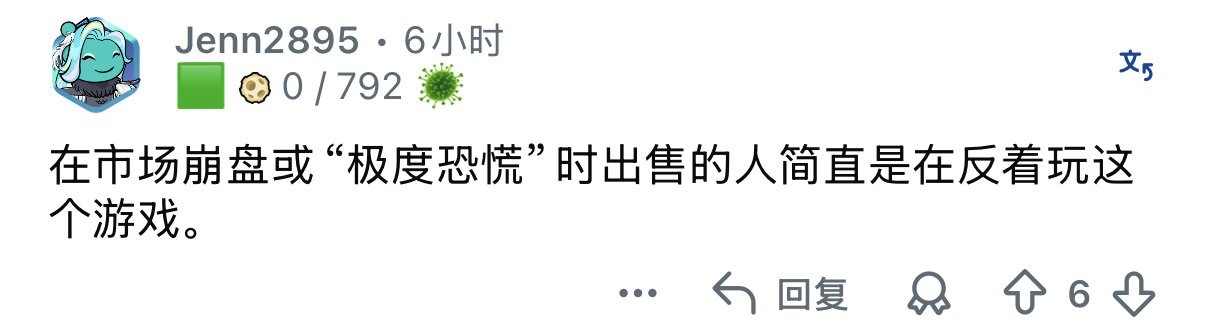


Be fearful when others are greedy, be greedy when others are fearful.



Salute to those who continue to hold 🫡.
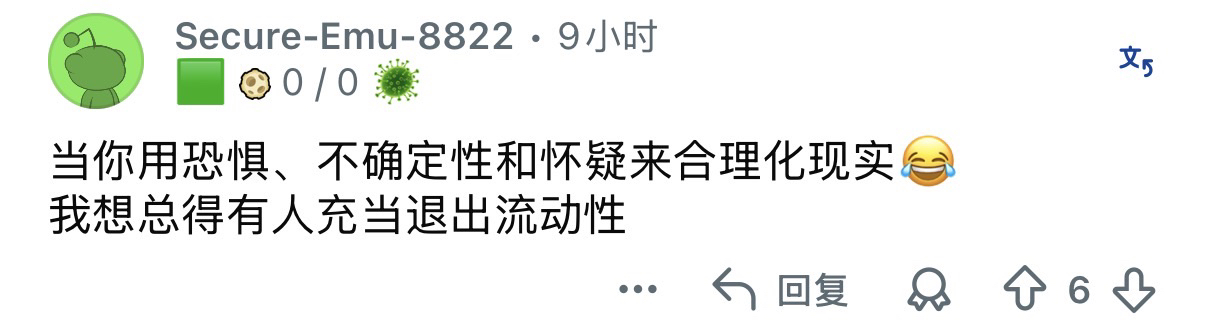


Who will provide the exit liquidity? 🤔
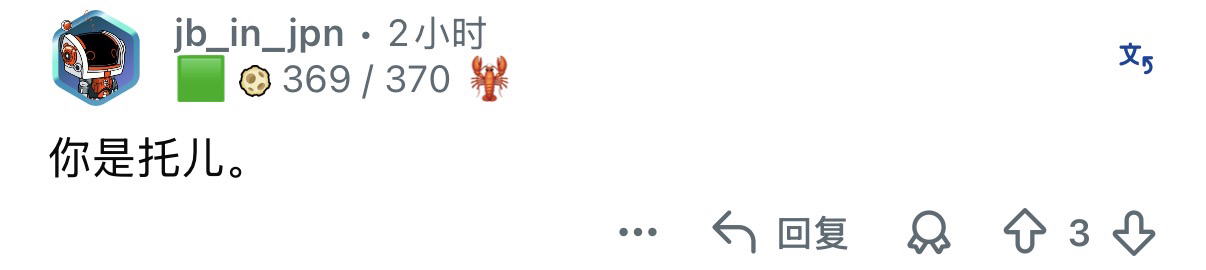


Paid actors telling everyone not to sell 🤣.
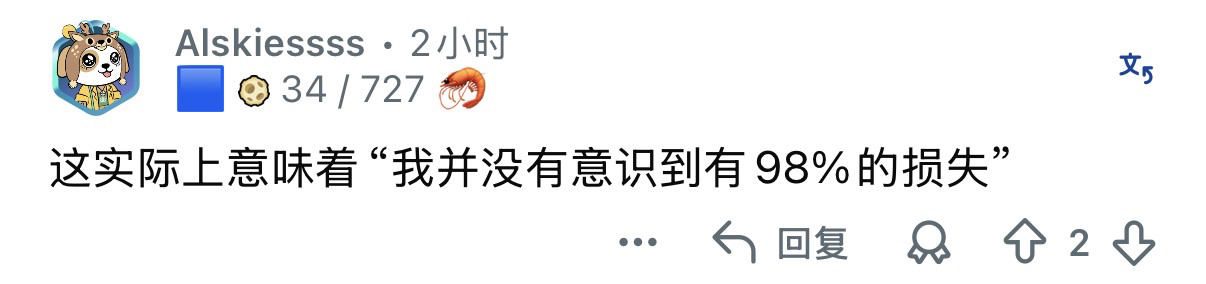


As long as you don't sell, it's just "paper losses" 🥶.
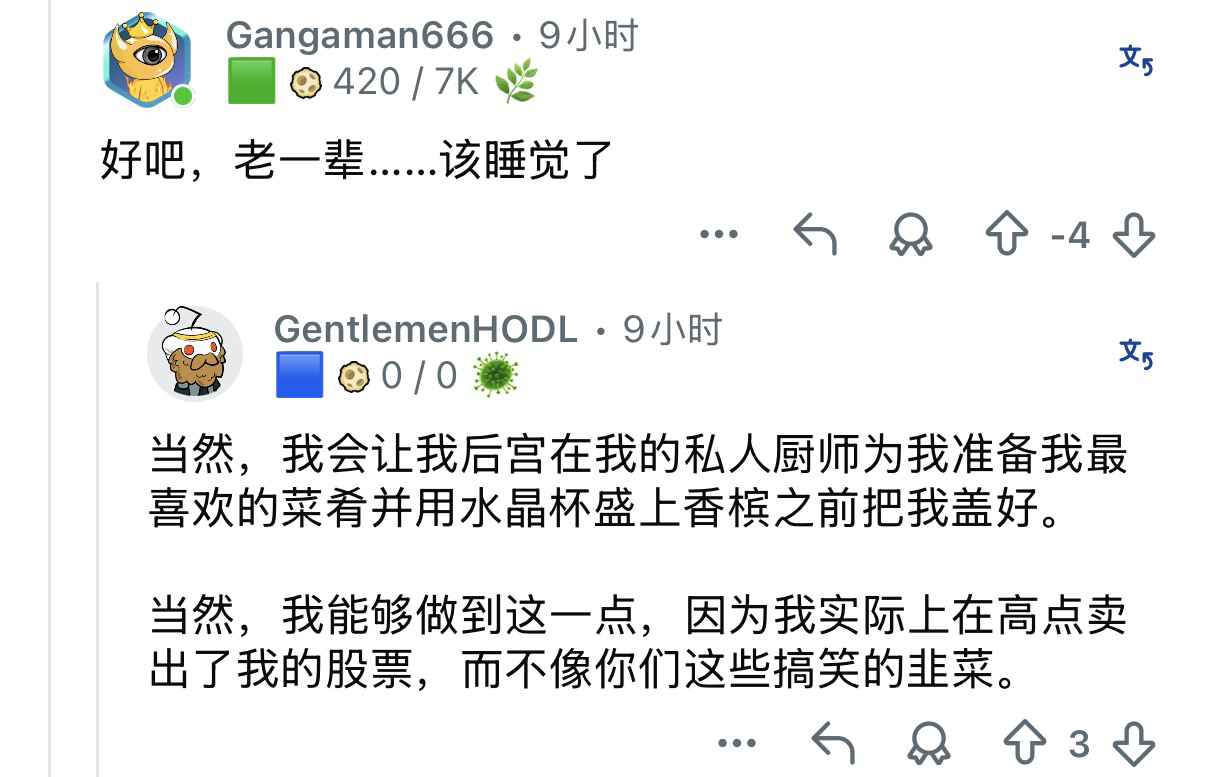


So you can live a high-end life if you sell at the top? 🤪
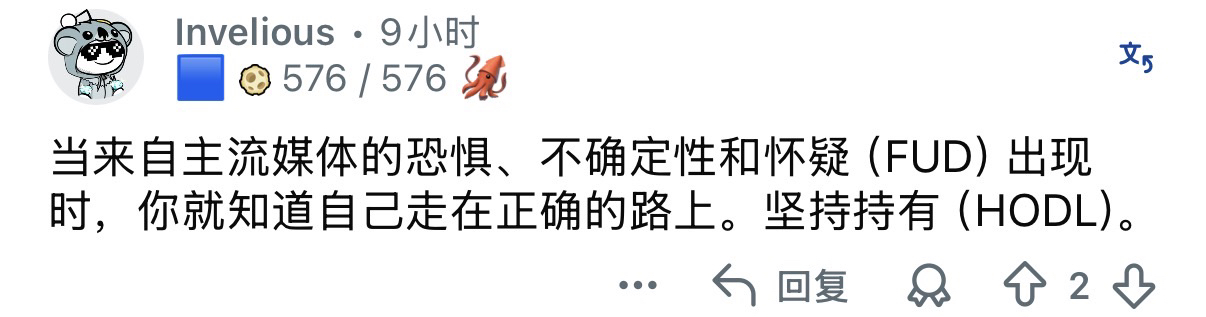


HODL tight!
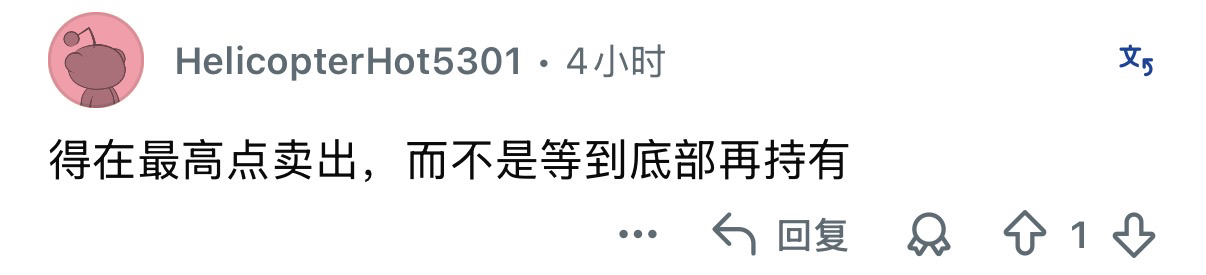


Sell high 📈, buy low 📉!
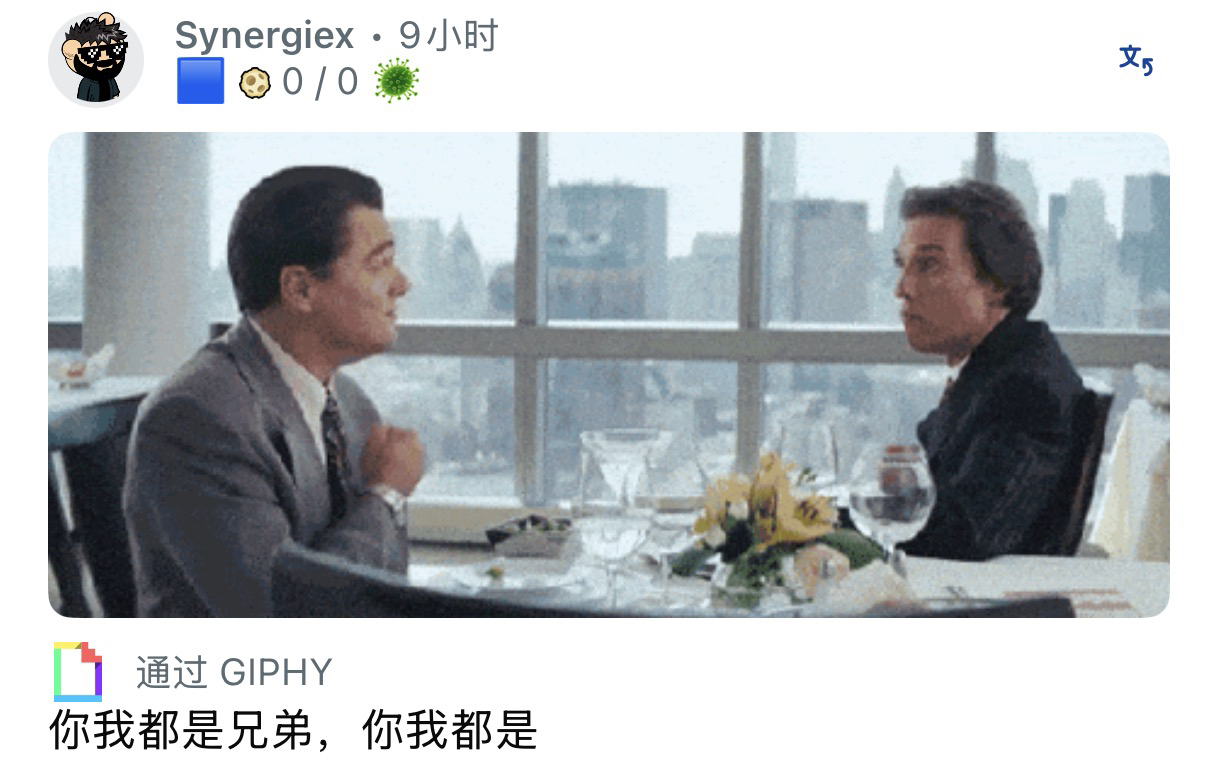


We're all in this together, bros!


STRC Depegs, Could It Be the Next LUNA?
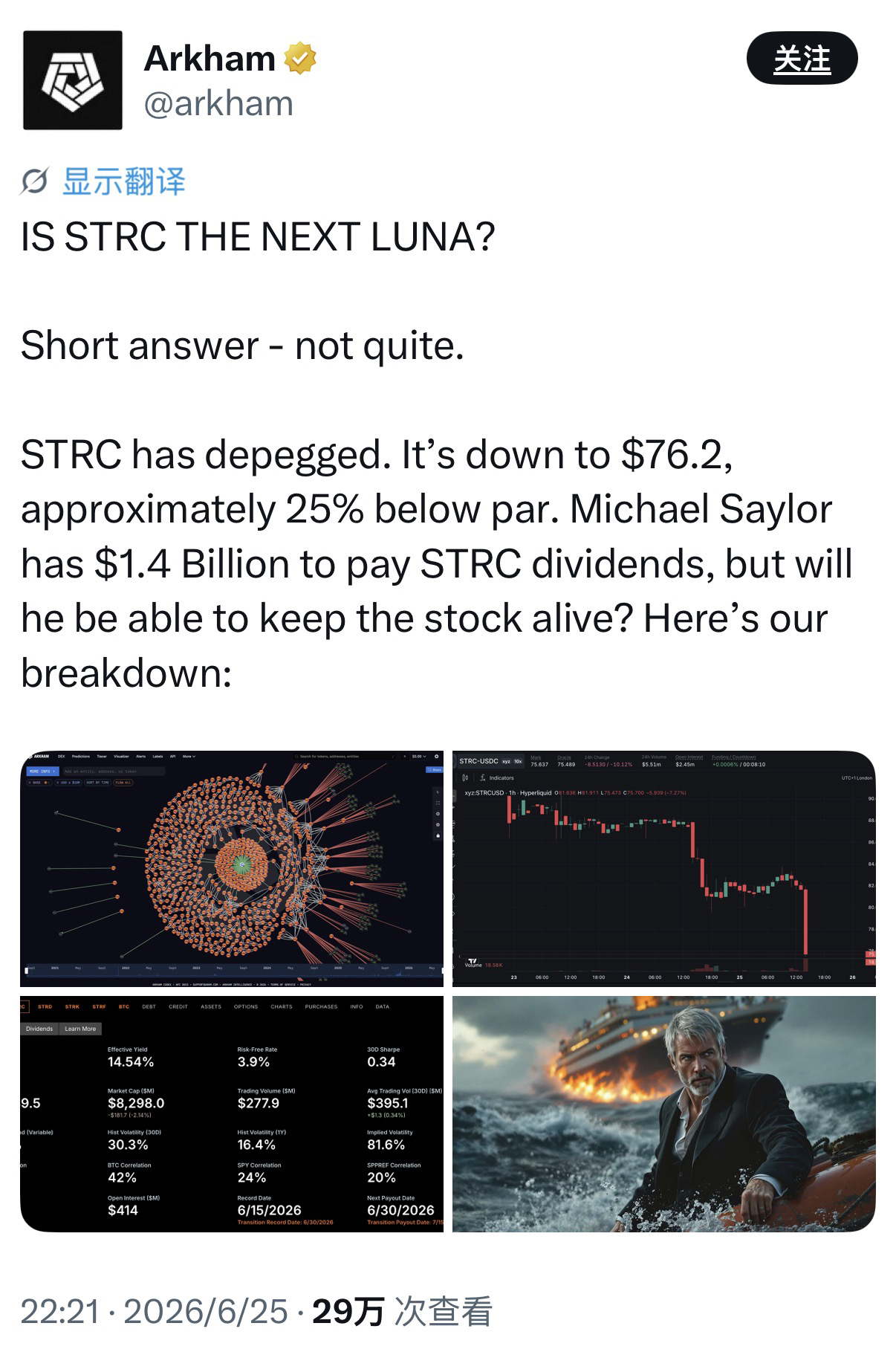


The official Arkham account posted a sensitive question on June 25: "Could STRC be the next LUNA?"


The answer: Not exactly, but there are significant issues.


First, an explanation: STRC is a perpetual preferred stock issued by Strategy, with a face value of $100 and an annual dividend of 11.5%.
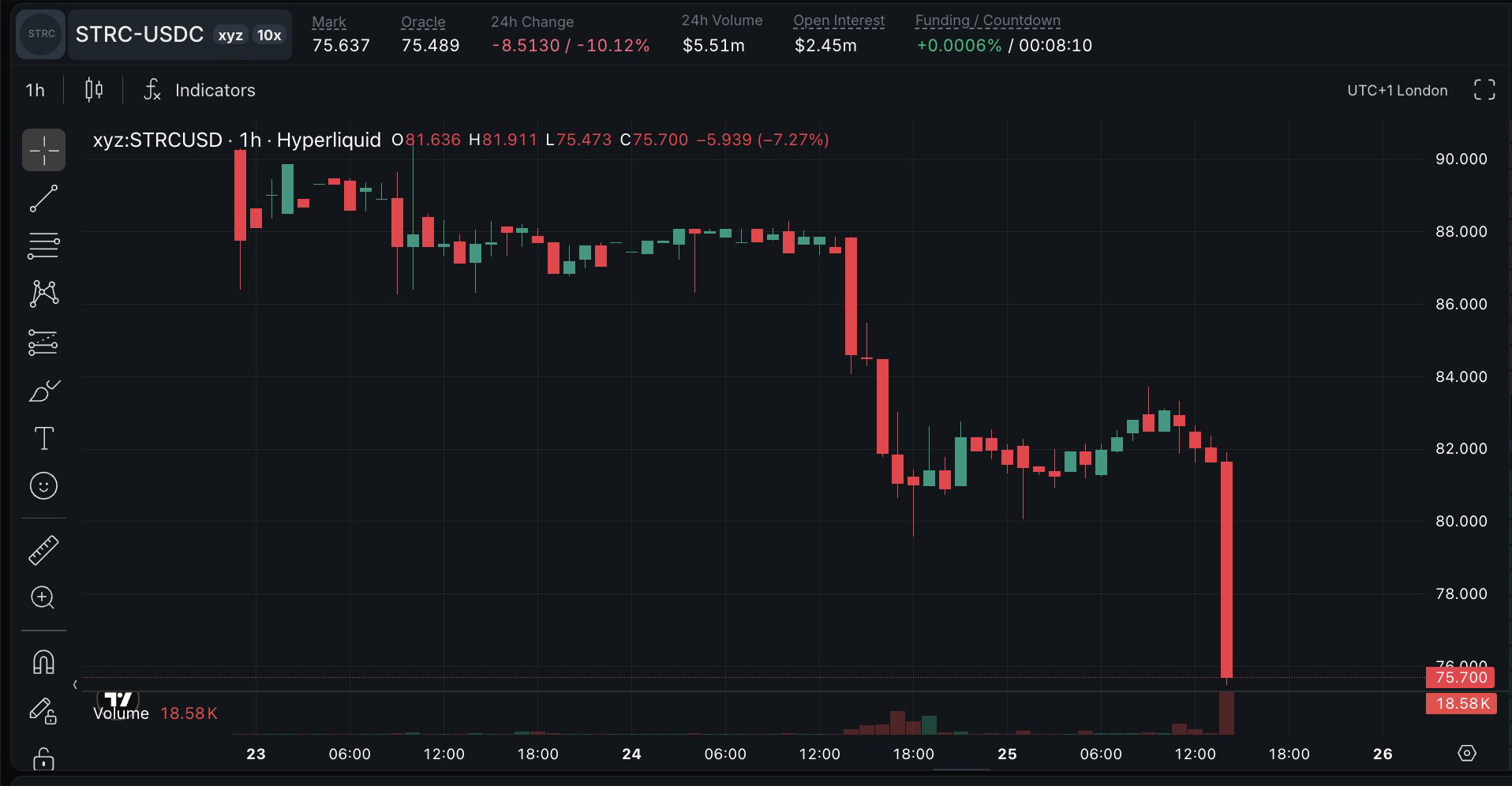


Currently, STRC has fallen to about $76.2, a discount of about 25% from its face value, meaning it has "de-pegged."


Why the drop? Because investors are starting to doubt: Is Saylor willing and able to continue paying out $1.2 billion in dividends every year?


According to data, there are about 105 million shares of STRC outstanding, requiring an annual dividend payout of about $1.2 billion. The dollar reserves Strategy announced this Monday were about $1.4 billion, enough for one year but not the second.


The key difference is that Saylor has no obligation to pay these dividends. If he decides to suspend them, STRC could keep falling, but Strategy itself wouldn't go to zero overnight like LUNA did.


However, the risk lies ahead: If MSTR (Strategy's common stock) investors realize that the money they invest is being used to prioritize paying preferred stock dividends, they might buy less MSTR.
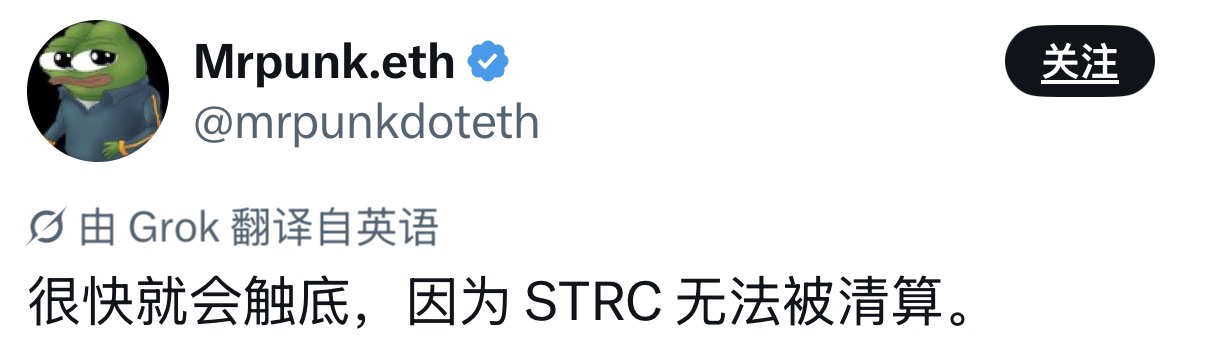


So, what is the actual "bottom" price?



The chart has already shown the "final result" 📉.
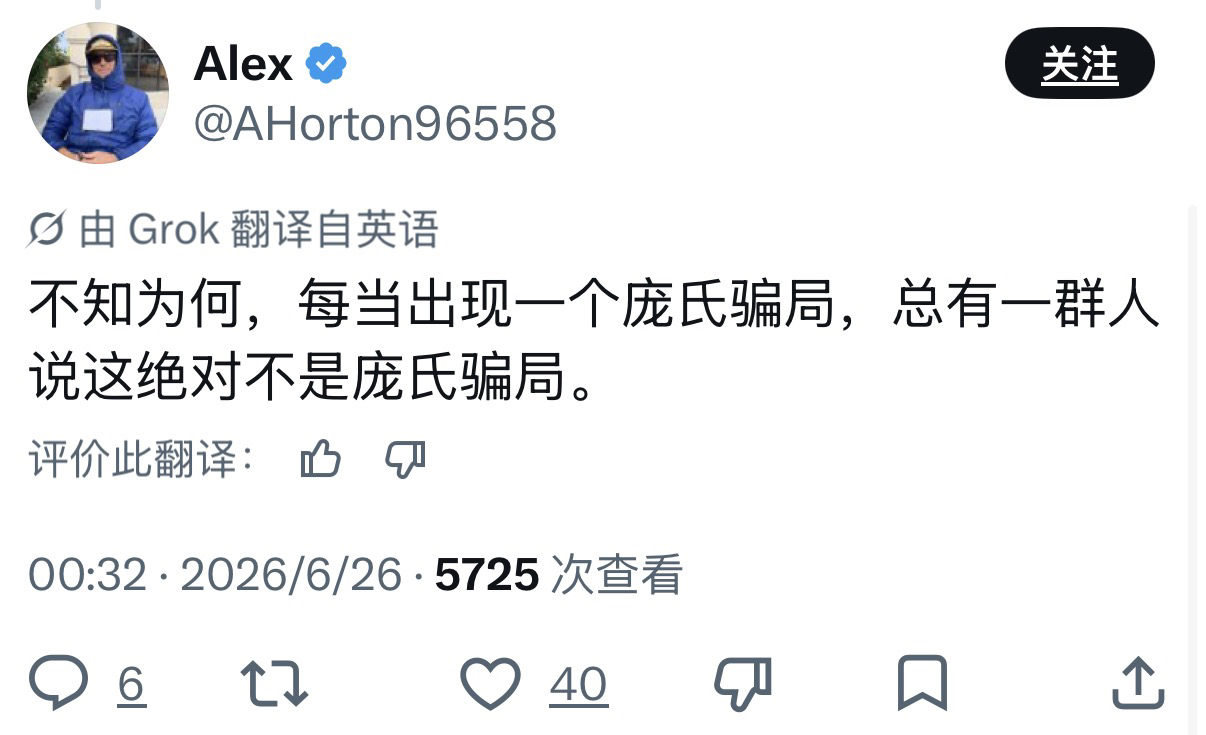


Perhaps people just don't want to admit this fact 🫢.
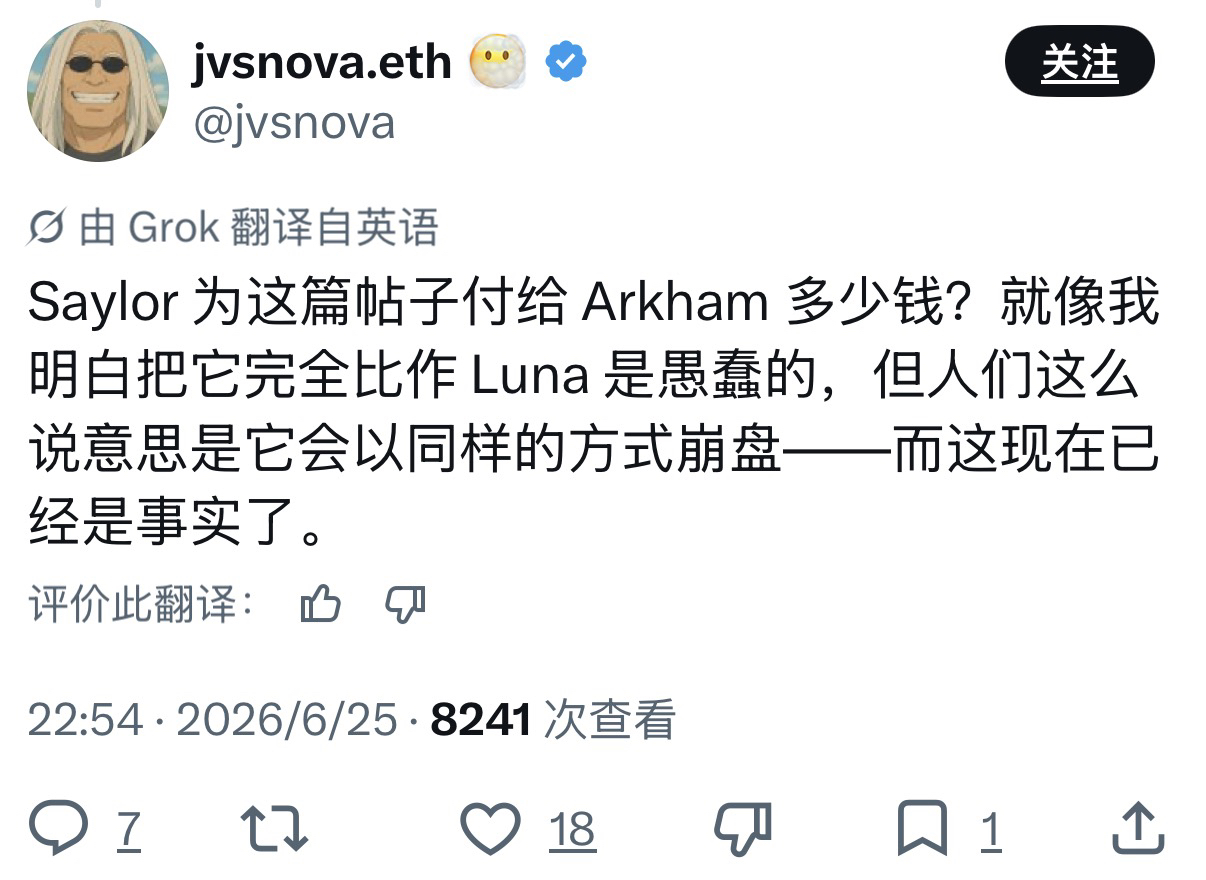


Is Saylor paying to tell everyone this isn't the same as the LUNA crash? 😜
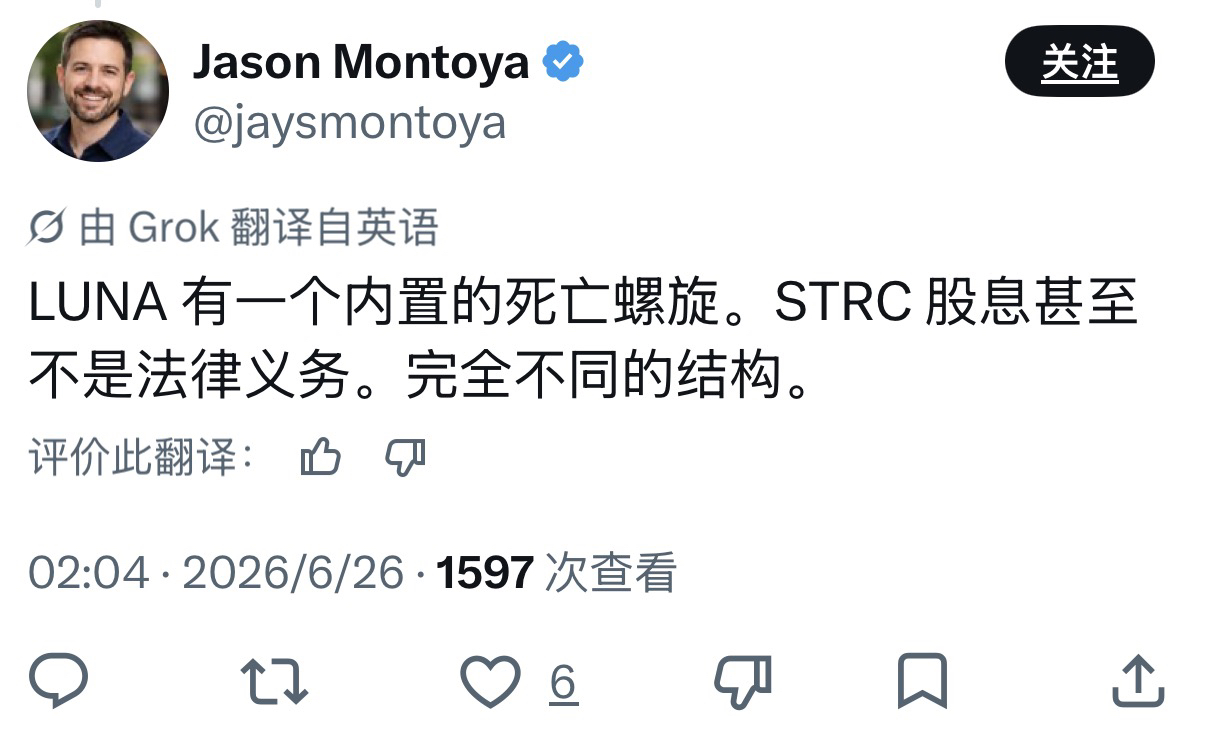


So, should we be worried? 🙂↕️
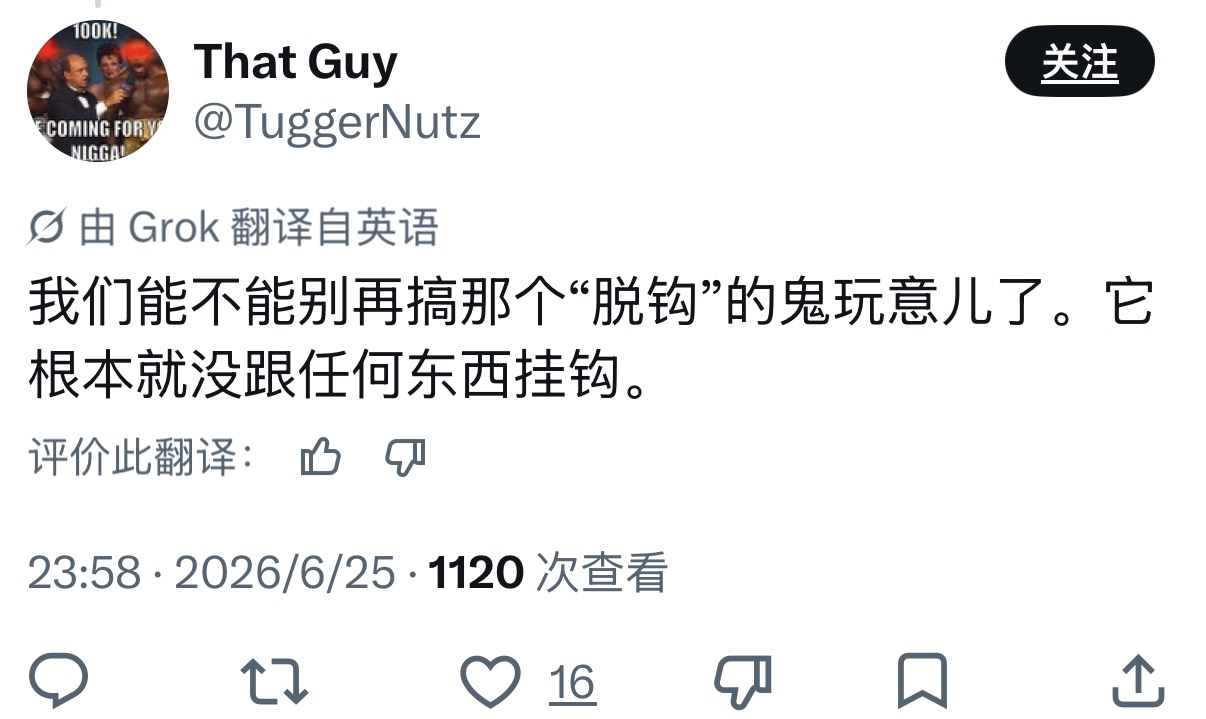


It's just the market setting the price, isn't it? 🧐
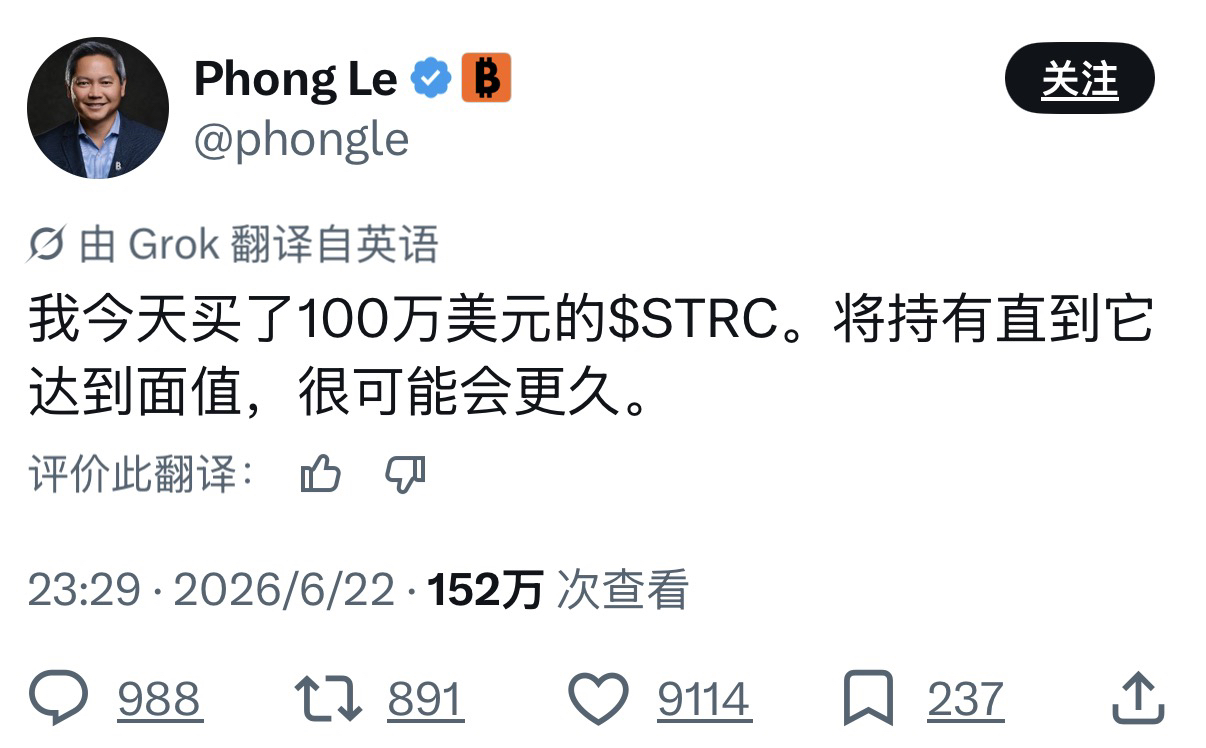


Strategy CEO Phong Le stated on June 22 that he had purchased $1 million worth of STRC.
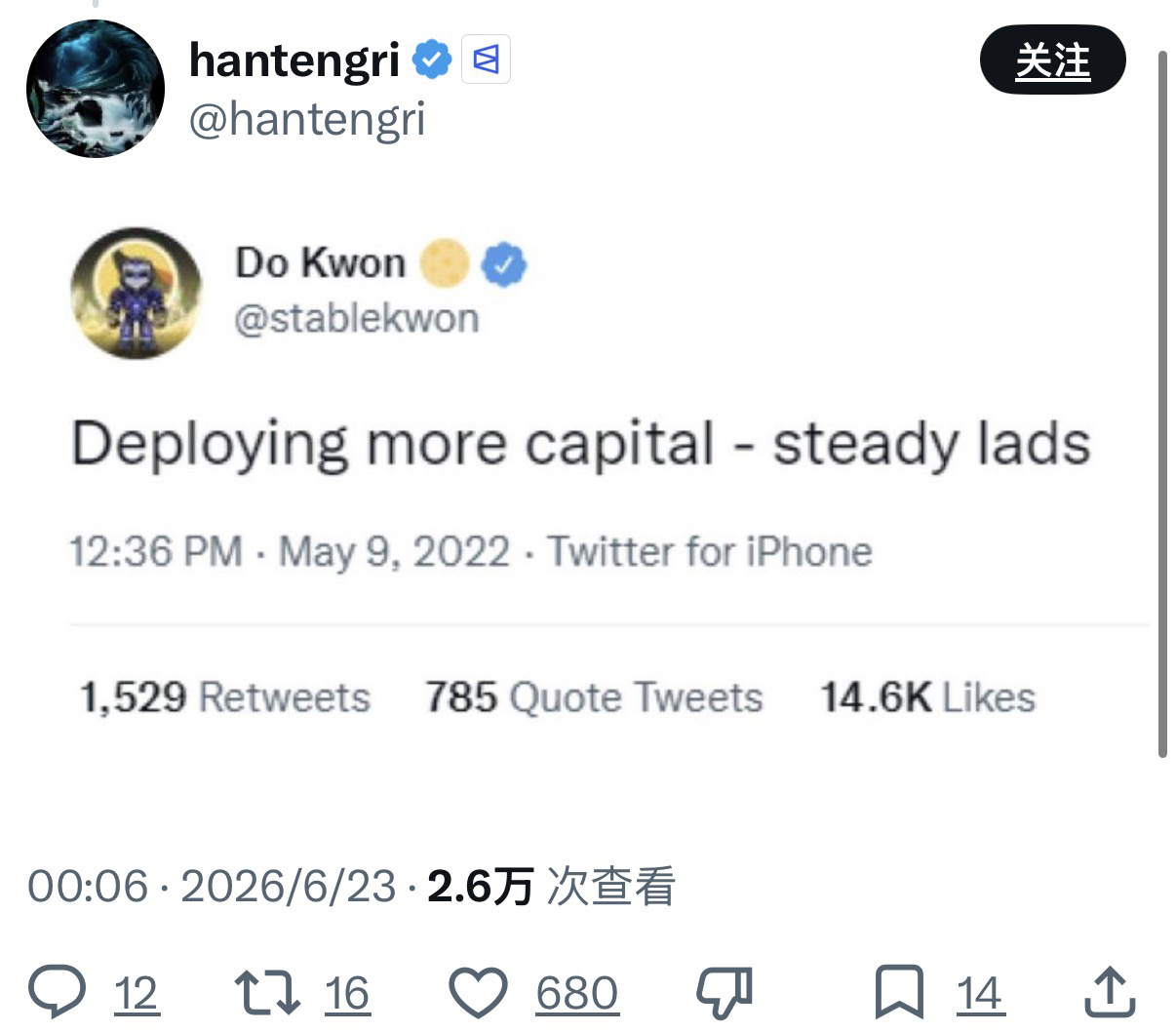


Coincidentally, "deploying more capital, stand by"—a sentiment once tweeted by Luna founder Do Kwon 😅.
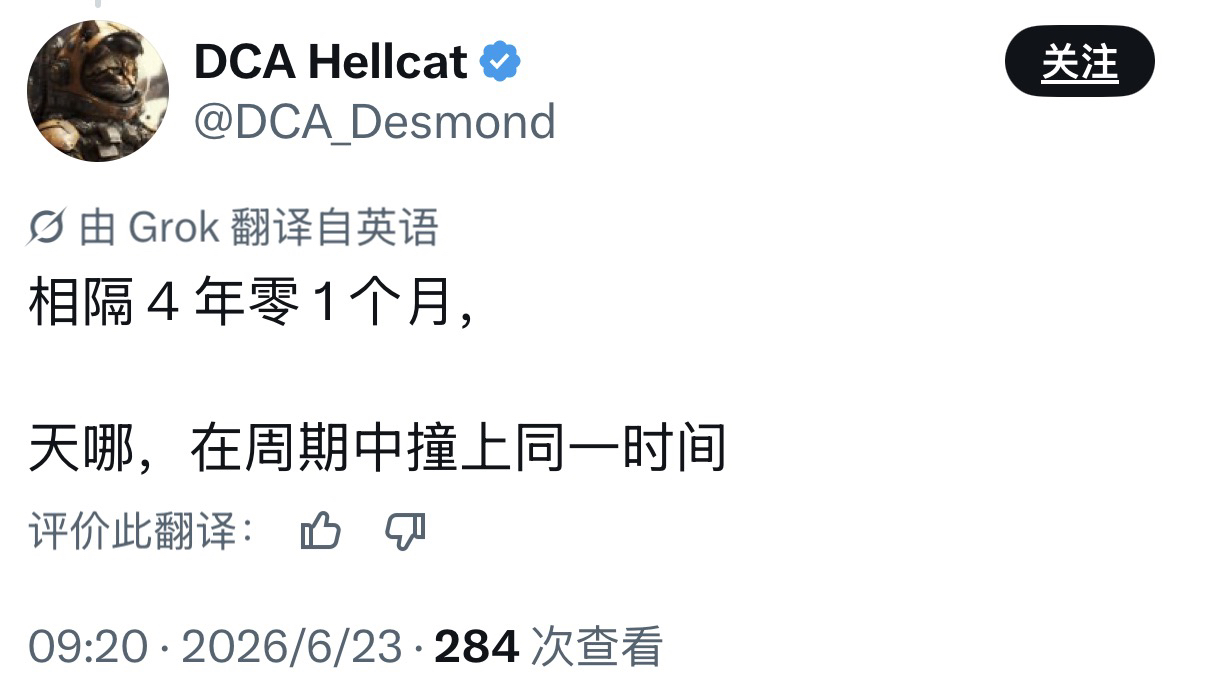


It's been exactly 4 years and 1 month since the LUNA crash. Compared to LUNA, at least STRC has a real company with cash behind it.


Chuan Mu's 1,828 Tweets Dug Up, Revealing a "Contradictory Persona"


A blogger conducted an in-depth analysis with a straightforward title: "I Dug Up 1,828 of Chuan Mu's Tweets"
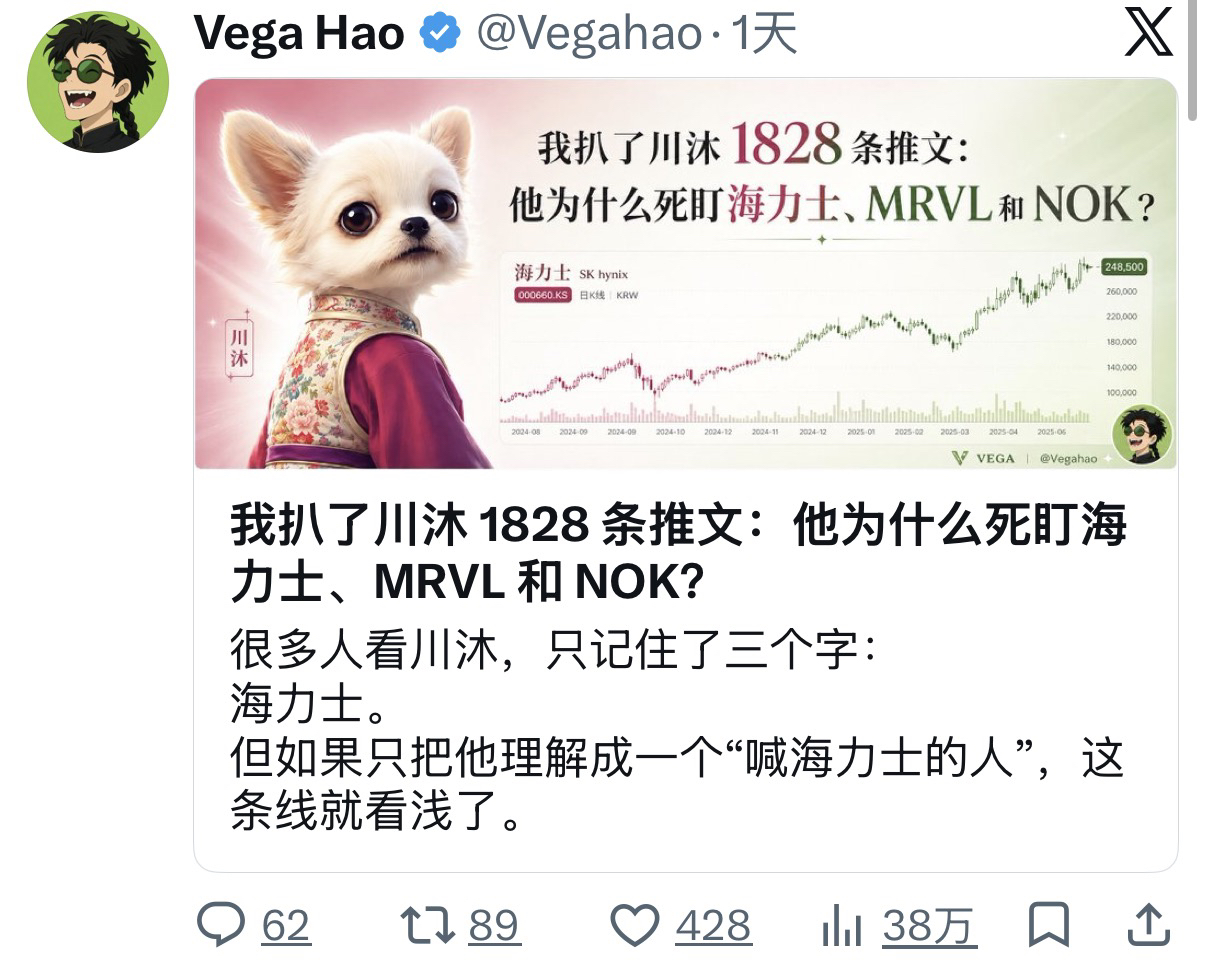


Who is Chuan Mu? During the 2023 ORDI inscription run, he turned $500 into $1 million. In the 2025 crypto crash, he shorted a basket of altcoins, turning $10,000 into $1 million in a month. After October 2025, he publicly announced exiting the Crypto market, perfectly dodging the major downturn, and pivoted to HK/US/A-shares. Hitting many bull stocks—Hynix, Samsung, MRVL, NOK—his stock account surpassed 100 million yuan.


By analyzing his tweets, the article's author found that what makes Chuan Mu truly impressive is his questioning method: In the AI wave, who are the end-users? Who are the infrastructure providers? Where are the supply chain bottlenecks? Who has the hardest time scaling production? Who is mispriced by the market? He doesn't start by asking "which stock will rise," but rather "where will the entire system get stuck?"


Following this logic, his main focus continuously shifted: In the summer of 2025, he was still on Crypto proxies in US stocks (MSTR, SBET, CRCL); by late 2025, he switched to early AI infrastructure clues (Micron, LITE); in early 2026, he heavily invested in Hynix and Samsung, the most bottlenecked parts of AI storage; by May 2026, he further expanded to "left foot storage (DRAM), right foot optical communication" (MRVL handles chip-to-chip optical interconnects, NOK handles long-distance chip-to-chip optical communication).


However, some netizens have raised doubts about Chuan Mu. Some tokens he shilled later experienced "pump and dump" scenarios. Additionally, stocks he said he would hold for a period were sold midway, but followers who bought in were kept in the dark 🥹.
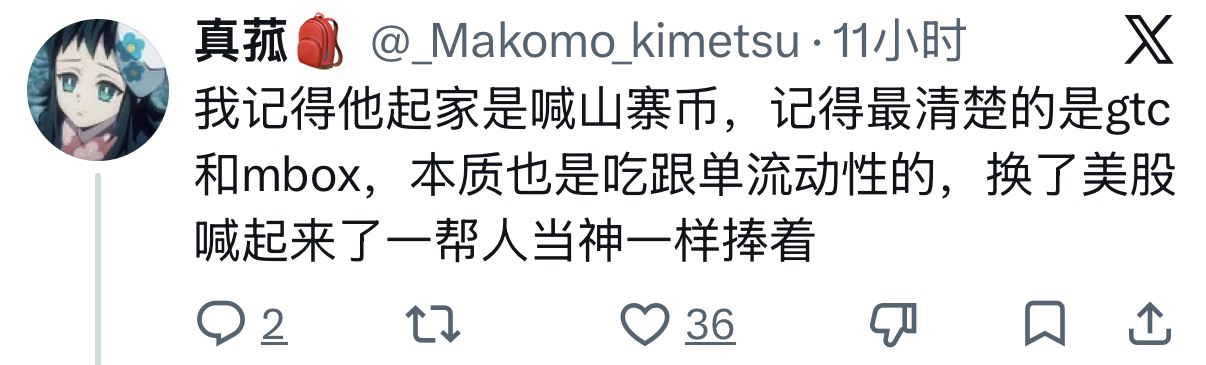


So, after success, there will always be "scholars to explain the classics for him"? 🫢
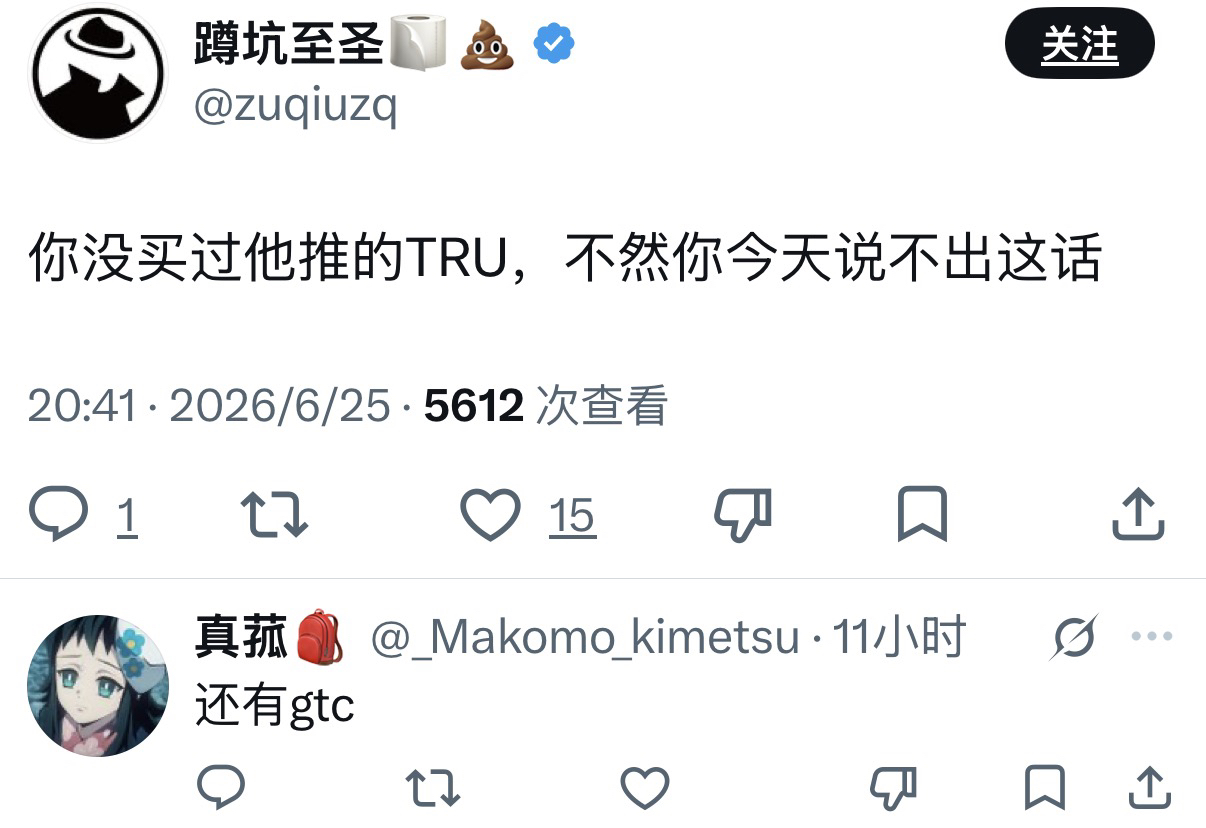


Only those who experienced it have the right to speak.
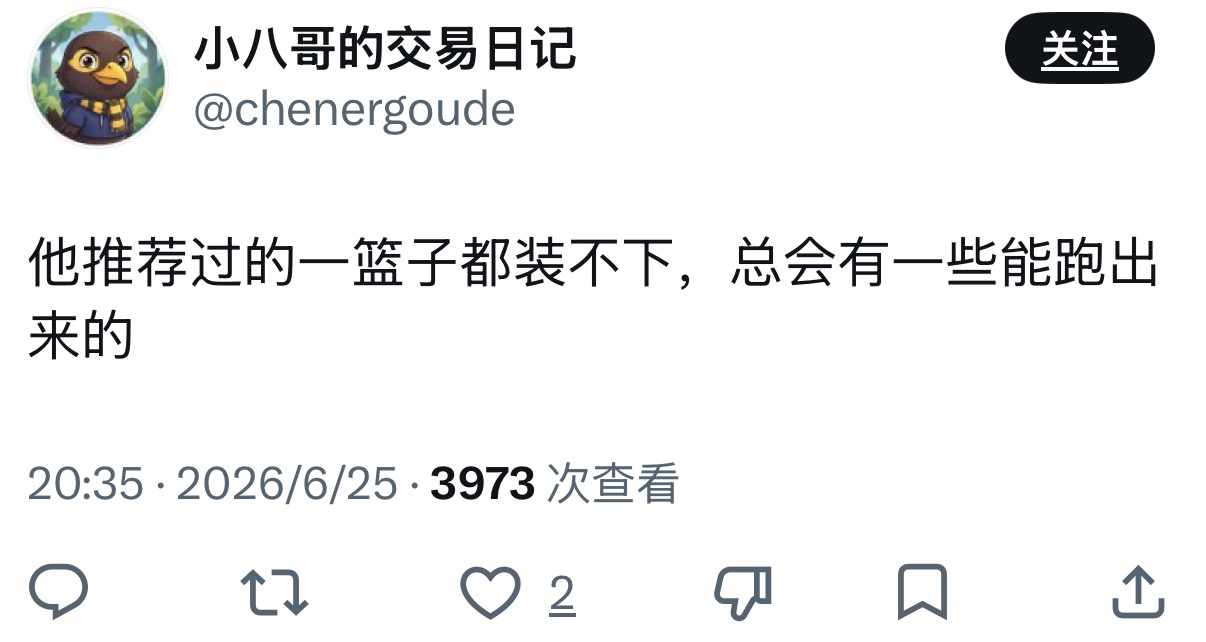


"Shilling" becomes a game of probability 🎲.
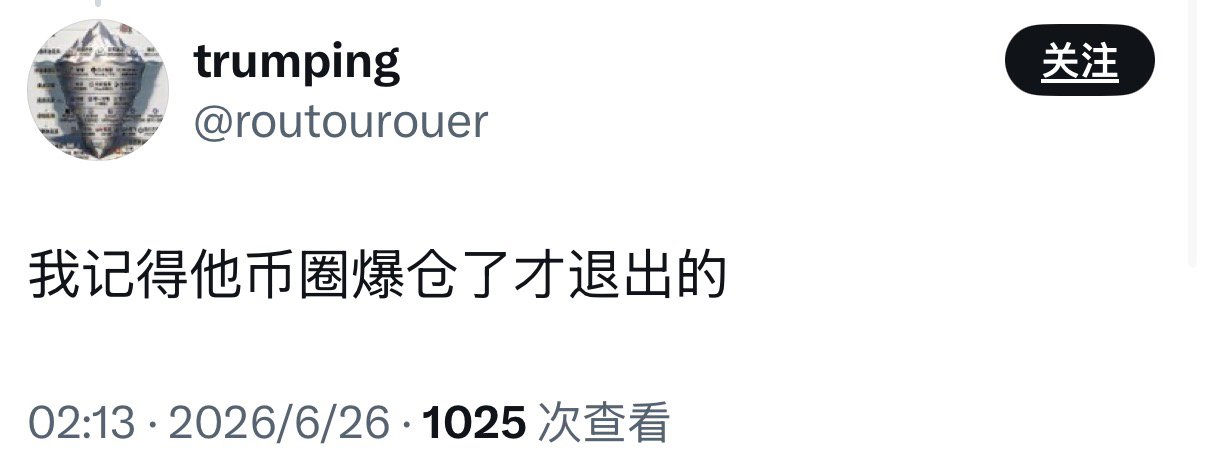


Behind it all is a story of blood and tears 😭.
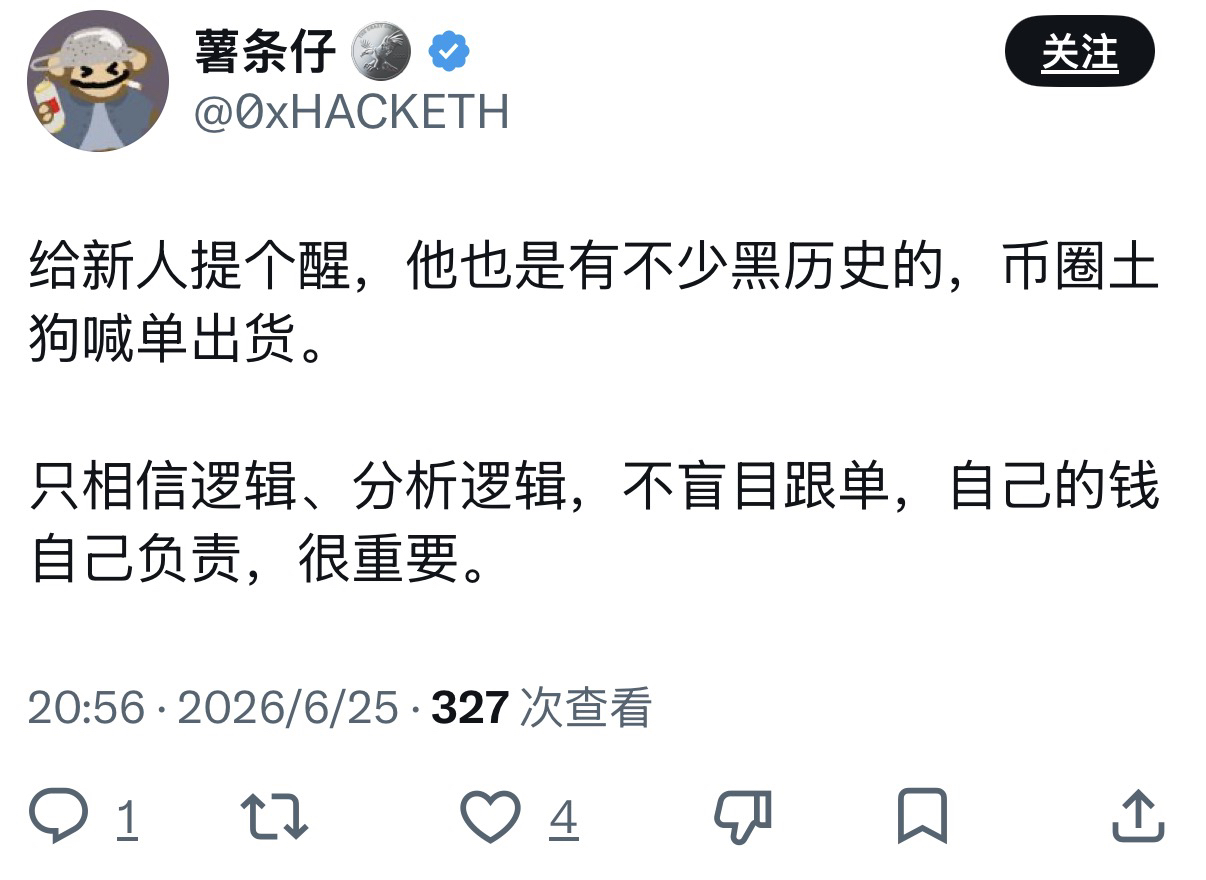


Understand a person comprehensively, don't blindly trust, and maintain your own judgment!
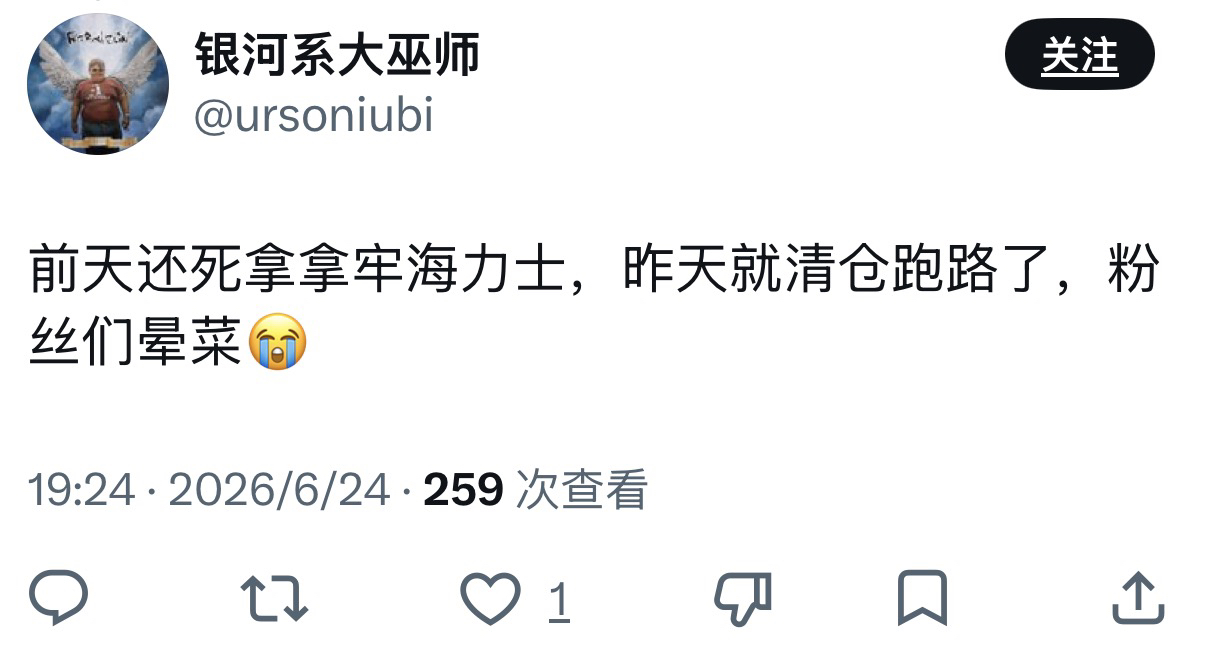


Teacher, why didn't you notify us when you got off the train? 🫪
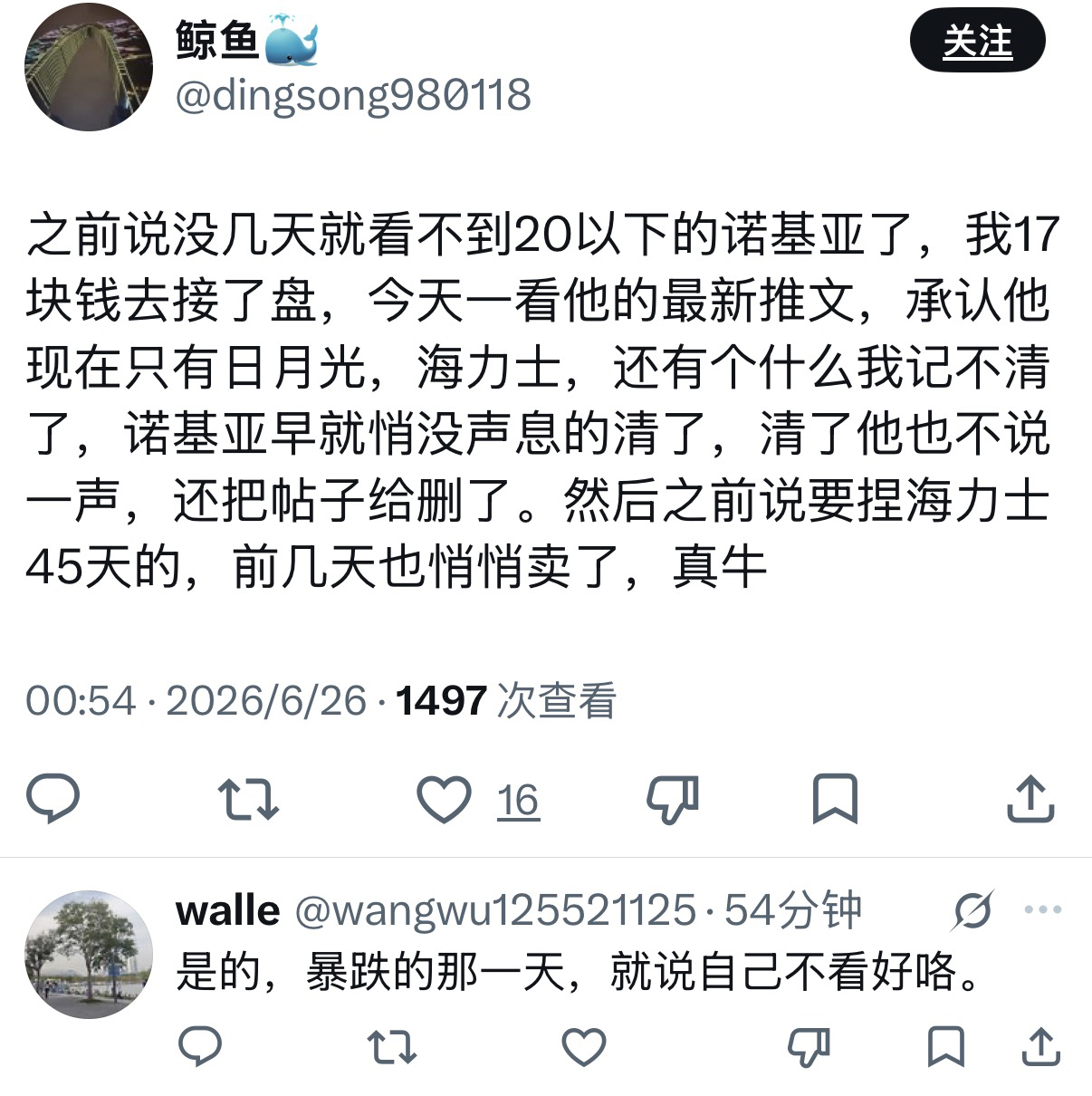


The "profits" shown are what they want you to see 🤩, there's a part they don't want you to see.


From BTC's "Reddit morale-boosting method," to STRC's "$1.2 billion dividend question," to Chuan Mu's "contradictory persona." This week, some cheered each other on, some calculated cash reserves, and some scoured tweets for the next big thing.


Wish everyone a happy weekend! See you next week!


(This week's content is based on public information and online discussion, interpreted lightly, for reference only.)


Past Reviews: Spicy Review|Michael Saylor's "Playboy Comments"; 60-Year-Old Aunt Liquidates and "Borrows from Young Guy"
Spicy Review|Three Stories Tell You: In Crypto, the Harder You Work, the More "Miserable" You Become
Spicy Review|"King of Retail" Had His Account Hacked by His Brother for "Scams"? AI "Excavates" Bitcoin...


Trending Cryptos

Related Questions

QWhat is the main topic of the article 'Hot Review: Is STRC the Next LUNA?'?

AThe article discusses three main topics: 1) The emotional 'HODL' sentiment among retail investors on Reddit during a market downturn. 2) Analysis of STRC (Strategy's preferred stock) and its risks, comparing it to the LUNA collapse. 3) Analysis of trader 'Chuan Mu's trading style and public persona based on his tweets.

QAccording to the article, why has STRC's price fallen, and how is it different from LUNA?

ASTRC's price has fallen (trading around $76.2 vs. a $100 face value) because investors doubt Strategy's ability/willingness to continue paying its $1.2 billion annual dividend, given its current ~$1.4 billion cash reserve. The key difference from LUNA is that Strategy CEO Michael Saylor has no legal obligation to pay the dividends; if he stops, STRC could fall further, but the company itself (and its core Bitcoin holdings) won't collapse instantly like the algorithmic stablecoin UST/LUNA system did.

QWho is trader 'Chuan Mu', and what is his trading methodology as described in the article?

AChuan Mu is a trader famous for turning $500 into $1 million during the 2023 ORDI inscription rally and later $10,000 into $1 million by shorting altcoins. According to the article's analysis of his tweets, his methodology involves asking systemic questions first, such as 'Where will the bottlenecks be in the entire AI system?' rather than 'Which stock will rise?'. This led him to invest sequentially in crypto-related stocks, AI infrastructure, and then key bottleneck sectors like AI memory (SK Hynix, Samsung) and optical communication (Marvell, Nokia).

QWhat was the 'most emotionally valuable post' on Reddit mentioned in the article, and what was the community's reaction?

AThe post was on the Reddit CryptoCurrency subreddit during a market crash in June, with the simple text: 'Screw Fear, Uncertainty, and Doubt!'. The comment section became an emotional support forum where users encouraged each other to 'HODL' (Hold On for Dear Life), calling FUD for 'noobs', celebrating diamond hands, and debating whether holding through losses or selling at highs was the better strategy.

QWhat contradictions or criticisms about trader Chuan Mu are mentioned in the article?

AThe article mentions criticisms that some cryptocurrencies Chuan Mu promoted later experienced 'harvesting' dumps, negatively impacting followers. Additionally, he reportedly sold some stocks he had publicly said he would hold for a longer period without notifying his followers, leading to comments like 'Teacher, why didn't you notify us when you got off the bus?'. This creates a 'contradictory persona' where his displayed profits are selective.

Related Reads

Airwallex's Pivot: From Dismissing Stablecoins a Year Ago to Making High-Profile Investments Today

Airwallex, a major cross-border payments fintech, has made a notable strategic shift by leading a seed round investment in Metal, a tokenized financial settlement network. This move is significant given that Airwallex founder Jack Zhang was a prominent critic of stablecoins just a year prior, arguing they failed to reduce costs for mainstream currency corridors and lacked clear utility. The investment targets Metal, a Layer-1 blockchain designed for the tokenization and settlement of assets like stocks, bonds, and stablecoins, aiming for the institutional market. Metal's team includes veterans from Ren Protocol and Meta's Diem project. For Airwallex, this partnership integrates tokenized finance into its global payments network, providing a new settlement layer. Despite his company's investment, Zhang maintains a distinction, stating his skepticism toward "cryptocurrencies" remains, while classifying regulated, asset-backed stablecoins as a separate category. This stance reflects a broader trend of traditional finance (TradFi) cautiously engaging with crypto infrastructure. Companies like Stripe, Mastercard, and major banks are similarly exploring stablecoin payments and tokenization networks, recognizing their potential in emerging markets and 24/7 settlement. The article concludes that Airwallex's investment is less a change of belief and more a strategic necessity to secure a position in the evolving landscape of digital asset settlement, where stablecoins are becoming a key interface for global finance.

marsbit34m ago

Airwallex's Pivot: From Dismissing Stablecoins a Year Ago to Making High-Profile Investments Today

marsbit34m ago

Glue Finance Founder: ETH Has Entered a Phase of Non-Consensus, an Inflection Point Is Coming

"Glue Finance founder argues Ethereum's current price underperformance stems from its 'unfinished machine' status. Despite record usage and settlement value in 2026, ETH remains below its 2021 peak because the protocol's continued development creates a dependency on the Ethereum Foundation for guidance and fixes. Key issues include centralized L2 sequencers, governance-based freezes (as seen with Arbitrum), state bloat, a vulnerable public mempool, and looming quantum computing threats. This 'dependency discount' prevents ETH from accruing the 'ossification premium' that markets award to immutable, trustless systems like Bitcoin. The author, a self-described Ethereum maximalist, rejects two flawed escape paths: a 'war mode' shift towards centralization for speed (which would sacrifice Ethereum's core value), or simply replacing the EF with another governing body. The only solution is the 'Manhattan Plan' or 'Lean Ethereum': a concerted, accelerated effort to complete and then *freeze* the protocol's neutral core. This involves finalizing critical upgrades in consensus (Lean Consensus), scaling (targeting 1 trillion gas/sec), quantum resistance (leanXMSS signatures), and full ZK-provable execution. The goal is to pass the 'walk-away test'—where Ethereum could run forever, neutrally, without the EF. Success would transform Ethereum into the first programmable, quantum-resistant, immutable global settlement layer, flipping its current discount into a unique 'eternity premium' that surpasses Bitcoin's. Failure—stagnation or trading neutrality for speed—would relegate it to being a slower, less trustworthy competitor."

marsbit1h ago

Glue Finance Founder: ETH Has Entered a Phase of Non-Consensus, an Inflection Point Is Coming

marsbit1h ago

Trading

Spot

Hot Articles

How to Buy LUNA

Welcome to HTX.com! We've made purchasing Terra (LUNA) simple and convenient. Follow our step-by-step guide to embark on your crypto journey.Step 1: Create Your HTX AccountUse your email or phone number to sign up for a free account on HTX. Experience a hassle-free registration journey and unlock all features.Get My AccountStep 2: Go to Buy Crypto and Choose Your Payment MethodCredit/Debit Card: Use your Visa or Mastercard to buy Terra (LUNA) instantly.Balance: Use funds from your HTX account balance to trade seamlessly.Third Parties: We've added popular payment methods such as Google Pay and Apple Pay to enhance convenience.P2P: Trade directly with other users on HTX.Over-the-Counter (OTC): We offer tailor-made services and competitive exchange rates for traders.Step 3: Store Your Terra (LUNA)After purchasing your Terra (LUNA), store it in your HTX account. Alternatively, you can send it elsewhere via blockchain transfer or use it to trade other cryptocurrencies.Step 4: Trade Terra (LUNA)Easily trade Terra (LUNA) on HTX's spot market. Simply access your account, select your trading pair, execute your trades, and monitor in real-time. We offer a user-friendly experience for both beginners and seasoned traders.

4.5k Total ViewsPublished 2024.03.29Updated 2026.06.02

How to Buy LUNA

What is $LUNA

Luna28 ($$LUNA): A Moon-Inspired Crypto Venture Introduction In the ever-evolving world of cryptocurrencies, innovation is key. Luna28 stands out as a project that not only embraces technology but also intertwines it with the mystique of cosmic cycles. Inspired by the moon's 28-day cycle, Luna28 ($$LUNA) aims to create a unique and engaging experience for its community, merging the concepts of tokenomics and lunar-themed non-fungible tokens (NFTs). At its core, this project employs a distinctive token burn mechanism aligned with lunar and solar eclipses, setting a new precedent in the crypto space. What is Luna28? Luna28 is a token-based cryptocurrency project built on the Ethereum blockchain. It seeks to offer its users a blend of cosmic engagement through a series of innovative features. Key to its identity is the launch of lunar-themed NFTs which enhance community interaction while celebrating the moon's cultural significance. The project aims to create a deeper connection between its community members and the cosmos. This connection is facilitated through a carefully crafted ecosystem that leverages lunar themes, token burns, and dynamic activities associated with celestial events. The goal is not just about enhancing token value but fostering a sense of belonging and enjoyment within the community. Creator of Luna28 The details surrounding the creator of Luna28 remain largely unknown. This lack of information has led to an air of mystery around the project, further adding to its uniqueness. The anonymous nature of its creation reflects a broader trend within the crypto industry, where the focus is often on the project and its community rather than individual profiles. Investors of Luna28 Currently, there is no publicly available information regarding the specific investment foundations or organizations that support Luna28. This aspect may indicate a grassroots initiative where the community plays a vital role in the project's development and growth. The absence of prominent investors can sometimes create a more decentralized and independent project, allowing for organic community engagement and involvement. How Does Luna28 Work? One of the most compelling aspects of Luna28 is how it operates, particularly its unique features that set it apart from other cryptocurrency projects. 1. Lunar and Solar Eclipse Token Burns Luna28 incorporates a special token burn mechanism, which involves periodically burning a portion of its token supply during lunar and solar eclipses. This approach not only creates excitement around celestial events but also works on the fundamental principle of increasing scarcity. By reducing the overall token supply through burns, the remaining tokens have the potential for increased value, benefiting all holders. 2. Tokenomics The economic structure of Luna28 is crafted to ensure sustainability and growth. Each transaction incurs a 4.4% tax: 2% contributes to the Moon Cycle Fund, which is burned every 28 days during the full moon. The remaining 2.4% is earmarked for development and marketing, facilitating the project’s expansion and continuous improvement. This tax structure establishes a steady flow of funding while maintaining a deflationary approach that can enhance the token's value proposition. 3. 100% Burned Liquidity Security and trust are paramount in any cryptocurrency project. Luna28 addresses these concerns by locking its liquidity pool tokens in a burn wallet. This ensures that liquidity is permanently secured, fostering confidence within the community as they engage with the platform. 4. NFT Drops Further enhancing community engagement, Luna28 plans to release lunar-themed NFTs. These digital collectibles not only serve as a source of fun and creativity but also offer users unique assets tied to the larger lunar theme. The introduction of NFTs reflects a growing trend in the crypto space, blending traditional forms of artistic expression with innovative technology. 5. Hyper Deflationary Token Luna28 is classified as a hyper deflationary token, emphasizing its commitment to a declining token supply through systematic burns. This design encourages long-term holding, as community members anticipate potential value growth driven by scarcity. 6. First Buyer Incentive In a bid to promote active participation, Luna28 offers a unique first buyer incentive. After each celestial burn event, the first participant in the market is rewarded with 10% of the tokens burned during that event. This encourages immediate engagement and interest surrounding each significant celestial phenomenon. 7. Sustainable Tax Structure The project's tax model is specifically designed to encourage sustainable growth, balancing the need for ongoing project development with the goal of enhancing token value. This innovative tax structure serves the dual purpose of supporting the community's interests while maintaining a healthy ecosystem for the project. Timeline of Luna28 A well-charted timeline helps in understanding the progression and milestones of Luna28. Here’s a synopsis of important events in the project’s history: Stealth Launch: The project entered the crypto arena under a stealth launch, garnering significant community interest and posting a remarkable 1792% increase from its initial listing. This initial surge indicated strong community reception and a solid foundation for future growth. Token Burns: Committing to its unique approach, Luna28 plans to burn 28% of its token supply over a three-year period, timed specifically during lunar and solar eclipses. Community members eagerly await their opportunities to participate in these events. Community Involvement: Emphasizing transparency and the importance of community feedback, Luna28 plans to notify its users in advance about upcoming token burn events. This engagement approach encourages active participation, fostering a strong sense of community. Key Features Luna28's distinctive features bolster its appeal within the cryptocurrency sector: Hyper Deflationary Nature: The project's focus on hyper deflationary mechanics enables a strategic reduction in supply, aiming for enhanced value retention. Incentives for Early Engagement: The project rewards early participants with direct benefits, which cultivates a proactive community eager to contribute. Commitment to Community Development: The sustainable tax model not only ensures the project's growth but also actively involves the community in shaping its future direction. Conclusion Luna28 represents a unique fusion of technology, community engagement, and celestial inspiration in the cryptocurrency landscape. By integrating innovative mechanisms such as token burns during astrological events and creating engaging lunar-themed NFTs, the project distinguishes itself as a trailblazer within its niche. As a community-driven endeavor, Luna28 promises to deliver not just another cryptocurrency but an experience that marries elements of cosmic fascination with blockchain technology. With its innovative features and strong emphasis on community involvement, Luna28 has the potential to create a lasting impact in the world of digital currencies. The connection it forges between its users and the universe represents not only a creative endeavor but also a brilliantly calculated business strategy poised for growth. As we observe the evolution of Luna28, it is evident that it is more than just a token; it is a concept that encourages its community to look up at the cosmos and ponder their place within it, all while navigating the exciting world of cryptocurrency. The future for Luna28 looks bright and full of potential, eagerly awaiting its next lunar cycle.

835 Total ViewsPublished 2024.04.01Updated 2024.12.03

What is $LUNA

What is TERRA

Exploring the Terra Ecosystem: A Comprehensive Overview Introduction In the ever-evolving landscape of blockchain technology and cryptocurrency, the Terra Ecosystem has emerged as an ambitious project designed to facilitate a decentralized financial system. This innovative platform focuses on creating stable and scalable algorithmic stablecoins, aimed at driving the widespread adoption of cryptocurrencies. In this article, we will delve into the foundational aspects of the Terra Ecosystem, exploring its operational mechanisms, its creators, investors, notable components, and the timeline of its development. What is the Terra Ecosystem? Founded in 2018, the Terra Ecosystem is a layer-one blockchain designed to provide an efficient and reliable payment platform. The core mission of Terra is to create a preferred form of money that is not only decentralized but also practical for everyday use. At the heart of the ecosystem is its native algorithmic stablecoin, TerraUSD (UST), which is pegged to the US dollar using an innovative algorithmic mechanism. This unique approach addresses a common concern in the cryptocurrency space: the volatility that often accompanies digital assets. The Terra Ecosystem aims to enhance the usability of cryptocurrencies by creating an environment where digital currencies function similarly to traditional currencies. By being user-friendly and stable, Terra sets out to attract users outside of the crypto community, ultimately fostering mass adoption. The Creators of the Terra Ecosystem The Terra Ecosystem emerged under the guidance of its co-founders Daniel Shin and Do Kwon. Both individuals, with a wealth of experience in entrepreneurship and technology, launched Terraform Labs to spearhead this groundbreaking project. Daniel Shin, a prominent figure in the South Korean tech landscape, has co-founded multiple tech companies, while Do Kwon has an extensive background in computer science and engineering. Their partnership is pivotal in steering the development and growth trajectory of the Terra Ecosystem. Investors in the Terra Ecosystem While detailed information about specific investors remains limited, it is widely acknowledged that Terraform Labs has garnered substantial financial support from a variety of angel investors and venture capital firms. This backing provides the necessary resources for the ongoing development and expansion of the Terra Ecosystem. The emphasis on acquiring diversified investment sources reflects the strong belief in the project's potential within the cryptocurrency community. How Does the Terra Ecosystem Work? At the core of the Terra Ecosystem's functionality lies its innovative proof-of-stake (PoS) consensus mechanism. This allows holders of the LUNA token, the native currency of the ecosystem, to participate in the governance and operation of the network. The dual-token structure differentiates Terra from many other projects, with LUNA serving both as a stake for validators and as a governance token. The mechanism operates in a distinctive way, whereby the supply of LUNA backs the stablecoin UST. If the demand for UST increases, the algorithm automatically adjusts the supply of LUNA to maintain the stability of UST at its dollar peg. Users are enabled to exchange 1 UST for an equivalent value in LUNA, ensuring that fluctuations in demand do not affect the peg. This innovative approach enables the Terra Ecosystem to maintain price stability, one of its primary goals. Timeline of the Terra Ecosystem The development journey of the Terra Ecosystem has been marked by significant milestones: 2018: Establishment of Terraform Labs by Daniel Shin and Do Kwon, laying the groundwork for the Terra Ecosystem. April 2019: The initial release of the Terra blockchain, initiating its journey into the broader cryptocurrency landscape. 2021: Terra experiences remarkable growth as its total value locked (TVL) reaches new heights, positioning it as a dominant player in decentralized finance (DeFi). May 2022: A turbulent period arises as the Terra blockchain is temporarily halted following the collapse of UST and LUNA, leading to a significant impact on market perception and capitalization. January 2024: Terraform Labs files for bankruptcy, marking another critical event in the project's history, sparking discussions on the sustainability and future of the ecosystem. Key Components of the Terra Ecosystem A variety of features contribute to the unique functionality of the Terra Ecosystem: Core Functionality The Terra Ecosystem includes essential functionalities such as managing transaction fees, monitoring price fluctuations, and maintaining historical balances of transactions, all of which are crucial for ensuring user experience and operational integrity. Applications One of the flagship features of the Terra Ecosystem is its diverse array of applications. This includes: Anchor Protocol: A money market protocol that provides high stablecoin yields and tokenized stakes for users seeking to maximize returns on their investments. Mirroring Technology: Enabling users to create assets that mirror real-world assets and trades, allowing for broader use cases and applications. Chai: A payment platform designed to facilitate everyday transactions using Terra's stablecoin technology. Swaps and Exchanges The ecosystem provides functionality for seamless asset exchanges. Notable features include native swapping capabilities and platforms such as Terraswap, allowing users to exchange Terra assets efficiently while benefiting from competitive rates. Governance Governance plays a critical role in the decentralized nature of the Terra Ecosystem. Token holders use their LUNA tokens to propose changes or vote on proposals that affect the network, ensuring collective decision-making and community involvement in the ecosystem's evolution. Notable Projects in the Terra Ecosystem Beyond the core functionalities, the Terra Ecosystem is also home to notable projects that further augment its capabilities: Terraswap: This decentralized exchange (DEX) emerged to facilitate easy swapping of Terra assets, thus promoting a vibrant trading environment within the ecosystem. Astroport: Another DEX known for its high total value locked, Astroport enhances trading opportunities and liquidity provision for users. Loop Markets: This integrated exchange hub offers users a range of trading tools and services, significantly contributing to the user experience across the Terra platform. Conclusion The Terra Ecosystem stands as a significant player within the blockchain and cryptocurrency domains, aiming to create a stable and scalable financial platform designed for widespread cryptocurrency adoption. Although the ecosystem faced dramatic challenges, notably the collapse of its stablecoin UST and the LUNA token, it continues to adapt and evolve in the face of adversity. As the project navigates its future, it remains committed to its foundational vision of building practical products accessible to a broader audience, thereby reinforcing the potential of decentralized finance. The Terra Ecosystem, with its robust features and innovative approach, holds promise as it seeks to redefine the landscape of digital currency use, remaining a focal point for enthusiasts and investors alike in the ongoing evolution of blockchain technology.

1.3k Total ViewsPublished 2024.12.17Updated 2024.12.17

What is TERRA

Discussions

Welcome to the HTX Community. Here, you can stay informed about the latest platform developments and gain access to professional market insights. Users' opinions on the price of LUNA (LUNA) are presented below.

活动图片