Author: Youth Wealth Development Association

No matter what, this week is destined to be recorded in history.
On June 12th, the largest company IPO in human history is about to debut. SpaceX is the behemoth created by Musk, embodying this world's richest man's ultimate fantasy of interstellar migration.
Over the past decade or so, SpaceX's Falcon rockets have launched a total of 656 times.
In 2025 alone, they launched 165 times—almost half of all global orbital launches.
The Dragon spacecraft has carried out more than twenty manned missions, sending over seventy people into orbit.
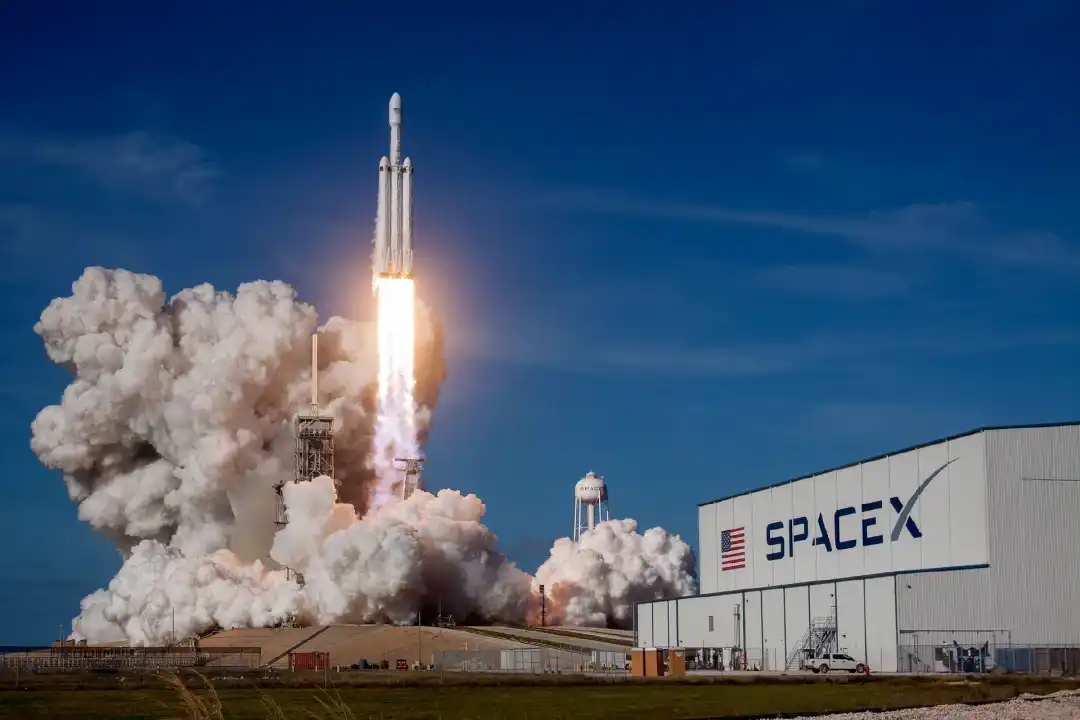
In SpaceX's prospectus, the word "Mars" appears 63 times. The "Mars Exploration Program" is also Musk's number one project, on which he has staked his entire future.
But today's article is not about SpaceX, nor is it about Musk. Instead, it's about the captain who will command humanity's first manned mission to Mars—a Bitcoin billionaire from Tianjin, Wang Chun.
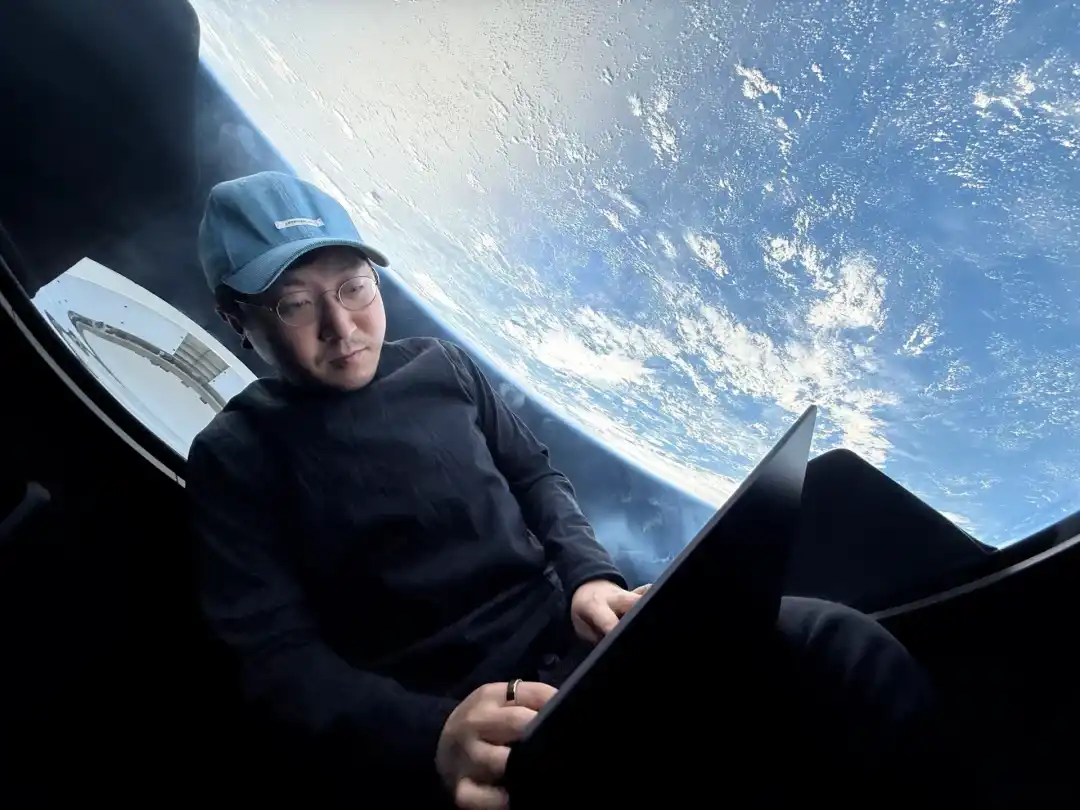

Wang Chun spent his childhood with his grandparents.
In 1987, when Wang Chun was five years old, his grandfather picked up a world map while taking a walk. From then on, that map became his favorite toy.
What fascinated him wasn't the named places, but the blank spaces at the bottom of the map—the polar regions. At five years old, Wang Chun often stared at these most remote, most uninhabited corners of the Earth. He later said that from that moment on, he was captivated by those distant and unknown places.
Yet in reality, it wasn't until he was eighteen and went to university that he first traveled more than a hundred kilometers away from home.
At that time, Wang Chun didn't yet know just how vast a world he would explore in his lifetime.
At thirteen, Wang Chun got his first computer. Besides playing games, he used it to write many programs. One of the earliest was a gravity simulator that visualized the motion of planets in the solar system.

In school, Wang Chun participated in various programming competitions, including the International Olympiad in Informatics (IOI) and ACM-ICPC. Later, based on these competition achievements, he skipped the national college entrance exam (Gaokao) and was directly admitted to university.
After graduation, Wang Chun joined a software company in Beijing. From that time on, he became obsessed with riding trains.
In 2007, he used all his weekends to travel by train for 75,900 kilometers. He meticulously recorded every trip, down to the minute and second, posting them on forums.
That year, he spent a total of two months entirely on train carriages. Every Friday after work, he headed straight to the train station, not returning to work until the following Monday.
This earned him the online nickname "高铁千次男" (the Thousand-Trip High-Speed Rail Guy).

Over the years, he traveled by train to every province in China.
In 2010, Wang Chun went abroad for the first time, first to Nepal, then to India. There, he boarded what was then India's longest direct train—the 16317 Himalaya Express. He rode from Kanyakumari at the southernmost tip of the subcontinent all the way to Kashmir in the far north, traversing the entire length of India from south to north.
This journey cost about $1,000, which was all his savings at the time.
In 2013, Wang Chun applied his programming skills to something almost nobody understood at the time—Bitcoin.
He partnered with "Shenyu" to set up China's first Bitcoin mining pool, named F2Pool, specifically for mining Bitcoin.
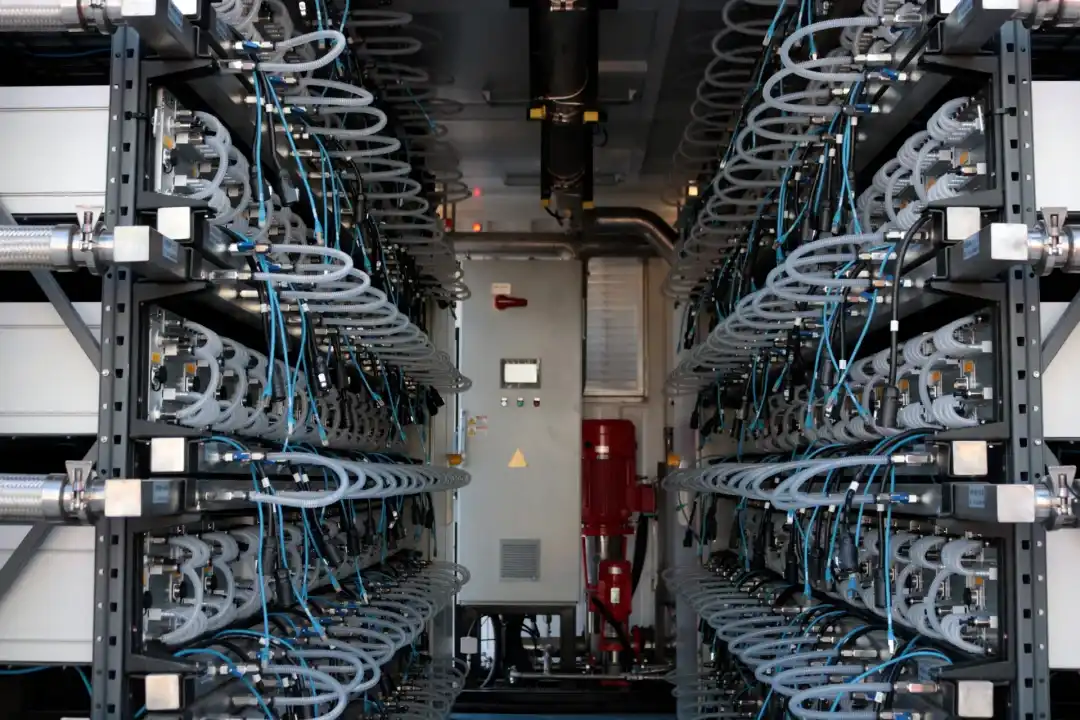
F2Pool grew astonishingly fast. Within a year of its founding, F2Pool became the world's largest Bitcoin mining pool. Over the next decade, more than 1.3 million Bitcoins were mined from this pool.
At its peak, F2Pool alone controlled over 30% of the global network's hash rate. In other words, back then, for every three Bitcoins mined worldwide, roughly one came from Wang Chun's pool.
By selling these "shovels," Wang Chun amassed enough wealth to become a dazzling Bitcoin billionaire.
After earning his fortune, Wang Chun finally had the chance to realize his childhood dreams of traveling the world and exploring the polar regions.


On April 1, 2025, Wang Chun embarked on the 1000th flight of his life. However, the destination of this flight wasn't any city, but a true frontier—space.
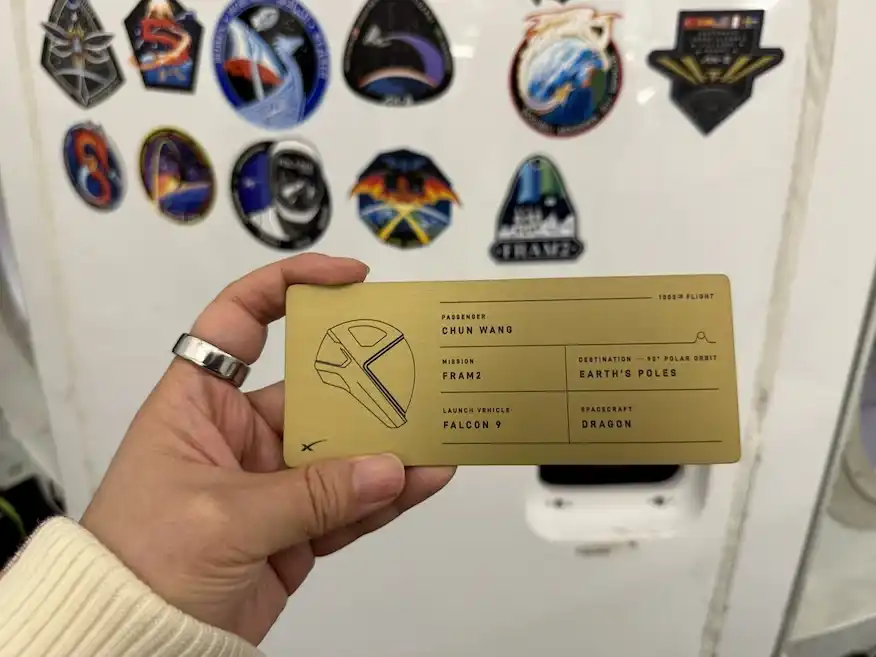
△This flight aboard SpaceX's Dragon spacecraft will be Wang Chun's 1000th flight to date
This mission, codenamed Fram2, was flown by SpaceX's most mature and most frequently used crewed spacecraft, the Dragon.
Its flight path was special: launching southward from Florida, entering a rare polar orbit, circling right over the North and South Poles, and "vertically" orbiting the entire Earth.
For this journey, Wang Chun paid out of his own pocket to charter all four seats on the Dragon spacecraft, costing approximately $200 million in total. He also personally selected his three crewmates: a film cinematographer, a robotics expert, and a polar explorer.
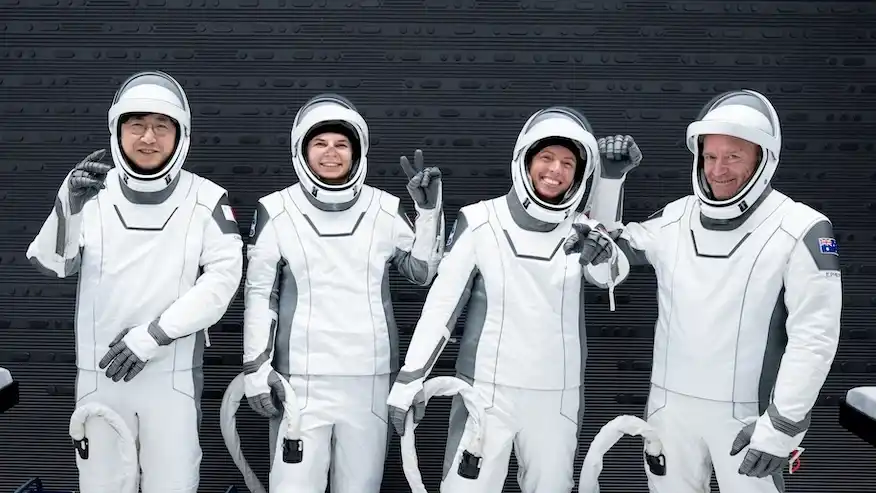
△The four astronauts of the Fram2 mission pose for a group photo in the suit-up room near Launch Pad 39A at NASA's Kennedy Space Center.
The mission plan and this unique orbital path were also designed by him personally. The purpose was to satisfy his childhood fascination with the polar regions.
Over the next three and a half days, they circled the Earth repeatedly, taking numerous photos of the polar regions and auroras from a space perspective, and incidentally capturing humanity's first X-ray image in space.
After returning from space, people marveled at Wang Chun's extreme challenge while also envying him for having finally achieved his life's ultimate goal.
But what nobody expected was that, for Wang Chun, all of this so far was just a warm-up.
On May 21, 2026, SpaceX unveiled its next-generation spacecraft, "Starship." During the live broadcast, SpaceX also announced that Wang Chun would serve as commander for humanity's first manned mission to Mars.
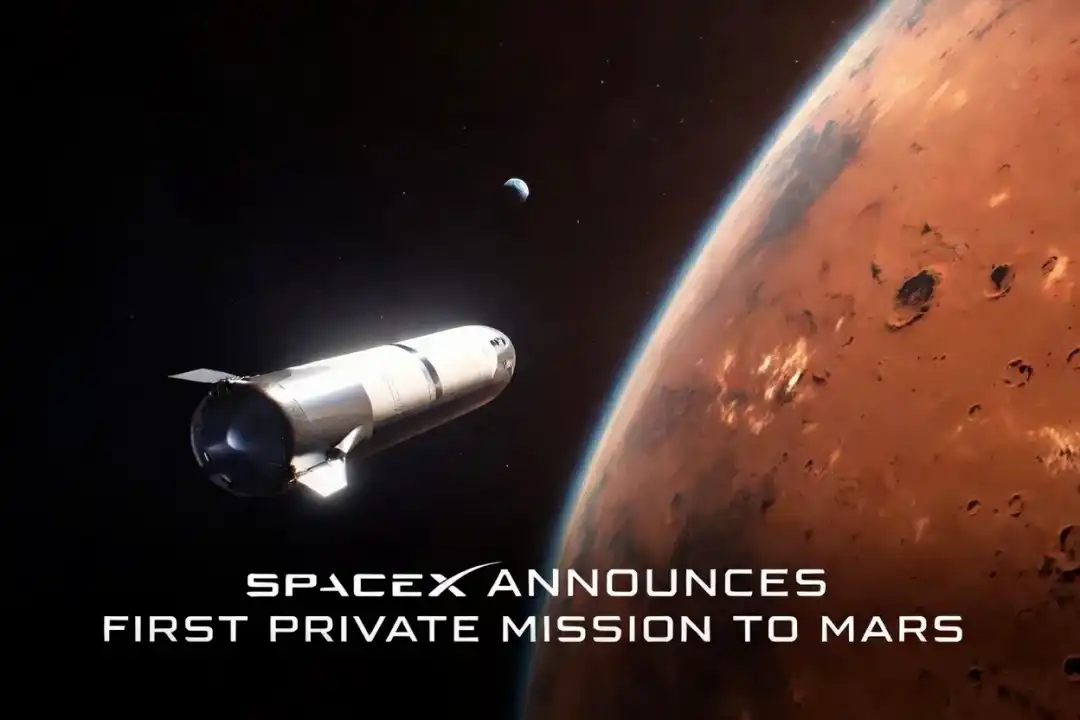
It's a journey of roughly two years.
The spacecraft will carry him out of the Earth-Moon system, toward Mars, then loop back to Earth, covering hundreds of millions of kilometers in total. For much of those two years, he will be confined to a small cabin, floating in the pitch-black deep space.

And before departing for Mars, Wang Chun will also embark on a week-long lunar flyby mission with humanity's first self-funded space tourist, Dennis Tito, and his wife, coming as close as about 200 kilometers from the lunar surface.
During the two years following the launch of the manned Mars mission, Wang Chun and his crew will conduct extensive data collection work in deep space. The aim is to obtain crucial operational data for humanity, to transform Mars exploration from a short-term novel attempt into a truly sustainable, self-sufficient habitat.

For Musk and SpaceX, a Mars flyby was never the goal.
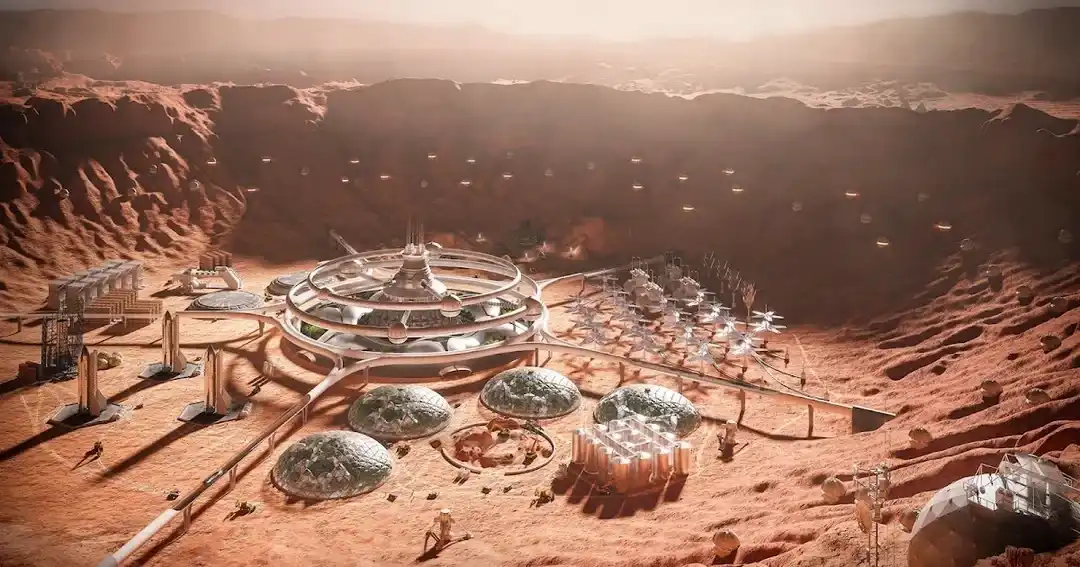
According to Musk's vision, the future involves building a real city on Mars. To that end, every twenty-six months or so, thousands of Starships would be launched, transporting equipment and people in trip after trip. The Martian city would begin with hundreds of millions of tons of prioritized equipment and supplies, ultimately leading to the arrival of one million people willing to live on Mars.
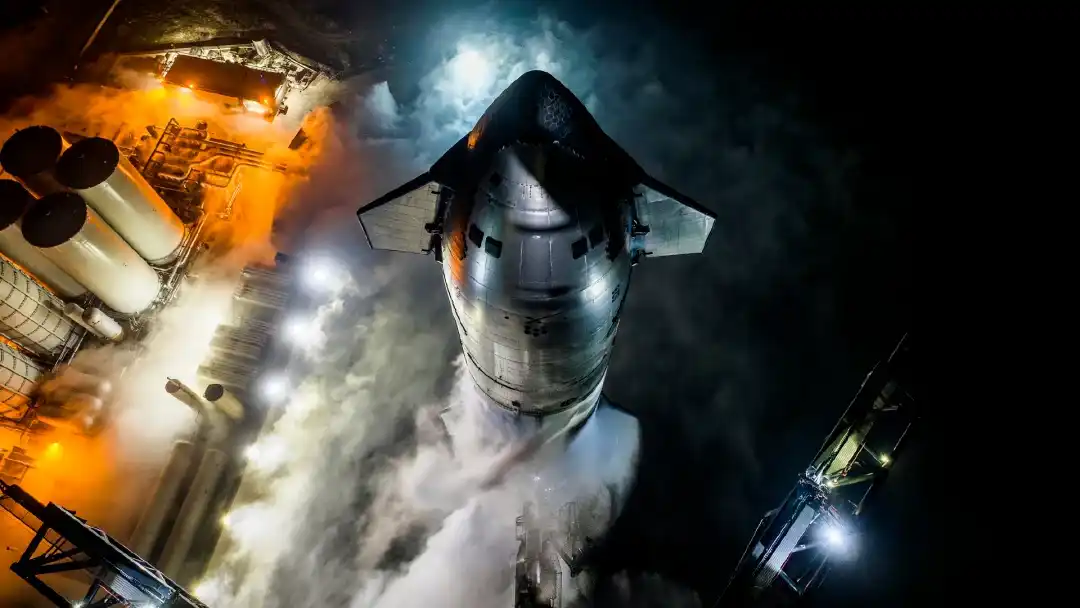
Humanity would thus become a true "multi-planetary species."
The Mars mission that Wang Chun is about to undertake in the next two years is the first step toward this audacious plan.
When most people talk about commercial space companies like SpaceX and Blue Origin, they are often amazed by the incredibly high costs or eagerly gossip about the super-rich who spend fortunes.
It seems that when discussing the door to space, the only topic left is "money."
But in terms of money, Wang Chun isn't even among the wealthiest. In this circle, giants like Changpeng Zhao (CZ) and Justin Sun have fortunes hundreds of times larger than his.
In the Bitcoin world, famous for creating overnight billionaires, he's at best upper-middle class.
But for Wang Chun, money has always been a tool, not a goal.
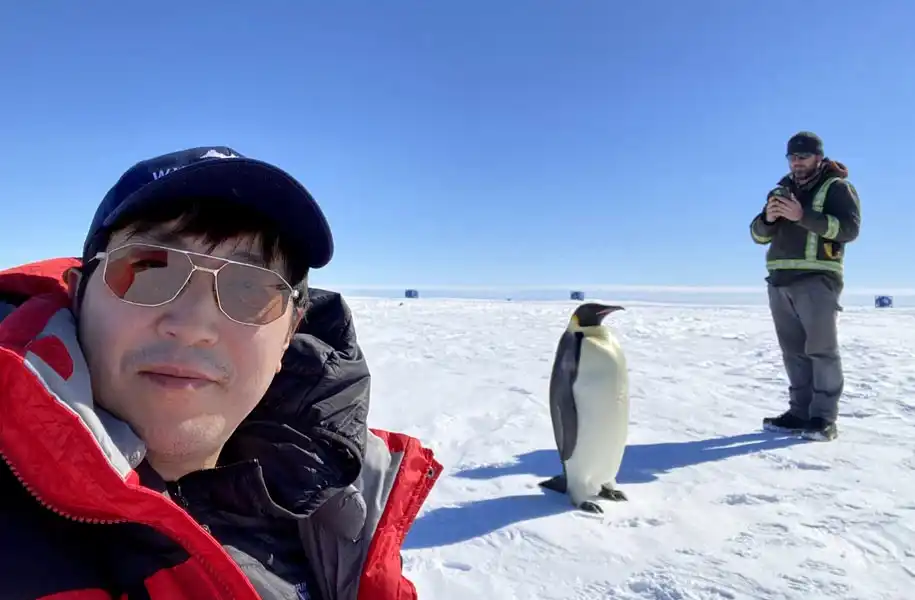
The extravagance and hedonism of the crypto world mostly stem from the greed stirred by rapidly accumulated wealth, which many cannot resist.
But Wang Chun hardly seems like someone from the crypto world.
When everyone else is looking down counting their money, only he looks up and counts the stars.
During the Fram2 mission, his total net worth was only a few hundred million dollars, yet without batting an eye, he spent a full $200 million to take his expedition team to space. That was essentially betting a large portion of his fortune on a three-and-a-half-day journey.
Compared to many of his peers who, upon making money, dive headfirst into a life of indulgence, Wang Chun's simplicity and purity are truly rare in today's era.
In an interview with CBS, he spoke about the significance of this mission: "This is not just about going to space; it's about pushing boundaries and sharing knowledge. We hope stories like these can inspire more people to follow their curiosity."
Stefan Zweig wrote in *Sternstunden der Menschheit* (Decisive Moments in History): "The greatest luck a person can have in life is to discover their mission in the middle of their life, in the prime of their years."
In this world, few are willing to venture into those desolate and harsh corners to explore our planet. Even fewer are willing to exhaust their wealth to actively seek out extreme environments.
Wang Chun is clearly one of those fortunate few.