Rate Hikes to Save STRC, Selling Bitcoin to Preserve Credit: Strategy Picks Its Two Most Expensive Paths

链捕手Published on 2026-06-30Last updated on 2026-06-30

Abstract

Over the past six weeks, Strategy has faced a significant crisis of confidence, with its core securities MSTR and STRC experiencing sharp price declines. The situation escalated as the company utilized dollar reserves intended for dividends and interest payments to repurchase debt, and then sold a small amount of Bitcoin for the first time since 2022—an action that contradicted its "never sell" narrative and signaled potential liquidity strain. In response, Strategy introduced a Digital Credit capital framework. This formalized a series of measures to manage the pressure down its capital structure: ordinary shareholders have already borne costs through equity dilution from an $11.5 billion ATM offering; new rules enforce a hard dollar reserve covering at least 12 months of expected dividend and interest payments; the STRC dividend rate was increased from 11.5% to 12%; and, most notably, Bitcoin was officially integrated into the capital toolkit, with board authorization to sell up to $1.25 billion worth if needed to support obligations and repurchase programs. The market reacted with a mix of relief and skepticism. While the announcement triggered a sharp single-day rally in both MSTR and STRC, the preferred shares still trade at a significant discount. Supporters view the framework as pragmatic crisis management that provides a price floor and clearer rules. Critics argue that institutionalizing Bitcoin sales undermines the core investment thesis and, with Bitcoin's price ...

Over the past six weeks, Strategy's two core securities have experienced a significant crisis of confidence. The MSTR stock price fell below $87, hitting a new low since February 2024, down over 50% from its peak. STRC plummeted from near its par value to a historic low of $74 last Thursday, a 26% discount to its $100 par value.

Public discourse surrounding this global largest corporate Bitcoin holder has shifted from its previous long-termist narrative to widespread questioning of the sustainability of its financing model.

Just as market concerns intensified, Strategy yesterday launched a Digital Credit Capital Framework, formalizing what was previously a one-time Bitcoin sale for emergency purposes into an institutionalized capital management tool.

How the Pressure Mounted Step by Step

The earliest hidden trigger of this crisis dates back to May 15th. Strategy repurchased $1.5 billion of convertible bonds maturing in 2029 at an approximately 8% discount. This transaction utilized dollar reserves that were supposed to be earmarked specifically for preferred stock dividends and debt interest payments, slashing the company's cash coverage capacity from the promised 24 months to about 6 months.

In the last week of May, Strategy sold Bitcoin for the first time since 2022, offloading 32 BTC to demonstrate the company's ability to support dividends by liquidating assets. However, this signal was interpreted negatively by the market. For a company whose core narrative has long been "never selling Bitcoin," even a small-scale sale subtly conveyed that its funding chain was beginning to tighten.

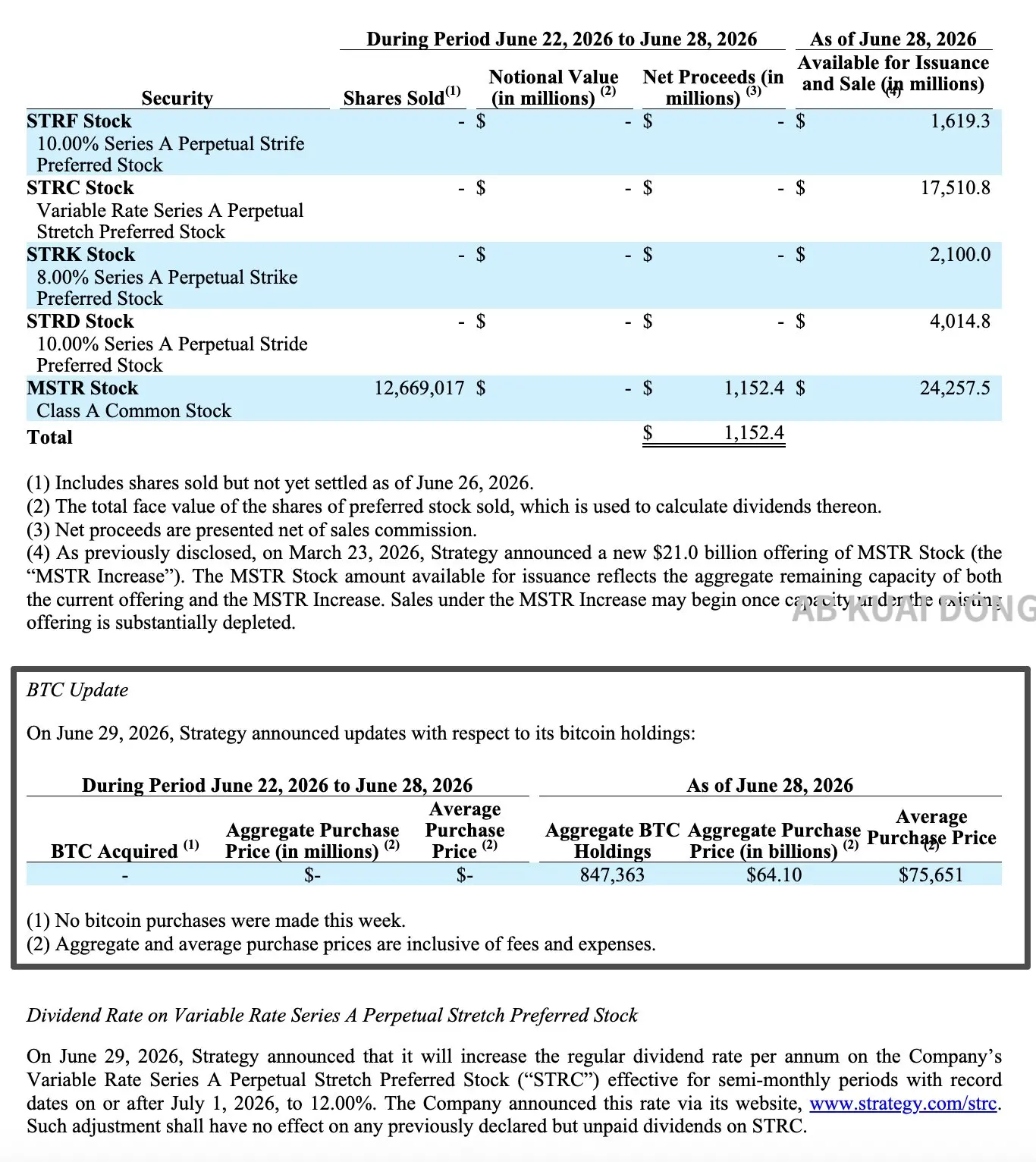
Subsequently, the company's shareholder meeting approved a plan to change STRC's dividends to twice a month, and dollar reserves also recovered to over $1 billion. Last week, Strategy sold over 12.66 million shares of MSTR through a common stock ATM offering, raising approximately $1.15 billion net. The secondary market is still digesting the new shares.

Meanwhile, the company's Bitcoin purchasing pace noticeably slowed. During the fundraising in the previous two weeks, about half was used to buy Bitcoin; in the third week, the purchase size drastically shrank, with most funds retained to pay STRC dividends.
On June 26th, STRC fell to its historic low of $74. Concurrent data showed that STRC's 90-day correlation coefficient with Bitcoin rose to nearly 0.70, the highest level since the product's launch in July 2025.

The Framework Passes Costs Down the Capital Structure

On June 29th, Strategy filed an 8-K form, introducing the Digital Credit Capital Framework. This framework includes hard coverage requirements for dollar reserves, a dynamic evaluation mechanism for STRC dividends, a total of $2 billion in repurchase authorization, and a BTC liquidation plan of up to $1.25 billion.

The emergence of the Digital Credit Capital Framework essentially channels the pressure accumulated over the past six weeks down the company's capital structure step by step.

Delphi Digital's analysis noted that when Bitcoin appreciates, the cost is borne by common shareholders paying preferred stock dividends. Once the mNAV falls below 1x, this transmission channel fails, forcing the company to turn to reserves and selling Bitcoin. Strategy is currently in this stage.
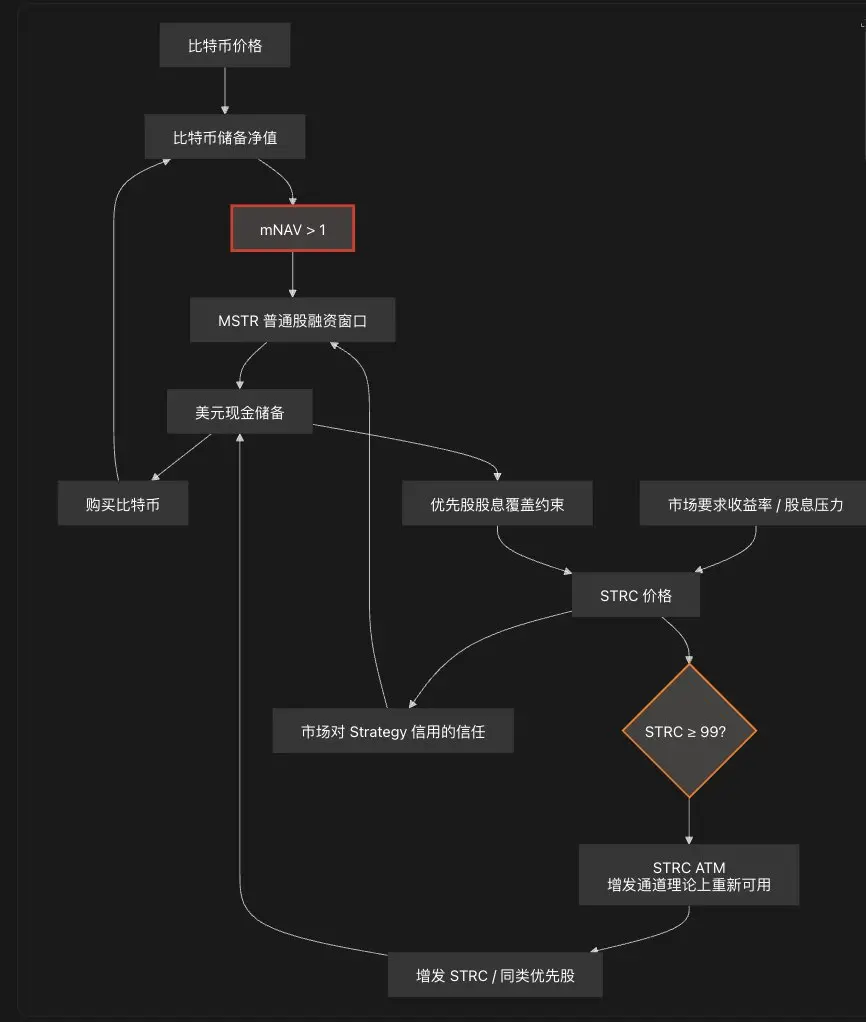
Image Source: X user @bitfish

The first wave of costs is borne by common shareholders. The entire $1.15 billion raised from last week's ATM offering was transferred into reserves, meaning common shareholders are already footing the bill for the preferred stock's solvency at the cost of equity dilution.

The second step is to establish hard rules for dollar reserves. The framework stipulates that this cash reserve can only be used to pay preferred stock dividends and debt interest. Management must maintain a size sufficient to cover at least the next 12 months of expected expenditures. As of June 28th, the company's reserve balance was $2.55 billion. Based on annualized dividend and interest expenses of approximately $1.76 billion, the coverage period is about 17.4 months.

The third step is to raise STRC's annualized dividend yield from 11.5% to 12%, effective July 1st. The company also stated that future dividend yields will be assessed monthly on a comprehensive basis and will not be increased solely because STRC trades below par value. This arrangement attempts both to maintain the preferred stock's attractiveness and avoid excessive future cash flow pressure.

The fourth step, and the one that elicited the strongest market reaction, is that Bitcoin itself is formally incorporated into the capital management toolkit. The Board authorized a BTC liquidation plan, allowing the sale of Bitcoin to raise up to $1.25 billion to replenish dollar reserves, pay preferred stock dividends and interest expenses, or fund the repurchase plan. If all uses—paying dividends/interest, repurchasing preferred and common stock—are counted, the theoretical liquidation scale could exceed $1.25 billion, with any excess requiring further Board approval.

It's worth noting that Zach Pandl, Head of Research at Grayscale Research, recently stated that, rather than raising STRC's dividend yield by 50 basis points, it would be better to directly sell over $3 billion worth of Bitcoin to more thoroughly fulfill cash payment obligations and restore market confidence. This view aligns with the company's new framework, indicating that the market has long recognized the company has few options left.

Faced with the three options of repurchasing STRC, selling Bitcoin, or cutting dividends, Strategy rejected the last one. The two $1 billion repurchase authorizations and the Bitcoin sale plan were simultaneously activated, and the dividend was not only not cut but raised by 50 basis points.
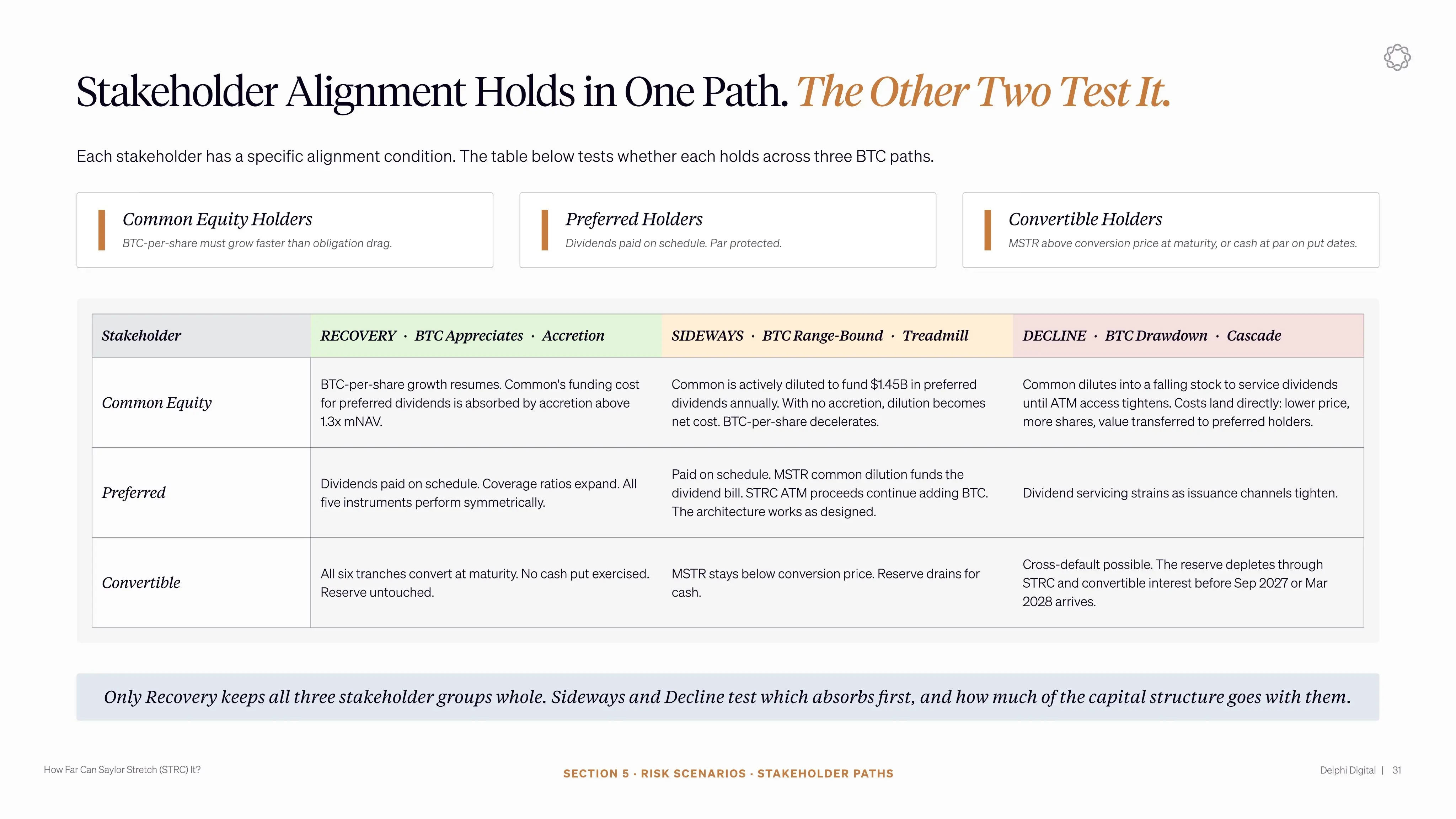
In the short term, the rate hike helps pull STRC back from deep discount to near par value. But in the long run, a higher dividend rate means future cash flow pressure hasn't truly eased, and Bitcoin has officially transformed from a long-term asset to be only bought and never sold into a capital management tool that can be liquidated under specific conditions.

The Market Remains Half-Convinced, Half-Skeptical

On the day the framework was announced, MSTR closed up 12.6%, and STRC rose 12.2% in sync, rebounding to $83.67, both marking the largest single-day gains recently. However, the STRC price still has about a 16% discount, with a considerable distance from the company's target range of $99 to $100.

Some supportive voices for Strategy view this as a relatively pragmatic crisis management move. Dollar reserve coverage has significantly improved from its previous strained state, and the introduction of repurchase tools provides an expectation of price support for the preferred stock. Benchmark Equity Research reiterated its Buy rating, maintaining a $570 price target. Based on MSTR's Monday closing price of $92.68, this target implies about 515% upside potential.

Analyst Mark Palmer pointed out in a report that the framework formally grants management permission to operate the capital machine in reverse when market conditions require, including repurchasing common and perpetual preferred stock, liquidating Bitcoin to fulfill obligations, and suspending common stock issuance when the stock price no longer trades at a premium to net asset value. He believes this means Strategy has become an active manager on both ends of the capital structure, which is a significant positive for shareholders.

But skeptical voices are equally clear. Crypto KOL @MengLayer pointed out that institutionalizing Bitcoin sales from a one-time emergency move not only weakens the narrative tension but, more directly, poses the problem that the current Bitcoin price is already below the company's average holding cost of about $75,700. Selling assets below cost to maintain the credit structure in this range is, in itself, a difficult operation, hardly an easy path.

Ripple CEO Brad Garlinghouse has previously stated that financial engineering itself does not create long-term value; an asset's long-term value ultimately stems from actual utility. He believes Strategy's model of relying on preferred stock financing to buy Bitcoin over the past year has already negatively impacted the overall crypto market.

More notably, this discussion has transcended the company level. Galaxy Digital CEO Mike Novogratz stated that the recent drop in Bitcoin price is fundamentally caused by the confidence collapse triggered by Strategy. As the world's largest corporate Bitcoin holder, Strategy's stock and preferred securities performance have become a key indicator for traders to gauge risk across the entire Bitcoin market.

Finally

Following the framework release, the market experienced a short-term rebound, but formally including Bitcoin as a capital management option has brought the previously implied tension to the surface.

The flip side of market sentiment is also worth noting. For the week ending June 26th, U.S. spot Bitcoin ETFs saw a net outflow of $1.79 billion, marking the second-largest single-week net outflow on record, with net outflow weeks extending to seven consecutive weeks. Global non-mining publicly traded companies' net Bitcoin purchases last week were only $14.65 million, an 83% decrease month-over-month.
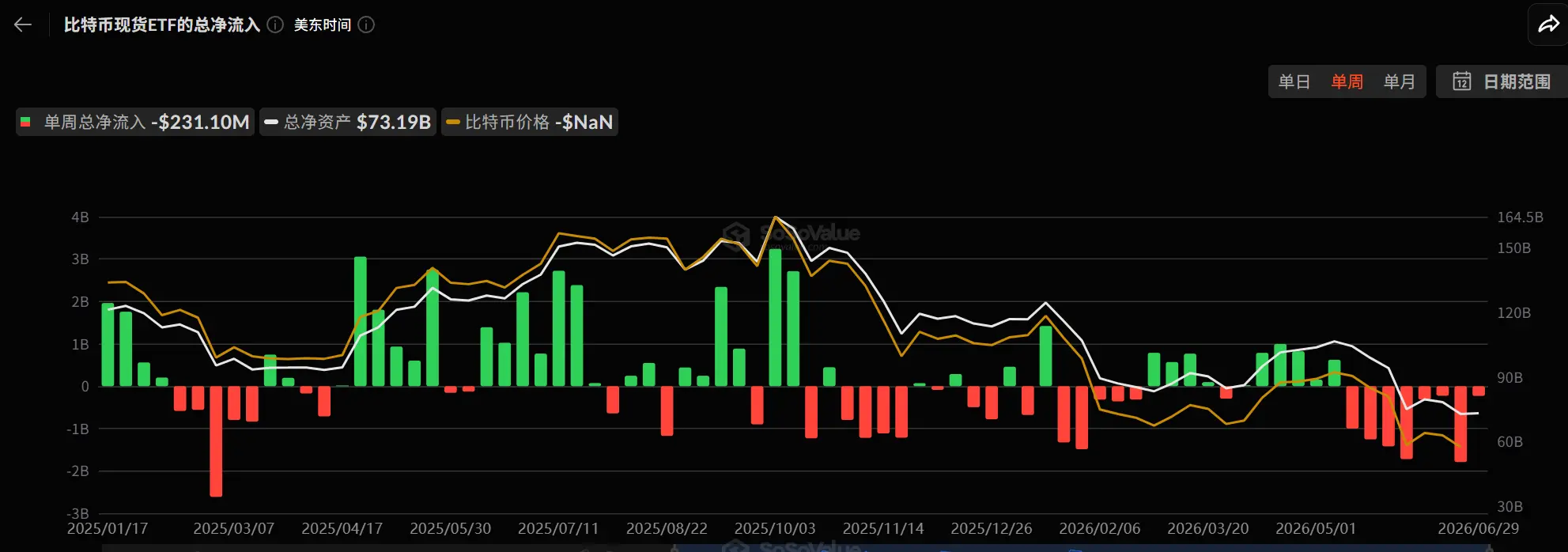
Meanwhile, the leveraged MicroStrategy ETFs (both long and short) launched in 2024 have each fallen over 90% since inception. Despite billions of dollars in inflows earlier, the leverage effect is magnifying losses dramatically.
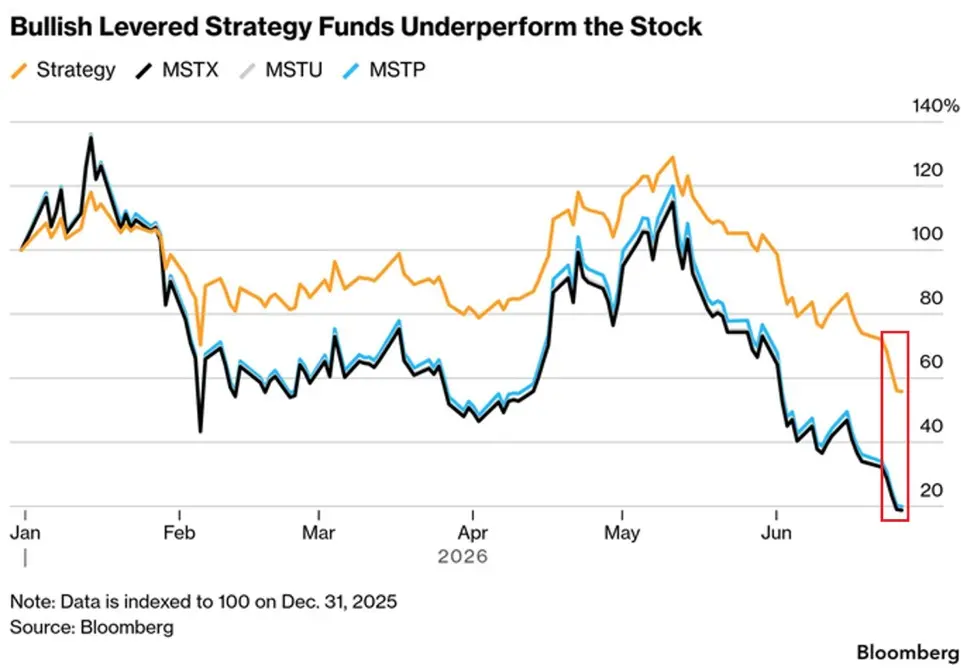
On one side, incremental buying from institutional channels like ETFs and public companies has clearly dried up; on the other, retail leverage exposure is being repeatedly crushed.

This new framework may alleviate liquidity and credit issues to some extent, giving Strategy more maneuvering room during Bitcoin's downturn. But whether STRC can truly return near par value ultimately depends on whether the market believes the company can sustainably cover these dividends without further dilution or Bitcoin liquidation. A rebound in Bitcoin price would make this task easier.


Trending Cryptos

Related Questions

QWhat is the core crisis that Strategy's two key securities (MSTR and STRC) have faced in the past six weeks?

ABoth of Strategy's core securities have experienced a significant confidence crisis. MSTR's stock price fell below $87, hitting a new low since February 2024, marking a decline of over 50% from its peak. STRC plummeted from near its face value to a historical low of $74 last Thursday, representing a 26% discount to its $100 face value.

QWhat major action did Strategy take on June 29th to address its capital management issues?

AOn June 29th, Strategy filed an 8-K form to introduce its 'Digital Credit' capital framework. This framework institutionalized measures including hard coverage requirements for its US dollar reserves, a dynamic assessment mechanism for STRC dividends, a $2 billion total share repurchase authorization, and a plan allowing for the sale of up to $1.25 billion worth of Bitcoin to support these obligations.

QAccording to the article, how does the new capital framework transfer costs down the company's capital structure?

AThe framework transfers costs down the capital structure in several waves. First, common shareholders bear the cost through equity dilution (e.g., the $1.15 billion ATM offering). Second, it establishes hard rules for US dollar reserves dedicated to covering dividend and interest payments. Third, it increases the STRC dividend yield from 11.5% to 12%. Fourth and most critically, it formally authorizes the sale of Bitcoin as a capital management tool, shifting the potential cost onto the core 'never sell' asset itself.

QWhat are the main arguments from supporters and critics regarding Strategy's new capital framework?

ASupporters, like Benchmark Equity Research, view it as pragmatic crisis management that provides tools (reserve rules, buybacks) to stabilize the situation and demonstrates active capital structure management. Critics, however, argue that institutionalizing Bitcoin sales undermines the company's core 'never sell' narrative and forces it to sell assets below its average cost basis (~$75.7K) to maintain its credit structure, which is a costly and challenging move.

QWhat broader market trends does the article link to the pressures faced by Strategy?

AThe article links Strategy's difficulties to broader negative trends in the Bitcoin market. These include historic net outflows from US spot Bitcoin ETFs (e.g., $1.79 billion in the week ending June 26th), a significant decline in net Bitcoin buying by global non-mining public companies, and the severe underperformance (over 90% declines) of leveraged MicroStrategy ETFs, indicating a drying up of institutional buying and heavy losses in leveraged retail positions.

Related Reads

Earning Six Figures and Still Struggling to Rent in San Francisco

A couple in San Francisco with a combined tech income over $360,000 struggled for months to find a one-bedroom apartment under $5,000 per month. Their story highlights how the AI wealth boom, driven by upcoming IPOs from companies like OpenAI and Anthropic, is dramatically escalating the city's cost of living. Even six-figure salaries are becoming insufficient for a comfortable lifestyle. The article details the financial reality for tech workers earning around $180,000 annually. After taxes, retirement contributions, and healthcare, take-home pay is roughly $7,000 per month. With average rents exceeding $3,800 and one-bedrooms often costing $4,500-$5,200, discretionary income shrinks to $1,500-$2,500. This contrasts sharply with reported median total compensations of $640,000 at OpenAI and $420,000 at Anthropic. The AI gold rush is identified as the primary driver. The scale of potential wealth from these IPOs, far surpassing previous tech booms, is flooding the housing market. Data shows San Francisco's average rent is now the highest in the U.S., with vacancy rates in desirable neighborhoods plummeting to around 3%. The overall cost of living is 65.6% above the national average. The piece features multiple professionals, including a 25-year-old with a $250,000 salary, facing housing instability, fierce competition for rentals, and a persistent, low-grade financial anxiety despite high earnings. It concludes that the rapid concentration of AI wealth is redefining what constitutes a "high salary" in San Francisco, pushing out mid-tier tech talent and creating a stark divide between those in the AI sector and everyone else.

marsbit1h ago

Earning Six Figures and Still Struggling to Rent in San Francisco

marsbit1h ago

Has Bitcoin Bottomed? Unpacking 12 Key Data Indicators

Author: BitalkNews **Title: Has Bitcoin Bottomed? Analyzing 12 Key Data Indicators** The current Bitcoin price is around $59,600, representing a maximum drawdown of approximately 53% from the 2025 high. The market is in a deep correction phase. Multiple indicators suggest valuations are nearing historical lows, but a confirmed bottom requires more time. **Summary of Key Indicators:** 1. **Fear & Greed Index:** At 16, indicating "Extreme Fear," similar to levels seen during the 2022 FTX collapse. 2. **Rainbow Chart:** BTC has fallen into the "Bitcoin is dead" zone, only the second such occurrence historically. 3. **MVRV Ratio:** Currently around 1.13, near the lower historical band, pointing to a bottoming valuation area (approx. $53,200-$53,400). 4. **Realized Price:** The aggregate cost basis is ~$53,400; the current price is only about 12% above it but hasn't broken below yet. 5. **UTXO Profit/Loss Ratio:** Has dropped to its lowest level this cycle, signaling a potential "capitulation" event often seen near cycle bottoms. 6. **Long-Term Holder SOPR:** For holders >155 days, it's at 0.662, now negative, indicating seasoned investors are selling at a loss. 7. & 8. **Miner Health:** ~20% of miners are unprofitable, and actual miner revenue is below theoretical levels, indicating ongoing miner stress. 9. **ETF Flows:** U.S. spot BTC ETFs have seen sustained net outflows, including a 13-day streak with over $1.7B in weekly outflows. 10. **Strategy Risk:** Strategy's stock premium has significantly contracted, pressuring the traditional "borrow-to-buy" model. 11. **Bear Duration & Drawdown:** The correction has lasted >265 days with a ~52.5% drawdown, shorter in depth but lengthy in duration. 12. **Market Expectations (Polymarket):** Betting markets suggest an ~80% probability of BTC falling below $55,000 and a notable chance below $50,000. **Conclusion:** Bitcoin is in a deep correction with potential bottom formation. Valuation metrics are in historically low ranges, and on-chain capitulation signals are accumulating. However, a complete shakeout isn't finished—the realized price hasn't been breached, and ETF demand hasn't reversed. The area below $60,000 holds long-term appeal, but patience is advised. Key signals to watch for include a return to ETF inflows, a recovery in the Long-Term Holder SOPR, and easing miner pressure.

marsbit1h ago

Has Bitcoin Bottomed? Unpacking 12 Key Data Indicators

marsbit1h ago

Valuation Inversion Emerges, Bitcoin Treasury Companies Face Trust Crisis

"Valuation Inversion Emerges, Sparking Trust Crisis for Bitcoin Treasury Firms" The investment thesis for corporate Bitcoin treasury stocks has fundamentally shifted. Investors are no longer rewarding companies simply for accumulating more Bitcoin. Instead, the focus is now on net Bitcoin per share, with intense scrutiny on whether new financings truly benefit existing shareholders or merely dilute their stake. Key indicators highlight the new reality. Metaplanet's market capitalization has fallen below the total value of its Bitcoin holdings, indicating a valuation discount. While MicroStrategy maintains a premium, its core metric—Bitcoin per diluted share for common shareholders—has been declining due to dilution from financing activities, primarily through its STRAT permanent preferred shares. This marks a transition from a pure "asset accumulation" phase to an "equity attribution" phase. Investors now deduct costs like preferred dividends and debt to calculate the actual Bitcoin claim for common equity. The widespread adoption of spot Bitcoin ETFs has removed the scarcity value these stocks once held, forcing them to justify their structure with superior leverage, dividends, or capital efficiency. European entrants like France's Capital B and Sweden's BTC AB are testing this new environment with ambitious funding plans backed by relatively small Bitcoin holdings. They are asking investors to bear complex capital structures, betting future Bitcoin purchases will cover all dilution and dividend costs. The sector's core risk is a broken financing loop. Once a company's stock trades below its Bitcoin net asset value, it loses the ability to issue equity for accretive purchases. It is then left with unpalatable choices: dilutive financing at a discount, venturing into new businesses like Bitcoin lending, or selling assets. The winners in this next phase will be those that demonstrably increase Bitcoin per share for common shareholders with every financing move.

Foresight News1h ago

Valuation Inversion Emerges, Bitcoin Treasury Companies Face Trust Crisis

Foresight News1h ago

Trading

Spot

Hot Articles

What is $BITCOIN

DIGITAL GOLD ($BITCOIN): A Comprehensive Analysis Introduction to DIGITAL GOLD ($BITCOIN) DIGITAL GOLD ($BITCOIN) is a blockchain-based project operating on the Solana network, which aims to combine the characteristics of traditional precious metals with the innovation of decentralized technologies. While it shares a name with Bitcoin, often referred to as “digital gold” due to its perception as a store of value, DIGITAL GOLD is a separate token designed to create a unique ecosystem within the Web3 landscape. Its goal is to position itself as a viable alternative digital asset, although specifics regarding its applications and functionalities are still developing. What is DIGITAL GOLD ($BITCOIN)? DIGITAL GOLD ($BITCOIN) is a cryptocurrency token explicitly designed for use on the Solana blockchain. In contrast to Bitcoin, which provides a widely recognized value storage role, this token appears to focus on broader applications and characteristics. Notable aspects include: Blockchain Infrastructure: The token is built on the Solana blockchain, known for its capacity to handle high-speed and low-cost transactions. Supply Dynamics: DIGITAL GOLD has a maximum supply capped at 100 quadrillion tokens (100P $BITCOIN), although details regarding its circulating supply are currently undisclosed. Utility: While precise functionalities are not explicitly outlined, there are indications that the token could be utilized for various applications, potentially involving decentralized applications (dApps) or asset tokenization strategies. Who is the Creator of DIGITAL GOLD ($BITCOIN)? At present, the identity of the creators and development team behind DIGITAL GOLD ($BITCOIN) remains unknown. This situation is typical among many innovative projects within the blockchain space, particularly those aligning with decentralized finance and meme coin phenomena. While such anonymity may foster a community-driven culture, it intensifies concerns about governance and accountability. Who are the Investors of DIGITAL GOLD ($BITCOIN)? The available information indicates that DIGITAL GOLD ($BITCOIN) does not have any known institutional backers or prominent venture capital investments. The project seems to operate on a peer-to-peer model focused on community support and adoption rather than traditional funding routes. Its activity and liquidity are primarily situated on decentralized exchanges (DEXs), such as PumpSwap, rather than established centralized trading platforms, further highlighting its grassroots approach. How DIGITAL GOLD ($BITCOIN) Works The operational mechanics of DIGITAL GOLD ($BITCOIN) can be elaborated on based on its blockchain design and network attributes: Consensus Mechanism: By leveraging Solana’s unique proof-of-history (PoH) combined with a proof-of-stake (PoS) model, the project ensures efficient transaction validation contributing to the network's high performance. Tokenomics: While specific deflationary mechanisms have not been extensively detailed, the vast maximum token supply implies that it may cater to microtransactions or niche use cases that are still to be defined. Interoperability: There exists the potential for integration with Solana’s broader ecosystem, including various decentralized finance (DeFi) platforms. However, the details regarding specific integrations remain unspecified. Timeline of Key Events Here is a timeline that highlights significant milestones concerning DIGITAL GOLD ($BITCOIN): 2023: The initial deployment of the token occurs on the Solana blockchain, marked by its contract address. 2024: DIGITAL GOLD gains visibility as it becomes available for trading on decentralized exchanges like PumpSwap, allowing users to trade it against SOL. 2025: The project witnesses sporadic trading activity and potential interest in community-led engagements, although no noteworthy partnerships or technical advancements have been documented as of yet. Critical Analysis Strengths Scalability: The underlying Solana infrastructure supports high transaction volumes, which could enhance the utility of $BITCOIN in various transaction scenarios. Accessibility: The potential low trading price per token could attract retail investors, facilitating wider participation due to fractional ownership opportunities. Risks Lack of Transparency: The absence of publicly known backers, developers, or an audit process may yield skepticism regarding the project's sustainability and trustworthiness. Market Volatility: The trading activity is heavily reliant on speculative behavior, which can result in significant price volatility and uncertainty for investors. Conclusion DIGITAL GOLD ($BITCOIN) emerges as an intriguing yet ambiguous project within the rapidly evolving Solana ecosystem. While it attempts to leverage the “digital gold” narrative, its departure from Bitcoin's established role as a store of value underscores the need for a clearer differentiation of its intended utility and governance structure. Future acceptance and adoption will likely depend on addressing the current opacity and defining its operational and economic strategies more explicitly. Note: This report encompasses synthesised information available as of October 2023, and developments may have transpired beyond the research period.

525 Total ViewsPublished 2025.05.13Updated 2025.05.13

What is $BITCOIN

Discussions

Welcome to the HTX Community. Here, you can stay informed about the latest platform developments and gain access to professional market insights. Users' opinions on the price of BTC (BTC) are presented below.

活动图片