Author: Zen, PANews
On August 3, Isabel, co-founder of POAP, announced that the digital collectible project, which had been operating for over five years, would cease further development.
After the news broke, many early users reopened their wallets. There still lay the badges from Ethereum conferences, hackathons, community meetups, and online events they had attended. Some were from conferences that had ceased, some belonged to long-silent projects, and others recorded industry moments like Ethereum's Merge upgrade.
The badges can still be queried and displayed, as if the past never left. But the team that created these mementos has decided to say goodbye.
POAP was not a failed product, unloved and unused. It grew from an internal experiment within the Ethereum community into one of the most representative participation credentials in the crypto industry, entering brand events, concerts, and major industry happenings.
In fact, this is not the first time the internet industry has tried to turn memories and mementos into a business. Over a decade ago, a startup called GetGlue once allowed millions of users to check in to TV shows, movies, and books, collect digital stickers, only to take away all digital records when its servers shut down.
POAP retold this story using blockchain, and once again stepped into the same river.
POAP's Departure from the Denver Plateau
In February 2019, thousands of developers gathered in Colorado for ETHDenver. The conference was held during a crypto market trough, with Bitcoin having fallen significantly from its previous bull market peak, and "NFT" far from becoming a buzzword.
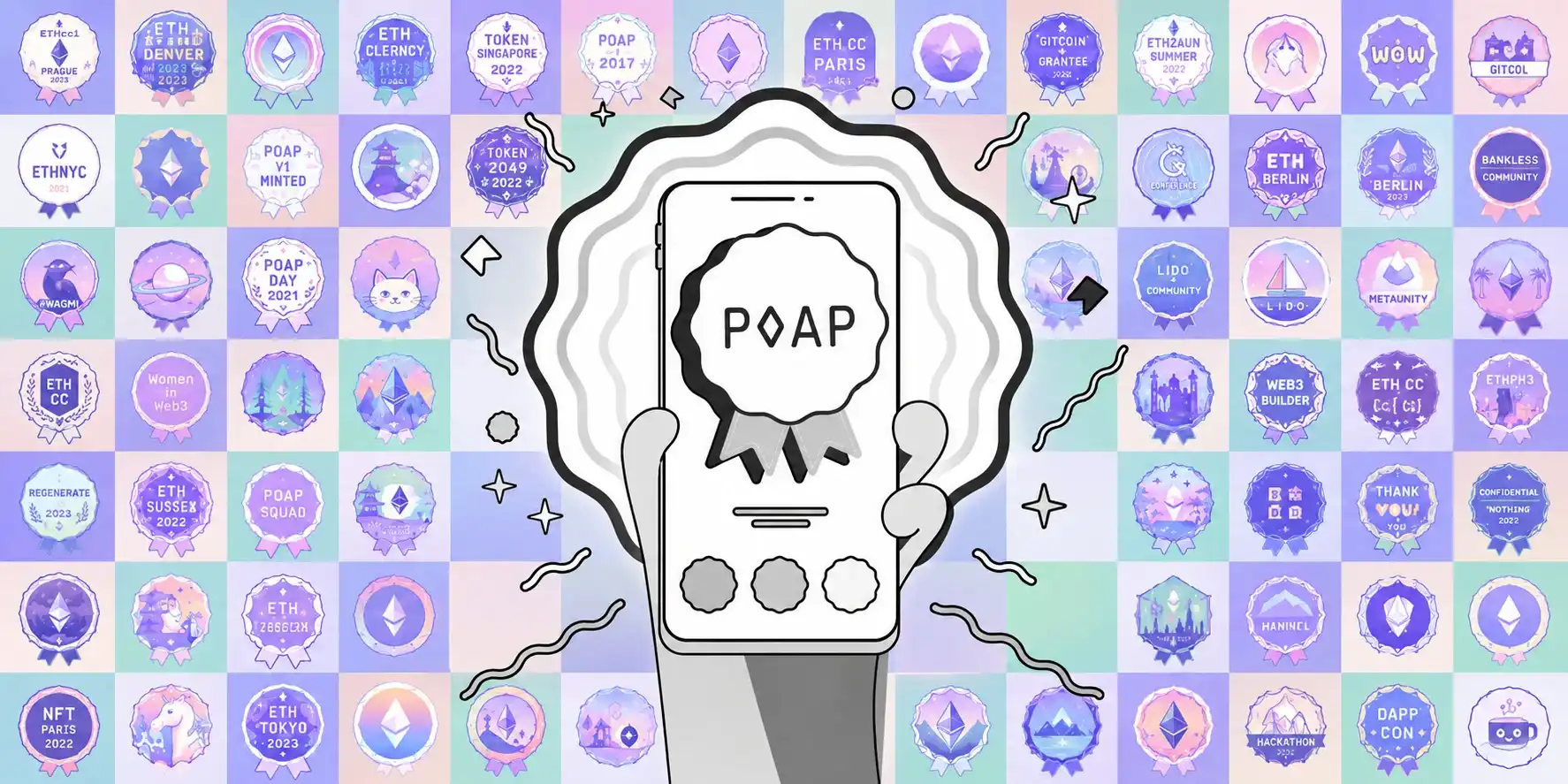
It was at this hackathon that POAP's early members, including Patricio Worthalter, first attempted to distribute ERC-721 digital badges to participants. POAP stands for Proof of Attendance Protocol, allowing attendees to claim an on-chain badge proving they were present at a specific time and place.
A year later, the distinctive pink rosette badge with a QR code had become a prominent feature at some Ethereum conferences. Attendees scanned the QR code to claim the POAP to their Ethereum address. Anyone who could display records of attending multiple events like EthCC Paris, Devcon Osaka, DappCon Berlin, or ETHDenver Denver via a mobile app was considered a crypto insider.
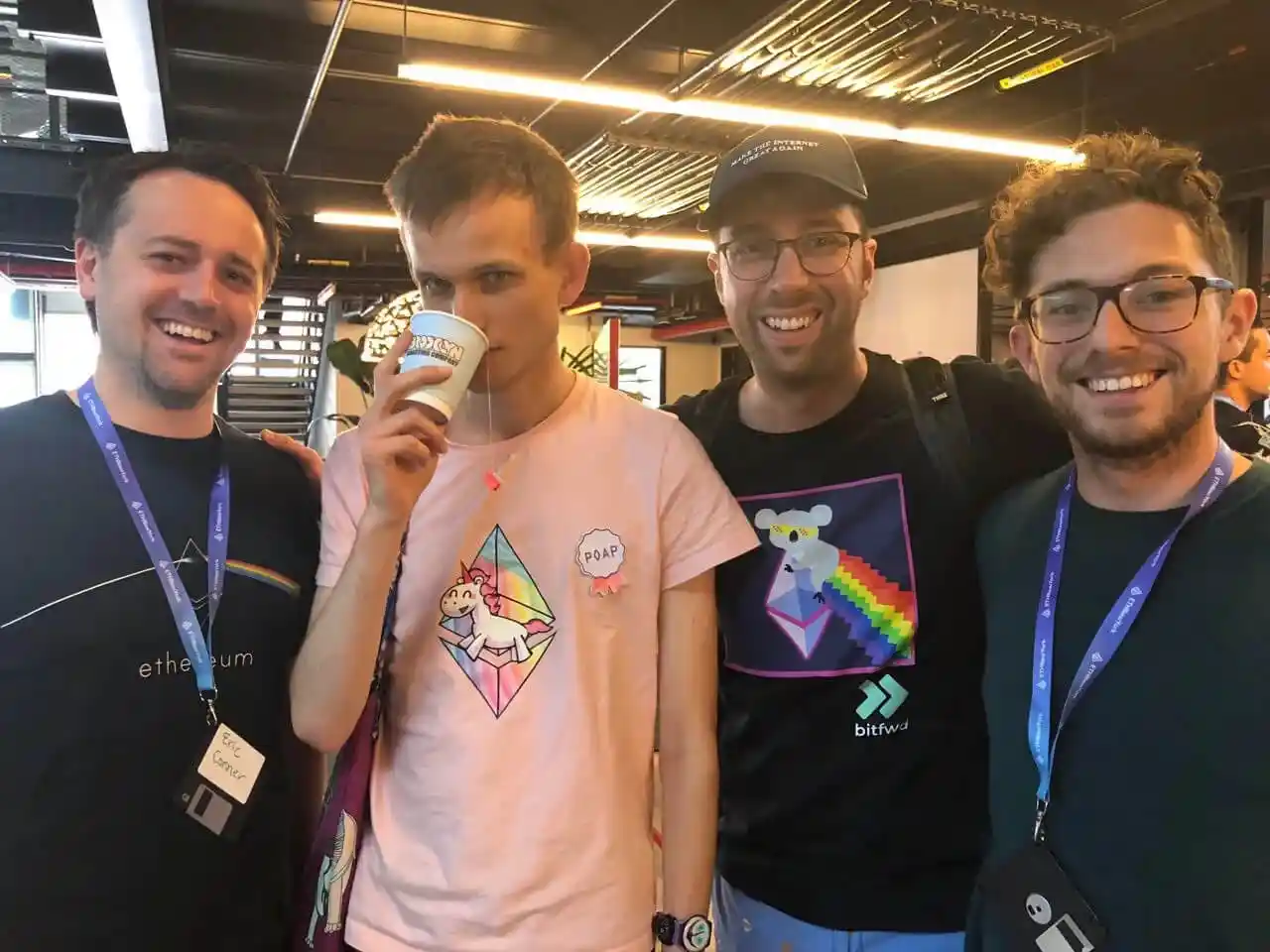
By March 2020, POAP had covered over 100 events, with approximately 7,000 badges claimed cumulatively. Later, POAP gradually evolved from an internal Ethereum community experiment into one of the most representative digital participation credentials in the crypto industry.
Essentially, POAP tapped into a long-standing habit of commemoration.
Travelers collect fridge magnets, postcards, and tickets; sports fans treasure match tickets; concert-goers keep wristbands; attendees might take home name badges and commemorative pins. Most of these items aren't expensive; what truly matters is the experiences they carry, the people shared with, the places visited, and the emotions felt.
POAP's core approach was to transform the emotions and memories represented by ticket stubs and badges into an on-chain credential held by the user themselves.
By the 2022 Metaverse Fashion Week, POAP even became a significant draw for attendees. Upon entering the event space, people would ask each other if a POAP was available. Even for lackluster events, as long as a POAP claim was offered, a queue could form.
Beyond industry events, POAP also began gaining favor with brands.
Adidas distributed limited-edition POAPs to some users, holders later gaining priority access to purchase the "Into the Metaverse" NFT; Estée Lauder built a virtual space in Decentraland inspired by the Advanced Night Repair "Little Brown Bottle," where visitors could unlock a POAP and claim an NFT wearable.
POAP's peak moment occurred in September 2022. That's when Ethereum completed its historic transition from Proof of Work to Proof of Stake. During The Merge, over 41,000 people watched the official watch party online, and participants placed over 366,000 pixels on the POAP collaborative canvas. The live stream then announced minting details for The Merge Drawing Party commemorative POAP.
An unrepeatable historical event was recorded as a digital badge that could be stored long-term in a wallet. For a project long centered on community rituals and shared memories, this was almost the ideal application scenario.
From Cultural Experiment to Economic Incentives
As the NFT market heated up, POAP transitioned from a cultural experiment and volunteer project at hackathons to a formal company. In September 2021, POAP Inc. was registered in the US. Just four months later, the company announced a $10 million seed funding round co-led by Archetype and Sapphire Sport.
POAP's self-definition extended far beyond "event badges." The team envisioned that the conferences, courses, communities, and projects each person participated in could gradually form a social graph, becoming a form of digital identity independent of names, nationalities, and ID numbers.
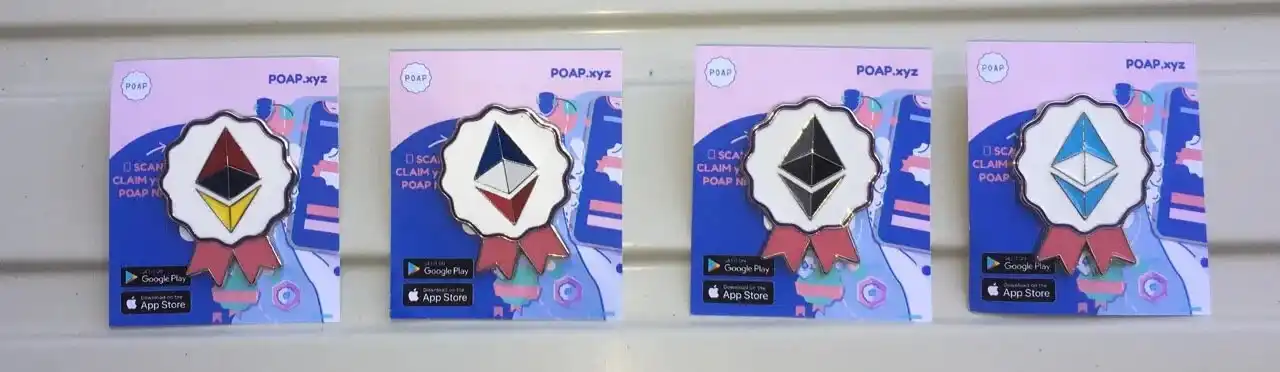
Since each badge and its holding address are queryable on-chain, communities and project teams could also identify specific users based on POAP holdings, granting them access to lotteries, event tickets, exclusive content, whitelist spots, and distributing NFT or token airdrops.
This potential utility significantly boosted POAP's appeal. For project teams, distributing POAPs to event participants was a low-cost way to record early users and community members for future rewards; for users, claiming a free badge had almost no cost but could become a credential for future event access, airdrops, or proof of early participation.
Thus, users' motivations for collecting POAPs were not identical from the start. Some wanted to preserve an experience, seeing it as a community identity; others merely bet on potential future rewards from the badge. This dual nature helped POAP spread rapidly within crypto communities but also sowed long-term contradictions.
When badges could correspond to airdrops or other economic benefits, publicly shared claim links attracted many users who didn't actually attend events, and individuals might use multiple wallets for batch claiming. As airdrop farming, Sybil attacks, and reward arbitrage became widespread issues in crypto, POAP's position grew more awkward.
For projects distributing rewards, a POAP that could be claimed at low cost and collected in bulk became a less reliable indicator of community contribution and user quality. And when projects were no longer willing to allocate benefits based on POAPs, users primarily motivated by potential rewards would also leave quickly.
Thus, POAP fell into a difficult-to-escape cycle. A product originally intended to record genuine experiences became less valuable the more it was integrated into crypto's incentive systems.
Stepping into the Same River: The Web2 Version of "POAP" That Died Over a Decade Ago
Before blockchain and NFTs, the Web 2.0 era had already conducted a remarkably similar experiment, also attempting to turn people's daily experiences into collectible digital badges.
In August 2010, a viewer of the popular TV series "True Blood" could sit in front of the TV, open the recently released GetGlue app, and click on the episode they were watching to "check in." Seconds later, a digital sticker designed by HBO would appear on their profile.
By checking in consecutively, commenting, or completing hidden tasks with undisclosed rules, users could unlock rarer stickers like "Truebie." After collecting a certain number, users could request GetGlue to mail free physical versions of the stickers home, to be stuck on laptops, bookshelves, or walls.
GetGlue started as a browser plugin providing social recommendations based on web content, later pivoting to "entertainment check-ins." Users could tell friends what TV show they were watching, what book they were reading, what music they were listening to, even what drink they were having or what topic they were thinking about. Each check-in earned points, unlocked stickers, and could be shared to Twitter or Facebook.
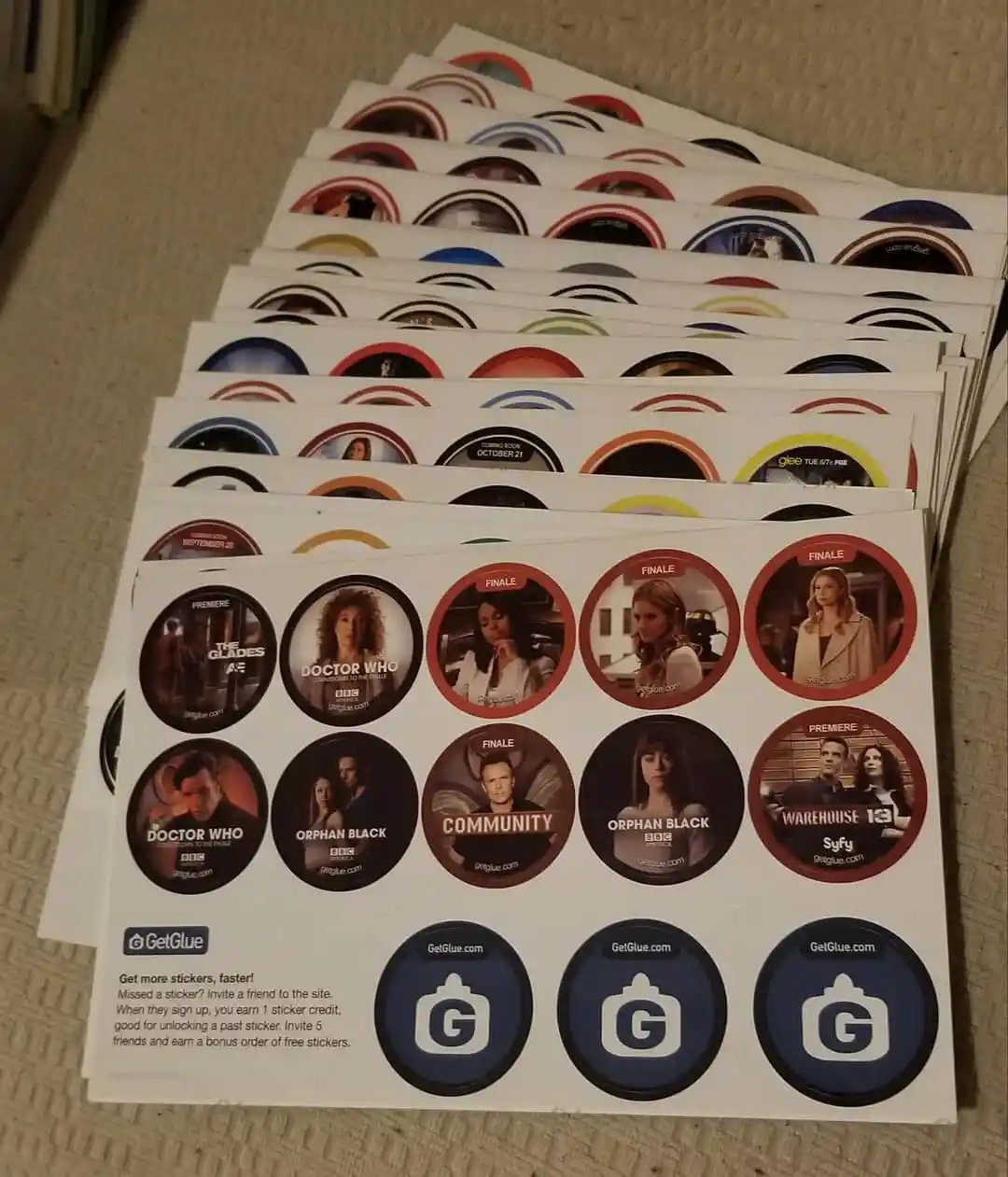
GetGlue, focused on TV viewer socializing, saw rapid growth in 2010. At the start of the year, it had only about 30,000 users; by October, that number exceeded 650,000, with over 10 million check-ins and ratings per month.
In early 2012, GetGlue raised $12 million, backed by Union Square Ventures, RRE Ventures, Time Warner Investments, among others, bringing total funding to around $24 million. Its user base expanded to 2 million, with over 100 million cumulative check-ins.
Additionally, GetGlue had dozens of major media partners. HBO, Showtime, PBS, Universal Pictures, Warner Bros., Random House, and many other film, TV, and publishing houses distributed stickers and discounts to fans around hundreds of programs. Fox, NBC, HBO, and DirecTV even integrated GetGlue's data and features into their own websites and apps.
The business logic seemed smooth. User check-ins expressed interest and promoted shows; TV networks gained data on when audiences watched live, on-demand, or recorded. GetGlue could monetize through brand partnerships, member rewards, merchandise referrals, and ads. On the surface, GetGlue seemed to have all the makings of a successful consumer internet company.
However, the problem was that users truly wanted the TV shows, movies, and books, not the check-in itself. GetGlue also believed the check-in stickers that initially attracted users weren't enough to sustain the business alone. By 2012, it had already de-emphasized stickers, attempting instead to use user check-in history to rebuild an electronic program guide, recommending worthwhile content to viewers for future time slots.
In 2012, competitor Viggle announced plans to acquire GetGlue for $25 million in cash and stock, but the deal later fell through. In 2013, GetGlue was acquired by TV app company i.TV; in early 2014, the company rebranded as tvtag, its interface changing from blue to red, retaining check-ins, stickers, and real-time discussions. Less than a year later, users received a farewell email: tvtag and its companion app would shut down on January 1, 2015.
After the servers shut down, GetGlue users' check-in history, discussions, and social networks vanished along with it. Those physical stickers once stuck on computers, notebooks, and walls had likely already been damaged, peeled off, or discarded over years of use.
The digital accounts' check-in records, discussions, and relationship networks disappeared with the server shutdown. Those physical stickers stuck on computers and notebooks might have long been damaged, peeled off, or thrown away.
Over a decade later, POAP retold this story of digital mementos using blockchain. The business challenges it faced were not fundamentally different from GetGlue's. The distinction was that, upon reaching its end, the POAP digital badges already in wallets would continue to exist as on-chain records.
Emotional Value That Cannot Drive Consumption
The similarity between POAP and GetGlue lies fundamentally in facing the same product structure. What users truly value are the activities, programs, and communities behind the mementos, while the platform provides an add-on record after an experience concludes.
GetGlue users loved "True Blood," the Oscars, or a particular novel. POAP users cherish an Ethereum conference, hackathon, concert, or community gathering. Stickers and badges reinforce memories but rarely become the primary reason people attend events or watch programs.
Such a product can be very popular yet struggle to achieve consumption.
For POAP collectors, the most attractive aspects of badges are precisely being free, low-barrier, and gift-like. Small communities, schools, and open-source projects are willing to issue POAPs but often lack sustained software budgets; large brands have the ability to pay but are more likely to treat it as a marketing project for a product launch, not a must-have long-term subscription infrastructure.
This creates a misalignment between product value, users, and payers.
POAP also faced a contradiction GetGlue never did—it was born in the NFT market yet consistently tried to distance itself from NFT speculation.
During the NFT peak from 2021 to 2022, the most effective user distribution methods were often price appreciation, airdrop expectations, and secondary market trading. Projects issued tokens or NFTs, rapidly expanding communities through scarcity and wealth effects, then converting transaction fees, royalties, or token appreciation into revenue.
POAP didn't want to follow this path. It emphasized that badges represent shared experiences, not tradeable assets. A POAP should only be issued when an event is truly worth commemorating. If users claimed badges merely for future airdrops or trading value, the record itself would lose meaning.
This restraint protected POAP's brand but also limited its commercial potential.
In her farewell, Isabel stated, the funding cycles and distribution mechanisms of the crypto industry made it very difficult for POAP to build a sustainable company without eroding its original spirit. In other words, POAP's most valuable aspects clashed most intensely with the crypto industry's most proven monetization methods at the time.
POAP's shutdown doesn't prove digital mementos are meaningless. The millions of badges still in users' wallets prove it once created genuine cultural value. But there is no automatic conversion path between cultural value and commercial value.
What's regrettable is that POAP ultimately preserved many people's pasts but failed to find a sustainable future for itself.