OpenAI's Misfire, Scaling Law's Original Paper Reveals Bug, Trillions of Compute Power Wasted in Vain

marsbitPublished on 2026-07-05Last updated on 2026-07-05

Abstract

Recent revelations by a former OpenAI researcher, Diogo Almeida, and subsequent discussion highlighted by DeepMind's Sander Dieleman suggest a critical bug in OpenAI's seminal 2020 "Scaling Laws" paper. The analysis claims the original research contained a flawed experimental setup, leading to a misinterpretation of how to optimally scale large language models (LLMs). The core issue involves two key methodological choices in the OpenAI paper: first, training all models (small and large) on the same fixed dataset size (~130 billion tokens), which underfed larger models; and second, using a cosine learning rate decay that prematurely flattened loss curves, creating the false impression that models had reached performance saturation with more data. This combination allegedly biased the conclusion that, for a fixed compute budget, scaling model parameters was vastly more important than scaling training data—a principle that drove the creation of "over-parameterized, under-trained" models like GPT-3. This was later corrected by DeepMind's 2022 Chinchilla paper, which advocated for a more balanced scaling of parameters and data. Further scrutiny revealed that even the Chinchilla analysis itself had an optimization bug. The critique extends beyond the bug, questioning whether current scaling laws are inherently biased, as they are primarily derived from English data, a morphologically poor language that may be inefficient to learn compared to others like French. The implication i...

DeepMind researcher reveals late at night: There's a critical bug in OpenAI's original Scaling Law paper! The global AI community has wasted trillions in compute power for nothing. GPT-3 was actually severely "overinflated".

OpenAI misled the entire AI field for years!

Over the past five years, the entire AI industry has been driven forward by the Scaling Law.

Sam Altman's confidence in AGI stems from this curve.

Now, someone has stepped forward to say: This curve was wrong from the very beginning.

This is not hindsight. The speaker is a researcher who was optimizing large models at OpenAI back then - Diogo Almeida.

Just now, he published a blog post with a chillingly straightforward title - "Scaling Laws, Honestly".

The opening sentence leaves no room for doubt: The original version of the scaling law is wrong because it contains a bug.
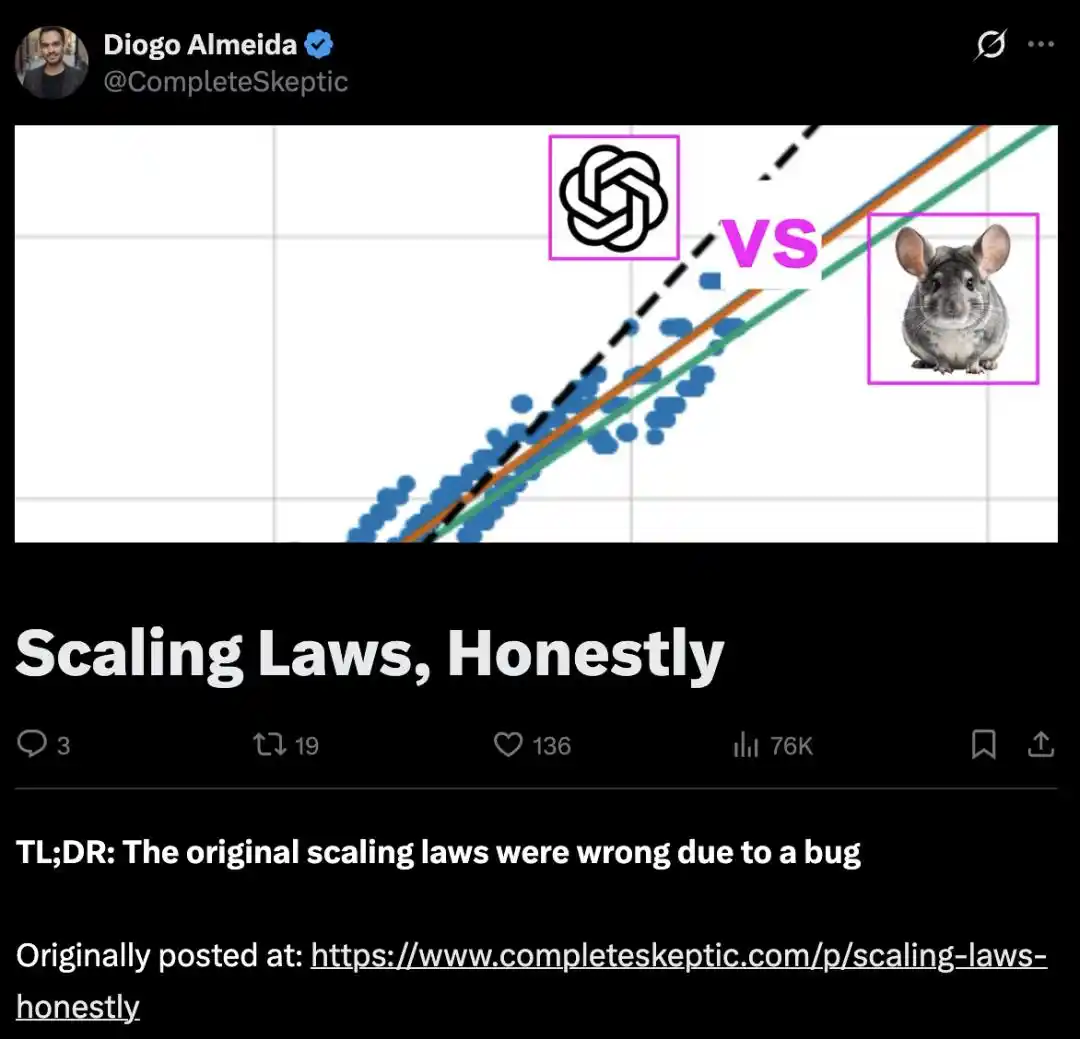
Portal: https://www.completeskeptic.com/p/scaling-laws-honestly

Sander Dieleman from DeepMind, famous for diffusion models, promptly boosted it on Twitter, calling it an interesting piece of LLM history:

The original scaling law was wrong due to a bug, likely causing the industry to waste massive compute power on a bunch of "overly large, undertrained" models.
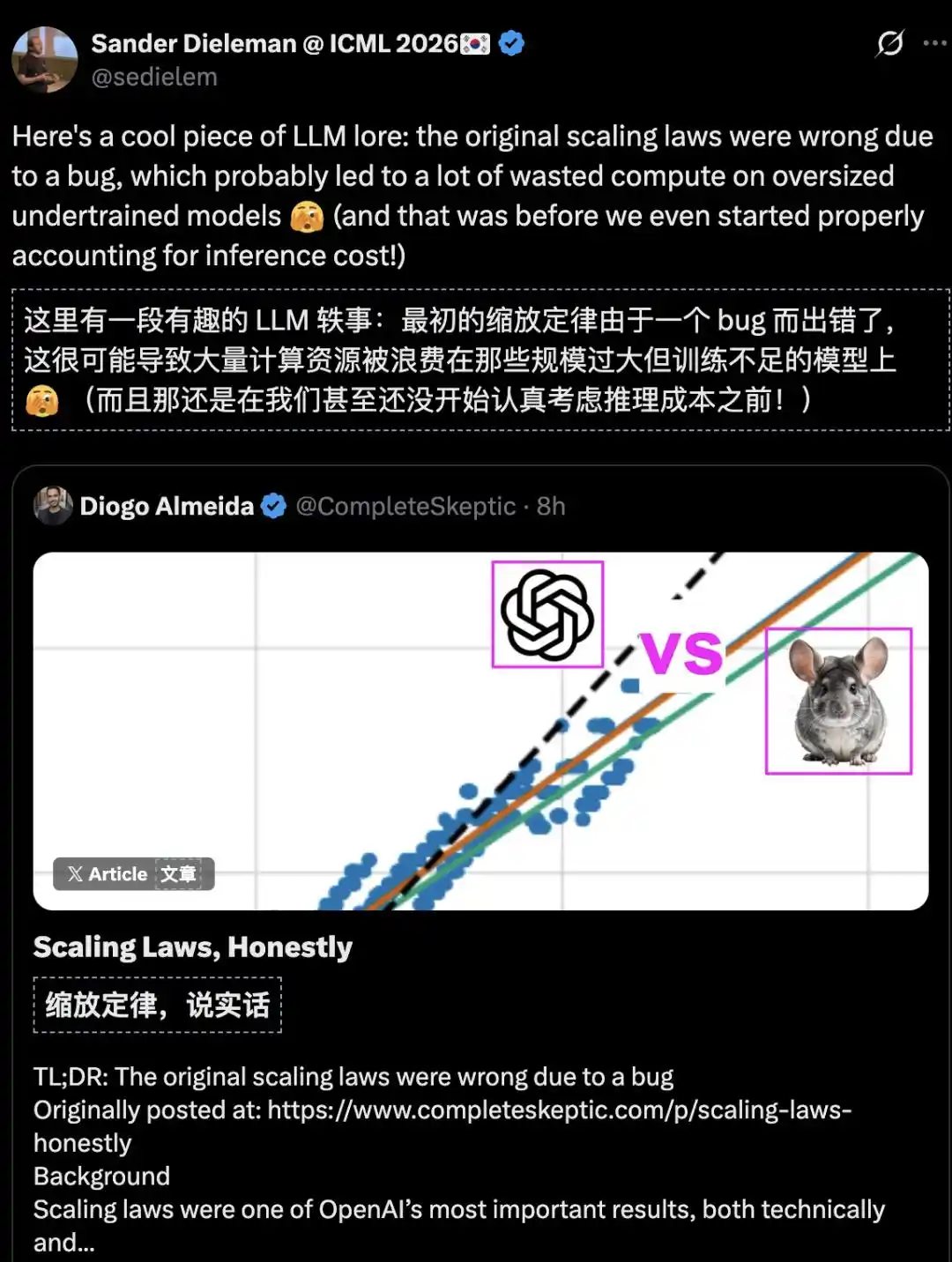
One bug, burning two years.

When the bug is exposed, what we see is not just a black hole of compute power, but also a boundary of intelligence reshaped by language itself, far deeper than imagined.

Scaling Law Turns Out to Be the LLM Version of "Geocentric Theory"

In 2020, OpenAI concluded: Under a fixed compute budget, you should prioritize making the model larger, rather than feeding it more data.

In formula terms, the optimal parameter count is proportional to compute raised to the power of 0.73—parameters were the variable to aggressively scale.
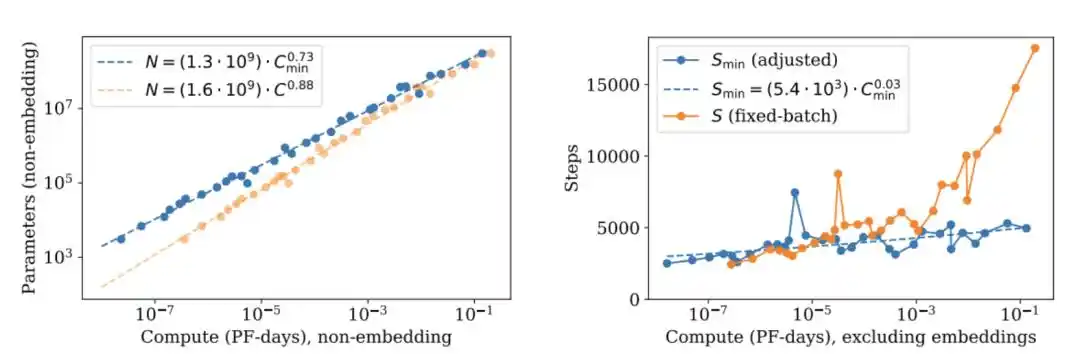
This statement directly defined the shape of the GPT-3 generation. Pile on parameters. Pile them on relentlessly. 175 billion.

It told developers worldwide: Don't ask, just scale parameters; as long as you make the model big enough, miracles will happen.

Two years later, DeepMind threw down Chinchilla, overturning this conclusion: model and data should be scaled up with roughly equal importance, with about 20 tokens per parameter being cost-effective.
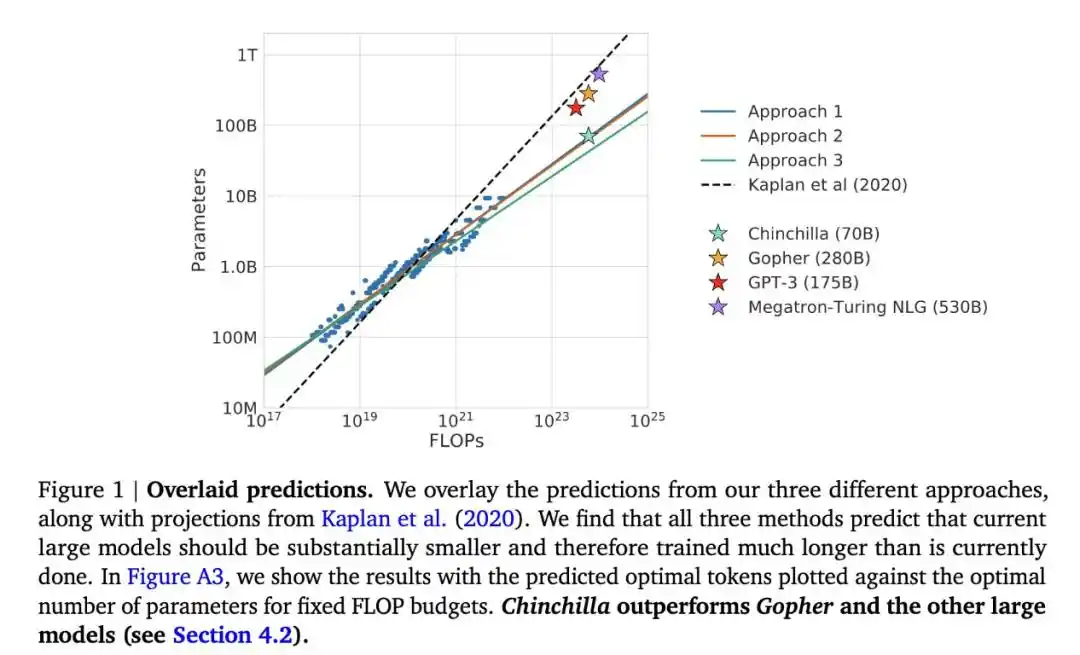
They trained a 70-billion parameter Chinchilla, fed it 1.4 trillion tokens—half the size of GPT-3 but with over four times its data.

The result? With the same compute budget, it comprehensively outperformed Gopher with 280 billion parameters but fed only 300 billion tokens.

In plain language: With the same money, one raised a "flabby" strongman, the other trained a lean boxer.

After a three-year delay, Beida alumna Weng Li delved into mainstream explanations for the subsequent differences, attributing the variance to their methods of calculating total parameters.

And that's not all. Even the "correct" Chinchilla itself isn't clean.

In 2024, Besiroglu et al. extracted and reran the data points from the Chinchilla paper, discovering another bug hidden in its own fitting:

The loss scale in the optimizer was set too high, applying the Huber loss per sample average instead of sum, causing premature termination of fitting.
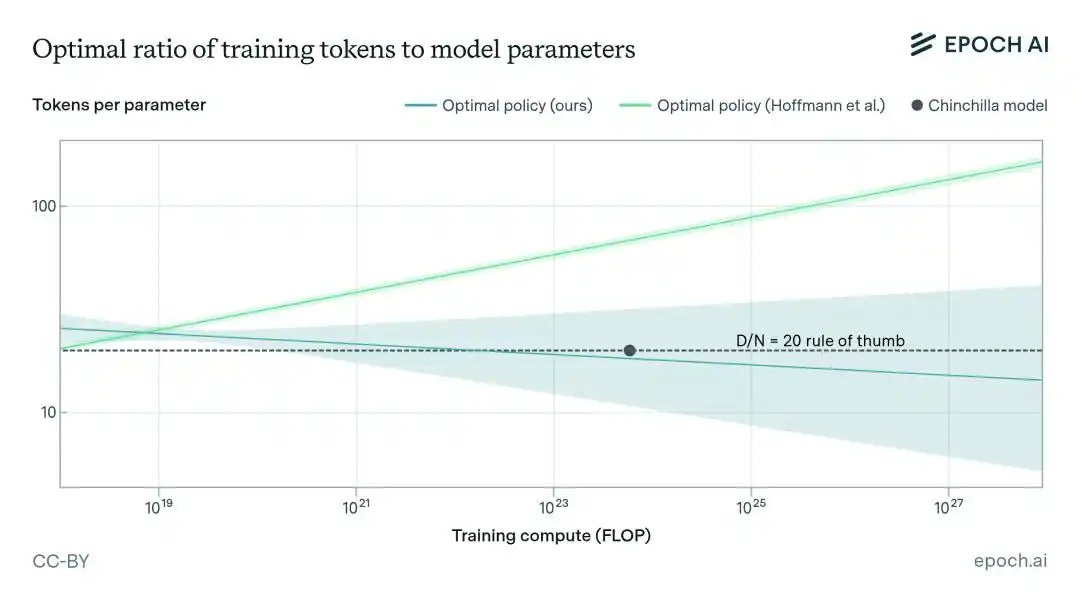
The paper correcting a bug, itself carried another bug.

At this point, that phrase "first principles" repeated by countless people suddenly seems less solid.

So-called Scaling Law has never been an ironclad physical law like Newton's three laws; it's just an empirically fitted curve.
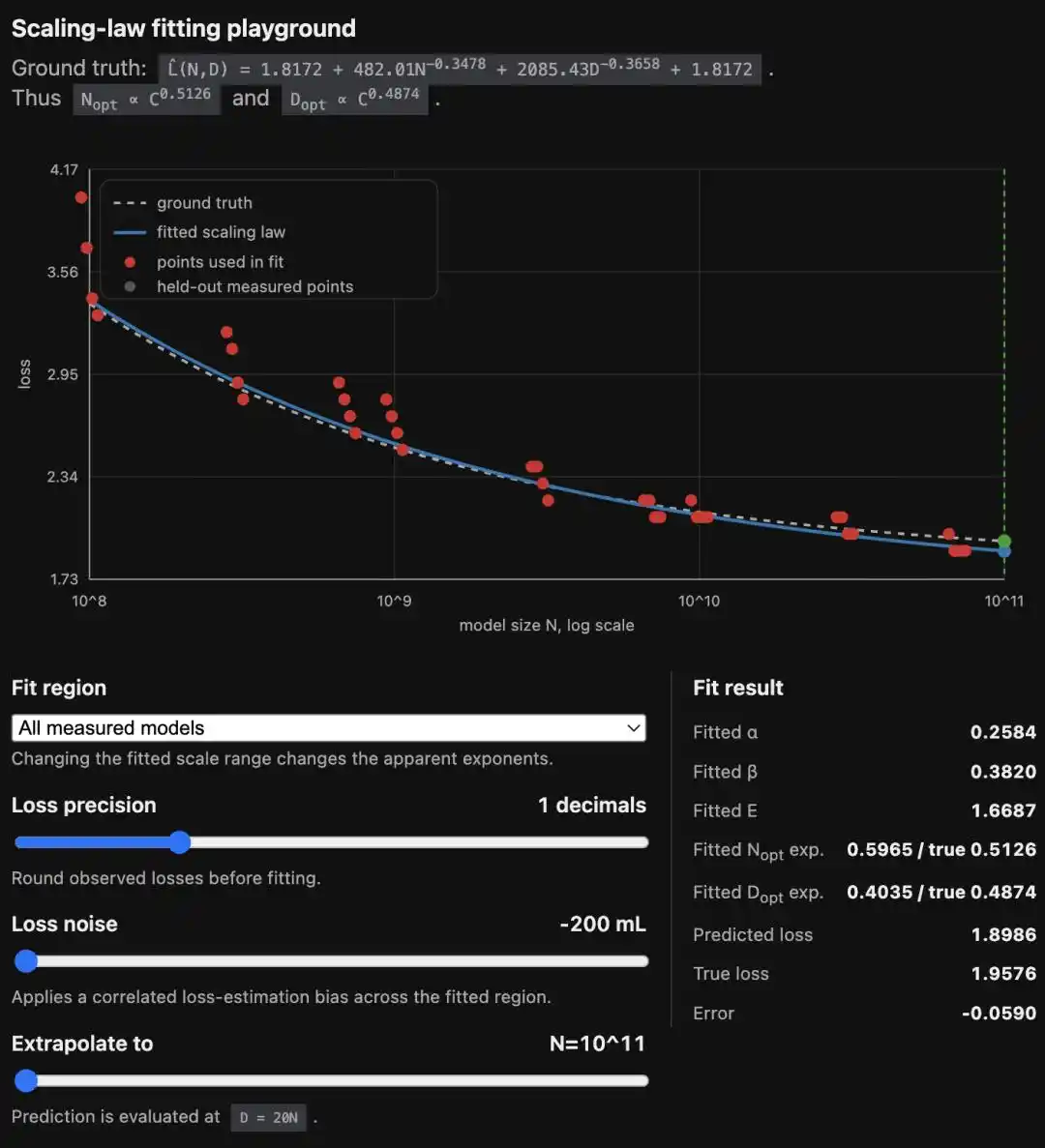
When Diogo Almeida believes the truth isn't so, it's not a matter of different methods, "the original scaling law itself had a bug."

Did OpenAI Deceive Global AI Peers with Three Tricks?

To create a lie believed by the global AI community, only three steps are needed.

Step One: Imprisoning Data.

OpenAI's paper fed all models—whether they were toddlers learning to walk (small models) or already giants—the exact same "meal size." Approximately 130B tokens of data.

Small models were thus "well-fed" or even "overfed," while the large models that truly needed massive data to fill their capacity were severely malnourished under the same token budget.
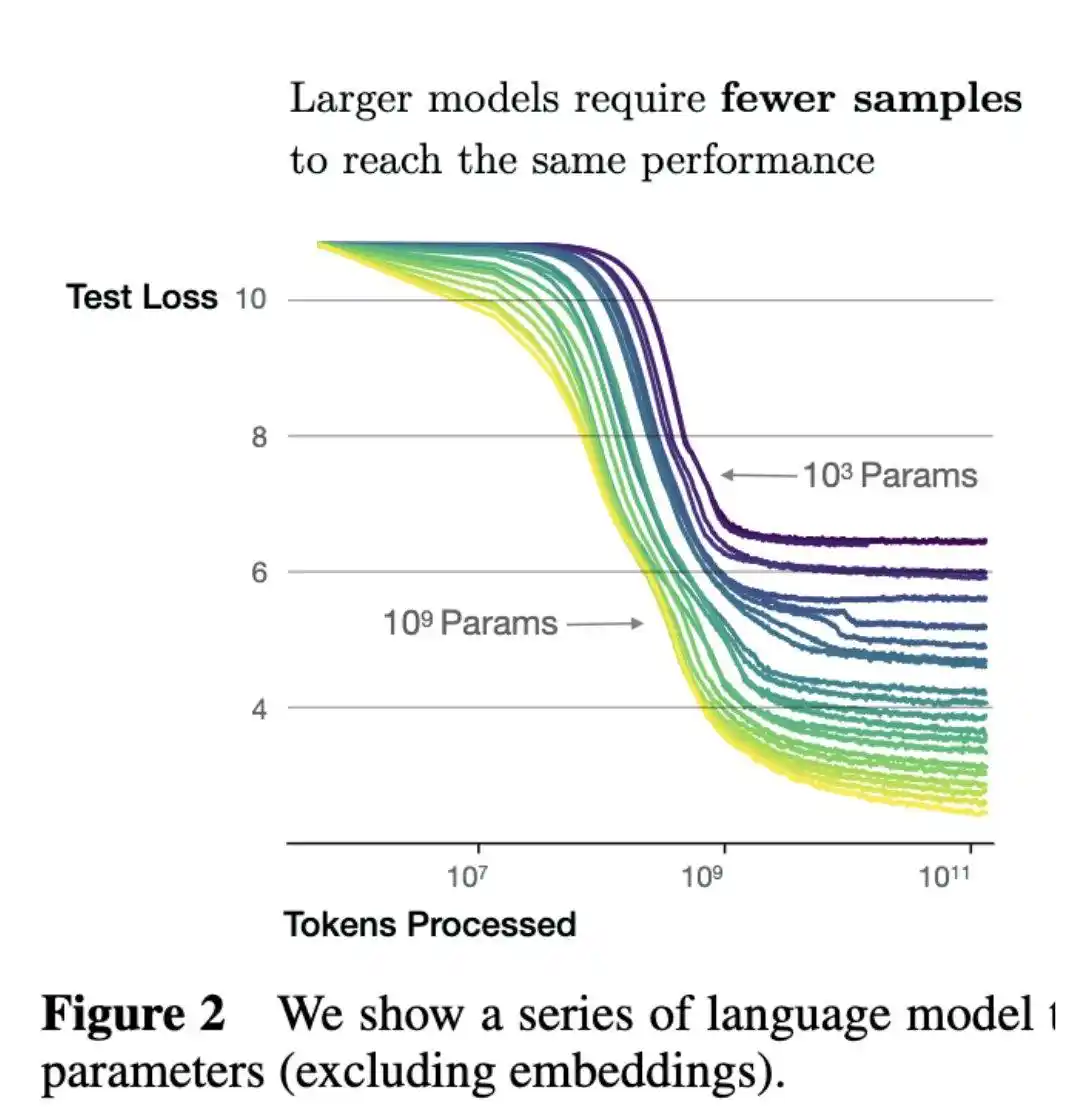
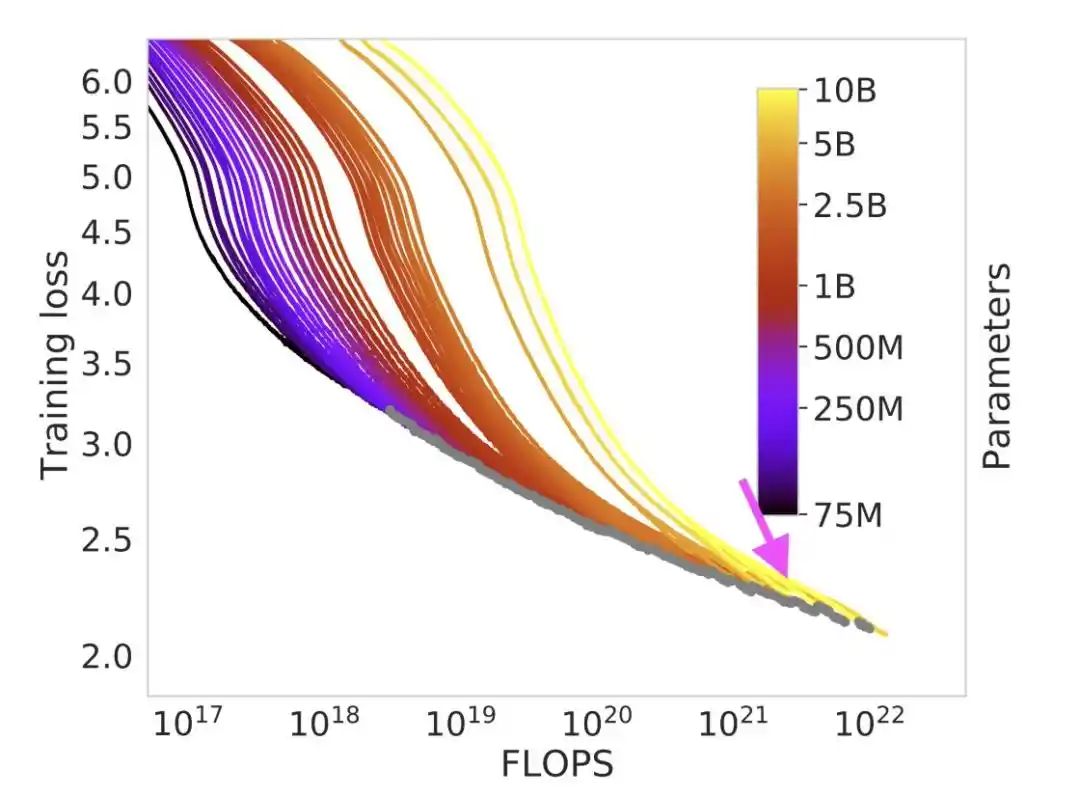
The Chinchilla paper later pinpointed the issue: They "used a fixed number of training tokens and learning rate schedule for all models."
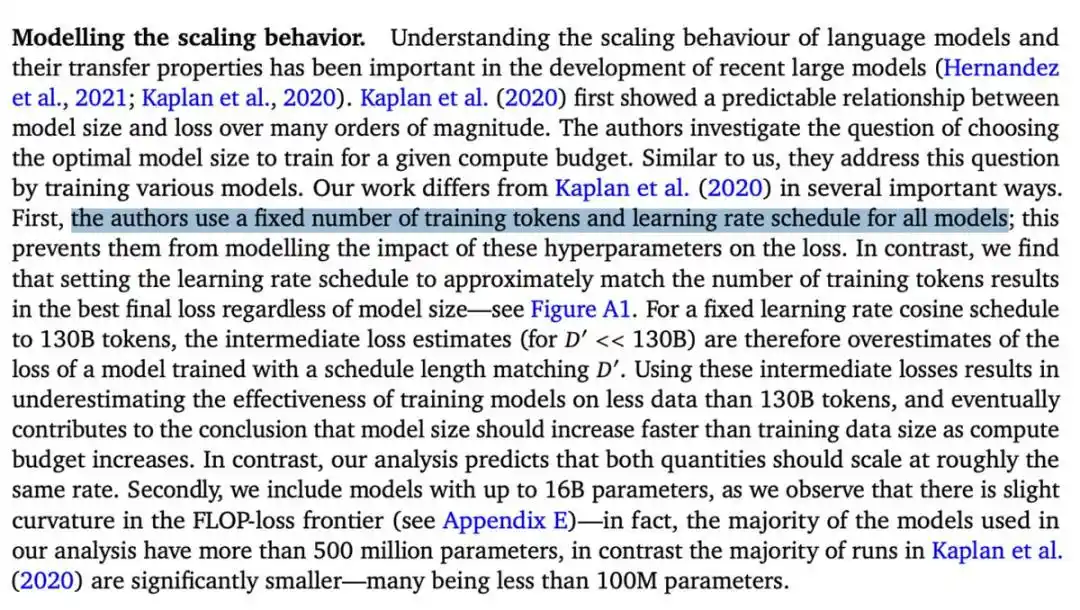
This is like having kindergarteners and PhD students take the same exam with the same time limit, then claiming "performance depends only on talent."

Step Two: Deceiving LR Decay.

They used Cosine Learning Rate Decay, allowing the learning rate to smoothly approach zero as training neared its endpoint.
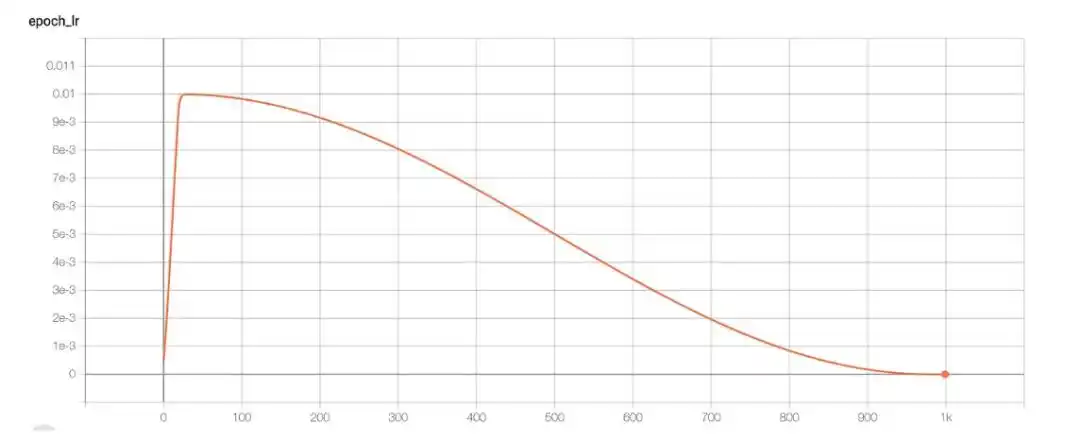
As training approached the preset endpoint, the learning rate was artificially pressed down to zero step by step, naturally causing the model's progress to "flatten."

Once the curve flattens, it looks like: This model has already learned all it can, feeding it more is useless.

The researchers thus concluded: "Adding more data is useless, the model has saturated."

This wasn't the model's limit; it was the learning rate artificially severing the model's growth path. It created a perfect illusion: performance has hit the ceiling, more data is futile.

But we now know those large models were nowhere near their limit.

Step Three: The Arrogance of Authority.

The third step, and the most insidious: The paper stated that the results were "largely independent of learning rate schedule."
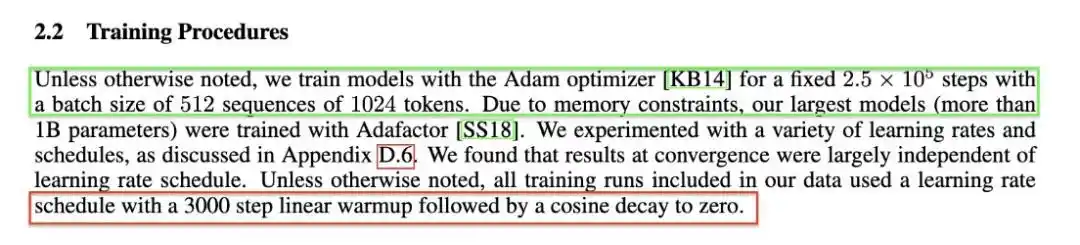
Although many, including Diogo Almeida who was at OpenAI at the time, vaguely sensed something was off, technically this conclusion was correct under a fixed token limit.

But it simply didn't apply to the ideal "infinite data" world that the scaling law truly aimed to describe.

They mistook a localized truth under limited conditions for a universal cosmic law.

With these three steps combined, you get a law that is both wrong and extremely difficult to debug.

Even Diogo himself admits: Back then, he was also doing optimization at OpenAI and didn't spot this bug—that learning rate curve looked too much like it was "carefully set," who would have doubted it?

GPUs Wasted in Vain

Severe Compute Mismatch

Guided by OpenAI's erroneous formula, the AI industry entered the era of "brute force yields miracles."

This means that in recent years, the world's brightest minds and scarcest compute power were wasted on ineffective scale expansion.

This isn't just a matter of money; it's humanity collectively sprinting thousands of kilometers down the wrong track in the race against time towards AGI, all due to a learning rate setting.

If the discovery of the bug is heartbreaking, the ensuing deep reflection is chilling.

Researcher Adam Zachary Wasserman pointed out a blind spot overlooked by everyone: Even if the formula is corrected, the current Scaling Law is merely an "English Scaling Law."
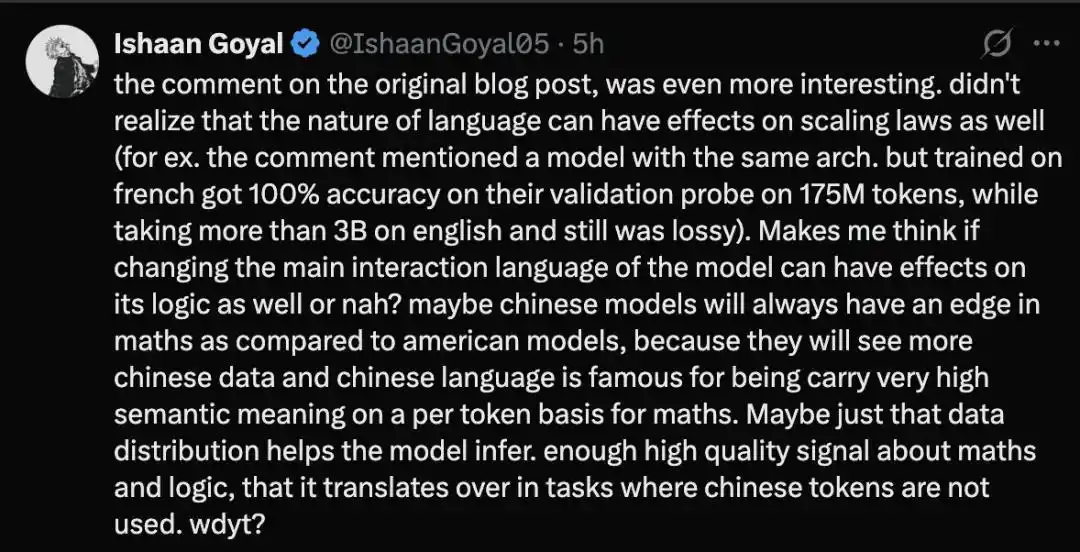
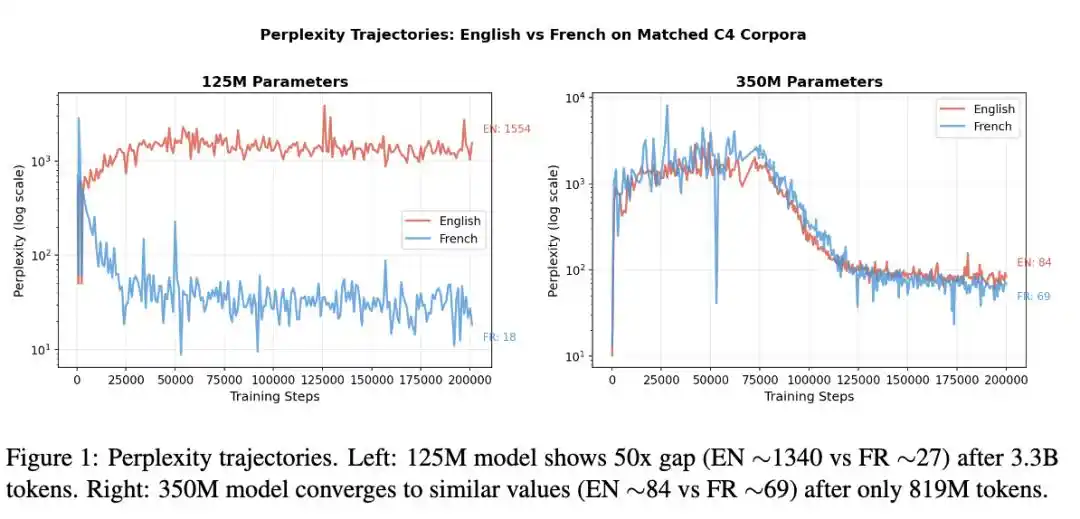
He conducted a counterintuitive experiment: training models with the same architecture and compute power.

The result showed that a French model achieved a certain grammatical capability with efficiency 50 to 100 times higher than an English model.
Why? Because English is a "morphologically poor" language.

It relies too much on distributional patterns, requiring models to guess word meanings from massive data; whereas languages like French or Chinese, which are morphologically rich or structurally strict, carry a lot of explicit information in the words themselves.
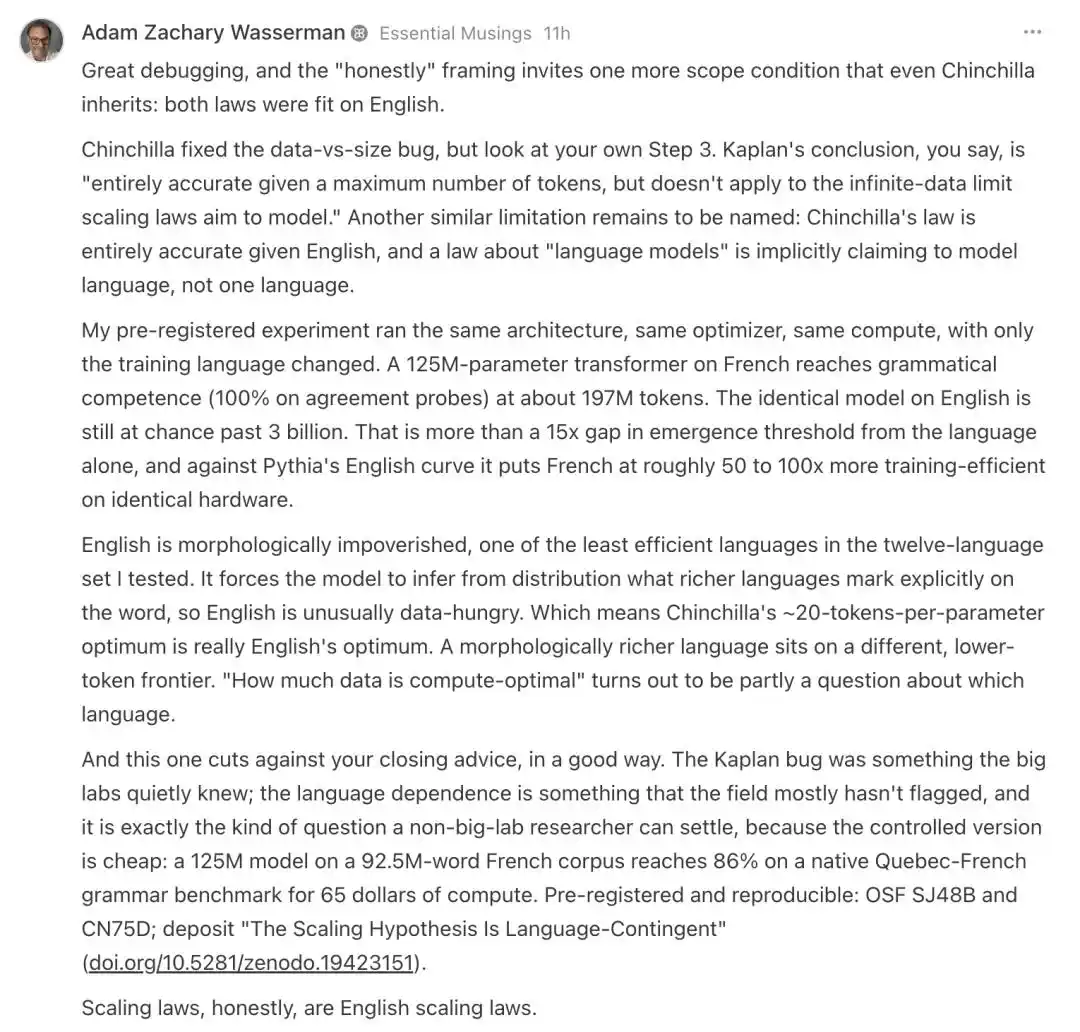
This means all our current compute allocation plans are based on the most "data-hungry," least efficient language.

When you think you're exploring the physical laws of "general intelligence," you're actually just measuring "how wasteful English is with compute."

It's like trying to establish nutritional standards for all living creatures in the universe by studying a pig's appetite—this is not just bias, but a cognitive limitation.

We could have achieved stronger performance with smaller models and more high-quality data.

We could have saved tens of thousands of H100 runtime hours worth of electricity and heat.

We could have entered the "Efficient AI" era two years earlier.

References:

https://www.completeskeptic.com/p/scaling-laws-honestly

https://lilianweng.github.io/posts/2026-06-24-scaling-laws/

This article comes from the WeChat public account "New Zhiyuan," author: ASI Apocalypse, editor: David


Trending Cryptos

Related Questions

QWhat is the main claim made by Diogo Almeida in his blog post regarding OpenAI's original scaling law paper?

ADiogo Almeida claims that the original scaling law paper from OpenAI was fundamentally wrong due to a bug. This bug, involving the use of a fixed token budget and a cosine learning rate decay for all model sizes, allegedly led to the incorrect conclusion that model parameters should be prioritized over data, resulting in the industry wasting vast computational resources on overtrained and oversized models like GPT-3.

QAccording to the article, how did DeepMind's Chinchilla paper challenge OpenAI's original scaling law findings?

ADeepMind's Chinchilla paper challenged OpenAI's findings by demonstrating that model parameters and training data should be scaled up roughly equally for optimal performance. It showed that a 70-billion parameter model trained on 1.4 trillion tokens outperformed a much larger 280-billion parameter model trained on only 300 billion tokens, suggesting that OpenAI's guidance led to inefficient, 'overweight' models.

QWhat were the three key methodological issues the article identifies in OpenAI's original scaling law research?

AThe article identifies three key issues: 1) 'Imprisoning Data' - Using a fixed token budget (~130B tokens) for all model sizes, starving larger models. 2) 'Deceptive LR Decay' - Using cosine learning rate decay, which artificially flattens the loss curve, creating a false impression of performance saturation. 3) 'Authoritative Arrogance' - Presenting a conclusion that was only valid under their limited experimental conditions (fixed token budget) as a universal law for an ideal world with infinite data.

QWhat broader implication about language and AI efficiency does researcher Adam Zachary Wasserman's experiment suggest?

AAdam Zachary Wasserman's experiment suggests that current scaling laws are effectively 'English Scaling Laws.' He found that models trained on French achieve certain grammatical capabilities 50 to 100 times more efficiently than those trained on English. This implies that English, being a morphologically poor language, is exceptionally data-inefficient. Therefore, our entire computational allocation strategy might be biased and inefficient, based on studying one of the most computationally wasteful languages.

QWhat is the ultimate consequence of the bug in the scaling law, as described in the article?

AThe ultimate consequence is that the global AI industry, guided by the flawed scaling law, wasted years of research, development, and trillions of FLOPs of computational power on training oversized and undertrained models. This represents a massive misallocation of稀缺的算力, potentially delaying progress towards more efficient AI and AGI by years, as resources were not optimally directed towards scaling both model size and data volume in balance.

Related Reads

DeepMind's Classic Masterpiece Crowned Again, ICML 2026 Awards Announced

ICML 2026 has announced its annual awards, with diffusion models and AI safety ethics taking center stage. The Outstanding Paper Award was shared by two diffusion model studies. One challenges a core assumption of diffusion language models (DLMs), arguing that their touted "arbitrary order generation" is a "flexibility trap" that harms performance. The other provides a high-accuracy sampling method, pushing the technical ceiling for diffusion models and log-concave distributions. A position paper winning the Outstanding Award raises a critical ethical concern: AI alignment research is unintentionally building a "censor's toolkit," where safety tools like RLHF can be repurposed for content control. Several papers received Honorable Mentions, spanning key areas: mapping where honesty emerges in RLHF-trained models, motion attribution in video generation, quantifying how much language models memorize, analyzing diffusion model consistency via random matrix theory, and providing a mathematical proof for the "grokking" phenomenon in a simple model. The Test of Time Award was given to DeepMind's 2016 seminal work "Asynchronous Methods for Deep Reinforcement Learning," recognizing the enduring impact of the A3C algorithm. Overall, the awards signal a shift in AI research from rapid expansion to deeper scrutiny—validating diffusion models as a major architectural contender while prompting serious ethical reflection within the safety community.

marsbit14m ago

DeepMind's Classic Masterpiece Crowned Again, ICML 2026 Awards Announced

marsbit14m ago

ARK's Massive Buying Spree in Crypto-Linked Stocks: Lower Risk, or Double the Pressure?

ARK Invest, led by Cathie Wood, significantly increased its holdings in crypto-related public stocks in June, purchasing $77 million worth of shares in Coinbase, Circle, and Bullish during Bitcoin's worst monthly performance in four years. The investment thesis is that these stocks offer regulated exposure to the crypto cycle without direct Bitcoin ownership. However, data analysis reveals significant downsides: these stocks exhibit nearly double the volatility of Bitcoin (68%-90% vs. 37.6% 30-day annualized volatility) and carry substantial company-specific risks like earnings, competition, and equity dilution, which account for much of their price movement. Only MicroStrategy closely tracks Bitcoin, acting as a leveraged proxy. Coinbase shows moderate correlation, while Circle and Robinhood have low correlation, being more influenced by stablecoin competition and diversified brokerage operations, respectively. Mining companies like RIOT and MARA have surged due to AI-related ventures, decoupling from Bitcoin's price. The case of Strategy highlights additional equity-structure risks, such as potential value erosion when its market value falls below its net asset value. Ultimately, investing in crypto stocks often means accepting amplified Bitcoin volatility or layering on unrelated business risks, rather than obtaining a safer alternative to direct cryptocurrency ownership.

Foresight News18m ago

ARK's Massive Buying Spree in Crypto-Linked Stocks: Lower Risk, or Double the Pressure?

Foresight News18m ago

Tsinghua University's Special Award Winner, Gu Yuxian, Joins DeepSeek

Tsinghua University's prestigious Graduate Special Scholarship recipient and 2021 Ph.D. candidate, Yuxian Gu, has officially joined DeepSeek. This news coincides with DeepSeek's major recruitment drive and the imminent launch of DeepSeek V4, on whose research paper Gu is listed as an author. A doctoral student in the Conversational AI group under Professor Minlie Huang at Tsinghua, Gu's research focuses on enhancing efficiency throughout the entire lifecycle of large language models. His key contributions span three areas: innovative methods for pre-training data selection (e.g., PDS), advanced knowledge distillation techniques for model compression (notably MiniLLM), and the development of efficient model architectures like Jet-Nemotron. His work has gained significant recognition, with nearly 5,000 citations on Google Scholar. Key publications include the highly cited surveys and papers on pre-trained models and the MiniLLM distillation method. As first author, he has presented at top-tier AI conferences including NeurIPS, ICLR, and ACL. One of his notable achievements is the Jet-Nemotron architecture, which combines Post-Neural Architecture Search (PostNAS) and a novel linear attention module called JetBlock. This model series demonstrates state-of-the-art performance rivaling larger models while achieving substantial efficiency gains in inference. Gu's expertise in creating powerful yet efficient AI systems aligns with industry needs, as evidenced by the adoption of his MiniLLM method by leading tech companies. His move to DeepSeek is anticipated to contribute further advancements in the field.

marsbit44m ago

Tsinghua University's Special Award Winner, Gu Yuxian, Joins DeepSeek

marsbit44m ago

Trading

Spot

Hot Articles

What is SONIC

Sonic: Pioneering the Future of Gaming in Web3 Introduction to Sonic In the ever-evolving landscape of Web3, the gaming industry stands out as one of the most dynamic and promising sectors. At the forefront of this revolution is Sonic, a project designed to amplify the gaming ecosystem on the Solana blockchain. Leveraging cutting-edge technology, Sonic aims to deliver an unparalleled gaming experience by efficiently processing millions of requests per second, ensuring that players enjoy seamless gameplay while maintaining low transaction costs. This article delves into the intricate details of Sonic, exploring its creators, funding sources, operational mechanics, and the timeline of significant events that have shaped its journey. What is Sonic? Sonic is an innovative layer-2 network that operates atop the Solana blockchain, specifically tailored to enhance the existing Solana gaming ecosystem. It accomplishes this through a customised, VM-agnostic game engine paired with a HyperGrid interpreter, facilitating sovereign game economies that roll up back to the Solana platform. The primary goals of Sonic include: Enhanced Gaming Experiences: Sonic is committed to offering lightning-fast on-chain gameplay, allowing players and developers to engage with games at previously unattainable speeds. Atomic Interoperability: This feature enables transactions to be executed within Sonic without the need to redeploy Solana programmes and accounts. This makes the process more efficient and directly benefits from Solana Layer1 services and liquidity. Seamless Deployment: Sonic allows developers to write for Ethereum Virtual Machine (EVM) based systems and execute them on Solana’s SVM infrastructure. This interoperability is crucial for attracting a broader range of dApps and decentralised applications to the platform. Support for Developers: By offering native composable gaming primitives and extensible data types - dining within the Entity-Component-System (ECS) framework - game creators can craft intricate business logic with ease. Overall, Sonic's unique approach not only caters to players but also provides an accessible and low-cost environment for developers to innovate and thrive. Creator of Sonic The information regarding the creator of Sonic is somewhat ambiguous. However, it is known that Sonic's SVM is owned by the company Mirror World. The absence of detailed information about the individuals behind Sonic reflects a common trend in several Web3 projects, where collective efforts and partnerships often overshadow individual contributions. Investors of Sonic Sonic has garnered considerable attention and support from various investors within the crypto and gaming sectors. Notably, the project raised an impressive $12 million during its Series A funding round. The round was led by BITKRAFT Ventures, with other notable investors including Galaxy, Okx Ventures, Interactive, Big Brain Holdings, and Mirana. This financial backing signifies the confidence that investment foundations have in Sonic’s potential to revolutionise the Web3 gaming landscape, further validating its innovative approaches and technologies. How Does Sonic Work? Sonic utilises the HyperGrid framework, a sophisticated parallel processing mechanism that enhances its scalability and customisability. Here are the core features that set Sonic apart: Lightning Speed at Low Costs: Sonic offers one of the fastest on-chain gaming experiences compared to other Layer-1 solutions, powered by the scalability of Solana’s virtual machine (SVM). Atomic Interoperability: Sonic enables transaction execution without redeployment of Solana programmes and accounts, effectively streamlining the interaction between users and the blockchain. EVM Compatibility: Developers can effortlessly migrate decentralised applications from EVM chains to the Solana environment using Sonic’s HyperGrid interpreter, increasing the accessibility and integration of various dApps. Ecosystem Support for Developers: By exposing native composable gaming primitives, Sonic facilitates a sandbox-like environment where developers can experiment and implement business logic, greatly enhancing the overall development experience. Monetisation Infrastructure: Sonic natively supports growth and monetisation efforts, providing frameworks for traffic generation, payments, and settlements, thereby ensuring that gaming projects are not only viable but also sustainable financially. Timeline of Sonic The evolution of Sonic has been marked by several key milestones. Below is a brief timeline highlighting critical events in the project's history: 2022: The Sonic cryptocurrency was officially launched, marking the beginning of its journey in the Web3 gaming arena. 2024: June: Sonic SVM successfully raised $12 million in a Series A funding round. This investment allowed Sonic to further develop its platform and expand its offerings. August: The launch of the Sonic Odyssey testnet provided users with the first opportunity to engage with the platform, offering interactive activities such as collecting rings—a nod to gaming nostalgia. October: SonicX, an innovative crypto game integrated with Solana, made its debut on TikTok, capturing the attention of over 120,000 users within a short span. This integration illustrated Sonic’s commitment to reaching a broader, global audience and showcased the potential of blockchain gaming. Key Points Sonic SVM is a revolutionary layer-2 network on Solana explicitly designed to enhance the GameFi landscape, demonstrating great potential for future development. HyperGrid Framework empowers Sonic by introducing horizontal scaling capabilities, ensuring that the network can handle the demands of Web3 gaming. Integration with Social Platforms: The successful launch of SonicX on TikTok displays Sonic’s strategy to leverage social media platforms to engage users, exponentially increasing the exposure and reach of its projects. Investment Confidence: The substantial funding from BITKRAFT Ventures, among others, emphasizes the robust backing Sonic has, paving the way for its ambitious future. In conclusion, Sonic encapsulates the essence of Web3 gaming innovation, striking a balance between cutting-edge technology, developer-centric tools, and community engagement. As the project continues to evolve, it is poised to redefine the gaming landscape, making it a notable entity for gamers and developers alike. As Sonic moves forward, it will undoubtedly attract greater interest and participation, solidifying its place within the broader narrative of blockchain gaming.

1.7k Total ViewsPublished 2024.04.04Updated 2024.12.03

What is SONIC

What is $S$

Understanding SPERO: A Comprehensive Overview Introduction to SPERO As the landscape of innovation continues to evolve, the emergence of web3 technologies and cryptocurrency projects plays a pivotal role in shaping the digital future. One project that has garnered attention in this dynamic field is SPERO, denoted as SPERO,$$s$. This article aims to gather and present detailed information about SPERO, to help enthusiasts and investors understand its foundations, objectives, and innovations within the web3 and crypto domains. What is SPERO,$$s$? SPERO,$$s$ is a unique project within the crypto space that seeks to leverage the principles of decentralisation and blockchain technology to create an ecosystem that promotes engagement, utility, and financial inclusion. The project is tailored to facilitate peer-to-peer interactions in new ways, providing users with innovative financial solutions and services. At its core, SPERO,$$s$ aims to empower individuals by providing tools and platforms that enhance user experience in the cryptocurrency space. This includes enabling more flexible transaction methods, fostering community-driven initiatives, and creating pathways for financial opportunities through decentralised applications (dApps). The underlying vision of SPERO,$$s$ revolves around inclusiveness, aiming to bridge gaps within traditional finance while harnessing the benefits of blockchain technology. Who is the Creator of SPERO,$$s$? The identity of the creator of SPERO,$$s$ remains somewhat obscure, as there are limited publicly available resources providing detailed background information on its founder(s). This lack of transparency can stem from the project's commitment to decentralisation—an ethos that many web3 projects share, prioritising collective contributions over individual recognition. By centring discussions around the community and its collective goals, SPERO,$$s$ embodies the essence of empowerment without singling out specific individuals. As such, understanding the ethos and mission of SPERO remains more important than identifying a singular creator. Who are the Investors of SPERO,$$s$? SPERO,$$s$ is supported by a diverse array of investors ranging from venture capitalists to angel investors dedicated to fostering innovation in the crypto sector. The focus of these investors generally aligns with SPERO's mission—prioritising projects that promise societal technological advancement, financial inclusivity, and decentralised governance. These investor foundations are typically interested in projects that not only offer innovative products but also contribute positively to the blockchain community and its ecosystems. The backing from these investors reinforces SPERO,$$s$ as a noteworthy contender in the rapidly evolving domain of crypto projects. How Does SPERO,$$s$ Work? SPERO,$$s$ employs a multi-faceted framework that distinguishes it from conventional cryptocurrency projects. Here are some of the key features that underline its uniqueness and innovation: Decentralised Governance: SPERO,$$s$ integrates decentralised governance models, empowering users to participate actively in decision-making processes regarding the project’s future. This approach fosters a sense of ownership and accountability among community members. Token Utility: SPERO,$$s$ utilises its own cryptocurrency token, designed to serve various functions within the ecosystem. These tokens enable transactions, rewards, and the facilitation of services offered on the platform, enhancing overall engagement and utility. Layered Architecture: The technical architecture of SPERO,$$s$ supports modularity and scalability, allowing for seamless integration of additional features and applications as the project evolves. This adaptability is paramount for sustaining relevance in the ever-changing crypto landscape. Community Engagement: The project emphasises community-driven initiatives, employing mechanisms that incentivise collaboration and feedback. By nurturing a strong community, SPERO,$$s$ can better address user needs and adapt to market trends. Focus on Inclusion: By offering low transaction fees and user-friendly interfaces, SPERO,$$s$ aims to attract a diverse user base, including individuals who may not previously have engaged in the crypto space. This commitment to inclusion aligns with its overarching mission of empowerment through accessibility. Timeline of SPERO,$$s$ Understanding a project's history provides crucial insights into its development trajectory and milestones. Below is a suggested timeline mapping significant events in the evolution of SPERO,$$s$: Conceptualisation and Ideation Phase: The initial ideas forming the basis of SPERO,$$s$ were conceived, aligning closely with the principles of decentralisation and community focus within the blockchain industry. Launch of Project Whitepaper: Following the conceptual phase, a comprehensive whitepaper detailing the vision, goals, and technological infrastructure of SPERO,$$s$ was released to garner community interest and feedback. Community Building and Early Engagements: Active outreach efforts were made to build a community of early adopters and potential investors, facilitating discussions around the project’s goals and garnering support. Token Generation Event: SPERO,$$s$ conducted a token generation event (TGE) to distribute its native tokens to early supporters and establish initial liquidity within the ecosystem. Launch of Initial dApp: The first decentralised application (dApp) associated with SPERO,$$s$ went live, allowing users to engage with the platform's core functionalities. Ongoing Development and Partnerships: Continuous updates and enhancements to the project's offerings, including strategic partnerships with other players in the blockchain space, have shaped SPERO,$$s$ into a competitive and evolving player in the crypto market. Conclusion SPERO,$$s$ stands as a testament to the potential of web3 and cryptocurrency to revolutionise financial systems and empower individuals. With a commitment to decentralised governance, community engagement, and innovatively designed functionalities, it paves the way toward a more inclusive financial landscape. As with any investment in the rapidly evolving crypto space, potential investors and users are encouraged to research thoroughly and engage thoughtfully with the ongoing developments within SPERO,$$s$. The project showcases the innovative spirit of the crypto industry, inviting further exploration into its myriad possibilities. While the journey of SPERO,$$s$ is still unfolding, its foundational principles may indeed influence the future of how we interact with technology, finance, and each other in interconnected digital ecosystems.

93 Total ViewsPublished 2024.12.17Updated 2024.12.17

What is $S$

What is AGENT S

Agent S: The Future of Autonomous Interaction in Web3 Introduction In the ever-evolving landscape of Web3 and cryptocurrency, innovations are constantly redefining how individuals interact with digital platforms. One such pioneering project, Agent S, promises to revolutionise human-computer interaction through its open agentic framework. By paving the way for autonomous interactions, Agent S aims to simplify complex tasks, offering transformative applications in artificial intelligence (AI). This detailed exploration will delve into the project's intricacies, its unique features, and the implications for the cryptocurrency domain. What is Agent S? Agent S stands as a groundbreaking open agentic framework, specifically designed to tackle three fundamental challenges in the automation of computer tasks: Acquiring Domain-Specific Knowledge: The framework intelligently learns from various external knowledge sources and internal experiences. This dual approach empowers it to build a rich repository of domain-specific knowledge, enhancing its performance in task execution. Planning Over Long Task Horizons: Agent S employs experience-augmented hierarchical planning, a strategic approach that facilitates efficient breakdown and execution of intricate tasks. This feature significantly enhances its ability to manage multiple subtasks efficiently and effectively. Handling Dynamic, Non-Uniform Interfaces: The project introduces the Agent-Computer Interface (ACI), an innovative solution that enhances the interaction between agents and users. Utilizing Multimodal Large Language Models (MLLMs), Agent S can navigate and manipulate diverse graphical user interfaces seamlessly. Through these pioneering features, Agent S provides a robust framework that addresses the complexities involved in automating human interaction with machines, setting the stage for myriad applications in AI and beyond. Who is the Creator of Agent S? While the concept of Agent S is fundamentally innovative, specific information about its creator remains elusive. The creator is currently unknown, which highlights either the nascent stage of the project or the strategic choice to keep founding members under wraps. Regardless of anonymity, the focus remains on the framework's capabilities and potential. Who are the Investors of Agent S? As Agent S is relatively new in the cryptographic ecosystem, detailed information regarding its investors and financial backers is not explicitly documented. The lack of publicly available insights into the investment foundations or organisations supporting the project raises questions about its funding structure and development roadmap. Understanding the backing is crucial for gauging the project's sustainability and potential market impact. How Does Agent S Work? At the core of Agent S lies cutting-edge technology that enables it to function effectively in diverse settings. Its operational model is built around several key features: Human-like Computer Interaction: The framework offers advanced AI planning, striving to make interactions with computers more intuitive. By mimicking human behaviour in tasks execution, it promises to elevate user experiences. Narrative Memory: Employed to leverage high-level experiences, Agent S utilises narrative memory to keep track of task histories, thereby enhancing its decision-making processes. Episodic Memory: This feature provides users with step-by-step guidance, allowing the framework to offer contextual support as tasks unfold. Support for OpenACI: With the ability to run locally, Agent S allows users to maintain control over their interactions and workflows, aligning with the decentralised ethos of Web3. Easy Integration with External APIs: Its versatility and compatibility with various AI platforms ensure that Agent S can fit seamlessly into existing technological ecosystems, making it an appealing choice for developers and organisations. These functionalities collectively contribute to Agent S's unique position within the crypto space, as it automates complex, multi-step tasks with minimal human intervention. As the project evolves, its potential applications in Web3 could redefine how digital interactions unfold. Timeline of Agent S The development and milestones of Agent S can be encapsulated in a timeline that highlights its significant events: September 27, 2024: The concept of Agent S was launched in a comprehensive research paper titled “An Open Agentic Framework that Uses Computers Like a Human,” showcasing the groundwork for the project. October 10, 2024: The research paper was made publicly available on arXiv, offering an in-depth exploration of the framework and its performance evaluation based on the OSWorld benchmark. October 12, 2024: A video presentation was released, providing a visual insight into the capabilities and features of Agent S, further engaging potential users and investors. These markers in the timeline not only illustrate the progress of Agent S but also indicate its commitment to transparency and community engagement. Key Points About Agent S As the Agent S framework continues to evolve, several key attributes stand out, underscoring its innovative nature and potential: Innovative Framework: Designed to provide an intuitive use of computers akin to human interaction, Agent S brings a novel approach to task automation. Autonomous Interaction: The ability to interact autonomously with computers through GUI signifies a leap towards more intelligent and efficient computing solutions. Complex Task Automation: With its robust methodology, it can automate complex, multi-step tasks, making processes faster and less error-prone. Continuous Improvement: The learning mechanisms enable Agent S to improve from past experiences, continually enhancing its performance and efficacy. Versatility: Its adaptability across different operating environments like OSWorld and WindowsAgentArena ensures that it can serve a broad range of applications. As Agent S positions itself in the Web3 and crypto landscape, its potential to enhance interaction capabilities and automate processes signifies a significant advancement in AI technologies. Through its innovative framework, Agent S exemplifies the future of digital interactions, promising a more seamless and efficient experience for users across various industries. Conclusion Agent S represents a bold leap forward in the marriage of AI and Web3, with the capacity to redefine how we interact with technology. While still in its early stages, the possibilities for its application are vast and compelling. Through its comprehensive framework addressing critical challenges, Agent S aims to bring autonomous interactions to the forefront of the digital experience. As we move deeper into the realms of cryptocurrency and decentralisation, projects like Agent S will undoubtedly play a crucial role in shaping the future of technology and human-computer collaboration.

763 Total ViewsPublished 2025.01.14Updated 2025.01.14

What is AGENT S

Discussions

Welcome to the HTX Community. Here, you can stay informed about the latest platform developments and gain access to professional market insights. Users' opinions on the price of S (S) are presented below.

活动图片