Mythos Report Released: Billions of Devices Worldwide Exposed, 10,000 Critical Vulnerabilities Uncovered in 30 Days

marsbitPublished on 2026-05-25Last updated on 2026-05-25

Abstract

The first report from Anthropic's "Project Glasswing" reveals staggering results from its secret initiative using the next-generation AI model, Claude Mythos Preview. In just 30 days, collaborating with roughly 50 global tech giants and critical infrastructure developers, Mythos identified over 10,000 high or critical-severity software vulnerabilities. It demonstrated an extremely low false-positive rate, even outperforming human experts, and successfully intercepted a $1.5 million bank fraud in progress. Key findings include uncovering 2,000 bugs in Cloudflare's core systems, fixing 271 critical vulnerabilities in Firefox 150 (ten times more than previous methods), and discovering a 27-year-old hidden bug in OpenBSD's codebase. The AI even autonomously constructed full attack chains for some exploits. Mythos also scanned over 1,000 essential open-source projects, identifying 23,019 total vulnerabilities, with 6,202 rated high/critical by the AI. Independent verification confirmed a 90.6% true-positive rate, validating 1,094 severe vulnerabilities. A critical case involved wolfSSL, a cryptography library used by billions of devices, where Mythos found a flaw allowing perfect digital certificate forgery. This unprecedented discovery speed has created a new crisis: human developers are overwhelmed and cannot patch vulnerabilities fast enough. In response, Anthropic is rolling out defensive tools like "Claude Security" to auto-generate patches and releasing frameworks to help ...

A's Project Glasswing Achieves Initial Success: Mythos Uncovers 10,000 Critical Vulnerabilities in 30 Days, Even Intercepts $1.5M in Wire Fraud! Facing a Blizzard of Reports, Human Programmers Plead for Mercy: "Stop Finding Them! We Can't Possibly Fix Them All!"

Just now, Anthropic released another piece of news that has shocked the global tech and security circles.

The first-month battle report for "Project Glasswing" has been officially announced!

In this secret operation, Anthropic deployed its next-generation top-tier large language model—Claude Mythos Preview—for the first time.

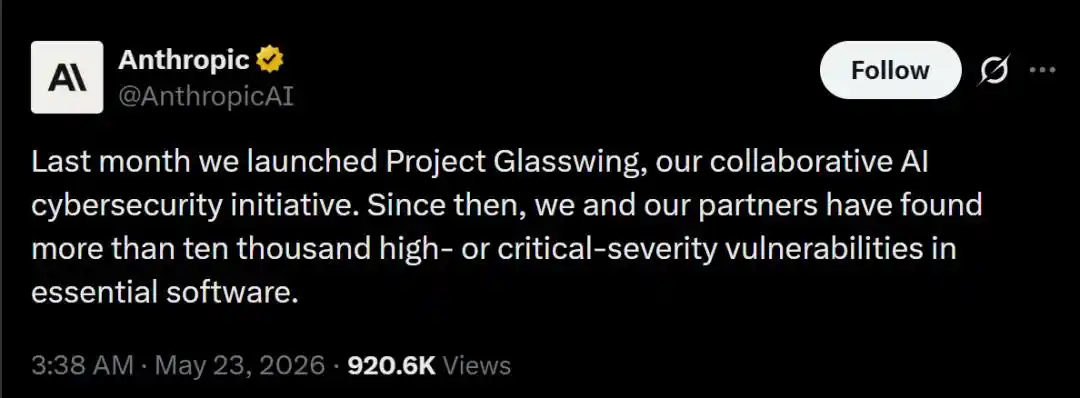
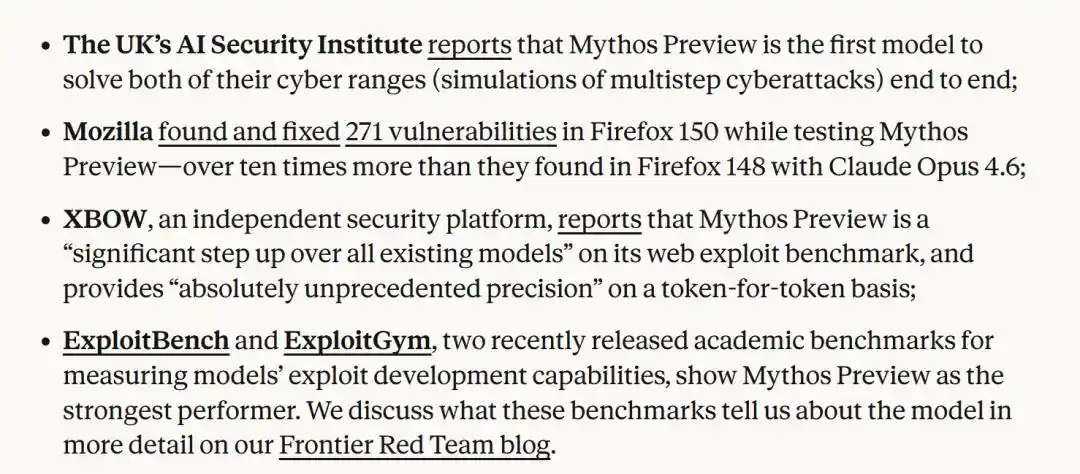
In just 30 days, partnering with about 50 global internet giants and critical infrastructure software developers, it unearthed over 10,000 high-risk or critical-level software vulnerabilities in one go!
Even more terrifying, it can not only find vulnerabilities but also automatically construct "end-to-end" attack chains.

In a real business scenario at a partner bank, it even successfully intercepted a $1.5 million wire fraud attempt!

Instantly, the entire security community was thoroughly shaken.

Some security experts even exclaimed in despair on X: "The foundation of the internet has been turned upside down by AI... We might really be done for!"
The Crazy 30 Days

Global Tech Giants Experience Firsthand: How Terrifying is Mythos?

In April 2026, Anthropic secretly launched Project Glasswing. The name symbolizes the hope of making the world's most important closed-source and open-source software transparent and secure.

The first batch to join the plan comprised about 50 critical infrastructure software developers.

After they gained testing access to Claude Mythos Preview, within just one month, the entire industry's worldview was shattered.
Let's look at this dazzling battle report—

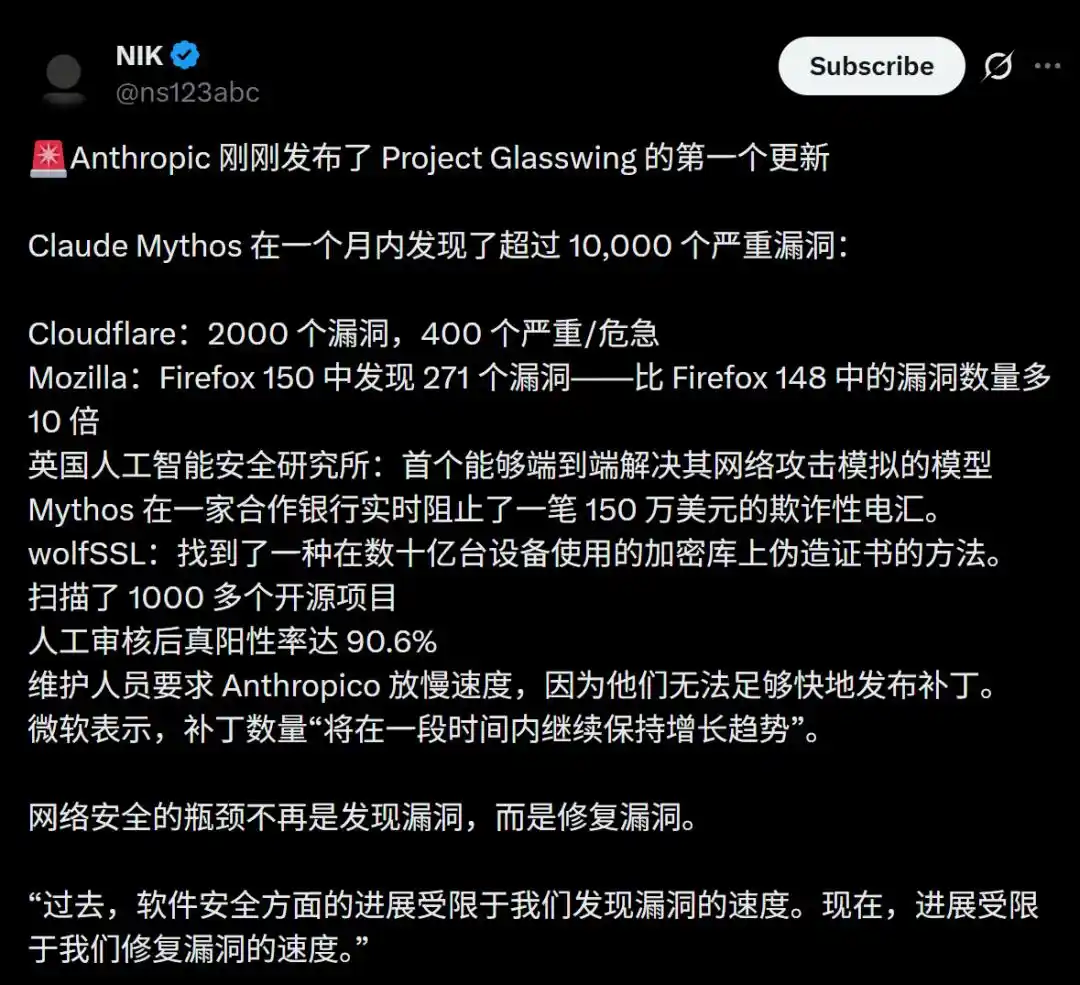
Cloudflare reported that in their extremely critical core-path systems, Mythos dug up 2000 vulnerabilities in one go! Among them, 400 were high-risk or critical-level.

Even more outrageous, Cloudflare's security team exclaimed: This AI's false-positive rate is even lower than that of top-tier human security testers.

In the testing of Mozilla's latest Firefox 150 browser, Mythos fixed 271 high-risk vulnerabilities in one go.

This number is over 10 times the vulnerabilities previously found using Opus 4.6 in Firefox version 148!

OpenBSD's reported results are downright spine-chilling: Mythos unearthed a bug hidden in the OpenBSD codebase for a full 27 years!

Moreover, the model didn't even need human intervention; it constructed a complete vulnerability exploitation chain itself.
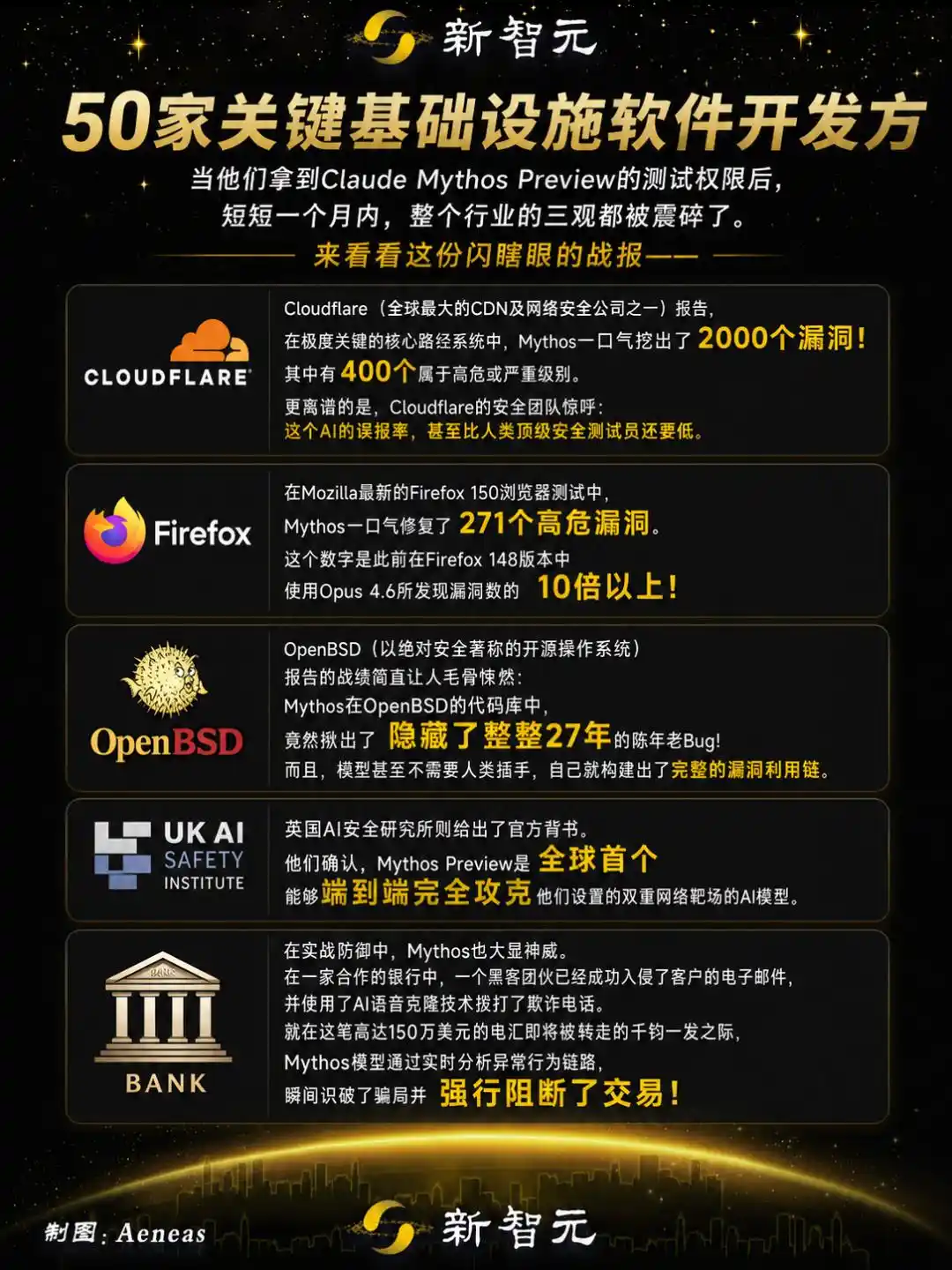
The UK AI Safety Institute offered official endorsement. They confirmed that Mythos Preview is the world's first AI model capable of end-to-end, fully compromising the double-network test environment they set up.

In practical defense, Mythos also demonstrated its prowess.

At a partner bank, a hacker group had successfully infiltrated a client's email and used AI voice-cloning technology to make a fraudulent call.

At the critical moment when the $1.5 million wire transfer was about to be sent, the Mythos model, through real-time analysis of the abnormal behavior chain, instantly saw through the scam and forcibly blocked the transaction!

"We human security experts look like primitives holding spears, watching an F-22 fighter jet fly overhead," a security researcher participating in the internal testing lamented on X.

Billions of Exposed Devices Worldwide Saved by Mythos!

However, Mythos also triggered a productivity crisis.

In the past, the core bottleneck in cybersecurity was discovering vulnerabilities. Finding a high-risk zero-day vulnerability could take top white-hat hackers weeks or even months.

Now, Claude Mythos has driven the cost and time of finding vulnerabilities to "infinitely close to zero."

Anthropic used it to scan over 1,000 core open-source projects underpinning the global internet. The results are hair-raising—

A total of 23,019 vulnerabilities were discovered, including 6,202 high-risk or critical vulnerabilities assessed by Mythos!

To ensure it wasn't the AI "rambling," Anthropic collaborated with six globally renowned independent security research firms for manual cross-verification.

The result proved: The AI's true positive rate (i.e., the vulnerability actually exists) was as high as 90.6%! Ultimately, 1,094 were confirmed as undeniable high-risk or critical vulnerabilities.
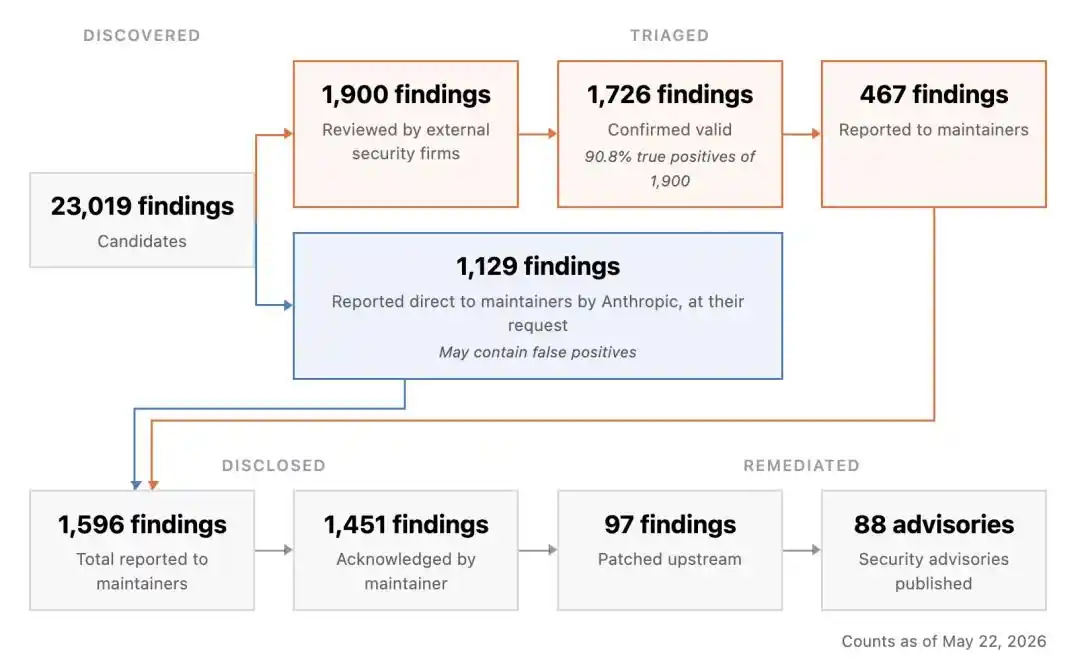
Open-source vulnerability dashboard, showing vulnerabilities of all severity levels

Here, an extremely typical case must be mentioned—wolfSSL.

wolfSSL is a famously prominent open-source cryptography library, used by billions of devices worldwide (including IoT devices, routers, smart cars, etc.).

However, before Mythos, wolfSSL's defenses were like paper. Mythos not only discovered an extremely hidden logic vulnerability but even wrote a set of attack code itself!

Using this code, hackers could arbitrarily forge digital certificates, creating incredibly realistic bank websites or email login pages with no flaws.
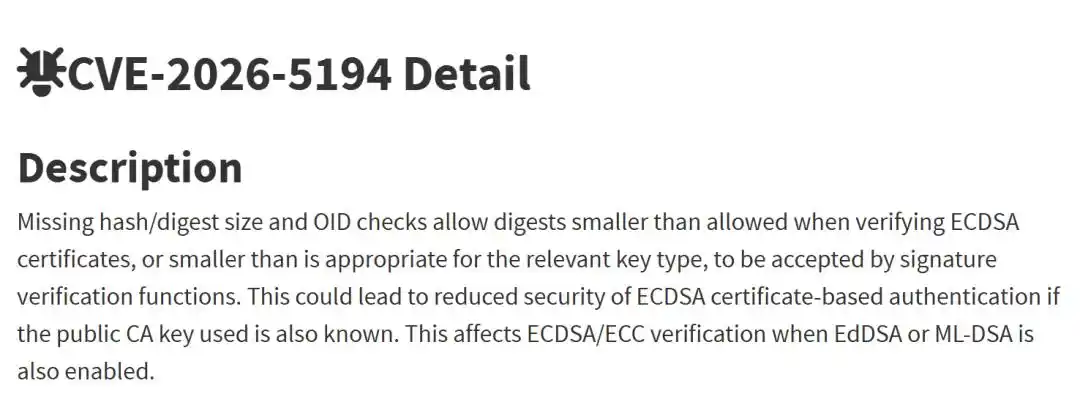
If this vulnerability hadn't been discovered and reported for repair by Mythos in advance, once exploited by the black market, the consequences would be unimaginable.

Billions of devices worldwide were actually running exposed on the edge of danger. This time, Mythos pulled them back.

Epic Reversal: Finding Bugs is No Longer the Bottleneck, Fixing Them Is!

As Project Glasswing progressed, a bizarre phenomenon never before seen in cybersecurity history was born.

"The bottleneck of cybersecurity is no longer finding vulnerabilities. The current bottleneck is: the speed at which humans can fix vulnerabilities is far outpaced by the speed at which AI discovers them."

For open-source community maintainers, this is simply a nightmare.
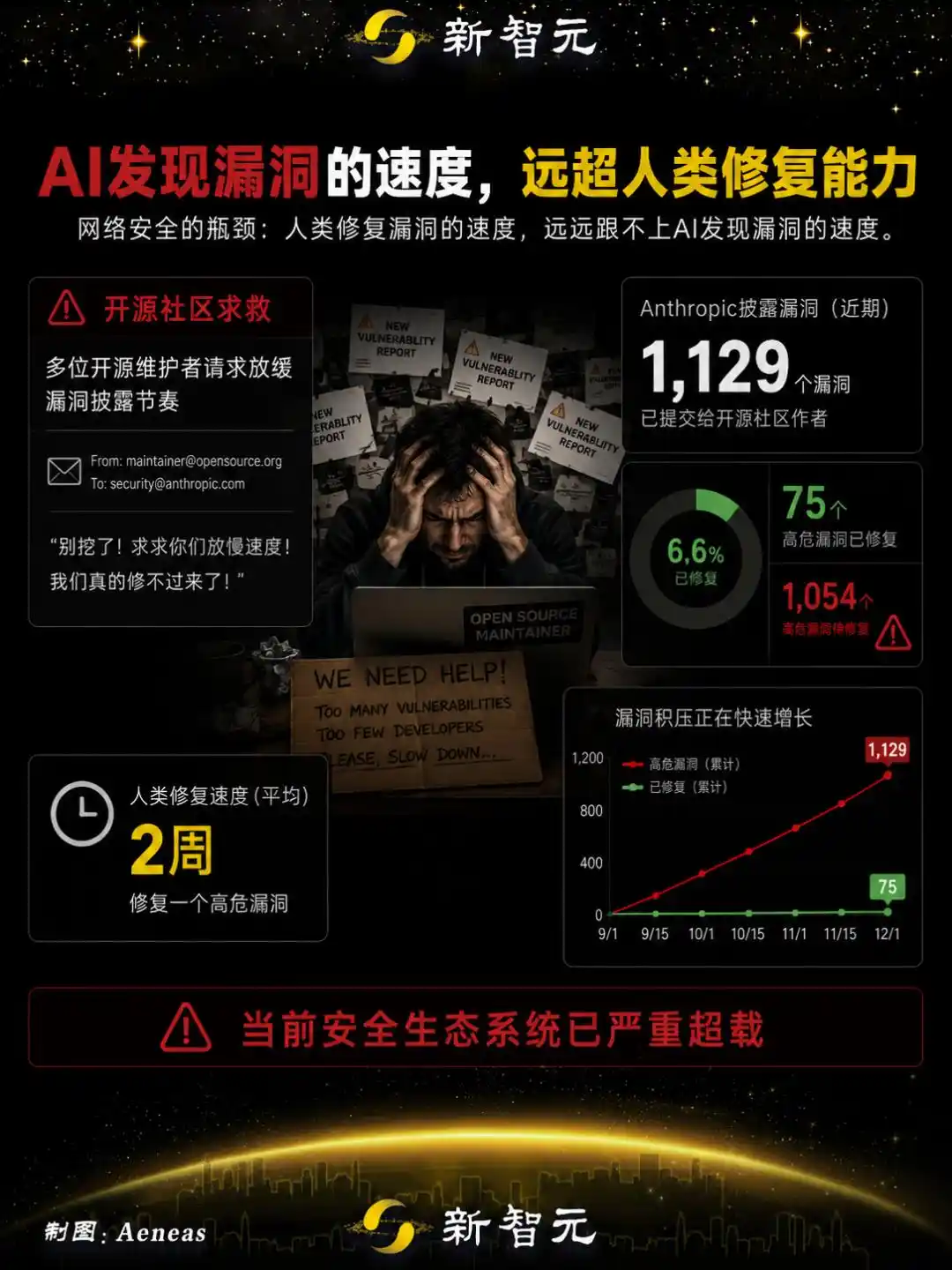
Anthropic's vulnerability reports flew like snowflakes to major open-source communities. The authors are already overwhelmed.

"Stop digging! Please, slow down! We really can't fix them fast enough!"

According to Anthropic, several open-source maintainers recently sent "pleading" emails asking them to slow down the pace of vulnerability disclosure due to severe manpower shortages.

Even with detailed reports, human programmers still need an average of two full weeks to fix a single high-risk vulnerability.

Currently, out of the 1,129 vulnerabilities Anthropic submitted to open-source authors, only 75 high-risk ones have been successfully patched. The current security ecosystem is severely overloaded!

Fight Fire with Fire: Anthropic's Defense

Since humans can't keep up with fixing them, fight fire with fire.

Anthropic decisively unveiled its "Defender Toolkit" plan.

First is the heavy-weight launch of Claude Security.

This is an automation marvel built specifically for Claude Enterprise customers. Its logic is: I not only help you find vulnerabilities in your codebase, but I also directly write the fix patches for you.

Within just three weeks of launch, enterprise customers have already used Opus 4.7 to fix over 2100 vulnerabilities at lightning speed!

Next is the "Network Verification Program."

Anthropic now allows professional white-hats, penetration testers, and red/blue teams to legally and compliantly lift certain "security restraints" on the Claude model for legitimate vulnerability research and test range activities.

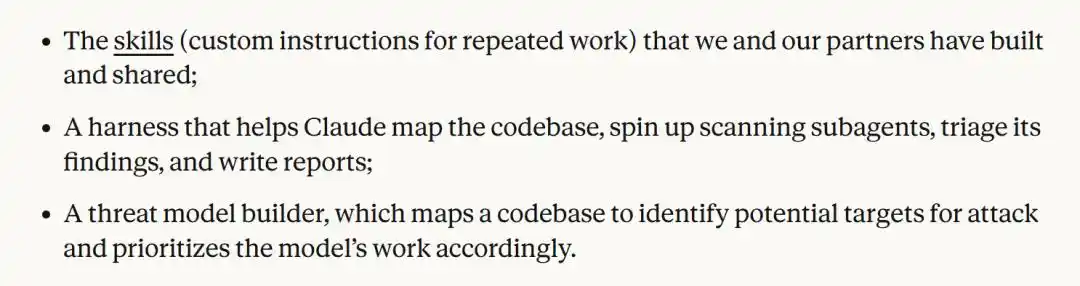
More interestingly, Anthropic directly open-sourced a "BUG-finding pipeline."

1 Customized Instructions (Skills): Teach you how to keep the AI focused for deep code review.

2 Automation Framework (Harness): A command system enabling Claude to automatically traverse massive codebases, clone sub-agents for parallel scanning, automatically triage vulnerabilities, and generate reports.

3 Threat Model Builder: Simply throw your code in, and the AI automatically identifies the system's most vulnerable "soft spots," prioritizing them for defense.
Internet giant Cisco also stepped forward, announcing the open-sourcing of the "Foundry Security Spec" system to build security assessment defenses similar to Mythos.

From now on, it will be: AI finds vulnerabilities, then AI generates patches, with humans only responsible for final review.

This is the ultimate future form of cybersecurity.

The Sword of Damocles: When Will Mythos Be Publicly Released?

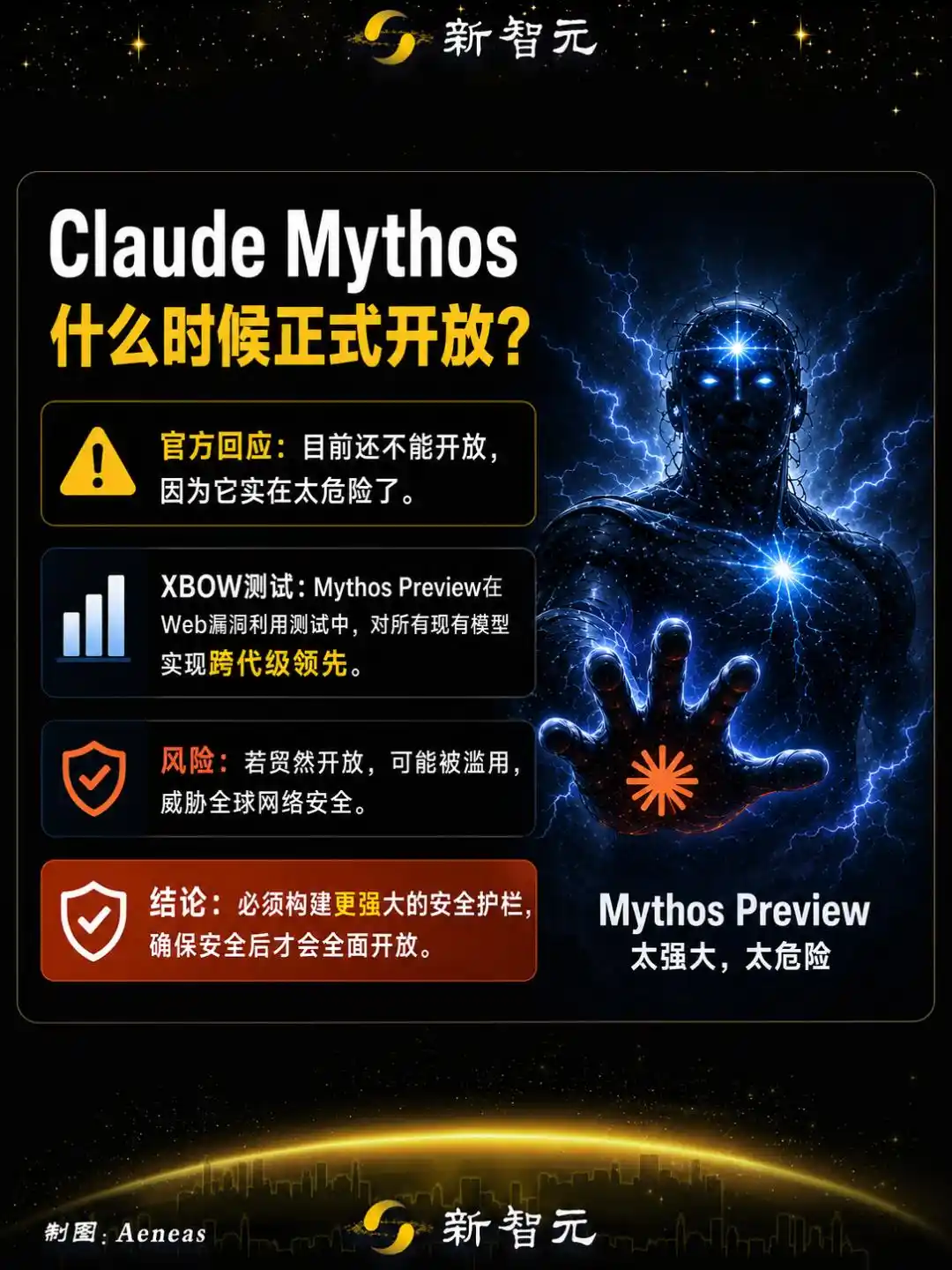
So, when exactly will Claude Mythos be officially released to the public?

Anthropic's current stance remains very cautious.

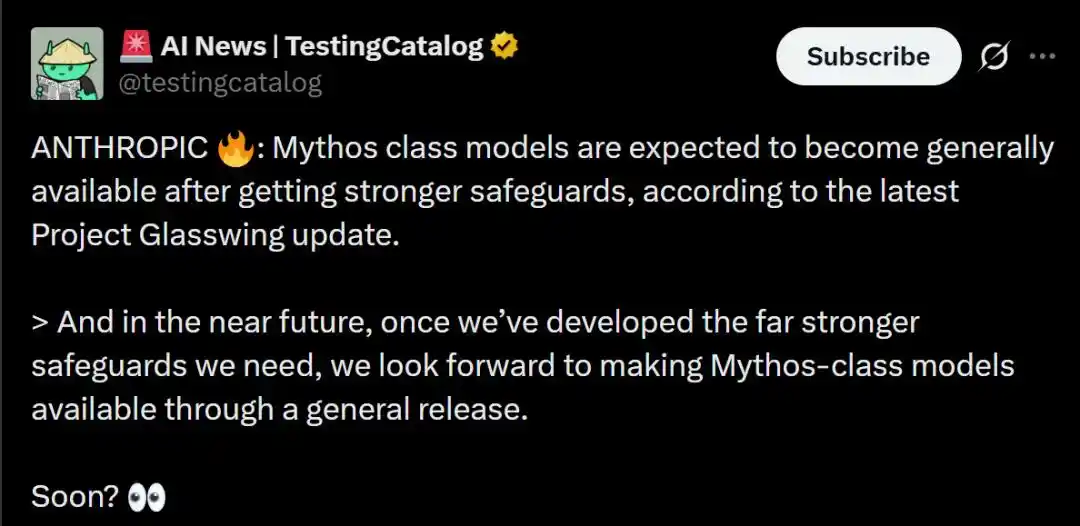
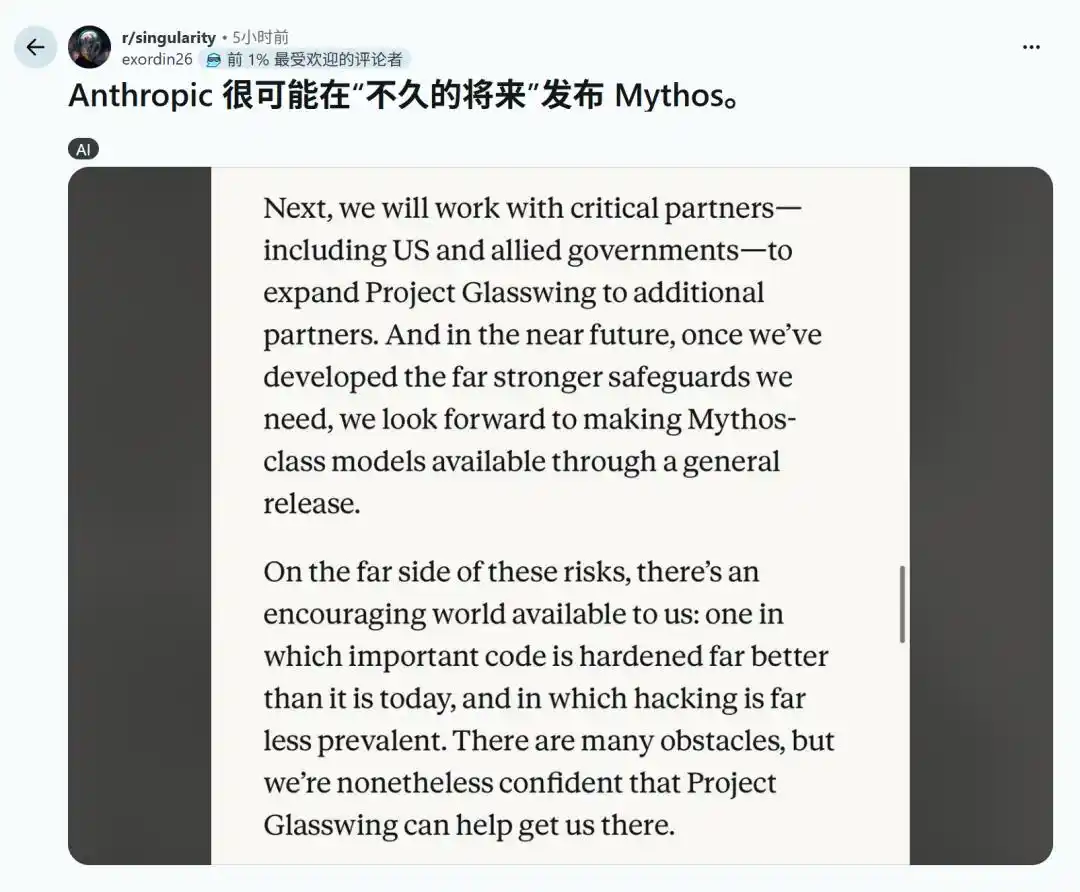
They state that once "more powerful, higher-level safety guardrails" are built, Mythos-level models will inevitably be pushed for full public release!

It cannot be released now because it is simply too dangerous.
As the XBOW test report states: Mythos Preview achieves "generational leaps ahead of all existing models" in web vulnerability exploitation benchmarks, even demonstrating "absolutely unprecedented precision" in every single token generation.

Anthropic is very clear that currently, no company in the world possesses security mechanisms strong enough to 100% ensure this model won't be abused.

If Mythos's API were made public today, tomorrow global hacker groups, and even some extremist organizations, could mass-produce thousands of zero-day exploitation tools at extremely low cost.

Ordinary people's computers, hospital systems, power grid control centers would face a catastrophe!

Anthropic's recommendations are:

1 Shorten the patch cycle! Shorten the patch cycle! Shorten the patch cycle! Don't hoard updates for a month; use existing AI tools (like Opus 4.7) to push security fixes to users as soon as possible.

2 Enforce upgrade policies. Developers must make updates as effortless as possible for users to install; for those who stubbornly refuse to upgrade, enforce network disconnection. Return to security fundamentals.

3 Strengthen multi-factor authentication (MFA), harden default configurations, maintain detailed logs.

The Calm Before the Storm

One month, collaboration with over 50 giants, 10,000+ critical vulnerabilities, intercepting $1.5M in wire fraud... These are just the initial results of Claude Mythos Preview flexing its muscles.

Right now, human programmers are experiencing the birth pangs—being inundated by AI reports, patching bugs that have lurked for 20-30 years.

But as Anthropic envisions—

"After navigating these risks, an exhilarating world beckons: one where humanity's important code will be forged to be a hundred times more robust than today's, and hacker attacks will become an exceedingly rare historical footnote."

Let us silently thank those AIs tirelessly reviewing hundreds of millions of lines of code.

It's quite possible that it just blocked a potentially fatal nuclear blast for you.

References:

https://x.com/AnthropicAI/status/20579091025425495

This article is from the WeChat public account "AI New Wisdom," author: ASI Revelation, editor: Aeneas Moses


Related Questions

QWhat was the outcome of Anthropic's 'Project Glasswing' in its first 30 days?

AIn its first 30 days, Anthropic's 'Project Glasswing,' which utilized the Claude Mythos Preview AI model, identified over 10,000 high or critical severity software vulnerabilities across approximately 50 major tech companies and critical infrastructure software providers.

QWhat significant achievement did the Claude Mythos model accomplish in a real-world banking scenario?

AIn a real-world banking scenario, the Claude Mythos model successfully intercepted a $1.5 million wire transfer fraud by analyzing the transaction's abnormal behavior chain in real-time and blocking it at the last moment.

QWhat major shift in cybersecurity bottlenecks does the report highlight due to AI like Claude Mythos?

AThe report highlights a major shift where the bottleneck in cybersecurity is no longer finding vulnerabilities, but rather the human inability to patch them fast enough. AI can discover vulnerabilities far quicker than developers can fix them.

QWhat was a particularly dangerous vulnerability discovered by Mythos in the wolfSSL library, and why was it significant?

AMythos discovered a hidden logic flaw in the wolfSSL cryptography library that could allow hackers to forge digital certificates and create perfect fake websites. This was significant because wolfSSL is used in billions of devices globally, meaning they were all at severe risk.

QWhy is Anthropic hesitant to publicly release the Claude Mythos model immediately, according to the article?

AAnthropic is hesitant to publicly release Claude Mythos immediately because it is considered too dangerous. They state that without 'more powerful, higher-level safety guardrails,' releasing it could enable malicious actors to cheaply mass-produce zero-day exploit tools, potentially devastating critical systems worldwide.

Related Reads

Futu's Fine Turns into a Boon for Hyperliquid?

The article explores the interconnected narratives of a regulatory crackdown on Chinese fintech brokers and the rise of the decentralized exchange Hyperliquid. It begins with China's May 2026 proposal for severe penalties against brokers like Futu and Tiger for illegal cross-border operations, suggesting this may redirect capital toward platforms like Hyperliquid. This is evidenced by HYPE token's price surge coinciding with the news. The core of the article analyzes Hyperliquid's disruptive potential and the regulatory pressure it faces. Traditional giants like CME and ICE are lobbying the CFTC to crack down on Hyperliquid, citing its lack of KYC, position limits, and market surveillance—particularly for its weekend crude oil contracts, which challenge traditional market hours. Despite this, Hyperliquid demonstrates remarkable efficiency, with a small team generating high revenue, largely funneled into HYPE buybacks. Its innovation lies in synthetic perpetual contracts for pre-IPO companies (e.g., Cerebras, SpaceX), enabling price discovery outside traditional channels. Unlike tokenized equity platforms (PreStocks, Ondo) tied to physical assets or entities, Hyperliquid's "asset-less" synthetic contracts are argued to be more resilient to legal targeting, as they are simply code on a decentralized network. However, the article notes this is not absolute, citing the network's limited validators and past interventions. The piece concludes that Hyperliquid's fundamental advantage is offering continuous, permissionless trading—effectively competing on *time*—which established players cannot easily replicate, even as significant regulatory risks loom.

marsbit14m ago

Futu's Fine Turns into a Boon for Hyperliquid?

marsbit14m ago

AlphaGo's Creator Puts AI into a 23-Year-Old Artificial Society: All Three Toughest Challenges for AI Agents Are Here

Demis Hassabis, CEO of DeepMind, has embarked on a new AI research venture by partnering with the long-running space MMO, EVE Online. This collaboration, announced in early May, aims to use the game's 23-year-old, player-driven persistent universe as a testbed for tackling three core challenges in AI agent research: long-horizon planning, memory, and continual learning. Unlike previous DeepMind environments like AlphaGo (Go) or AlphaStar (StarCraft II), EVE Online features no fixed end state. Its single-shard universe has fostered complex, emergent player societies with real economies, political alliances, and wars that can span months or years. These conditions naturally demand the very skills—long-term strategic planning, maintaining memories over extended periods, and adapting to constant change—that are hardest for current AI agents to master. The research will initially use an offline version of EVE, providing a controlled, complex sandbox without interfering with the live player server. This move continues DeepMind's trajectory of using increasingly complex and open-ended virtual worlds for AI training, from Atari games and Go to StarCraft II and the SIMA project. The EVE environment represents a significant step towards testing AI in a persistent, socially complex, and continuously evolving world shaped by human behavior over decades.

marsbit1h ago

AlphaGo's Creator Puts AI into a 23-Year-Old Artificial Society: All Three Toughest Challenges for AI Agents Are Here

marsbit1h ago

DeepSeek Announces Permanent Price Cut, But Liang Wenfeng Is Not Trying to Be a "Cyber Bodhisattva"

DeepSeek has announced a permanent 75% discount on its V4-Pro API, significantly reducing its token prices. This move stands out as a major industry-wide price cut while competitors like Anthropic, OpenAI, and Google have been quietly raising theirs. The article contrasts this strategy with the broader trend of AI becoming more expensive, citing examples of companies like Microsoft and Uber struggling with high token costs as usage soars. While CEO Liang Wenfeng is hailed by some as a "Cyber Bodhisattva" for this普惠 approach, the article argues this is a strategic business choice, not mere altruism. DeepSeek's ability to maintain low prices is attributed to several structural advantages: lower-cost AI talent in China, the impending use of domestic昇腾 hardware for further cost reductions, and, most critically, access to China's cheaper and more abundant energy infrastructure, which drastically reduces the electricity costs dominating AI operations. The analysis suggests that for many commercial applications, a "good enough" model that is radically cheaper (e.g., 1% to 11% of GPT-5.5's cost) is more valuable than the absolute top-tier model. This allows for vastly more experimentation and iteration within a budget. Therefore, as AI generally becomes more expensive, DeepSeek's cost-competitiveness—rooted in China's energy and talent advantages—becomes its core strategic value and differentiator in the global market.

marsbit13h ago

DeepSeek Announces Permanent Price Cut, But Liang Wenfeng Is Not Trying to Be a "Cyber Bodhisattva"

marsbit13h ago

Trading

Spot
Futures

Hot Articles

What is SONIC

Sonic: Pioneering the Future of Gaming in Web3 Introduction to Sonic In the ever-evolving landscape of Web3, the gaming industry stands out as one of the most dynamic and promising sectors. At the forefront of this revolution is Sonic, a project designed to amplify the gaming ecosystem on the Solana blockchain. Leveraging cutting-edge technology, Sonic aims to deliver an unparalleled gaming experience by efficiently processing millions of requests per second, ensuring that players enjoy seamless gameplay while maintaining low transaction costs. This article delves into the intricate details of Sonic, exploring its creators, funding sources, operational mechanics, and the timeline of significant events that have shaped its journey. What is Sonic? Sonic is an innovative layer-2 network that operates atop the Solana blockchain, specifically tailored to enhance the existing Solana gaming ecosystem. It accomplishes this through a customised, VM-agnostic game engine paired with a HyperGrid interpreter, facilitating sovereign game economies that roll up back to the Solana platform. The primary goals of Sonic include: Enhanced Gaming Experiences: Sonic is committed to offering lightning-fast on-chain gameplay, allowing players and developers to engage with games at previously unattainable speeds. Atomic Interoperability: This feature enables transactions to be executed within Sonic without the need to redeploy Solana programmes and accounts. This makes the process more efficient and directly benefits from Solana Layer1 services and liquidity. Seamless Deployment: Sonic allows developers to write for Ethereum Virtual Machine (EVM) based systems and execute them on Solana’s SVM infrastructure. This interoperability is crucial for attracting a broader range of dApps and decentralised applications to the platform. Support for Developers: By offering native composable gaming primitives and extensible data types - dining within the Entity-Component-System (ECS) framework - game creators can craft intricate business logic with ease. Overall, Sonic's unique approach not only caters to players but also provides an accessible and low-cost environment for developers to innovate and thrive. Creator of Sonic The information regarding the creator of Sonic is somewhat ambiguous. However, it is known that Sonic's SVM is owned by the company Mirror World. The absence of detailed information about the individuals behind Sonic reflects a common trend in several Web3 projects, where collective efforts and partnerships often overshadow individual contributions. Investors of Sonic Sonic has garnered considerable attention and support from various investors within the crypto and gaming sectors. Notably, the project raised an impressive $12 million during its Series A funding round. The round was led by BITKRAFT Ventures, with other notable investors including Galaxy, Okx Ventures, Interactive, Big Brain Holdings, and Mirana. This financial backing signifies the confidence that investment foundations have in Sonic’s potential to revolutionise the Web3 gaming landscape, further validating its innovative approaches and technologies. How Does Sonic Work? Sonic utilises the HyperGrid framework, a sophisticated parallel processing mechanism that enhances its scalability and customisability. Here are the core features that set Sonic apart: Lightning Speed at Low Costs: Sonic offers one of the fastest on-chain gaming experiences compared to other Layer-1 solutions, powered by the scalability of Solana’s virtual machine (SVM). Atomic Interoperability: Sonic enables transaction execution without redeployment of Solana programmes and accounts, effectively streamlining the interaction between users and the blockchain. EVM Compatibility: Developers can effortlessly migrate decentralised applications from EVM chains to the Solana environment using Sonic’s HyperGrid interpreter, increasing the accessibility and integration of various dApps. Ecosystem Support for Developers: By exposing native composable gaming primitives, Sonic facilitates a sandbox-like environment where developers can experiment and implement business logic, greatly enhancing the overall development experience. Monetisation Infrastructure: Sonic natively supports growth and monetisation efforts, providing frameworks for traffic generation, payments, and settlements, thereby ensuring that gaming projects are not only viable but also sustainable financially. Timeline of Sonic The evolution of Sonic has been marked by several key milestones. Below is a brief timeline highlighting critical events in the project's history: 2022: The Sonic cryptocurrency was officially launched, marking the beginning of its journey in the Web3 gaming arena. 2024: June: Sonic SVM successfully raised $12 million in a Series A funding round. This investment allowed Sonic to further develop its platform and expand its offerings. August: The launch of the Sonic Odyssey testnet provided users with the first opportunity to engage with the platform, offering interactive activities such as collecting rings—a nod to gaming nostalgia. October: SonicX, an innovative crypto game integrated with Solana, made its debut on TikTok, capturing the attention of over 120,000 users within a short span. This integration illustrated Sonic’s commitment to reaching a broader, global audience and showcased the potential of blockchain gaming. Key Points Sonic SVM is a revolutionary layer-2 network on Solana explicitly designed to enhance the GameFi landscape, demonstrating great potential for future development. HyperGrid Framework empowers Sonic by introducing horizontal scaling capabilities, ensuring that the network can handle the demands of Web3 gaming. Integration with Social Platforms: The successful launch of SonicX on TikTok displays Sonic’s strategy to leverage social media platforms to engage users, exponentially increasing the exposure and reach of its projects. Investment Confidence: The substantial funding from BITKRAFT Ventures, among others, emphasizes the robust backing Sonic has, paving the way for its ambitious future. In conclusion, Sonic encapsulates the essence of Web3 gaming innovation, striking a balance between cutting-edge technology, developer-centric tools, and community engagement. As the project continues to evolve, it is poised to redefine the gaming landscape, making it a notable entity for gamers and developers alike. As Sonic moves forward, it will undoubtedly attract greater interest and participation, solidifying its place within the broader narrative of blockchain gaming.

1.5k Total ViewsPublished 2024.04.04Updated 2024.12.03

What is SONIC

What is $S$

Understanding SPERO: A Comprehensive Overview Introduction to SPERO As the landscape of innovation continues to evolve, the emergence of web3 technologies and cryptocurrency projects plays a pivotal role in shaping the digital future. One project that has garnered attention in this dynamic field is SPERO, denoted as SPERO,$$s$. This article aims to gather and present detailed information about SPERO, to help enthusiasts and investors understand its foundations, objectives, and innovations within the web3 and crypto domains. What is SPERO,$$s$? SPERO,$$s$ is a unique project within the crypto space that seeks to leverage the principles of decentralisation and blockchain technology to create an ecosystem that promotes engagement, utility, and financial inclusion. The project is tailored to facilitate peer-to-peer interactions in new ways, providing users with innovative financial solutions and services. At its core, SPERO,$$s$ aims to empower individuals by providing tools and platforms that enhance user experience in the cryptocurrency space. This includes enabling more flexible transaction methods, fostering community-driven initiatives, and creating pathways for financial opportunities through decentralised applications (dApps). The underlying vision of SPERO,$$s$ revolves around inclusiveness, aiming to bridge gaps within traditional finance while harnessing the benefits of blockchain technology. Who is the Creator of SPERO,$$s$? The identity of the creator of SPERO,$$s$ remains somewhat obscure, as there are limited publicly available resources providing detailed background information on its founder(s). This lack of transparency can stem from the project's commitment to decentralisation—an ethos that many web3 projects share, prioritising collective contributions over individual recognition. By centring discussions around the community and its collective goals, SPERO,$$s$ embodies the essence of empowerment without singling out specific individuals. As such, understanding the ethos and mission of SPERO remains more important than identifying a singular creator. Who are the Investors of SPERO,$$s$? SPERO,$$s$ is supported by a diverse array of investors ranging from venture capitalists to angel investors dedicated to fostering innovation in the crypto sector. The focus of these investors generally aligns with SPERO's mission—prioritising projects that promise societal technological advancement, financial inclusivity, and decentralised governance. These investor foundations are typically interested in projects that not only offer innovative products but also contribute positively to the blockchain community and its ecosystems. The backing from these investors reinforces SPERO,$$s$ as a noteworthy contender in the rapidly evolving domain of crypto projects. How Does SPERO,$$s$ Work? SPERO,$$s$ employs a multi-faceted framework that distinguishes it from conventional cryptocurrency projects. Here are some of the key features that underline its uniqueness and innovation: Decentralised Governance: SPERO,$$s$ integrates decentralised governance models, empowering users to participate actively in decision-making processes regarding the project’s future. This approach fosters a sense of ownership and accountability among community members. Token Utility: SPERO,$$s$ utilises its own cryptocurrency token, designed to serve various functions within the ecosystem. These tokens enable transactions, rewards, and the facilitation of services offered on the platform, enhancing overall engagement and utility. Layered Architecture: The technical architecture of SPERO,$$s$ supports modularity and scalability, allowing for seamless integration of additional features and applications as the project evolves. This adaptability is paramount for sustaining relevance in the ever-changing crypto landscape. Community Engagement: The project emphasises community-driven initiatives, employing mechanisms that incentivise collaboration and feedback. By nurturing a strong community, SPERO,$$s$ can better address user needs and adapt to market trends. Focus on Inclusion: By offering low transaction fees and user-friendly interfaces, SPERO,$$s$ aims to attract a diverse user base, including individuals who may not previously have engaged in the crypto space. This commitment to inclusion aligns with its overarching mission of empowerment through accessibility. Timeline of SPERO,$$s$ Understanding a project's history provides crucial insights into its development trajectory and milestones. Below is a suggested timeline mapping significant events in the evolution of SPERO,$$s$: Conceptualisation and Ideation Phase: The initial ideas forming the basis of SPERO,$$s$ were conceived, aligning closely with the principles of decentralisation and community focus within the blockchain industry. Launch of Project Whitepaper: Following the conceptual phase, a comprehensive whitepaper detailing the vision, goals, and technological infrastructure of SPERO,$$s$ was released to garner community interest and feedback. Community Building and Early Engagements: Active outreach efforts were made to build a community of early adopters and potential investors, facilitating discussions around the project’s goals and garnering support. Token Generation Event: SPERO,$$s$ conducted a token generation event (TGE) to distribute its native tokens to early supporters and establish initial liquidity within the ecosystem. Launch of Initial dApp: The first decentralised application (dApp) associated with SPERO,$$s$ went live, allowing users to engage with the platform's core functionalities. Ongoing Development and Partnerships: Continuous updates and enhancements to the project's offerings, including strategic partnerships with other players in the blockchain space, have shaped SPERO,$$s$ into a competitive and evolving player in the crypto market. Conclusion SPERO,$$s$ stands as a testament to the potential of web3 and cryptocurrency to revolutionise financial systems and empower individuals. With a commitment to decentralised governance, community engagement, and innovatively designed functionalities, it paves the way toward a more inclusive financial landscape. As with any investment in the rapidly evolving crypto space, potential investors and users are encouraged to research thoroughly and engage thoughtfully with the ongoing developments within SPERO,$$s$. The project showcases the innovative spirit of the crypto industry, inviting further exploration into its myriad possibilities. While the journey of SPERO,$$s$ is still unfolding, its foundational principles may indeed influence the future of how we interact with technology, finance, and each other in interconnected digital ecosystems.

54 Total ViewsPublished 2024.12.17Updated 2024.12.17

What is $S$

What is AGENT S

Agent S: The Future of Autonomous Interaction in Web3 Introduction In the ever-evolving landscape of Web3 and cryptocurrency, innovations are constantly redefining how individuals interact with digital platforms. One such pioneering project, Agent S, promises to revolutionise human-computer interaction through its open agentic framework. By paving the way for autonomous interactions, Agent S aims to simplify complex tasks, offering transformative applications in artificial intelligence (AI). This detailed exploration will delve into the project's intricacies, its unique features, and the implications for the cryptocurrency domain. What is Agent S? Agent S stands as a groundbreaking open agentic framework, specifically designed to tackle three fundamental challenges in the automation of computer tasks: Acquiring Domain-Specific Knowledge: The framework intelligently learns from various external knowledge sources and internal experiences. This dual approach empowers it to build a rich repository of domain-specific knowledge, enhancing its performance in task execution. Planning Over Long Task Horizons: Agent S employs experience-augmented hierarchical planning, a strategic approach that facilitates efficient breakdown and execution of intricate tasks. This feature significantly enhances its ability to manage multiple subtasks efficiently and effectively. Handling Dynamic, Non-Uniform Interfaces: The project introduces the Agent-Computer Interface (ACI), an innovative solution that enhances the interaction between agents and users. Utilizing Multimodal Large Language Models (MLLMs), Agent S can navigate and manipulate diverse graphical user interfaces seamlessly. Through these pioneering features, Agent S provides a robust framework that addresses the complexities involved in automating human interaction with machines, setting the stage for myriad applications in AI and beyond. Who is the Creator of Agent S? While the concept of Agent S is fundamentally innovative, specific information about its creator remains elusive. The creator is currently unknown, which highlights either the nascent stage of the project or the strategic choice to keep founding members under wraps. Regardless of anonymity, the focus remains on the framework's capabilities and potential. Who are the Investors of Agent S? As Agent S is relatively new in the cryptographic ecosystem, detailed information regarding its investors and financial backers is not explicitly documented. The lack of publicly available insights into the investment foundations or organisations supporting the project raises questions about its funding structure and development roadmap. Understanding the backing is crucial for gauging the project's sustainability and potential market impact. How Does Agent S Work? At the core of Agent S lies cutting-edge technology that enables it to function effectively in diverse settings. Its operational model is built around several key features: Human-like Computer Interaction: The framework offers advanced AI planning, striving to make interactions with computers more intuitive. By mimicking human behaviour in tasks execution, it promises to elevate user experiences. Narrative Memory: Employed to leverage high-level experiences, Agent S utilises narrative memory to keep track of task histories, thereby enhancing its decision-making processes. Episodic Memory: This feature provides users with step-by-step guidance, allowing the framework to offer contextual support as tasks unfold. Support for OpenACI: With the ability to run locally, Agent S allows users to maintain control over their interactions and workflows, aligning with the decentralised ethos of Web3. Easy Integration with External APIs: Its versatility and compatibility with various AI platforms ensure that Agent S can fit seamlessly into existing technological ecosystems, making it an appealing choice for developers and organisations. These functionalities collectively contribute to Agent S's unique position within the crypto space, as it automates complex, multi-step tasks with minimal human intervention. As the project evolves, its potential applications in Web3 could redefine how digital interactions unfold. Timeline of Agent S The development and milestones of Agent S can be encapsulated in a timeline that highlights its significant events: September 27, 2024: The concept of Agent S was launched in a comprehensive research paper titled “An Open Agentic Framework that Uses Computers Like a Human,” showcasing the groundwork for the project. October 10, 2024: The research paper was made publicly available on arXiv, offering an in-depth exploration of the framework and its performance evaluation based on the OSWorld benchmark. October 12, 2024: A video presentation was released, providing a visual insight into the capabilities and features of Agent S, further engaging potential users and investors. These markers in the timeline not only illustrate the progress of Agent S but also indicate its commitment to transparency and community engagement. Key Points About Agent S As the Agent S framework continues to evolve, several key attributes stand out, underscoring its innovative nature and potential: Innovative Framework: Designed to provide an intuitive use of computers akin to human interaction, Agent S brings a novel approach to task automation. Autonomous Interaction: The ability to interact autonomously with computers through GUI signifies a leap towards more intelligent and efficient computing solutions. Complex Task Automation: With its robust methodology, it can automate complex, multi-step tasks, making processes faster and less error-prone. Continuous Improvement: The learning mechanisms enable Agent S to improve from past experiences, continually enhancing its performance and efficacy. Versatility: Its adaptability across different operating environments like OSWorld and WindowsAgentArena ensures that it can serve a broad range of applications. As Agent S positions itself in the Web3 and crypto landscape, its potential to enhance interaction capabilities and automate processes signifies a significant advancement in AI technologies. Through its innovative framework, Agent S exemplifies the future of digital interactions, promising a more seamless and efficient experience for users across various industries. Conclusion Agent S represents a bold leap forward in the marriage of AI and Web3, with the capacity to redefine how we interact with technology. While still in its early stages, the possibilities for its application are vast and compelling. Through its comprehensive framework addressing critical challenges, Agent S aims to bring autonomous interactions to the forefront of the digital experience. As we move deeper into the realms of cryptocurrency and decentralisation, projects like Agent S will undoubtedly play a crucial role in shaping the future of technology and human-computer collaboration.

691 Total ViewsPublished 2025.01.14Updated 2025.01.14

What is AGENT S

Discussions

Welcome to the HTX Community. Here, you can stay informed about the latest platform developments and gain access to professional market insights. Users' opinions on the price of S (S) are presented below.

活动图片