MicroStrategy Sells BTC Without a Price Drop, Is STRC's Rebound Truly Good News?

marsbitPublished on 2026-08-13Last updated on 2026-08-13

Abstract

The cryptocurrency market is currently experiencing extreme quiet, with BTC weekly trading volume at its lowest since 2023 and implied volatility hitting bottom. Liquidity is thin, as evidenced by a muted price reaction to CPI data. The market's primary issue is a lack of active participants, not just news. Options data shows traders are pricing in higher short-term downside risks. Market makers' gamma positioning suggests a critical support zone between $61,000 and $60,000; a break below could accelerate a downturn. Two developments are being interpreted bullishly: MicroStrategy (MSTR) selling a small portion of its BTC without causing a price crash, and the rebound of its preferred shares (STRC) from lows near $73 to over $95. However, an alternative bearish interpretation exists. The low liquidity means large entities cannot exit sizable positions easily. A STRK recovery towards $100 could provide the buying pressure these sellers need to finally offload BTC, making the apparent利好 (positive news) actually improve selling conditions. STRC faces a structural ceiling at $100 because MSTR has signaled it will issue new shares around that price, capping upside and inviting short sellers. While recent buybacks boosted the price, they haven't solved this core problem. If STRK cannot sustainably break $100, concerns will grow about MSTR needing to sell BTC for funding. Finally, the Bitfinex Long positions indicator, which typically moves inversely to BTC price, has become inef...

The silence of the market is frightening.
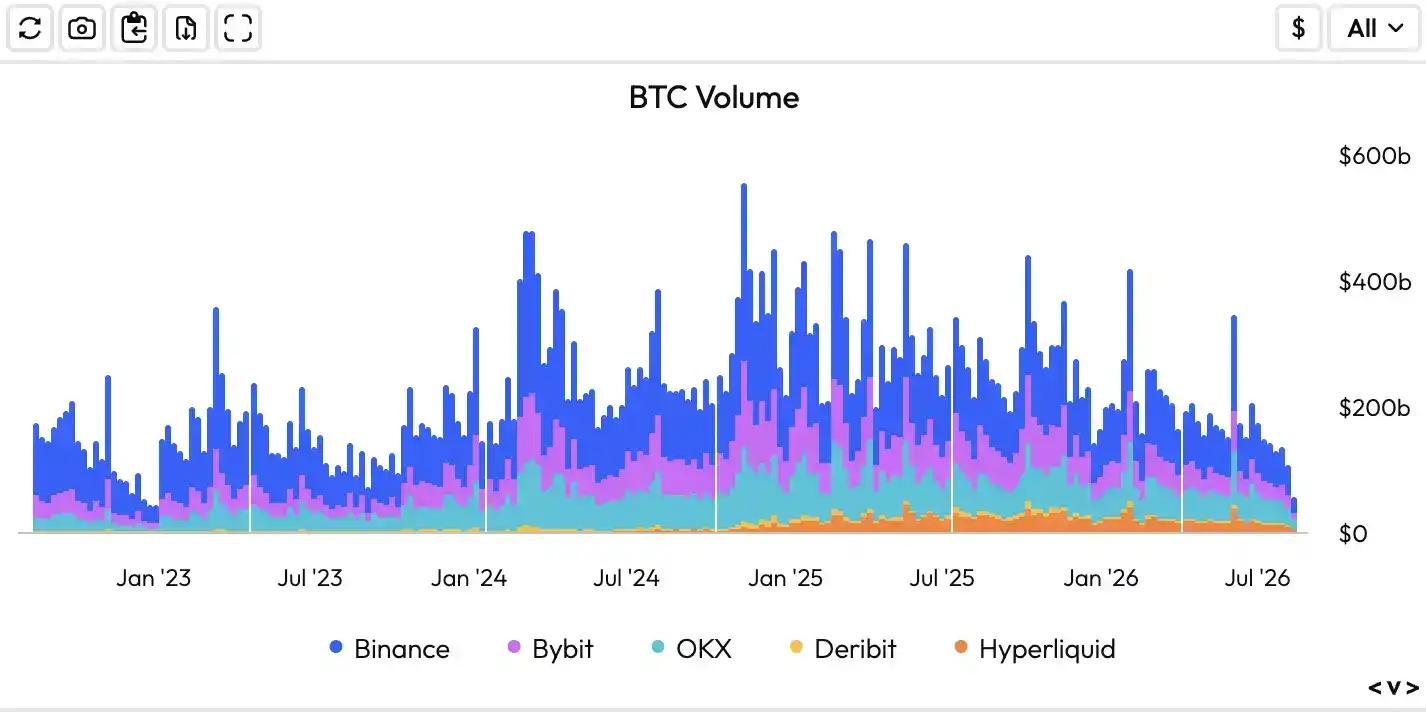
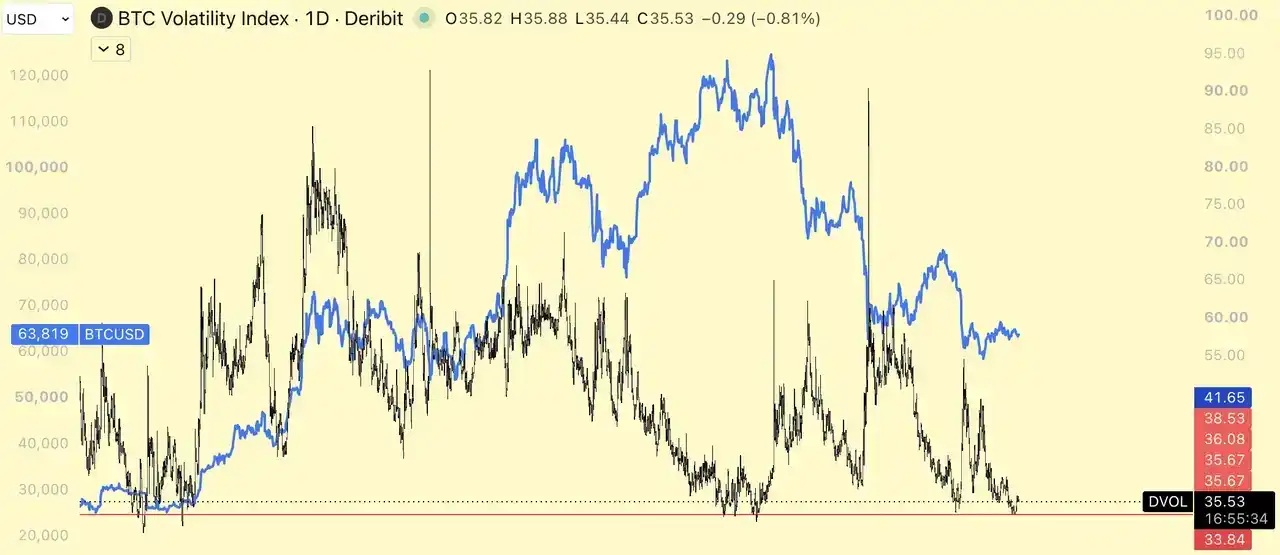
BTC weekly trading volume has fallen to its lowest level since 2023. Deribit's BTC volatility index DVOL also bottomed last week.
Liquidity is equally scarce. Last night at 20:30, CPI data was released. At the moment of the CPI announcement, BTC quickly fell from $64,450 to around $64,100, then rebounded to near $64,300 before declining again.
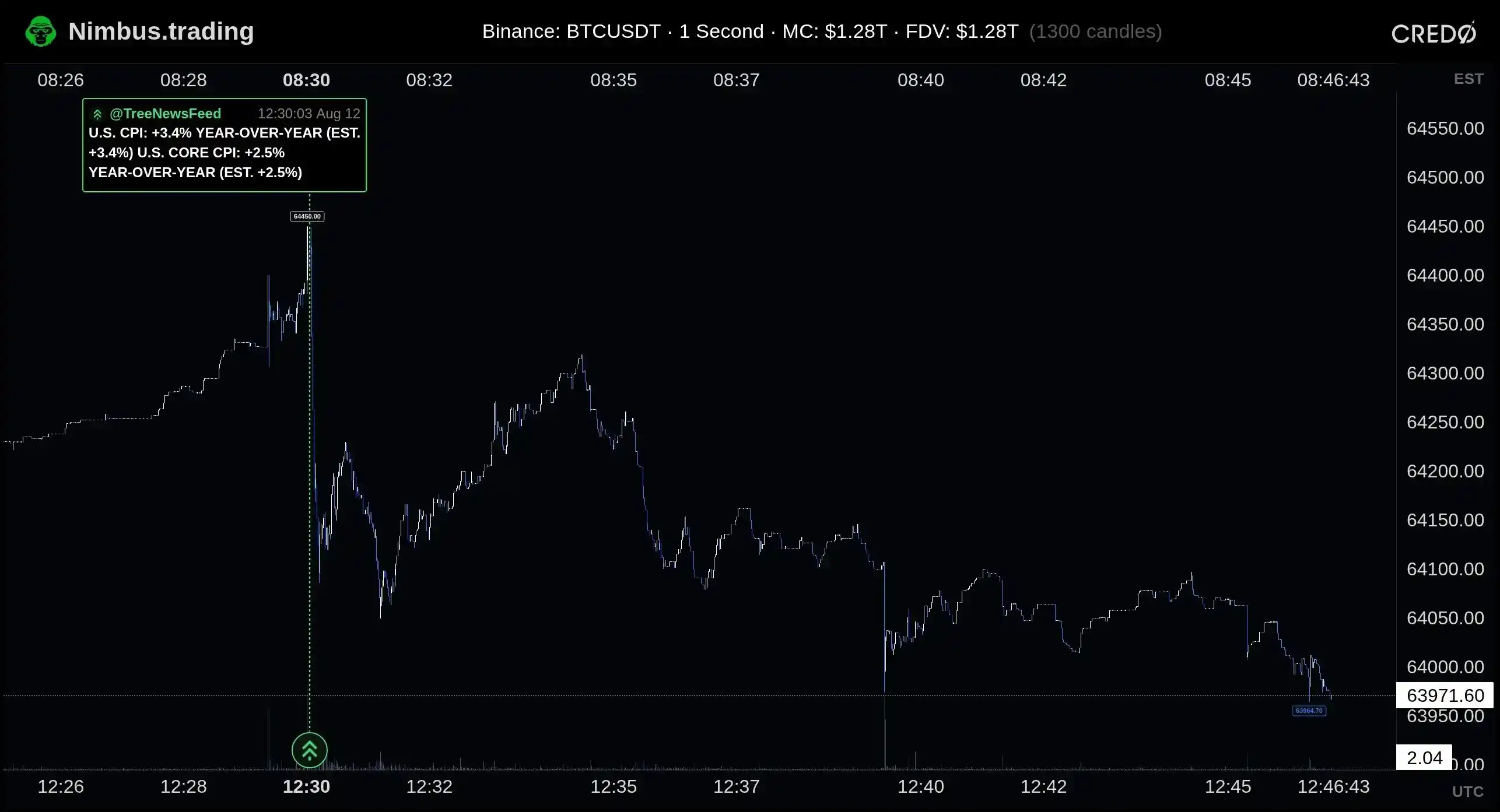
An hour later, when US stocks opened, BTC saw few participants. Apart from short-lived capital flows from cross-market arbitrage, the market failed to establish a new direction. BTC prices are easily moved now, but there aren't enough traders willing to follow through and extend the trend.
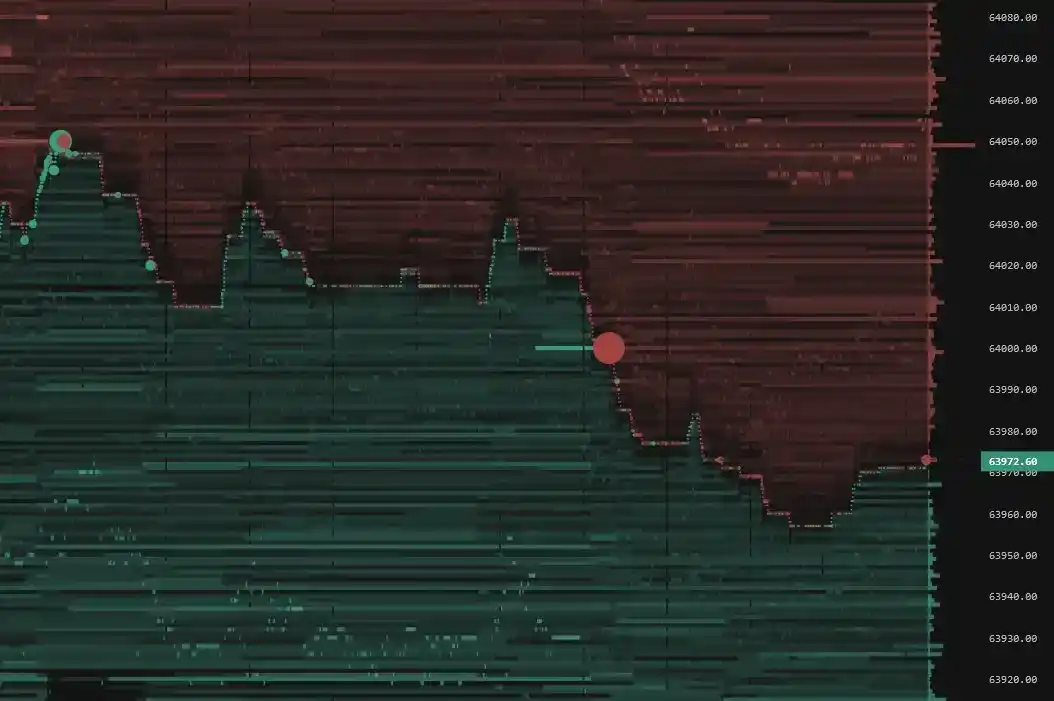
The market lacks more than just a single piece of good or bad news.

It lacks participants.

Options Market

Let's look at the options data.

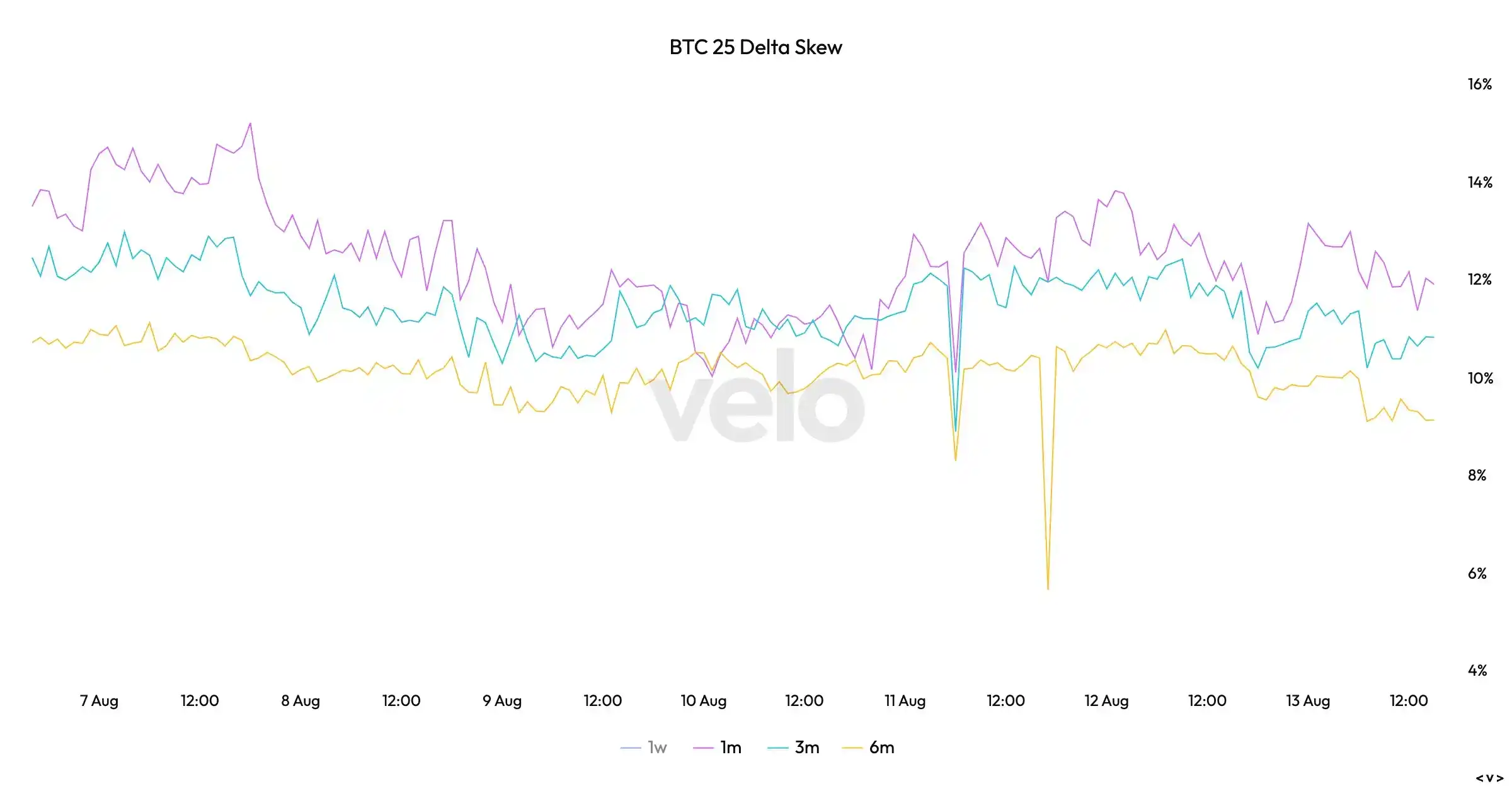
BTC 25 Delta Skew measures the implied volatility difference between put and call options with similar deltas. The curves for one-month, three-month, and six-month tenors in the chart are all in positive territory, approximately 12%, 10.7%, and 9.1% respectively. Shorter tenors show higher skew. Traders' demand for short-term downside protection is significantly higher than their pricing for long-term risks.
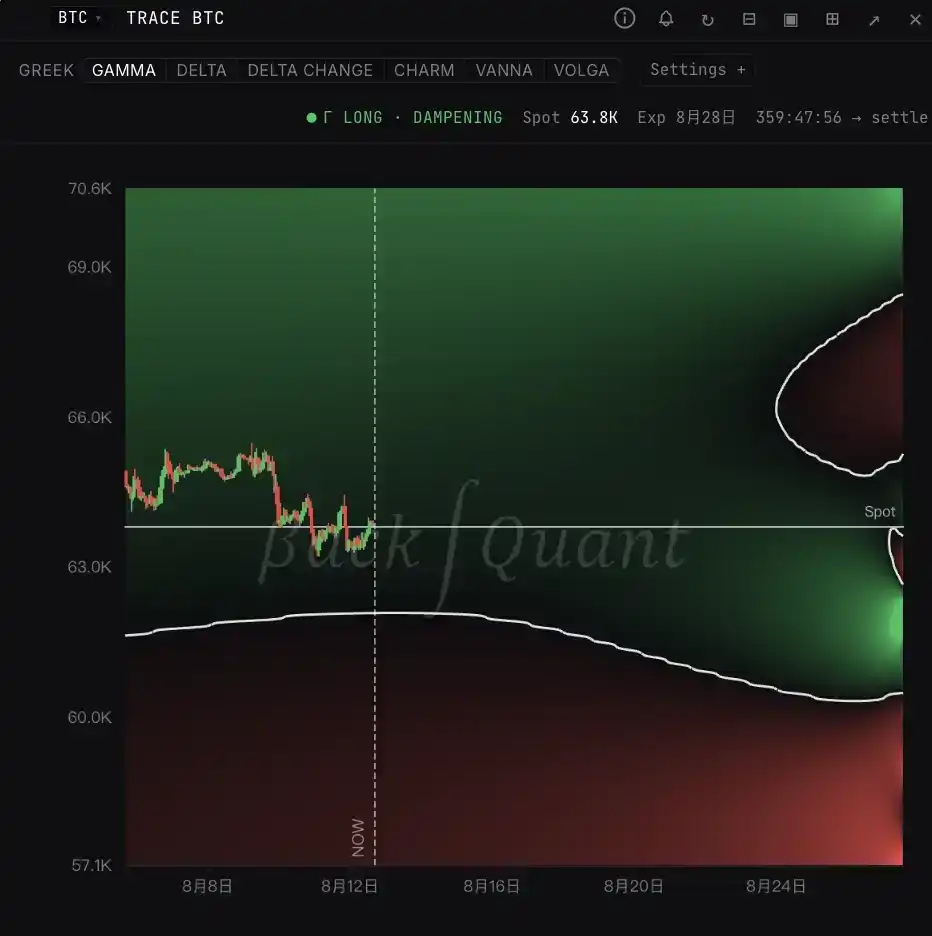
The aggregate Gamma heatmap for the end of the month provides more specific price boundaries. Currently, the market remains in a long gamma, volatility-suppressing zone. Market makers buy on price dips and sell on rallies; their hedging actions pull prices back into the range. The gamma flip zone is located near $61,000 to $60,000. As long as BTC stays above this boundary, market maker hedging absorbs volatility; if the price falls below the boundary, positions shift to short gamma, forcing market makers to continue selling during declines—their hedging behavior switches from a stabilizer to an accelerator.
If You Don't Buy, Who Do We Sell To?

Many traders are citing two changes to support a bullish view. Saylor sold several hundred million dollars worth of BTC in batches over the past month, about 0.13% of MicroStrategy's holdings, yet the BTC price remained roughly flat. Meanwhile, STRC rebounded from lows around $73 to $95.45, just a step away from $100. Saylor sells BTC without causing a sell-off, and STRC recovers most of its losses—the market naturally interprets this as bad news already being digested.

The problem is, given the current low-liquidity, low-volatility market conditions, an alternative explanation exists for the above phenomena.

Large entities still have spot holdings to exit, but the current trading volume cannot absorb large sell orders. They have temporarily paused selling simply because the order book is too thin. When STRC returns to $100, potentially bringing fresh buying interest for BTC, it might offer these entities what could be their last exit opportunity.

Good news can improve selling conditions.

This path explains why BTC consolidated during Saylor's minor selling spree and also suggests why pressure risks remain even after Saylor resumes buying. The variable determining the price is how MicroStrategy's orders compare to the entire market's potential selling pressure. Looking solely at Saylor's buys or sells doesn't provide a complete answer.

A reasonable counterargument is: large entities have previously faced volatile events and MicroStrategy's buying support, so why haven't they completed their exit? The historical trend offers a rather pessimistic answer. After the previous round of STRC restoring fund flows and MicroStrategy providing spot demand, BTC subsequently experienced a rapid decline, settling near $59,000 and entering a prolonged consolidation.

Furthermore, option positions have set $61,000 to $60,000 as the volatility amplification zone. Once large spot sell orders push the price into the negative gamma region, the next bottom is likely to form.

The Dilemma of STRC

MicroStrategy recently increased its dollar reserves by $650 million and repurchased $109 million worth of STRC. The company disclosed that these actions extended the dollar reserve coverage period by 143 days to 2.7 years and narrowed STRC's Bitcoin credit spread by 10 basis points. Including operations from the previous week, the two-week repurchase scale is approximately $190 million.

This money pulled STRC back to $95 but did not solve the most critical problem.
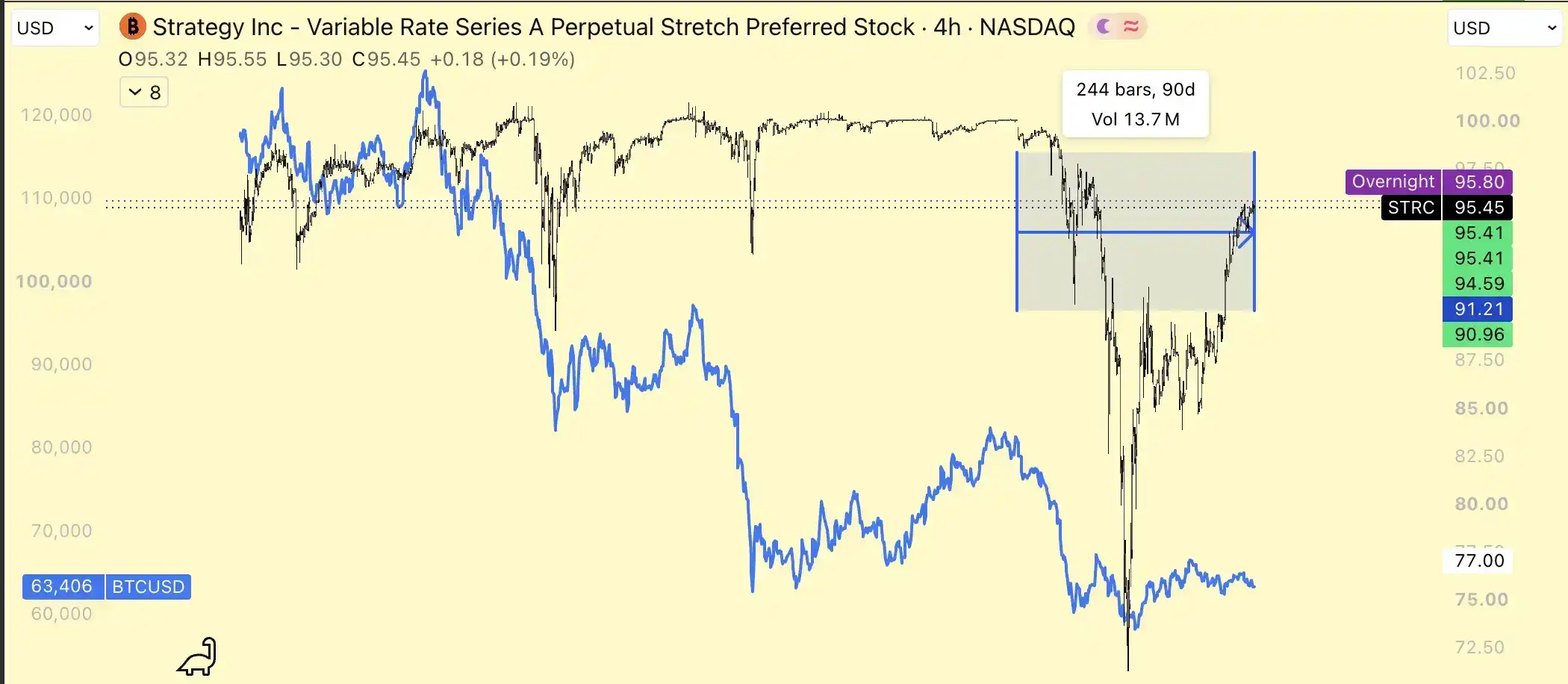
STRC must return to $100.

MicroStrategy issues additional STRC shares at-market near $100. This essentially tells the market that whenever the share price approaches $100, the company will issue more new shares. Consequently, all holders who bought below $100 will sell near $99.9. Even if the STRC price reaches $100, it will immediately be sold back below $100 by these sellers. Short sellers can also sell borrowed shares near $99.9, wait for the price to drop back to $95, buy them back to cover, and earn roughly a $5 per share profit.

The biggest risk in this trade is STRC breaking above $100 and continuing to rise, forcing short sellers to cover at higher prices. However, MicroStrategy itself adding supply near $100 actively caps that upside potential. The more the market believes the company will issue shares at $100, the more willing traders are to sell early at $99.9, making it harder for STRC to truly sustain above $100.

As long as this rule remains unchanged, if the roughly $190 million repurchase still cannot help STRC reclaim $100, the market will continue to question where the next funds to buy STRC will come from, and concerns about BTC liquidation will rise accordingly. MicroStrategy's actions of replenishing dollar reserves while repurchasing STRC already indicate the company's current priority is repairing the financing side; resuming net purchases of BTC is still secondary.

Shorting is not a free trade either. Short sellers need to borrow STRC first, then sell it on the market. During the holding period, they must pay an annualized securities lending rate exceeding 50% and compensate for a dividend yield of about 12%, resulting in a combined annualized cost of over 60%. The longer the stock price remains stuck near $100, the more these fees eat into profits.

Because STRC issuance dilutes upside potential, short sellers rarely face the risk of sustained price increases. If MicroStrategy stopped issuing STRC at $100, and STRC rose from $99.9 to $102-$105, short sellers would immediately face a paper loss of $2.1 to $5.1 per share. Some shorts, forced to cut losses, would have to buy back STRC, and their buying would further push up the price, triggering a short squeeze.

The securities lending fee determines how long shorts can hold, and MicroStrategy's issuance rule determines whether they need to cut losses early. As long as issuance starts at $100, it will attract short sellers.

The capital allocation contradiction hasn't disappeared either. When MSTR's mNAV is below 1, continuing to sell common stock dilutes the per-share value for common shareholders. Repurchasing STRC without raising dividends or repurchasing MSTR provides more direct protection for preferred shareholders. The company sees a longer dollar reserve coverage period and a narrower Bitcoin credit spread, while common shareholders calculate who bears the cost of this repair.

Bitfinex Long

Bitfinex Long positions typically exhibit an inverse relationship with BTC price. When BTC falls, large long positions on Bitfinex often increase; when BTC rises, these long positions gradually decrease. The market is accustomed to using this inverse relationship as a positioning indicator to observe whether large funds are accumulating BTC during price weakness.
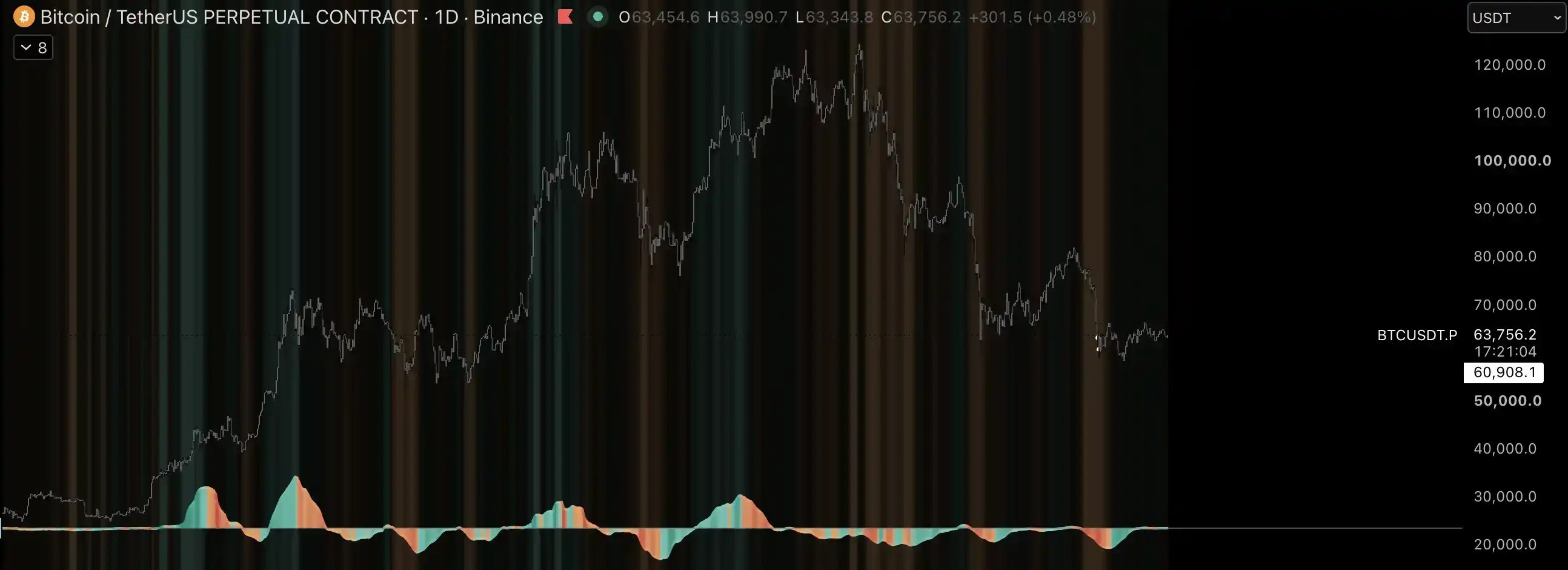
Bitfinex Long Rate of Change (Inverted) Indicator

Recently, this indicator has failed. The rate of change for Bitfinex Long has dropped to its lowest level since the end of the 2022 bear market. While BTC consolidates around the $60,000s, Bitfinex long positions have neither increased nor decreased significantly, offering no directional signal for the next price move.

BTC's "savior" has turned into "Satan."

Trending Cryptos

Related Questions

QAccording to the article, what does the low transaction volume and stagnant BTC price indicate about the current market?

AThe low transaction volume and stagnant BTC price indicate a severe lack of market participants and liquidity, making the market susceptible to being moved by small trades but lacking the sustained momentum to establish a clear new direction.

QWhat is the significance of the 61,000 to 60,000 USD price level for BTC according to the options market data mentioned?

AThe 61,000 to 60,000 USD price level is identified as the gamma flip zone in the options market. Below this level, market makers' hedging behavior would switch from absorbing volatility (long gamma) to amplifying sell-side pressure (short gamma), potentially accelerating a price decline.

QWhy does the article suggest that STRK's rebound to near 100 USD might not be a genuine bullish signal for BTC?

AThe article suggests the rebound might not be bullish because it could provide large entities holding BTC an improved exit opportunity in a thin market. Furthermore, STRK's own structure, where Strategy issues new shares near 100 USD, creates a selling wall that caps its price, limiting its ability to sustainably drive positive sentiment for BTC.

QWhat is the core dilemma facing STRK's price action as explained in the article?

AThe core dilemma is that Strategy's rule of issuing new STRK shares at or near 100 USD creates a self-imposed price ceiling. It encourages selling just below that level (e.g., at 99.9 USD) by both holders and short sellers, making it extremely difficult for the price to sustainably break above and hold 100 USD.

QWhat does the recent behavior of the 'Bitfinex Long' indicator imply, according to the article?

AThe recent behavior implies the 'Bitfinex Long' indicator has become ineffective. Its change rate has fallen to multi-year lows and shows no clear correlation with BTC price movements, failing to provide the usual signal about whether large capital is accumulating or distributing during price weakness.

Related Reads

Chip Giant with 700 Billion Market Cap Sees Soaring Inventory

"Chips Giant with 700 Billion Market Cap Sees Inventory Soar" In its 2026 first-half financial report, Cambricon, a leading Chinese AI chip design company, reported significant growth in both revenue and profit. Revenue reached 59.96 billion yuan, up 108.13% year-on-year, while net profit grew 122.61% to 23.11 billion yuan. However, a major point of investor focus was the sharp rise in the company's inventory, which surged 66.83% from the end of the previous year to 82.48 billion yuan. This inventory now represents 45.32% of its total assets. The increase is primarily attributed to a substantial growth in raw materials (up 77.95% to 52.78 billion yuan) and work-in-process with contract manufacturers (up 61.85% to 24.18 billion yuan). Cambricon management explained that the inventory build-up was due to increased purchases of raw materials and outsourced processing. The company acknowledged the risk of inventory impairment should market conditions change. Industry analysts noted that as a fabless chip designer, such inventory accumulation is a strategic move to secure wafer capacity. However, it carries significant risk due to the industry's rapid technological iteration. If downstream demand slows, the company could face substantial inventory write-downs. Additionally, Cambricon's prepayments soared nearly threefold to 29.14 billion yuan. Brokerage analyses interpret the concurrent rise in prepayments and inventory as a positive indicator, suggesting strong future order fulfillment and pointing towards significant revenue growth in the third quarter. Despite strong operational metrics, the company's cash and cash equivalents have shown a declining trend over the past three years, dropping to 6.26 billion yuan by mid-2026. Cambricon's stock price hit a historic high of 1,620 yuan per share in June, briefly pushing its market capitalization above one trillion yuan. As of August 13th, its share price was 1,105.5 yuan, with a total market cap of approximately 694.6 billion yuan.

marsbit37m ago

Chip Giant with 700 Billion Market Cap Sees Soaring Inventory

marsbit37m ago

Securitize's First Post-IPO Financial Report Disappoints, Has the 'Compliant Tokenization' Narrative Lost Its Luster?

Securitize, a leading tokenization platform, released its first quarterly earnings report since going public in July 2026, disappointing investors. Q2 2026 revenue was $14.43 million, down 5% year-over-year and 26% sequentially, missing analyst estimates. The net loss widened to $21.68 million. While tokenized assets under management grew 9% to a record $4.3 billion and platform trading volume surged 147% to $5.3 billion, total assets under administration fell 20% to $24.3 billion. The divergence between soaring volume and declining revenue raised concerns about its fee structure and business model viability. The report highlights Securitize's continued focus on regulatory compliance, including partnerships with major transfer agents and approvals from FINRA and Dubai's VARA. It also registered an investment advisor subsidiary with the SEC. However, tangible progress in its new tokenized public securities business was limited. Apart from tokenizing its own stock (SECZ) at its IPO, no other public company stock has been tokenized on its platform in over a month. Analysts note that SECZ's on-chain market value is misleading as it was issued to existing shareholders, not driven by secondary market demand. Post-earnings, Securitize's stock fell over 20%, bringing its total decline since its IPO to approximately 36%. The market reaction underscores investor concern over shrinking revenue and the slow pace of commercializing its tokenized equities narrative, shifting focus from regulatory milestones to real-market metrics like market share and user adoption.

marsbit40m ago

Securitize's First Post-IPO Financial Report Disappoints, Has the 'Compliant Tokenization' Narrative Lost Its Luster?

marsbit40m ago

Crypto Bear Market: Which Crypto Concept Stocks Are Institutional Giants Accumulating?

Despite a bearish crypto market, major institutional investors are increasing their positions in key crypto-related stocks, as revealed in recent 13F filings. European asset management giant Amundi significantly boosted its stake in MicroStrategy (MSTR) by 148%. Other institutions like Vanguard, State Street, and Capital Group also added to their MSTR holdings. While price performance has been weak, banks and public pension funds, including those from Michigan and Louisiana, are also expanding their exposure, signaling growing acceptance. In the mining sector, Bitmine (BMNR) saw inflows from passive index funds following its inclusion in the Russell index, with BlackRock as a major holder. For Circle (CRCL), active buyers included the Norwegian Sovereign Wealth Fund, the Swiss National Bank, and ARK Invest, which has been actively trading the stock. Regarding Coinbase (COIN), large positions from Vanguard and BlackRock are primarily passive, tied to index inclusions. ARK Invest engages in more active, tactical buying. Robinhood (HOOD) shows high institutional ownership (over 93%), with various pension funds making smaller, scattered additions. ARK Invest leads in active trading for stocks like Block (XYZ) and Bullish (BLSH), while traditional asset managers' moves are often passive. The trend indicates institutions are strategically accumulating sector leaders during the downturn, with conservative funds slowly adding crypto equities to their portfolios. However, due to the 45-day reporting lag, 13F data should be used for reference, not for direct copy-trading.

marsbit41m ago

Crypto Bear Market: Which Crypto Concept Stocks Are Institutional Giants Accumulating?

marsbit41m ago

Securitize's First Post-IPO Financial Report Bombshell: Is the 'Compliant Tokenization' Narrative Failing to Sell?

Securitize, a tokenization platform, released its first earnings report since going public in July 2026, revealing disappointing Q2 results. Revenue fell 5% year-over-year to $14.43 million, missing estimates, while the net loss widened significantly to $21.68 million. Despite achieving record tokenized assets under management of $4.3 billion and a 147% surge in platform trading volume, overall assets under administration declined by 20%. The company's stock (SECZ) dropped over 20% in after-hours trading following the report. The article highlights a key concern: Securitize's revenue declined despite substantial trading growth, suggesting either compressed fees or an unclear business model. While Securitize maintains its focus on regulatory compliance—securing key partnerships with entities like Computershare and NYSE, and obtaining an SEC investment advisor registration—its tangible progress in the new tokenized stock business has been slow. Apart from tokenizing its own stock (SECZ) upon listing, it has not launched other tokenized equities. Analysts note that SECZ's high on-chain market capitalization is misleading, as it resulted from a one-time distribution to shareholders rather than organic investor demand. The market's patience is waning as investors prioritize real business metrics like market share and user adoption over the "compliant tokenization" narrative. Securitize's market value has fallen 36% from its debut, reflecting growing concerns over its shrinking revenue and the delayed execution of its tokenized stock initiatives.

Odaily星球日报56m ago

Securitize's First Post-IPO Financial Report Bombshell: Is the 'Compliant Tokenization' Narrative Failing to Sell?

Odaily星球日报56m ago

Trading

Spot

Hot Articles

What is $BITCOIN

DIGITAL GOLD ($BITCOIN): A Comprehensive Analysis Introduction to DIGITAL GOLD ($BITCOIN) DIGITAL GOLD ($BITCOIN) is a blockchain-based project operating on the Solana network, which aims to combine the characteristics of traditional precious metals with the innovation of decentralized technologies. While it shares a name with Bitcoin, often referred to as “digital gold” due to its perception as a store of value, DIGITAL GOLD is a separate token designed to create a unique ecosystem within the Web3 landscape. Its goal is to position itself as a viable alternative digital asset, although specifics regarding its applications and functionalities are still developing. What is DIGITAL GOLD ($BITCOIN)? DIGITAL GOLD ($BITCOIN) is a cryptocurrency token explicitly designed for use on the Solana blockchain. In contrast to Bitcoin, which provides a widely recognized value storage role, this token appears to focus on broader applications and characteristics. Notable aspects include: Blockchain Infrastructure: The token is built on the Solana blockchain, known for its capacity to handle high-speed and low-cost transactions. Supply Dynamics: DIGITAL GOLD has a maximum supply capped at 100 quadrillion tokens (100P $BITCOIN), although details regarding its circulating supply are currently undisclosed. Utility: While precise functionalities are not explicitly outlined, there are indications that the token could be utilized for various applications, potentially involving decentralized applications (dApps) or asset tokenization strategies. Who is the Creator of DIGITAL GOLD ($BITCOIN)? At present, the identity of the creators and development team behind DIGITAL GOLD ($BITCOIN) remains unknown. This situation is typical among many innovative projects within the blockchain space, particularly those aligning with decentralized finance and meme coin phenomena. While such anonymity may foster a community-driven culture, it intensifies concerns about governance and accountability. Who are the Investors of DIGITAL GOLD ($BITCOIN)? The available information indicates that DIGITAL GOLD ($BITCOIN) does not have any known institutional backers or prominent venture capital investments. The project seems to operate on a peer-to-peer model focused on community support and adoption rather than traditional funding routes. Its activity and liquidity are primarily situated on decentralized exchanges (DEXs), such as PumpSwap, rather than established centralized trading platforms, further highlighting its grassroots approach. How DIGITAL GOLD ($BITCOIN) Works The operational mechanics of DIGITAL GOLD ($BITCOIN) can be elaborated on based on its blockchain design and network attributes: Consensus Mechanism: By leveraging Solana’s unique proof-of-history (PoH) combined with a proof-of-stake (PoS) model, the project ensures efficient transaction validation contributing to the network's high performance. Tokenomics: While specific deflationary mechanisms have not been extensively detailed, the vast maximum token supply implies that it may cater to microtransactions or niche use cases that are still to be defined. Interoperability: There exists the potential for integration with Solana’s broader ecosystem, including various decentralized finance (DeFi) platforms. However, the details regarding specific integrations remain unspecified. Timeline of Key Events Here is a timeline that highlights significant milestones concerning DIGITAL GOLD ($BITCOIN): 2023: The initial deployment of the token occurs on the Solana blockchain, marked by its contract address. 2024: DIGITAL GOLD gains visibility as it becomes available for trading on decentralized exchanges like PumpSwap, allowing users to trade it against SOL. 2025: The project witnesses sporadic trading activity and potential interest in community-led engagements, although no noteworthy partnerships or technical advancements have been documented as of yet. Critical Analysis Strengths Scalability: The underlying Solana infrastructure supports high transaction volumes, which could enhance the utility of $BITCOIN in various transaction scenarios. Accessibility: The potential low trading price per token could attract retail investors, facilitating wider participation due to fractional ownership opportunities. Risks Lack of Transparency: The absence of publicly known backers, developers, or an audit process may yield skepticism regarding the project's sustainability and trustworthiness. Market Volatility: The trading activity is heavily reliant on speculative behavior, which can result in significant price volatility and uncertainty for investors. Conclusion DIGITAL GOLD ($BITCOIN) emerges as an intriguing yet ambiguous project within the rapidly evolving Solana ecosystem. While it attempts to leverage the “digital gold” narrative, its departure from Bitcoin's established role as a store of value underscores the need for a clearer differentiation of its intended utility and governance structure. Future acceptance and adoption will likely depend on addressing the current opacity and defining its operational and economic strategies more explicitly. Note: This report encompasses synthesised information available as of October 2023, and developments may have transpired beyond the research period.

1.8k Total ViewsPublished 2025.05.13Updated 2025.05.13

What is $BITCOIN

Discussions

Welcome to the HTX Community. Here, you can stay informed about the latest platform developments and gain access to professional market insights. Users' opinions on the price of BTC (BTC) are presented below.

活动图片