Looking Back at Information Hiding in the GenAI Era from Claude's Invisible Watermark: How Can Embedded Watermarks Ensure Losslessness?

marsbitPublished on 2026-08-17Last updated on 2026-08-17

Abstract

On August 11, 2026, Anthropic announced that its new Claude models will embed invisible, machine-readable watermarks into generated text, allowing AI-generated content to be traced even after copying and redistribution, without affecting semantic quality or readability. This move follows global initiatives to watermark AI outputs, highlighted by the World Economic Forum and futurist Kevin Kelly. A core challenge is ensuring watermarking does not degrade model performance, leading to the key research goal of "provably lossless" generation. The theoretical foundation lies in provably secure steganography, which requires that watermarked data be indistinguishable from normal data in distribution. Early theoretical work was limited by the inability to precisely sample natural data distributions. The rise of generative AI models around 2018 provided a breakthrough, as these models learn and sample from explicit distributions. Pioneering work by a University of Science and Technology of China (USTC) team proposed frameworks for provably secure steganography using generative models, mapping encrypted messages to drive content generation. Subsequent research expanded the practicality of these techniques. Advancements include public-key steganography for asymmetric extraction, "box-less" extraction where the receiver doesn't need the original model, and "grey-box" scenarios for resource-constrained devices. A key innovation, SyncPool, resolved tokenization ambiguities in LLMs to ens...

On August 11, 2026, Anthropic announced that starting from August 2nd, the newly released version of the Claude model will directly embed invisible, machine-readable watermarks into generated text. This will enable AI-generated content to be identified and traced by software even after being copied and disseminated.

The official documentation states: "When a supported Claude model generates text, it embeds a subtle watermark directly into the text. You will not see it, and it does not change the semantics, quality, or readability of Claude's responses."

This mechanism covers Claude's web interface, API, Claude Code, and all product lines. It takes effect for global users and cannot be disabled. Generated images and other files will also include digital signature and traceability metadata compliant with the C2PA standard.

This is a landmark move by Anthropic following its signing of the EU's Artificial Intelligence Act, Article 50, Transparency Code of Conduct.

"Watermarking" AI-generated content is evolving from corporate initiatives to a global consensus. In June 2025, the World Economic Forum released the "Top 10 Emerging Technologies of 2025" at the Summer Davos in Tianjin, listing "Generative Watermarking" in second place. Futurist Kevin Kelly predicted in "2049: The Possible Next 10,000 Days" that the AI era necessitates "redefining reality" and "adding watermarks or similar markers to distinguish authenticity on AI-generated images and videos."
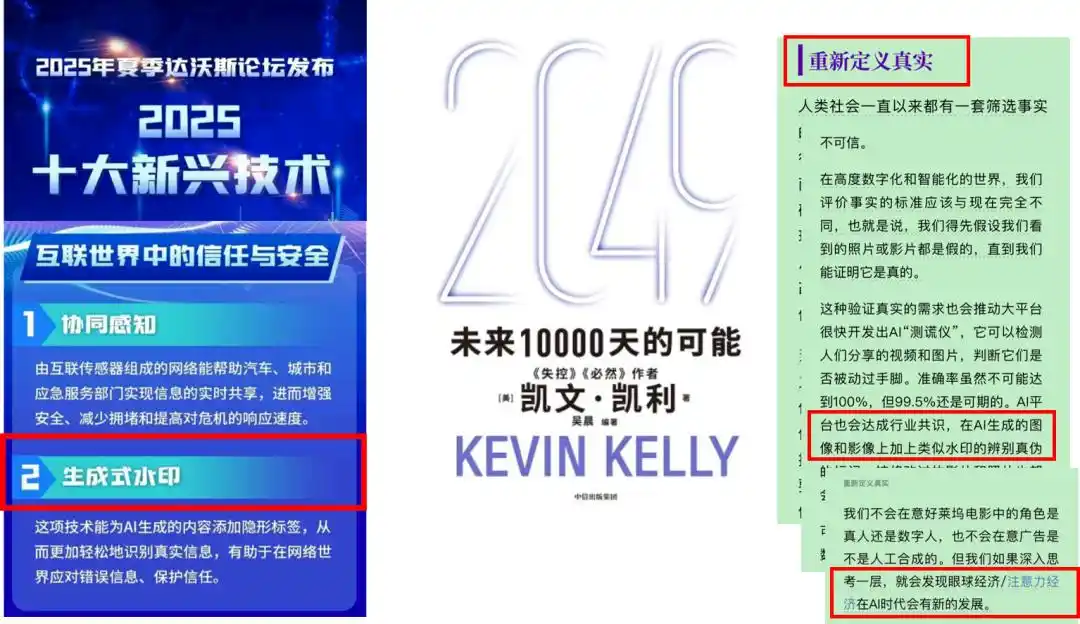
Figure 1: Summer Davos Forum and Kevin Kelly's Prediction

However, getting watermarks "right" is not easy.

On the day of Anthropic's announcement, users' most concentrated concern was precisely: will watermarking harm the model? Will it reduce generation quality?

"Provable performance losslessness" thus became the core proposition of information hiding research in the GenAI era. To understand this proposition, we must return to its theoretical origin—provably secure steganography.

Provably Secure Steganography: Twenty Years Waiting for Generative Models

Steganography and watermarking both belong to information hiding. Traditional steganography has long remained at the level of "empirical security": using steganalysis algorithms to test security strength, but unable to provide mathematical guarantees. Provably secure steganography requires strict proof: the distribution of data carrying secrets is indistinguishable from that of normal data.

This theoretical line has a long history.

In 1949, Shannon pointed out the difficulty of establishing a theory for covert communication; in 1998, Cachin introduced relative entropy, providing an information-theoretic security definition; in 2002, Turing Award winner Manuel Blum guided Hopper et al. in establishing the computational security steganography framework, further developing public-key steganography and covert key agreement in 2004.

However, all constructions of provably secure steganography rely on a stringent premise—the carrier distribution must be precisely sampleable. Natural data distributions are uncontrollable, causing the theory to lie dormant for years.
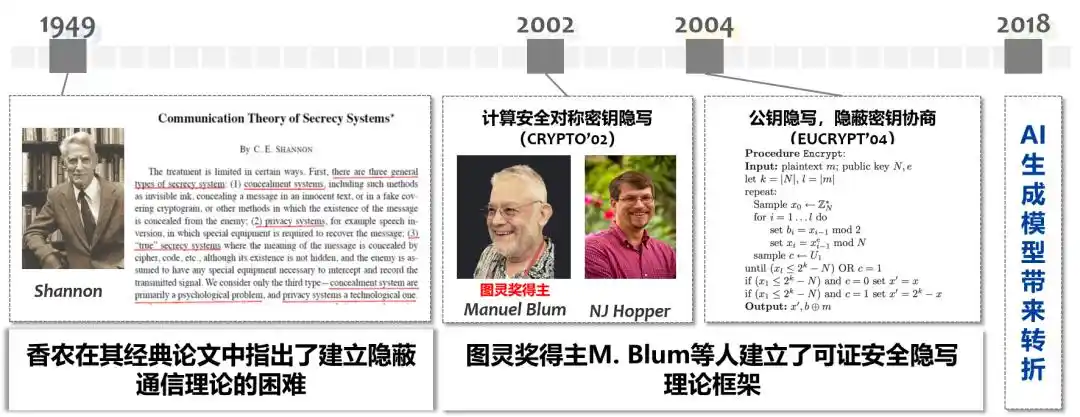
Figure 2: A Brief History of Provably Secure Steganography Development

In 2018, AI generative models brought a turning point: models first learn a distribution, then sample according to it, naturally providing an "explicit distribution or perfect sampler."

A team from the University of Science and Technology of China (USTC) pioneered the idea of generative provably secure steganography internationally. They proposed two frameworks: "black-box sampling" and "compression-reversible sampling" (IWDW 2018, arXiv 2018), reducing steganographic security to cryptographic algorithm security—encrypting a message into pseudo-random ciphertext, using the ciphertext to drive sampling for content generation, and allowing the receiver to recover the ciphertext via inverse sampling.

At that time, generative AI had not yet exploded, and this idea seemed "ahead of its time," initially finding it difficult to gain peer recognition. As the quality of generative models like text and audio improved rapidly, related achievements gradually gained acknowledgment. The International Workshop on Digital Forensics and Watermarking (IWDW) invited the USTC team to deliver a keynote report titled "When Provably Secure Steganography Meets Generative Models."
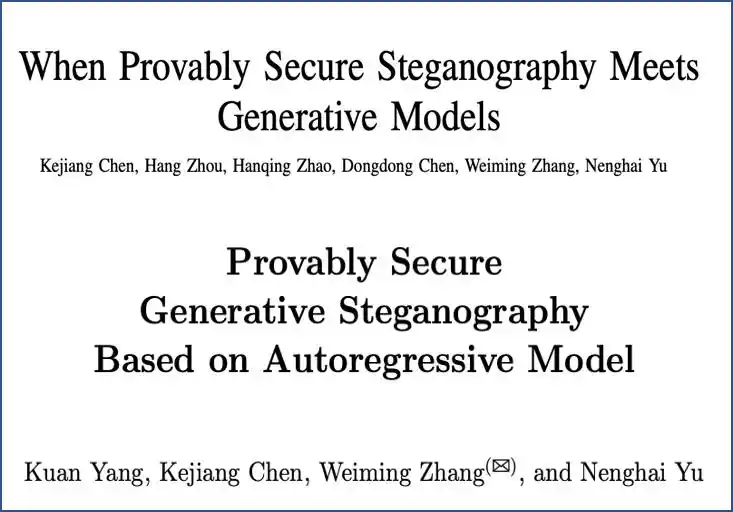
Figure 3: The Earliest Papers on Generative Provably Secure Steganography

Around 2021, AI-generated data gradually became a major form of online content. Provably secure steganography gained widespread attention globally: Tsinghua University proposed provably secure linguistic steganography based on sample grouping (Findings of ACL 2021); Boston University and Johns Hopkins University proposed the cryptographically secure steganography scheme Meteor for real distributions (ACM CCS 2021); Oxford University proposed perfectly secure steganography based on minimal entropy coupling (ICLR 2023).

The USTC team proposed the DisCop construction based on "distribution replicas" (IEEE S&P 2023), significantly improving embedding payload rate. In the same year, Quanta Magazine listed "perfectly hiding secret information in generated data" as one of the seven international breakthroughs in computer science for the year, heralding the entry of information hiding into the "provable" era.

From Symmetric to Asymmetric, from "Boxed" to "Box-less"

Early generative provably secure steganography schemes were all "symmetric key" systems, requiring the sender and receiver to pre-share a key and relying on white-box extraction, limiting their application scenarios.

Additionally, subword ambiguity could lead to extraction failure. The USTC team pushed the technical route towards public-key steganography, box-less/grey-box scenarios, and eliminated subword ambiguity, making generative hiding practical.

Public-key steganography (IEEE TIFS 2024): Proposed a provably secure public-key steganography scheme combining Elliptic Curve Cryptography (ECC) with generative models and introduced a steganographic key exchange protocol. Solved the problems of steganographic key agreement and "asymmetric" hidden information extraction.

Box-less steganography (IEEE TMM 2026): Traditional methods rely on "white-box" extraction, requiring the receiver to possess the exact same language model as the sender. The team proposed Disreo, achieving "box-less extraction" through token position randomization and output probability reorganization, enabling the receiver to recover the message without accessing the underlying model, providing greater convenience for practical deployment.

Grey-box steganography (ACM CCS 2026): Between white-box and box-less lies the "grey-box" scenario—unequal resources between sender and receiver; the receiver may only have the capability to run a small model (e.g., on mobile devices). SpecStega is based on speculative sampling: using a small model shared by both parties to embed and extract messages, then refining the output with the target large model. This ensures the final stego-text aligns with the large model's output distribution, maintaining high quality and security, while allowing efficient decoding at the receiver end using only the small model. The payload rate is improved over 20 times compared to existing black-box schemes—offering a third path between "boxed" and "box-less" for provably secure steganography.

Resolving subword ambiguity (IEEE TDSC): Steganography based on large language models commonly faces token decoding ambiguity—the same text segment can be tokenized into different subword sequences, causing extraction failure. The team proposed SyncPool, which groups tokens with prefix relationships before embedding, eliminating ambiguity in principle and achieving reliable extraction for provably secure steganography.

From Steganography to Watermarking: Bringing "Provable Losslessness" to Industry

First, AIGC large models learn the distribution of natural data, then sample according to that distribution to generate text, images, audio, video, etc. If one can: embed a watermark in the generated content without affecting the sampling distribution, it means the watermark embedding does not impact generation quality.

Provably secure steganography theoretically guarantees that the distribution of data carrying secrets is indistinguishable from that of normally generated data—meaning embedding information does not alter the model's sampling distribution. This is precisely the definition of "provably generation-quality-lossless watermarking." Watermarking does not require the large capacity of steganography, thus capacity can be traded for robustness.

In the text domain, the provably generation-quality-lossless watermarking system developed by the USTC team is plug-and-play, requiring no modification of model parameters. It supports single-bit robust discrimination and multi-bit model attribution, and has been applied to platforms like the Spark large model and Secure GPT, serving 13,000 developers.

Meanwhile, international research on provably lossless generative text watermarks is also advancing rapidly:

In 2024, teams from the University of Maryland and others' "Unbiased Watermark for Large Language Models" (ICLR 2024 Spotlight) defined unbiased watermarks and provided a general construction.

The same year, Stanford University proposed robust unbiased watermarks resistant to distortion (TMLR 2024).

In 2025, Multi-Channel Unbiased Watermark MCmark (ACL 2025) improved watermark extraction robustness while maintaining strict unbiasedness.

In the image domain, the USTC team proposed Gaussian Shading (CVPR 2024), mapping an encrypted, randomized watermark to Gaussian latent variables indistinguishable from normal generation, then acting on the entire latent space via the diffusion process—training-free, plug-and-play, and provably performance-lossless.

Gaussian Shading++ and T2SMark (NeurIPS 2025) further addressed robustness, generation parameter variation, and generation diversity issues in real-world deployment.

TAG-WM (ICCV 2025) introduced a dual mechanism of "template watermark + information watermark," achieving both tamper localization and ownership verification under the lossless premise.

SemBind (ICML 2026) binds the watermark to image semantics through a semantic masker, resisting black-box forgery attacks.
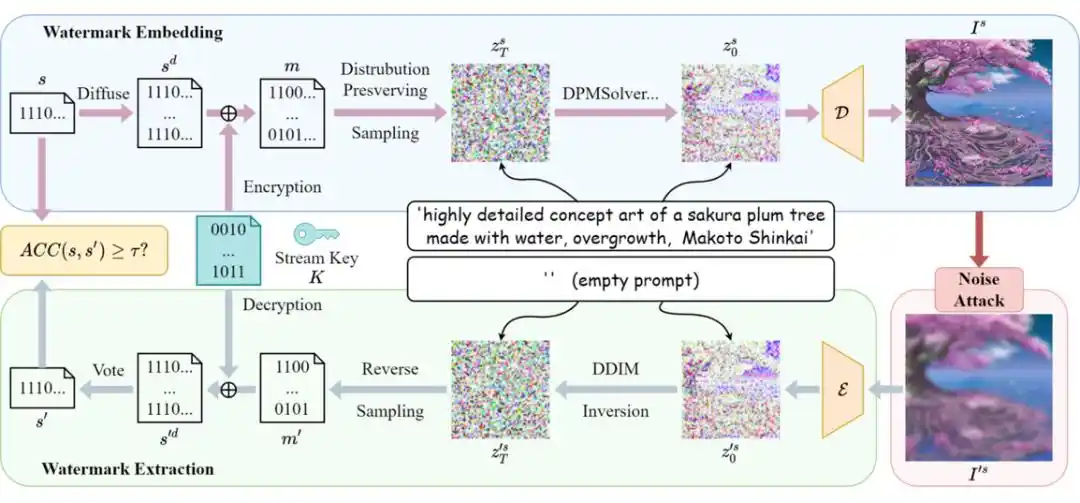
Figure 4: Provably Lossless Generative Image Watermark Gaussian Shading (CVPR 2024)

From content watermarking to model watermarking. Models themselves are important digital assets, also requiring reliable provenance. Model watermarking always faces one question: will it affect the model's normal use?

Drawing inspiration from the "provably undetectable backdoor" construction proposed by Turing Award winner Shafi Goldwasser et al. at FOCS 2022, the USTC team proposed a provably performance-lossless black-box model watermarking protocol (IEEE TDSC 2026): using unforgeable message authentication codes to construct branch indicators, making the probability of normal users triggering the watermark branch computationally negligible, thereby reducing performance losslessness to cryptographic security.

Thus, "provable losslessness" extends from generated content to the models themselves.

From "Empirical Security" to "Provable Security"

Anthropic's invisible watermark sparked controversy on its launch day: writers worried about attribution, developers worried "will the watermark reduce generation quality?" Industry pioneers chose "engineering fast runs," while the goals of "accurate marking, no harm, withstand rewriting and erasure, and provide definitive evidence" call for solid theoretical support.

From Shannon's conceptual challenge to Blum et al.'s theoretical frameworks, from the first generative provably secure steganography algorithm in 2018 to the Spark model watermark and Claude's watermark, information hiding has taken seventy-seven years to finally upgrade from "empirical security" to "provable security," turning "worrying that embedding watermarks harms the model" into "mathematically proven losslessness"—whether for generated content or the model itself—providing theoretically guaranteed technical support for AI content governance.

Watermarking: Attack and Defense

Designing watermarks is hard; erasing them is easy. Or perhaps not entirely. Designing watermarks requires pursuing both quality losslessness and robustness simultaneously, while attackers also need to erase watermarks under quality constraints.

Without constraints, watermarks are easily erased. Rewriting sentence by sentence to erase watermarks—does it still count as content generated by the original model? Perhaps it would be easier to just use another open-source model for generation.

Like other security fields, attackers and defenders engage in a game under their respective constraints. The existence of both attack and defense keeps a technology direction vibrant.

And "losslessness" is the constraint and pursuit for both sides.

Defenders do not want to sacrifice generation quality by embedding watermarks; attackers also do not want to degrade quality by erasing watermarks.

Absolute security never exists. The significance of defense is to create the greatest possible cost for attack. The essence of attack and defense is a game of cost, and the same holds for watermarking.

This article is from the WeChat public account "New Zhiyuan," author: New Zhiyuan.

Trending Cryptos

Related Questions

QWhat is the core concept behind 'provably secure steganography' as discussed in the article?

AThe core concept of 'provably secure steganography' is to mathematically prove that the distribution of stego-data (data containing hidden information) is indistinguishable from the distribution of normal, cover data. This ensures that embedding information does not alter the statistical properties of the generated content, providing a theoretical guarantee of security and 'losslessness' in terms of generation quality.

QWhat key advantage do generative AI models provide for provably secure steganography, according to the article?

AGenerative AI models provide a key prerequisite that was historically difficult to achieve: an explicit or perfect sampler of a data distribution. Since these models learn a distribution and then sample from it to generate content, they naturally offer the 'perfect sampler' required for the theoretical constructions of provably secure steganography, enabling the shift from 'empirical security' to 'provable security'.

QName three practical challenges in steganography/watermarking that the research from USTC addressed, as mentioned in the article.

A1. Public Key Steganography: They proposed schemes combining Elliptic Curve Cryptography with generative models to solve asymmetric key management and extraction. 2. Boxless Extraction (Disreo): Enabling message recovery without the receiver needing access to the original generative model. 3. Subword Token Ambiguity (SyncPool): Solving extraction failures caused by the same text being tokenized into different subword sequences by grouping related tokens.

QHow does the concept of 'provable performance losslessness' apply to both generated content and AI models themselves?

AFor generated content (text, images), 'provable performance losslessness' means embedding a watermark does not change the model's sampling distribution, guaranteeing no degradation in generation quality. For AI models, it refers to model watermarking protocols where the probability of a normal user triggering the 'watermark branch' of the model is computationally negligible. This is achieved by using cryptographic constructs like unforgeable message authentication codes, thereby extending the guarantee of 'no performance impact' from the content to the model asset itself.

QAccording to the article, what is the fundamental nature of the battle between watermarking defense and attack?

AThe fundamental nature is a cost博弈 (game of cost/博弈). There is no absolute security. The goal of defense (watermarking) is to impose the highest possible cost on the attacker (e.g., significant quality degradation or computational effort required for removal). Conversely, attackers operate under the constraint of maintaining content quality while removing the watermark. 'Losslessness' is a shared constraint and pursuit for both sides in this ongoing博弈.

Related Reads

Tiger Research: How Far Can the On-Chain Foreign Exchange Settlement Layer Go?

"Tiger Research: How Far Can On-Chain FX Settlement Layers Go?" The article examines KiiChain, a startup aiming to create an on-chain foreign exchange settlement layer, focusing on its potential to address inefficiencies in cross-border payments, especially for emerging markets. The core problem is the slow, costly, and fragmented traditional FX infrastructure, where bank hours, regulations, and thin liquidity for local currencies create delays. KiiChain, founded by OTC veterans, proposes aggregating USD and local currency stablecoin liquidity on one chain to enable 24/7 settlement. The platform consists of four components: 1) The KiiChain App uses an Atomic Quote Network (RFQ-style price discovery with on-chain settlement) to tackle settlement delays, but not underlying liquidity scarcity. 2) The RWA Protocol tokenizes collateral using compliant standards (like ERC-3643), shifting trust from bank relationships to coded rules, though regulatory anchors remain. 3) Kii Oracle uses a decentralized validator network to create consensus pricing from fragmented data, improving transparency but not market depth. 4) KiiChain Pay bundles fiat on/off-ramps and swap services; only the DEX swap bypasses banking bottlenecks, while others still rely on licensed operators. The analysis concludes KiiChain doesn't eliminate intermediaries but creates a unified settlement layer where they can interact without geographic or time constraints. It streamlines the process—three of eight traditional steps are removed—by moving infrastructure on-chain, improving speed and accessibility for digital asset swaps. However, fiat entry/exit points remain subject to off-chain service limitations. Current metrics show over $500M in transaction volume. The future depends on ecosystem growth—attracting liquidity partners and users—to evolve beyond settlement into a broader financial hub. Ultimately, the on-chain structure currently solves settlement friction and time, not liquidity depth. Success will be determined by execution in building partnerships and market presence, not by architectural design alone.

marsbit10m ago

Tiger Research: How Far Can the On-Chain Foreign Exchange Settlement Layer Go?

marsbit10m ago

'The Idea of Catching the Absolute Bottom Is Wrong': Experts on a New Phase of Bitcoin Capitulation

Analysts from CryptoQuant advise investors against trying to pinpoint the exact bottom of Bitcoin's price. Their data shows the percentage of the Bitcoin supply in profit has fallen to 51.4%, a level historically associated with capitulation phases followed by accumulation. This means approximately 48.6% of circulating coins are held at an unrealized loss. The metric, based on UTXO analysis comparing a coin's last moved price to its current market value, last neared this level in early 2023 when Bitcoin traded between $16,000 and $20,000. CryptoQuant states that the idea of catching the "absolute bottom" is flawed. The decline in the average cost basis during a bear market reflects coins transferring from weak hands to stronger, long-term holders. While some investors realize losses, others may use the decline for gradual accumulation. The accumulation window may last longer than many expect, even as fear drives some participants away. Historically, a supply in profit below 55% has been linked to re-accumulation periods. Separately, Swan Bitcoin CEO Cory Klippsten offered a forecast, suggesting Bitcoin could form a bottom in October 2026, followed by a recovery towards approximately $130,000 ahead of the 2028 halving. This aligns with the historical pattern of local lows forming about 12 months after bull market peaks; Bitcoin hit its all-time high above $126,000 in early October 2025. However, Klippsten cautioned against over-relying on past cycles due to limited historical data.

cryptonews.ru53m ago

'The Idea of Catching the Absolute Bottom Is Wrong': Experts on a New Phase of Bitcoin Capitulation

cryptonews.ru53m ago

How Does FalconX Bring Institutional Lending On-Chain? Deep Dive into the FALX Operational Mechanism

FALX is a structured credit facility that brings institutional prime brokerage loans on-chain as fixed-income assets. It works by having FalconX originate overcollateralized loans to institutional clients (e.g., quant funds, market makers). These loan exposures enter a bankruptcy-remote SPV. The Pareto protocol provides the on-chain credit vault infrastructure, while M11 Credit acts as the credit curator, administrative agent, and collateral agent. Platforms like Plume, Ethereum, and Solana serve as distribution channels for investors. Investors deposit USDC into the vault, receiving an estimated ~7.4% net yield (after a 10% performance fee). This yield represents a premium over low-risk on-chain alternatives (like tokenized Treasuries at ~4%) to compensate for risks including FalconX operational risk, collateral liquidation risk, SPV legal risk, M11's execution risk, a 31-day redemption notice period, and potential contagion from DeFi re-collateralization. The structure incorporates multiple risk mitigations: overcollateralized underlying loans, a first-loss capital contribution from FalconX, and independent oversight by M11. However, challenges remain, such as scaling investor demand (current AUM is ~$148M against a ~$1B potential capacity), managing redemption liquidity, and addressing new risks from the vault token's use as collateral in DeFi lending protocols like Morpho. FALX demonstrates a pragmatic path for on-chain credit by leveraging existing institutional loan origination and combining it with legal structures, external curation, and blockchain-based distribution.

marsbit54m ago

How Does FalconX Bring Institutional Lending On-Chain? Deep Dive into the FALX Operational Mechanism

marsbit54m ago

Trading

Spot

Hot Articles

What is SONIC

Sonic: Pioneering the Future of Gaming in Web3 Introduction to Sonic In the ever-evolving landscape of Web3, the gaming industry stands out as one of the most dynamic and promising sectors. At the forefront of this revolution is Sonic, a project designed to amplify the gaming ecosystem on the Solana blockchain. Leveraging cutting-edge technology, Sonic aims to deliver an unparalleled gaming experience by efficiently processing millions of requests per second, ensuring that players enjoy seamless gameplay while maintaining low transaction costs. This article delves into the intricate details of Sonic, exploring its creators, funding sources, operational mechanics, and the timeline of significant events that have shaped its journey. What is Sonic? Sonic is an innovative layer-2 network that operates atop the Solana blockchain, specifically tailored to enhance the existing Solana gaming ecosystem. It accomplishes this through a customised, VM-agnostic game engine paired with a HyperGrid interpreter, facilitating sovereign game economies that roll up back to the Solana platform. The primary goals of Sonic include: Enhanced Gaming Experiences: Sonic is committed to offering lightning-fast on-chain gameplay, allowing players and developers to engage with games at previously unattainable speeds. Atomic Interoperability: This feature enables transactions to be executed within Sonic without the need to redeploy Solana programmes and accounts. This makes the process more efficient and directly benefits from Solana Layer1 services and liquidity. Seamless Deployment: Sonic allows developers to write for Ethereum Virtual Machine (EVM) based systems and execute them on Solana’s SVM infrastructure. This interoperability is crucial for attracting a broader range of dApps and decentralised applications to the platform. Support for Developers: By offering native composable gaming primitives and extensible data types - dining within the Entity-Component-System (ECS) framework - game creators can craft intricate business logic with ease. Overall, Sonic's unique approach not only caters to players but also provides an accessible and low-cost environment for developers to innovate and thrive. Creator of Sonic The information regarding the creator of Sonic is somewhat ambiguous. However, it is known that Sonic's SVM is owned by the company Mirror World. The absence of detailed information about the individuals behind Sonic reflects a common trend in several Web3 projects, where collective efforts and partnerships often overshadow individual contributions. Investors of Sonic Sonic has garnered considerable attention and support from various investors within the crypto and gaming sectors. Notably, the project raised an impressive $12 million during its Series A funding round. The round was led by BITKRAFT Ventures, with other notable investors including Galaxy, Okx Ventures, Interactive, Big Brain Holdings, and Mirana. This financial backing signifies the confidence that investment foundations have in Sonic’s potential to revolutionise the Web3 gaming landscape, further validating its innovative approaches and technologies. How Does Sonic Work? Sonic utilises the HyperGrid framework, a sophisticated parallel processing mechanism that enhances its scalability and customisability. Here are the core features that set Sonic apart: Lightning Speed at Low Costs: Sonic offers one of the fastest on-chain gaming experiences compared to other Layer-1 solutions, powered by the scalability of Solana’s virtual machine (SVM). Atomic Interoperability: Sonic enables transaction execution without redeployment of Solana programmes and accounts, effectively streamlining the interaction between users and the blockchain. EVM Compatibility: Developers can effortlessly migrate decentralised applications from EVM chains to the Solana environment using Sonic’s HyperGrid interpreter, increasing the accessibility and integration of various dApps. Ecosystem Support for Developers: By exposing native composable gaming primitives, Sonic facilitates a sandbox-like environment where developers can experiment and implement business logic, greatly enhancing the overall development experience. Monetisation Infrastructure: Sonic natively supports growth and monetisation efforts, providing frameworks for traffic generation, payments, and settlements, thereby ensuring that gaming projects are not only viable but also sustainable financially. Timeline of Sonic The evolution of Sonic has been marked by several key milestones. Below is a brief timeline highlighting critical events in the project's history: 2022: The Sonic cryptocurrency was officially launched, marking the beginning of its journey in the Web3 gaming arena. 2024: June: Sonic SVM successfully raised $12 million in a Series A funding round. This investment allowed Sonic to further develop its platform and expand its offerings. August: The launch of the Sonic Odyssey testnet provided users with the first opportunity to engage with the platform, offering interactive activities such as collecting rings—a nod to gaming nostalgia. October: SonicX, an innovative crypto game integrated with Solana, made its debut on TikTok, capturing the attention of over 120,000 users within a short span. This integration illustrated Sonic’s commitment to reaching a broader, global audience and showcased the potential of blockchain gaming. Key Points Sonic SVM is a revolutionary layer-2 network on Solana explicitly designed to enhance the GameFi landscape, demonstrating great potential for future development. HyperGrid Framework empowers Sonic by introducing horizontal scaling capabilities, ensuring that the network can handle the demands of Web3 gaming. Integration with Social Platforms: The successful launch of SonicX on TikTok displays Sonic’s strategy to leverage social media platforms to engage users, exponentially increasing the exposure and reach of its projects. Investment Confidence: The substantial funding from BITKRAFT Ventures, among others, emphasizes the robust backing Sonic has, paving the way for its ambitious future. In conclusion, Sonic encapsulates the essence of Web3 gaming innovation, striking a balance between cutting-edge technology, developer-centric tools, and community engagement. As the project continues to evolve, it is poised to redefine the gaming landscape, making it a notable entity for gamers and developers alike. As Sonic moves forward, it will undoubtedly attract greater interest and participation, solidifying its place within the broader narrative of blockchain gaming.

2.4k Total ViewsPublished 2024.04.04Updated 2024.12.03

What is SONIC

What is $S$

Understanding SPERO: A Comprehensive Overview Introduction to SPERO As the landscape of innovation continues to evolve, the emergence of web3 technologies and cryptocurrency projects plays a pivotal role in shaping the digital future. One project that has garnered attention in this dynamic field is SPERO, denoted as SPERO,$$s$. This article aims to gather and present detailed information about SPERO, to help enthusiasts and investors understand its foundations, objectives, and innovations within the web3 and crypto domains. What is SPERO,$$s$? SPERO,$$s$ is a unique project within the crypto space that seeks to leverage the principles of decentralisation and blockchain technology to create an ecosystem that promotes engagement, utility, and financial inclusion. The project is tailored to facilitate peer-to-peer interactions in new ways, providing users with innovative financial solutions and services. At its core, SPERO,$$s$ aims to empower individuals by providing tools and platforms that enhance user experience in the cryptocurrency space. This includes enabling more flexible transaction methods, fostering community-driven initiatives, and creating pathways for financial opportunities through decentralised applications (dApps). The underlying vision of SPERO,$$s$ revolves around inclusiveness, aiming to bridge gaps within traditional finance while harnessing the benefits of blockchain technology. Who is the Creator of SPERO,$$s$? The identity of the creator of SPERO,$$s$ remains somewhat obscure, as there are limited publicly available resources providing detailed background information on its founder(s). This lack of transparency can stem from the project's commitment to decentralisation—an ethos that many web3 projects share, prioritising collective contributions over individual recognition. By centring discussions around the community and its collective goals, SPERO,$$s$ embodies the essence of empowerment without singling out specific individuals. As such, understanding the ethos and mission of SPERO remains more important than identifying a singular creator. Who are the Investors of SPERO,$$s$? SPERO,$$s$ is supported by a diverse array of investors ranging from venture capitalists to angel investors dedicated to fostering innovation in the crypto sector. The focus of these investors generally aligns with SPERO's mission—prioritising projects that promise societal technological advancement, financial inclusivity, and decentralised governance. These investor foundations are typically interested in projects that not only offer innovative products but also contribute positively to the blockchain community and its ecosystems. The backing from these investors reinforces SPERO,$$s$ as a noteworthy contender in the rapidly evolving domain of crypto projects. How Does SPERO,$$s$ Work? SPERO,$$s$ employs a multi-faceted framework that distinguishes it from conventional cryptocurrency projects. Here are some of the key features that underline its uniqueness and innovation: Decentralised Governance: SPERO,$$s$ integrates decentralised governance models, empowering users to participate actively in decision-making processes regarding the project’s future. This approach fosters a sense of ownership and accountability among community members. Token Utility: SPERO,$$s$ utilises its own cryptocurrency token, designed to serve various functions within the ecosystem. These tokens enable transactions, rewards, and the facilitation of services offered on the platform, enhancing overall engagement and utility. Layered Architecture: The technical architecture of SPERO,$$s$ supports modularity and scalability, allowing for seamless integration of additional features and applications as the project evolves. This adaptability is paramount for sustaining relevance in the ever-changing crypto landscape. Community Engagement: The project emphasises community-driven initiatives, employing mechanisms that incentivise collaboration and feedback. By nurturing a strong community, SPERO,$$s$ can better address user needs and adapt to market trends. Focus on Inclusion: By offering low transaction fees and user-friendly interfaces, SPERO,$$s$ aims to attract a diverse user base, including individuals who may not previously have engaged in the crypto space. This commitment to inclusion aligns with its overarching mission of empowerment through accessibility. Timeline of SPERO,$$s$ Understanding a project's history provides crucial insights into its development trajectory and milestones. Below is a suggested timeline mapping significant events in the evolution of SPERO,$$s$: Conceptualisation and Ideation Phase: The initial ideas forming the basis of SPERO,$$s$ were conceived, aligning closely with the principles of decentralisation and community focus within the blockchain industry. Launch of Project Whitepaper: Following the conceptual phase, a comprehensive whitepaper detailing the vision, goals, and technological infrastructure of SPERO,$$s$ was released to garner community interest and feedback. Community Building and Early Engagements: Active outreach efforts were made to build a community of early adopters and potential investors, facilitating discussions around the project’s goals and garnering support. Token Generation Event: SPERO,$$s$ conducted a token generation event (TGE) to distribute its native tokens to early supporters and establish initial liquidity within the ecosystem. Launch of Initial dApp: The first decentralised application (dApp) associated with SPERO,$$s$ went live, allowing users to engage with the platform's core functionalities. Ongoing Development and Partnerships: Continuous updates and enhancements to the project's offerings, including strategic partnerships with other players in the blockchain space, have shaped SPERO,$$s$ into a competitive and evolving player in the crypto market. Conclusion SPERO,$$s$ stands as a testament to the potential of web3 and cryptocurrency to revolutionise financial systems and empower individuals. With a commitment to decentralised governance, community engagement, and innovatively designed functionalities, it paves the way toward a more inclusive financial landscape. As with any investment in the rapidly evolving crypto space, potential investors and users are encouraged to research thoroughly and engage thoughtfully with the ongoing developments within SPERO,$$s$. The project showcases the innovative spirit of the crypto industry, inviting further exploration into its myriad possibilities. While the journey of SPERO,$$s$ is still unfolding, its foundational principles may indeed influence the future of how we interact with technology, finance, and each other in interconnected digital ecosystems.

410 Total ViewsPublished 2024.12.17Updated 2024.12.17

What is $S$

What is AGENT S

Agent S: The Future of Autonomous Interaction in Web3 Introduction In the ever-evolving landscape of Web3 and cryptocurrency, innovations are constantly redefining how individuals interact with digital platforms. One such pioneering project, Agent S, promises to revolutionise human-computer interaction through its open agentic framework. By paving the way for autonomous interactions, Agent S aims to simplify complex tasks, offering transformative applications in artificial intelligence (AI). This detailed exploration will delve into the project's intricacies, its unique features, and the implications for the cryptocurrency domain. What is Agent S? Agent S stands as a groundbreaking open agentic framework, specifically designed to tackle three fundamental challenges in the automation of computer tasks: Acquiring Domain-Specific Knowledge: The framework intelligently learns from various external knowledge sources and internal experiences. This dual approach empowers it to build a rich repository of domain-specific knowledge, enhancing its performance in task execution. Planning Over Long Task Horizons: Agent S employs experience-augmented hierarchical planning, a strategic approach that facilitates efficient breakdown and execution of intricate tasks. This feature significantly enhances its ability to manage multiple subtasks efficiently and effectively. Handling Dynamic, Non-Uniform Interfaces: The project introduces the Agent-Computer Interface (ACI), an innovative solution that enhances the interaction between agents and users. Utilizing Multimodal Large Language Models (MLLMs), Agent S can navigate and manipulate diverse graphical user interfaces seamlessly. Through these pioneering features, Agent S provides a robust framework that addresses the complexities involved in automating human interaction with machines, setting the stage for myriad applications in AI and beyond. Who is the Creator of Agent S? While the concept of Agent S is fundamentally innovative, specific information about its creator remains elusive. The creator is currently unknown, which highlights either the nascent stage of the project or the strategic choice to keep founding members under wraps. Regardless of anonymity, the focus remains on the framework's capabilities and potential. Who are the Investors of Agent S? As Agent S is relatively new in the cryptographic ecosystem, detailed information regarding its investors and financial backers is not explicitly documented. The lack of publicly available insights into the investment foundations or organisations supporting the project raises questions about its funding structure and development roadmap. Understanding the backing is crucial for gauging the project's sustainability and potential market impact. How Does Agent S Work? At the core of Agent S lies cutting-edge technology that enables it to function effectively in diverse settings. Its operational model is built around several key features: Human-like Computer Interaction: The framework offers advanced AI planning, striving to make interactions with computers more intuitive. By mimicking human behaviour in tasks execution, it promises to elevate user experiences. Narrative Memory: Employed to leverage high-level experiences, Agent S utilises narrative memory to keep track of task histories, thereby enhancing its decision-making processes. Episodic Memory: This feature provides users with step-by-step guidance, allowing the framework to offer contextual support as tasks unfold. Support for OpenACI: With the ability to run locally, Agent S allows users to maintain control over their interactions and workflows, aligning with the decentralised ethos of Web3. Easy Integration with External APIs: Its versatility and compatibility with various AI platforms ensure that Agent S can fit seamlessly into existing technological ecosystems, making it an appealing choice for developers and organisations. These functionalities collectively contribute to Agent S's unique position within the crypto space, as it automates complex, multi-step tasks with minimal human intervention. As the project evolves, its potential applications in Web3 could redefine how digital interactions unfold. Timeline of Agent S The development and milestones of Agent S can be encapsulated in a timeline that highlights its significant events: September 27, 2024: The concept of Agent S was launched in a comprehensive research paper titled “An Open Agentic Framework that Uses Computers Like a Human,” showcasing the groundwork for the project. October 10, 2024: The research paper was made publicly available on arXiv, offering an in-depth exploration of the framework and its performance evaluation based on the OSWorld benchmark. October 12, 2024: A video presentation was released, providing a visual insight into the capabilities and features of Agent S, further engaging potential users and investors. These markers in the timeline not only illustrate the progress of Agent S but also indicate its commitment to transparency and community engagement. Key Points About Agent S As the Agent S framework continues to evolve, several key attributes stand out, underscoring its innovative nature and potential: Innovative Framework: Designed to provide an intuitive use of computers akin to human interaction, Agent S brings a novel approach to task automation. Autonomous Interaction: The ability to interact autonomously with computers through GUI signifies a leap towards more intelligent and efficient computing solutions. Complex Task Automation: With its robust methodology, it can automate complex, multi-step tasks, making processes faster and less error-prone. Continuous Improvement: The learning mechanisms enable Agent S to improve from past experiences, continually enhancing its performance and efficacy. Versatility: Its adaptability across different operating environments like OSWorld and WindowsAgentArena ensures that it can serve a broad range of applications. As Agent S positions itself in the Web3 and crypto landscape, its potential to enhance interaction capabilities and automate processes signifies a significant advancement in AI technologies. Through its innovative framework, Agent S exemplifies the future of digital interactions, promising a more seamless and efficient experience for users across various industries. Conclusion Agent S represents a bold leap forward in the marriage of AI and Web3, with the capacity to redefine how we interact with technology. While still in its early stages, the possibilities for its application are vast and compelling. Through its comprehensive framework addressing critical challenges, Agent S aims to bring autonomous interactions to the forefront of the digital experience. As we move deeper into the realms of cryptocurrency and decentralisation, projects like Agent S will undoubtedly play a crucial role in shaping the future of technology and human-computer collaboration.

1.1k Total ViewsPublished 2025.01.14Updated 2025.01.14

What is AGENT S

Discussions

Welcome to the HTX Community. Here, you can stay informed about the latest platform developments and gain access to professional market insights. Users' opinions on the price of S (S) are presented below.

活动图片