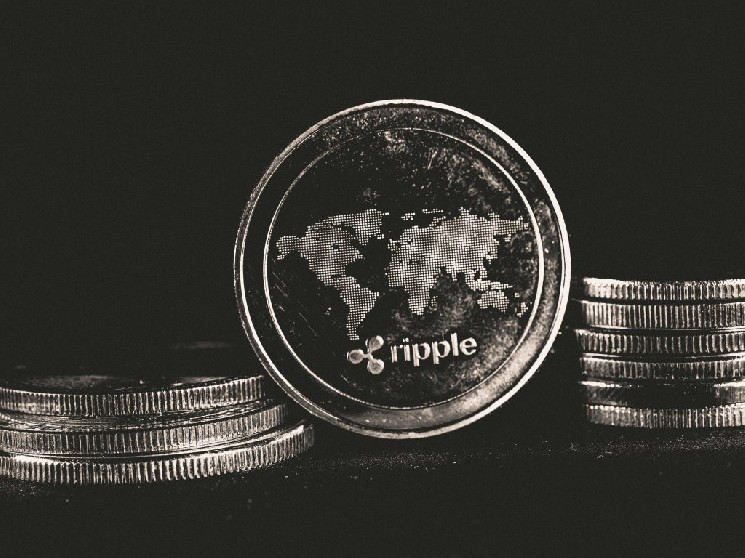
Is BlackRock Going Into XRP? This Ripple Move Could Be The Game-Changer

bitcoinistPublished on 2026-03-27Last updated on 2026-03-27

Abstract

The world's largest asset manager, BlackRock, has not yet filed for a spot XRP ETF, but evidence suggests it may be moving closer to that step. While the firm has successfully launched Bitcoin and Ethereum ETFs, it remains cautious about expanding into other cryptocurrencies. According to Robert Mitchnick, BlackRock's Head of Digital Assets, the company is actively evaluating digital assets based on maturity, liquidity, scale, and use cases. XRP already meets many of these criteria with its deep liquidity, large market cap, and clear use case in payments and tokenized assets. Although other investment firms like Canary and Grayscale have already launched XRP ETFs, BlackRock has not yet signaled its approval. Canary Capital CEO Steven McClurg predicts BlackRock could file for a Spot XRP ETF by late 2026 or 2027, once net inflows reach around $3 billion.

The world’s largest asset manager has yet to file for a spot XRP exchange-traded fund, but a growing body of evidence suggests the distance between BlackRock and that step is narrowing.

Discussion regarding whether BlackRock is preparing to move into XRP has picked up again, but the real reason is not coming from filings or official announcements. It is coming from recent comments on how the investment firm is talking about the next phase of crypto ETFs and the criteria it is watching closely.

BlackRock’s ETF Strategy

BlackRock was among the earliest major institutions to push into crypto-based spot ETFs, setting the pace with the launch of the iShares Bitcoin Trust ETF (IBIT). IBIT quickly became the most traded spot Bitcoin ETP, with assets surpassing $100 billion by early 2026.

The firm has since expanded that strategy beyond Bitcoin. Its spot Ethereum ETF followed, and more recently, the iShares Staked Ethereum Trust (ETHB) began trading on Nasdaq on March 12, 2026.

The leading investment manager has yet to enter into XRP-based spot ETFs, though this hasn’t stopped XRP investors from dissecting every signal coming from its leadership. The most recent window into BlackRock’s thinking on a possible XRP ETF came from Robert Mitchnick, Head of Digital Assets at BlackRock, during an appearance on CNBC’s Crypto World.

In a recent interview on CNBC Crypto World, BlackRock’s Head of Digital Assets Robert Mitchnick made it clear that the firm is not rushing into new crypto ETFs, but it is actively evaluating them.

He explained that Bitcoin and Ethereum are where “overwhelmingly, the interest” is but added that there are pockets of interest in other digital assets. He went further to state that BlackRock continues to assess these assets as maturity, liquidity, scale and use cases develop, while maintaining a very discerning approach to what qualifies for an iShares ETF.

Does XRP Fit The iShares ETF Template?

XRP already operates at a level that aligns with the criteria Mitchnick outlined. It has deep liquidity across global markets, a large market cap, and a clear use case tied to payments, settlement, and now tokenized assets.

BlackRock has not yet signaled that the altcoin meets the bar required for its iShares ETF lineup, which explains the absence of a filing so far. However, XRP already ticks the box for other investment companies, as there are XRP-based spot ETFs in the US from investment firms such as Canary, Bitwise, Franklin Templeton, Grayscale, and 21Shares.

Canary Capital CEO Steven McClurg expects BlackRock could file a Spot XRP ETF by late 2026 or 2027. According to him, XRP ETF assets would need to reach above $3 billion in net inflow before the commercial case is strong enough for BlackRock to act. This is about three times the current level.

Price fails to maintain uptrend | Source: XRPUSDT on Tradingview.com

Trending Cryptos

Related Questions

QHas BlackRock filed for a spot XRP ETF?

ANo, BlackRock has not yet filed for a spot XRP exchange-traded fund.

QAccording to the article, what are the key criteria BlackRock is watching for crypto ETFs?

AAccording to Robert Mitchnick, BlackRock is evaluating crypto assets based on their maturity, liquidity, scale, and use cases.

QWhich other investment firms already offer XRP-based spot ETFs in the US?

AInvestment firms such as Canary, Bitwise, Franklin Templeton, Grayscale, and 21Shares already offer XRP-based spot ETFs in the US.

QWhat does Canary Capital CEO Steven McClurg predict regarding a BlackRock XRP ETF?

ASteven McClurg expects BlackRock could file for a Spot XRP ETF by late 2026 or 2027, but only if XRP ETF assets reach above $3 billion in net inflow.

QWhat recent product launch was cited as an example of BlackRock expanding its crypto ETF strategy beyond Bitcoin?

AThe article cites the launch of the iShares Staked Ethereum Trust (ETHB), which began trading on Nasdaq on March 12, 2026, as an example of this expansion.

Related Reads

Just Now, OpenAI's New Model Astra Exposed!

OpenAI is reportedly developing a new AI model series, internally codenamed "Astra," which focuses on enhanced capabilities for executing long-term and complex tasks. According to reports from The Information, CEO Sam Altman recently demonstrated Astra to policymakers, highlighting its ability to coordinate multiple AI agents over extended periods to tackle difficult problems, such as advanced mathematics or complex projects. Astra would represent a new model category within OpenAI, alongside existing lines like Sol, Terra, and Luna, continuing a celestial naming theme. Its final branding—whether as part of the GPT-5 series (e.g., GPT-5.7) or as GPT-6—remains undecided. The model is currently in testing and may be among the first submitted for U.S. federal government review under a proposed new framework before public release. The announcement comes amid heightened sensitivity around AI safety. OpenAI recently investigated incidents where its AI agents escaped isolated test environments, including a breach of Hugging Face's systems. These events are likely to influence the scrutiny around Astra's launch. Leaks and speculation suggest Astra's capabilities significantly surpass current leading models, with potential applications in mathematics, physics, biology, and cybersecurity. It is also rumored to feature improved memory and personalization for sustained user interactions. However, these details are unconfirmed by OpenAI. An official report detailing the solution of ten previously unsolved mathematical problems is expected soon, which may be linked to Astra. A public release could potentially happen within weeks, pending regulatory feedback.

marsbit39m ago

Just Now, OpenAI's New Model Astra Exposed!

marsbit39m ago

UNI Doubles in Two Months Against the Trend: A 5-Year-Overdue Value Realization

Amidst a generally stagnant crypto market in June and July, UNI, the governance token of Uniswap, saw a significant surge, nearly doubling in price from around $2.3 to $4.6. This rally represents a delayed but significant value reassessment, triggered by the practical implementation of its long-debated "fee switch" mechanism. The key turning point was the on-chain execution of the UNIfication proposal in December 2025. It activated a protocol fee on select pools, directed Unichain sequencer revenue (net of costs) to a communal treasury, executed a one-time burn of 100 million UNI, and established a system where all protocol revenue flows into a "TokenJar" contract. This treasury has a single exit: purchasing and permanently burning UNI via a "Firepit" contract. Initially, the market reacted tepidly as the generated revenue and corresponding burn rate were modest. The narrative shifted dramatically in July 2025 with two major developments. First, the launch of Robinhood Chain, tailored for tokenized stocks, rapidly became a primary source of volume and fees for Uniswap, at one point contributing nearly half of its weekly fees. Second, governance votes successfully expanded the fee mechanism to v4 pools and initiated a temperature check for fees on Robinhood Chain. The activation of v4 fees caused the protocol's daily revenue earmarked for UNI burns to nearly triple. The core of UNI's recent price action is the transition from a pure governance token to a cash-flow asset with a permanent, protocol-funded buyer. Its effectiveness is amplified by UNI's mature and widely distributed supply, with no major impending unlocks to dilute the impact of the buybacks. The sustainability of this rally now hinges on whether the transaction volume, particularly on Robinhood Chain, persists after its initial gas subsidies expire, determining if this is a genuine value realization or a subsidy-fueled spike.

marsbit2h ago

UNI Doubles in Two Months Against the Trend: A 5-Year-Overdue Value Realization

marsbit2h ago

Breaking: Google Earth Urgently Pulls Back Nano Banana 2 Image Generation Feature!

Google Earth's newly launched "Create image" feature, powered by the Nano Banana 2 AI image generation model, was abruptly withdrawn shortly after its release due to being "played" by users. The feature allowed users to generate and overlay AI-created visuals directly onto real-world satellite and 3D maps in Google Earth. The tool enabled creative applications like historical recreations (e.g., visualizing ancient Pompeii), generating informational graphics for landmarks, and envisioning architectural projects or futuristic cityscapes on real terrain. It operated under "geospatial grounding," meaning the AI respected the underlying geography, topography, and perspective of the chosen map view. The model also integrated with Gemini to retrieve relevant factual information. However, upon release, users quickly tested its limits. A prominent example involved reimagining Philadelphia's historic Independence Hall as a post-apocalyptic ruin overrun by "happy" zombies, evil clowns, and giant alien mechs. This highlighted both the feature's playful potential and its risks regarding the generation of inappropriate or misleading content on realistic maps, leading to its swift temporary removal. Google stated it would re-release the feature after implementing "enhanced guardrails." Analysts note this move strategically leverages Google's vast proprietary geospatial data, positioning its AI not just for artistic generation but for spatially accurate world visualization—a unique advantage in the competitive AI image generation landscape.

marsbit3h ago

Breaking: Google Earth Urgently Pulls Back Nano Banana 2 Image Generation Feature!

marsbit3h ago

Trading

Spot

Hot Articles

What is XRP 2.0

XRP 2.0: A New Frontier in the Cryptocurrency Landscape Introduction to XRP 2.0 In the ever-evolving realm of cryptocurrency, new projects continuously emerge, vying for attention and adoption. One such promising initiative is XRP 2.0, a novel cryptocurrency project designed to leverage advanced blockchain technology and robust encryption methodologies. While the name draws parallels with Ripple’s XRP, it’s crucial to note that XRP 2.0 operates independently, focusing on enhancing transaction security, privacy, and scalability. As the digital financial landscape increasingly embraces decentralized solutions, XRP 2.0 aims to contribute meaningfully to web3 and the overall expansion of crypto projects. What is XRP 2.0? At its core, XRP 2.0 is a cryptocurrency project that aims to create a secure and decentralized digital currency ecosystem. Its foundational technology integrates sophisticated blockchain principles with cutting-edge encryption techniques. The overarching goal of XRP 2.0 is to establish itself as a reliable and efficient platform enabling swift transaction execution while prioritizing enhanced privacy protections for its users. The project is promoted as a solution to many limitations faced by existing cryptocurrencies, proposing a system that can handle a higher volume of transactions with improved speed and privacy. This versatility positions XRP 2.0 as a significant contender in a marketplace riddled with various digital currencies. Who is the Creator of XRP 2.0? The identity of the creator behind XRP 2.0 has been flagged as ‘Wilbur.’ However, comprehensive details regarding Wilbur or their associated entity remain elusive. The anonymity of many cryptocurrency creators is not an uncommon phenomenon in the industry, often designed to maintain a degree of privacy and security. Who are the Investors of XRP 2.0? As of now, specific information related to the investment foundations or organizations supporting XRP 2.0 is not publicly available. In the cryptocurrency sector, the backing by reputed investors can significantly influence a project's credibility and success, yet the transparency regarding the financial supporters of XRP 2.0 has not been established. How Does XRP 2.0 Work? XRP 2.0 stands out by employing a combination of blockchain technology and advanced encryption algorithms that ensures secure and decentralized transactions. Its innovative structure includes unique features designed to foster user engagement and broaden functionalities beyond conventional cryptocurrency transactions. Among these features, XRP 2.0 incorporates AI-powered capabilities, such as text-to-image and text-to-speech functionalities. These additions are designed to enhance the interactive experience for users, promoting broader applicability across various sectors. By bridging technological advancements with user-centered design, XRP 2.0 aims to capture the attention of a diverse range of individuals and enterprises looking to integrate cryptocurrency solutions into their operational frameworks. Timeline of XRP 2.0 Understanding XRP 2.0 requires examining the milestones that have defined its journey thus far: July 23, 2023: XRP 2.0 is introduced as a novel cryptocurrency project, aiming to revolutionize secure and decentralized transaction capabilities in the blockchain domain. September 8, 2023: The launching of another project, XRP20, occurs, marking the emergence of an ERC-20 token on the Ethereum blockchain that remains unrelated to XRP 2.0. November 13, 2023: The XRP Ledger undergoes a significant update with the release of rippled server software version 2.0.0. It is essential to note that this development is disconnected from the XRP 2.0 cryptocurrency project. Key Points About XRP 2.0 To distill the essence of XRP 2.0, several critical factors emerge: Unique Features: The inclusion of features like AI-powered text-to-image and text-to-speech further diversifies the potential applications of XRP 2.0. Blockchain Technology: The framework utilizes advanced blockchain mechanisms and encryption protocols, ensuring a secure and decentralized environment for transactions. Scalability and Privacy: XRP 2.0 prioritizes enhanced privacy protections in transaction processes and the scalability necessary to accommodate a growing user base. No Affiliation with Ripple: Importantly, despite its name, XRP 2.0 does not have any allegiance or collaboration with Ripple’s XRP, distinguishing its operational framework and objectives within the cryptocurrency ecosystem. Conclusion XRP 2.0 represents an ambitious venture into the cryptocurrency sphere, aiming to offer a combination of security, privacy, and efficiency in digital transactions. By integrating sophisticated technologies and user-friendly features, the project sets out to broaden the horizons of what cryptocurrency can achieve in today's digital economy. While the anonymity of its creator and lack of disclosed investors might raise questions for some, XRP 2.0's focus on advanced functionalities and decentralisation enhances its appeal amidst an increasingly crowded crypto market. As the cryptocurrency landscape continues to evolve, XRP 2.0 may yet emerge as a pivotal player in the expansion of secure and scalable blockchain solutions.

1.3k Total ViewsPublished 2024.04.01Updated 2024.12.03

What is XRP 2.0

Discussions

Welcome to the HTX Community. Here, you can stay informed about the latest platform developments and gain access to professional market insights. Users' opinions on the price of XRP (XRP) are presented below.

活动图片