From FOMO to Implementation: A Review of the Current State of AI Services in Crypto Companies

比推Published on 2026-03-17Last updated on 2026-03-17

Abstract

From FOMO to Implementation: A Look at Crypto Companies' AI Services Cryptocurrency companies, from exchanges to security firms, are rapidly integrating AI-driven services, driven by FOMO (fear of missing out) rather than just hype. Unlike previous cycles, established players like Coinbase and Binance are leading the charge, treating AI as a business necessity rather than a narrative. Key sectors adopting AI include: - **Research**: Projects like Surf AI address crypto's fragmented data problem by offering specialized tools that aggregate on-chain data, social sentiment, and metrics, providing accurate, crypto-specific insights. - **Trading**: Exchanges are leveraging AI to allow natural language commands for analysis and execution, lowering the barrier for non-developers to create automated strategies via AI agents. - **Security/Audit**: Firms like CertiK use AI to enhance smart contract audits by combining automated code scanning with human review, and adding post-audit monitoring to cover previous blind spots. - **Payment Infrastructure**: Companies are developing protocols for AI agents to make on-chain payments, using stablecoins for API fees or services, with Circle’s proposal for AI-agent payments gaining attention. The push is fueled by AI advancements like MCP and OpenClaw, which make agent-based automation accessible. However, the adoption gap between "having functionality" and "actual usage" remains, with questions about user trust in AI for real trading or paym...

Author: Ekko, Ryan Yoon

Original Title: What AI Services Are Crypto Firms Offering?

Compiled and Edited by: BitpushNews


FOMO (Fear Of Missing Out) is looming over cryptocurrency companies. From exchanges to security firms, they are racing to launch AI-driven services. This article explores why they are choosing to act now.

Key Points

  • Cross-Industry Deployment: Crypto companies in exchanges, security, payments, and research are simultaneously launching AI services.

  • Led by Giants: Unlike previous cycles, companies with mature profit models like Coinbase and Binance are taking the lead. AI has shifted from a 'narrative' to a 'business necessity'.

  • Varied Departmental Motivations: Exchanges aim to prevent user churn; security companies aim to fill audit blind spots; payment infrastructure targets the emerging Agent Economy.

  • Gap Between Adoption and Utility: 'Having a function' and 'actual use' are two different issues. AI FOMO and competitive pressure are accelerating AI adoption, even beyond proven practical demand.

  • Genuine Need and Competitive Anxiety Coexist: Distinguishing between 'value-creating adoption' and 'label-sticking adoption' is a key issue.

1. Crypto Companies Are Comprehensively Offering AI Services

AI is the most watched field in the global market today. General-purpose tools like ChatGPT and Claude have entered daily life, while platforms like OpenClaw have lowered the barrier to building agents.

The crypto industry started late in this wave but is now integrating AI into every vertical.

What AI services are these companies offering? And why are they entering this market?

2. How Crypto Companies Are Adopting AI
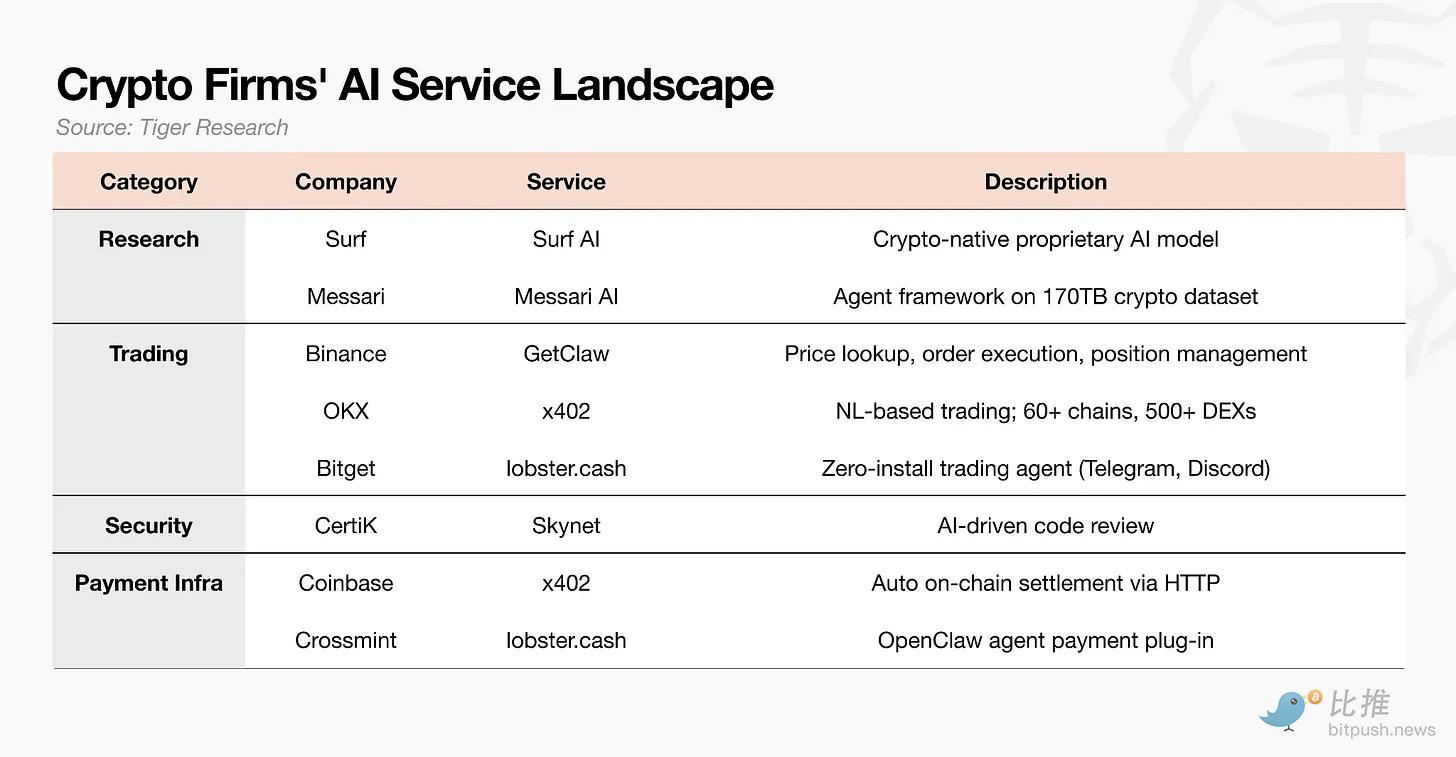
2.1. Research
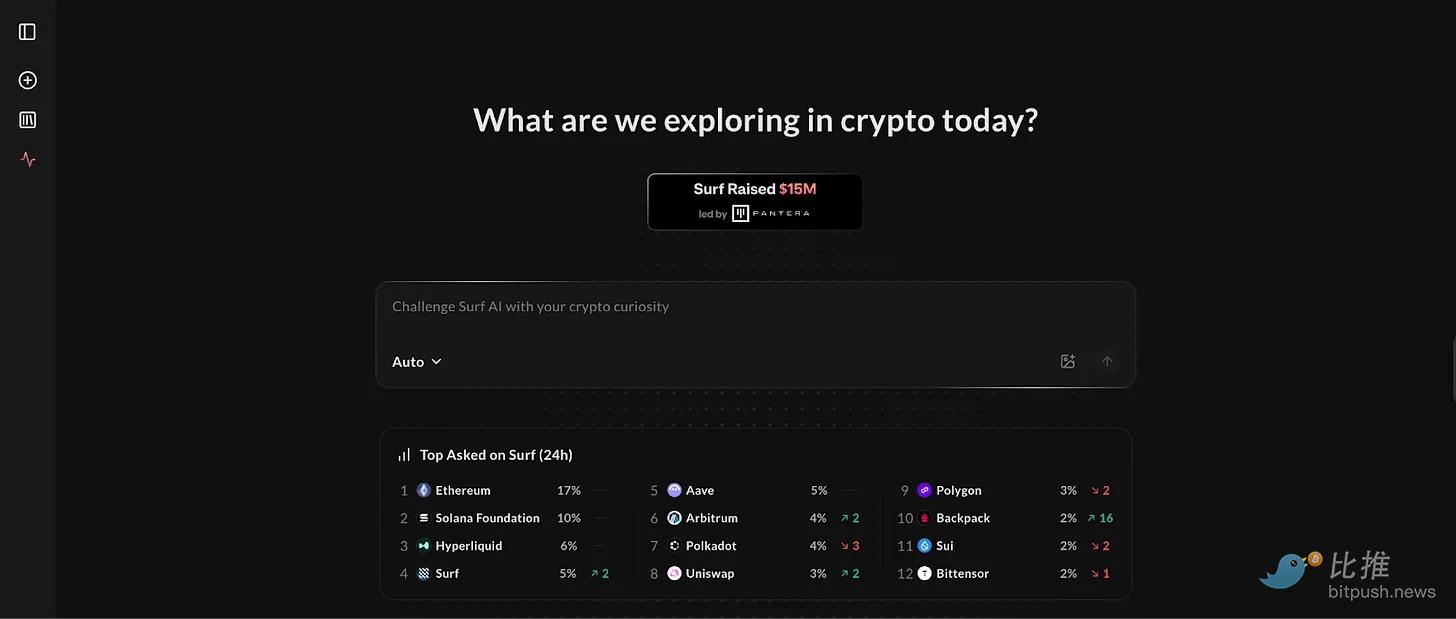
(Source: Surf AI)

Cryptocurrency research has structural problems: on-chain data, social sentiment, and key metrics are scattered across platforms and difficult to verify. General-purpose AI often returns inaccurate answers when handling cryptocurrency queries.

Projects like Surf address this by providing crypto-specific AI research tools that can integrate scattered data sources. Among all AI use cases in crypto, research has the lowest barrier to entry, requiring no programming or trading expertise.

2.2. Trading
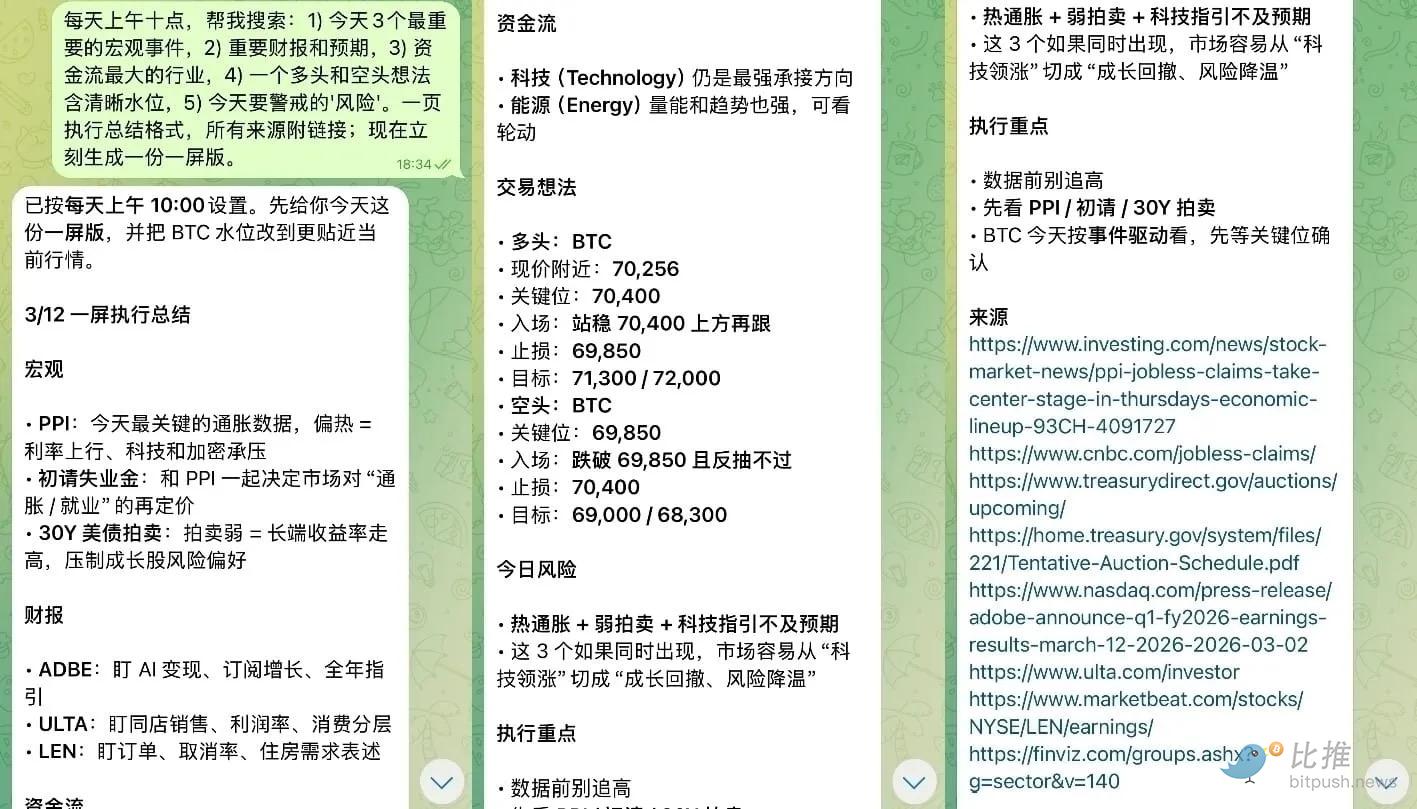
(Source: Bitget)

Exchanges are leading the adoption of AI in trading.

Approaches vary: some exchanges directly open proprietary trading data to users; others allow users to issue natural language instructions to AI agents, which handle the entire process from analysis to execution in one step.

Exchanges have offered APIs for years. The difference now is the addition of a layer: interfaces like MCP and AI Skills enable non-developers to access exchange functions through AI agents. Tools once limited to developers are now accessible via natural language.

This aligns with a broader community shift. Non-developer users are increasingly building automated trading strategies through AI agents, with no code required. They describe the strategy, and the agent builds and runs the algorithm.

For exchanges, this is both an opportunity and a threat. As AI-driven users grow, loyalty to any single exchange weakens, as agents can execute trades anywhere. The reason exchanges adopt AI is simple: to quickly attract users and maintain platform activity.

Trading involves real asset management, requiring higher judgment and responsibility than research. But with the barrier to entry lowering, this field is also opening to average users.

2.3. Security / Auditing
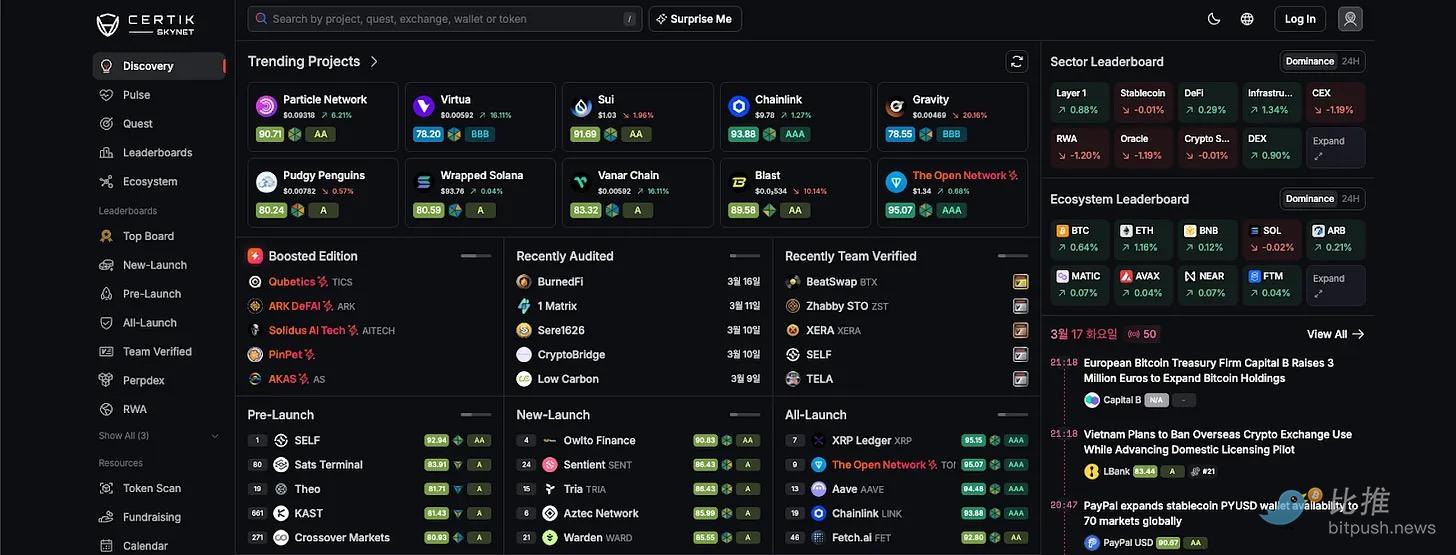
(Source: CertiK)

Smart contract auditing traditionally relied on manual line-by-line code review, a process that is slow, expensive, and inconsistent across auditors. AI is now integrated into workflows: AI scans the code first, then human auditors conduct targeted deep dives. This increases speed and coverage without replacing auditors.

CertiK is a leading example. The company previously faced criticism for audited projects being attacked later. However, those incidents occurred outside the audit scope. An audit only checks the code at a specific point in time and does not include continuous monitoring.

CertiK uses AI to bridge this gap. It adds real-time post-audit monitoring, delivered via public dashboards. Because the expanded coverage is AI-driven rather than labor-intensive, both CertiK and the audited projects benefit.

In security, AI adoption is not about disrupting existing services but expanding the scope of human work: increasing precision during audits and filling post-audit blind spots. For blockchain security companies, AI is not a new business line but a tool to address existing weaknesses.

2.4. Payment Infrastructure
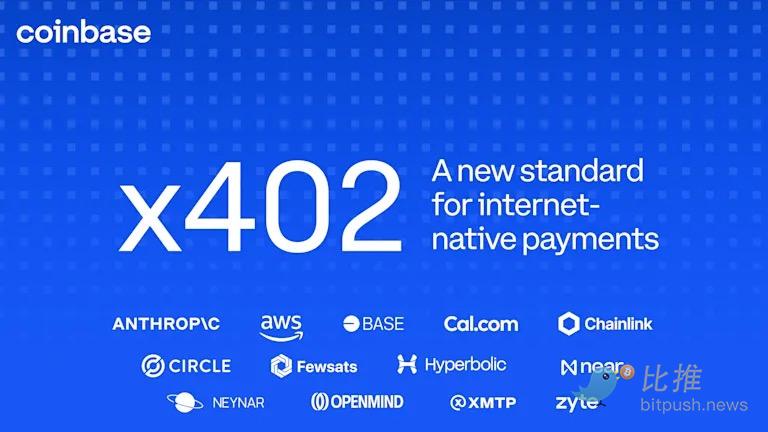
(Source: Coinbase)

AI agents need payment rails to participate in economic activity: paying API fees, buying data, and purchasing services from other agents. For agents, the most natural payment method is an on-chain wallet with stablecoins.

Two models are emerging. The first is a general-purpose protocol that embeds payments into HTTP requests, enabling automatic on-chain settlement the moment an agent accesses a paid API. The second is agent-specific payment plugins, where agents execute payments only within human-preset permissions and limits.

Payment infrastructure is the area most closely linked to stablecoins. However, because the payment entity is an AI agent rather than a human, fully functional models are not yet mature.
(Source: Circle)

USDC issuer Circle is also in the spotlight. The company released a proposal to connect its Gateway payment infrastructure with the x402 protocol and invited developers and researchers to review and contribute.

This is not yet a mature market, but the market has already begun pricing in this trajectory. A key driver behind Circle's rising valuation is the narrative of AI agent payments. The implementation timeline for payment infrastructure will be longer than the areas mentioned above, but it has become one of the most significant macro themes in the current market.

3. Why Crypto Companies Are Entering the AI Field Now

When ChatGPT was released in November 2022, neither the AI nor the crypto industry was ready. AI models were impressive but couldn't reliably perform tasks; the crypto industry was reeling from the FTX collapse and a comprehensive crisis of trust.

Since then, AI has made huge strides. Over the past year, all major models have significantly enhanced their capabilities and become practically useful. In contrast, the crypto industry in the same period merely 'leveraged' AI: AI-branded memecoins, non-functional AI agents, and marketing-driven slogans. Decentralized AI infrastructure projects kept emerging, but if honestly compared to equivalent native AI services, their quality was noticeably inferior.

The gap is now widening further. In the AI industry, infrastructure like MCP (enabling agents to directly call external tools) and OpenClaw (supporting no-code agent building) has made the agent era accessible. Crypto companies are only starting to act now.

The difference this time is who is acting. It's no longer new startups labeling themselves with AI, but companies with mature profit models: Coinbase, Binance, and Bitget. These companies have no reason to launch AI services merely as a marketing tactic. They are driven not by today's revenue, but by the fear of falling behind: FOMO.
(Source: FORTUNE)

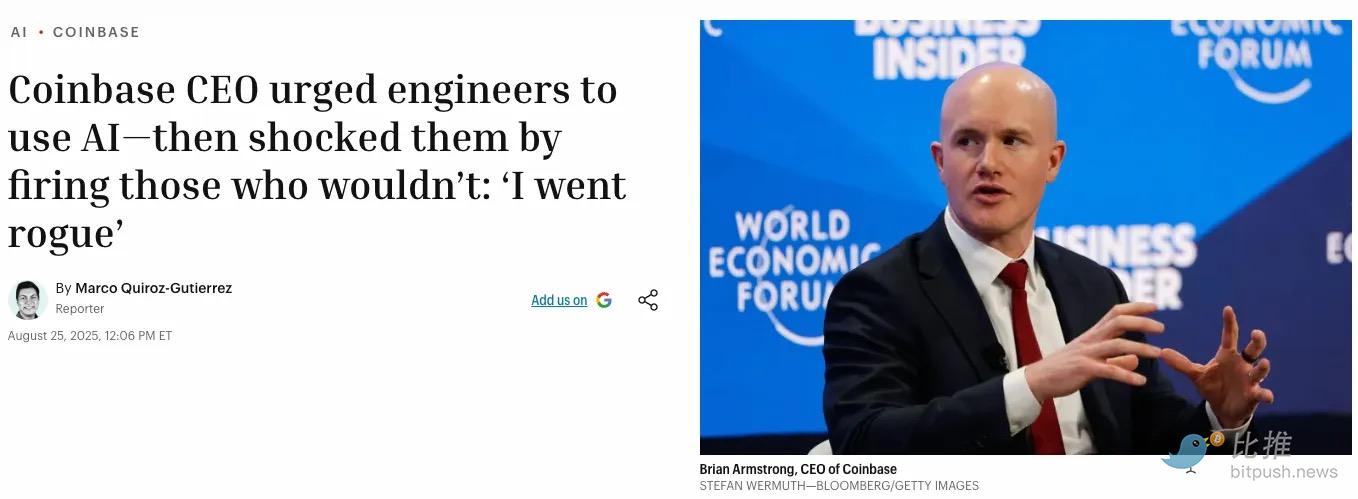
This sense of urgency is clearly visible in the actions of Coinbase CEO Brian Armstrong. He issued a company-wide directive requiring all engineers to get up to speed with AI programming tools within a week and fired employees who did not comply.

But we also need to stay grounded. Take trading automation as an example: agents can check prices and propose strategies, but how many users will actually trust an agent to hand over funds for live trading? Has the x402 protocol been applied in the real world yet?

Ultimately, AI adoption in the crypto industry is not about chasing trends. As the AI era arrives, companies are taking action to avoid losing their position. 'Having a function' and 'actual use' remain two different problems. But who is taking action is crucial.

Think of the AI industry as a swimming pool being filled with water. Those who jumped in before were just pretending to swim; those jumping in now are former national team surfers. No one knows how high the water will rise, or if this pool will become an ocean. But the crypto industry will not drown in the center of the wave.


Twitter:https://twitter.com/BitpushNewsCN

Bitpush TG Discussion Group:https://t.me/BitPushCommunity

Bitpush TG Subscription: https://t.me/bitpush

Original link:https://www.bitpush.news/articles/7620574

Related Questions

QWhat is the main reason crypto companies are rushing to adopt AI services according to the article?

AThe main reason is FOMO (Fear Of Missing Out) and the need to avoid losing their competitive position, as AI has transitioned from a narrative to a business necessity.

QWhich sectors of the crypto industry are adopting AI, as mentioned in the article?

AThe sectors include exchanges, security/audit firms, payment infrastructure, and research services.

QHow are crypto exchanges using AI to enhance their services?

AExchanges are using AI to provide proprietary trading data, enable natural language commands for AI agents to execute trades, and lower the barrier for non-developers to build automated trading strategies.

QWhat role does AI play in the security and audit segment of the crypto industry?

AAI is used to scan code first for audits, followed by targeted human review, improving speed and coverage. It also enables real-time post-audit monitoring to fill blind spots after the audit is complete.

QWhy is payment infrastructure considered a significant area for AI adoption in crypto?

APayment infrastructure is key for the emerging agent economy, as AI agents need on-chain payment rails with stablecoins to pay for API fees, data, and services autonomously.

Related Reads

The King of Blind Date Attire in Korea: How SK Hynix Made a Comeback Against Samsung?

In South Korea's dating scene, SK Hynix employees are now highly sought after, a status shift fueled by the company's astronomical profits and employee bonuses, projected to reach up to 6.1 million RMB per person by 2027. This marks a dramatic reversal for the long-time second-place player in memory semiconductors, which has now surpassed its rival Samsung in annual operating profit. The turnaround story began in 2008 when a struggling Hynix, emerging from bankruptcy restructuring, took a risky bet by agreeing to develop High Bandwidth Memory (HBM) with AMD. At the time, HBM had no clear market beyond high-end graphics cards and was a costly, complex technology. Major players like Samsung, pursuing its own HMC technology, declined. For Hynix, with only memory as its core business, it was a gamble born of necessity. The pivotal moment came in 2012 when SK Group Chairman Chey Tae-won acquired Hynix. Defying industry downturns, he invested heavily in R&D and fabrication, sustaining the HBM project through over a decade of commercial uncertainty and internal challenges. A key break occurred around 2016-2017 when Samsung faced production issues supplying HBM2 for Google's TPU, allowing SK Hynix to gain a crucial foothold in the data center market. The AI explosion post-ChatGPT in 2022 was the catalyst, turning HBM into a critical bottleneck for AI accelerators like NVIDIA's GPUs. By 2025, SK Hynix captured 62% of the global HBM market, leaving Samsung at 17%. For the first time, its annual operating profit exceeded Samsung's. Analysts point to the "innovator's dilemma" to explain Samsung's miss: its vast, successful business portfolio made it risk-averse, preventing an all-in bet on the initially niche HBM technology. In contrast, SK Hynix, as a challenger with its back against the wall, had no choice but to commit fully. The story highlights how Korea's chaebol system allows for ultra-long-term bets beyond quarterly pressures. However, SK Hynix's lead isn't guaranteed. Samsung is aggressively catching up on HBM4, and challenges like customer concentration (heavy reliance on NVIDIA) and technical hurdles in advanced packaging remain. The narrative underscores a market truth: the greatest alpha often comes from betting on uncertain, long-term directions others dismiss, much like HBM in 2008.

marsbit21m ago

The King of Blind Date Attire in Korea: How SK Hynix Made a Comeback Against Samsung?

marsbit21m ago

Understanding Hash in One Article: The "Browser Miner" on Ethereum

Hash is an Ethereum-based ERC-20 token described as a "browser-minable post-quantum token." Its key features include enabling browser-based GPU mining without specialized hardware, a fixed supply cap of 21 million tokens, immutable and permissionless smart contracts with no team allocation or pre-mining, and an emphasis on post-quantum security using Keccak256 hashing. The mining mechanism is a simplified on-chain proof-of-work where miners solve unique challenges tied to their wallet address. Key design elements prevent answer theft, with epochs resetting every 100 blocks (~20 minutes) and a per-block minting limit. Emission follows a Bitcoin-like halving schedule every 100,000 mints, starting at 100 tokens per mint. Projections suggest all tokens could be mined within approximately 294 days if a target rate of one mint per minute is sustained. Hash emphasizes "post-quantum" security by leveraging hash-based primitives like Keccak256, which are considered more resistant to quantum attacks compared to elliptic-curve cryptography. While not a fully post-quantum asset, it aligns with Ethereum's broader post-quantum research narrative. The project completed its Genesis sale at $0.03 and began trading on Uniswap, with its price reaching around $0.19. The initial circulating supply is small, with 5% sold in Genesis and 5% allocated to liquidity. The majority (47.6% of total supply) is allocated to early-stage mining, leading to a front-loaded emission schedule. This structure, combined with low initial liquidity, makes Hash a high-volatility, high-risk project dependent on sustained miner participation and market demand to absorb new supply.

marsbit34m ago

Understanding Hash in One Article: The "Browser Miner" on Ethereum

marsbit34m ago

OpenAI's Largest Internal Wealth Creation: 600 People Cash Out a Total of $6.6 Billion, 75 Take Home the Maximum $30 Million Each

A Wall Street Journal report reveals OpenAI's unprecedented pre-IPO wealth creation. In a single employee stock sale last October, over 600 current and former employees sold shares, collectively cashing out approximately $6.6 billion. Due to high investor demand, the company tripled the individual sale cap to $30 million, with about 75 employees selling the maximum amount. This event represents the largest such transaction in tech industry history for a private company. OpenAI's valuation was $500 billion for this tender offer. Employees with over two years of tenure were eligible, allowing many post-ChatGPT hires their first liquidity event. The company's stock has reportedly grown over 100-fold in seven years. Following a restructuring, employees collectively hold about 26% of OpenAI. The scale of executive wealth is also staggering. In court testimony related to Elon Musk's lawsuit, President and co-founder Greg Brockman confirmed his OpenAI stake is worth around $30 billion. Analysis indicates about 165 current and former employees hold a combined ~$164.9 billion in equity, averaging nearly $1 billion per person in paper wealth. OpenAI's per-employee stock-based compensation is estimated to be 34 times the average of major tech firms before their IPOs. OpenAI continues its rapid ascent, closing a $122 billion funding round at an $852 billion valuation in March. With monthly revenue hitting $2 billion, over 900 million weekly ChatGPT users, and plans for a potential trillion-dollar IPO in late 2026, this wealth-creation engine shows no signs of stopping.

链捕手57m ago

OpenAI's Largest Internal Wealth Creation: 600 People Cash Out a Total of $6.6 Billion, 75 Take Home the Maximum $30 Million Each

链捕手57m ago

Trading

Spot
Futures

Hot Articles

Discussions

Welcome to the HTX Community. Here, you can stay informed about the latest platform developments and gain access to professional market insights. Users' opinions on the price of AI (AI) are presented below.

活动图片















