Federal Reserve Conducts Thorough Examination of Investors and Bitcoin Price Growth: Results Deserve Attention! Here Are the Details

cryptonews.ruPublished on 2026-08-24Last updated on 2026-08-24

Abstract

A new study from the Federal Reserve Bank of Cleveland found that providing information on Bitcoin's past performance significantly increases the likelihood of investors entering the cryptocurrency market. Participants who were given data on Bitcoin's recent returns were much more likely to acquire cryptocurrency in the future. The research, focused on U.S. household crypto investments, showed that participants informed of Bitcoin's 14.3% return over the previous 12 months were approximately 2.41 percentage points more likely to report owning cryptocurrency in a follow-up survey. When shown a price chart, the increase was about 2.48 percentage points. Given a baseline ownership rate of 11%, this represents a relative increase of roughly 23%. Furthermore, these participants allocated about 2 percentage points more of their investment portfolios to cryptocurrencies, largely by shifting funds from cash and bank accounts. The study noted that the effect of past performance information was stronger on individuals who were less knowledgeable about cryptocurrencies initially. Economists concluded that awareness of Bitcoin's historical gains can attract new investors who previously did not follow or own digital assets.

A new study by the Federal Reserve Bank of Cleveland found that information about Bitcoin's past performance can increase investors' desire to enter the cryptocurrency market. According to the study, participants who were provided with information about Bitcoin's recent returns were much more likely to purchase cryptocurrency in the future.

According to Coindesk, the report, prepared by Federal Reserve Bank of Cleveland economists Michael Weber, Bernardo Candia, Olivier Coibion, and Yuriy Gorodnichenko, examined US household investments in cryptocurrencies and the factors influencing these investment decisions.

This study showed that participants who received information about Bitcoin's price growth were more likely to own BTC and other cryptocurrencies.

The published report indicated that some participants were provided with information on Bitcoin's performance over the past 12 months, while another group was not given such information.

"...Thus, the goal was to measure the impact of knowledge about Bitcoin's past returns on investment behavior."

Trend of Buying Cryptocurrency Strengthened!

The report states that as a result of the study, participants who were told that Bitcoin's return over the previous 12 months was 14.3% were approximately 2.41 percentage points more likely to report owning cryptocurrency in a subsequent survey.

In the group shown a Bitcoin price chart, this increase was approximately 2.48 percentage points.

"Given that initially about 11% of participants owned cryptocurrency, this increase corresponds to a relative increase of approximately 23% compared to the current ownership level."

Share of Investors Willing to Invest in Cryptocurrency Also Increased!

The research affected not only existing cryptocurrency ownership but also the percentage of cryptocurrencies investors were willing to allocate to their portfolios.

Participants who received information about Bitcoin's past performance increased the share of cryptocurrencies in their investment portfolio by approximately 2 percentage points. A significant portion of this increase appears to be explained by a shift from cash and bank accounts to crypto assets.

One of the important findings of the study was that knowledge of Bitcoin's past performance had a stronger influence on those who were less informed about cryptocurrencies.

The economists added that the latest research shows that Bitcoin and the market can attract new investors who previously did not follow or own cryptocurrencies.

*This is not investment advice.

end-content

Trending Cryptos

Related Questions

QWhat was the main finding of the Federal Reserve Bank of Cleveland's study regarding Bitcoin information?

AThe main finding was that providing participants with information about Bitcoin's past performance significantly increased their likelihood of owning cryptocurrency and investing more of their portfolio in it.

QHow did informing participants about Bitcoin's past returns affect their reported cryptocurrency ownership?

AParticipants who were told Bitcoin's 12-month return was 14.3% were approximately 2.41 percentage points more likely to report owning cryptocurrency in a subsequent survey, a relative increase of about 23%.

QWhich investor group was most influenced by knowledge of Bitcoin's past performance?

AKnowledge of Bitcoin's past performance had a stronger effect on those who were less knowledgeable about cryptocurrencies initially, attracting new investors.

QBesides ownership, what other investment behavior changed after participants learned about Bitcoin's past performance?

AParticipants increased the share of cryptocurrencies in their investment portfolio by about 2 percentage points, often shifting funds away from cash and bank accounts.

QAccording to the report, what method was used to provide information to one group of study participants?

AFor one group, a graph showing the price trend of Bitcoin over the previous 12 months was provided, which led to an approximate 2.48 percentage point increase in ownership.

Related Reads

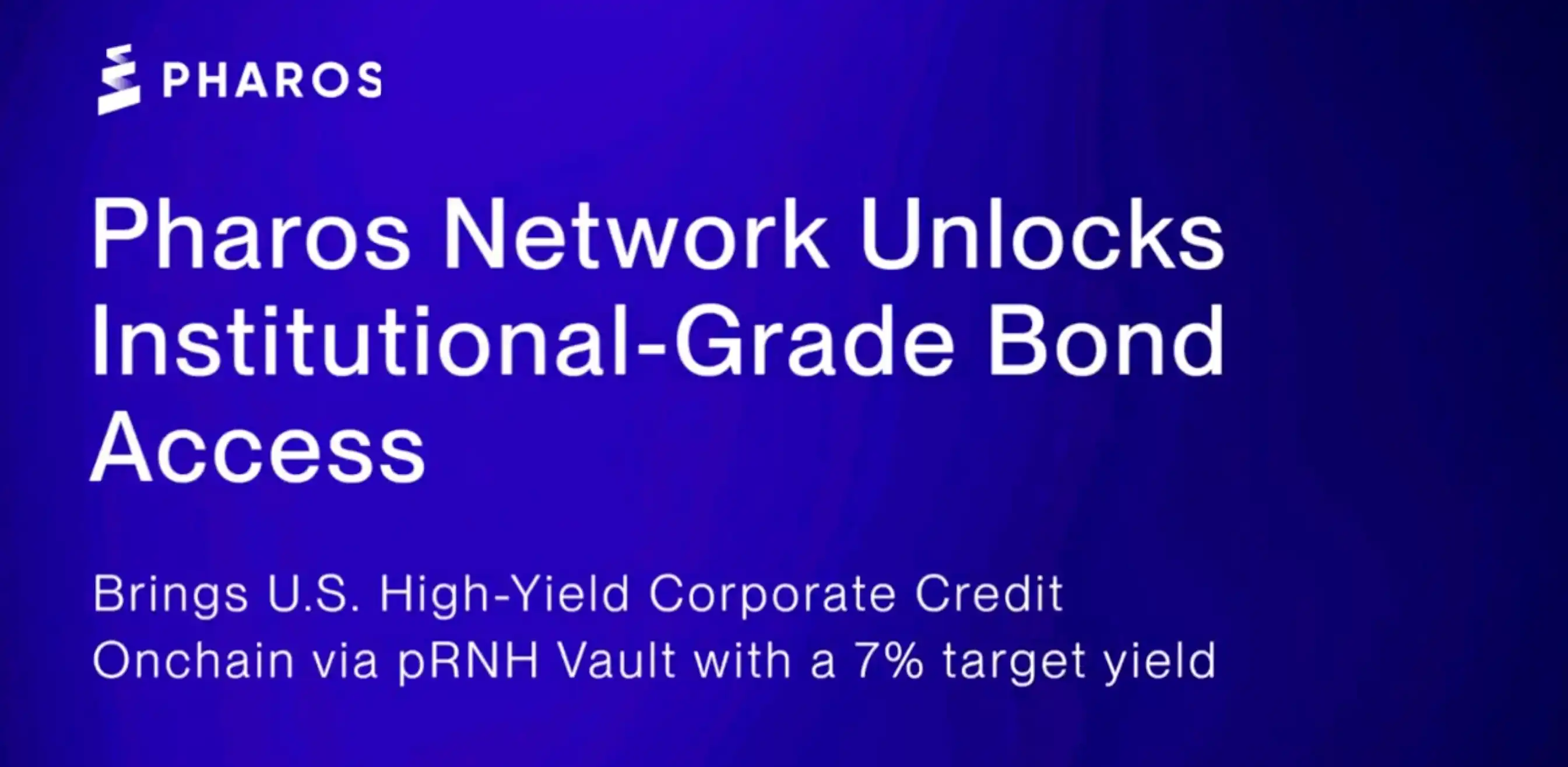
Pharos Introduces On-Chain Institutional-Grade U.S. Corporate Bond Credit, Expanding Its RealFi Asset Portfolio

Pharos Network has launched the pRNH Vault, introducing institutional-grade US corporate high-yield bond exposure to its on-chain RealFi (Real World Finance) ecosystem. Developed by the R25 protocol, the vault provides qualified users access to a tokenized portfolio of high-yield corporate debt, broadening Pharos's asset offerings beyond stablecoins and cash-equivalents. The vault's underlying asset is the NYLIM Anemoy US High Yield Corporate Bond separate account (HYB), managed by New York Life Investment Management (NYLIM) and tokenized in collaboration with Anemoy and Centrifuge. Users can deposit USDC into the vault to receive pRNH tokens, representing indirect ownership of the HYB portfolio, which targets an annualized yield of approximately 7%. The structure offers programmability and composability for on-chain financial applications. Pharos views this move as a key evolution from basic asset tokenization towards building a dynamic marketplace where institutional assets can be actively discovered, evaluated, and utilized programmatically. The pRNH Vault architecture incorporates agent-assisted functionalities for credit screening, liquidity monitoring, and on-chain operations, signaling tighter integration between real-world finance and intelligent on-chain systems. To support this vision, Pharos employs a technical stack including the SALI engine for parallel execution, modular SPNs, protocol-level compliance, ZK-KYC/AML, and native AI agent support. The network positions itself as the "value discovery layer" for the agent economy, aiming to make real-world value, smart agents, and institutional assets widely accessible. The pRNH launch adds a core credit asset to this ecosystem and serves as a practical test case for its infrastructure.

marsbit5m ago

Pharos Introduces On-Chain Institutional-Grade U.S. Corporate Bond Credit, Expanding Its RealFi Asset Portfolio

marsbit5m ago

Deposits in RWA Tripled — Traditional Finance Chooses Blockchain

The decentralized finance (DeFi) sector is undergoing a structural shift, with tokenized real-world assets (RWA) taking center stage. According to a joint report by CoinShares and Token Terminal, deposits in RWA lending and trading platforms tripled year-over-year, reaching $7.4 billion in Q2 2026. This explosive growth starkly contrasts with a 15% decline in overall DeFi deposits and a nearly 70% drop in DEX trading volumes over the same period. Analysts highlight this divergence as evidence of a fundamental shift: demand is driven not by speculation but by the genuine utility of blockchain for traditional finance. The primary drivers are tokenized U.S. Treasury bonds and multi-strategy funds, like BlackRock's BUIDL, which investors use as reliable collateral to secure stablecoin loans while earning yield. The Ethereum network hosts about 70% of all RWA collateral. Beyond government bonds, the tokenization of equities and commodity derivatives is advancing. The tokenized equity market is estimated at $2.2 billion, while perpetual futures on assets like oil and the S&P 500 have seen explosive growth on platforms like TradeXYZ. Standard Chartered projects the total tokenized asset market could reach $4 trillion by 2028. This growth signals that RWA has moved beyond crypto market cycles, offering tangible value, deep liquidity, and 24/7 global access, marking a new phase of institutional scaling for blockchain-based finance.

cryptonews.ru40m ago

Deposits in RWA Tripled — Traditional Finance Chooses Blockchain

cryptonews.ru40m ago

Trading

Spot

Hot Articles

What is $BANK

Bank AI: A Revolutionary Step in the Future of Banking Introduction In an era marked by rapid advancements in technology, Bank AI stands at the intersection of artificial intelligence (AI) and banking services. This innovative project seeks to redefine the financial landscape, enhancing operational efficiency, security measures, and customer experiences through the power of AI. As we embark on this exploration of Bank AI, we will delve into what the project entails, its operational dynamics, its historical context, and significant milestones. What is Bank AI? At its core, Bank AI represents a transformative initiative aimed at integrating artificial intelligence into various banking operations. This project harnesses the capabilities of AI to automate processes, improve risk management protocols, and enhance customer interaction through personalised services. The primary objectives of Bank AI include: Automation of Banking Functions: By leveraging AI technologies, Bank AI aims to automate routine tasks, reducing the burden on human resources and enhancing efficiency. Enhanced Risk Management: The project utilises AI algorithms to predict and identify risks, thereby fortifying security measures against fraud and other threats. Personalisation of Banking Services: Bank AI focuses on offering tailored financial products and services by analysing customer data and behaviours. Improving Customer Experience: The implementation of AI-driven solutions, such as chatbots and virtual assistants, aims to provide users with more human-like interactions, revolutionising the way customers engage with banks. With these goals, Bank AI positions itself as a crucial player in rendering banking more efficient, secure, and user-centric. Who is the Creator of Bank AI? Details regarding the creator of Bank AI remain unknown. As such, no specific individual or organisation has been identified in the available information. The anonymity surrounding the project's inception raises questions but does not detract from its ambitious vision and objectives. Who are the Investors of Bank AI? Similar to the project's creator, specific information regarding the investors or supporting organisations of Bank AI has not been disclosed. Without this information, it is challenging to outline the financial backing and institutional support that might be propelling the project forward. Nevertheless, the importance of having a robust investment foundation is pivotal for sustaining development in such an innovative field. How Does Bank AI Work? Bank AI operates on several innovative fronts, focusing on unique factors that differentiate it from traditional banking frameworks. Below are key operational features: Automation: By applying machine learning algorithms, Bank AI automates various manual processes within banks. This results in reduced operational costs and allows human workers to redirect their efforts towards more strategic activities. Advanced Risk Management: The integration of AI into risk management practices equips banks with tools to accurately predict potential threats such as fraud, ensuring that customer information and assets remain secure. Tailored Financial Recommendations: Through continuous learning from customer interactions, the AI systems develop a nuanced understanding of user needs, enabling them to offer tailored advice on financial decisions. Enhanced Customer Interactions: Utilizing chatbots and virtual assistants powered by AI, Bank AI enables a more engaging customer experience, allowing users to have their queries resolved quickly, thus reducing wait times and improving satisfaction levels. Together, these operational features position Bank AI as a pioneer in the banking sector, establishing new benchmarks for service delivery and operational excellence. Timeline of Bank AI Understanding the trajectory of Bank AI requires a look at its historical context. Below is a timeline highlighting important milestones and developments: Early 2010s: The conceptualisation of AI integration into banking services began to gain attention as banking institutions recognised the potential benefits. 2018: A marked increase in the implementation of AI technologies occurred when banks started using AI tools like chatbots for basic customer service and risk management systems for improved security handling. 2023: The sophistication of AI continued to advance, with generative AI being introduced for more complex tasks such as document processing and real-time investment analysis. This year marked a significant leap in the capabilities afforded to banks by AI technology. 2024-Current Status: As of this year, Bank AI is on an upward trajectory, with ongoing research and developments poised to further enhance capabilities in banking operations. Continued exploration of AI applications hints at exciting developments yet to come. Key Points About Bank AI Integration of AI in Banking: Bank AI focuses on adopting artificial intelligence to streamline banking processes and improve user experiences. Automation and Risk Management Focus: The project strongly emphasises these areas, aiming to shift the burden of routine tasks while enhancing security frameworks through predictive analytics. Personalised Banking Solutions: By harnessing customer data, Bank AI enables tailored banking services that cater to individual user needs. Commitment to Development: Bank AI remains committed to ongoing research and development efforts, ensuring its adaptability and ongoing relevance as technology continues to evolve. Conclusion In summary, Bank AI exemplifies a crucial step forward in the banking industry, leveraging artificial intelligence to reshape operational paradigms, enhance security, and promote customer satisfaction. Despite gaps in information surrounding the creator and investors, the clear objectives and functional mechanisms of Bank AI provide a strong foundation for its ongoing evolution. As AI technology continues to advance and merge with the banking sector, Bank AI is well-positioned to significantly impact the future of financial services, enhancing the way we understand and interact with banking.

414 Total ViewsPublished 2024.04.06Updated 2024.12.03

What is $BANK

Discussions

Welcome to the HTX Community. Here, you can stay informed about the latest platform developments and gain access to professional market insights. Users' opinions on the price of BANK (BANK) are presented below.

活动图片