Detained for 37 Days: The First Wave of People Who Got Rich from 'AI Gateways' Are Starting to Go to Jail

marsbitPublished on 2026-05-21Last updated on 2026-05-21

Abstract

A prominent AI proxy service operator was reportedly detained for 37 days and is now on bail pending trial, highlighting the legal risks in China's booming but unregulated AI intermediary market. These services act as "AI scalpers," providing domestic users with access to restricted overseas models (like OpenAI, Claude) by bundling APIs, handling payments, and bypassing network blocks, all for a fee. Their controversial profitability stems from practices like bulk-registering accounts to resell free credits, exploiting refund policies, overcharging for tokens, substituting cheaper models, and illegally selling user conversation data. Major figures, including cryptocurrency entrepreneurs, are now entering this space. Legally, these operations face severe risks. Their core model often involves unauthorized API access and operating without required telecom licenses, potentially constituting illegal business operations. They fail to meet data security obligations for the vast amounts of user data they process, risking charges for failing to fulfill network security duties. Crucially, the unauthorized collection and sale of user data, which can include personal and commercial secrets, easily meets the threshold for the crime of infringing on personal information. The case underscores a critical juncture for the AI industry. While proxies lower access barriers, they expose user data to unsecured middlemen and undermine the business models of AI developers, forcing them to divert...

Author: Lawyer Shao Shiwei

According to industry insider news, in May 2026, an operator of an AI gateway service publicly stated that they had been criminally detained for 37 days for illegally reverse-engineering, scraping, and reselling low-cost AI API resources, and is currently under a status of release on bail pending trial.

Although Lawyer Shao has also seen fellow lawyers commenting on this incident, stating that an AI gateway operator was criminally detained by Shanghai police, as there is no official announcement yet, the specific charges and handling of the case cannot be confirmed.

In the past two years, the demand for AI applications in China has exploded. However, due to regional restrictions on overseas large language models, more and more people are operating AI gateways. Simply put, domestic users want to use them but can't, so the gateway helps bridge the channel and charges a toll.

Therefore, using this case as an example, we can discuss: Can the currently booming business of AI gateways still be done? What risks might ordinary people face when operating an AI gateway?

The Lucrative Business of AI Gateways

According to a report by Xinhua News Agency, China's average daily Token usage has increased over a thousandfold from early 2024 to March 2026. The demand is clearly there.

However, if domestic users want to use overseas large models (OpenAI, Anthropic, Google, etc.), they encounter numerous hurdles such as network environment, payment channels, and identity verification.

Where there are hurdles, there is business. AI gateways have emerged accordingly. Currently, on many self-media platforms, it's claimed that AI API gateways are one of the most profitable projects in 2026, and this is not false.

AI gateways can also be understood as AI scalpers. They package interfaces from different AI model providers into a unified outlet, handling backend connections to all models for the user. Users also avoid the need for accessing restricted networks or figuring out foreign currency payments.

On platforms like Taobao, Xianyu, and Xiaohongshu, many such posts can be seen, with prices shockingly low.
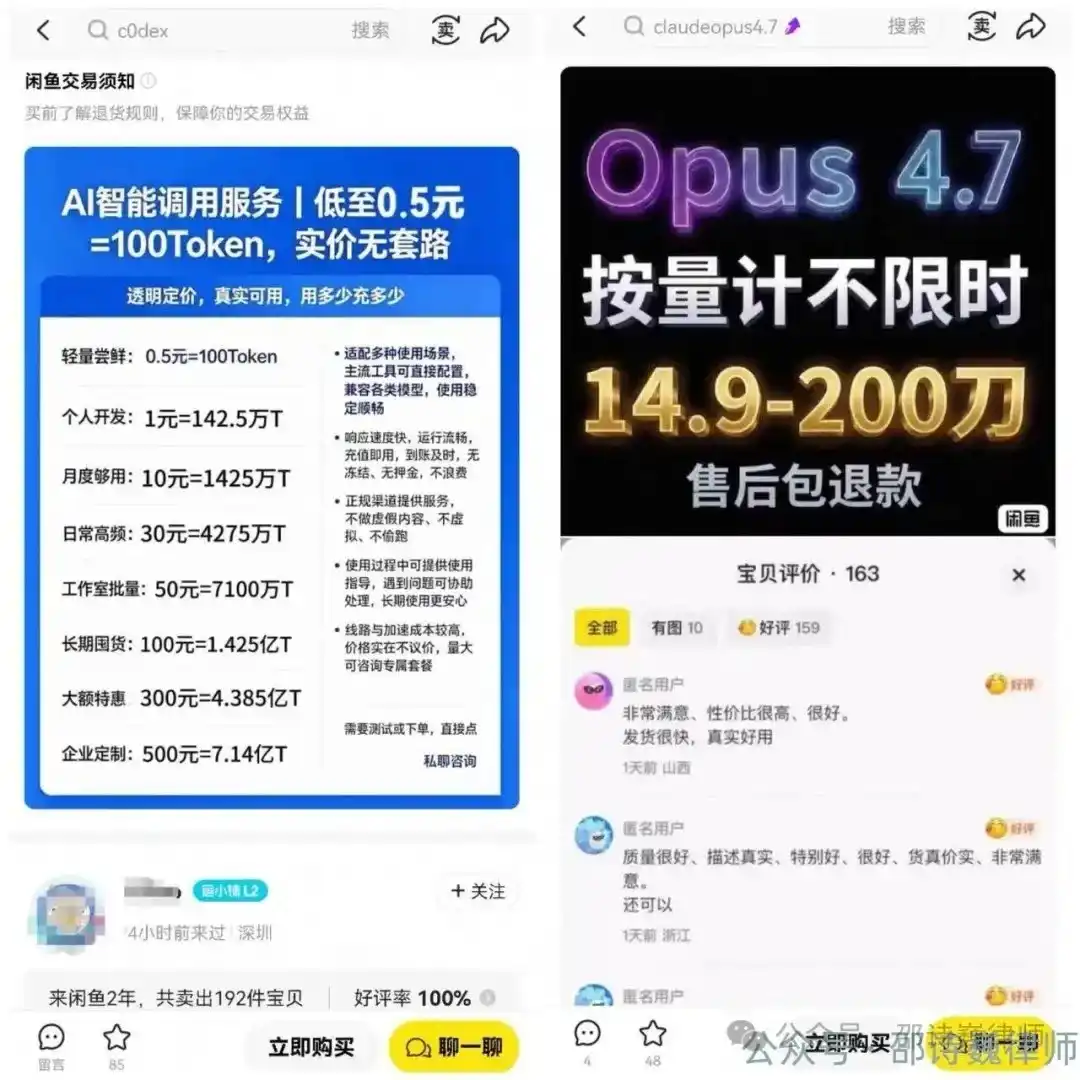

So the question arises: With prices pushed so low, how exactly do the gateway operators make money?

Reselling free credits. Platforms like ChatGPT and Claude offer free credits upon registering new accounts. The bulk account merchants behind the gateway service register large quantities of accounts, exploit the platform's free credits, then use technical means to reverse-engineer these accounts' web interfaces into standard APIs, and sell them uniformly. The cost is almost zero.

Refund arbitrage. They batch-register official accounts, top them up, and call the APIs. What if the account gets banned? Apply for a refund. In most cases, the pre-loaded money can be recovered. This means they use your money to call the APIs, and if banned, they get the cost back from the official source, profiting from both ends.

Over-reporting Tokens. Official APIs strictly charge based on the number of Tokens used, but the gateway's billing system is written by the operator themselves. Normally, 1 Chinese character is about 1.5 to 2 Tokens. Some gateways adjust the multiplier in the backend, so your 1 Chinese character could be charged as 3 to 4 Tokens. Users have no way to verify this.

Model swapping. You pay for Claude Opus 4.7, but you might actually be calling a small open-source model. This is also why many users feel that models via gateways seem "dumbed down".
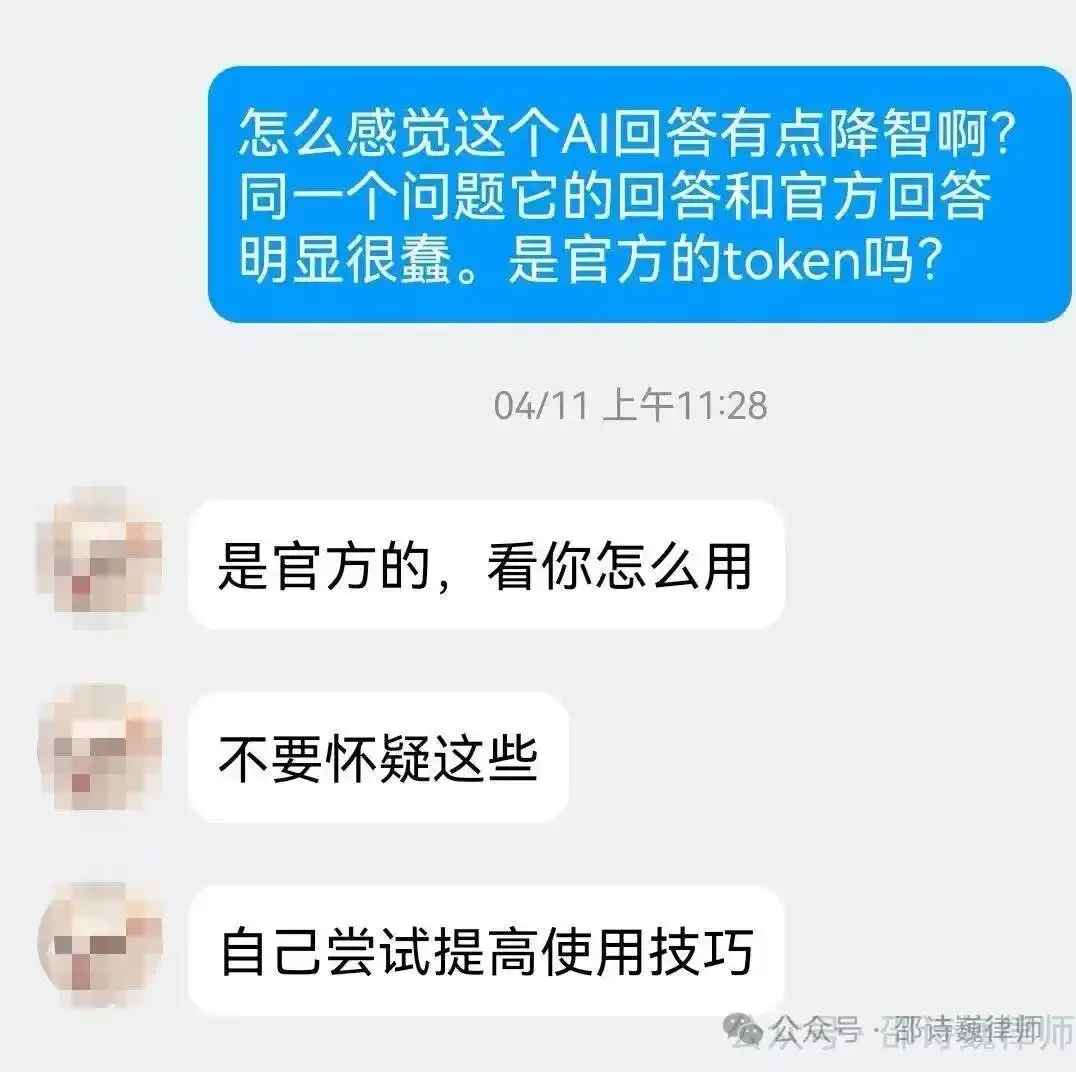
Data resale. They package and sell users' complete conversation records, especially high-quality training data like code in programming scenarios, reasoning processes, and engineering decisions, to model vendors. Why are gateways so cheap? They often profit by selling data.

This business has grown so large that even celebrities are entering the field. On May 1, 2026, Tron founder Justin Sun launched the AI gateway B.AI, with the slogan "One API Key = Claude + GPT + Gemini + Full Series of Domestic Large Models." On May 5, the cryptocurrency company WLFI, linked to the Trump family, launched WorldRouter, directly connecting AI calls with the cryptocurrency system.

But the greater the traffic, the greater the associated risks.

Why Could Running an AI Gateway Lead to Arrest?

Earlier, we outlined the profit models of AI gateways. As a gateway operator, one might be aware of the risks in such gray-area projects. However, after operating for some time and genuinely making money, and seeing peers doing the same without incident, one tends to become complacent.

From a legal perspective, the criminal risks of AI gateways mainly concentrate on three levels.

First, the business model itself may be illegal.

The computing resources of AI gateways are not obtained through legitimate procurement of API interfaces. Instead, they involve batch-registering accounts to exploit free credits or using technical means to reverse-engineer and obtain interface access. This no longer falls under the category of normal commercial agency.

Providing information relay and data processing services essentially constitutes a telecommunications value-added service. According to the "Regulations of the People's Republic of China on Telecommunications," operating such a business requires corresponding administrative permits. Operating without permission carries the risk of violating the crime of Illegal Business Operations.

Furthermore, overseas large model providers have access restrictions for users in China. Gateways help users circumvent these restrictions through proxy IPs, fabricated identities, etc., essentially assisting in bypassing the service provider's access conditions. If such acts are deemed as disrupting market order, they could also fall within the scope of the crime of Illegal Business Operations.

Second, lack of data security obligations.

AI gateways process a large volume of interaction data between users and models daily. User prompts, code snippets, business documents are all transmitted and processed through gateway servers. As the actual handler of the data, the gateway legally bears corresponding security management responsibilities.

However, the reality is that the vast majority of gateways have not established any data security management system—data storage locations, access control, and security measures are all non-existent. Once a data breach occurs, whether due to external attacks or internal mismanagement, the gateway, as a network service provider, could face criminal prosecution for the crime of Refusing to Perform Information Network Security Management Obligations. This crime targets precisely the act of "having a legal obligation but failing to fulfill it."

Third, illegal collection and sale of user data.

Some gateways package and sell user conversation logs to third parties, which is not an isolated phenomenon within the industry. However, the corresponding legal risk of this behavior is generally underestimated.

Conversation content between users and AI models often contains personal information, commercial secrets, and other sensitive data. Gateways rarely obtain explicit user consent when collecting this data, let alone inform users of the data's purpose and flow. Collecting and providing such information to third parties without consent, if serious, constitutes the crime of Infringing on Citizens' Personal Information.

The threshold for this crime is not high. According to relevant judicial interpretations, illegally obtaining, selling, or providing 50 or more pieces of personal information such as location tracking, communication content, credit information, property information, or 500 or more pieces of other personal information that may affect personal or property safety, such as accommodation information, communication records, health and physiological information, transaction information, meets the standard for prosecution. Considering the daily data processing volume of a gateway, reaching this threshold is not difficult.

Final Thoughts

Regarding the issue of AI gateways, Lawyer Shao does not wish to limit the discussion merely to whether operators will be prosecuted. The incident reflects issues the AI industry inevitably faces during its rapid development phase.

For users, gateways lower the usage barrier, but also expose users' sensitive data to an intermediate link without qualifications or security safeguards. Once problems occur, users might not even find a party against whom to assert their rights.

For model vendors, the existence of gateways consumes their technological investment and business models. Free credits are exploited in bulk, paid interfaces are reverse-engineered and misused, and pricing systems are undermined. Vendors are forced to divert significant resources from product development to risk control and countermeasures, and these costs ultimately get passed on to normal paying users. A deeper damage lies in the fact that when gateways dump computing power at low prices, the market's perception of the value of AI services is being distorted—users gradually come to believe that these capabilities should be almost free. This harms the sustainable development of the entire industry.

As a lawyer specializing in the new economy sector, Lawyer Shao has also been following the development of the AI industry and has served many practitioners in this field. How far an industry can go depends not on how fast it runs, but on whether it can establish a basic commercial order and foundation of trust. The AI industry is at a critical stage of transitioning from wild growth to standardized operation. The choices of every practitioner are shaping the future ecosystem of this industry.

A healthy AI industry requires vendors to continuously invest in technological R&D, users' data rights to be genuinely protected, and practitioners to participate in market competition in a compliant and responsible manner. These are prerequisites for the industry's long-term survival. What Lawyer Shao hopes to see is more practitioners choosing to do the difficult but right thing, making the foundation of this industry even more solid.

Special Disclaimer: This article is an original work by Lawyer Shao Shiwei. It represents only the author's personal views and does not constitute legal consultation or advice on specific matters.


Trending Cryptos

Related Questions

QWhat is an 'AI Relay Station' as described in the article?

AAn 'AI Relay Station' is a service that acts as an intermediary between Chinese users and overseas large AI models (like OpenAI, Anthropic, Google). It helps users bypass restrictions such as network access, payment channels, and identity verification, providing a unified API interface in exchange for a fee.

QWhat are some unethical profit models used by certain AI Relay Station operators mentioned in the article?

AThe article lists several unethical practices: 1) Reselling the free usage quotas from newly registered AI service accounts. 2) Refund arbitrage—charging users for API calls, then requesting refunds from the official service after the account gets banned. 3) Inflating token counts in their own billing systems to overcharge users. 4) Model swapping—delivering a less capable model than what the user paid for. 5) Collecting and selling users' high-quality conversation data, such as code and business discussions.

QWhat are the main legal risks for operating an AI Relay Station in China according to the article?

AThe main legal risks are: 1) Operating without the necessary telecom value-added service permits, which could lead to charges of illegal business operations. 2) Failing to implement data security measures, risking prosecution for refusal to fulfill information network security management obligations. 3) Illegally collecting and selling user conversation data, which may contain personal information or trade secrets, potentially constituting the crime of infringing on citizens' personal information.

QWhy does the article suggest that AI Relay Stations can harm the long-term development of the AI industry?

AThe article argues that these stations distort the market by devaluing AI services through predatory pricing (e.g., using stolen quotas). This forces legitimate model providers to divert resources from R&D to fraud prevention, increasing costs for genuine users. It also creates a perception that advanced AI capabilities should be nearly free, undermining sustainable business models and the industry's foundation of trust and fair competition.

QWhat event prompted the discussion in this article, and what was the reported outcome?

AThe discussion was prompted by an incident in May 2026 where the operator of an AI Relay Station publicly stated they had been criminally detained for 37 days for illegally reverse-engineering and reselling low-cost AI API resources. The individual was reportedly released on bail awaiting trial, though the article notes there was no official confirmation of the case details from authorities.

Related Reads

Tiger Research: Zuckerberg Begins Betting on Prediction Markets, While Asian Nations Still View Them as Gambling

This article examines the rise of prediction markets, contrasting their growing institutional acceptance in the West with their restrictive regulation in Asia. It details how prediction markets, which originated from informal political betting and academic experiments like the Iowa Electronic Market, aggregate crowd wisdom into probabilistic prices through binary contracts. Their growth accelerated around 2020, reaching over $14 billion in monthly volume. A key driver is the "skin in the game" principle, where users risk their own capital, leading to high accuracy in predicting events like Fed rate decisions and elections, as demonstrated by platforms like Polymarket. Meta's entry, with Mark Zuckerberg reportedly leading the development of the Arena app, signals the market's maturation. In the U.S., court rulings have distinguished prediction markets from gambling, facilitating entry by traditional financial institutions. However, most Asian jurisdictions still classify them as gambling, focusing on social control rather than financial innovation. The article argues this stance creates three problems for Asia: 1) regulatory arbitrage pushes users to riskier offshore platforms, 2) loss of sovereign information infrastructure as valuable social sentiment data accumulates abroad, and 3) abandonment of user protection. It concludes that Asia needs a policy shift from prohibition to constructive regulation, integrating these markets into the formal system to harness their data as a national asset, as initiatives like Limitless Research are beginning to do.

marsbit12m ago

Tiger Research: Zuckerberg Begins Betting on Prediction Markets, While Asian Nations Still View Them as Gambling

marsbit12m ago

Ethereum's Next Decade in the Eyes of Vitalik

"Lean Ethereum" Long-Term Roadmap Unveiled by Vitalik Buterin On July 5, 2026, Vitalik Buterin published the "Lean Ethereum" roadmap, positioning it as Ethereum's third major evolution following the Merge. This multi-year, multi-phase upgrade aims to fundamentally transform Ethereum's core protocol through staged network upgrades extending to 2029. Key goals include achieving 1 gigagas per second L1 throughput (a massive increase from the current ~32 TPS), near-instant finality, and quantum-resistant cryptography. The plan involves transitioning Ethereum's security model from full transaction re-execution by all nodes to native verification via recursive STARK proofs. A major proposed change is replacing the EVM with a proof-friendly architecture like RISC-V or leanISA, though this remains a point of contention, especially with L2s like Arbitrum favoring alternatives like WASM. Other planned upgrades include a restructured state model with a large, cheap "warehouse" storage layer to drastically reduce fees for migrated applications, multi-dimensional gas pricing, and a new focus on making privacy a first-class, native protocol feature. While the roadmap significantly raises Ethereum's long-term technical ceiling, analysts note it does not directly address ETH's mid-term token economics or value capture. The plan's multi-year timeline means near-term price impact will likely depend on observable progress milestones, such as the successful deployment of the upcoming Glamsterdam gas limit increase, growth in L2 activity and blob usage, and trends in L1 fee revenue and ETH burn.

链捕手1h ago

Ethereum's Next Decade in the Eyes of Vitalik

链捕手1h ago

In Just 11 Days, Claude Rewrote Millions of Lines of Code, an Epic AI Engineering Feat Sparks Fury

In just 11 days, Bun's founder Jarred Sumner used Anthropic's Claude AI models to rewrite its million lines of code from Zig to Rust. This move sparked significant controversy, particularly from Zig's creator, Andrew Kelley, who publicly criticized Sumner's engineering practices and the decision to use AI for such a massive rewrite. Bun, a high-performance JavaScript/TypeScript runtime and rival to Node.js, was originally written in Zig. After Anthropic acquired Bun, the team encountered persistent stability and memory safety bugs in the Zig codebase. These issues, combined with Zig's strict policy against LLM-generated code, led to the decision to rewrite in Rust. The rewrite was executed using Claude AI tools at an estimated API cost of $165,000, dramatically reducing the expected time and financial cost. Andrew Kelley's response was scathing. He blamed the original bugs on poor engineering habits, calling Bun's Zig code a collection of "hacks on top of hacks." He expressed relief that Bun was no longer associated with Zig, fearing it would misrepresent the language and attract low-quality, AI-generated contributions. The tech community is divided; some view Kelley's critique as unprofessional, while others see it as a defense of engineering integrity. A major concern about the AI-driven rewrite is the resulting code quality. The translation from Zig left approximately 27,000 lines of unsafe Rust code, raising fears about long-term maintainability and technical debt. The debate centers on whether this project is a milestone in AI-assisted development or a future maintenance nightmare.

marsbit2h ago

In Just 11 Days, Claude Rewrote Millions of Lines of Code, an Epic AI Engineering Feat Sparks Fury

marsbit2h ago

From Auto Finance to Bitcoin to AI Engines: An Analysis of Cango's 'What Not to Do' Strategy

From Auto Finance to Bitcoin and Now AI: Cango's "What Not to Do" Strategy Cango, a Chinese auto finance platform that went public on the NYSE in 2018, is undergoing its third major transformation. After selling its entire auto business in 2024, it pivoted to become a large-scale Bitcoin miner, acquiring 50 exahash of mining rigs from Bitmain. However, its true goal was never Bitcoin, but owning and controlling energy infrastructure. Now, Cango is pivoting again. While most listed Bitcoin miners are leasing power to giant hyperscalers for AI training clusters, Cango is taking the opposite path. It has launched an AI inference subsidiary called EcoHash, focusing not on training but on distributed inference. The company's strategy hinges on the insight that over 70% of mining industry power is controlled by small, independent sites (10-50 MW), which are too small for hyperscalers but ideal for low-latency AI inference. Cango aims to partner with these small operators, providing the AI technology, customers, and financing through its EcoLink software layer, which can distribute workloads across sites for reliability. Cango maintains a hybrid model, running roughly 31.7 EH/s of Bitcoin mining for cash flow while aggressively cleaning its balance sheet—slashing long-term debt by 94.5% to $30.6 million and raising $75 million for its AI venture. Its first AI deployment will be at a 50 MW site in Georgia. The strategy faces skepticism, given the high costs of converting mining sites and the potential for an AI bubble. However, Cango's leadership believes discipline around "what not to do"—avoiding direct competition with hyperscalers in training—positions it to capture the long-tail demand for distributed AI inference power.

Foresight News2h ago

From Auto Finance to Bitcoin to AI Engines: An Analysis of Cango's 'What Not to Do' Strategy

Foresight News2h ago

Trading

Spot

Hot Articles

How to Buy PEOPLE

Welcome to HTX.com! We've made purchasing ConstitutionDAO (PEOPLE) simple and convenient. Follow our step-by-step guide to embark on your crypto journey.Step 1: Create Your HTX AccountUse your email or phone number to sign up for a free account on HTX. Experience a hassle-free registration journey and unlock all features.Get My AccountStep 2: Go to Buy Crypto and Choose Your Payment MethodCredit/Debit Card: Use your Visa or Mastercard to buy ConstitutionDAO (PEOPLE) instantly.Balance: Use funds from your HTX account balance to trade seamlessly.Third Parties: We've added popular payment methods such as Google Pay and Apple Pay to enhance convenience.P2P: Trade directly with other users on HTX.Over-the-Counter (OTC): We offer tailor-made services and competitive exchange rates for traders.Step 3: Store Your ConstitutionDAO (PEOPLE)After purchasing your ConstitutionDAO (PEOPLE), store it in your HTX account. Alternatively, you can send it elsewhere via blockchain transfer or use it to trade other cryptocurrencies.Step 4: Trade ConstitutionDAO (PEOPLE)Easily trade ConstitutionDAO (PEOPLE) on HTX's spot market. Simply access your account, select your trading pair, execute your trades, and monitor in real-time. We offer a user-friendly experience for both beginners and seasoned traders.

7.5k Total ViewsPublished 2024.03.29Updated 2026.06.02

How to Buy PEOPLE

Discussions

Welcome to the HTX Community. Here, you can stay informed about the latest platform developments and gain access to professional market insights. Users' opinions on the price of PEOPLE (PEOPLE) are presented below.

活动图片