Original Text丨Boyang, Tencent Technology
On June 16th, US local time, just four days after completing the largest IPO in history, SpaceX announced its first major acquisition following the listing.
According to documents filed with the US Securities and Exchange Commission (SEC), SpaceX will acquire AI programming startup Cursor's parent company Anysphere in an all-stock transaction valued at $60 billion. The deal is expected to close in the third quarter of 2026, subject to regulatory approvals.
Following the announcement, SpaceX's stock price surged by over 16% intraday, with its market cap once exceeding $2.94 trillion, briefly surpassing Microsoft. By the close, SpaceX had overtaken Amazon to become the fourth most valuable company in the US. From its IPO price of $135 per share, SpaceX's stock has accumulated gains of nearly 50%.
CNBC host Jim Cramer commented on this: "Buying SpaceX is essentially buying Musk's brain." He believes traditional valuation models struggle to measure Musk's ability to translate grand visions into commercial reality.
01 What is Cursor, and Why is it Worth $60 Billion?
Cursor is one of the hottest AI programming tools globally, co-founded in 2022 by Michael Truell and his MIT classmates Sualeh Asif, Arvid Lunnemark, and Aman Sanger. Headquartered in San Francisco, the company has about 700 employees and serves 60% of Fortune 500 companies.
Cursor's core product is an AI coding assistant that allows developers to flexibly switch between mainstream AI models from OpenAI, Anthropic, xAI, Google, etc. It can automatically generate, edit, and review code, directly competing with Anthropic's Claude Code and OpenAI's Codex.
In terms of revenue, Cursor's growth has been staggering. In November 2025, its annualized revenue surpassed $1 billion, roughly tenfold growth from a year earlier. It's reported that within the following three months, Cursor's annualized revenue doubled again to $4 billion. Currently, Cursor ranks 37th on the 2026 CNBC Disruptor 50 list.
However, according to Ramp spending data, Cursor's market share has dropped from 41% in June 2025 to around 26% in May 2026, while Anthropic's Claude Code now occupies about half of the market in this segment.
02 The Entrepreneurial Journey of a Prodigy
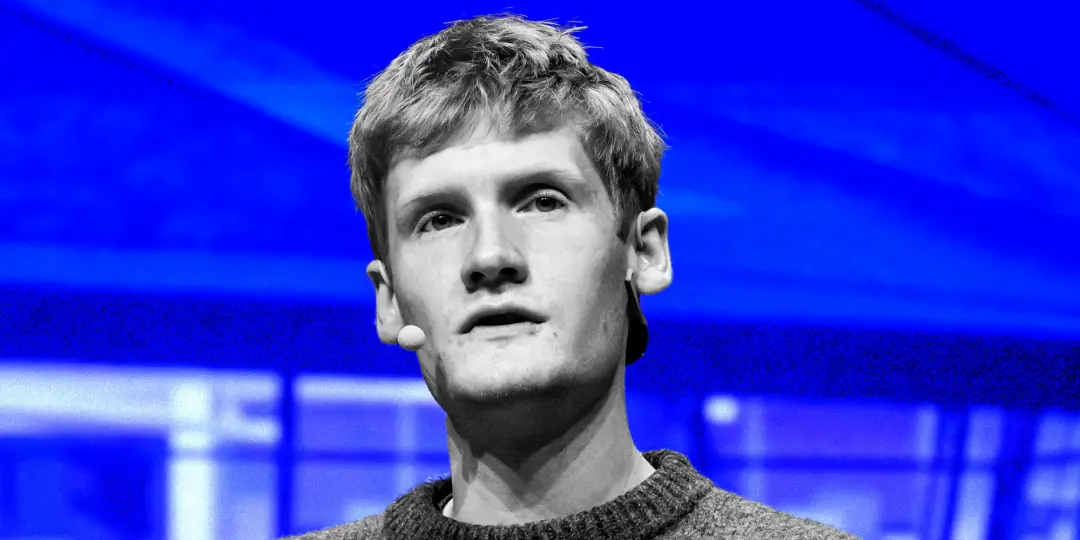
Cursor CEO Michael Truell
The story of Cursor begins with a quiet, red-haired teenager.
In 2019, as an 18-year-old MIT freshman, Truell faced a coding test expected to take an hour. He submitted his answers in under ten minutes. Tech investor Ali Partovi was the examiner that day, leading a program scouting top student coding talent. Partovi later had Truell test him, finding the teenager's code neat and concise, while his own answer sheet was a mess.
Growing up in New York with parents who were both journalists, Truell displayed exceptional programming talent from a young age. At 15, attending the prestigious private school Horace Mann School, he co-developed a programming game called Halite with classmates. The game taught coding basics by having players conquer grid territories, attracting thousands of middle and college students with no prior coding experience and earning him a $10,000 prize from a top math association.
At MIT, Truell majored in both Computer Science and Mathematics while incubating startup ideas. Claire Shorall, who mentored him in a startup bootcamp, recalls being impressed by his curiosity and humility. "I gave him some advice, but he clearly already knew his mind."
After graduating in 2022, Truell co-founded Anysphere with three MIT classmates, initially positioning it as a code editing platform. By building an enhanced version of Microsoft's open-source editor VS Code, they achieved monthly recurring revenue of $1 million within a year. Cursor officially launched in March 2023 and was quickly embraced by developers and enterprise users.
03 The "Strange" Relationship with Anthropic
Cursor's rise wasn't smooth sailing, with the biggest variable coming from its core AI supplier—Anthropic.
The two companies were highly interdependent: Cursor's product heavily relied on Anthropic's AI models, while Cursor's explosive growth once contributed about 40% to 50% of Anthropic's revenue. Both sides were aware of each other's importance.
However, before launching its own code editor Claude Code, Anthropic privately told Cursor's management that the product was more research-oriented and not a major commercial deployment. Yet Claude Code quickly swept through the developer community.
By February 2026, Claude Code's annualized revenue had grown to $2.5 billion, about $500 million higher than Cursor's revenue at the time. Many developers began posting on social media announcing they were abandoning Cursor for Claude Code. Meanwhile, Anthropic's previous severing of model access to Windsurf during its acquisition talks with OpenAI further heightened Cursor management's concerns about over-reliance on a single supplier.
On January 5, 2026, Truell held an all-hands meeting described by internal employees as "urgent," announcing that Cursor must develop its own AI model. His message was concise and powerful: We cannot fall behind. Cancel all unnecessary meetings, be ready for cross-team collaboration at any time. We must stay agile and adapt quickly.
Subsequently, Cursor launched its self-developed programming model suite, Composer, initially based on an open-source model from Chinese AI lab Moonshot. However, according to Cursor, in the Composer 2.5 version released in May, over 85% of the work was Cursor's own R&D (based on the Kimi K2.5 model). Cursor engineer Lucas Garza stated that with its low price and extremely fast response speed, Composer received an "extremely enthusiastic" response from developers.
04 Moving Closer to Musk: A Win-Win Gamble
Developing its own model required massive computing power, a weakness for Cursor. This spring, Truell found another founder with grand ambitions to fill this gap.
On April 21st, Truell posted on X in his typically concise style: "Excited to partner with the SpaceX team to scale Composer. A significant step on our journey to building the best AI platform for programming."
On the same day, SpaceX also publicly announced on X that it had secured an acquisition option from Cursor. SpaceX could choose to acquire Cursor for $60 billion in an all-stock transaction after completing its IPO. If SpaceX declined the acquisition, it would have to pay a $1 billion breakup fee and provide $8.5 billion worth of free computing resources.
Days after SpaceX successfully completed the largest IPO in history, SpaceX formally exercised the acquisition option, announcing the $60 billion acquisition of Cursor, fulfilling the "foreshadowing" planted in April.
The deal serves different purposes for both parties. Cursor gains access to SpaceX's Colossus supercomputer. This system is composed of hundreds of thousands of top-tier Nvidia AI chips. SpaceX, on the other hand, hopes to leverage Cursor's deep penetration among top software engineers to achieve a leapfrog advantage in the AI programming race. Musk's AI chatbot Grok currently lags behind mainstream models in programming; an xAI contractor once admitted Grok "is not good at programming."
After the announcement, many Cursor employees were caught off guard. After all, Truell had repeatedly expressed his intention to build Cursor into an "enduring company" and viewed selling as "a significant risk and a major gamble." Early investor Partovi, who wrote Cursor's first check, said he considered Truell the type of founder inclined to remain independent, "He has the ambition, confidence, and drive to go much further."
SpaceX stated that the Colossus supercomputer was its core bargaining chip to attract Cursor. "Cursor's leading product and distribution among top software engineers, combined with SpaceX's Colossus supercomputer with a million H100 compute equivalents, will enable us to build the world's most useful AI models."
05 A Larger Ambition: Satellite Data Centers and Trillion-Dollar Revenue
This acquisition also serves SpaceX's broader AI strategy. The company is seeking regulatory approval to deploy up to 1 million AI satellites, exploring solar-powered orbital data centers to handle ground computing tasks. Meanwhile, SpaceX has announced multi-billion-dollar cloud computing agreements with Anthropic and Google, significantly bolstering its pre-IPO revenue base.
However, Musk also stated on X that SpaceX reserves the right to cancel these agreements if Colossus computing power becomes constrained.
On June 14th, Musk posted that SpaceX "might achieve around $1 trillion in revenue by 2030." Compared to the company's $18.7 billion revenue in 2025, this would be a qualitative leap. In 2025, SpaceX reported a net loss of $4.9 billion, and the loss widened to $4.28 billion in the first quarter of this year.
For Musk, the goal is always clear. He wrote on X: "Whether it will become the best remains to be seen, but I will never give up. Never."
For Truell, this is perhaps the biggest test of his life: Can he deliver on the bet with Musk? "It's all a bit crazy," he said, "But we know how special this is—how unprecedented it is in history."


















