Crypto’s $30 billion lending boom is changing the market – Here’s how

ambcryptoPublished on 2026-03-26Last updated on 2026-03-26

Abstract

Crypto's lending sector, now valued at $30 billion, is emerging as a key pillar, shifting focus from Layer 1 blockchains like Ethereum and Tron. While L1s still dominate in value, lending protocols such as Aave and Morpho are at the center of a rapidly growing on-chain credit system. The rise of stablecoins as a medium of exchange and the expansion of tokenized assets are improving liquidity and market efficiency. This lending boom is creating a new "yield layer," where users earn returns through interest, leverage, and better capital utilization, turning holdings into productive assets.

For years, the crypto spotlight has been on L1s like Ethereum [ETH] and Tron [TRX]. Today, it seems like that’s changed.

On-chain lending is becoming one of the ecosystem’s most consequential pillars!

An assessment of the competitive landscape

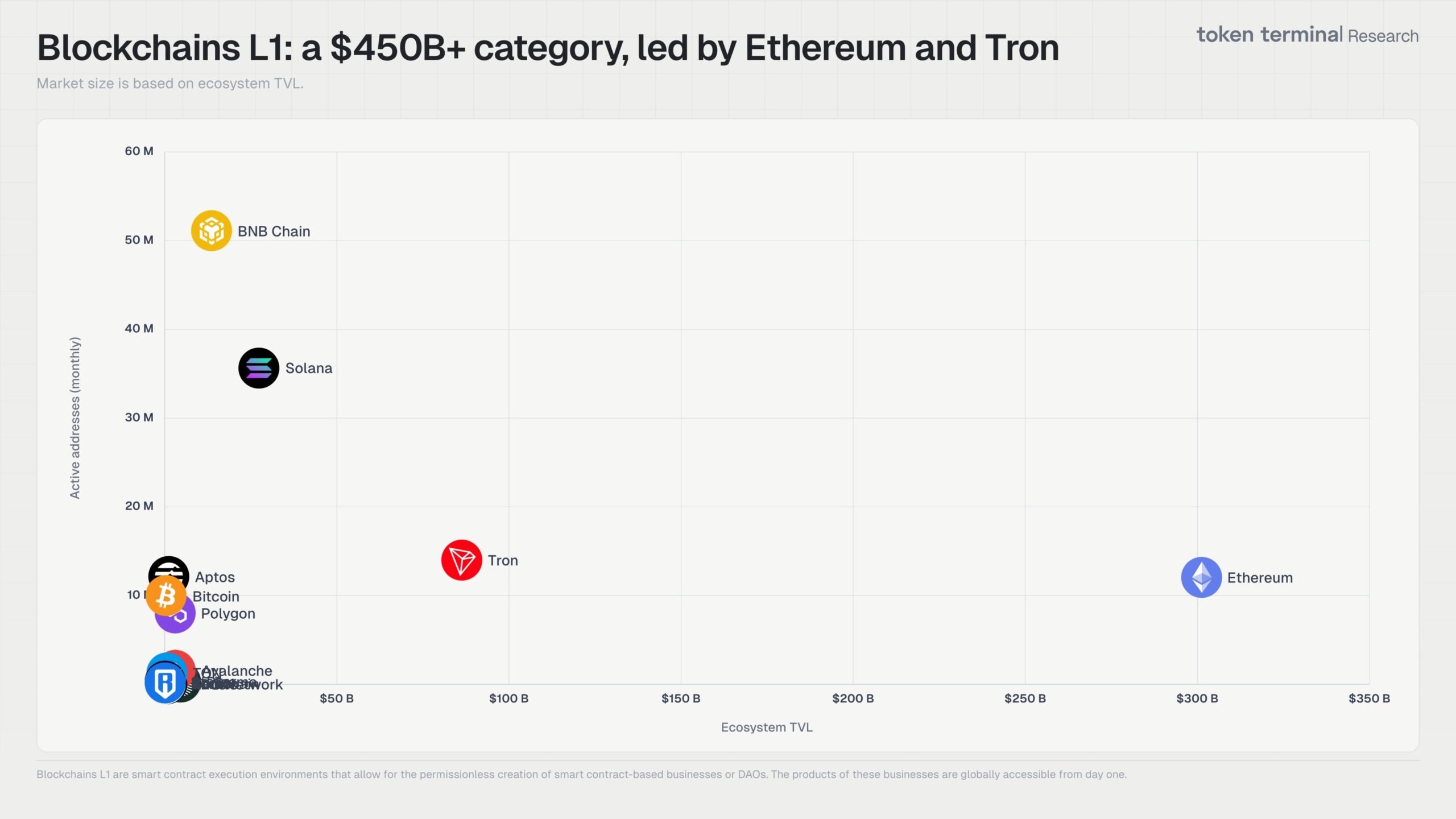
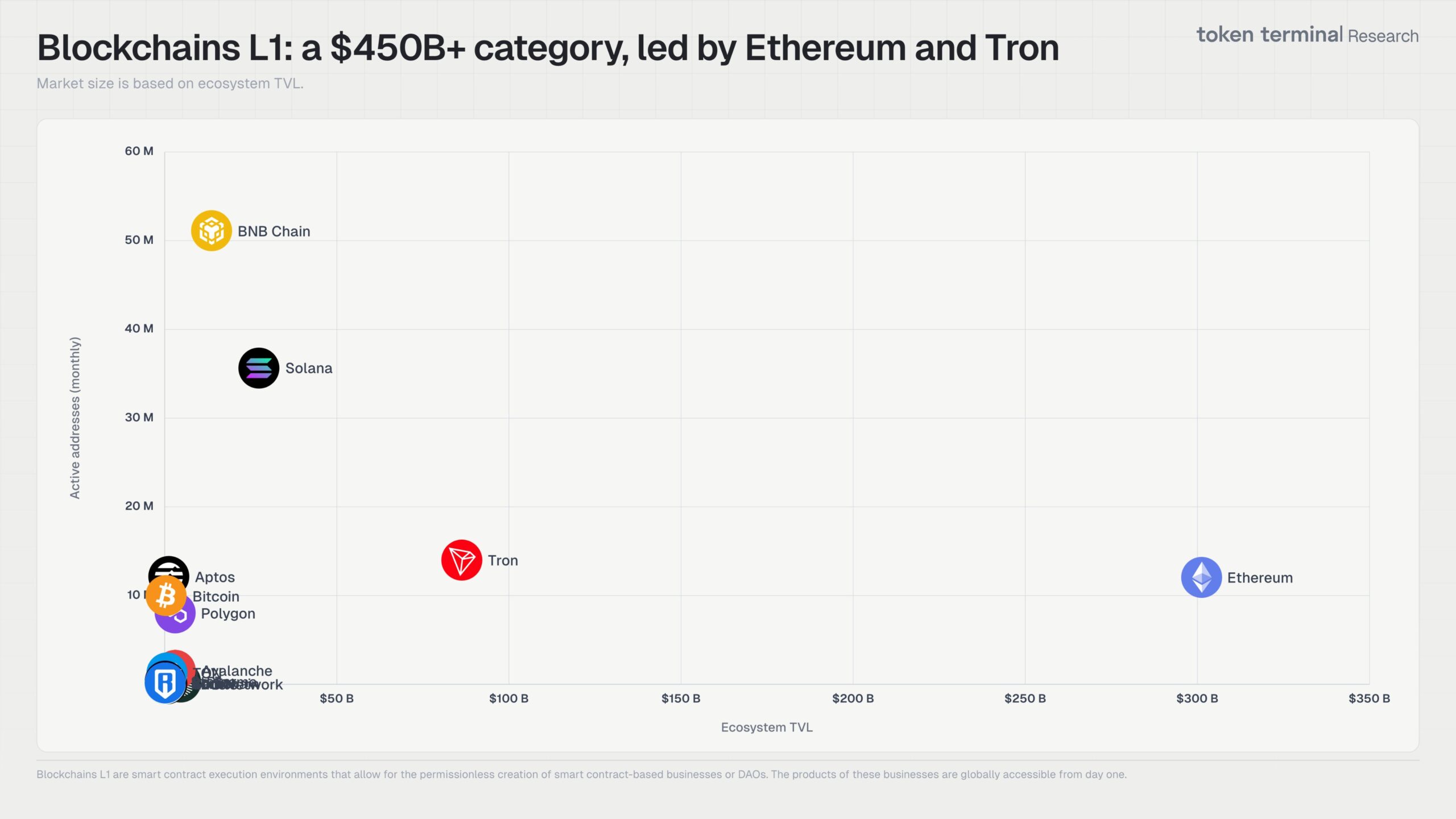
Layer 1 blockchains still anchor the crypto economy today, with the aforementioned L1s commanding a disproportionate share of ecosystem value. According to data from Token Terminal, the gap between these leaders and the rest of the race is stark.
Source: Token Terminal

Elsewhere, chains like BNB Chain [BNB] and Solana [SOL] are competing on the user activity front, even as their relative TVL lags.

The market is still concentrated at the top, but a lot more competitive than we think.

Is lending the new yield source?

Building on that foundation, lending protocols like Aave and Morpho are now at the center of a fast-growing, on-chain credit system worth about $30 billion!

With stablecoins becoming a popular medium of exchange on-chain, they’re also a default asset for borrowing and lending. On the other hand, a new class of tokenized assets (from funds to commodities and even equities) are expanding the pool of usable collateral.
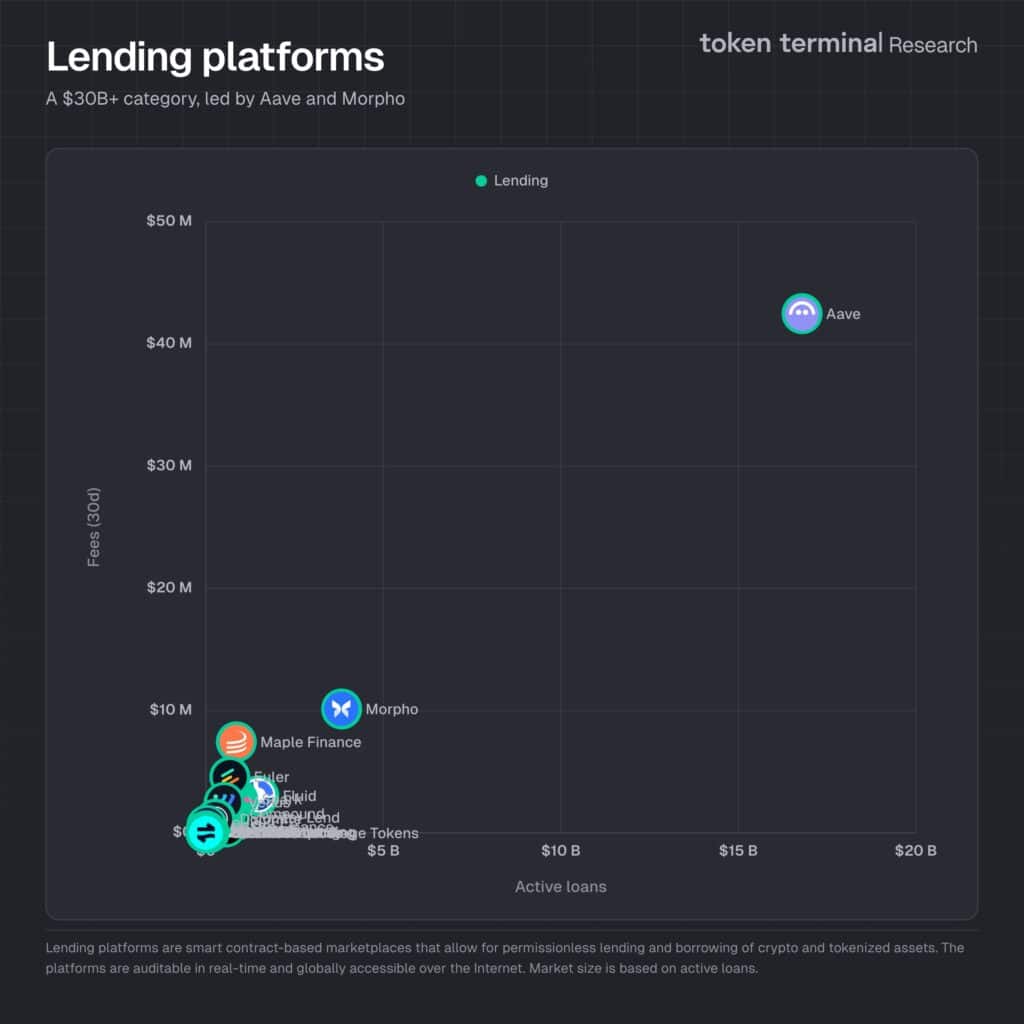
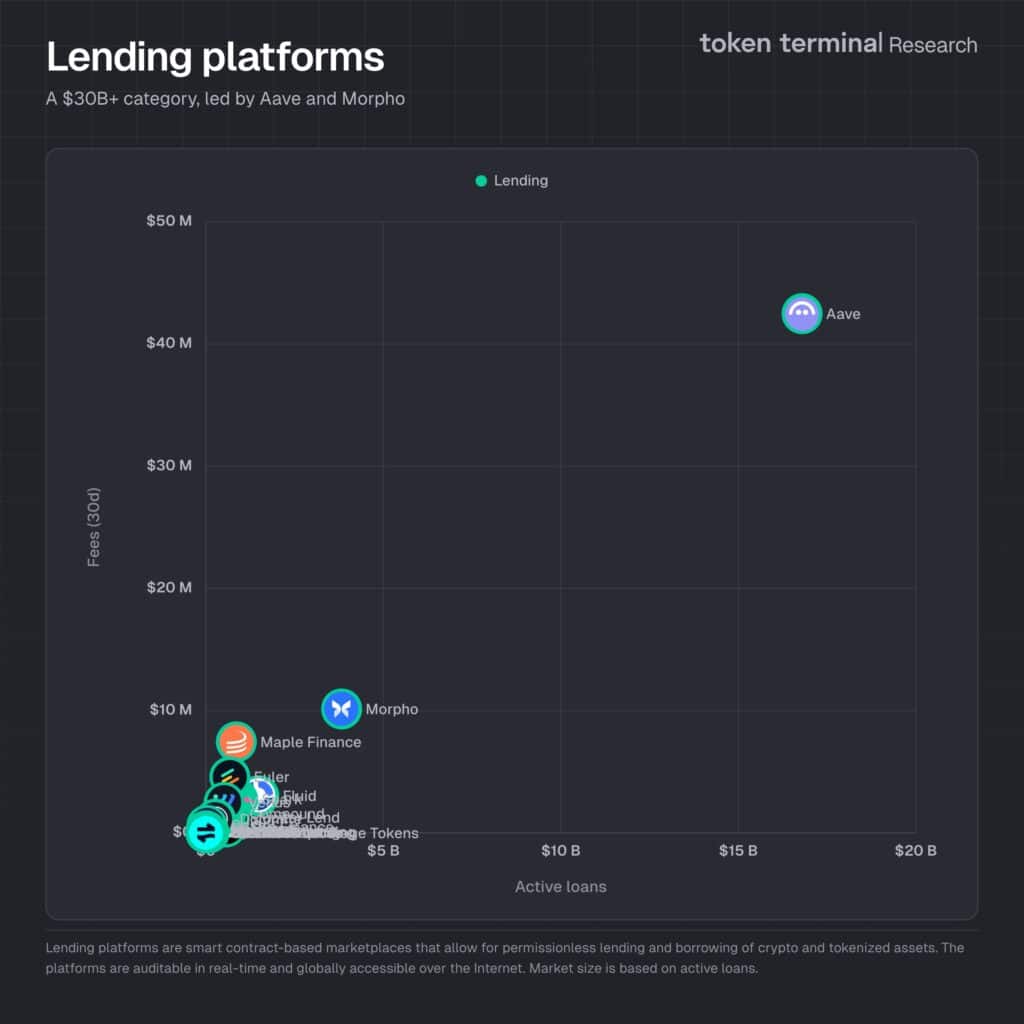
Source: Token Terminal

Together, they improve liquidity and make markets more efficient.

This is where lending begins to resemble what crypto twitter is now calling a “yield layer.” Instead of relying on buzz alone, users see returns through interest, leverage, and better capital.

In doing so, lending platforms turn holdings into productive assets, and the effects are far-reaching.

Case in point? Rhea Finance integrating with TRON.

Trending Cryptos

Related Questions

QWhat is the current estimated value of the on-chain credit system driven by lending protocols like Aave and Morpho?

AThe on-chain credit system driven by lending protocols like Aave and Morpho is worth about $30 billion.

QWhich Layer 1 blockchains are mentioned as commanding a disproportionate share of ecosystem value according to Token Terminal data?

AEthereum [ETH] and Tron [TRX] are mentioned as commanding a disproportionate share of ecosystem value.

QWhat are stablecoins becoming a popular medium for on-chain, according to the article?

AStablecoins are becoming a popular medium of exchange on-chain, and they are also a default asset for borrowing and lending.

QHow are lending platforms transforming user holdings, as described in the article?

ALending platforms are turning user holdings into productive assets by providing returns through interest, leverage, and better capital efficiency.

QWhat new class of assets is expanding the pool of usable collateral in the lending market?

AA new class of tokenized assets, from funds to commodities and even equities, is expanding the pool of usable collateral.

Related Reads

L2 'Recalibration': When L1 Becomes Its Own Rollup, What Is Ethereum's Endgame?

The article discusses the evolving relationship between Ethereum's Layer 1 (L1) and Layer 2 (L2) solutions, moving beyond the initial "L2 for scaling" model. As Ethereum L1 itself scales (increasing Gas Limit, statelessness, zkEVM), the unique value proposition of L2s shifts from merely providing cheap execution to offering differentiated features like application-specific optimization, privacy, and flexible governance. The piece explores three key themes: 1. **L2's New Role:** L2s are transitioning from a pure scaling technology to a spectrum of execution environments with varying degrees of security inheritance from Ethereum L1. 2. **Interoperability as State Trust:** Solving L2 fragmentation is less about cross-chain bridges and more about enabling faster, trust-minimized state verification between environments. This involves initiatives like faster L1 finality, intent-based architectures (Open Intents Framework), and native account abstraction. 3. **Blurring Layers:** With the potential integration of zk-proofs into L1 validation (making L1 akin to its own "Rollup") and the concept of "Native Rollups," the rigid boundary between L1 and L2 may fade. The future could be a unified system with multiple execution domains (for DeFi, gaming, privacy, etc.) sharing a common security, settlement, and state framework. In conclusion, Ethereum's goal is not to abandon L2s or re-centralize everything on L1, but to re-integrate the fragmented user experience—liquidity, accounts, applications—while preserving the scaling benefits of a multi-environment ecosystem. The endgame is a cohesive "one chain" feeling for users, powered by diverse but securely interconnected execution layers.

marsbit38m ago

L2 'Recalibration': When L1 Becomes Its Own Rollup, What Is Ethereum's Endgame?

marsbit38m ago

Trading

Spot

Hot Articles

How to Buy TRX

Welcome to HTX.com! We've made purchasing TRON (TRX) simple and convenient. Follow our step-by-step guide to embark on your crypto journey.Step 1: Create Your HTX AccountUse your email or phone number to sign up for a free account on HTX. Experience a hassle-free registration journey and unlock all features.Get My AccountStep 2: Go to Buy Crypto and Choose Your Payment MethodCredit/Debit Card: Use your Visa or Mastercard to buy TRON (TRX) instantly.Balance: Use funds from your HTX account balance to trade seamlessly.Third Parties: We've added popular payment methods such as Google Pay and Apple Pay to enhance convenience.P2P: Trade directly with other users on HTX.Over-the-Counter (OTC): We offer tailor-made services and competitive exchange rates for traders.Step 3: Store Your TRON (TRX)After purchasing your TRON (TRX), store it in your HTX account. Alternatively, you can send it elsewhere via blockchain transfer or use it to trade other cryptocurrencies.Step 4: Trade TRON (TRX)Easily trade TRON (TRX) on HTX's spot market. Simply access your account, select your trading pair, execute your trades, and monitor in real-time. We offer a user-friendly experience for both beginners and seasoned traders.

26.7k Total ViewsPublished 2024.03.29Updated 2026.06.02

How to Buy TRX

Discussions

Welcome to the HTX Community. Here, you can stay informed about the latest platform developments and gain access to professional market insights. Users' opinions on the price of TRX (TRX) are presented below.

活动图片