Crypto ATM Giant Bitcoin Depot Warns Of Possible Collapse

bitcoinistPublished on 2026-05-16Last updated on 2026-05-16

Abstract

Crypto ATM operator Bitcoin Depot has warned of potential collapse in an SEC filing, citing "substantial doubt" about its ability to continue. The company faces a severe crisis driven by a sharp $80 million revenue drop in Q1 2026, a $9.5 million net loss, and over $20 million in legal judgments. Intensifying regulatory pressure is a key factor, including a proposed nationwide ban on crypto ATMs in Canada and multiple lawsuits from U.S. states like Massachusetts and Iowa. These actions, alongside enhanced compliance controls, have drastically reduced customer transaction volume. The company's stock (BTM) plummeted over 40% in five days. In a leadership change, former MoneyGram CEO Alex Holmes replaced Scott Buchanan in March, bringing compliance expertise to navigate the challenging legal and regulatory landscape. The future of the business remains highly uncertain.

Bitcoin Depot had roughly 220 machines running in Canada when the Canadian government released its Spring Economic Update in April, proposing a nationwide ban on crypto ATMs to combat scammers and money launderers. The timing could not have been worse for the company.

A Company Running Out Of Room

The Atlanta-based crypto kiosk operator disclosed in a Form 10-Q filing with the US Securities and Exchange Commission on Tuesday that management has “substantial doubt” about whether the business can keep running.

Chief financial officer David Gray cited more than $20 million in legal judgments accrued in the fourth quarter of 2025, alongside a wave of lawsuits from state regulators and a sharp drop in transaction volume.

Revenue fell by $80 million in the first quarter of 2026 compared to the same period a year earlier. The company also posted a net loss of $9.5 million over those three months.

Officials pointed to tightening regulations and enhanced compliance controls as the main reasons customers are using the machines less.
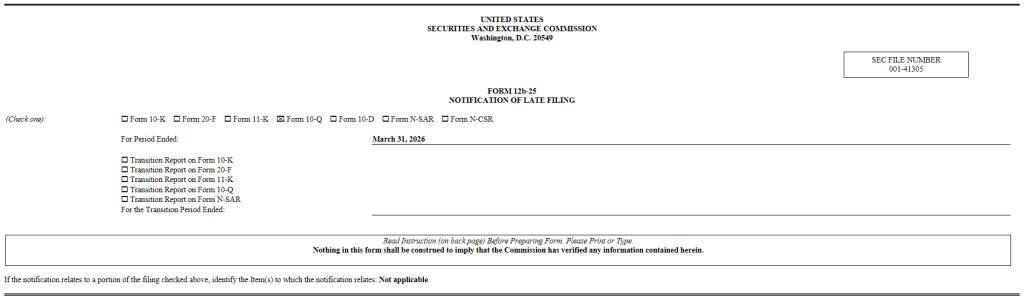
Source: SEC

States Are Closing The Door

The legal pressure started before the Canadian proposal. In January, Bitcoin Depot paid close to $2 million to Maine’s Consumer Credit Protection Bureau to settle a complaint.

Massachusetts, Iowa, and other states have since filed their own actions against the company. Individual cities and towns have also moved to restrict or ban crypto kiosks, with local officials citing concerns about residents falling victim to scams.

BTCUSD currently trading at $78,103. Chart: TradingView

Shares of Bitcoin Depot, which trade on the Nasdaq under the ticker BTM, dropped more than 40% over five trading days, sliding from $5 to $2.90.

In March, the company replaced CEO Scott Buchanan, who had held the position for just three months, with Alex Holmes.

Holmes ran MoneyGram from 2016 to 2024 and is known for his background in regulatory compliance — a skill set Bitcoin Depot clearly needs right now.

Leadership Shift, Uncertain Road

The company’s SEC filing described the revenue decline as being driven by a combination of regulatory impacts and enhanced compliance controls.

Reports indicate Bitcoin Depot is trying to manage existing legal exposure while adapting to a market that looks very different than it did a year ago.

Whether the new leadership can stabilize the business remains to be seen. The machines are still running. The lawsuits are not stopping. And the regulatory walls are getting closer on both sides of the border.

Featured image from ICIJ, chart from TradingView

Trending Cryptos

Related Questions

QWhat major event did the Canadian government announce in April that negatively impacted Bitcoin Depot?

AIn April, the Canadian government released its Spring Economic Update, proposing a nationwide ban on crypto ATMs to combat scammers and money launderers.

QAccording to its SEC filing, what are the main reasons cited for the decline in Bitcoin Depot's revenue?

AThe main reasons cited for the revenue decline are tightening regulations and enhanced compliance controls, which have led to customers using the machines less.

QWho is the new CEO of Bitcoin Depot as of March, and what is his relevant background?

AThe new CEO as of March is Alex Holmes, who previously ran MoneyGram from 2016 to 2024 and is known for his background in regulatory compliance.

QWhat significant financial challenges did Bitcoin Depot's CFO cite for the fourth quarter of 2025?

ACFO David Gray cited more than $20 million in legal judgments accrued in the fourth quarter of 2025, alongside a wave of lawsuits from state regulators and a sharp drop in transaction volume.

QHow did Bitcoin Depot's stock price (BTM) perform over five trading days following the news?

AShares of Bitcoin Depot (ticker BTM) dropped more than 40% over five trading days, sliding from $5 to $2.90.

Related Reads

Annual Salary of Millions Competing for Electricians, Meta Rushes to Open Its Own Technical School

The AI boom is facing an unexpected bottleneck: a severe shortage of skilled construction workers and electricians. As tech giants like Meta, OpenAI, and Alphabet race to build massive data centers—such as OpenAI's $16 billion "Stargate" project—they are hitting a critical labor wall. The U.S. needs an estimated 130,000 more electricians, 240,000 construction workers, and 150,000 supervisors by 2030 for AI infrastructure alone, but tens of thousands of electrician jobs go unfilled each year. While AI companies offer high premiums, with electricians earning up to $280,000 annually, worker scarcity still causes massive losses—delays on a single project can cost $14.2 million per month. The complexity of building AI data centers, which require immense power (equivalent to powering hundreds of thousands of homes), sophisticated electrical systems, and advanced liquid cooling solutions, demands highly skilled technicians who are in short supply. To combat this, companies are investing heavily in training. Meta has committed $115 million to a free training school offering tuition, housing, and stipends, targeting 5,000 new workers. OpenAI is partnering with unions to secure skilled labor. These efforts are paying off, with a significant rise in Gen Z interest in trade schools over college. However, the power demands are staggering. AI data centers are driving a rapid surge in electricity consumption, projected to account for up to 12% of U.S. power use by 2028 and raising costs for consumers. Furthermore, the construction boom is project-based, leading to a potential future glut of trained workers once building peaks, which could depress wages industry-wide. The race for AI supremacy now depends as much on skilled hands as on advanced chips.

marsbit1h ago

Annual Salary of Millions Competing for Electricians, Meta Rushes to Open Its Own Technical School

marsbit1h ago

OpenAI No Longer Sells Its Most Expensive Model for Profit

OpenAI is shifting its business strategy away from promoting its most expensive, flagship models for every task. Recent price cuts—80% for GPT-5.6 Luna and 20% for Terra—signal a deeper change: the company now actively advises users that many tasks don't require the most powerful model. Instead, OpenAI recommends a tiered approach: use the high-end GPT-5.6 Sol for complex planning and analysis, then delegate execution to cheaper models like Luna. This mirrors moves by Anthropic, which recently launched Claude Opus 5 at half the price of its top model, Fable 5. Both companies are de-emphasizing flagship models as primary revenue drivers, using them instead for brand prestige and technological showcases. The industry is entering a "mass-market" phase, similar to automotive, where high-volume, cost-effective models handle daily operations and drive scale. OpenAI's price reductions are partly enabled by AI models themselves optimizing underlying code and infrastructure, creating a self-reinforcing cycle of efficiency gains and cost reduction. Competition is shifting from "who is smartest" to "who offers the best value." The goal is no longer selling individual models but fostering widespread API adoption and ecosystem lock-in. By making AI calls cheap and ubiquitous, companies like OpenAI aim to become the indispensable, utility-like infrastructure powering automated workflows—the "water and electricity" of software, quietly embedded everywhere.

marsbit1h ago

OpenAI No Longer Sells Its Most Expensive Model for Profit

marsbit1h ago

Trading

Spot

Hot Articles

How to Buy ATM

Welcome to HTX.com! We've made purchasing Atletico De Madrid Fan Token (ATM) simple and convenient. Follow our step-by-step guide to embark on your crypto journey.Step 1: Create Your HTX AccountUse your email or phone number to sign up for a free account on HTX. Experience a hassle-free registration journey and unlock all features.Get My AccountStep 2: Go to Buy Crypto and Choose Your Payment MethodCredit/Debit Card: Use your Visa or Mastercard to buy Atletico De Madrid Fan Token (ATM) instantly.Balance: Use funds from your HTX account balance to trade seamlessly.Third Parties: We've added popular payment methods such as Google Pay and Apple Pay to enhance convenience.P2P: Trade directly with other users on HTX.Over-the-Counter (OTC): We offer tailor-made services and competitive exchange rates for traders.Step 3: Store Your Atletico De Madrid Fan Token (ATM)After purchasing your Atletico De Madrid Fan Token (ATM), store it in your HTX account. Alternatively, you can send it elsewhere via blockchain transfer or use it to trade other cryptocurrencies.Step 4: Trade Atletico De Madrid Fan Token (ATM)Easily trade Atletico De Madrid Fan Token (ATM) on HTX's spot market. Simply access your account, select your trading pair, execute your trades, and monitor in real-time. We offer a user-friendly experience for both beginners and seasoned traders.

3.6k Total ViewsPublished 2024.03.29Updated 2025.03.21

How to Buy ATM

Discussions

Welcome to the HTX Community. Here, you can stay informed about the latest platform developments and gain access to professional market insights. Users' opinions on the price of ATM (ATM) are presented below.

活动图片













