Bitcoin Whales Halt Sell-off, Accumulate Over $2.7 Billion in 60 Days

华尔街日报Published on 2026-08-18Last updated on 2026-08-18

Abstract

Bitcoin whales have halted their selling spree and are actively accumulating, signaling a potential market bottom after months of downturn. According to on-chain data from CryptoQuant, large holders have net purchased approximately 43,000 BTC (worth around $2.75 billion) over the past 60 days, beginning when prices neared $60,000. Data from Glassnode confirms this trend, showing accelerated buying among both mid-sized holders (100-1,000 BTC) and ultra-large investors (over 10,000 BTC). This broad-based accumulation across holder tiers, which started in late July, is notable as it occurs against a backdrop of weak market sentiment, persistent outflows from crypto ETFs, and a significant price decline from last October's peak. While this whale activity offers a positive signal for investors seeking a market bottom, analysts caution that macro headwinds remain. Key institutional buyers like MicroStrategy have turned into net sellers, and overall trading volume and market participation are low. As Nexo analyst Dessislava Ianeva notes, while the accumulation is structurally significant, a broad market recovery ultimately depends on improved macroeconomic conditions.

Bitcoin whales have returned to the buyer's side, providing a potential bottom signal for the cryptocurrency market that has been in a downturn for several months.

According to on-chain data firm CryptoQuant, large holders have accumulated a net total of approximately 43,000 Bitcoins over the past 60 days, equivalent to about $2.75 billion at current prices. This trend began when Bitcoin's price fell near $60,000, marking a shift from months of continuous selling to renewed accumulation by this group.

Meanwhile, data from Glassnode shows that mid-tier holders (with 100 to 1,000 Bitcoins) and ultra-large investors (holding over 10,000 Bitcoins) have also recently accelerated their buying.

Bitcoin's current price has fallen about 50% from its peak in October last year, now trading around $64,000. Cryptocurrency-themed ETFs continue to see fund outflows, and even Strategy, a former stable buyer holding large amounts of Bitcoin, has recently turned into a net seller.

Against the backdrop of massive retail investor withdrawal and low market sentiment, the re-entry of large, institution-level capital is seen by some investors as a positive signal that the market may be entering a bottoming phase.
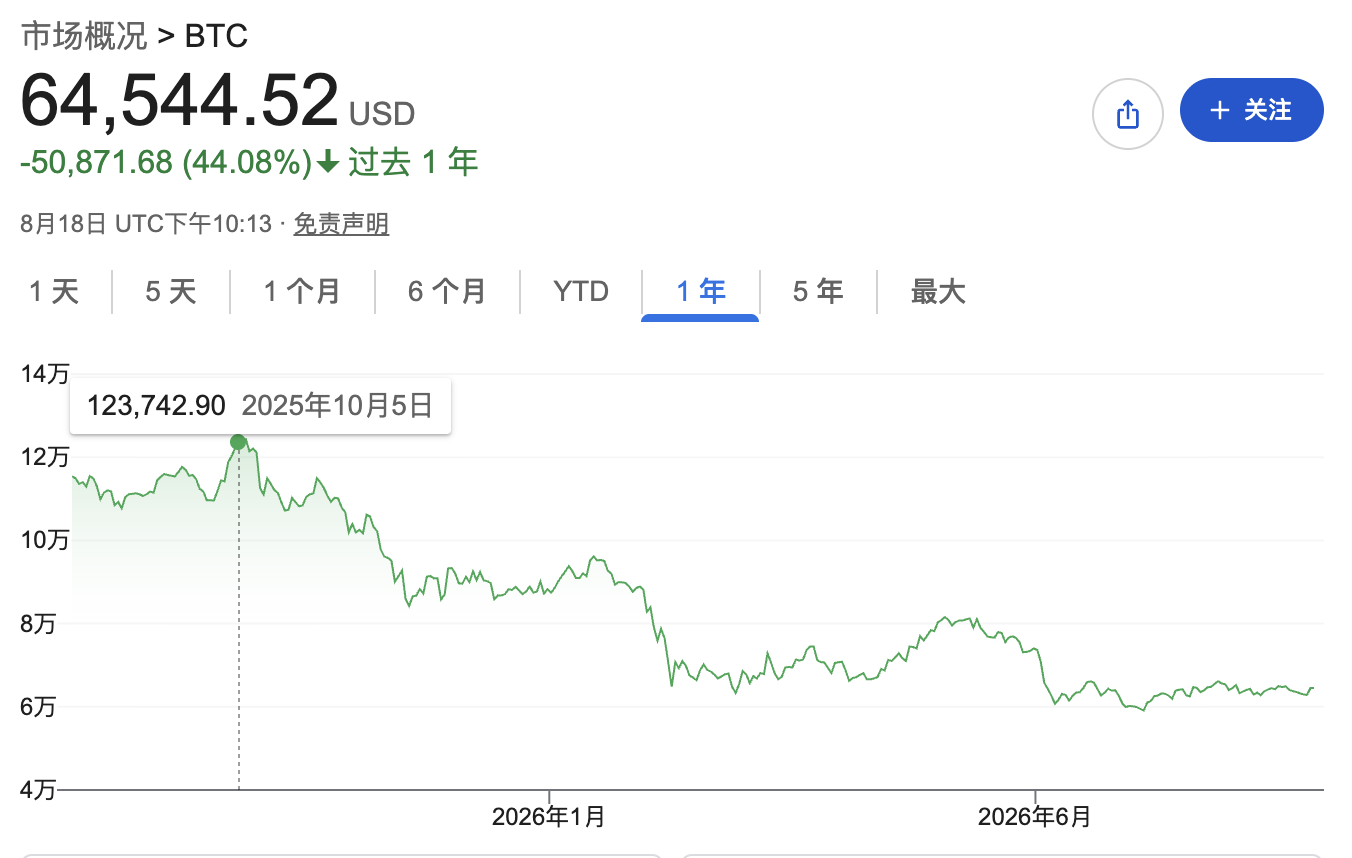
This round of whale buying is not an isolated phenomenon but shows a universal characteristic across holder tiers.

CryptoQuant's data (excluding exchange and mining pool accounts) shows that large holders began re-accumulating after Bitcoin's price stabilized around $60,000, with their balances continuously increasing. At the same time, the balances of small and medium-sized holder groups have also risen.

Glassnode's data provides a more detailed perspective. Mid-tier investors holding 100 to 1,000 Bitcoins have been steadily accumulating recently, while the group holding over 10,000 Bitcoins is also in active buying mode.

Glassnode analyst Sean Rose stated that the data "reflects the directional trend of accumulation behavior, not simply net balance changes, and since late July, this trend has clearly pointed to a resumption of buying across all holder tiers."

Bitcoin's inherent properties give this signal special reference value—the whale group has historically been seen as long-term believers in Bitcoin, with past behavior patterns focused on long-term holding. The timing of the buying is even more noteworthy: this is not chasing a rally, but proactive entry during a period of sustained market weakness and price pressure.

Despite the encouraging accumulation signal, the macro headwinds facing Bitcoin cannot be ignored.

Bitcoin's current decline of about 50% from its October peak is relatively moderate compared to other tokens, with altcoins suffering more severe losses. Outflows from cryptocurrency-themed ETFs continue, and retail investors have largely exited the market during the previous decline.

More noteworthy is the shift in Strategy's stance. The company was previously one of the most representative institutional buyers in the Bitcoin market for a long time but has now shifted from buying to selling, losing that traditional support. At the same time, market trading activity remains sluggish, with August spot trading volume dropping to its lowest level for the period since 2021.

Nexo research analyst Dessislava Ianeva pointed out that the current market exhibits characteristics of insufficient participation and lack of confidence, with overall trading sentiment weak.

Opinions are divided on whether whale accumulation can serve as a leading indicator for a new bull market.

Optimists believe that deep-pocketed investors actively building positions during a weak market phase holds strong contrarian indicator significance, historically often appearing in the early stages of trend reversals. The current synchronized accumulation behavior across holder tiers provides some basis for investors looking for market bottom signals.

However, Dessislava Ianeva remains cautious. She stated: "Whale buying in a low-volatility environment can confirm the existence of structural accumulation, but it does not guarantee that the market will immediately embark on a comprehensive, broad-based bull run. A true market-wide recovery first requires support from the macroeconomic environment."

This statement highlights the core contradiction of the current market: on-chain data shows funds are quietly flowing in, but macro-level uncertainties have not dissipated. Whether the market can transform local accumulation signals into a trend reversal remains to be seen.


Trending Cryptos

Related Questions

QAccording to the article, what key change in behavior did Bitcoin whales exhibit over the past 60 days, and what is the estimated value of this activity?

ABitcoin whales have ended a period of sustained selling and returned to being net buyers. Over the past 60 days, they have accumulated a net total of approximately 43,000 Bitcoin, which is valued at around $2.75 billion at current prices.

QWhich two specific investor groups, as defined by Glassnode, are mentioned to have accelerated their buying activity recently?

AAccording to Glassnode data, the two groups showing accelerated buying are medium holders (those holding 100 to 1,000 Bitcoin) and mega holders (those holding over 10,000 Bitcoin).

QWhat major institutional buyer, once a stable source of demand, has now switched to being a net seller according to the article?

AStrategy (formerly known as MicroStrategy), a company that was historically a major institutional buyer and long-term holder of Bitcoin, has now shifted to being a net seller.

QWhat does Nexo research analyst Dessislava Ianeva identify as a key feature of the current market environment?

ADessislava Ianeva points out that the current market is characterized by a lack of participation and confidence, resulting in overall weak and lethargic trading activity.

QWhat important caveat does Dessislava Ianeva provide regarding the significance of whale accumulation in the current low-volatility environment?

AShe cautions that while whale buying in a low-volatility environment confirms the existence of structural accumulation, it does not guarantee the immediate start of a broad-based bull market. A true market-wide recovery, she states, first requires support from the macroeconomic environment.

Related Reads

RWA Tokenization Enters the Next Phase: What is the Truly Time-Consuming Advantage to Build?

The article argues that as tokenization frameworks for Real-World Assets (RWA) mature, the ability to issue assets is becoming less of a competitive advantage. The focus is shifting to what happens *after* issuance: which RWA operations can build enduring trust, maintain stable operations, and remain integrated into the financial ecosystem over the long term. The piece introduces the concept of a **Reserve Layer**—infrastructure that connects tokenized assets to the necessary verification, liquidity, and operational systems for on-chain finance. For an asset to serve as a reliable reserve (e.g., short-term U.S. Treasuries, gold), it needs predictable value, standardized features, deep markets, and observable pricing. However, the true, hard-to-replicate advantage lies not just in the underlying asset but in the **operational track record** built over time. This includes consistent reserve management, independent audits, successful redemptions, maintained liquidity, and protocol integrations. Each successful operation adds evidence, creating a reinforcing cycle: more evidence builds stronger institutional confidence, leading to wider distribution, deeper liquidity, and more use cases as collateral. The article presents a framework combining two dimensions: an asset's suitability as a reserve and the issuer's operational capability. The most sustainable model combines **high-quality reserve assets with strong, long-term operational discipline**. A critical blind spot is an asset with high reserve suitability (like gold) issued by an entity with a limited operational track record; the quality of the infrastructure is separate from the quality of the asset itself. In conclusion, the next phase of RWA will be defined by participants who can pair appropriate reserve assets with the operational rigor to support them through market cycles, thereby transforming tokenized RWAs into durable financial infrastructure.

marsbit32m ago

RWA Tokenization Enters the Next Phase: What is the Truly Time-Consuming Advantage to Build?

marsbit32m ago

Trading

Spot

Hot Articles

What is $BITCOIN

DIGITAL GOLD ($BITCOIN): A Comprehensive Analysis Introduction to DIGITAL GOLD ($BITCOIN) DIGITAL GOLD ($BITCOIN) is a blockchain-based project operating on the Solana network, which aims to combine the characteristics of traditional precious metals with the innovation of decentralized technologies. While it shares a name with Bitcoin, often referred to as “digital gold” due to its perception as a store of value, DIGITAL GOLD is a separate token designed to create a unique ecosystem within the Web3 landscape. Its goal is to position itself as a viable alternative digital asset, although specifics regarding its applications and functionalities are still developing. What is DIGITAL GOLD ($BITCOIN)? DIGITAL GOLD ($BITCOIN) is a cryptocurrency token explicitly designed for use on the Solana blockchain. In contrast to Bitcoin, which provides a widely recognized value storage role, this token appears to focus on broader applications and characteristics. Notable aspects include: Blockchain Infrastructure: The token is built on the Solana blockchain, known for its capacity to handle high-speed and low-cost transactions. Supply Dynamics: DIGITAL GOLD has a maximum supply capped at 100 quadrillion tokens (100P $BITCOIN), although details regarding its circulating supply are currently undisclosed. Utility: While precise functionalities are not explicitly outlined, there are indications that the token could be utilized for various applications, potentially involving decentralized applications (dApps) or asset tokenization strategies. Who is the Creator of DIGITAL GOLD ($BITCOIN)? At present, the identity of the creators and development team behind DIGITAL GOLD ($BITCOIN) remains unknown. This situation is typical among many innovative projects within the blockchain space, particularly those aligning with decentralized finance and meme coin phenomena. While such anonymity may foster a community-driven culture, it intensifies concerns about governance and accountability. Who are the Investors of DIGITAL GOLD ($BITCOIN)? The available information indicates that DIGITAL GOLD ($BITCOIN) does not have any known institutional backers or prominent venture capital investments. The project seems to operate on a peer-to-peer model focused on community support and adoption rather than traditional funding routes. Its activity and liquidity are primarily situated on decentralized exchanges (DEXs), such as PumpSwap, rather than established centralized trading platforms, further highlighting its grassroots approach. How DIGITAL GOLD ($BITCOIN) Works The operational mechanics of DIGITAL GOLD ($BITCOIN) can be elaborated on based on its blockchain design and network attributes: Consensus Mechanism: By leveraging Solana’s unique proof-of-history (PoH) combined with a proof-of-stake (PoS) model, the project ensures efficient transaction validation contributing to the network's high performance. Tokenomics: While specific deflationary mechanisms have not been extensively detailed, the vast maximum token supply implies that it may cater to microtransactions or niche use cases that are still to be defined. Interoperability: There exists the potential for integration with Solana’s broader ecosystem, including various decentralized finance (DeFi) platforms. However, the details regarding specific integrations remain unspecified. Timeline of Key Events Here is a timeline that highlights significant milestones concerning DIGITAL GOLD ($BITCOIN): 2023: The initial deployment of the token occurs on the Solana blockchain, marked by its contract address. 2024: DIGITAL GOLD gains visibility as it becomes available for trading on decentralized exchanges like PumpSwap, allowing users to trade it against SOL. 2025: The project witnesses sporadic trading activity and potential interest in community-led engagements, although no noteworthy partnerships or technical advancements have been documented as of yet. Critical Analysis Strengths Scalability: The underlying Solana infrastructure supports high transaction volumes, which could enhance the utility of $BITCOIN in various transaction scenarios. Accessibility: The potential low trading price per token could attract retail investors, facilitating wider participation due to fractional ownership opportunities. Risks Lack of Transparency: The absence of publicly known backers, developers, or an audit process may yield skepticism regarding the project's sustainability and trustworthiness. Market Volatility: The trading activity is heavily reliant on speculative behavior, which can result in significant price volatility and uncertainty for investors. Conclusion DIGITAL GOLD ($BITCOIN) emerges as an intriguing yet ambiguous project within the rapidly evolving Solana ecosystem. While it attempts to leverage the “digital gold” narrative, its departure from Bitcoin's established role as a store of value underscores the need for a clearer differentiation of its intended utility and governance structure. Future acceptance and adoption will likely depend on addressing the current opacity and defining its operational and economic strategies more explicitly. Note: This report encompasses synthesised information available as of October 2023, and developments may have transpired beyond the research period.

2.0k Total ViewsPublished 2025.05.13Updated 2025.05.13

What is $BITCOIN

Discussions

Welcome to the HTX Community. Here, you can stay informed about the latest platform developments and gain access to professional market insights. Users' opinions on the price of BTC (BTC) are presented below.

活动图片