Bitcoin trades around $64,000 per coin on Wednesday

cryptonews.ruPublished on 2026-08-06Last updated on 2026-08-06

Abstract

Bitcoin is trading around $64,000 per coin on Wednesday, maintaining its dominant position in the crypto market with an estimated 60-70% share. The article details the basics of Bitcoin, noting its 2009 creation by Satoshi Nakamoto and its capped supply of 21 million coins. It also provides an overview of the broader cryptocurrency market, reporting a total market capitalization exceeding $3.2 trillion and mentioning price movements for Ether and Ripple. Major assets by trading volume and market cap are listed, including Bitcoin, Ethereum, USDT, Solana, BNB Chain, and Dogecoin. Key factors driving the high volatility and rapid price changes in crypto are explained, such as the balance of supply and demand, limited issuance, liquidity, news, regulatory developments, and mining costs. The decentralized blockchain technology underpinning Bitcoin is briefly described, along with the role of miners in confirming transactions and securing the network. The summary concludes by attributing Bitcoin's significant price swings to its decentralized nature, lack of a single regulator, market sentiment, and speculative demand, noting that even major assets remain sensitive to news.

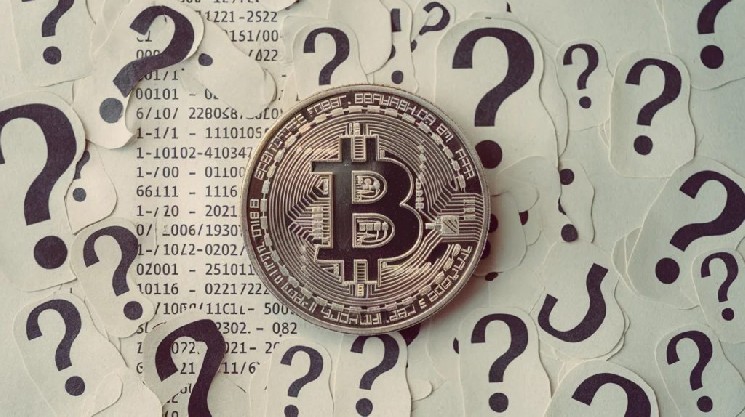
Bitcoin is holding around $64,000 per digital asset on Wednesday. It still maintains a dominant position in the crypto market, with its share estimated at approximately 60-70%.

Basic facts about Bitcoin

The history of Bitcoin began in 2009, and its creator is believed to be Satoshi Nakamoto. The number of coins in circulation increases through mining, and the maximum supply is limited to 21 million Bitcoins.

Bitcoin can be purchased on a cryptocurrency exchange: typically, a user registers, deposits funds, selects a trading pair, and places a buy order. Coins can be stored in hot wallets connected to the internet or in cold wallets, where keys are kept offline.

The price forecast for Bitcoin in 2030 depends on demand, liquidity, regulation, technological updates, mining costs, and market sentiment.

Key prices in the cryptocurrency market

The total market capitalization of cryptocurrencies exceeds $3.2 trillion US dollars. This is one of the main benchmarks for the digital asset market, along with liquidity and daily turnover.

Ether fell to around $1,900 on Wednesday. Ripple corrected to $1.06.

Largest assets by turnover and market capitalization

Among the market leaders by trading volume and market capitalization remain the most well-known crypto assets:

  • Bitcoin;
  • Ethereum;
  • USDT;
  • Solana, BNB Chain, and Dogecoin.

Why cryptocurrency prices change so quickly

The price of cryptocurrencies is formed on exchanges through the balance of supply and demand: buyers and sellers place orders, and the market finds the current transaction level. Prices are most often influenced by:

  • limited issuance;
  • liquidity;
  • technological updates;
  • news;
  • regulation;
  • bans;
  • mining costs.

Bitcoin operates as a payment system based on blockchain and a peer-to-peer network. Simply put, blockchain can be imagined as a shared chain of records: network participants see the history of transactions, and new transactions are added in blocks after verification. Miners confirm transactions, collect them into blocks, and maintain the network; in return, new coins are created during the mining process. This model reduces dependence on a centralized intermediary and relies on open-source software, but it has limitations: fees, network load, and sensitivity to mining costs can change.

The high volatility of Bitcoin is related to the decentralized nature of the market, the absence of a single regulator, participant sentiment, and speculative demand.

Therefore, even large assets remain sensitive to the news background.

The daily trading turnover of the cryptocurrency market fluctuates around $300 billion.

Trending Cryptos

Related Questions

QAround what price was Bitcoin trading on Wednesday according to the article?

ABitcoin was trading around $64,000 per coin on Wednesday.

QWhat is the estimated market dominance of Bitcoin as mentioned in the text?

ABitcoin's market dominance is estimated at approximately 60-70%.

QName two other major cryptocurrencies and their mentioned price levels from the article.

AEther (Ethereum) fell to the level of $1900, and Ripple corrected to $1.06.

QWhat are some of the factors listed that influence cryptocurrency prices?

AFactors influencing prices include limited emission, liquidity, technological updates, news, regulation, bans, and the cost of mining.

QWhat is the maximum supply limit for Bitcoin?

AThe maximum supply of Bitcoin is capped at 21 million coins.

Related Reads

Home Furnishing Listed Companies Are Trying to Turn Around with AI and Semiconductors

Chinese home furnishing listed companies are increasingly turning to AI and semiconductor cross-border ventures to revive their fortunes amid declining core businesses. A prominent example is PVC flooring giant **Elegant Home Furnishing**, whose stock price skyrocketed with 10 consecutive trading limits after announcing a plan to acquire a majority stake in **Ou Kang Nuo**, a semiconductor storage testing equipment and services company. Despite Elegant Home's own financial struggles—including recent losses and tight cash flow—the acquisition, funded through asset sales and loans, has dramatically boosted its market value. The deal involves a cross-shareholding structure with Ou Kang Nuo's controlling shareholder. This trend is widespread. Over the past year, numerous home furnishing firms with stagnant main operations have seen their stock prices surge after announcing moves into hot sectors like AI, semiconductors, or computing power. Key cases include: * **Markor Home Furnishings** ("high-end home furnishing first share"), after years of heavy losses, acquired an AI server high-speed copper cable company and later introduced AI computing power investors. * **Zhenai Meijia** ("blanket king") became the first A-listed manufacturer controlled by an AI large model company following a takeover. * **Fasilon** (integrated ceiling) saw its stock soar after establishing an AI subsidiary. * **Jinlong Decoration** experienced multiple trading limits after being linked to "commercial aerospace" and "AI computing," despite clarifying these segments contribute less than 1% of its business. Statistics show over 20 A-share companies announced semiconductor crossovers in 2025, with home furnishing and building materials firms being the most active. This shift is largely driven by pressures from the real estate downturn, shrinking overseas demand, and trade tariffs, pushing companies to seek growth through trendy concepts rather than core business improvement. However, the article warns that such speculative frenzies often end when the hype fades, leaving stock prices to eventually reflect the companies' weak fundamentals, as seen in Jinlong Decoration's subsequent sharp price correction. The repeated attempts to "ride the trend" highlight a desperate struggle for survival in a challenging traditional industry.

marsbit40m ago

Home Furnishing Listed Companies Are Trying to Turn Around with AI and Semiconductors

marsbit40m ago

"Sell America" Trade Resurfaces: Global Funds Reprice Washington Policy Risks, Dollar and Treasuries Bear the Brunt

"Sale of America" Trade Resurges as Global Funds Reprice Washington Policy Risks, Hitting Dollar and Treasuries First Recent policy signals from Washington are prompting global bond and foreign exchange investors to reignite the "Sale of America" debate. Uncertainty stems from Fed Chair Wash's shift towards less policy communication, Treasury Secretary Bessant's approval of joint intervention with Japan to support the Yen (the first such coordinated move in nearly 30 years), expanding fiscal deficits, and trade war fears. These factors are undermining confidence in U.S. assets. The 30-year Treasury yield recently broke above 5%, hitting a high not seen since 2007, while the Bloomberg Dollar Spot Index has fallen about 2% from its June peak. This dollar weakness is unusual given still-high U.S. interest rates. Investors cite policy uncertainty as a key driver, with one manager calling the Fed Chair and Treasury Secretary a "double whammy" creating a "Trump administration premium." While the S&P 500 continues hitting record highs and foreign holdings of U.S. Treasuries remain high, parts of the bond and FX markets are adjusting. A core concern is whether the Fed under Wash can effectively anchor inflation expectations; analysts warn that if the Fed lags the hiking cycle, long-end yields could face further upward pressure. The 30-year term premium has risen sharply. The U.S.-backed Yen intervention has also sparked debate on the dollar's structural outlook. While framed by Bessant as a "reallocation of reserves," market participants caution that if Japan—America's largest foreign creditor—must sell Treasuries to fund interventions, ripple effects could hit the bond market. Strategists predict moderate dollar depreciation ahead. Most experts are not predicting an end to dollar hegemony or the safe-haven status of Treasuries. However, a key underlying risk is highlighted: the pace of foreign buying of U.S. debt may not keep up with the speed of American borrowing, gradually eroding the structural advantages that have long supported "American exceptionalism."

marsbit41m ago

"Sell America" Trade Resurfaces: Global Funds Reprice Washington Policy Risks, Dollar and Treasuries Bear the Brunt

marsbit41m ago

Trading

Spot

Hot Articles

What is $BITCOIN

DIGITAL GOLD ($BITCOIN): A Comprehensive Analysis Introduction to DIGITAL GOLD ($BITCOIN) DIGITAL GOLD ($BITCOIN) is a blockchain-based project operating on the Solana network, which aims to combine the characteristics of traditional precious metals with the innovation of decentralized technologies. While it shares a name with Bitcoin, often referred to as “digital gold” due to its perception as a store of value, DIGITAL GOLD is a separate token designed to create a unique ecosystem within the Web3 landscape. Its goal is to position itself as a viable alternative digital asset, although specifics regarding its applications and functionalities are still developing. What is DIGITAL GOLD ($BITCOIN)? DIGITAL GOLD ($BITCOIN) is a cryptocurrency token explicitly designed for use on the Solana blockchain. In contrast to Bitcoin, which provides a widely recognized value storage role, this token appears to focus on broader applications and characteristics. Notable aspects include: Blockchain Infrastructure: The token is built on the Solana blockchain, known for its capacity to handle high-speed and low-cost transactions. Supply Dynamics: DIGITAL GOLD has a maximum supply capped at 100 quadrillion tokens (100P $BITCOIN), although details regarding its circulating supply are currently undisclosed. Utility: While precise functionalities are not explicitly outlined, there are indications that the token could be utilized for various applications, potentially involving decentralized applications (dApps) or asset tokenization strategies. Who is the Creator of DIGITAL GOLD ($BITCOIN)? At present, the identity of the creators and development team behind DIGITAL GOLD ($BITCOIN) remains unknown. This situation is typical among many innovative projects within the blockchain space, particularly those aligning with decentralized finance and meme coin phenomena. While such anonymity may foster a community-driven culture, it intensifies concerns about governance and accountability. Who are the Investors of DIGITAL GOLD ($BITCOIN)? The available information indicates that DIGITAL GOLD ($BITCOIN) does not have any known institutional backers or prominent venture capital investments. The project seems to operate on a peer-to-peer model focused on community support and adoption rather than traditional funding routes. Its activity and liquidity are primarily situated on decentralized exchanges (DEXs), such as PumpSwap, rather than established centralized trading platforms, further highlighting its grassroots approach. How DIGITAL GOLD ($BITCOIN) Works The operational mechanics of DIGITAL GOLD ($BITCOIN) can be elaborated on based on its blockchain design and network attributes: Consensus Mechanism: By leveraging Solana’s unique proof-of-history (PoH) combined with a proof-of-stake (PoS) model, the project ensures efficient transaction validation contributing to the network's high performance. Tokenomics: While specific deflationary mechanisms have not been extensively detailed, the vast maximum token supply implies that it may cater to microtransactions or niche use cases that are still to be defined. Interoperability: There exists the potential for integration with Solana’s broader ecosystem, including various decentralized finance (DeFi) platforms. However, the details regarding specific integrations remain unspecified. Timeline of Key Events Here is a timeline that highlights significant milestones concerning DIGITAL GOLD ($BITCOIN): 2023: The initial deployment of the token occurs on the Solana blockchain, marked by its contract address. 2024: DIGITAL GOLD gains visibility as it becomes available for trading on decentralized exchanges like PumpSwap, allowing users to trade it against SOL. 2025: The project witnesses sporadic trading activity and potential interest in community-led engagements, although no noteworthy partnerships or technical advancements have been documented as of yet. Critical Analysis Strengths Scalability: The underlying Solana infrastructure supports high transaction volumes, which could enhance the utility of $BITCOIN in various transaction scenarios. Accessibility: The potential low trading price per token could attract retail investors, facilitating wider participation due to fractional ownership opportunities. Risks Lack of Transparency: The absence of publicly known backers, developers, or an audit process may yield skepticism regarding the project's sustainability and trustworthiness. Market Volatility: The trading activity is heavily reliant on speculative behavior, which can result in significant price volatility and uncertainty for investors. Conclusion DIGITAL GOLD ($BITCOIN) emerges as an intriguing yet ambiguous project within the rapidly evolving Solana ecosystem. While it attempts to leverage the “digital gold” narrative, its departure from Bitcoin's established role as a store of value underscores the need for a clearer differentiation of its intended utility and governance structure. Future acceptance and adoption will likely depend on addressing the current opacity and defining its operational and economic strategies more explicitly. Note: This report encompasses synthesised information available as of October 2023, and developments may have transpired beyond the research period.

1.5k Total ViewsPublished 2025.05.13Updated 2025.05.13

What is $BITCOIN

Discussions

Welcome to the HTX Community. Here, you can stay informed about the latest platform developments and gain access to professional market insights. Users' opinions on the price of BTC (BTC) are presented below.

活动图片