Macro FUD is easing, markets are deleveraging, and Fed policy is shifting.
According to CoinGlass data, roughly $1.8 billion in liquidations have hit the broader crypto market over the past 72 hours, with more than 75% of the total wipeout coming from long positions, in line with Bitcoin’s 5%+ weekly drawdown.
The flush wasn’t entirely unexpected. BTC had been consolidating around $60k for nearly two weeks, allowing leveraged long exposure to accumulate.
Once the price lost that range, the move naturally triggered long liquidations, clearing traders positioned for a bullish continuation. Against this backdrop, Ansem’s Q3 BTC thesis starts to make more sense.


According to the analyst, the flush has done what it needed to do, resetting excessive leverage and shaking out weak hands. With positioning now much cleaner, Bitcoin could be in a better spot to reclaim momentum, provided spot demand steps back in.
On the macro side, the analyst argues the backdrop is still supportive. After a four-week run in the U.S. dollar, the rotation into gold has started to fade, while inflows into AI have left many sitting on large unrealized gains.
With macro FUD easing, the market is increasingly leaning toward a rotation back into risk assets.
Against this backdrop, Ansem has flipped his Bitcoin [BTC] stance from bearish to bullish, viewing the start of Q3 as a clean long setup. However, unrealized losses among BTC long-term holders continue to build, raising the question whether the market is underestimating downside risk.
Bitcoin setup: Macro tailwinds vs. LTH stress signals
Is it still too early to call Bitcoin’s current dip a buying opportunity?
Even as macro FUD around the Strait of Hormuz cool, Fed rate hike expectations have jumped to over 27%, up from 11% last month, heading into the upcoming FOMC meeting on the 29th of July. This shift adds another layer of uncertainty to BTC’s setup, even as liquidity conditions show early signs of easing.
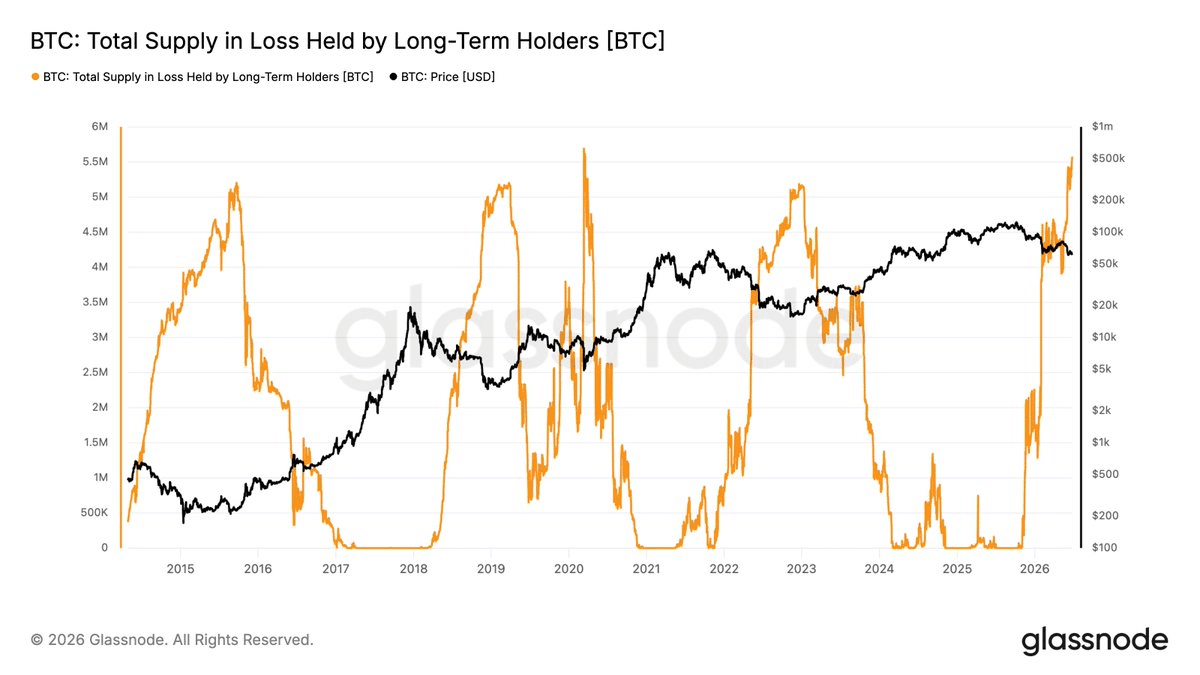
In this context, the growing number of holders sitting in unrealized losses starts to matter more. As the chart below shows, nearly 11 million BTC now sit in loss, marking the highest level on record.
Bitcoin’s drop to $59.1k has pushed 10.83 million BTC underwater, according to Glassnode data. LTHs now hold 14.8 million BTC, roughly 75% of circulating supply, with about 37% currently in the red.
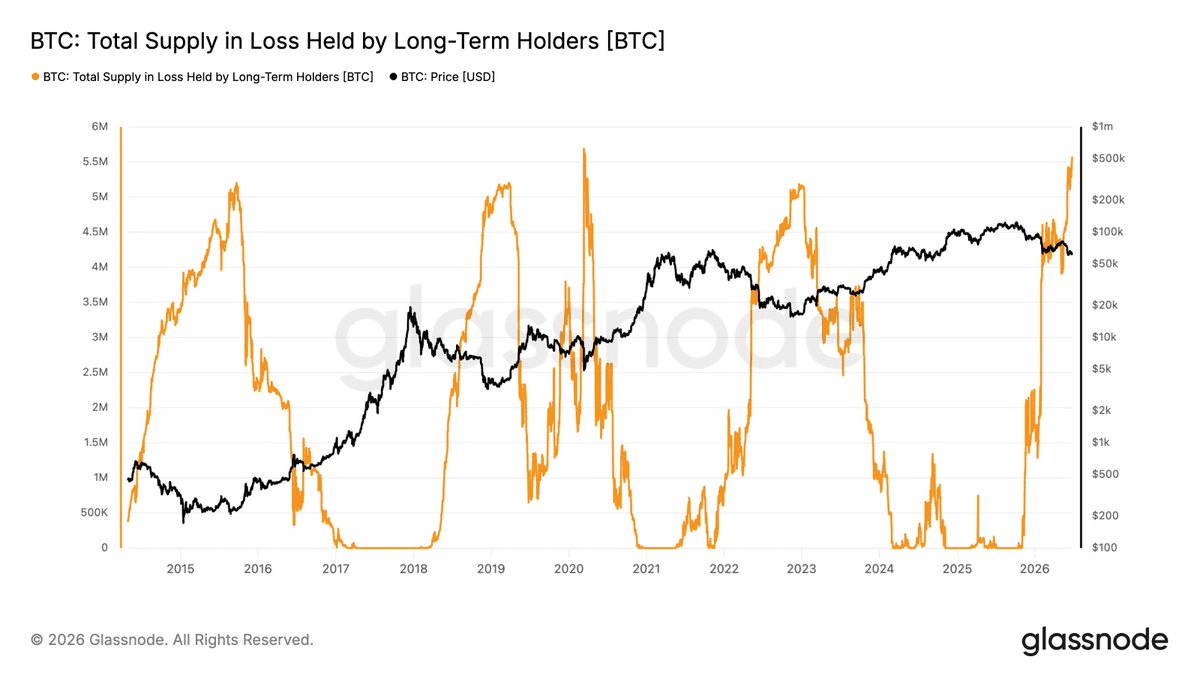
Against this backdrop, Ansem’s call may be a bit early.
With no strong catalysts coming through, Bitcoin’s spot demand still looks weak. In that context, framing the recent pullback as just a short-term deleveraging flush might be premature. Meanwhile, macro FUD continues to weigh on sentiment among long-term holders.
That naturally increases the risk of LTH capitulation. Overall, this makes a strong Q3 Bitcoin setup less convincing for now, with the market potentially underpricing downside risk.
Final Summary
- Leverage is resetting and macro conditions are improving, so Bitcoin could recover if spot demand returns.
- Weak demand, Fed uncertainty, and rising LTH losses increase risk of further downside.