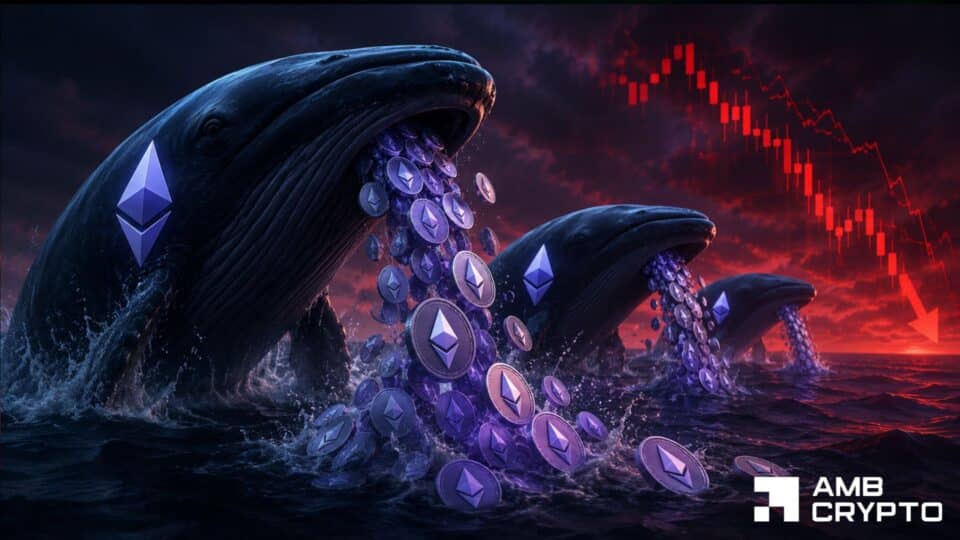
Andre Cronje Departs Sonic Labs Board Amid Token Slump

bitcoinistPublished on 2026-06-21Last updated on 2026-06-21

Abstract

Key DeFi developer Andre Cronje and two other directors have resigned from the board of Sonic Labs, formerly the Fantom Foundation. The departures raise governance questions for the high-speed EVM scaling project, coinciding with a significant decline in its native token, S/FTM, which trades approximately 97% below its all-time high. Despite the board shake-up, developers state that technical execution and protocol launch timelines remain unaffected. The project's new CEO is focused on operational restructuring. The situation underscores the volatility and governance challenges within the DeFi space, with future stability dependent on transparent leadership and adherence to the technical roadmap.

Prominent Decentralized Finance (DeFi) developer Andre Cronje, a key figure in the space, has resigned from the board of Sonic Labs, formerly known as the Fantom Foundation. The corporate registry updates also show two other directors have stepped down from their positions.

  • Andre Cronje and two other directors have left the Sonic Labs board.
  • This occurs as Sonic Labs’ native token, S/FTM, trades about 97% below its all-time high.
  • Sonic Labs, the rebrand of Fantom, is focused on high-speed EVM scaling, and the departures raise governance questions.

Governance Questions Emerge

The departures come at a critical juncture for Sonic Labs, which rebranded from Fantom Foundation and aims to provide high-speed EVM scaling solutions. These board changes introduce governance questions for the project, especially as a newly appointed CEO has pledged operational restructuring. The project’s underlying token, S/FTM, has seen a significant downturn, currently trading approximately 97% below its peak value, leaving it with just 1% of its former high.

Technical Outlook Unchanged

Despite the high-profile resignations and the token’s performance, developers associated with Sonic Labs have stated that technical execution plans and protocol launch timelines remain on track. This indicates that day-to-day development and future roadmap adherence are not expected to be impacted by the board shake-up. The focus remains on delivering the technology, even as the corporate structure evolves.

Broader Community Impact

For the broader DeFi community, these events highlight the inherent volatility and governance challenges within rapidly developing blockchain ecosystems. The significant drop in token value alongside changes in leadership structures warrants attention from users and stakeholders regarding the project’s long-term stability and direction. Transparency and clear communication from the new leadership will be crucial as Sonic Labs navigates this period. You can find more details on this development in an official announcement found here: TradingView post.

Future Operational Steps

While the exact timeline for when these changes were formally enacted is not detailed beyond the June 20, 2026, context of the registry updates, the project’s new CEO is focused on restructuring operations. The team’s commitment to their technical roadmap suggests a continued effort to build and deploy their scaling solutions, regardless of the recent board changes. The coming months will likely reveal more about the new governance structure and its effectiveness in guiding Sonic Labs forward.

This article was written by the News Desk and edited by Samuel Rae.

This article is based on registry disclosures published by Sonic Labs. at Sonic Labs Registry Disclosures

Trending Cryptos

Related Questions

QWho resigned from the Sonic Labs board and what is their significance in the DeFi space?

AAndre Cronje, a prominent DeFi developer, resigned from the board of Sonic Labs. He is a key figure in the decentralized finance space. Additionally, two other directors also stepped down from their positions on the board.

QWhat is the current status of Sonic Labs' native token, S/FTM, and how does it compare to its peak value?

ASonic Labs' native token, S/FTM, is currently trading approximately 97% below its all-time high, meaning it retains only about 3% of its former peak value.

QWhat is Sonic Labs' primary technological focus and what key question do the recent board departures raise?

ASonic Labs, which rebranded from the Fantom Foundation, is focused on providing high-speed EVM (Ethereum Virtual Machine) scaling solutions. The recent board departures raise significant governance questions for the project's future direction and stability.

QAccording to the article, has the development team's technical execution plan been affected by the board changes?

ANo, according to developers associated with Sonic Labs, the technical execution plans and protocol launch timelines remain on track and are not expected to be impacted by the recent board shake-up. The focus on delivering the technology continues.

QWhat does the article highlight about the broader DeFi community in relation to events at Sonic Labs?

AThe article highlights that these events underscore the inherent volatility and governance challenges within rapidly developing blockchain ecosystems. It warns users and stakeholders to pay attention to the project's long-term stability and direction following leadership changes and a significant token value drop.

Related Reads

2026 Altcoin Season Guide: Current Values & Market Signals, Is It Time to Prepare for Altcoin Season?

Altcoin Season Guide 2026: Signals & Timing Analysis This guide explores the dynamics of an "altcoin season," defined as a 90-day period where at least 75% of the top 50 cryptocurrencies outperform Bitcoin (BTC). Historically signaling capital rotation from BTC to alternative assets ("alts"), these periods have evolved. Key differences for the 2026 market cycle include the "ETF Wall," where institutional capital via spot Bitcoin ETFs may remain concentrated in BTC, potentially slowing a broad altseason. A genuine, sustainable altseason now likely requires BTC profit-taking combined with new retail and on-chain liquidity entering the wider market. Analysts use tools like the Altseason Index (values >75 indicate an altseason) but also monitor key pairs like ETH/BTC and SOL/BTC for confirmation. Additional signals include a declining Bitcoin Dominance rate (ideally below 40-50%), accelerating altcoin total market cap growth, and surges in trading volume and social sentiment for alts. Modern altseasons are increasingly narrative-driven and selective, not uniform across all coins. Capital typically rotates in stages: from BTC to major altcoins (like ETH), then into leading narratives (e.g., AI, RWA, DePIN), and finally into mid/small-cap projects and meme coins. The peak phase is often marked by extreme greed, parabolic rises, and high leverage, serving as a cautionary signal. For preparation, investors are advised to build a quality watchlist based on fundamentals, product traction, and team strength. Strategies should include portfolio diversification, disciplined risk management (position sizing, stop-losses, stablecoin reserves), and capitalizing on sector rotations rather than chasing past winners. While precise timing is uncertain, historical patterns suggest strong altcoin rallies often follow Bitcoin halvings by 12-30 months. For the 2024 halving cycle, 2026-2027 could present favorable conditions if supported by macro liquidity, technological narratives, and a sustained drop in Bitcoin Dominance. A true, broad altseason is unlikely if Bitcoin experiences a sharp crash (>20%), as capital tends to flee the entire crypto market.

Foresight News50m ago

2026 Altcoin Season Guide: Current Values & Market Signals, Is It Time to Prepare for Altcoin Season?

Foresight News50m ago

This Might Be the Most Stunning Image at This Year's WAIC!

This article introduces Shangtang's newly released multimodal AI model, **SenseNova U1 Pro**, unveiled at WAIC 2026. The model is highlighted for its ability to generate **native 8K-resolution images** with exceptional detail and coherence, even in extremely wide-format compositions. It goes beyond simple image generation by employing a **"图文交错思维" (interleaved image-text reasoning)** workflow, where it can plan, sketch, refine, check, and correct its outputs to achieve a final, deliverable result. Key capabilities demonstrated include generating a long 8K scroll depicting the 9-year history of WAIC, a detailed 24 solar terms illustration, a complex academic poster, a琉璃 (colored glaze)-style landscape, and a ready-to-use movie poster. The model handles intricate prompts involving layout, text clarity, material textures, and stylistic consistency. The article draws a parallel between this evolution in image generation and the progression seen in AI coding—from simple code completion to autonomous project delivery. U1 Pro represents a shift from generating single images to providing **complete content delivery systems** for professional scenarios like infographics, urban planning, and commercial design. While challenges like generation time and professional workflow integration remain, the model signifies a move towards multimodal AI agents that are accountable for producing usable, high-quality outputs.

marsbit2h ago

This Might Be the Most Stunning Image at This Year's WAIC!

marsbit2h ago

How Did This Round of Deleveraging in the Korean Stock Market Occur?

This article details the timeline and mechanisms behind the deleveraging event in the South Korean stock market, focusing on the KOSPI index from late June to mid-July. The core trigger was the market's structure, heavily concentrated in Samsung Electronics and SK Hynix, which comprised over half of the KOSPI. The situation was amplified by the May 27th launch of single-stock double-leveraged ETFs on these two companies, which attracted massive retail investment and concentrated risk. The process unfolded in eight stages: 1. Initial price collapse on June 23rd after regulatory warnings, but without significant debt reduction. 2. A rebound from June 24-25 fueled by retail buying and ETF rebalancing, which actually increased leverage. 3. Foreign and institutional investors selling from June 26-30, with domestic retail investors becoming the marginal buyers, transferring risk to household balance sheets. 4. A shift in global semiconductor sentiment from July 1-3, causing leveraged ETFs to systematically sell during declines. 5. The market failing to rally on strong earnings (July 6-8), signaling a turn from technical correction to concerns over peak profitability. 6. A rise in forced liquidations and the cross-listing of SK Hynix ADRs, spreading leverage risks to US and Hong Kong markets (July 9-10). 7. A cascade of synchronized selling from various players on July 13th, followed by a mechanical, ETF-driven rebound. 8. Institutionalization of deleveraging on July 16th, marked by an interest rate hike and new regulatory restrictions on single-stock leveraged products. The author concludes this was not a simple semiconductor correction but a negative feedback loop involving foreign capital rebalancing, retail margin trading, daily ETF rebalancing, forced liquidations, shifting industry expectations, and tightening monetary and regulatory policy. Leveraged ETFs acted as a critical amplifier, not the initial spark. The price decline (-25%) far exceeded the reduction in margin debt (-11%), indicating the deleveraging was primarily expressed through asset prices rather than immediate balance sheet repair.

marsbit2h ago

How Did This Round of Deleveraging in the Korean Stock Market Occur?

marsbit2h ago

Trading

Spot

Hot Articles

How to Buy T

Welcome to HTX.com! We've made purchasing Threshold Network Token (T) simple and convenient. Follow our step-by-step guide to embark on your crypto journey.Step 1: Create Your HTX AccountUse your email or phone number to sign up for a free account on HTX. Experience a hassle-free registration journey and unlock all features.Get My AccountStep 2: Go to Buy Crypto and Choose Your Payment MethodCredit/Debit Card: Use your Visa or Mastercard to buy Threshold Network Token (T) instantly.Balance: Use funds from your HTX account balance to trade seamlessly.Third Parties: We've added popular payment methods such as Google Pay and Apple Pay to enhance convenience.P2P: Trade directly with other users on HTX.Over-the-Counter (OTC): We offer tailor-made services and competitive exchange rates for traders.Step 3: Store Your Threshold Network Token (T)After purchasing your Threshold Network Token (T), store it in your HTX account. Alternatively, you can send it elsewhere via blockchain transfer or use it to trade other cryptocurrencies.Step 4: Trade Threshold Network Token (T)Easily trade Threshold Network Token (T) on HTX's spot market. Simply access your account, select your trading pair, execute your trades, and monitor in real-time. We offer a user-friendly experience for both beginners and seasoned traders.

12.5k Total ViewsPublished 2024.03.29Updated 2026.06.02

How to Buy T

Discussions

Welcome to the HTX Community. Here, you can stay informed about the latest platform developments and gain access to professional market insights. Users' opinions on the price of T (T) are presented below.

活动图片