By Jin Lei | from Shanghai | QbitAI Official Account
Just now, a new domestic model has emerged in the image generation circle—
Not only can it output native 8K directly, but it's also the kind that can draft its own sketches, do design work, and even check its homework!
Look, the ultra, ultra, ultra-long 8K image below was created by it:
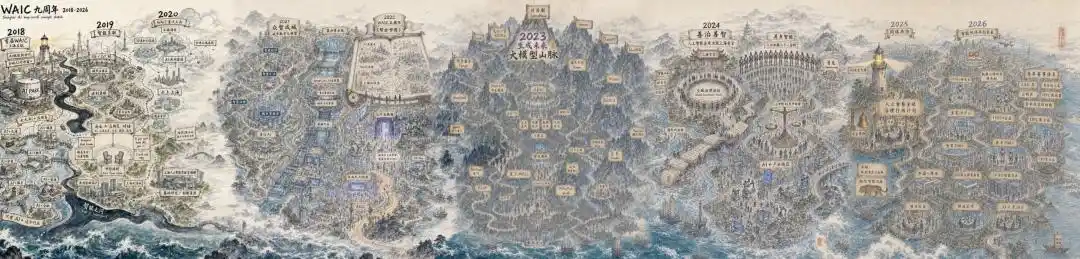
△Image size is limited here; the original is 51MB, with clear text when zoomed in.
The theme of this super-long scroll is "WAIC Ninth Anniversary 2018—2026"; from left to right, time unfolds sequentially, covering the highlights of each edition.
Perhaps you might wonder, with such a large image, can the details hold up?
Good question. Let's examine it more closely "with a magnifying glass":
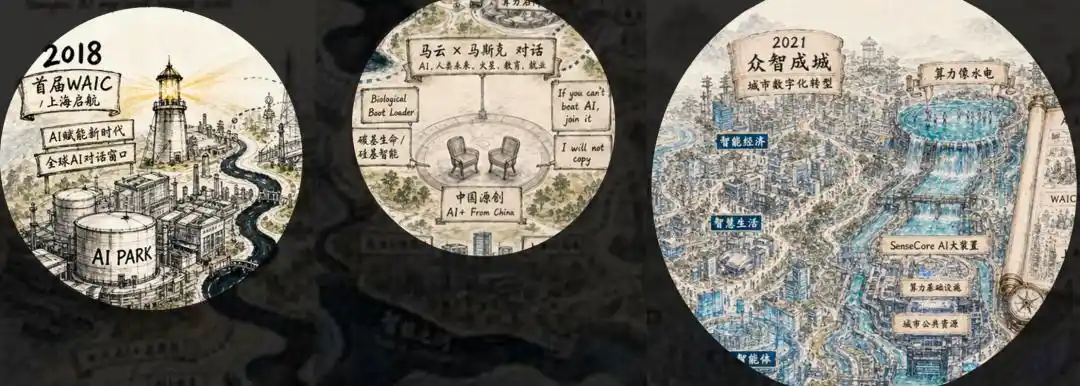
Every single character is clear, crystal clear.
This is the latest model just released by SenseTime at WAIC 2026—Ririxin SenseNova U1 Pro.
Simply put, U1 Pro is a delivery system for complex multimodal tasks. It aims to complete understanding, planning, information organization, multimodal generation, checking and correction, and final delivery around a target. Its core is the native unification of understanding, generation, and action.
After watching the entire release, we can summarize the highlights of U1 Pro into the following three points:
Native 8K Output: The focus isn't just on higher pixels, but also on maintaining text, composition, and details within an ultra-large canvas;
Interleaved Text-Image Thinking: The model can continuously complete sketching, refinement, coloring, checking, and adjustments around a goal;
Targeting Final Deliverables: The scenarios SenseTime is targeting include infographics, urban planning, film storyboards, academic posters, and commercial design, hoping the model requires less repeated "gacha pulls" and delivers more truly usable results.
If previous image generation models competed on who could draw more realistically or generate faster, then U1 Pro seems to push the question one step further:
Can an image require less human cleanup and finish the entire job itself?
To test U1 Pro's real performance, we gave it four more challenges.
Generate an 8K Version of "The Twenty-Four Solar Terms"
The first test continues to challenge U1 Pro's ultra-long canvas capabilities.
We asked it to generate a horizontal 8K long image centered around the twenty-four solar terms.
This task essentially still tests the AI's ability to capture details. For example, the names and order of the 24 solar terms must be correct; each term should correspond to appropriate phenology and seasonal colors; the 24 vertical units need to be distinct from each other while maintaining a cohesive visual style; and the color transition from spring to winter should be natural.
Let's look at the image generated by U1 Pro:
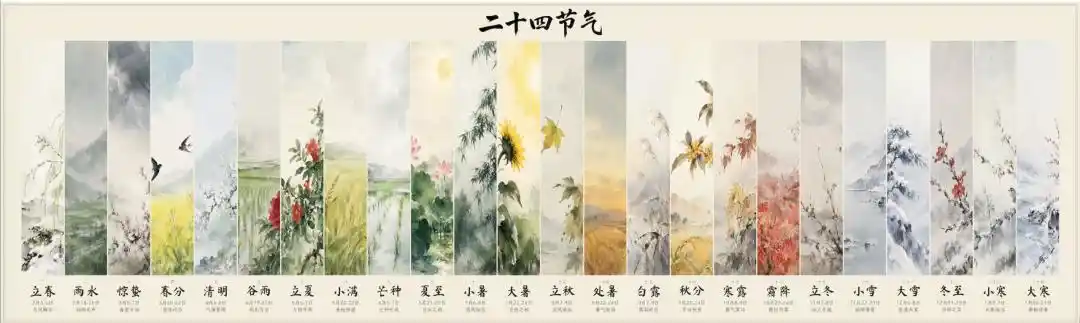
From an overall perspective, the model did place the 24 nodes within the same horizontal layout.
It didn't process the result into 24 same-sized, unrelated wallpapers. The mountain height, plant positions, and negative space in each frame vary, giving the image a rhythm reminiscent of a combination of a screen and a handscroll.
So, U1 Pro is already a stable contender capable of outputting 8K ultra-long images.
For the second test, we asked it to design a visual poster for a high-end laboratory, with the main theme titled "How Machines Observe and Understand Humans."
The prompt required a person in the center, viewed from behind, slightly turned to the side, with detection boxes, coordinate axes, geometric circles, motion trails, gaze tracking, spatial grids, and data nodes overlaid on the head and upper body.
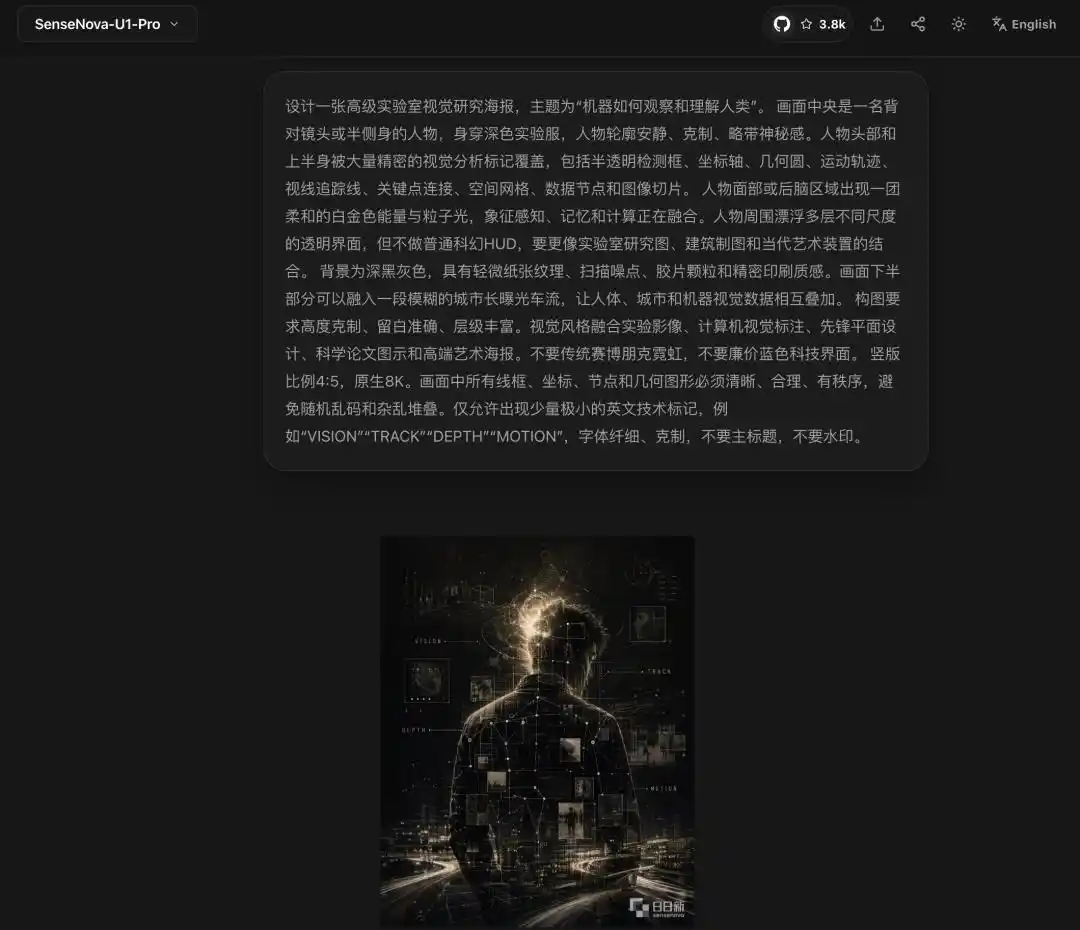
Let's examine the details:
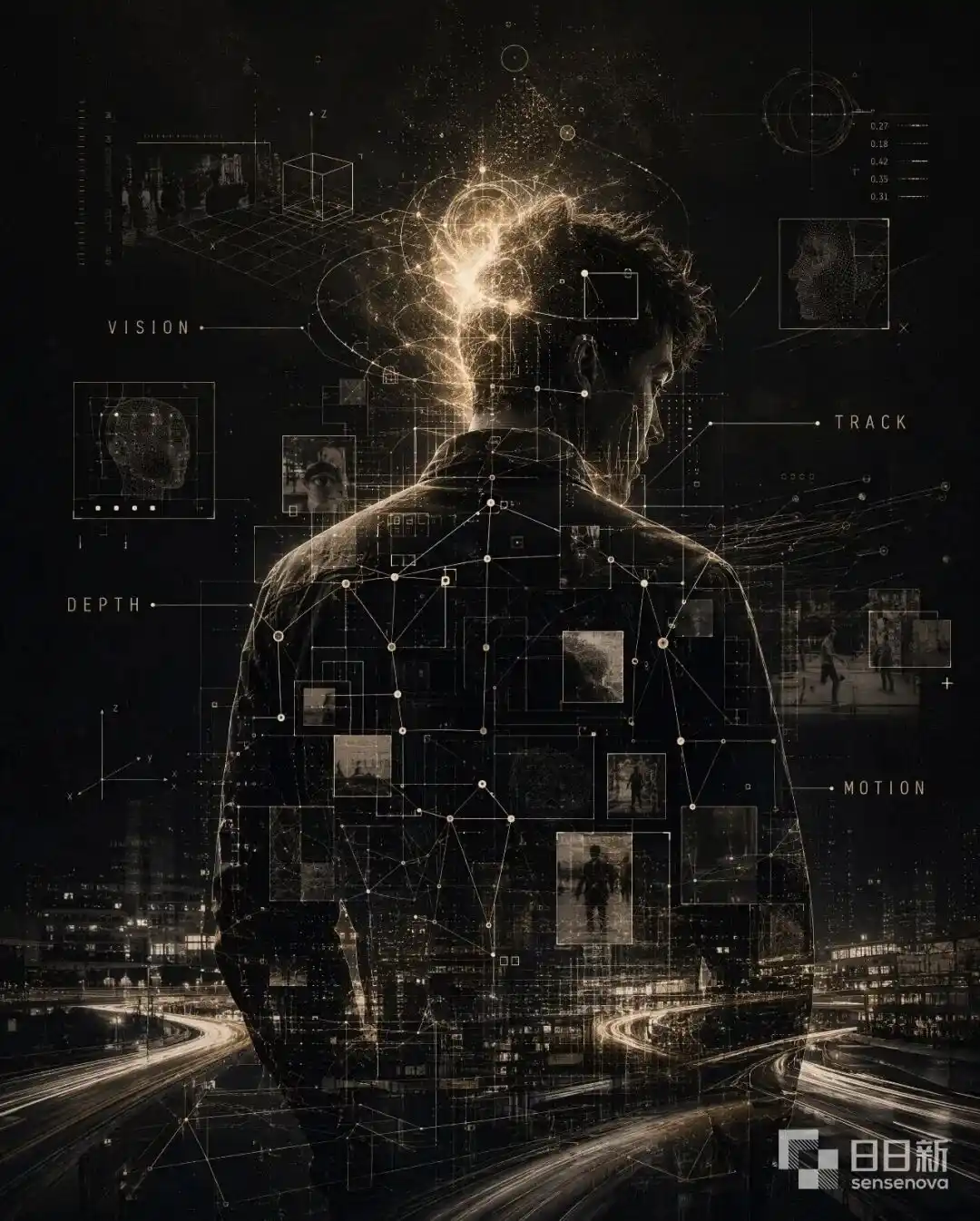
What's somewhat surprising is that most image generation models, upon encountering keywords like "technology" or "robots," would likely default to a tech-blue color palette.
But U1 Pro directly avoided this. Dark gold lines, black background, and paper grain texture formed a relatively complete visual hierarchy. The central focus is clear, the information density is high, yet the image didn't become completely chaotic.
The third challenge was an image of classical-style architecture and landscapes with a glassy texture.
The requirements simultaneously included turquoise mountains, blue rivers, waterfalls, pagodas, mountain gates, pavilions, covered bridges, palaces, peach blossom forests, pine trees, auspicious clouds, and a futuristic building with an Eastern architectural language.
Material-wise, the mountains should resemble a fusion of glass, jade, and enamel, with flowing highlights, layered glazing, and gold outlining on the surface; the water should have translucency and reflections; the buildings shouldn't look like cheap 3D models.
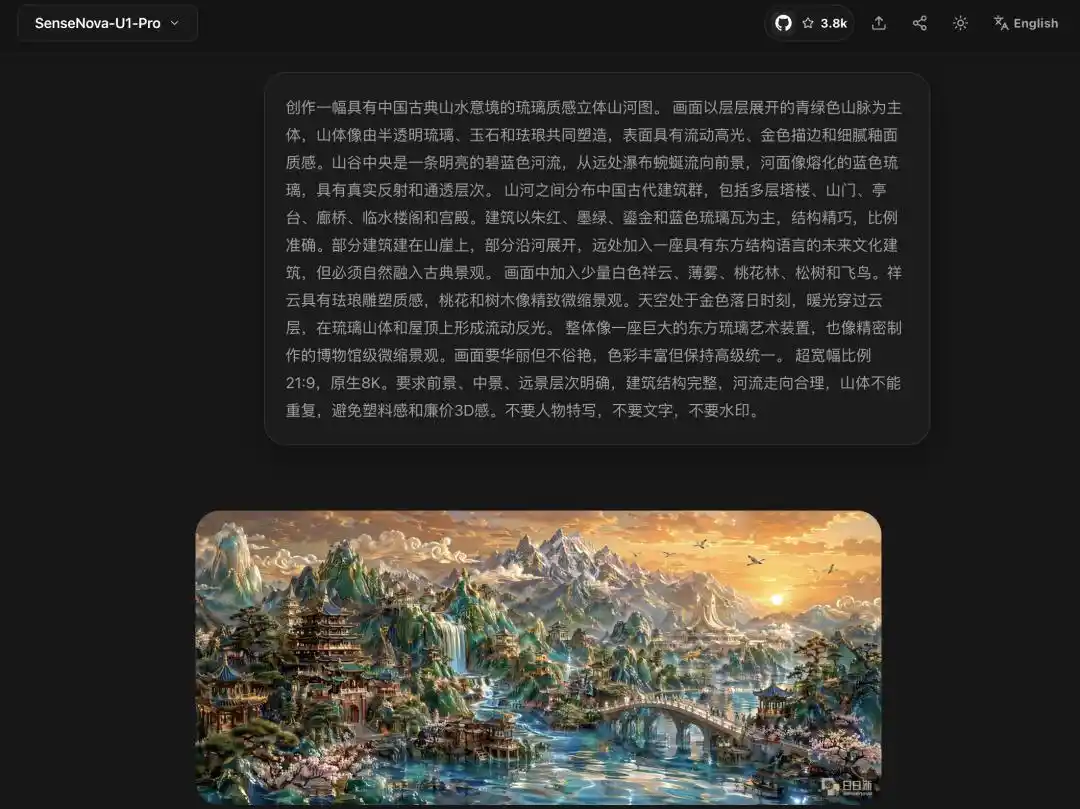
Here is the result generated by U1 Pro:
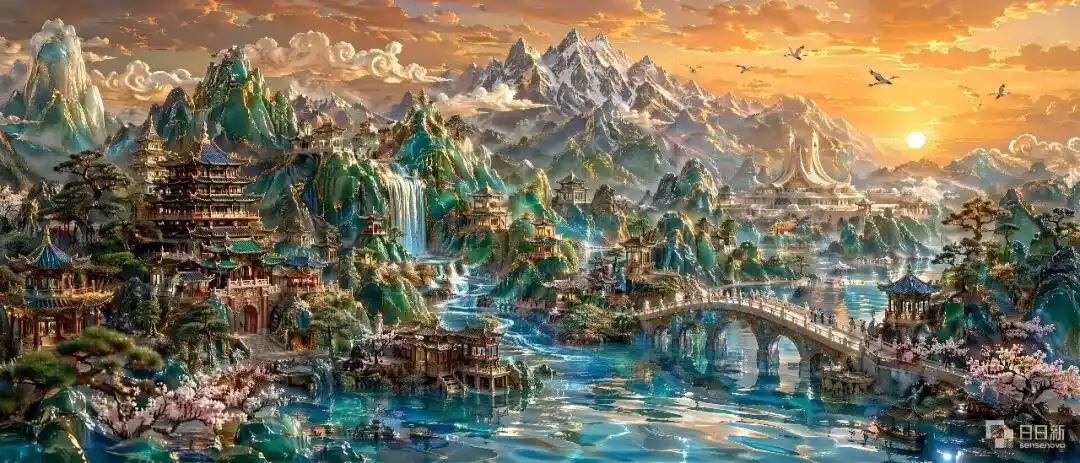
Judging from the final generated image, the model's ability to organize glassy mountains, water systems, classical buildings, and futuristic architecture into a relatively cohesive world already demonstrates its execution power for complex stylistic requirements.
The first three challenges were all about grand scenes, ultra-long images, and complex layouts. Therefore, for the final task, we tried something directly deliverable and commercial—a movie poster.
The prompt was as follows:
Design an original movie poster. The overall piece should be a high-fidelity, final poster ready for direct promotional use in a film's release campaign. The tone should lie between Eastern poetry, suspenseful epic, and modern art film, possessing strong visual impact and high aesthetic appeal.
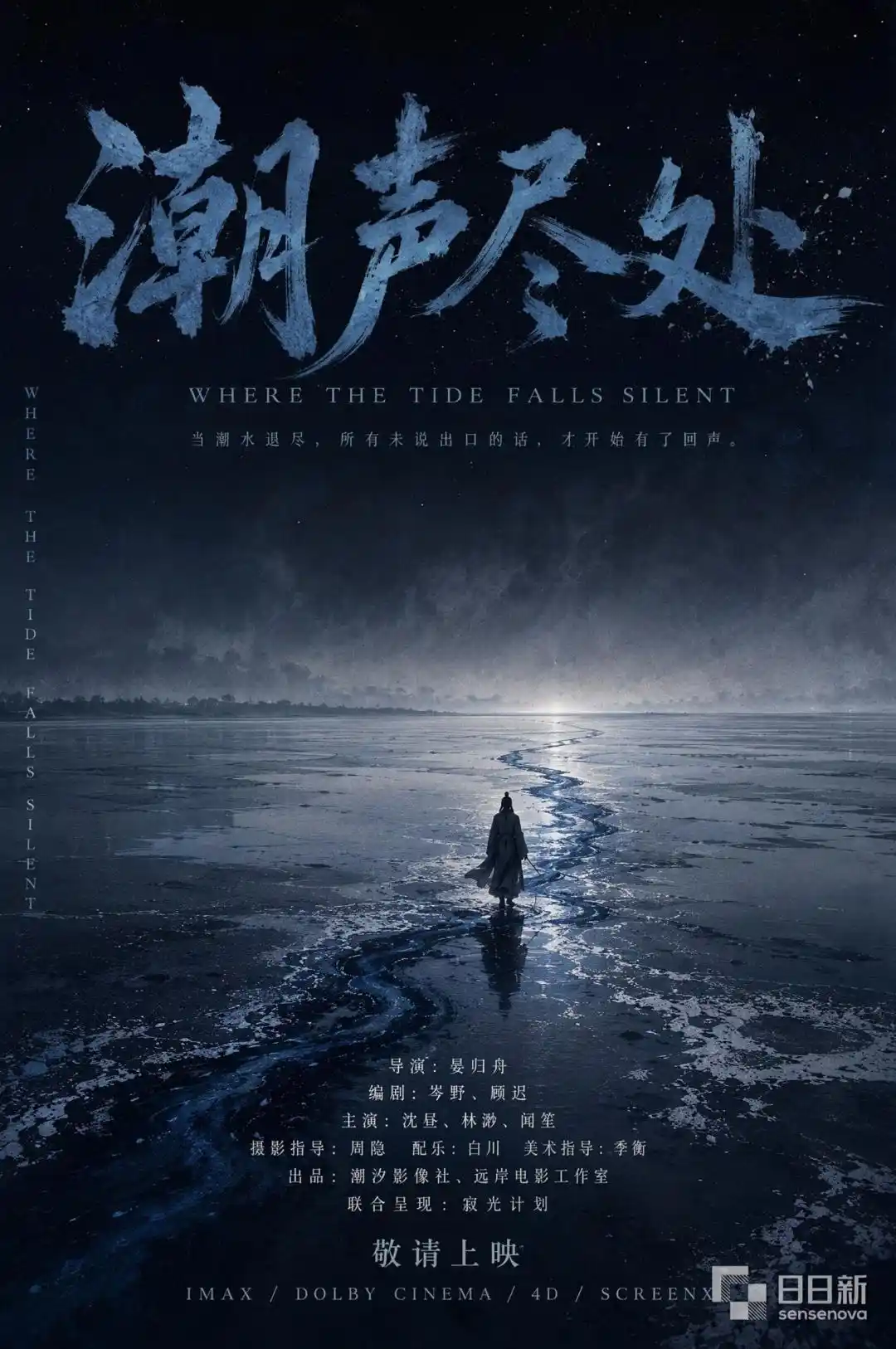
In the final result, once again, every character is clear, and the overall effect is precisely that feeling of being ready for commercial use!
Looking at the four challenges, U1 Pro's strength isn't limited to just 8K.
It's more adept at organizing a scene around a complete objective, placing information, layout, characters, materials, and style within a single task.
Furthermore, it can handle things like structural diagrams and commercially usable images:
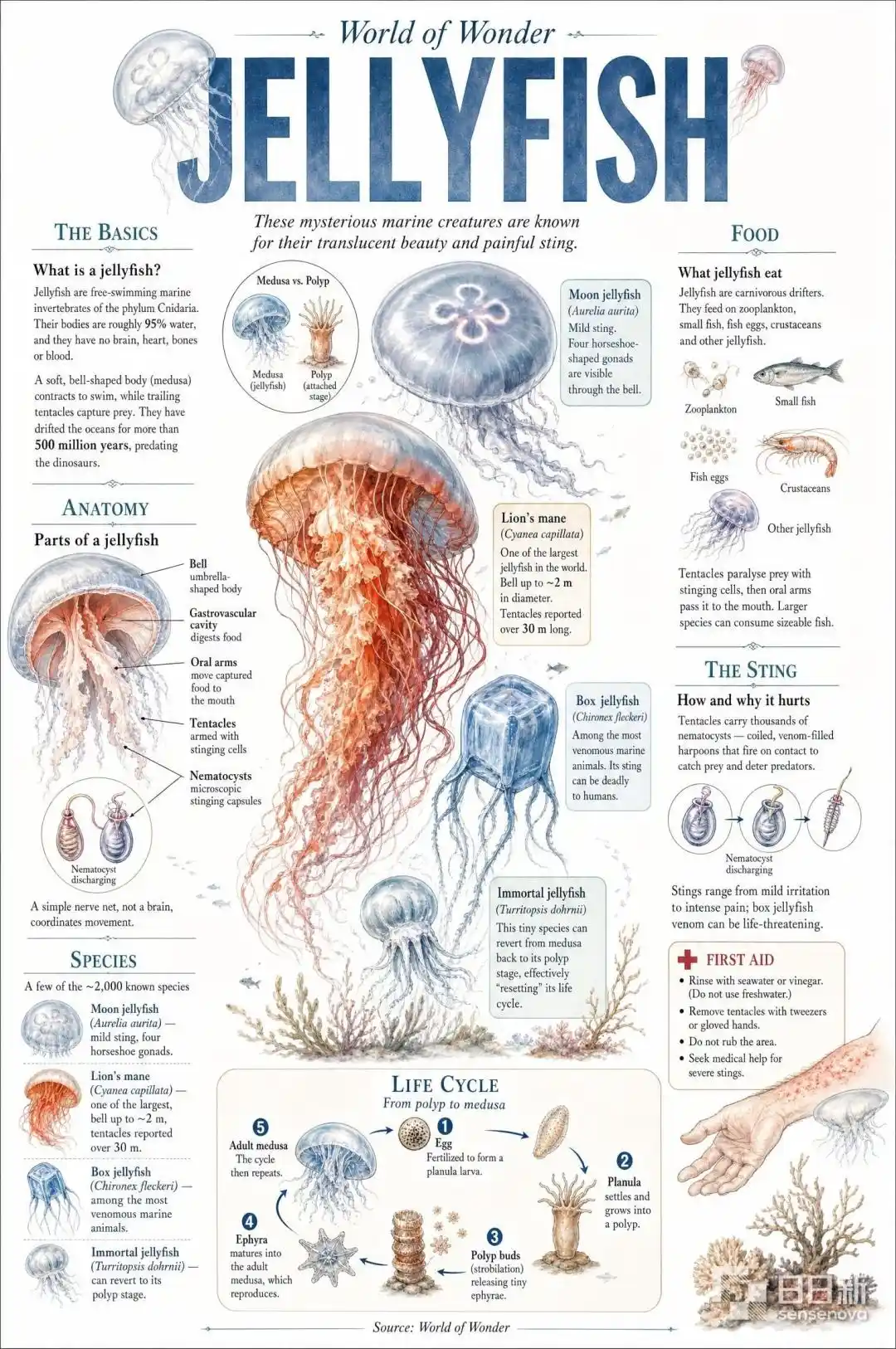
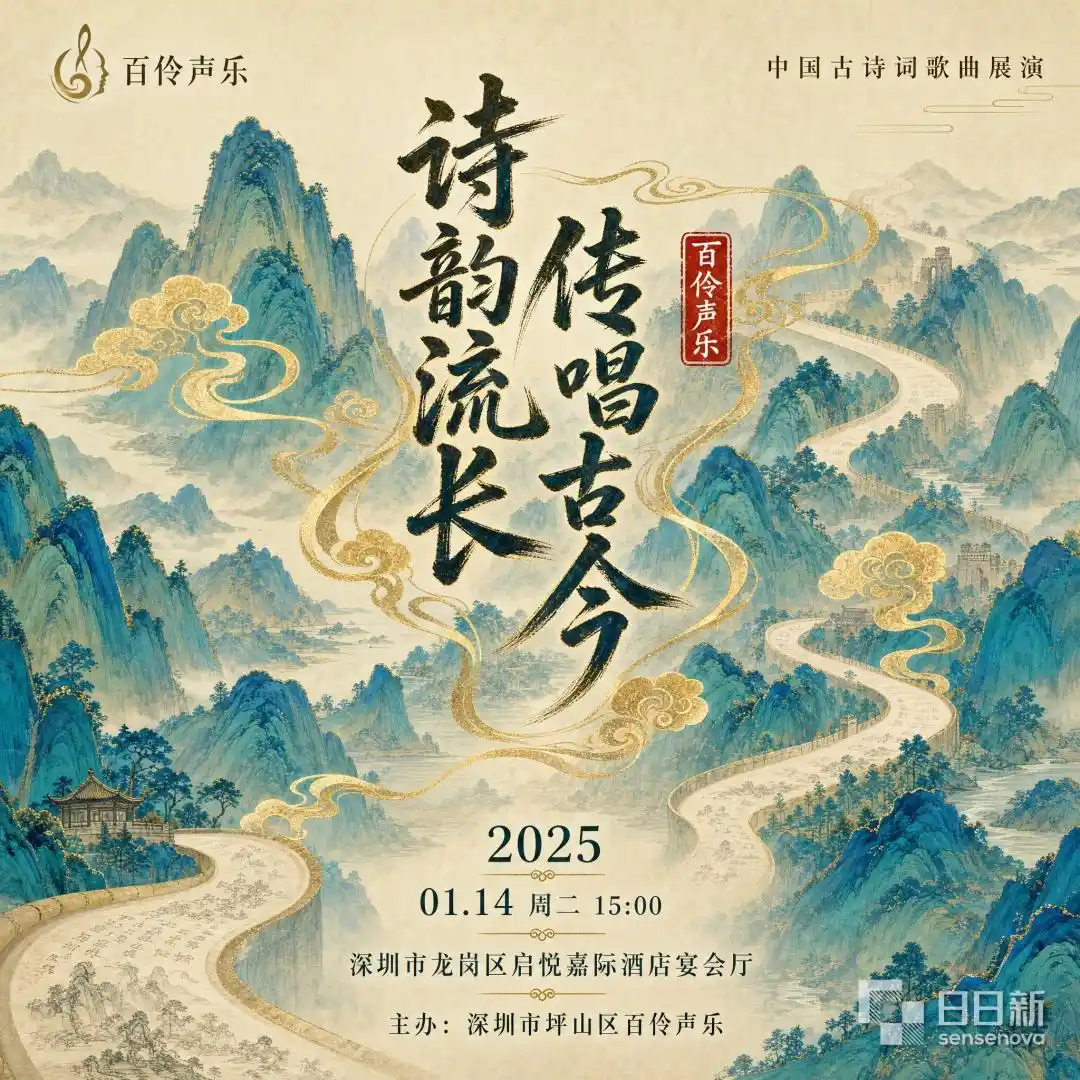
From One-Time Generation to Self-Checking
The commonality among the images in our tests is no longer just about picture quality.
Whether it's the Twenty-Four Solar Terms long image, the complex poster, or the glassy landscape, U1 Pro needs to simultaneously remember multiple sets of requirements and continuously process information, composition, style, and details within a single image.
This also addresses a very practical issue in current image generation tools.
Many models today can be repeatedly modified through natural language, but once the task gets slightly complex, the results can still easily spiral out of control. Fixing one local area might cause other areas to change; an image might look professional, but the text and structure can't withstand scrutiny; after several rounds of modification, textures, characters, and backgrounds might gradually drift.
SenseTime's CEO Xu Li summarized this issue on stage as:
Being interactive doesn't equal being deliverable.
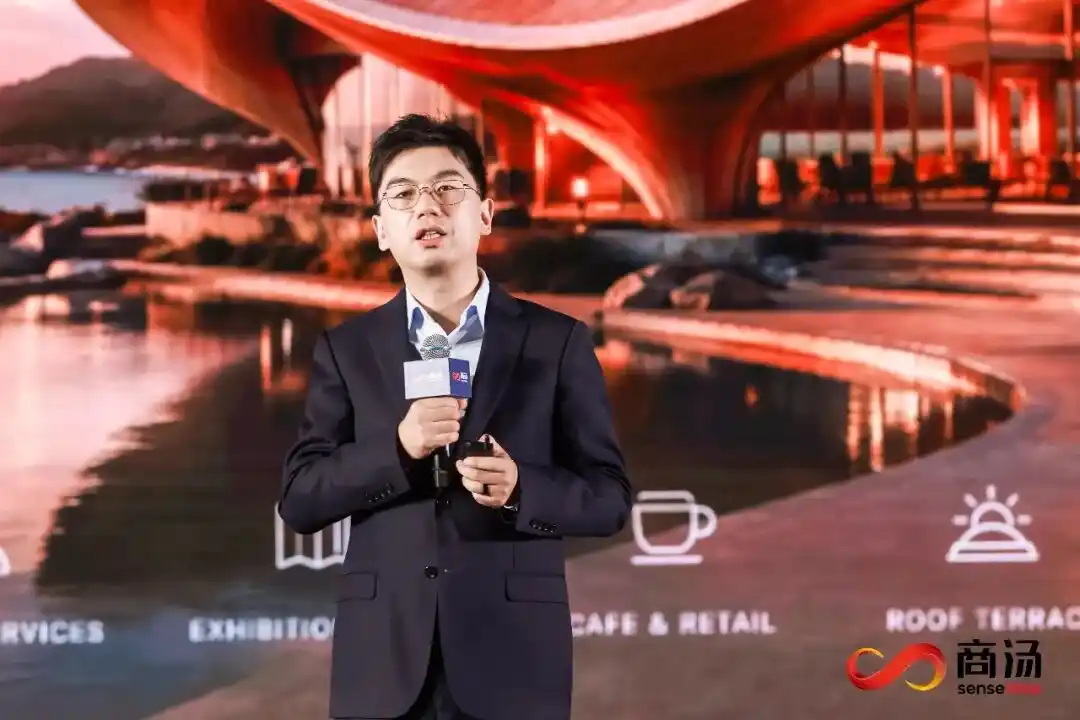
The direction U1 Pro chose is to extend a single image generation instance into a continuous creative workflow.
Here, "thinking" doesn't mean showing users a long string of textual reasoning but is closer to continuous creation where images and text alternate.
In a conversation with QbitAI, Lin Dahua, co-founder and Chief Scientist of SenseTime, mentioned:
During the U1 stage, SenseTime had already observed the beginnings of continuous creation. The model could first draft a sketch, then add details and color, gradually generating a complete image. The team also saw from this that visual models have the potential to approach a designer's workflow, pushing generative image capabilities towards real production scenarios in content design.
Thus, with U1 Pro, this workflow has been further expanded into a closed loop:
Understand the objective, plan the task, organize information, generate content, check for issues, continuously revise, and finally complete the delivery.
Taking the WAIC Ninth Anniversary scroll we showed at the beginning as an example, the model first needs to digest nine years of information, then decide how to distribute events, how to connect years, how to organize landscapes and cities, where to place textual information, and finally maintain a unified Eastern visual style.
Native 8K: The Difficulty is Far More Than Just More Pixels
Although native 8K output is a very eye-catching label for U1 Pro this time, the difficulty brought by the significant increase in resolution also increases proportionally.
Because higher resolution means more visual tokens, leading to increased computation and VRAM usage for Attention.
In response, a key solution SenseTime adopted was using a 32×32 large Patch.
As Lin Dahua said, common image generation models might use a 16×16 Patch. If a patch corresponds to one or a group of tokens, doubling the side length can reduce the total number of visual tokens to a quarter of the original.
This is equivalent to dividing an image into larger grids. With fewer grids, computational pressure decreases; but simultaneously, larger grids are more prone to losing details.
To solve this problem, the team added adaptive Noise Control, using more targeted training strategies for detailed areas; Patches retain some overlap, while optimizing spatial sampling, loss design, and model architecture.
These methods collectively control the context size, avoiding explosive growth from 8K while striving to preserve small text, textures, and structure.
In summary, U1 Pro enlarges the grids to reduce the total quantity first, then recovers the details within the large grids through overlap and more refined training.
Image Generation is Also Replicating the Path of AI Coding
From an industry perspective, what's more noteworthy about U1 Pro is that it corresponds to a shift in product paradigm.
To understand this change, we can look at the evolution of AI Coding.
AI Coding started with Copilot, helping professional developers complete code; then came Vibe Coding, where users express needs in natural language; further on, Coding Agents began decomposing tasks, writing code, calling tools, testing, and fixing, taking on complete projects.
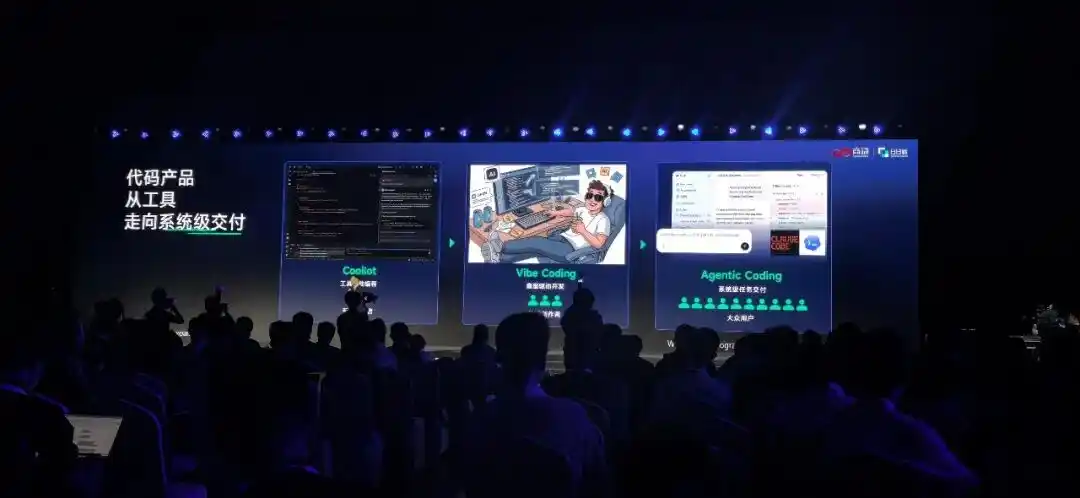
The value of models also shifted from "how many lines of code were written" to "can the project be completed."
And multimodal content is undergoing a similar change:
Stage one was single-point generation.
Stage two was intent-driven, allowing users to continuously modify.
Stage three points toward system-level content delivery.
The model doesn't just generate an image; it must understand the objective, organize information, maintain long-range consistency, check for errors, and deliver a usable result.
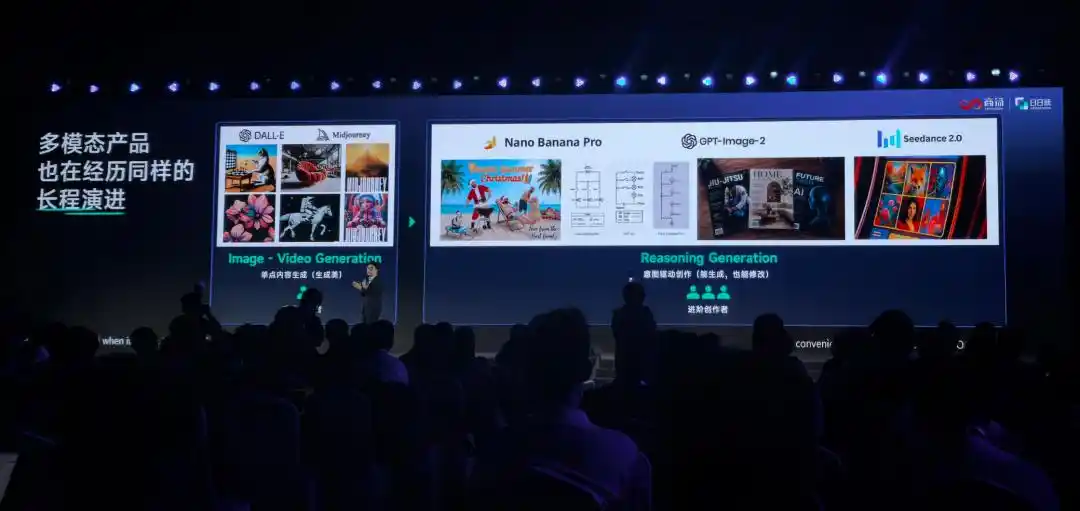
The inspiration Coding gave SenseTime is that once a technology crosses the industrial red line, truly bringing productivity changes, it has the opportunity to open up a larger commercial space.
SenseTime thus judges that interleaved text-image thinking and the unification of understanding and generation could also open up the differentiated track of visual design.
Of course, U1 Pro isn't perfect yet.
Because asynchronous generation means users trade waiting time for higher completion; editing capabilities, cost, and stability still need validation in real projects; professional design scenarios also don't rely solely on a final image—layers, vector elements, version management, and team collaboration are equally important.
But one thing is clear: the direction has become evident—
When image generation moves beyond repeated "gacha pulls" and starts taking responsibility for results, the real competition for multimodal Agents will have truly begun.
This article is from the WeChat public account "QbitAI" (ID: QbitAI), author: Following Frontier Technology