Alameda moves $3.56M in Ethereum – Should markets brace for another sell-off?

ambcryptoPublished on 2026-04-01Last updated on 2026-04-01

Abstract

Alameda Research, the defunct trading firm linked to FTX, has unstaked 1,695 ETH worth $3.56 million, signaling a potential sell-off in Ethereum and Solana. This follows a previous sale of $17 million in SOL tokens. The firm still holds significant assets, including $300 million in SOL, suggesting further selling pressure. Additional bearish signals include a trader from Fasanara Capital shorting $45 million in ETH and declining large transaction volumes. Ethereum is testing a key resistance level, while Solana is trading sideways with reduced network activity. A break above $2,100 for ETH or holding support at $76 for SOL could invalidate the expected decline.

The altcoin market could be in for yet another decline in price action.

Alameda Research, the now-defunct trading firm linked to the collapse of FTX, is making moves for the second time in less than a month. The firm recently hinted at a possible sell-off in Ethereum [ETH] and Solana [SOL]. Historically, its distribution events have resulted in massive sell-offs in associated assets, but will that happen again this time?

Examining Alameda Research’s selling pattern

According to Arkham data, Alameda unstaked more than 1,695 ETH, worth more than $3.56 million. This move seems to be following a familiar pattern. That is, three weeks ago, they sold more than $17 million of SOL tokens.

The firm still holds about $300 million worth of SOL, $35 million worth of Bitcoin, and $20 million worth of USDT. Therefore, there may be impending selling pressure on ETH and SOL as a result of the firm’s liquidation events.
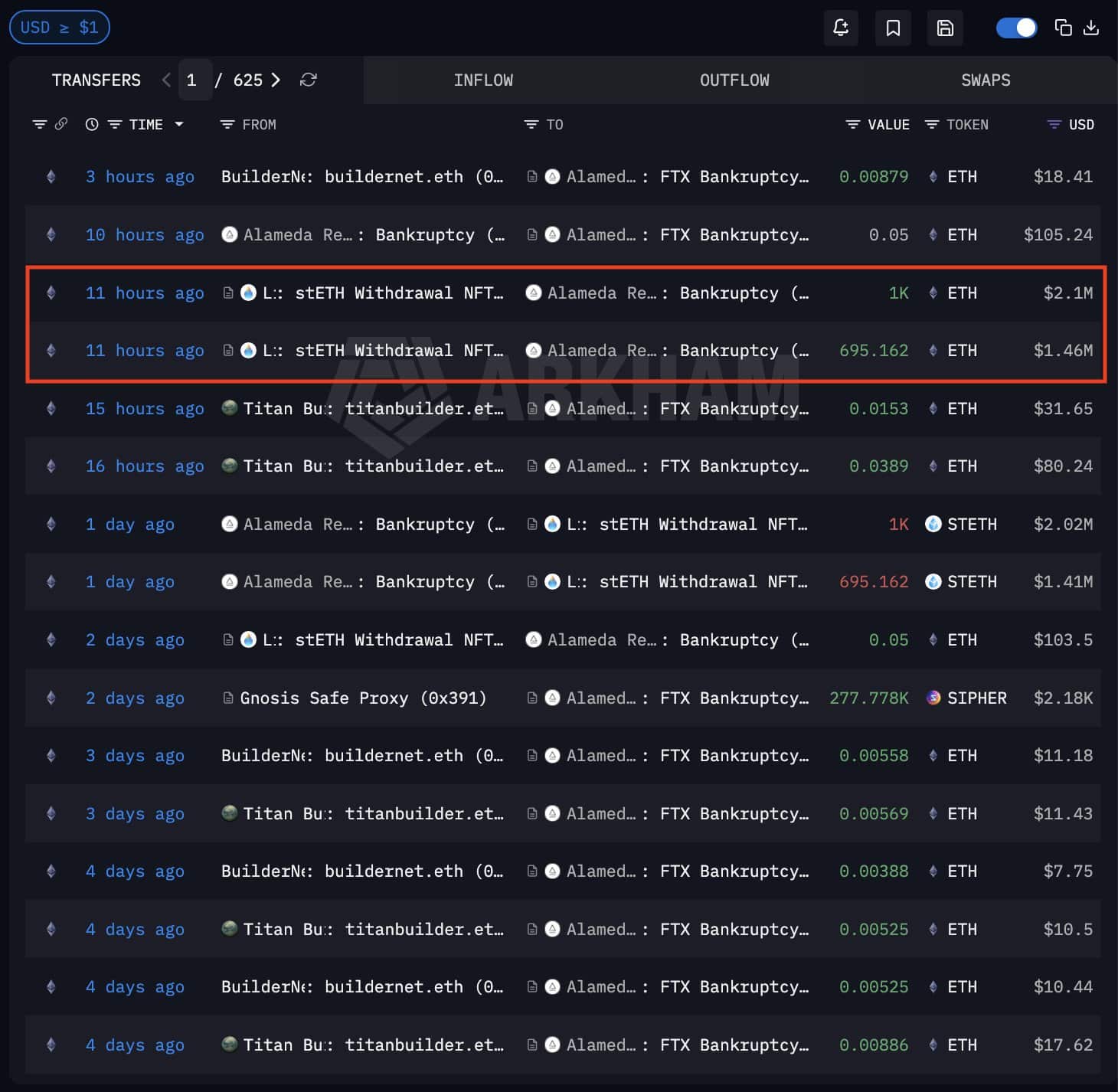
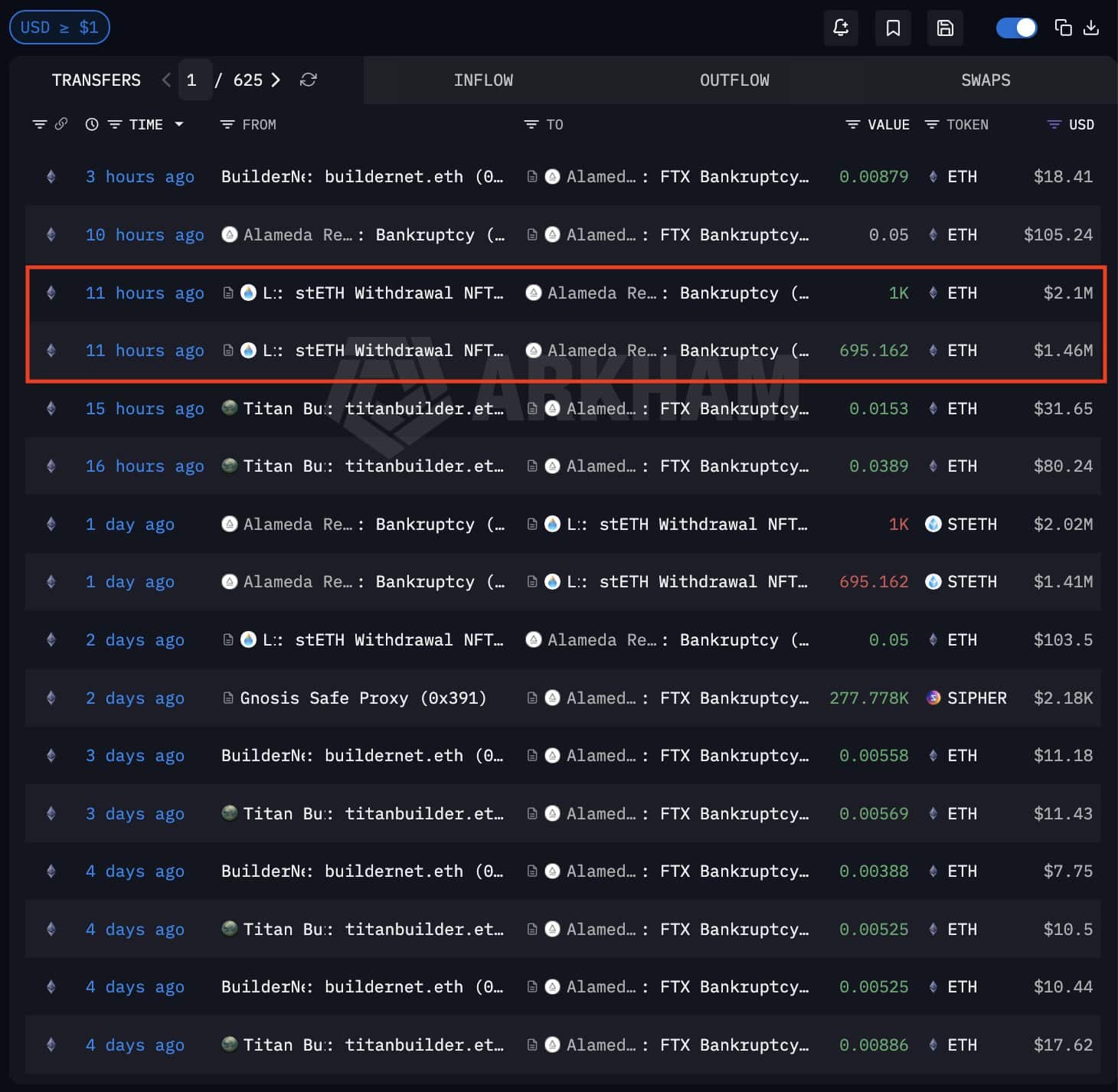
Source: Arkham

In addition to Alameda Research’s selling, other institutions are also shorting the largest altcoin. For instance, a trader linked to Fasanara Capital sold $45 million worth of ETH. Moreover, selling pressure rises amid long liquidations, particularly on big-cap altcoins.

How are ETH and SOL prices positioning?

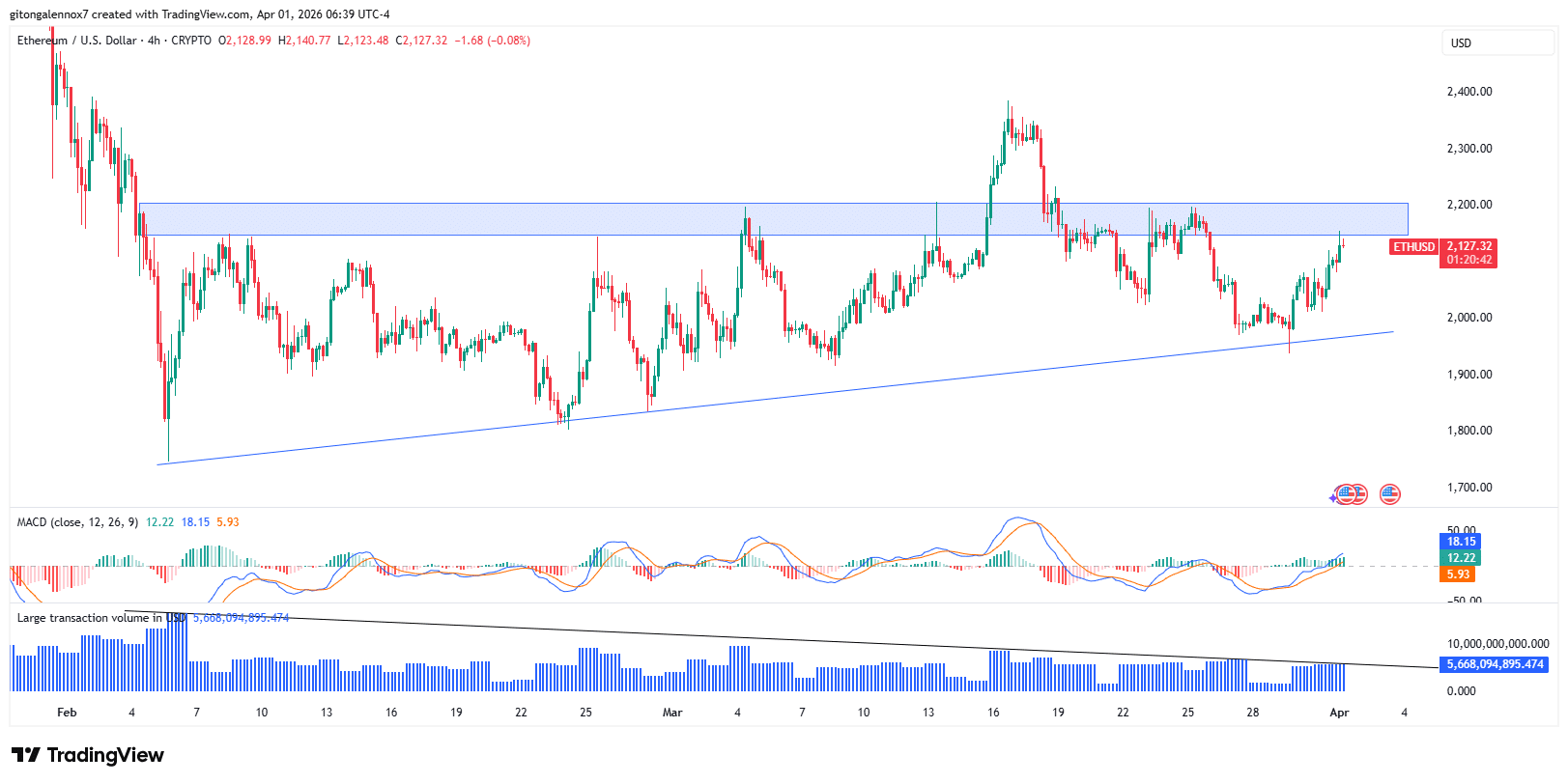
Ethereum price was showing strength at the moment. On the 4-hour chart, the altcoin was trading around a resistance zone that had held price since February.

While the MACD was bullish at press time, the amount of large transaction volume was declining. The Large Transaction Volume declined by 3x, from $17.5 billion to $5.67 billion.

This showed buying was weak at a price zone that has led to bearish reversals previously.
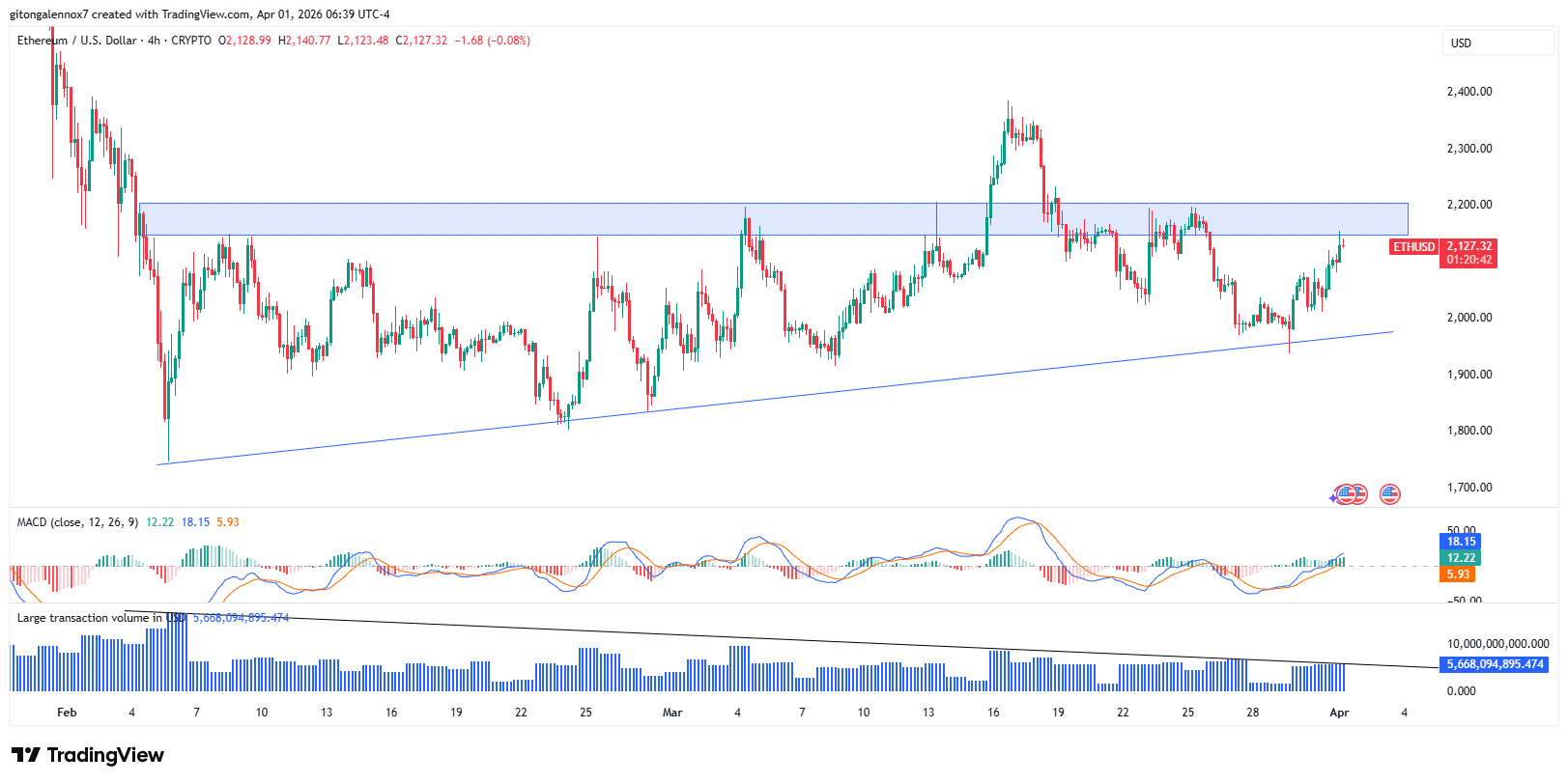
Source: ETH/USDT on TradingView

However, a break above would invalidate the signals sent by Alameda Research’s move, at least for now.

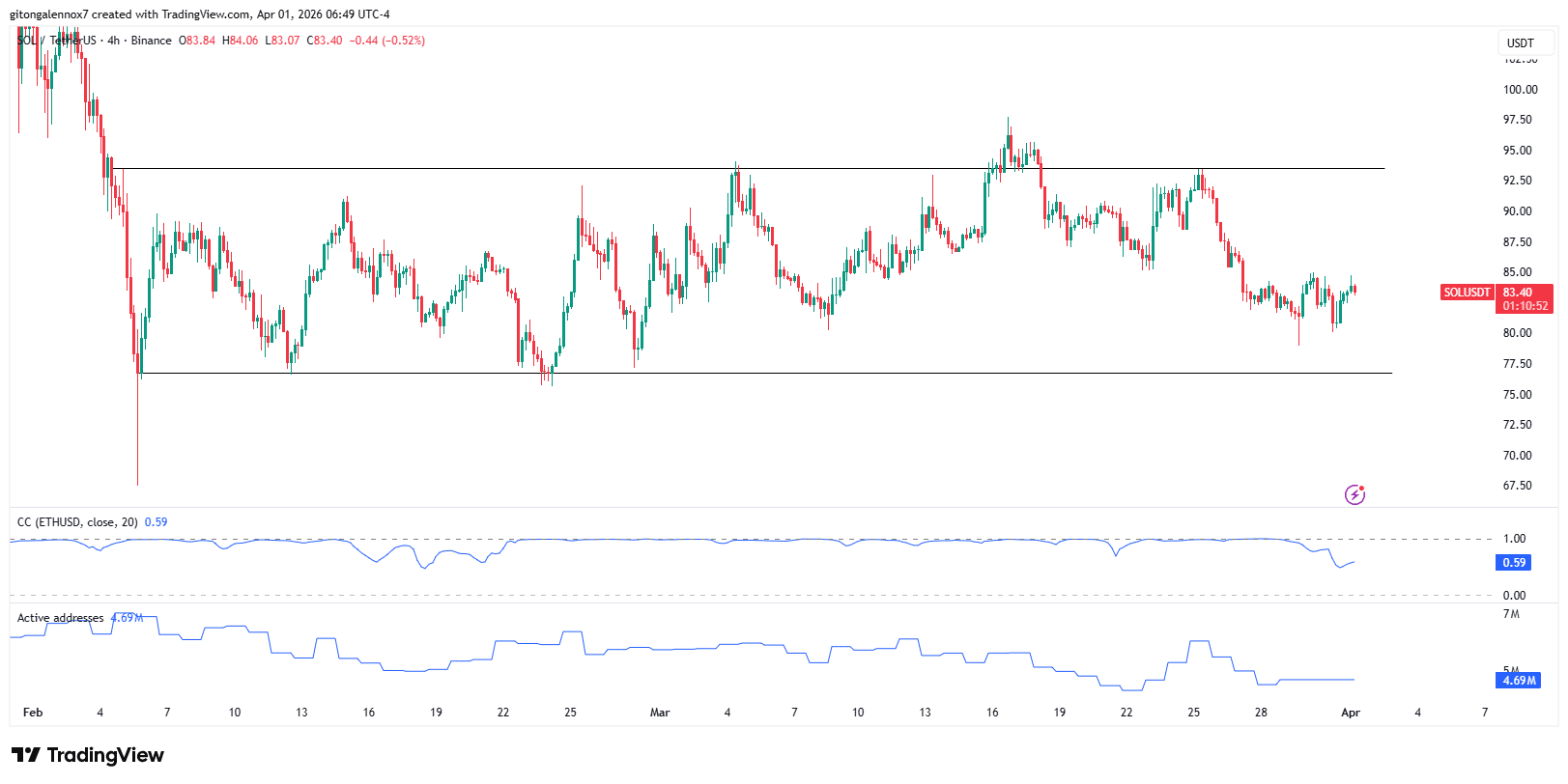
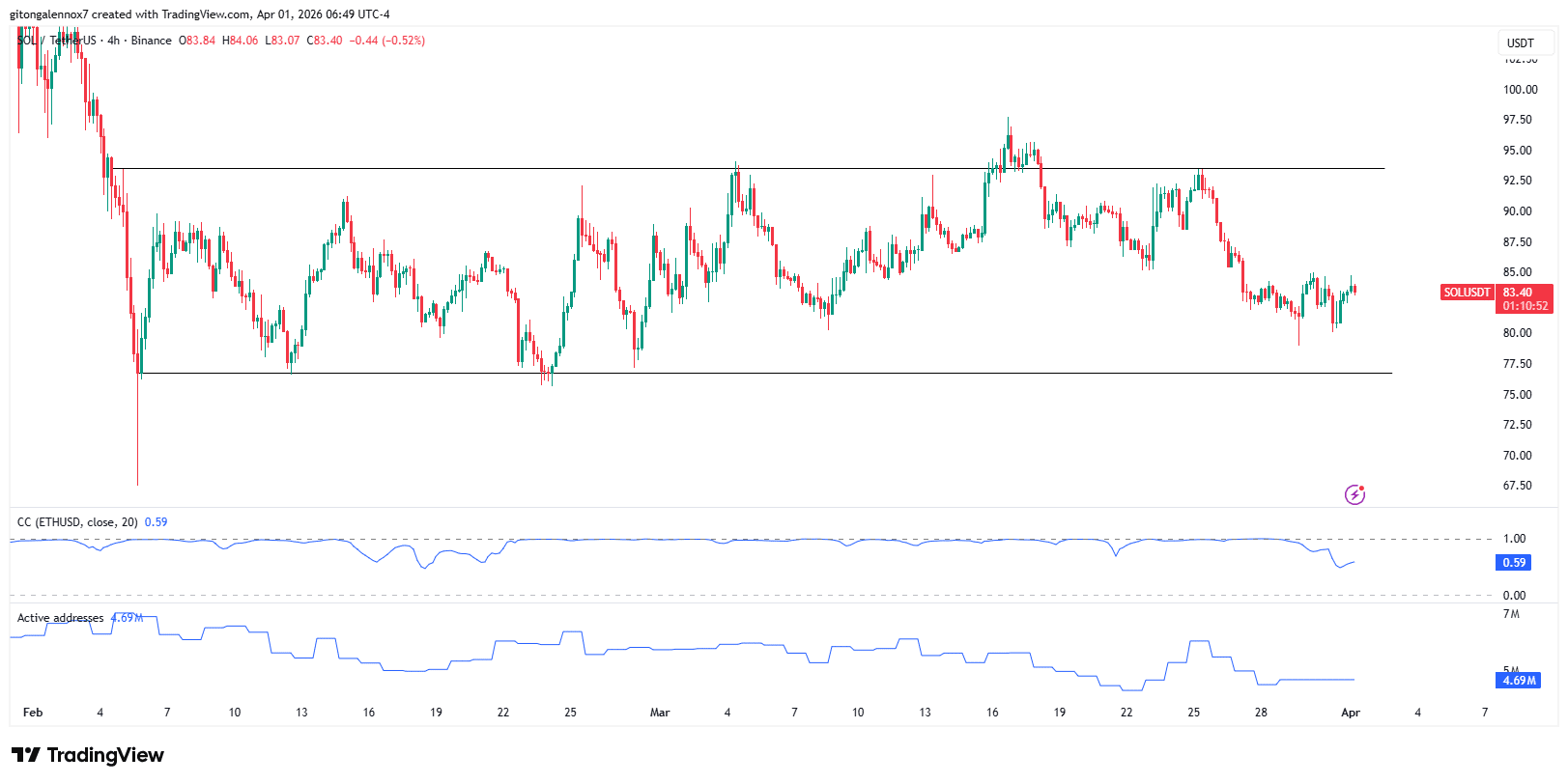
Meanwhile, Solana price action was trading in a sideways market, having lost much of its correlation with ETH. The correlation coefficient has dropped from 1 to 0.59.

The altcoin may drop to the support at $76 after trading near the range’s lows. This is due to a decrease in network activity as well; in just two months, the number of active addresses dropped from 7 million to 4.69 million.
Source: SOL/USDT on TradingView

The signals above suggested that, should history repeat itself, Ethereum and Solana might experience a short-term decline. However, if SOL maintains its support and ETH surpasses $2,100, it could invalidate the anticipated price decline.


Final Summary

  • Alameda Research and Fasanara Capital are betting on Ethereum and Solana prices dropping in the short term.
  • Ethereum showed strength but traded below a resistance, while Solana was struggling at the lower band of a price range.


Related Questions

QWhat was the value of Ethereum unstaked by Alameda Research according to the article?

AAlameda Research unstaked more than 1,695 ETH, worth over $3.56 million.

QWhich two cryptocurrencies are specifically mentioned as potentially facing selling pressure due to Alameda's liquidation events?

AEthereum (ETH) and Solana (SOL) are the cryptocurrencies mentioned as potentially facing selling pressure.

QWhat key price level for Ethereum would invalidate the bearish signals from Alameda's move, according to the analysis?

AA break above the $2,100 price level for Ethereum would invalidate the anticipated price decline.

QBesides Alameda move, what other evidence suggests rising selling pressure on Ethereum?

AA trader linked to Fasanara Capital sold $45 million worth of ETH, and there is rising selling pressure amid long liquidations on big-cap altcoins.

QWhat change in Solana's network activity is cited as a reason it might drop to its $76 support level?

AThe number of active addresses on the Solana network dropped from 7 million to 4.69 million in just two months.

Related Reads

Will the Next Crypto Bull Run Start with On-Chain Trading of SpaceX?

This article presents a scenario-based forecast for the crypto industry from 2026 to 2029, arguing that the next major cycle will be driven not by technological narratives but by legal access to real-world assets. The author predicts that by mid-2026, pre-IPO perpetual contracts for top private companies like SpaceX, OpenAI, and Anthropic on platforms like Hyperliquid will become the primary gateway for accessing quality assets, as most crypto-native tokens fail to capture real value. The much-hyped AI x Crypto intersection largely fails except for prediction markets, which thrive on betting on AI model supremacy. By 2027, public blockchain foundations are forced to choose between catering to retail speculation or building compliant infrastructure for institutions, with many opting for the latter. Growth in stablecoins and tokenized private credit/equity hits a "triple ceiling" due to regulatory and political uncertainty rather than market demand. The pivotal shift is forecast for 2028. A major liquidation event in pre-IPO perpetuals exposes the structural flaw of synthetic markets lacking a real underlying asset anchor. In response, regulatory changes finally allow the public solicitation of private securities resales to verified accredited investors. This creates a legitimate secondary market for real company equity, which then becomes the core asset class of the new bull market, relegating synthetic perps to a niche role. By 2029, the industry becomes "boring" but foundational. Tokens without claims on real cash flows or assets cease trading. Stablecoin growth is steady but politically capped. Crypto infrastructure fades from view as it gets absorbed into traditional finance backends. The article's central thesis is that the key bottleneck for crypto's next phase is legal and regulatory channels for real asset ownership, not technology.

marsbit1h ago

Will the Next Crypto Bull Run Start with On-Chain Trading of SpaceX?

marsbit1h ago

The Value Distribution of Stablecoins

**Summary: The Value Distribution of Stablecoins** The article argues that stablecoins are evolving from mere trading tools into broader channels for dollar access. It divides the stablecoin ecosystem into four layers to analyze how value is distributed: 1. **Issuance Layer:** Mints stablecoins, holds reserve assets, and captures the spread between reserve yield and user costs (e.g., Tether, Circle). This layer currently earns the largest profit margin. 2. **Infrastructure Layer:** Connects stablecoins to the traditional financial system, handling fiat on/off-ramps, banking integration, compliance (KYC/AML), and asset management (e.g., Bridge, BVNK). This is the "unglamorous" but critical work, building the essential bridges between crypto and real-world finance. 3. **Acquiring/Distribution Layer:** Integrates stablecoins into merchant systems, manages payment flows, and provides enterprise financial software (e.g., Stripe, Coinbase). They act as the access point for businesses. 4. **Application Layer:** The end-users and businesses that ultimately use stablecoins for payments, settlements, or as a store of value. They benefit from convenience but have little pricing power. The core thesis is that while the issuance layer currently dominates profits, the often-overlooked **infrastructure layer holds significant long-term potential**. The real challenge and barrier to mass adoption is not the on-chain transfer of stablecoins (which is simple), but the complex "last mile" integration into existing business workflows, banking systems, and regulatory frameworks across different countries. Companies in this layer are currently in a "land grab" phase, investing heavily to build networks, secure bank partnerships, and establish compliance pathways. While their position is currently pressured by the profitable issuers above and distribution platforms below, the article suggests that if stablecoins become a default financial rail for businesses, the infrastructure providers who have done the hard work of integration will ultimately gain strong pricing power and become entrenched, essential players.

marsbit7h ago

The Value Distribution of Stablecoins

marsbit7h ago

The Value Distribution of Stablecoins

The Value Distribution of Stablecoins The article argues that stablecoins are evolving from a mere trading tool into a broad "dollar channel." It analyzes the industry's value chain through four layers: 1. **Issuance Layer (e.g., Tether, Circle):** The top layer that mints stablecoins, holds reserve assets, and captures the thickest interest rate spread. 2. **Infrastructure Layer (e.g., Bridge, BVNK):** Connects stablecoins to the traditional financial system, handling critical but complex "dirty work" like fiat on/off-ramps, banking integration, compliance (KYC/AML), and cross-border settlement. 3. **Acquiring/Distribution Layer (e.g., Stripe, Coinbase):** Embeds stablecoins into merchant systems, manages payment flows, and integrates with enterprise software. 4. **Application Layer:** End-users and businesses that ultimately use stablecoins for payments, settlement, or storing value. The author posits that while the issuance layer currently captures the most profit, the most overlooked and potentially critical layer is infrastructure. The core challenge for stablecoin adoption isn't the on-chain transfer (which is simple), but bridging the gap between blockchain and the real-world financial system. This involves solving practical problems for businesses: fiat conversion, reconciliation, tax handling, and user onboarding. Infrastructure companies are currently in a difficult "land-grab" phase—building networks, securing banking relationships, and achieving compliance country-by-country. They face pressure from both the profitable issuance layer above and distribution platforms below. However, the author suggests this layer is building a crucial moat. Once stablecoins become a default business rail, the infrastructure players who have done the hard work of integration may gain significant, durable value and pricing power.

链捕手7h ago

The Value Distribution of Stablecoins

链捕手7h ago

Trading

Spot
Futures

Hot Articles

Discussions

Welcome to the HTX Community. Here, you can stay informed about the latest platform developments and gain access to professional market insights. Users' opinions on the price of ETH (ETH) are presented below.

活动图片