AI热情点燃股市,日经大涨3%再新高,日元160关口附近波动,油价涨超2%,比特币跌至6.7万美元

华尔街日报Published on 2026-06-03Last updated on 2026-06-03

受人工智能热潮再度推动,全球股市攀升至历史新高,MSCI全球所有国家指数上涨0.1%,创下纪录。

周三,美股指期货基本持平,欧洲股市普遍下跌,亚洲市场表现分化:日经225指数盘中一度大涨3%创下新高,韩国股市休市,而印尼基准股指则日内跌近5%。其他市场方面,美债收益率小幅上行,美元略有走强,日元汇率逼近160关口。

与此同时,中东局势再度紧张,布伦特原油价格上涨近2%至97.7美元/桶。受通胀担忧加剧、市场预期借贷成本将在更长时间内维持高位的影响,现货黄金小幅下跌至每盎司约4456美元,比特币一度跌破67000美元。

地缘方面,据新华社,美军中央司令部2日在社交媒体上发表声明说,伊朗发射又一批无人机袭击驻科威特美军,但未能命中预定目标。美军防空系统成功击落多架无人机,美方无人员受伤,也无资产受损。

科技板块依然是关注焦点,投资者涌入人工智能相关股票,忽略估值过高的担忧,押注强劲盈利增长。前一个交易日,标普500和纳斯达克100双双创下历史新高,费城半导体指数单日暴涨近6%。

资深策略师Louis Navellier表示:“科技股继续主导市场,趋势依然向好。如果伊朗问题能够得到解决,市场还有进一步大幅上涨的催化剂。”

主要资产走势:

  • 美股指期货基本持平,纳斯达克100指数期货涨0.02%,道指期货跌0.12%。美股前一日S&P500、纳斯达克100均创历史新高,费城半导体指数涨近6%。
  • 欧股开盘集体下跌,欧洲斯托克50指数跌0.29%,英国富时100指数跌0.15%,法国CAC40指数跌0.37%,德国DAX指数跌0.69%。
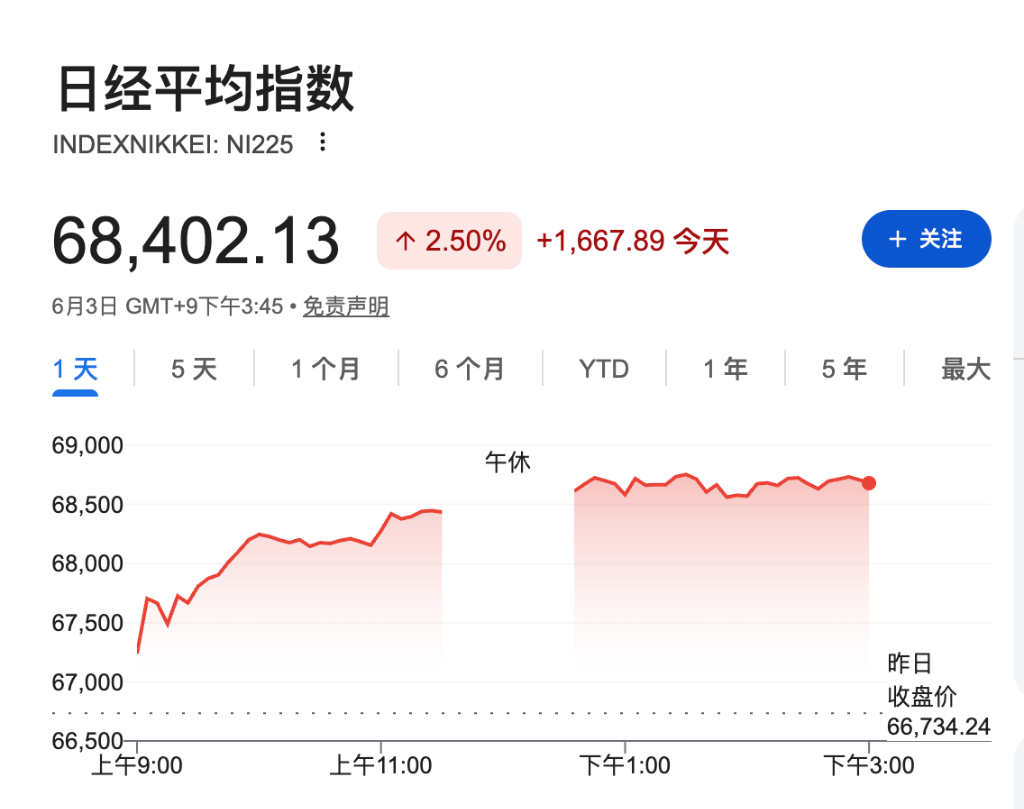
  • 日经225指数收涨2.5%,报68,402.13点。日本东证指数收涨1.8%,报3,996.20点。日经225盘中创历史新高,涨幅超3%。
  • 印尼基准股指日内跌幅近5%,为2025年4月初以来新低。
  • 霍尔木兹海峡局势升温:美国国务卿称伊朗已在该海峡大范围布雷,布伦特原油升至98美元/桶,但市场整体情绪未被压垮。
  • 韩国市场因公众假期休市。澳大利亚ASX200上涨0.62%。
  • 日元徘徊160关口,市场等待日本央行行长植田和男讲话,干预风险令空头谨慎。
  • 黄金下跌0.7%至4456美元/盎司。比特币一度下跌约1.2%至66703美元徘徊于两个月低点,以太坊创三个月新低。

科技股提振日股指新高

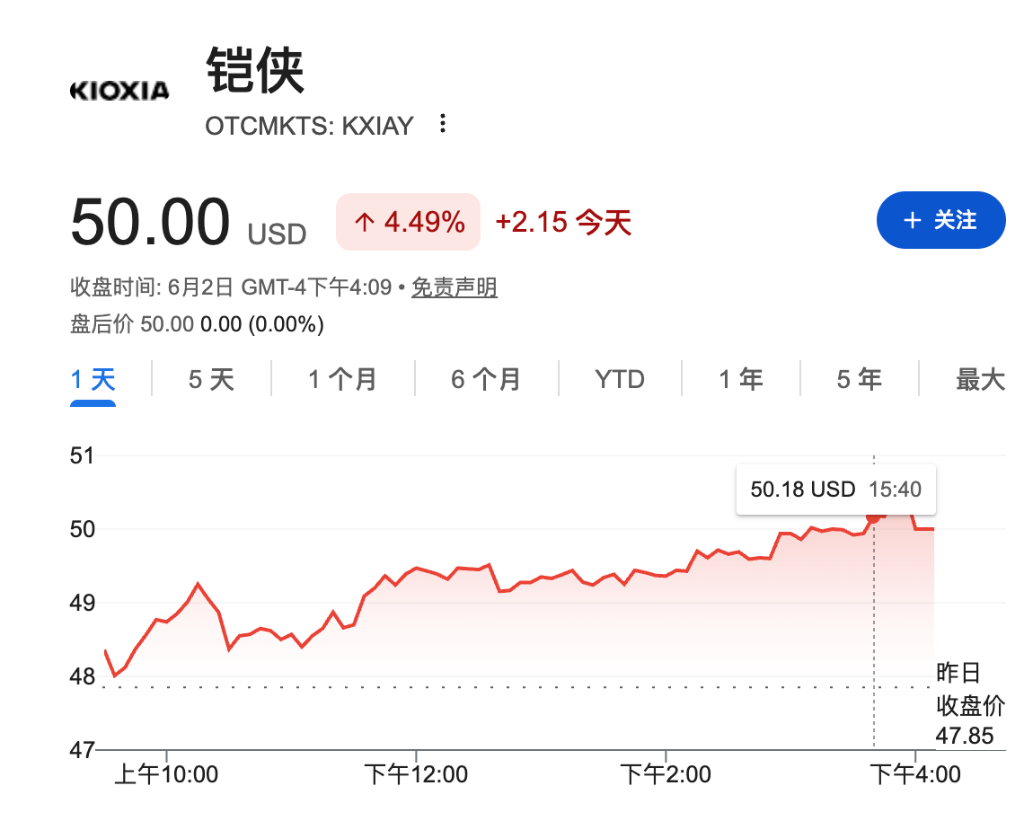
日经225指数盘中一度大涨超3%创下历史新高,最终收涨2.5%,报68,402.13点。半导体行业景气度持续攀升:Kioxia市值一度超越丰田,跃居日本第二;同时,设备厂商Toto计划将芯片相关资本开支占比提升至50%以上,为板块提供了坚实的基本面支撑。
霍尔木兹海峡被布雷,油价逼近100美元

市场情绪并非毫无裂缝。

美国国务卿鲁比奥周二在参议院外交关系委员会作证时措辞强硬:"他们正在向商船开火,并在霍尔木兹海峡大范围布雷——那是国际水域。"这是他自今年2月28日伊朗战争爆发以来首次出席国会听证。

一名白宫官员随后告诉CNBC,五角大楼已摧毁大量水雷及逾40艘布雷船只。

霍尔木兹海峡是全球能源运输的咽喉要道——战前约五分之一的全球石油和液化天然气经此通过。目前该水道可见的商业船只流量依然有限。

油价随即上行。布伦特原油期货涨约2%至98美元/桶,WTI原油涨2.2%至96美元/桶。
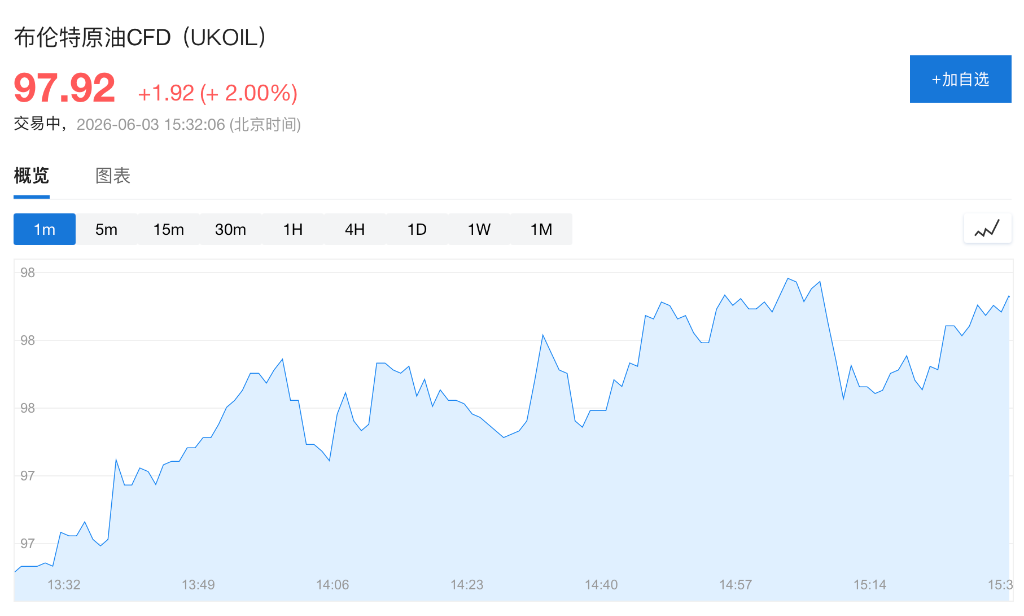
不过,据彭博宏观策略师David Savage的评论,"伊朗局势最初打压了风险偏好,并将WTI推向96美元/桶,但随后油价有所回落,为亚洲开盘提供了及时的情绪支撑。"

与此同时,特朗普对谈判前景保持乐观。他否认了伊朗官方媒体关于双方谈判已暂停的报道,称两国"持续"保持沟通,包括"今天"。

日元卡在160,市场等待植田和男开口

日元汇率徘徊在159.94附近,逼近160这一关键心理关口。
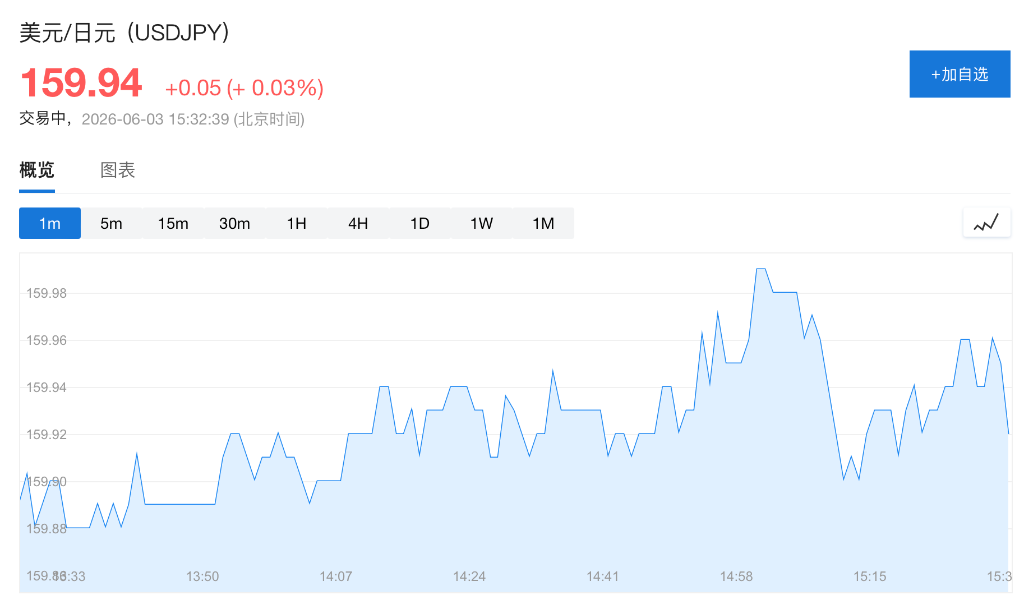
交易员对于突破160持谨慎态度,原因是当局随时可能出手干预以支撑日元。市场正等待日本央行行长植田和男(Kazuo Ueda)的计划讲话,寻找利率前景的线索。

债券市场方面,美国10年期国债收益率小幅上行1个基点至4.45%。美国4月职位空缺数跳升至近两年高位,裁员人数下降,劳动力市场韧性信号进一步强化了市场对美联储下一步将加息的押注。

eToro的Bret Kenwell表示:"就业市场继续站稳脚跟。市场寄望于能源价格在一季度地缘政治冲击后回落,让美联储在下半年通胀降温的同时保持按兵不动。加上盈利预期上调,这些因素合力有望推动股价进一步走高。"

黄金、比特币下跌

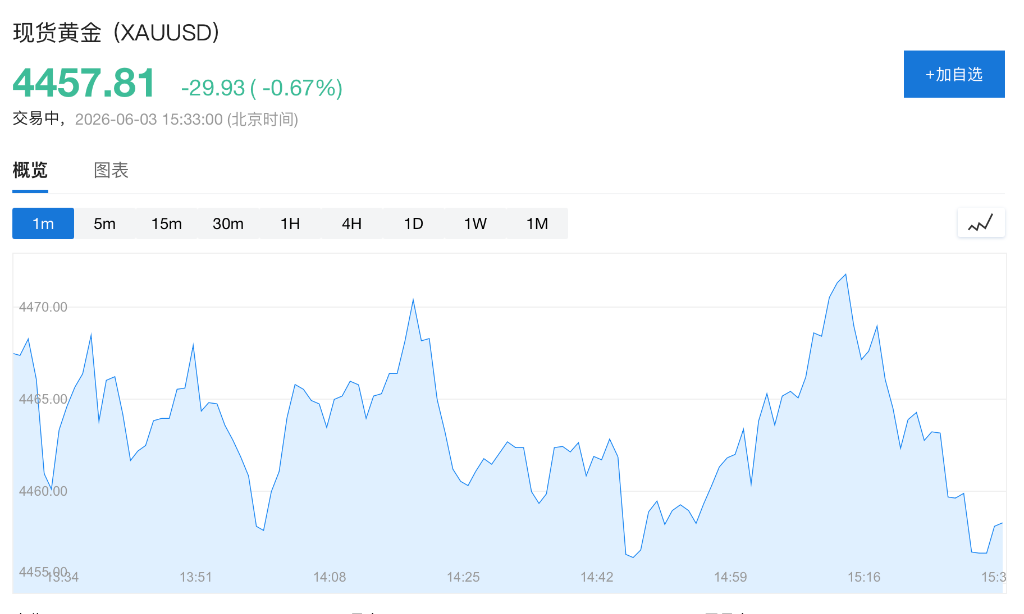
黄金小幅下跌0.7%至4457美元/盎司,通胀担忧令市场预期借贷成本将维持高位。
比特币一度下跌约1.2%至66703美元徘徊于两个月低点,以太坊创三个月新低。
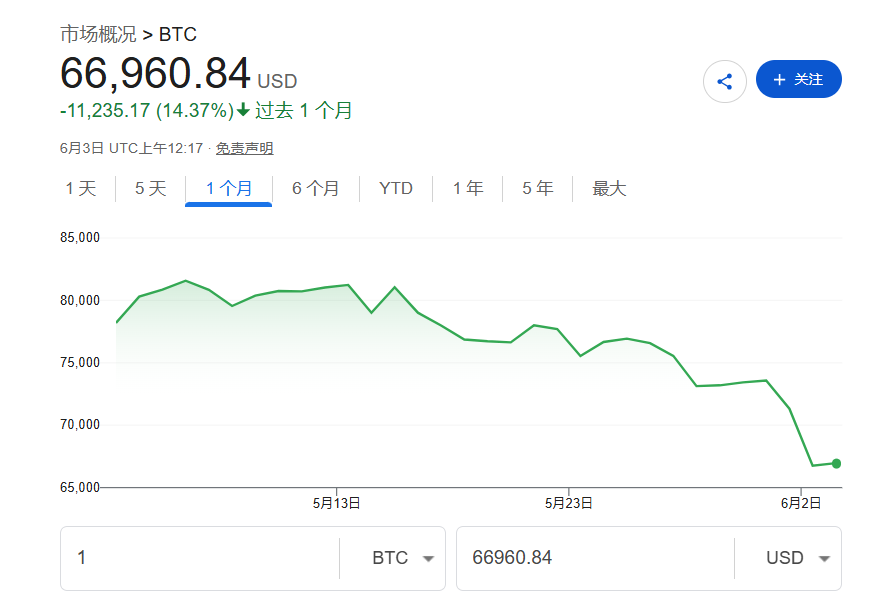
据分析,ETF资金外流、Strategy减持等只是表象,根本原因是全球资本有了更多选择:担心通胀的买黄金和能源,追求成长的买AI,就连想布局加密的投资者也不必非买比特币。比特币当前的熊市逻辑已变——“稀缺性不再足够”。


Related Reads

The Crypto Scene Is Dead, Perpetual Swaps Are Eternal

The crypto industry is undergoing a fundamental shift. The era defined by minting novel, native digital assets (altcoins) is fading. These assets, lacking real-world cash flows or clear value, are losing relevance as attention and capital flow elsewhere. Two powerful external forces are reshaping the space. First, traditional assets like U.S. stocks, bonds, gold, and oil are being tokenized and traded on-chain. Second, the explosive growth of AI, with its tangible products, has overshadowed crypto's once-dominant "future narrative." This marks a critical pivot: crypto is transitioning from being a "factory for new assets" to becoming a "global conduit for existing assets." Its validated utility is not complex financial reinvention but efficient global settlement, transfer, and trading—the original promise of blockchain. Stablecoins like USDT and USDC exemplify this, offering faster dollar movement rather than replacing it. Consequently, native ecosystems like Ethereum face profound challenges. While still crucial infrastructure, ETH struggles to capture value as users interact with Layer 2s or trade traditional assets without needing to hold it. DeFi's grand narrative of rebuilding finance has narrowed to core needs like cheap transfers and deep liquidity. The true breakout innovation is the perpetual contract (Perp). It brilliantly bypasses the complexities of direct asset ownership (custody, compliance, dividends) by creating pure price exposure. Users can speculate on the price movement of *any* asset—NVIDIA, gold, oil—24/7, globally, and with leverage. This "price casino" model, while risky and ethically fraught, delivers unmatched liquidity and accessibility. Projects like Hyperliquid succeeded not by inventing new mechanics but by perfecting the timing and execution of this model. Key drivers included making on-chain Perps feel like centralized exchanges, post-FTX trust migration towards transparency, and rising demand to trade macro assets and equities round-the-clock. In conclusion, the crypto world's most enduring successes are the dollar (via stablecoins), Bitcoin, and trading. Its new frontier is not creating alternative assets but providing a seamless, perpetual trading layer—a new API—for the world's existing financial system. The age of native altcoins is over; the age of perpetual synthetic exposure has begun.

Odaily星球日报5m ago

The Crypto Scene Is Dead, Perpetual Swaps Are Eternal

Odaily星球日报5m ago

After Marvell's 32% Surge, the Chinese Chip Family Behind It Emerges

The stock price of Marvell Technology surged 32.5% on June 2nd, driven by NVIDIA CEO Jensen Huang highlighting its custom ASICs and optical interconnects as core to AI data center architecture. This event brought attention to the Chinese semiconductor family behind Marvell: the Dai siblings. The story centers on three siblings, all UC Berkeley graduates, whose three-decade entrepreneurial journey aligns with major semiconductor industry shifts. In 1995, youngest sister Dai Wei Li co-founded Marvell with her husband Sehat Sutardja and his brother, focusing on storage controllers. Eldest brother Dai Wei Min founded EDA company Ultima, later sold to Cadence, and later founded VeriSilicon (芯原) in China, becoming a leading semiconductor IP provider. Second brother Dai Wei Jin co-founded EDA firm Silicon Perspective (sold to Cadence) and GPU IP company Vivante, later acquired by VeriSilicon. The combined "Dai-Sutardja" family network extends beyond Marvell. Their ventures and investments form a comprehensive ecosystem for the post-Moore's Law, chiplet era. Key holdings include: Dream Big Semiconductor (AI SuperNICs, acquired by Arm), Alphawave (high-speed SerDes IP, acquired by Qualcomm), and Silicon Box (a chiplet advanced packaging foundry). VeriSilicon itself thrives on the AI ASIC and IP boom in China. Collectively, the family's AI infrastructure-related portfolio is estimated at over $22 billion. Their strategy represents a distinct path: building critical components for open standards and key manufacturing capacity in the chiplet era, rather than pursuing standalone AI chip dominance. While this path may not create the next NVIDIA, it has enabled repeated successful exits and sustained influence within the global semiconductor industry.

marsbit1h ago

After Marvell's 32% Surge, the Chinese Chip Family Behind It Emerges

marsbit1h ago

Microsoft is Afraid of Being Marginalized by AI Giants

Microsoft, once the defining force of the PC era, now faces a familiar challenge in the AI age: the risk of being relegated to a profitable but invisible infrastructure provider. This anxiety was laid bare at Build 2026, where CEO Satya Nadella unveiled a major strategic pivot. The catalyst was a quiet April agreement that dissolved Microsoft's exclusive licensing and cloud-hosting deal with OpenAI, its once-vital partner. This erased Microsoft's key AI moat. With OpenAI and Anthropic defining AI applications and gaining enterprise traction—even within Microsoft's own ranks—Nadella had to answer: without exclusivity, what is Microsoft's role? The answer was a suite of seven in-house AI models, a developer-focused AI workstation (Surface RTX Spark Dev Box), and, most crucially, the Agent 365 platform for enterprise AI governance. The models, notably targeting Anthropic's strengths in coding and enterprise, signal a defensive move. However, the broader strategy is to make the models themselves less decisive. Financially, Microsoft's AI revenue is strong, driven largely by Azure running others' models. Yet its user-facing products like Copilot show weak penetration and engagement. Microsoft earns infrastructure money but lacks direct user mindshare. Nadella's core fear is being "hollowed out." As OpenAI and Anthropic prepare for IPOs and gain financial independence, they may build their own infrastructure, threatening Azure's lucrative AI revenue stream. Microsoft's window is to entrench itself deeper: not as the model creator, but as the indispensable platform for securely deploying, managing, and governing all AI models within the enterprise through Agent 365. Build 2026 revealed Microsoft's bet: in the AI era, the ultimate power lies not in any single model, but in the enterprise "operating system" that controls them. Nadella is determined to ensure Microsoft is the driver of this new era, not just a passenger.

marsbit1h ago

Microsoft is Afraid of Being Marginalized by AI Giants

marsbit1h ago

Trading

Spot
Futures

Hot Articles

What is $BITCOIN

DIGITAL GOLD ($BITCOIN): A Comprehensive Analysis Introduction to DIGITAL GOLD ($BITCOIN) DIGITAL GOLD ($BITCOIN) is a blockchain-based project operating on the Solana network, which aims to combine the characteristics of traditional precious metals with the innovation of decentralized technologies. While it shares a name with Bitcoin, often referred to as “digital gold” due to its perception as a store of value, DIGITAL GOLD is a separate token designed to create a unique ecosystem within the Web3 landscape. Its goal is to position itself as a viable alternative digital asset, although specifics regarding its applications and functionalities are still developing. What is DIGITAL GOLD ($BITCOIN)? DIGITAL GOLD ($BITCOIN) is a cryptocurrency token explicitly designed for use on the Solana blockchain. In contrast to Bitcoin, which provides a widely recognized value storage role, this token appears to focus on broader applications and characteristics. Notable aspects include: Blockchain Infrastructure: The token is built on the Solana blockchain, known for its capacity to handle high-speed and low-cost transactions. Supply Dynamics: DIGITAL GOLD has a maximum supply capped at 100 quadrillion tokens (100P $BITCOIN), although details regarding its circulating supply are currently undisclosed. Utility: While precise functionalities are not explicitly outlined, there are indications that the token could be utilized for various applications, potentially involving decentralized applications (dApps) or asset tokenization strategies. Who is the Creator of DIGITAL GOLD ($BITCOIN)? At present, the identity of the creators and development team behind DIGITAL GOLD ($BITCOIN) remains unknown. This situation is typical among many innovative projects within the blockchain space, particularly those aligning with decentralized finance and meme coin phenomena. While such anonymity may foster a community-driven culture, it intensifies concerns about governance and accountability. Who are the Investors of DIGITAL GOLD ($BITCOIN)? The available information indicates that DIGITAL GOLD ($BITCOIN) does not have any known institutional backers or prominent venture capital investments. The project seems to operate on a peer-to-peer model focused on community support and adoption rather than traditional funding routes. Its activity and liquidity are primarily situated on decentralized exchanges (DEXs), such as PumpSwap, rather than established centralized trading platforms, further highlighting its grassroots approach. How DIGITAL GOLD ($BITCOIN) Works The operational mechanics of DIGITAL GOLD ($BITCOIN) can be elaborated on based on its blockchain design and network attributes: Consensus Mechanism: By leveraging Solana’s unique proof-of-history (PoH) combined with a proof-of-stake (PoS) model, the project ensures efficient transaction validation contributing to the network's high performance. Tokenomics: While specific deflationary mechanisms have not been extensively detailed, the vast maximum token supply implies that it may cater to microtransactions or niche use cases that are still to be defined. Interoperability: There exists the potential for integration with Solana’s broader ecosystem, including various decentralized finance (DeFi) platforms. However, the details regarding specific integrations remain unspecified. Timeline of Key Events Here is a timeline that highlights significant milestones concerning DIGITAL GOLD ($BITCOIN): 2023: The initial deployment of the token occurs on the Solana blockchain, marked by its contract address. 2024: DIGITAL GOLD gains visibility as it becomes available for trading on decentralized exchanges like PumpSwap, allowing users to trade it against SOL. 2025: The project witnesses sporadic trading activity and potential interest in community-led engagements, although no noteworthy partnerships or technical advancements have been documented as of yet. Critical Analysis Strengths Scalability: The underlying Solana infrastructure supports high transaction volumes, which could enhance the utility of $BITCOIN in various transaction scenarios. Accessibility: The potential low trading price per token could attract retail investors, facilitating wider participation due to fractional ownership opportunities. Risks Lack of Transparency: The absence of publicly known backers, developers, or an audit process may yield skepticism regarding the project's sustainability and trustworthiness. Market Volatility: The trading activity is heavily reliant on speculative behavior, which can result in significant price volatility and uncertainty for investors. Conclusion DIGITAL GOLD ($BITCOIN) emerges as an intriguing yet ambiguous project within the rapidly evolving Solana ecosystem. While it attempts to leverage the “digital gold” narrative, its departure from Bitcoin's established role as a store of value underscores the need for a clearer differentiation of its intended utility and governance structure. Future acceptance and adoption will likely depend on addressing the current opacity and defining its operational and economic strategies more explicitly. Note: This report encompasses synthesised information available as of October 2023, and developments may have transpired beyond the research period.

363 Total ViewsPublished 2025.05.13Updated 2025.05.13

What is $BITCOIN

Discussions

Welcome to the HTX Community. Here, you can stay informed about the latest platform developments and gain access to professional market insights. Users' opinions on the price of BTC (BTC) are presented below.

活动图片