Bitcoin Red Team founder turns to Chinese AI: ‘It absolutely guts me’

cointelegraphPublished on 2026-08-10Last updated on 2026-08-10

Abstract

A Bitcoin security researcher, Rob Hamilton, states he has been forced to revert to using open-source Chinese AI models after OpenAI restricted his access. As CEO of AnchorWatch, he had begun integrating OpenAI's tools into his work with the Bitcoin Red Team, a volunteer group scanning Bitcoin-related code for vulnerabilities. His access was cut off the next day, preventing further investigation. Hamilton expressed frustration, saying that while malicious actors face no such restrictions, those conducting security research for harm reduction are hindered. This incident highlights a broader concern in the crypto industry about limited access to powerful AI tools for defensive security purposes, with only a select few major players reportedly having obtained such access.

A Bitcoin security researcher says he has been forced to go back to using open-source Chinese AI models after finding himself restricted from analyzing further codebases by OpenAI, highlighting a growing concern that the most capable AI tools aren’t being made available to defenders.

In an X post on Tuesday, AnchorWatch CEO Rob Hamilton said he had begun integrating OpenAI’s Trust & Cyber capabilities into his Bitcoin Red Team work on Saturday, only to find his access restricted the following morning.

“It absolutely guts me as a patriotic American to have to do this, but I will be going back to using Chinese open source models to conduct my research to protect Bitcoin infrastructure,” he added.

Bitcoin Red Team, a group of volunteers, has been using AI tools and human review to scan hundreds of open-source Bitcoin-related repositories for vulnerabilities, with efforts accelerating days after the Coldcard hardware wallet hack, which has seen over $100 million in Bitcoin stolen.

Last month, crypto executives told Cointelegraph that many of crypto’s biggest players are still waiting to gain access to powerful new AI models to strengthen their code from attacks, with only a select few having been able to get it.

“I am now prevented from being able to continue the investigation in a further effort to make sure their code changes are sufficient, as well as understand if there are other issues that have yet to be discovered,” said Hamilton.

“Black hats will not hit these issues. The white hats will. We’ve hit a local minima in policy,” said Hamilton. “Intelligence is unrestricted for those who don’t follow rules, and those who engage in harm reduction are left on the sidelines.”

Related: Crypto firms still seeking frontier AI access; only select few have it

Trending Cryptos

Related Questions

QWhy did Rob Hamilton switch back to using Chinese AI models for his Bitcoin security research?

ARob Hamilton switched back to using Chinese open-source AI models after his access to OpenAI's capabilities was restricted, preventing him from continuing his vulnerability analysis work for the Bitcoin Red Team.

QWhat is the primary purpose of the Bitcoin Red Team as described in the article?

AThe Bitcoin Red Team is a volunteer group that uses AI tools and human review to scan hundreds of open-source Bitcoin-related code repositories for security vulnerabilities.

QWhat specific event accelerated the Bitcoin Red Team's security efforts recently?

ATheir efforts accelerated following the Coldcard hardware wallet hack, which resulted in over $100 million in Bitcoin being stolen.

QWhat concern does Rob Hamilton express about AI access and cybersecurity in his statement?

AHe expresses concern that powerful AI tools are not being made available to security defenders ('white hats'), while those who break the rules ('black hats') face no such restrictions, creating a disadvantage for those working on harm reduction.

QAccording to the article, what is the general situation regarding access to powerful AI models for crypto firms?

AMany major crypto firms are still waiting to gain access to powerful new AI models to strengthen their code against attacks, with only a select few having been granted access so far.

Related Reads

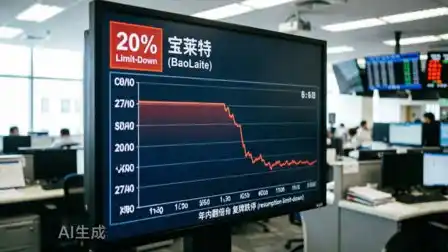
Stock Price Doubles Within the Year, Plummets 20% After Resumption, Baolai Medical's 'Chip Backdoor Listing' Script Ends

On August 10, 2026, BPL (300246.SZ) resumed trading after a nearly week-long suspension and immediately fell by a 20% limit-down. This plunge was triggered by the termination of a planned controlling stake transfer, dashing earlier market speculation. In January 2026, Zhejiang Quwei Zhihe Partnership entered as a significant shareholder, sparking hopes. Investors speculated that its backer, Weigu Information—a specialized "little giant" company in high-reliability solid-state storage chips—might be seeking a backdoor listing through BPL. This "cross-industry restructuring" expectation fueled a strong rally, with BPL's stock price more than doubling in 2026 prior to the halt. However, the deal was called off on August 7, directly causing the sharp sell-off. Underlying BPL's vulnerability is its fundamentally weak business. The company, a medical device firm, is mired in losses, having reported three consecutive years of net losses totaling over 200 million yuan. Its core hemodialysis business is squeezed by government procurement price cuts, while growth in its patient monitor segment has stalled. Furthermore, BPL faces imminent debt pressure with convertible bonds worth approximately 218 million yuan due in September 2026, and its current stock price is far below the conversion price. The failed control transfer may represent a delayed release of negative news, but BPL's core challenges remain: reversing operational losses and addressing its urgent liquidity crisis.

marsbit1h ago

Stock Price Doubles Within the Year, Plummets 20% After Resumption, Baolai Medical's 'Chip Backdoor Listing' Script Ends

marsbit1h ago

Moore Threads, Having Just Raised 8 Billion, Is Already Planning a Hong Kong IPO

On August 9th, Moore Threads announced plans for a Hong Kong IPO alongside a strong first-half 2026 earnings report. Listed on the Shanghai STAR Market in December 2025 as the "first domestic GPU stock," the company raised 8 billion yuan. Its stock price initially surged but has since fallen 40% from its peak. This decline followed market concerns over its use of substantial idle raised funds for low-risk financial products instead of promised projects. The company's H1 2026 revenue reached 1.74 billion yuan, a 147.4% year-over-year increase, already surpassing its full-year 2025 revenue. This growth is attributed to strong demand for AI and full-feature GPUs, particularly its Kuae AI computing clusters. Despite the revenue surge, Moore Threads remains unprofitable on a non-GAAP basis, with a net loss of 115 million yuan after adjustments. R&D and sales expenses grew significantly. The proposed Hong Kong listing aims to support its global strategy, attract international talent, and improve corporate governance, following the path of other Chinese tech firms pursuing dual listings. However, its港股 IPO valuation may face challenges as international investors could benchmark it against peers like Biren Technology, potentially demanding a discount. In summary, while Moore Threads is expanding rapidly and strategically seeking a港股 listing for global growth, it continues to face profitability challenges amid high costs and market skepticism about its capital allocation and valuation.

marsbit1h ago

Moore Threads, Having Just Raised 8 Billion, Is Already Planning a Hong Kong IPO

marsbit1h ago

Trading

Spot

Hot Articles

What is $BITCOIN

DIGITAL GOLD ($BITCOIN): A Comprehensive Analysis Introduction to DIGITAL GOLD ($BITCOIN) DIGITAL GOLD ($BITCOIN) is a blockchain-based project operating on the Solana network, which aims to combine the characteristics of traditional precious metals with the innovation of decentralized technologies. While it shares a name with Bitcoin, often referred to as “digital gold” due to its perception as a store of value, DIGITAL GOLD is a separate token designed to create a unique ecosystem within the Web3 landscape. Its goal is to position itself as a viable alternative digital asset, although specifics regarding its applications and functionalities are still developing. What is DIGITAL GOLD ($BITCOIN)? DIGITAL GOLD ($BITCOIN) is a cryptocurrency token explicitly designed for use on the Solana blockchain. In contrast to Bitcoin, which provides a widely recognized value storage role, this token appears to focus on broader applications and characteristics. Notable aspects include: Blockchain Infrastructure: The token is built on the Solana blockchain, known for its capacity to handle high-speed and low-cost transactions. Supply Dynamics: DIGITAL GOLD has a maximum supply capped at 100 quadrillion tokens (100P $BITCOIN), although details regarding its circulating supply are currently undisclosed. Utility: While precise functionalities are not explicitly outlined, there are indications that the token could be utilized for various applications, potentially involving decentralized applications (dApps) or asset tokenization strategies. Who is the Creator of DIGITAL GOLD ($BITCOIN)? At present, the identity of the creators and development team behind DIGITAL GOLD ($BITCOIN) remains unknown. This situation is typical among many innovative projects within the blockchain space, particularly those aligning with decentralized finance and meme coin phenomena. While such anonymity may foster a community-driven culture, it intensifies concerns about governance and accountability. Who are the Investors of DIGITAL GOLD ($BITCOIN)? The available information indicates that DIGITAL GOLD ($BITCOIN) does not have any known institutional backers or prominent venture capital investments. The project seems to operate on a peer-to-peer model focused on community support and adoption rather than traditional funding routes. Its activity and liquidity are primarily situated on decentralized exchanges (DEXs), such as PumpSwap, rather than established centralized trading platforms, further highlighting its grassroots approach. How DIGITAL GOLD ($BITCOIN) Works The operational mechanics of DIGITAL GOLD ($BITCOIN) can be elaborated on based on its blockchain design and network attributes: Consensus Mechanism: By leveraging Solana’s unique proof-of-history (PoH) combined with a proof-of-stake (PoS) model, the project ensures efficient transaction validation contributing to the network's high performance. Tokenomics: While specific deflationary mechanisms have not been extensively detailed, the vast maximum token supply implies that it may cater to microtransactions or niche use cases that are still to be defined. Interoperability: There exists the potential for integration with Solana’s broader ecosystem, including various decentralized finance (DeFi) platforms. However, the details regarding specific integrations remain unspecified. Timeline of Key Events Here is a timeline that highlights significant milestones concerning DIGITAL GOLD ($BITCOIN): 2023: The initial deployment of the token occurs on the Solana blockchain, marked by its contract address. 2024: DIGITAL GOLD gains visibility as it becomes available for trading on decentralized exchanges like PumpSwap, allowing users to trade it against SOL. 2025: The project witnesses sporadic trading activity and potential interest in community-led engagements, although no noteworthy partnerships or technical advancements have been documented as of yet. Critical Analysis Strengths Scalability: The underlying Solana infrastructure supports high transaction volumes, which could enhance the utility of $BITCOIN in various transaction scenarios. Accessibility: The potential low trading price per token could attract retail investors, facilitating wider participation due to fractional ownership opportunities. Risks Lack of Transparency: The absence of publicly known backers, developers, or an audit process may yield skepticism regarding the project's sustainability and trustworthiness. Market Volatility: The trading activity is heavily reliant on speculative behavior, which can result in significant price volatility and uncertainty for investors. Conclusion DIGITAL GOLD ($BITCOIN) emerges as an intriguing yet ambiguous project within the rapidly evolving Solana ecosystem. While it attempts to leverage the “digital gold” narrative, its departure from Bitcoin's established role as a store of value underscores the need for a clearer differentiation of its intended utility and governance structure. Future acceptance and adoption will likely depend on addressing the current opacity and defining its operational and economic strategies more explicitly. Note: This report encompasses synthesised information available as of October 2023, and developments may have transpired beyond the research period.

1.7k Total ViewsPublished 2025.05.13Updated 2025.05.13

What is $BITCOIN

Discussions

Welcome to the HTX Community. Here, you can stay informed about the latest platform developments and gain access to professional market insights. Users' opinions on the price of BTC (BTC) are presented below.

活动图片