a16z Charts of the Week: AI Costs Halved and Usage Doubled This Year, Major Life Milestones for 30-Year-Olds in the US Delayed Across the Board

marsbitPublished on 2026-03-01Last updated on 2026-03-01

Abstract

a16z's Charts of the Week explores four key trends. First, while a "DExit" (Delaware Exodus) narrative exists due to high-profile companies leaving over legal concerns, data shows a more complex reality. Delaware's overall share of U.S. businesses has actually grown, though Wyoming has seen a surge in LLC registrations. Second, AI demonstrates the Jevons Paradox: as the cost to process AI tokens halved this year, usage doubled. Demand for older GPU rentals (H100, A100) is also rising, contradicting predictions of a compute glut. Historical parallels suggest the full economic impact of AI may take time to materialize. Third, AI capital expenditure is massive, comparable to annual U.S. bank lending and significantly larger than U.S. corporate tax income or the military budget of any non-U.S. G7 nation. Fourth, the prediction market Kalshi is outperforming professional forecasters and futures markets in predicting the Federal Funds Rate, providing a valuable high-frequency, probabilistic benchmark. Finally, data shows a stark delay in life milestones for 30-year-olds in the U.S. Since the 1980s, far fewer are living independently, married, living with children, or owning a home. The only exception is college attainment, which has nearly doubled since 1995, though the value of a degree is increasingly questioned.

Author: a16z New Media

Compiled by: Deep Tide TechFlow

Original link:https://www.a16z.news/p/charts-of-the-week-dexit-real-or

Deep Tide Introduction: This edition of a16z's Charts of the Week covers four topics, each worthy of its own article: falling AI costs triggering the Jevons effect, the true scale of tech giant capital expenditures, Kalshi prediction markets outperforming professional forecasting agencies, and the comprehensive delay of life milestones for 30-year-olds in the US. The data sources are solid, and the perspective is calm and restrained, making it a high-quality reference for understanding the intersection of current tech and macro trends.

DExit......Real Trend or Illusion?

Delaware remains the preferred state for US corporate registration, but this position is quietly loosening:
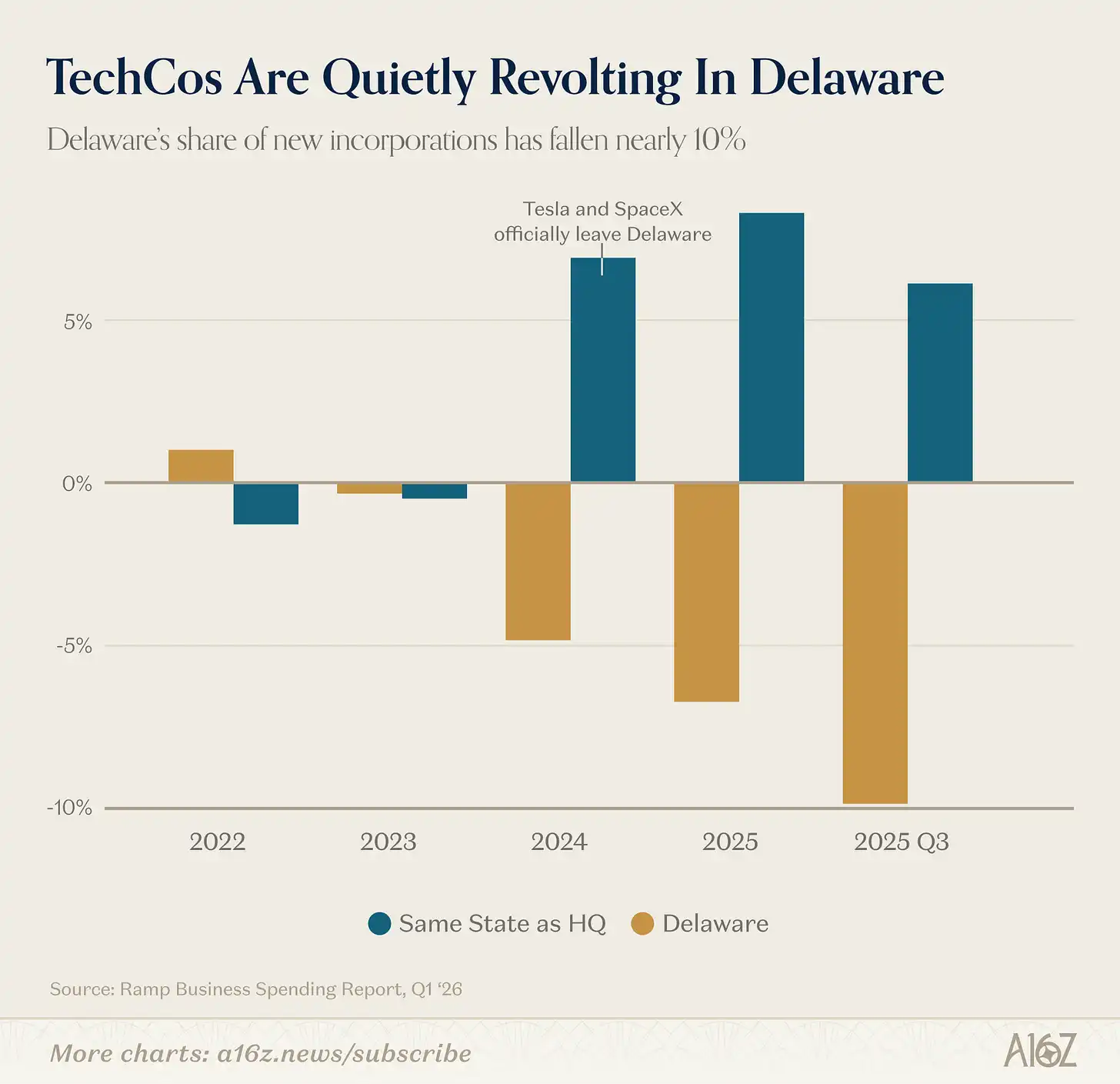
According to Ramp's data, Delaware's share of new company registrations has been declining since 2023, with a drop of about 10% in Q3 2025.

History doesn't repeat itself exactly, but it often rhymes......maybe.

Delaware hasn't always been the holy land for corporate registration.

About a century ago, Delaware replaced New Jersey—the original "Mother of Trusts"—as the preferred state for incorporation. New Jersey lost its advantage because then-Governor Woodrow Wilson tried to curb "corporate abuses," severely worsening the state's business environment. Delaware's corporate law was modeled on pre-Wilson era New Jersey law and was happy to welcome the departing companies. It then, along with the Delaware Court of Chancery, spent nearly 100 years building a reputation as a mature and fair venue for resolving disputes between companies and investors.

However, what took a century to build began to动摇 in just a few years. Rightly or wrongly, the Delaware Court of Chancery has recently taken a more lenient stance on shareholder litigation (especially in several high-profile cases, including but not limited to Tesla), and companies have really started moving their registrations elsewhere. Goodnight, and good luck, Delaware.

This is at least the mainstream narrative, but other data shows the situation is more complex.

First, even Delaware's founding myth itself isn't entirely accurate.

It wasn't until the 1980s (about 60 years after Governor Wilson's term) that Delaware truly surpassed New Jersey to become the number one state in the US for the number of corporate registrations:
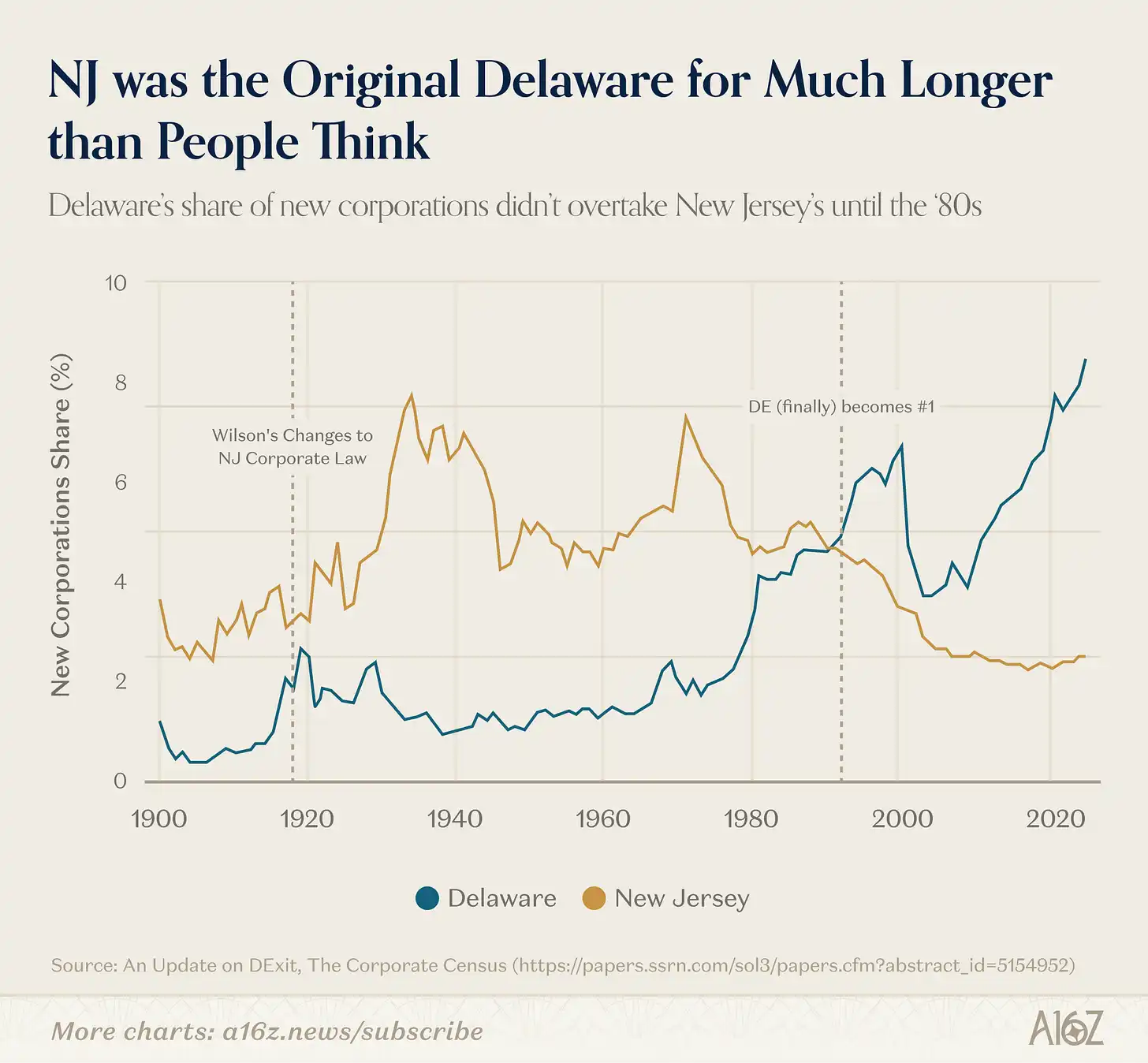
New Jersey dominated for much longer than the mainstream narrative suggests. The catalyst for Delaware's eventual overtaking was likely its passage of a series of laws related to director liability, which were particularly favored by public companies, coupled with network effects that continuously reinforced themselves, creating their own inertia.

Second, regardless of what's happening with high-profile public companies (and the companies in Ramp's data), Delaware as a whole still seems to be doing well, even more than well:
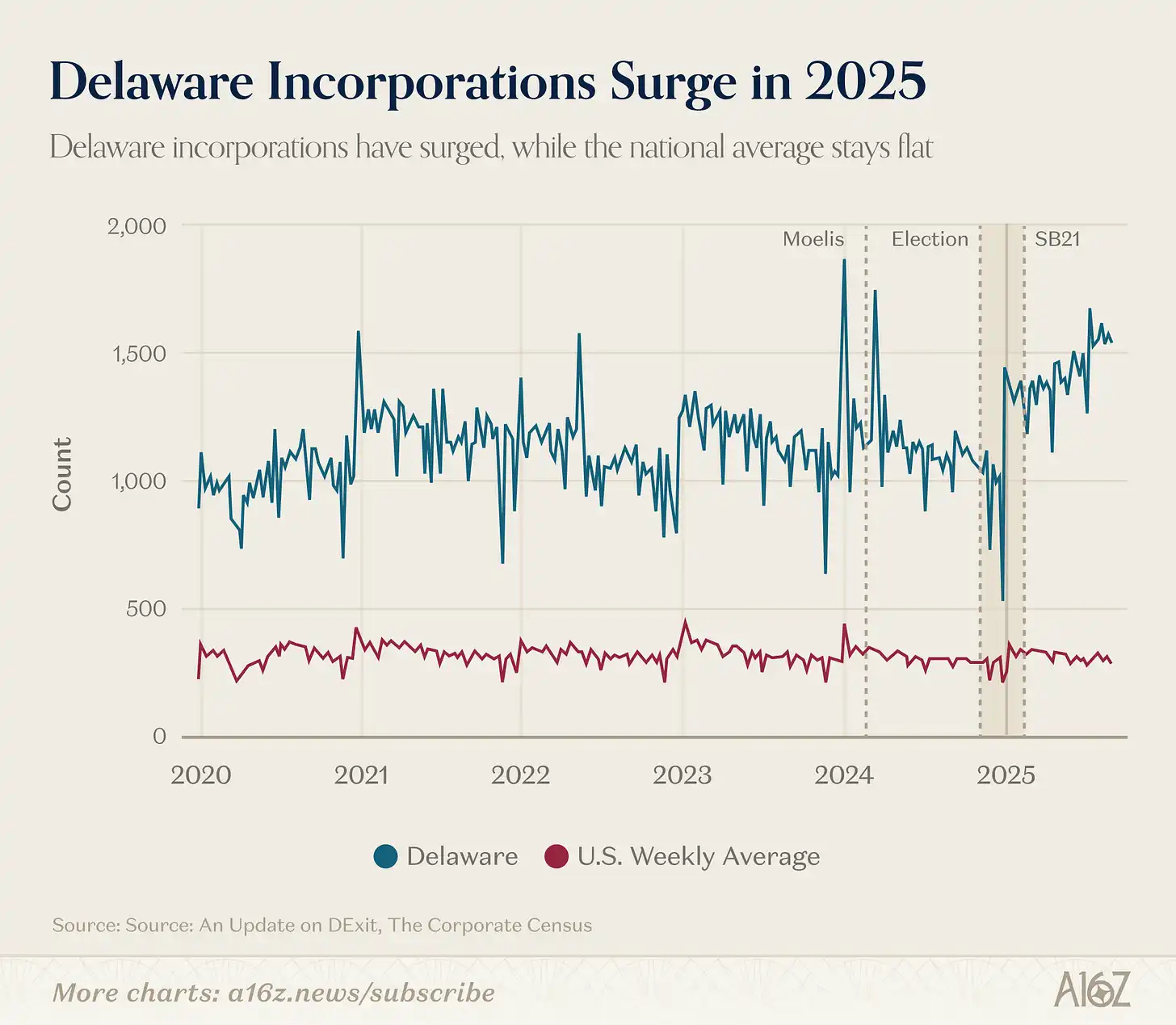
According to data published by the Harvard Law School Forum on Corporate Governance, Delaware's share of the total number of US companies actually increased significantly from late 2024 to 2025.

In fact, if you're looking for a clear case of "DExit," it's probably this one, and it has nothing to do with Tesla, but rather involves a specific type of company structure:
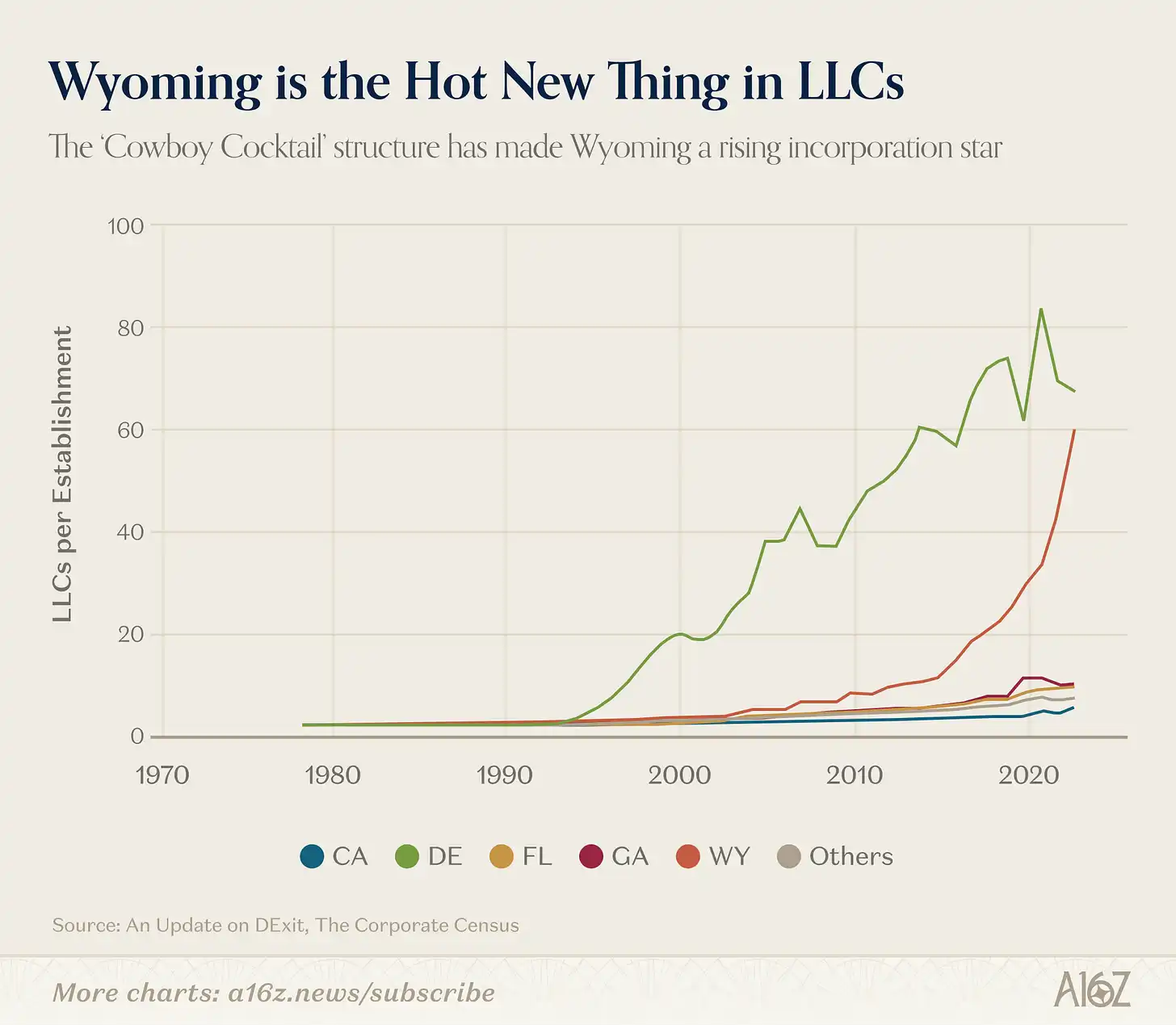
Wyoming LLCs began to surge around 2015.

Why? This is likely related to specific asset protection and privacy provisions in Wyoming's LLC law, which the state itself promotes as a "cowboy cocktail."

In short, the point here is not to say that DExit isn't happening (because at least some data suggests it is—even if it's just a few high-profile companies moving out, it's significant), but the reality is certainly more complex than the mainstream narrative presents.

The reality is that Delaware still enjoys the advantage of being the default option, not to mention all the network effects tied to it, and these are very difficult to shake.

We published an earlier version of this chart before, but as more data comes in, the effect becomes more stunning.

Token costs fall, Token consumption rises:
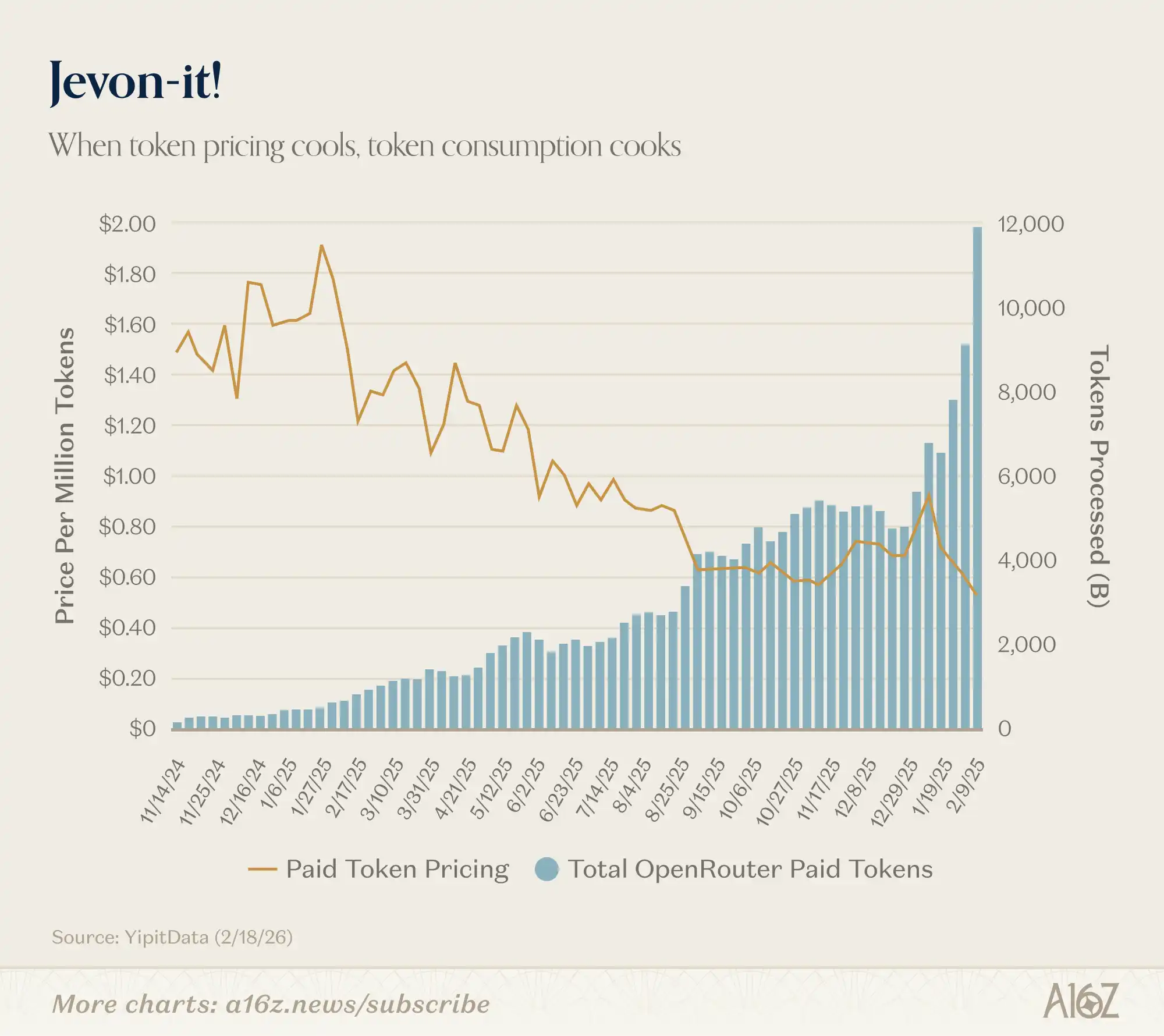
Since the beginning of this year, paid Token pricing has dropped from about 90 cents per million Tokens to 50 cents, while the number of Tokens processed has nearly doubled, from about 6,000 to 12,000.

This is a typical Jevons effect. The cheaper AI gets, the more AI we use. Delightful.

Remember when people said that when newer, better GPUs came out, the old ones would be unwanted?

That doesn't quite seem to be the case either:
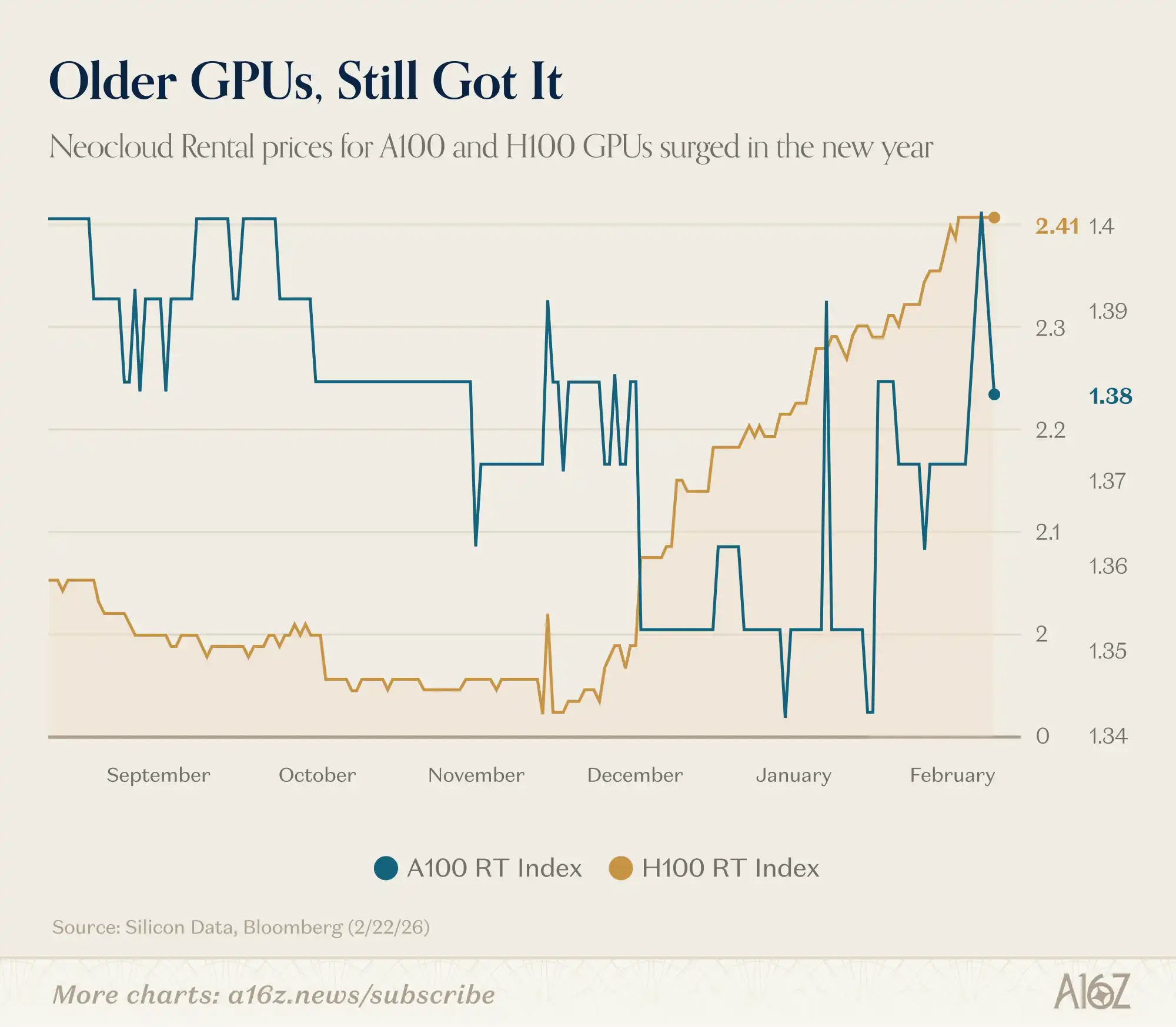
According to Silicon Data, rental prices for NVIDIA's H100 and A100 have both increased this year.

The market is far from showing signs of a compute oversupply; instead, it seems we haven't even scratched the surface of existing demand.

This comparison isn't a perfect analogy, but if history offers any reference, it might take us a while longer to truly see what an "AI-driven" economy really looks like:
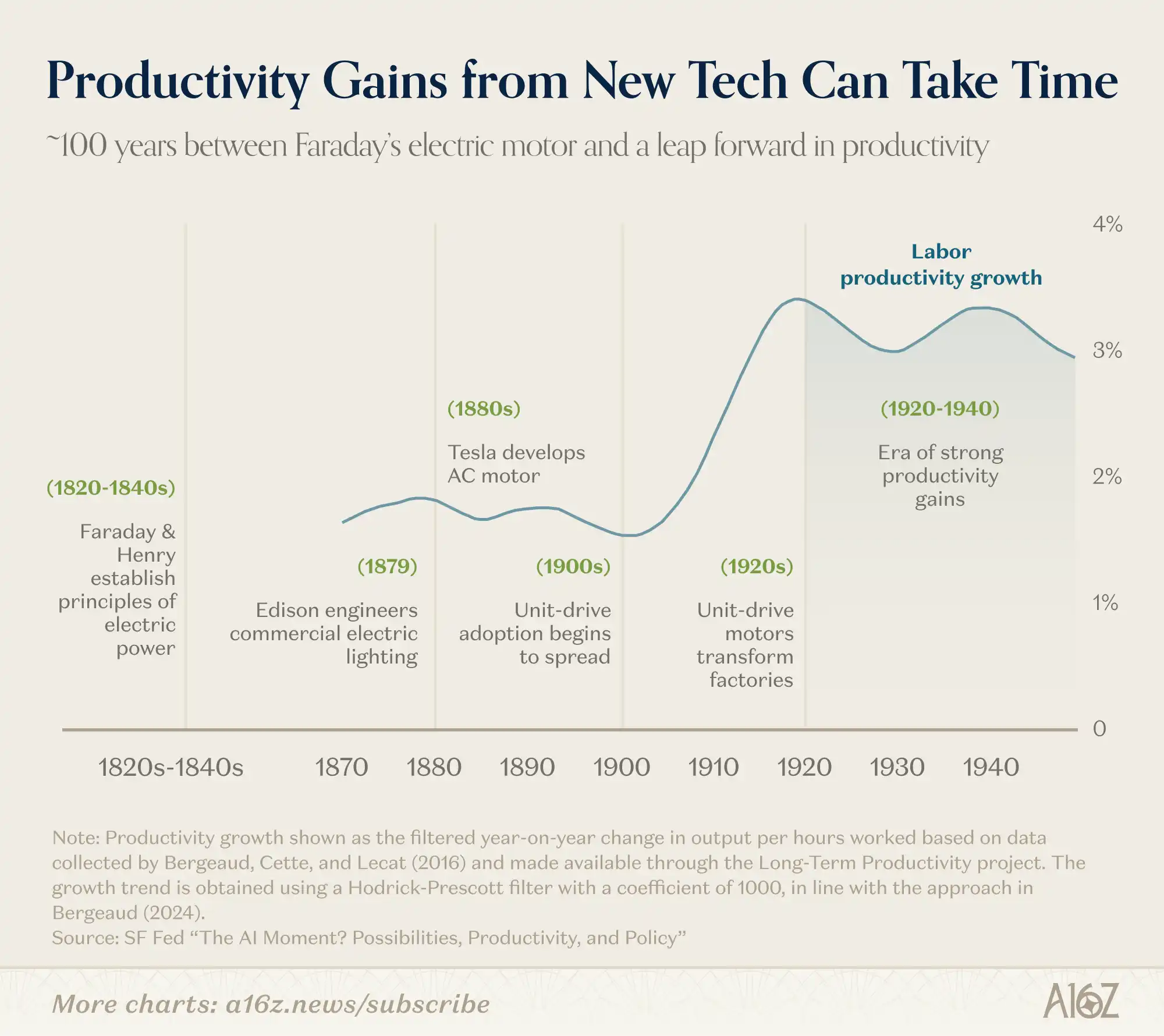
From the initial discussions of electric current by Faraday and Henry to the true explosion of industrial productivity waves in the first half of the 20th century, it took about 100 years.

Technology iteration cycles have indeed accelerated since the 1820s, but the variables involved in a platform-level shift are still extremely numerous.

Roy Amara famously said, "We tend to overestimate the effect of a technology in the short run and underestimate the effect in the long run." (Paraphrased common interpretation of the quote).

Capital Expenditure, Put in Perspective

Here's some data that never gets old: AI capital expenditure is huge.

Consider these comparisons:

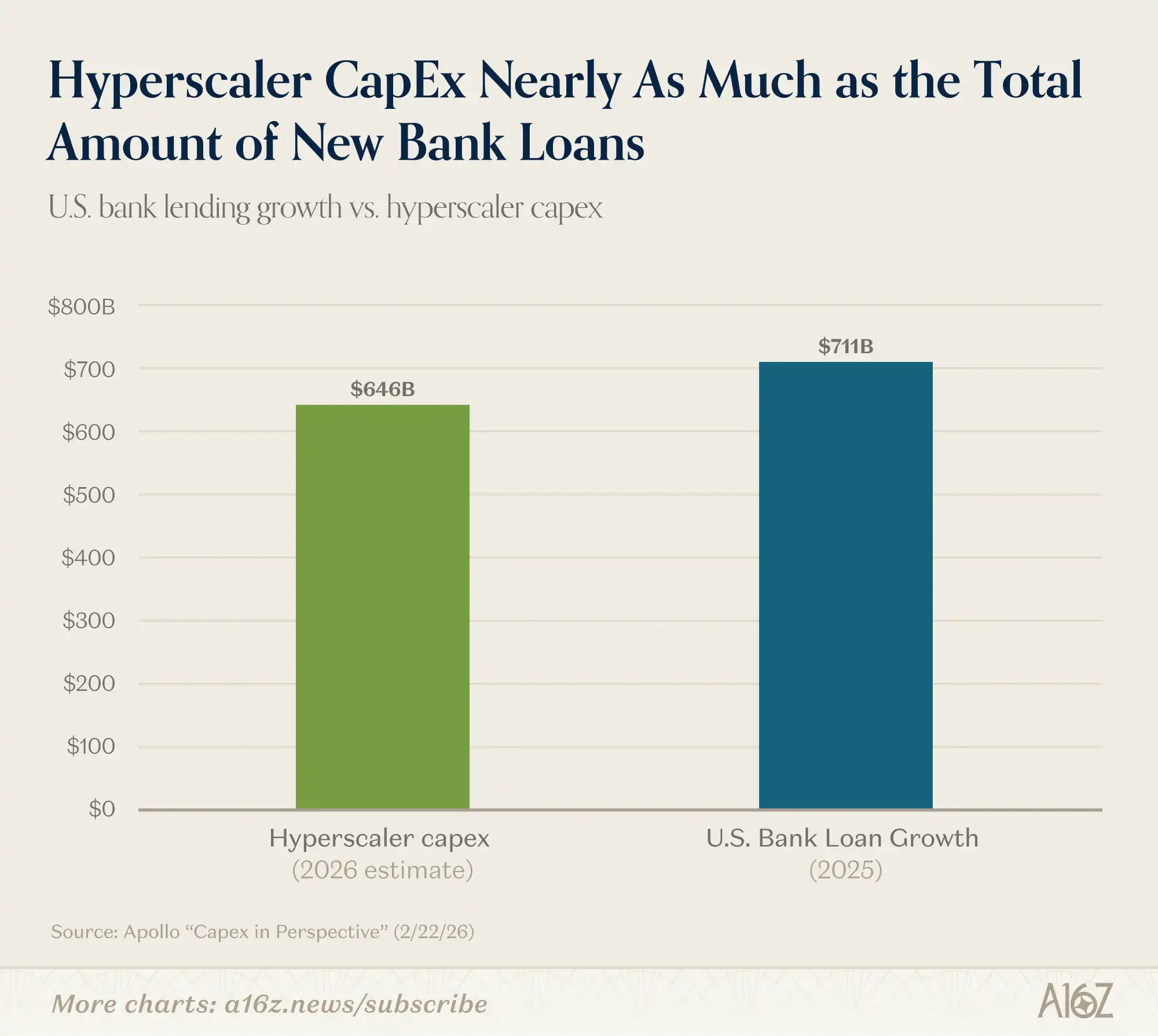
2026 AI capex is projected to be close to the total net new lending by US banks in 2025:
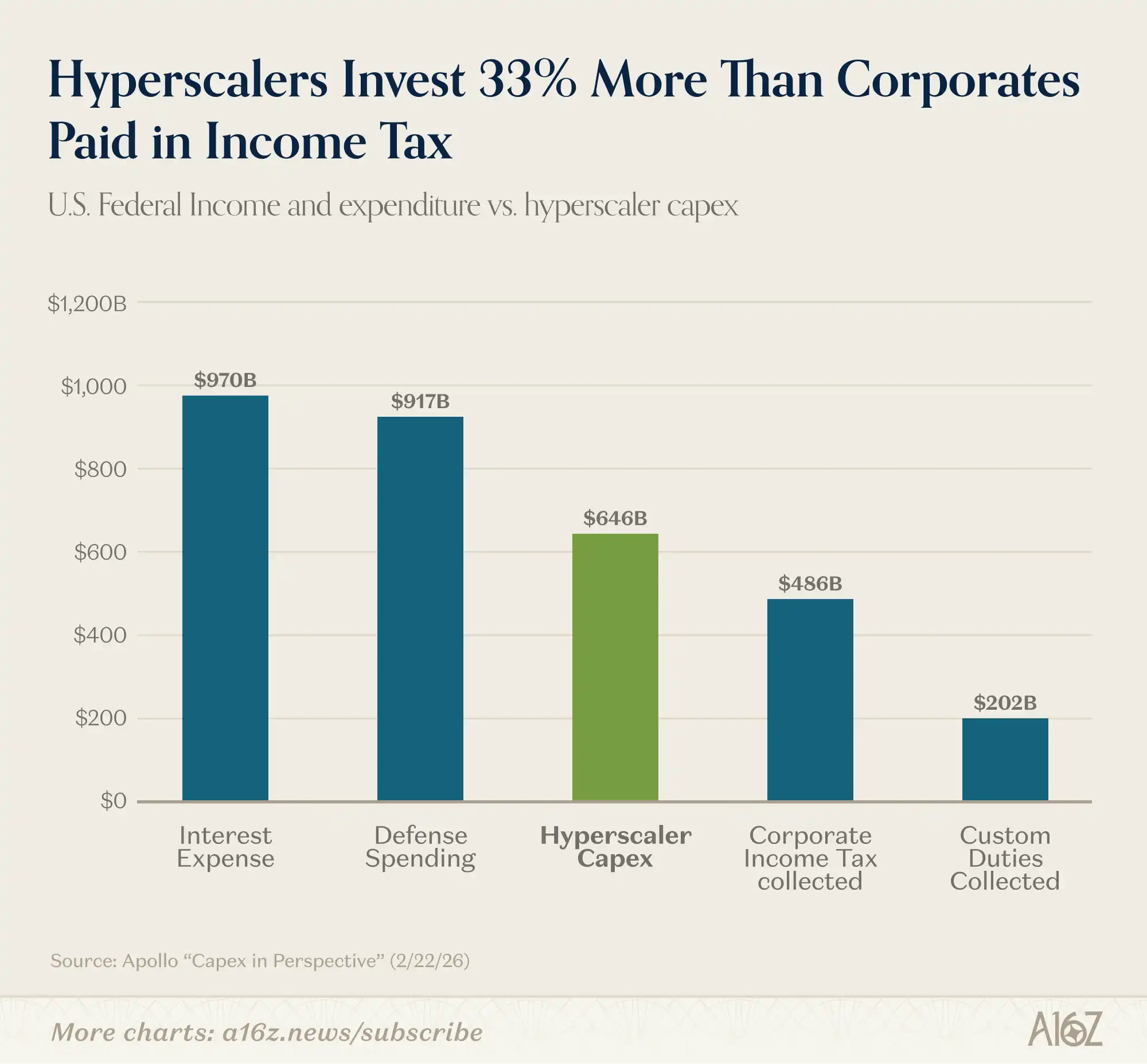
Capex is about 33% higher than total US corporate income tax revenue and about 3 times the total tariff revenue:
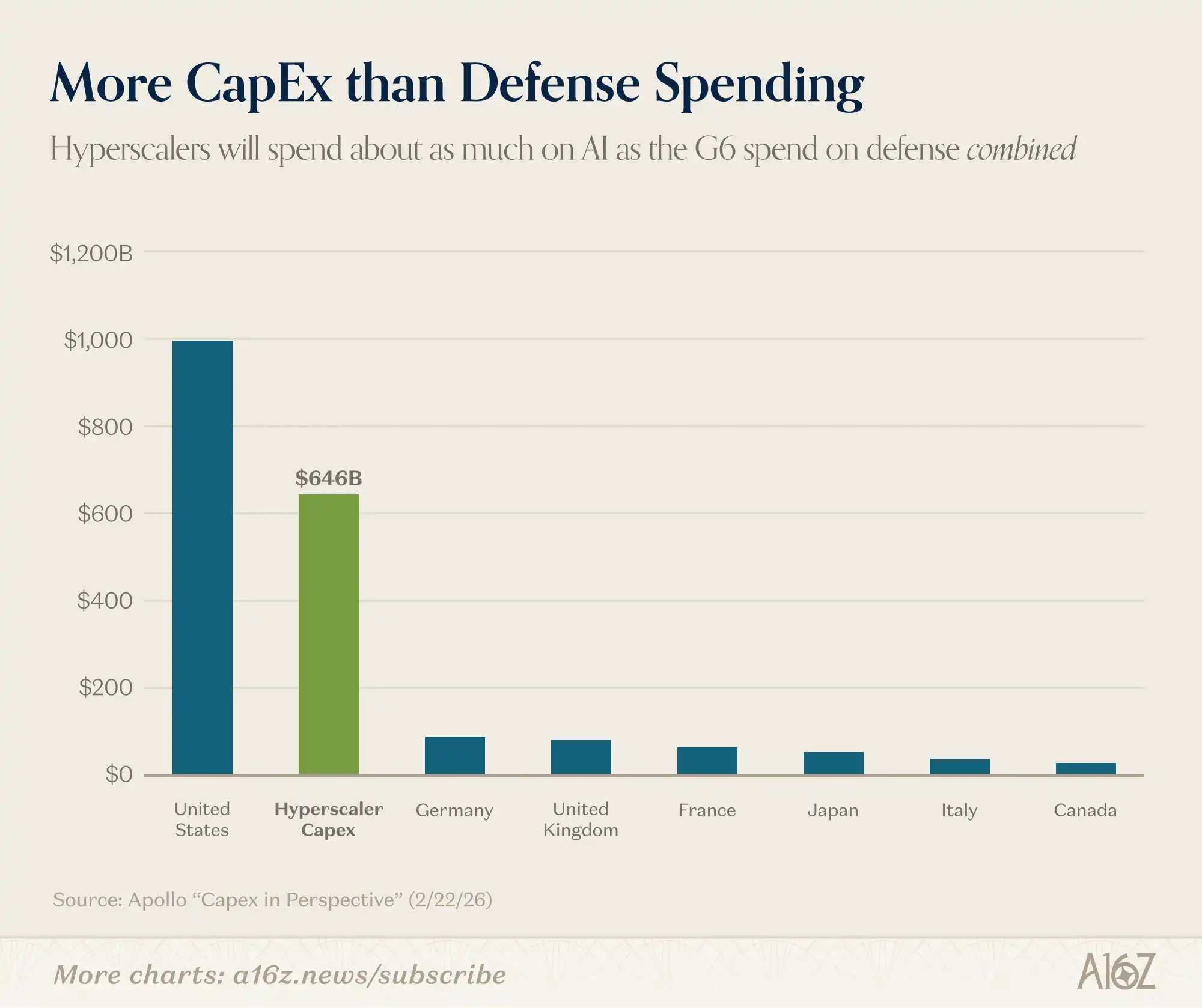
Capex is about 6 times the total military budget of any non-US G7 member country:
So, yes, capital expenditure is really huge.

Kalshi Moves into Macro Prediction

Federal Reserve researchers think prediction markets are pretty good.

At least on one metric, Kalshi's predictions for the federal funds rate have already outperformed professional forecasting agencies:
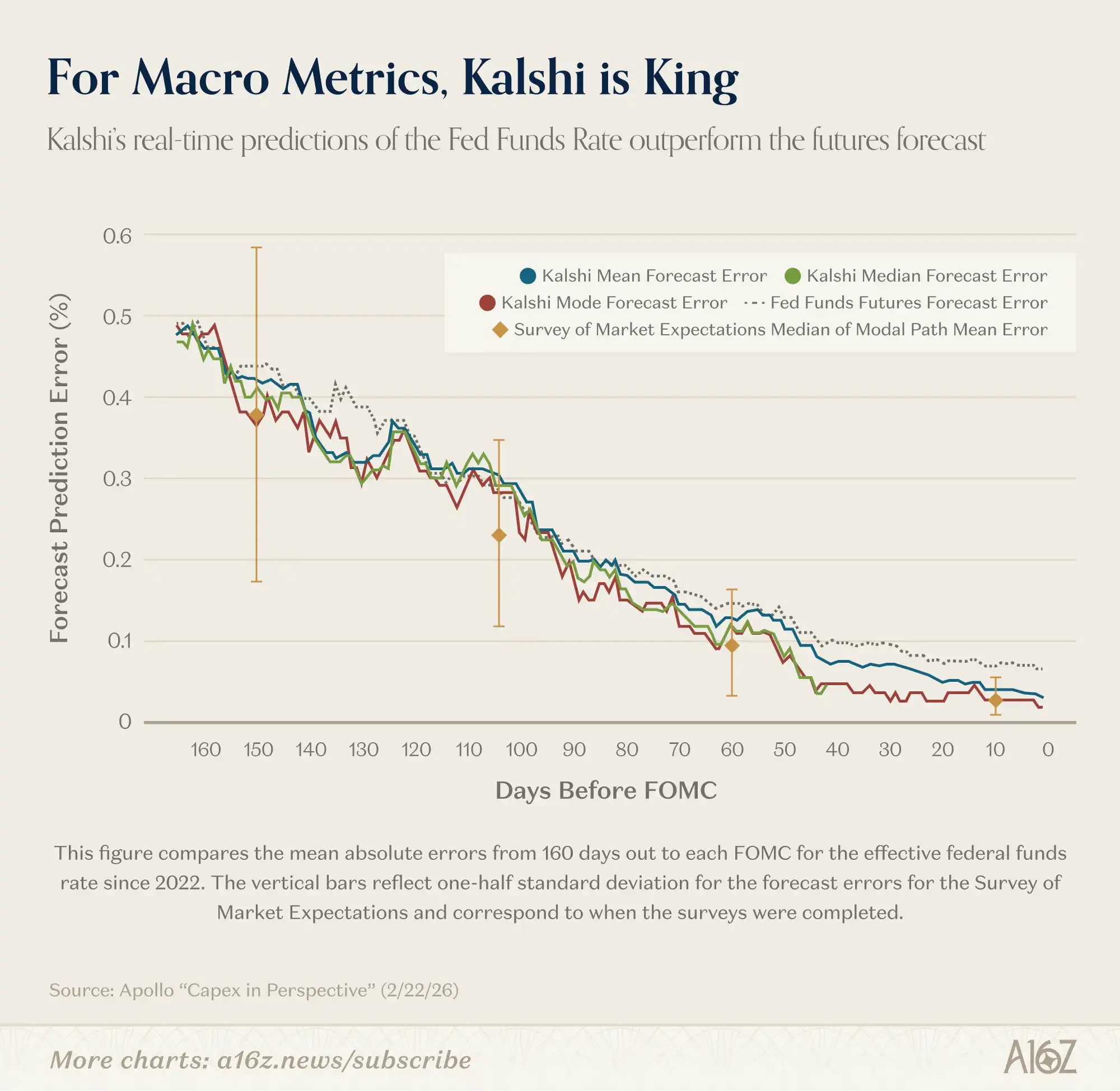
For predictions of the federal funds rate 150 days later (i.e., after 3 FOMC meetings), Kalshi's mean absolute error is very close to that of professional forecasters. But unlike surveys that provide only a modal path snapshot every six weeks, Kalshi provides a continuously updated full probability distribution...... We find that Kalshi's median and mode predictions have a perfect prediction record the day before FOMC meetings, which is a statistically significant improvement over federal funds futures predictions.

In other words, while all predictors start out similar, Kalshi's "continuously updated" predictions optimize over time, eventually achieving a "perfect prediction record" the day before the rate is officially announced. Furthermore, Kalshi's performance is also better than predictions from futures markets.

Kalshi's advantage extends beyond the federal funds rate. As the Fed researchers point out, since there are no other options markets for macroeconomic indicators like inflation, growth, and unemployment, Kalshi is the only place that provides a "high-frequency, continuously updated, probability distribution-rich benchmark" reflecting "crowd" judgment on the direction of these economic indicators.

Sounds pretty important.

The Delay of Adulthood

Here is a thought-provoking chart, with (a little) commentary:
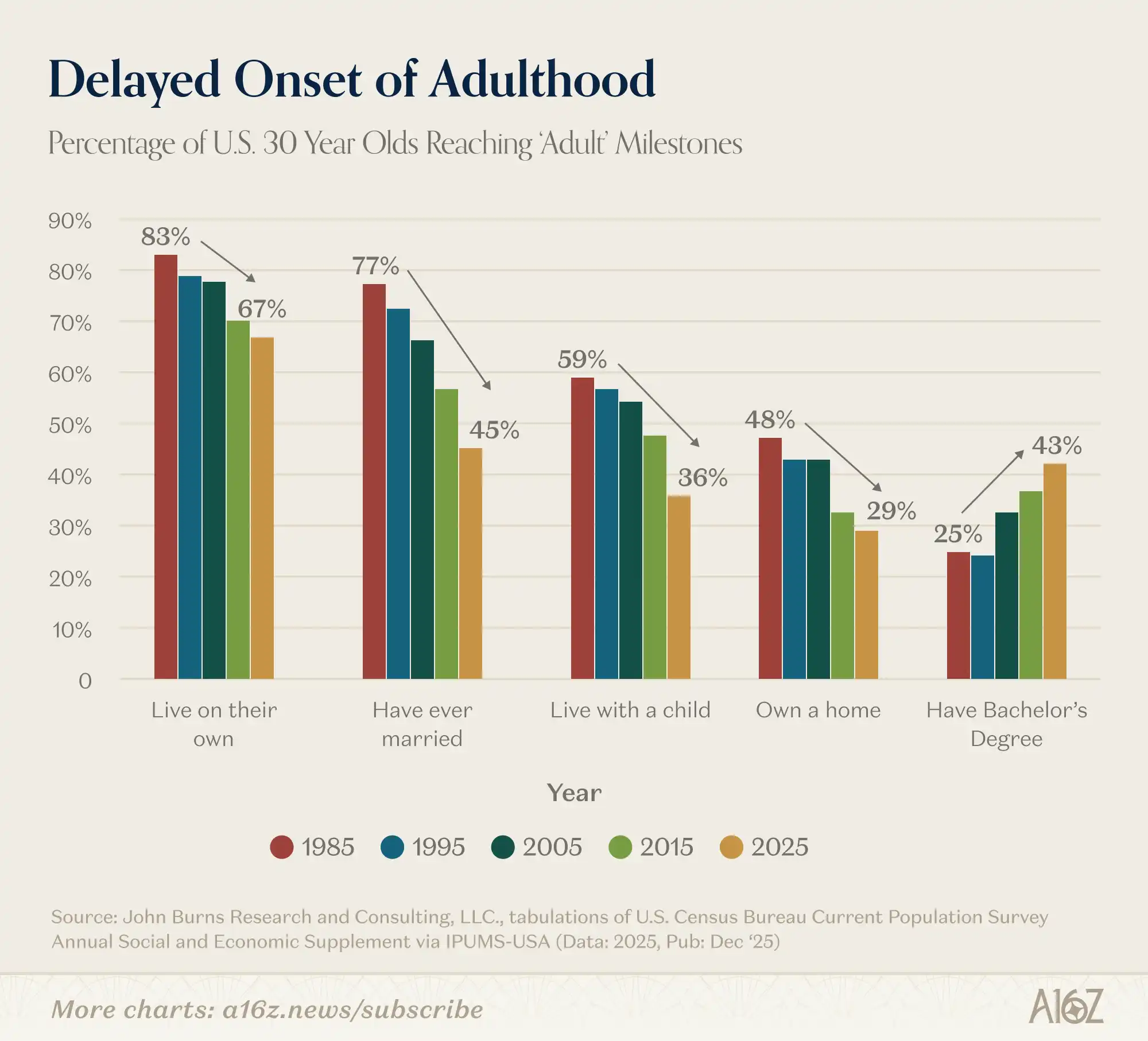
The proportion of 30-year-olds achieving major life milestones has been declining quite steeply since at least the 1980s.

Fewer and fewer 30-year-olds:

Live independently;

>Have ever been married;

>Live with children;

>Own their home.

The only exception is college enrollment rates—the proportion of 30-year-olds with a bachelor's degree has almost doubled since 1995.

So, is college worth it?
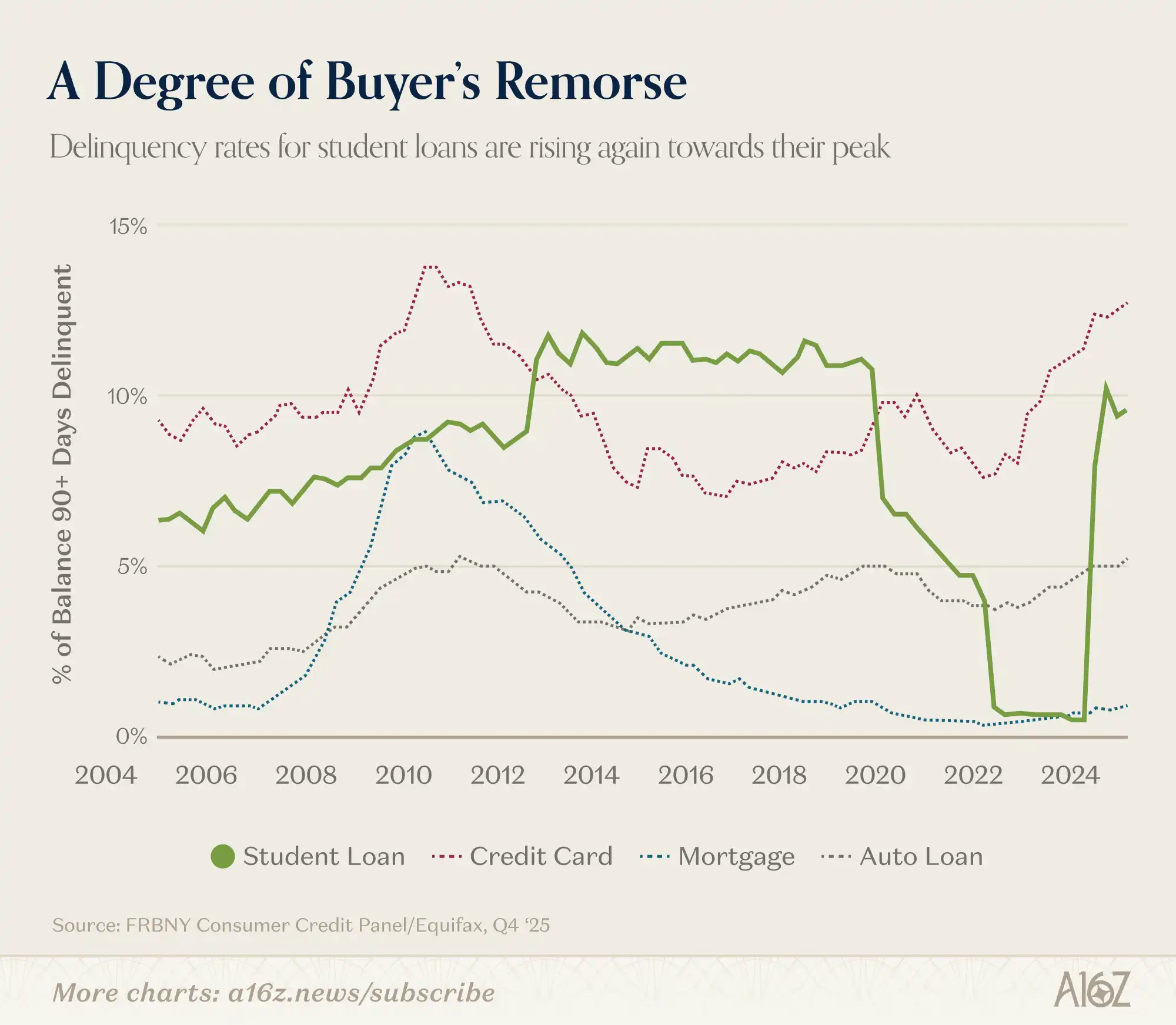
Milestones? More like milestones around the neck, right?!

Maybe, maybe not, but a sense of "buyer's remorse" seems to be in the air.

Related Questions

QWhat is the Jevons Effect mentioned in the article, and how is it demonstrated in the AI industry?

AThe Jevons Effect refers to the phenomenon where increased efficiency in using a resource leads to an increase in its consumption. In the AI industry, this is demonstrated by the fact that as the cost of AI tokens halved (from about $0.90 to $0.50 per million tokens), the number of tokens processed nearly doubled (from about 6,000 to 12,000).

QAccording to the data, what is the trend regarding the share of new company registrations in Delaware since 2023?

AAccording to Ramp's data, Delaware's share of new company registrations has been declining since 2023, with a drop of about 10% in the third quarter of 2025.

QHow does the performance of the prediction market Kalshi compare to professional forecasters in predicting the Federal Funds Rate?

AKalshi's predictions for the Federal Funds Rate have outperformed those of professional forecasters. Its median and mode predictions had a 'perfect predictive record' the day before FOMC meetings, which is a statistically significant improvement over the predictions from federal funds futures.

QWhat are the major life milestones for 30-year-olds that have seen a significant decline since the 1980s?

AThe major life milestones for 30-year-olds that have seen a significant decline since the 1980s are: living independently, ever being married, living with children, and owning a home.

QHow does the projected AI capital expenditure for 2026 compare to other major US economic figures?

AThe projected AI capital expenditure for 2026 is nearly equivalent to the total net new lending by all US banks in 2025. It is also about 33% higher than total US corporate income tax revenue and about three times the total US tariff revenue.

Related Reads

Those Pre-Bitcoin PoW Protocols Have Recently Been Reimplemented

This article details a recent surge in replicating pre-Bitcoin Proof-of-Work (PoW) protocols, specifically focusing on Hal Finney's 2004 RPOW (Reusable Proofs of Work). Within five days in May 2026, multiple independent builders in the Bitcoin/cypherpunk community launched projects inspired by this early electronic cash proposal. The initiative began with Fred Krueger's `rpow2.com`, a centralized but auditable system that replaced RPOW's original IBM 4758 hardware with Ed25519 signatures. Initially a faithful replica, it later adopted Bitcoin-like features (21M supply cap, difficulty adjustment) and a controversial 5.24% founder allocation. This sparked rapid forks, including `rpow4.com` which incorporated full Bitcoin parameters, a prediction market (`rpowmarket.com`), and a DEX (`rpow2swap.com`). Concurrently, Mike In Space created a prototype of Wei Dai's 1998 b-money proposal (`b-money.replit.app`), pushing the historical exploration even further back. The article contrasts these centralized, server-dependent experiments with Bitcoin's core innovation of decentralized, trustless consensus. It also highlights a parallel development: the `HASH` project on Ethereum, which uses smart contract hooks to enable a purely fair-launch, browser-mineable PoW token with 0% allocations to team or VCs. The collective activity is framed as a meme-driven, educational exploration of cypherpunk history rather than a serious financial movement, with all projects heavily disclaiming any investment value.

marsbit5m ago

Those Pre-Bitcoin PoW Protocols Have Recently Been Reimplemented

marsbit5m ago

South Korean Exchanges 'Battle' Regulators, Challenging the Boundaries of Enforcement and Legislation

South Korea's cryptocurrency industry is engaged in a rare, direct confrontation with regulators. The Financial Intelligence Unit (FIU), the primary anti-money laundering (AML) watchdog, has recently imposed heavy penalties on major exchanges like Upbit and Bithumb for alleged violations involving unregistered overseas VASPs and AML procedures. However, exchanges are now actively challenging these actions in court and through industry associations. In a significant shift, the Seoul Administrative Court ruled in favor of Upbit's operator, Dunamu, overturning part of an FIU-ordered business suspension. The court found the FIU's penalty criteria and justification insufficiently clear. Similarly, the court suspended the enforcement of a six-month business suspension against Bithumb pending a final ruling, citing potential irreversible harm to the exchange. Beyond legal battles, the industry is contesting proposed legislative amendments. The Digital Asset eXchange Alliance (DAXA) strongly opposes a draft rule that would mandate Suspicious Transaction Reports (STRs) for all crypto transfers over 10 million KRW (~$6,800). DAXA argues this "poison pill" clause violates legal principles and would overwhelm the STR system, increasing reports from 63,000 to an estimated 5.45 million annually for major exchanges, thereby crippling effective AML monitoring. This conflict highlights a structural tension in South Korea's crypto governance: comprehensive digital asset laws are still developing, while regulators rely heavily on AML enforcement. The industry's move from passive compliance to active legal and legislative challenges signifies a new phase, pressing for clearer rules and more proportionate enforcement. While short-term disputes may intensify, this clash could ultimately lead to a more mature and sustainable regulatory framework for South Korea's vibrant crypto market.

marsbit58m ago

South Korean Exchanges 'Battle' Regulators, Challenging the Boundaries of Enforcement and Legislation

marsbit58m ago

After 50x Storage Surge, Justin Sun Always Looks to the Next Decade

Sun Yuchen, known for his controversial stunts like a $30 million lunch with Warren Buffett (canceled due to a kidney stone) and eating a $6.2 million duct-taped banana, is often overshadowed by a significant fact: his decade-long track record of spotting major investment trends. In 2016, he famously advised young people to invest in Bitcoin, Nvidia, Tesla, and Tencent instead of buying property. A hypothetical $20,000 investment in Nvidia and Tesla from that list would now be worth over 50 million RMB. His latest major call was on November 6, 2025, predicting a "50x storage opportunity" tied to the AI boom, which materialized with Sandisk's stock surging nearly 50-fold by 2026. Looking ahead, Sun now focuses on the next frontier: Physical AI. He identifies four key areas: 1. **Embodied AI/Robotics**: He sees this reaching its "iPhone moment," with companies like UBTech and Galaxy General leading in commercialization. 2. **Drones**: Viewed as the first commercially viable form of Physical AI, revolutionizing sectors from warfare (e.g., AeroVironment's Switchblade) to logistics. 3. **Spatial Computing**: Beyond VR, it's about AI understanding physical space, a foundational technology for robotics and autonomous systems, exemplified by Apple's Vision Pro. 4. **Space Exploration**: After a 2025 suborbital flight with Blue Origin, Sun advocates for space as the ultimate frontier, discussing blockchain's potential role in space asset management and data transactions. His investment philosophy involves betting on entire, inevitable trends rather than single companies. For robotics, he sees Tesla (the body/manufacturer) and Nvidia (the brain/AI platform) as complementary plays. In defense drones, he highlights companies making tanks obsolete (AeroVironment) and those augmenting fighter jets (Kratos). For space, he participated in Blue Origin's flight and anticipates SpaceX's potential IPO to redefine the sector's valuation. Sun Yuchen's vision frames the next two decades not as a revolution in information flow (like the internet), but in the fundamental operation of the physical world through AI-powered robots, autonomous systems, and spatial intelligence, ultimately extending human and AI activity into space. While many still focus on conventional assets, he continues to look toward the next technological horizon.

marsbit1h ago

After 50x Storage Surge, Justin Sun Always Looks to the Next Decade

marsbit1h ago

The Billionaires Behind the Most Expensive Midterm Election in History

"The Most Expensive Midterm Elections and Their Billionaire Backers" This analysis details the unprecedented scale of spending in the 2026 midterm elections, highlighting the key billionaire donors shaping the political landscape. Jeff Yass, founder of Susquehanna International Group, has contributed over $81 million, ranking third among individual donors behind George Soros ($102.6M) and Elon Musk ($84.8M). Yass is a major donor to Trump's MAGA Inc. and supports school choice and various candidates. Overall, federal committees have raised over $4.7 billion this cycle, with political ad spending projected to reach $10.8 billion. Republican-aligned groups are significantly out-raising their Democratic counterparts. "Dark money" from undisclosed sources continues to grow. The core stakes involve control of Congress and policy direction for Trump's final term. Donors are also motivated by specific issues: Sergey Brin and Chris Larsen are funding opposition to a proposed California wealth tax and supporting crypto-friendly policies. Other top donors include OpenAI's Greg Brockman and his wife Anna ($50M total to MAGA Inc. and an AI-focused PAC), Richard Uihlein ($45.3M to conservative causes), venture capitalists Marc Andreessen and Ben Horowitz (each over $44M to crypto/AI PACs and MAGA Inc.), Miriam Adelson ($42.6M to GOP leadership PACs), Paul Singer ($33.9M), and Diane Hendricks ($25.8M to MAGA Inc.). The article notes that the peak fundraising period is still ahead, with major primaries approaching.

marsbit1h ago

The Billionaires Behind the Most Expensive Midterm Election in History

marsbit1h ago

Trading

Spot
Futures

Hot Articles

Discussions

Welcome to the HTX Community. Here, you can stay informed about the latest platform developments and gain access to professional market insights. Users' opinions on the price of AI (AI) are presented below.

活动图片