Written by: Amanda L. Gordon, Biz Carson, Bill Allison, Bloomberg
Compiled by: Saoirse, Foresight News
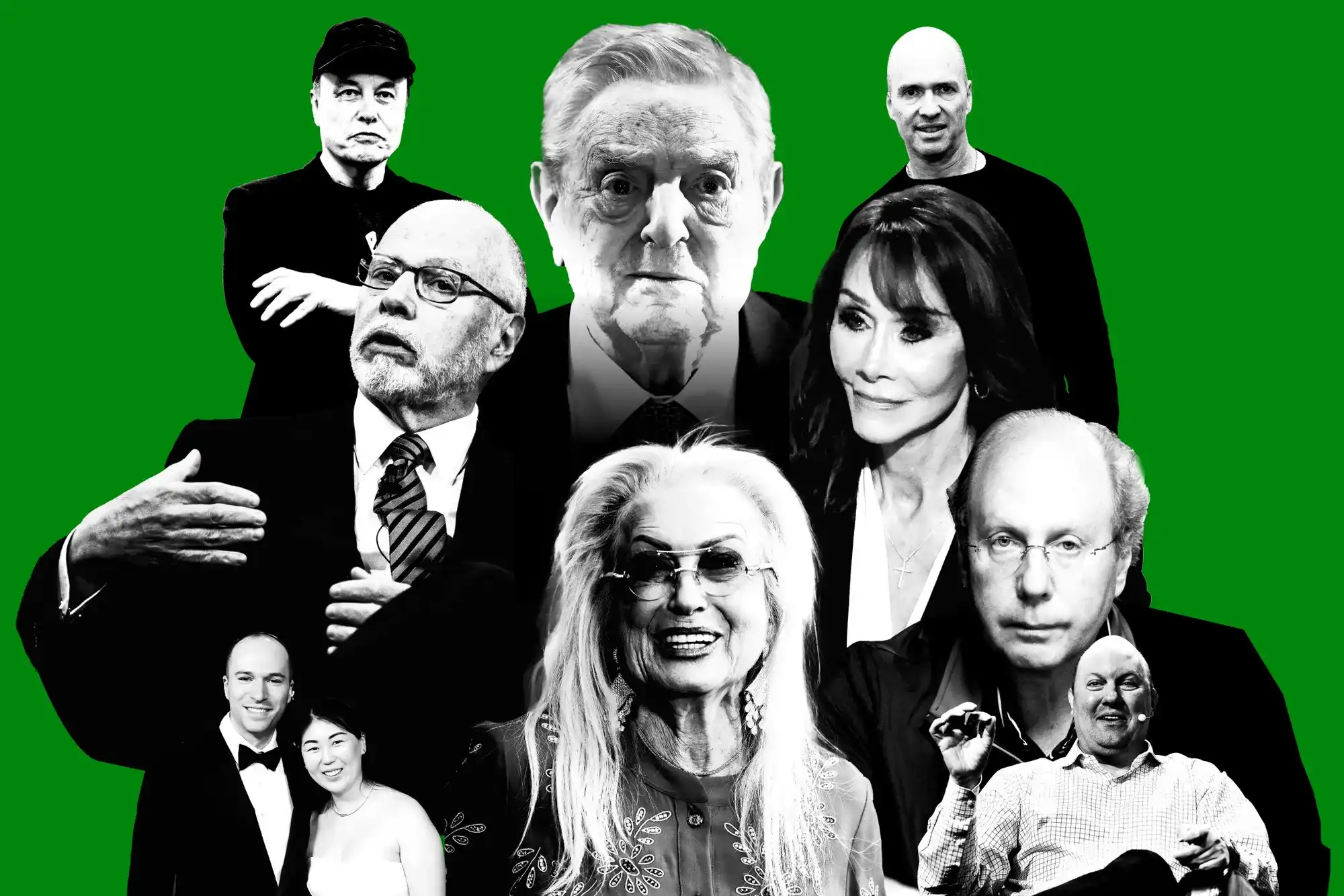
Jeff Yass, the billionaire founder of market-making firm Susquehanna International Group, has been frequently active this election season, donating over $80 million to midterm candidates and related political causes so far.
According to data compiled by Bloomberg News, this donation amount ranks third among individual donors this election cycle, behind only George Soros and Elon Musk. While Soros and Musk's donations primarily flowed to their respective super PACs, Jeff Yass is a major donor to Trump's MAGA Inc., while also directly funding a wide array of other recipients.
His donations cover his key areas of interest—including a $15 million donation to the School Freedom Fund, which advocates for school choice—as well as numerous political candidates, such as a $20 million contribution to a federal PAC supporting Ohio gubernatorial candidate Vivek Ramaswamy.
He also directed funds to some niche political causes, including a $675,000 donation to the Aurora Action Network, which seeks to repeal ranked-choice voting in Alaska, far from his home state of Pennsylvania. Yass did not respond to requests for comment.
With a net worth of $83.8 billion according to the Bloomberg Billionaires Index, Yass is just one player in this, the most expensive midterm election in history, as an analysis of big donors shows.
Bloomberg's analysis shows federal political committees have raised over $4.7 billion from individuals, companies, dark money groups and other entities this election cycle, a figure that doesn't include donations at the state and local levels. Political ad tracker AdImpact projects spending on political ads alone will reach $10.8 billion, a more than 20% increase from 2022.
Business Tycoons Plunging into U.S. Politics
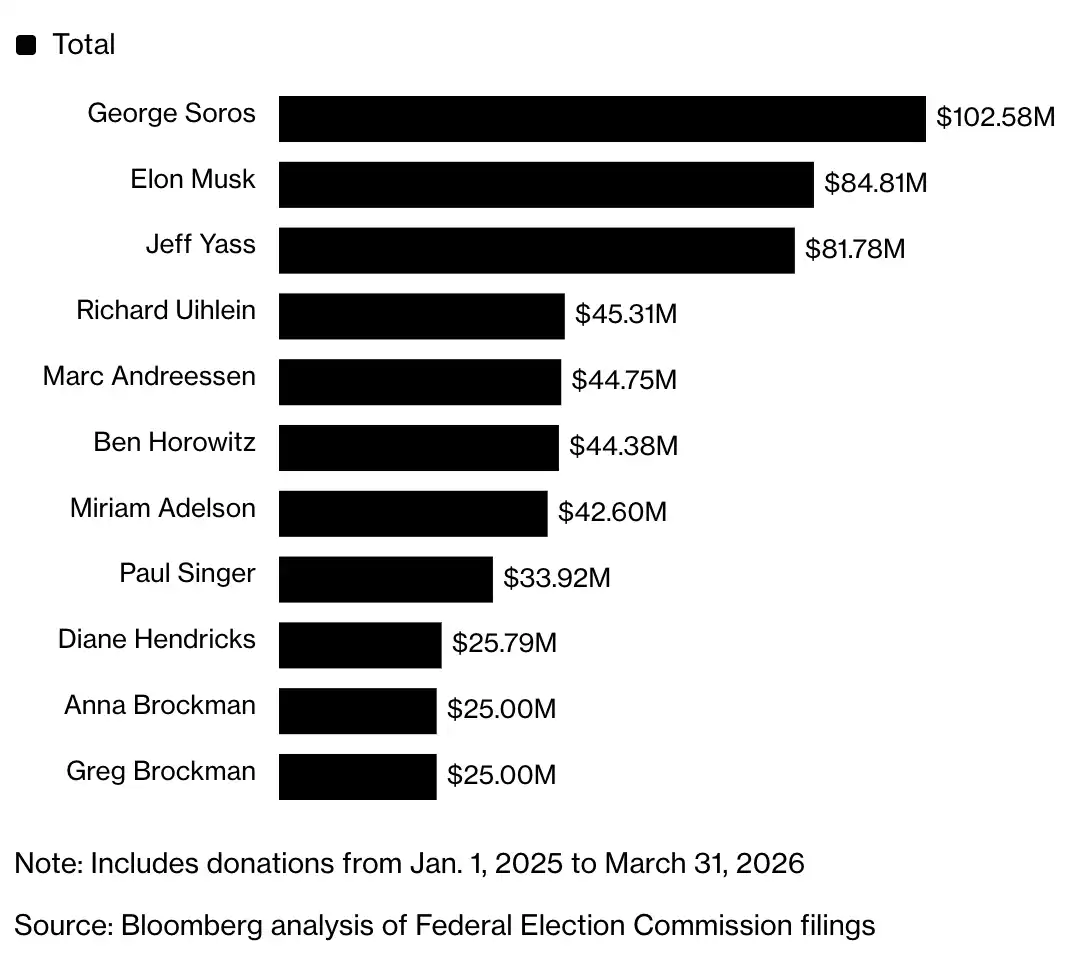
Top individual donors to federal committees (total) in the 2026 election cycle
So far, the bulk of the big money is flowing into Republican coffers: The Republican party and its allied super PACs for the Senate and House, along with Trump's political committee and MAGA Inc., raised a combined $917 million in the first quarter.
That was 3.5 times the $262 million raised by the Democratic National Committee and its Senate, House, and allied super PACs. However, in overall campaign fundraising, Democratic candidates are still outraising their Republican counterparts.
And that's just the traceable money. "Dark money"—political donations routed through nonprofits that don't have to disclose their funding sources—has played an increasing role in recent elections and is expected to do so again in 2026.
At the core of this money race is the battle for control of Congress and the direction of policy during the final two years of a Trump presidency. But for the super-rich writing the checks, there are equally pressing issues at stake: whether California will implement a billionaire tax, what regulatory rules will govern the AI and cryptocurrency industries, and the outcomes of local elections across states.
Google co-founder Sergey Brin has poured more than $60 million into California over the past four months, largely to oppose a proposed wealth tax. Ripple co-founder Chris Larsen has also spent millions fighting the billionaire tax proposal, while donating to organizations seeking to shape the state's political landscape; his company also gave $48.5 million to the pro-crypto PAC Fairshake.
Illinois Governor and potential 2028 presidential candidate JB Pritzker donated $10 million to a PAC helping the state's Lieutenant Governor, Juliana Stratton, who has won the Democratic nomination for the state's Senate seat.
The peak fundraising period is still ahead, with key primaries in May and June, including the fight for Mitch McConnell's Senate seat in Kentucky and the competitive California gubernatorial race.
Some top donors from previous elections have remained quiet so far, and more billionaires are expected to join the ranks of top donors as the Nov. 3 election approaches.
For example, Citadel founder Ken Griffin, a key donor in the 2018 and 2022 elections, has kept a low profile this midterm. His current donations are focused on Republican-aligned state political committees in Florida, where he moved his family home and business four years ago.
The following are the billionaires who have given the most to federal political committees so far in this midterm election cycle. All individuals on the list either did not respond to interview requests or declined to comment.
Details on Top Donors
George Soros
Illustration: 731; Source: Getty Images
Total Donated: $102.6 million
Key Recipients: $102 million to Democracy PAC; $265,500 to the Democratic Senatorial Campaign Committee; $250,000 to the Democratic Congressional Campaign Committee.
Influence: The 95-year-old Soros, a long-time political activist and funder of progressive causes, operates through foundations, PACs, and nonprofits linked to Democratic and liberal causes. His Democracy PAC, run by his son Alex, funds the Working Families Party and progressive candidates in district attorney races; his wholly-funded 501(c)(4), the Fund for Policy Reform, also put $10 million into California's redistricting fight.
Elon Musk
Illustration: 731; Source: Bloomberg
Total Donated: $84.8 million
Key Recipients: $50 million to America PAC; $10 million to Fight for Kentucky PAC; $10 million each to the Senate Leadership Fund and the Congressional Leadership Fund.
Influence: The Tesla and SpaceX co-founder is a full-throated backer of the Trump second-term camp, even as his relationship with the president has had its ups and downs, and he plans to stay deeply involved. Operating independently, he's put the bulk of his money into his own America PAC while also giving big to mainstream PACs helping Republicans win House and Senate seats. A key motivation for the 54-year-old Musk's continued political involvement is to boost ally JD Vance's potential 2028 presidential bid. As a first step, he backed Nate Morris, who shares the vice president's views, in the Republican primary for Mitch McConnell's Senate seat in Kentucky, though Morris dropped out last week.
Jeff Yass
Illustration: 731; Photographer: Eddie Maluk
Total Donated: $81.8 million
Key Recipients: $20 million to V-PAC, supporting Ohio gubernatorial candidate Vivek Ramaswamy; $16 million to MAGA Inc.; $15 million to the School Freedom Fund.
Influence: The founder of trading firm Susquehanna International Group is one of the largest individual donors to Trump's core fundraising vehicle, MAGA Inc. Yass's business interests align closely with the president's agenda: Trump last year halted a push to ban TikTok in the U.S., and Yass and his firm hold a stake in TikTok parent ByteDance. The 67-year-old prefers to highlight his support for school-choice PACs and candidates. "I've found a way that can work to lift tens of millions of kids out of poverty," he told The Washington Post.
Greg Brockman & Anna Brockman
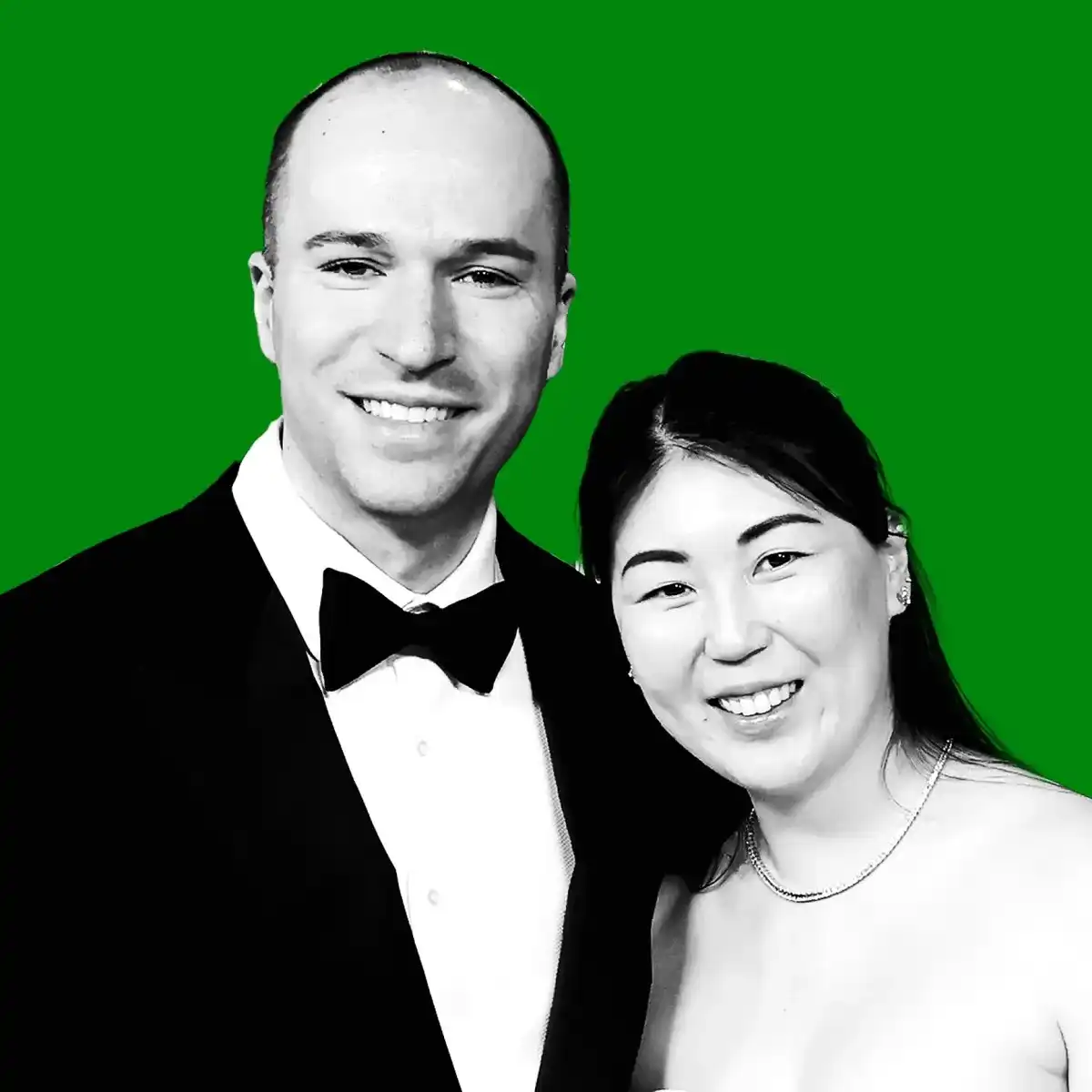
Photo Illustration: 731; Source: Getty Images
Total Donated: $50 million combined ($25 million each)
Key Recipients: $25 million to Leading the Future; $25 million to MAGA Inc.
Influence: OpenAI co-founder Greg Brockman and his wife Anna are key donors to Trump's super PAC, while also giving to the AI-focused Leading the Future PAC. Trump invited the Brockmans to a dinner with Saudi Crown Prince Mohammed bin Salman in November. The 38-year-old Greg Brockman plans to increase his support for Leading the Future this year, saying the shift in public sentiment makes backing AI-friendly candidates a crucial move for humanity's future.
Richard Uihlein
Total Donated: $45.3 million
Key Recipients: $39.6 million to Restoration of America PAC; $4 million to Fair Courts America; $1 million to Northwoods Future PAC, which is backing Michael Alfonso, son-in-law of Transportation Secretary Sean Duffy, for a Wisconsin House seat.
Influence: The 80-year-old heir to the Schlitz beer fortune, a hardline conservative and co-founder of packaging company Uline, is the primary funder of the Restoration of America PAC, which focuses on election integrity, a strong military, anti-abortion policies, and backing conservative candidates. He also advocates for looser regulations on the long-haul trucking industry, arguing current rules place an undue burden on truckers.
Marc Andreessen
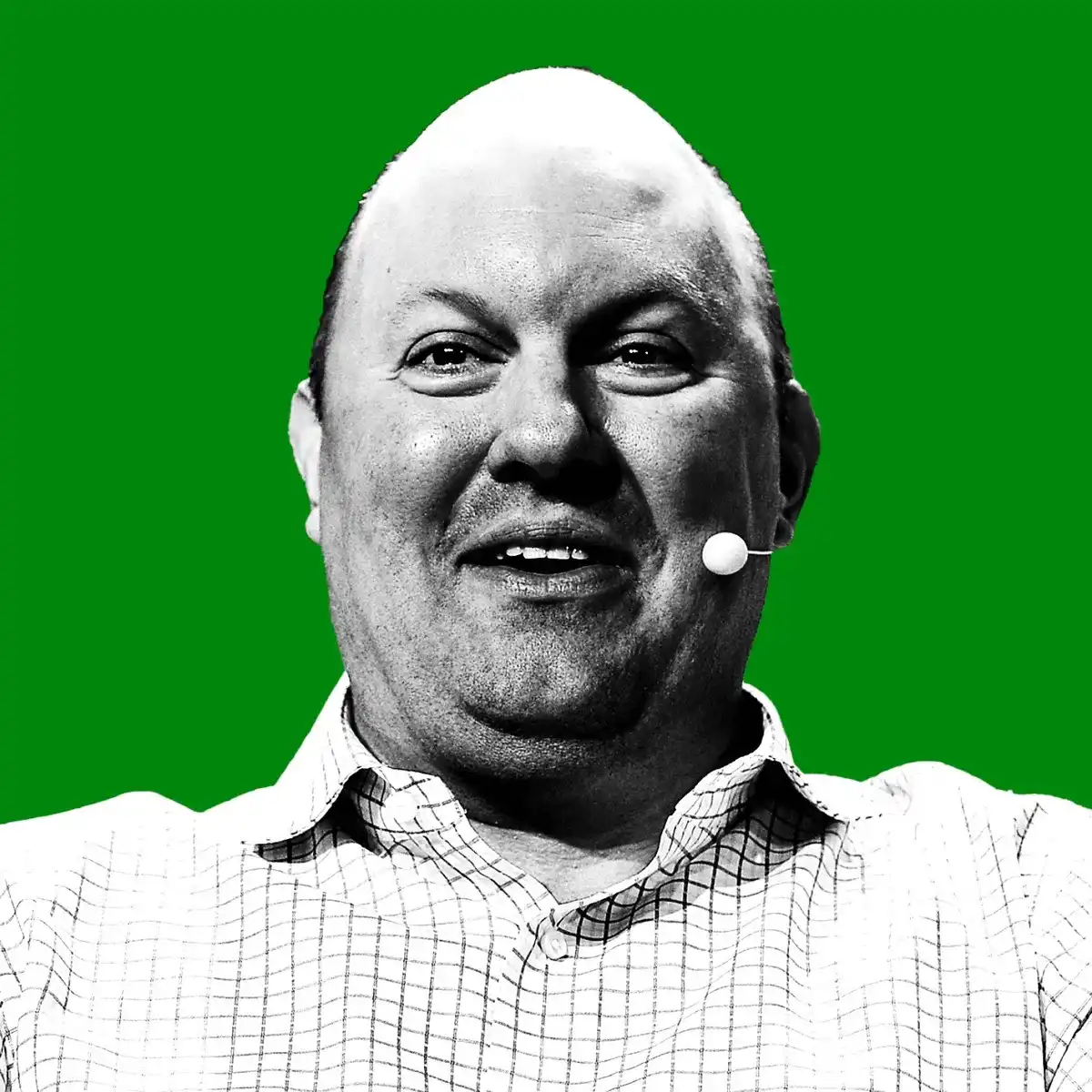
Photo Illustration: 731; Source: Getty Images
Total Donated: $44.7 million
Key Recipients: $25 million to Leading the Future; $11.9 million to Fairshake; $6 million to MAGA Inc.
Influence: The 54-year-old Andreessen, previously a bipartisan donor who backed Barack Obama in 2008, publicly endorsed Trump in July 2024 after clashing with Joe Biden over crypto and AI regulation. The Silicon Valley venture capitalist frequently speaks with Trump on the phone and is involved in shaping federal tech policy. Beyond his personal 2024 donation to Trump's campaign, his firm has backed two super PACs: Fairshake for crypto and Leading the Future for AI.
Ben Horowitz
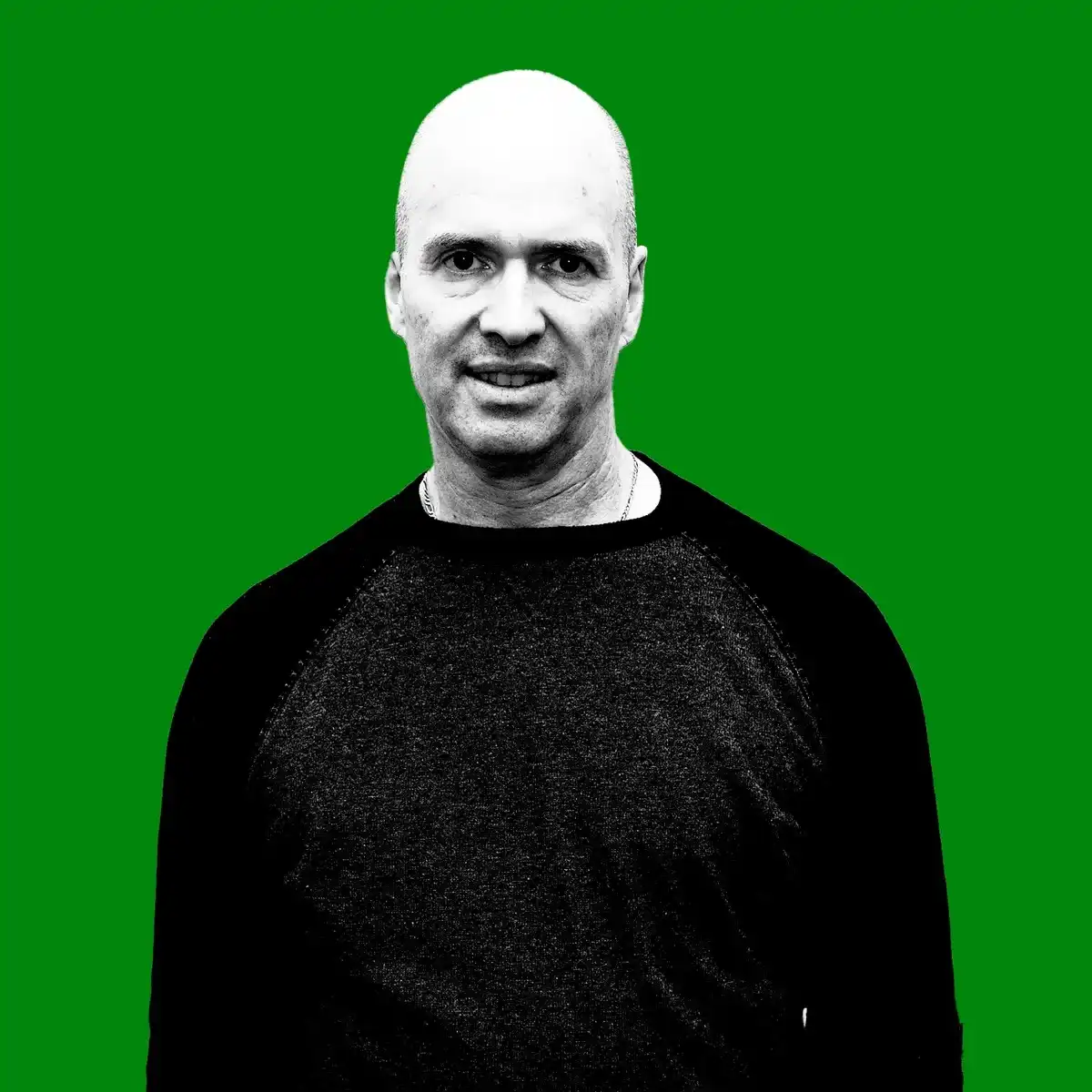
Photo Illustration: 731; Source: Getty Images
Total Donated: $44.4 million
Key Recipients: $25 million to Leading the Future; $11.9 million to Fairshake; $6 million to MAGA Inc.
Influence: During the 2024 presidential race, Ben Horowitz and his partner Marc Andreessen hedged their bets by backing Trump over tech policy. He has typically leaned Democratic and also supported Kamala Harris's campaign as a personal friend. Since then, the 59-year-old Horowitz has focused his giving more on specific issues, with the bulk of his money this cycle going to AI and crypto-related PACs, while also giving millions to MAGA Inc. and six-figure sums to the Senate Leadership Fund PAC.
Miriam Adelson
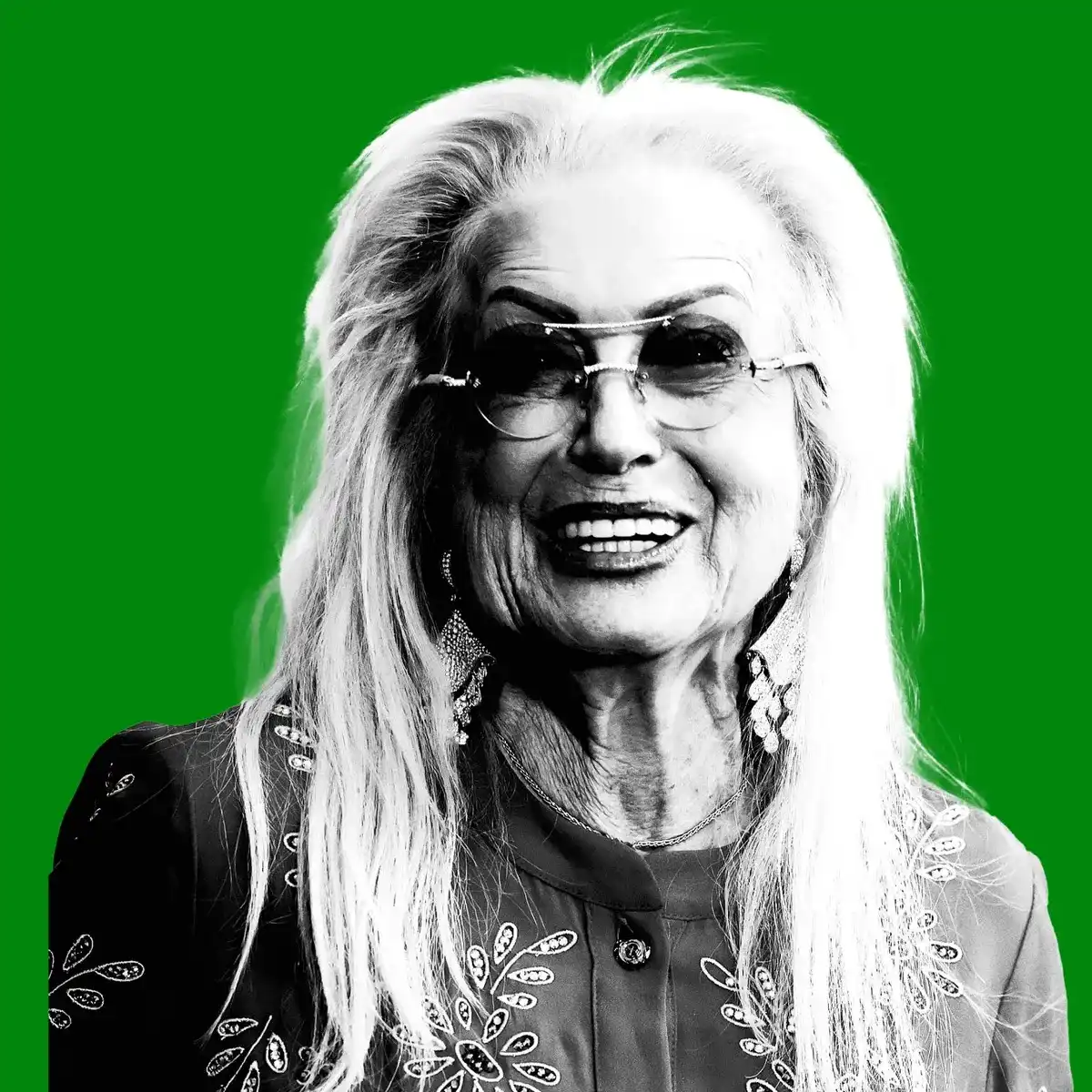
Photo Illustration: 731; Source: Getty Images
Total Donated: $42.6 million
Key Recipients: $30 million to Senate Leadership Fund; $10 million to Congressional Leadership Fund; $1 million to Security is Strength PAC, supporting South Carolina Senator Lindsey Graham.
Influence: The 80-year-old Israeli-American physician, Miriam Adelson, and her late husband, casino magnate Sheldon Adelson, were steadfast Trump supporters, with Miriam personally giving $95 million in 2024. The couple also deeply influenced the Trump administration's Israel policy, such as pushing for the move of the U.S. embassy to Jerusalem.
Paul Singer
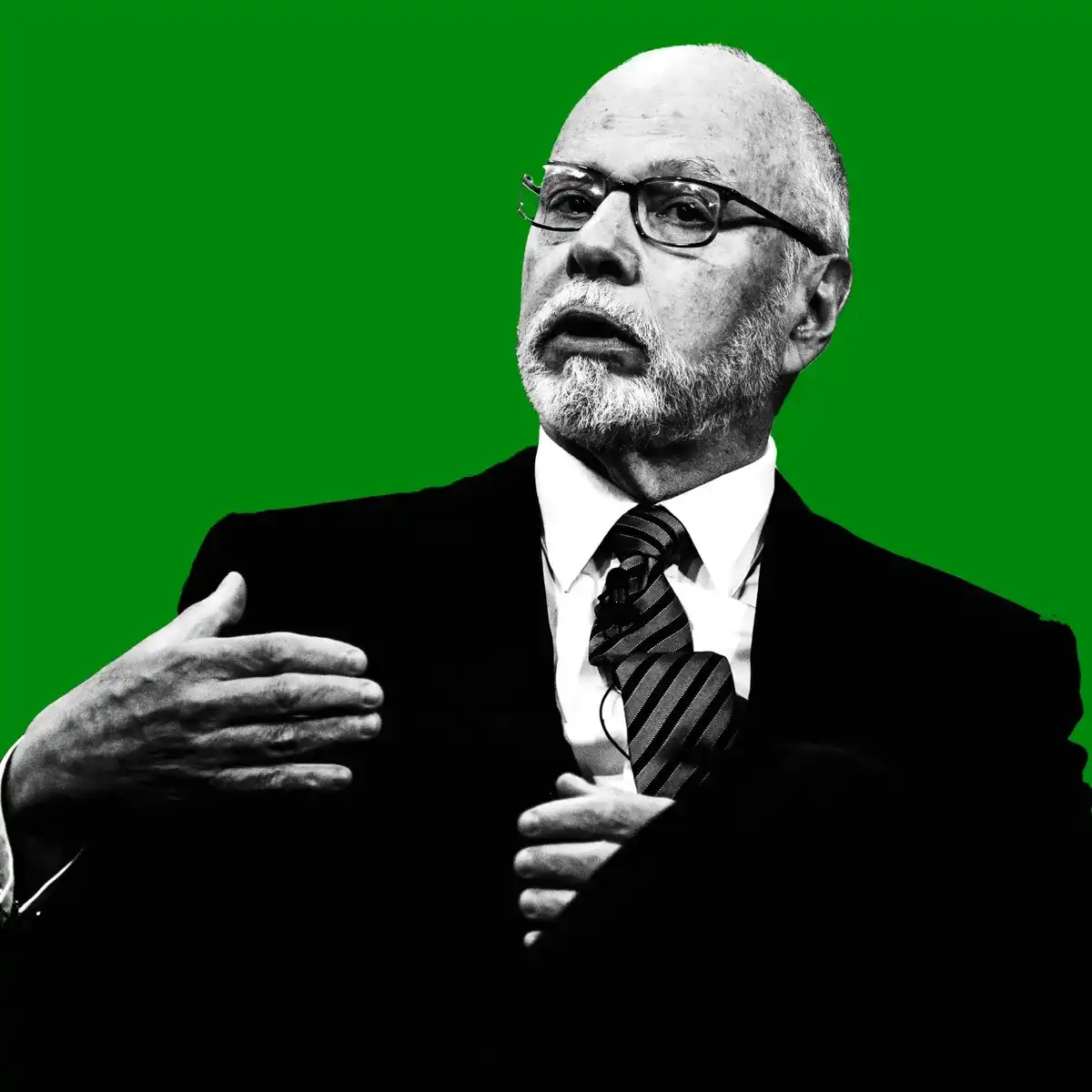
Photo Illustration: 731; Source: Getty Images
Total Donated: $33.92 million
Key Recipients: $14.5 million to Senate Leadership Fund; $8 million to Congressional Leadership Fund; $2.5 million to the United Democracy Project, linked to pro-Israel lobby AIPAC.
Influence: The activist money manager, initially skeptical of Trump, backed Nikki Haley in the 2024 Republican primary before aligning with the Trump second-term camp, particularly on support for Israel, a hard line on Iran, and tackling antisemitism on college campuses. The 81-year-old Singer has also given to PACs in key House races, including two groups working to oust Kentucky Republican Thomas Massie, who has drawn Trump's ire for supporting the release of Jeffrey Epstein-related files and voting against aid to Israel in 2023.
Diane Hendricks
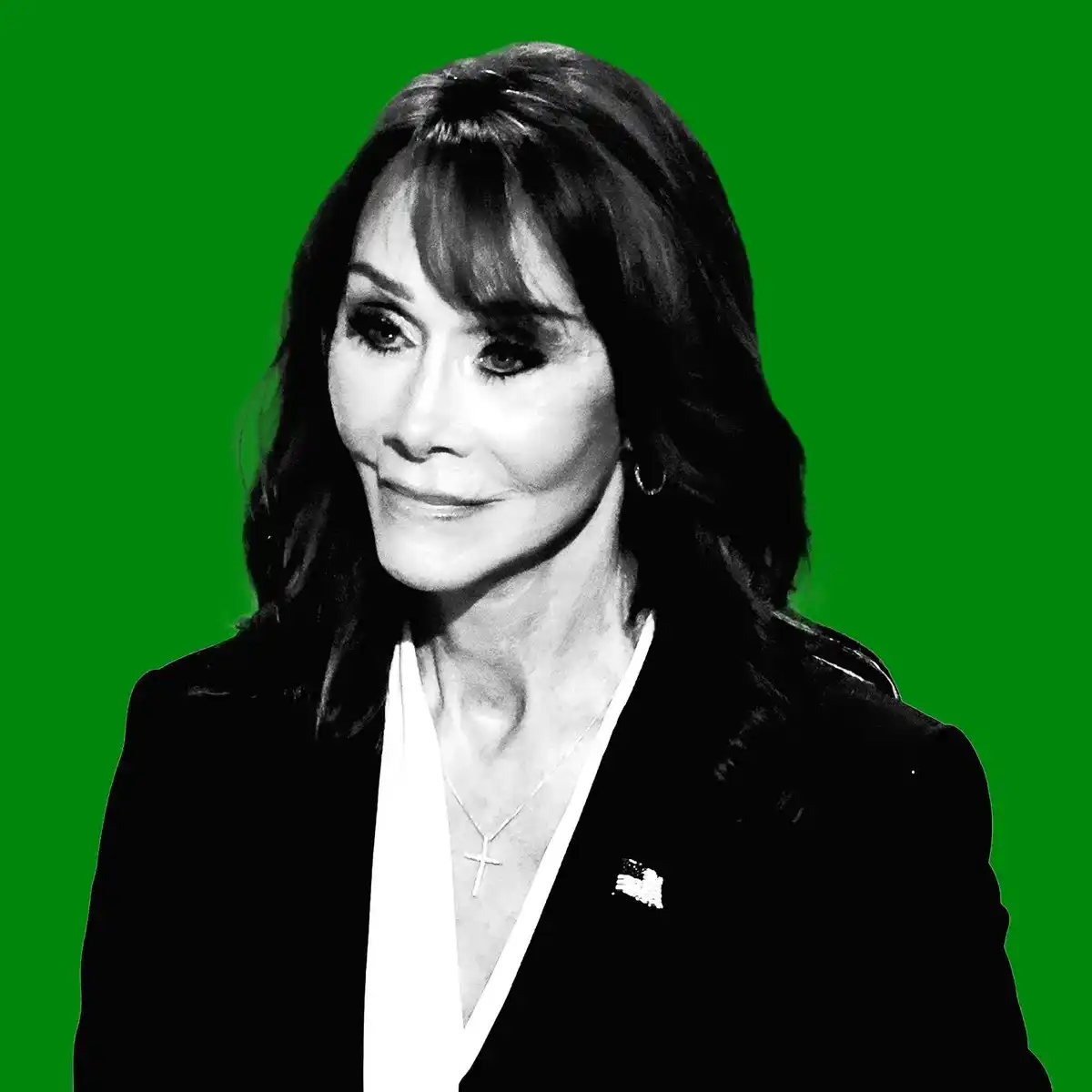
Photo Illustration: 731; Source: Getty Images
Total Donated: $25.79 million
Key Recipients: $25 million to MAGA Inc.; $413,000 to the Republican National Committee; $182,000 to Defend Our Majority, which backs House Republican candidates.
Influence: The 79-year-old Diane Hendricks, Wisconsin's richest person and co-founder of building materials distributor ABC Supply, is a long-time conservative donor to Republican candidates. She backed then-Governor Scott Walker's presidential bid in 2016 before pivoting to Trump. Trump appointed her to a national economic policy council during his first term. This year, she also attended the Winter Olympics closing ceremony as part of the presidential delegation.
Research Methodology
Bloomberg News compiled filings with the Federal Election Commission for donations of $10,000 or more from individuals and entities to parties and political action committees from Jan. 1, 2025, through March 31, 2026.
Donor names were standardized. The tally includes individuals, corporations, dark-money groups, trade associations, unions, state political committees and Native American tribes. If a joint fundraising committee attributed split donations to its members, they were counted as such.
Large donations from entities were also checked for the individuals behind them. Transfers between joint fundraising committees and beneficiary committees were excluded to avoid double counting.