A Crypto Gamble That Split a Century-Old Swiss Private Bank?

marsbitPublished on 2026-03-23Last updated on 2026-03-23

Abstract

An internal conflict over cryptocurrency strategy has led to a generational split within the Swiss private banking family behind Banque Syz. Marc Syz left the bank, led by his father Eric Syz, after the board rejected his proposal to integrate Future Holdings AG—a crypto treasury firm—into the bank’s alternative asset division, Syz Capital. Marc, who previously headed Syz Capital, is now pursuing a dual IPO for Future Holdings in Sweden and Switzerland, aiming to build one of Europe’s largest corporate Bitcoin treasuries. The dispute reflects broader tensions within Switzerland’s wealth management sector, where traditional private banks face intense competition and divergent views on innovation. Marc advocated for greater focus on digital assets and AI, warning that some banks rely too heavily on Switzerland’s reputation as a financial safe haven without adapting to new trends. Following the rejection of the merger, Marc and his business partner Richard Byworth resigned from Syz Capital and are launching a new asset management firm focused on alternative investments. Meanwhile, Banque Syz reaffirmed its commitment to alternative investments as a core business pillar and recently appointed Eric’s other son, Nicolas Syz, as CEO. The split underscores both the difficulties of family business governance and the high-stakes divergence in strategy between traditional finance and emerging digital asset models in Switzerland.

Written by: Allegra Catelli

Compiled by: Luffy, Foresight News

A Swiss private banking dynasty is embroiled in a generational conflict over differing visions for the company's future.

Marc Syz has left Banque Syz SA, based in Geneva and led by his father Eric Syz, to start a new venture with business partner Richard Byworth. The core of their disagreement lies in Marc's plan to incorporate the crypto treasury company Future Holdings AG into the bank's alternative assets division, Syz Capital, which Marc previously managed. He has now shifted focus to pursuing a dual listing for Future Holdings, aiming to build Europe's leading Bitcoin treasury institution.
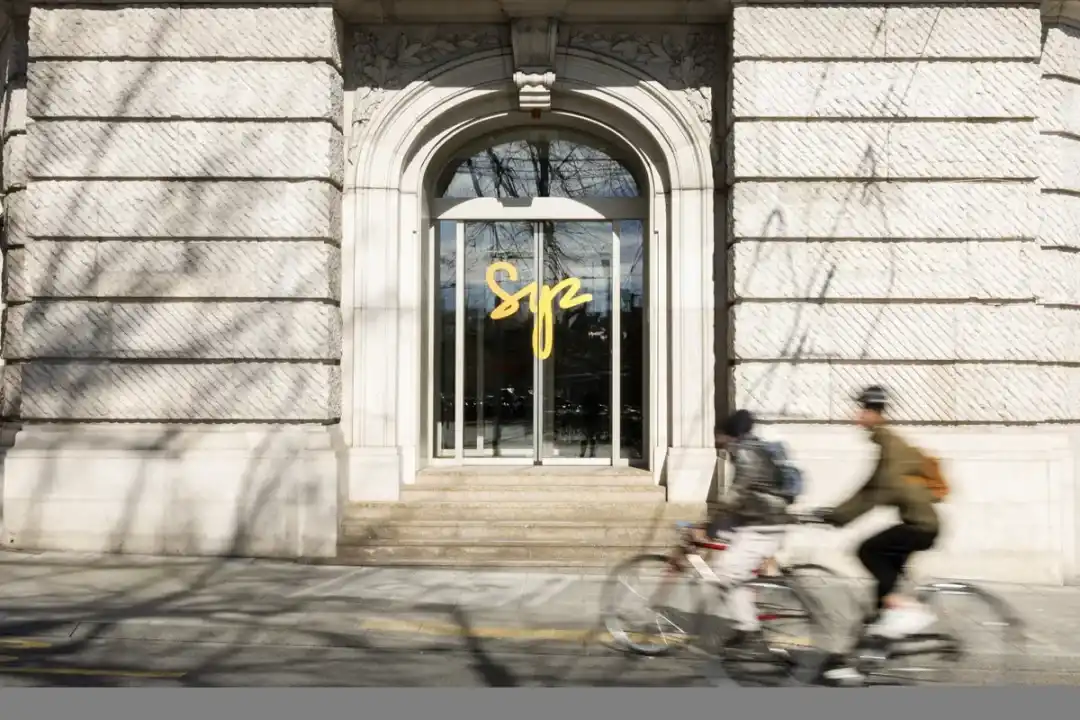
The logo of Banque Syz SA in Geneva

This family split highlights both the challenges of managing a family business and the ideological struggles within Switzerland's wealth management industry. Local boutique private banks not only face fierce competition from numerous domestic peers but also often hold divergent views on the industry's future. Marc stated that he had advocated for increased investment in alternative assets, artificial intelligence, and digital assets, expressing concern that some competitors rely too heavily on Switzerland's safe-haven reputation and lack innovative breakthroughs.

The bank and Eric Syz responded through a spokesperson, confirming only that Marc and Byworth had left and stating that "alternative investments have always been a core business of Banque Syz," without commenting on the specific reasons for their departure. Marc detailed the sequence of events in a phone interview.

Syz Capital was established in 2018 under Marc's leadership and managed assets of around 20 billion Swiss francs (equivalent to $25 billion) at the time of his departure, with some outflows occurring subsequently. The original Syz Capital team remains, now managed by Syz Group's Chief Financial Officer, Christoph Raninger. The bank has seen other recent executive departures, including Chief Operating Officer Boris Chave.

The catalyst for the worsening rift in the father-son relationship was the bank's board's rejection of the application to merge Future Holdings into Syz Capital on grounds of excessive risk. Marc said that subsequently, he and Byworth were asked to resign from their positions as directors of Syz Capital, ultimately leading to their complete departure from the wealth management firm.

It is currently unclear whether Marc, who holds about a 20% stake in Syz Capital, and Byworth, who holds about 5%, will retain their shareholder status.

Preparing for a Dual Listing

According to informed sources, the two are working with Stifel Financial Corp to advance a dual IPO for Future Holdings in Sweden and Switzerland, with plans later for an independent listing on the main board of the Swiss Exchange. The company is considering further Bitcoin acquisitions before this, aiming to hold over 3,500 bitcoins and striving to become one of Europe's largest corporate holders of cryptocurrency.

Marc Syz

The reporter has not yet received a response to calls or emails from Stifel.

Earlier this year, Future Holdings merged with the Swedish-listed Bitcoin treasury company H100 Group AB, expanding its crypto asset reserves to pave the way for a potential listing.

The crypto treasury model was pioneered by Michael Saylor's MicroStrategy Inc during the pandemic bull market. Companies raise funds by issuing additional shares to accumulate large amounts of Bitcoin, providing investors with equity exposure to Bitcoin without directly holding the tokens. US spot Bitcoin ETFs were not approved and launched until early 2024.

The crypto treasury sector exploded last year, with Trump's election win reigniting the bull market, pushing the valuations of several institutions far above the net value of their crypto holdings at their peak. Now, as the market has corrected and token prices have fallen from their highs, the market capitalizations of many listed Bitcoin treasury companies have dropped to at or below their net asset value.

However, Marc Syz and Byworth believe that Switzerland's overall crypto-friendly regulatory environment, combined with structural advantages like low interest rates and Europe's third-most liquid stock market, will provide favorable support for Future Holdings' listing.

The 2020 Restructuring

Prior to these personnel changes, Banque Syz had undergone several rounds of reform in recent years. In 2020, Eric led a restructuring that spun off the retail asset management business, Oyster. This was followed by a prolonged power transition, culminating in Eric appointing his other son, Nicolas Syz, as CEO in February of this year.

Eric Syz comes from a textile industry family whose business dates back to the 1850s. He co-founded Banque Syz in 1996 with Alfredo Piacentini and Paolo Luban, who have since left. The bank is controlled by Eric and high-end jewelry designer Suzanne Syz, who also serves as a director.

The bank's total assets under management have remained largely stable over the past five years, increasing by nearly 12% in 2024 from 23.1 billion Swiss francs the previous year to 25.8 billion Swiss francs, roughly level with the total assets at the end of 2020. The bank has continued to grow its presence in Zurich in recent years, adding office space and recruiting new teams, stating last year its intention to "expand asset size across all business lines and firmly advance growth plans."

As for Marc and Byworth, besides operating Future Holdings, the two plan to establish an independent asset management firm to compete with Syz Capital. The new firm will focus on alternative investment strategies, emphasizing capital preservation and appreciation.

Whether investors will embrace listed Bitcoin treasury vehicles after market volatility remains uncertain. But for Marc Syz, this is both a bet on the digital asset sector and a complete break with a venerable Swiss private banking dynasty.


Trending Cryptos

Related Questions

QWhat was the core disagreement that led to Marc Syz leaving Banque Syz SA?

AThe core disagreement was over the future direction of the bank, specifically Marc Syz's plan to integrate the crypto treasury company Future Holdings AG into the bank's alternative asset division, Syz Capital, which the bank's board rejected due to high risk.

QWhat is the new venture that Marc Syz and Richard Byworth are pursuing after leaving Banque Syz?

AThey are pursuing a dual IPO for Future Holdings AG in Sweden and Switzerland, aiming to make it one of Europe's largest corporate holders of Bitcoin, and plan to establish a new independent asset management firm focused on alternative investment strategies.

QHow did the bank's board react to Marc Syz's proposal for Future Holdings AG?

AThe bank's board rejected the proposal to integrate Future Holdings AG into Syz Capital, citing that the venture was too risky.

QWhat is a Bitcoin treasury company, as mentioned in the article?

AA Bitcoin treasury company is a model, pioneered by Michael Saylor's MicroStrategy, where a company raises capital by issuing shares to accumulate large amounts of Bitcoin, providing investors with equity exposure to Bitcoin without directly holding the cryptocurrency.

QWhat broader industry conflict in Swiss private banking does this family dispute reflect?

AIt reflects a conflict of ideas within the Swiss wealth management industry, where some practitioners advocate for innovation and increased investment in areas like digital assets and AI, while others prefer to rely on Switzerland's traditional reputation as a safe haven and are resistant to such changes.

Related Reads

In Conversation with Ray Dalio: We Are Currently in an AI Bubble, with 1% of My Portfolio in Bitcoin

Ray Dalio, founder of Bridgewater Associates, warns in an interview that the current AI boom shows classic bubble characteristics, which could lead to significant economic downturns as seen in past cycles like 1929 or 2000. He explains that speculative enthusiasm, fueled by debt and overvaluation, often precedes a crash when rising rates or taxation force asset sales, causing widespread losses and recession. Dalio also outlines his "Big Cycle" theory, describing an approximate 80-year pattern where widening wealth gaps, massive government deficits, and shifting geopolitical power (like China's rise) create internal conflict and global instability. He emphasizes that we are in a late-cycle, transitional phase where traditional powers like the US and UK face decline. For personal wealth protection, Dalio advises diversification beyond cash into assets like stocks, bonds, real estate, and particularly gold, which he prefers over Bitcoin. While he holds about 1% of his portfolio in Bitcoin as a non-printable hard asset, he views gold as more secure from technological or governmental threats. Regarding AI's impact, Dalio believes it will disproportionately benefit capital owners, worsening inequality by replacing both physical and cognitive labor. He suggests that human intuition and emotional intelligence, combined with AI, will be key for future workers. On taxation, Dalio argues that wealth taxes are impractical and risk triggering asset sell-offs, reducing productive investment. He points to the UK as a cautionary example of debt, low productivity, and political strife. Geopolitically, Dalio foresees a more regionalized world, with the US showing weakness in prolonged conflicts like with Iran, akin to past imperial declines. The ideal outcome, he suggests, is coexisting powerful blocs (e.g., Americas, China-Asia Pacific) without major war.

marsbit2h ago

In Conversation with Ray Dalio: We Are Currently in an AI Bubble, with 1% of My Portfolio in Bitcoin

marsbit2h ago

Daily 7.2 Trillion KRW: Foreign Capital's Record Net Buying on Friday! Wall Street Says Headwinds for Korean Stock Fund Flows Have Subsided

South Korean stock market sees a dramatic shift in fund flows. On July 31, foreign investors made a record net purchase of approximately KRW 7.2 trillion in KOSPI stocks, marking a fundamental reversal from the persistent large-scale net outflows seen in previous months. This contributed to a significant narrowing of foreign net selling in July to KRW 9.8 trillion, down sharply from KRW 48.4 trillion in June and KRW 44.5 trillion in May. Simultaneously, domestic institutional pressure eased. South Korean pension funds and asset managers turned to a net buying position in July, purchasing KRW 1.0 trillion worth of KOSPI shares, contrasting with net sales in May and June. Market volatility is expected to be dampened by new financial regulations. Effective July 31, the Financial Services Commission tightened access for retail investors to single-stock leveraged ETFs by raising the minimum cash deposit requirement. Trading volumes for these products subsequently dropped to about 50% of their monthly average. Citigroup Research maintains its year-end KOSPI target of 10,000 points. The firm cites several supportive factors: the substantial easing of headwinds from capital outflows, a robust fundamental outlook for the semiconductor sector, historically low market valuations, strong economic fundamentals, and the potential for policy support from financial authorities if needed.

marsbit2h ago

Daily 7.2 Trillion KRW: Foreign Capital's Record Net Buying on Friday! Wall Street Says Headwinds for Korean Stock Fund Flows Have Subsided

marsbit2h ago

Thanks to Dice Rolls, Bitcoin Keys Are Stored Offline, But Not Everyone Will Do It

The article discusses using dice rolls to generate secure Bitcoin wallet seeds, providing entropy independent of potentially flawed hardware random number generators. It explains that each fair dice roll offers about 2.585 bits of entropy, with around 50 rolls needed for a standard 12-word seed phrase and 99+ recommended for higher security. This method gained attention after a vulnerability was revealed in some Coldcard hardware wallets, where a faulty firmware RNG (dating back to 2021) compromised generated keys. The analysis notes that while a dice-generated main seed was safe from this specific flaw, other Coldcard functions (like creating paper wallets, backup keys, or passwords) could still be vulnerable if they used the defective RNG. The piece argues that while dice-based entropy is technically robust, the manual process is error-prone, tedious, and unrealistic for most new users, who might make mistakes in recording or inputting rolls. It concludes that while manual entropy generation should remain an option for advanced users, the long-term goal is to develop reliable, user-friendly hardware and software that securely generates randomness without requiring specialized knowledge. Coldcard users are advised to check their firmware version and replace any secondary secrets (like paper wallet keys) created with vulnerable devices, while also considering multi-signature setups with devices from different manufacturers for added security.

cryptonews.ru7h ago

Thanks to Dice Rolls, Bitcoin Keys Are Stored Offline, But Not Everyone Will Do It

cryptonews.ru7h ago

Trading

Spot

Hot Articles

What is $BANK

Bank AI: A Revolutionary Step in the Future of Banking Introduction In an era marked by rapid advancements in technology, Bank AI stands at the intersection of artificial intelligence (AI) and banking services. This innovative project seeks to redefine the financial landscape, enhancing operational efficiency, security measures, and customer experiences through the power of AI. As we embark on this exploration of Bank AI, we will delve into what the project entails, its operational dynamics, its historical context, and significant milestones. What is Bank AI? At its core, Bank AI represents a transformative initiative aimed at integrating artificial intelligence into various banking operations. This project harnesses the capabilities of AI to automate processes, improve risk management protocols, and enhance customer interaction through personalised services. The primary objectives of Bank AI include: Automation of Banking Functions: By leveraging AI technologies, Bank AI aims to automate routine tasks, reducing the burden on human resources and enhancing efficiency. Enhanced Risk Management: The project utilises AI algorithms to predict and identify risks, thereby fortifying security measures against fraud and other threats. Personalisation of Banking Services: Bank AI focuses on offering tailored financial products and services by analysing customer data and behaviours. Improving Customer Experience: The implementation of AI-driven solutions, such as chatbots and virtual assistants, aims to provide users with more human-like interactions, revolutionising the way customers engage with banks. With these goals, Bank AI positions itself as a crucial player in rendering banking more efficient, secure, and user-centric. Who is the Creator of Bank AI? Details regarding the creator of Bank AI remain unknown. As such, no specific individual or organisation has been identified in the available information. The anonymity surrounding the project's inception raises questions but does not detract from its ambitious vision and objectives. Who are the Investors of Bank AI? Similar to the project's creator, specific information regarding the investors or supporting organisations of Bank AI has not been disclosed. Without this information, it is challenging to outline the financial backing and institutional support that might be propelling the project forward. Nevertheless, the importance of having a robust investment foundation is pivotal for sustaining development in such an innovative field. How Does Bank AI Work? Bank AI operates on several innovative fronts, focusing on unique factors that differentiate it from traditional banking frameworks. Below are key operational features: Automation: By applying machine learning algorithms, Bank AI automates various manual processes within banks. This results in reduced operational costs and allows human workers to redirect their efforts towards more strategic activities. Advanced Risk Management: The integration of AI into risk management practices equips banks with tools to accurately predict potential threats such as fraud, ensuring that customer information and assets remain secure. Tailored Financial Recommendations: Through continuous learning from customer interactions, the AI systems develop a nuanced understanding of user needs, enabling them to offer tailored advice on financial decisions. Enhanced Customer Interactions: Utilizing chatbots and virtual assistants powered by AI, Bank AI enables a more engaging customer experience, allowing users to have their queries resolved quickly, thus reducing wait times and improving satisfaction levels. Together, these operational features position Bank AI as a pioneer in the banking sector, establishing new benchmarks for service delivery and operational excellence. Timeline of Bank AI Understanding the trajectory of Bank AI requires a look at its historical context. Below is a timeline highlighting important milestones and developments: Early 2010s: The conceptualisation of AI integration into banking services began to gain attention as banking institutions recognised the potential benefits. 2018: A marked increase in the implementation of AI technologies occurred when banks started using AI tools like chatbots for basic customer service and risk management systems for improved security handling. 2023: The sophistication of AI continued to advance, with generative AI being introduced for more complex tasks such as document processing and real-time investment analysis. This year marked a significant leap in the capabilities afforded to banks by AI technology. 2024-Current Status: As of this year, Bank AI is on an upward trajectory, with ongoing research and developments poised to further enhance capabilities in banking operations. Continued exploration of AI applications hints at exciting developments yet to come. Key Points About Bank AI Integration of AI in Banking: Bank AI focuses on adopting artificial intelligence to streamline banking processes and improve user experiences. Automation and Risk Management Focus: The project strongly emphasises these areas, aiming to shift the burden of routine tasks while enhancing security frameworks through predictive analytics. Personalised Banking Solutions: By harnessing customer data, Bank AI enables tailored banking services that cater to individual user needs. Commitment to Development: Bank AI remains committed to ongoing research and development efforts, ensuring its adaptability and ongoing relevance as technology continues to evolve. Conclusion In summary, Bank AI exemplifies a crucial step forward in the banking industry, leveraging artificial intelligence to reshape operational paradigms, enhance security, and promote customer satisfaction. Despite gaps in information surrounding the creator and investors, the clear objectives and functional mechanisms of Bank AI provide a strong foundation for its ongoing evolution. As AI technology continues to advance and merge with the banking sector, Bank AI is well-positioned to significantly impact the future of financial services, enhancing the way we understand and interact with banking.

235 Total ViewsPublished 2024.04.06Updated 2024.12.03

What is $BANK

Discussions

Welcome to the HTX Community. Here, you can stay informed about the latest platform developments and gain access to professional market insights. Users' opinions on the price of BANK (BANK) are presented below.

活动图片












