On the eve of its IPO, OpenAI's successive exposures of financial crises have introduced new uncertainties into Masayoshi Son's trillion-dollar gamble.
On June 23, The Information reported that OpenAI's IPO filing indicated a net loss of approximately $85 billion for the first quarter of 2026, not yet including non-cash accounting expenses from warrant revaluations due to rising valuations. Its cost of revenue (the expenses required to run its AI models) alone reached $35 billion, about 75 times its capital expenditures.
Just a week earlier, veteran U.S. tech columnist and self-media figure Ed Zitron had also revealed that OpenAI's revenue for 2025 was $13.1 billion, with losses as high as $38.5 billion.
These figures directly impact Masayoshi Son's "trillion-dollar gamble." Son firmly believes OpenAI can become the world's highest-valued company. Currently valued at around $850 billion, the highest market cap belongs to Nvidia at $5 trillion.
To this end, SoftBank has deeply tied itself to OpenAI, with its stake expected to reach about 13%, second only to Microsoft's 27% among external shareholders. If OpenAI can go public with a trillion-dollar valuation, Masayoshi Son will achieve his second legendary milestone.
But now, with OpenAI's IPO chess game unsettled, Masayoshi Son has already begun his next "trillion-dollar gamble."
Not long ago, in an interview with CNBC, he asserted: "The next golden track to birth a 'trillion-dollar market cap company' will be Physical AI and humanoid robots."
For this new "trillion-dollar bet," Son has already begun to act, planning to bundle some of SoftBank's AI and robotics assets together for a separate listing.
According to the Financial Times, SoftBank is establishing a U.S.-based AI and robotics company named "Roze," expected to go public as early as the second half of 2026, targeting a valuation of $100 billion. Informed sources revealed that SoftBank will hold an analyst day event in Texas this July to promote the IPO.
He has won, and he has lost, but Masayoshi Son has never stopped. From his famous victory with Alibaba, to the disastrous failure of WeWork, to heavy bets on Arm and a massive gamble on OpenAI, his investments either yield astronomical profits or incur huge losses.
AI is one of the battlefields where Son has placed his heaviest bets. With OpenAI's valuation soaring past $850 billion, he stands atop the wave once more. But the 68-year-old Son clearly has no plans to stop there. With the OpenAI game still undecided, he is pushing his chips toward Physical AI and humanoid robots.
A
Why does Son dare to gamble again?
Because he has already tasted success with AI.
On June 1, SoftBank's stock price surged 14%, its total market value briefly exceeding 48 trillion yen, topping the list of Japanese listed companies by market cap. The day before, SoftBank had just announced plans to build AI data centers in France. And the day after, thanks to his bets on OpenAI and other AI ventures, Masayoshi Son returned to the top spot on Forbes' real-time billionaire list as Asia's richest person for the first time in over a decade, albeit only for a few days.
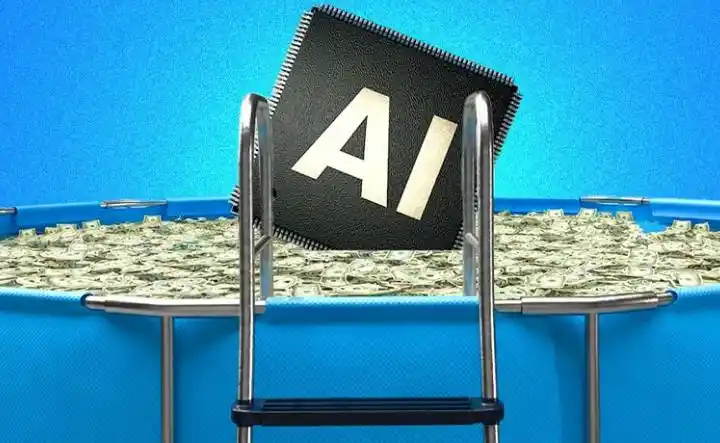
Undoubtedly, OpenAI is Son's biggest reliance for his return to the peak. Over the past two years, SoftBank's cumulative investment in OpenAI is expected to reach $64.6 billion, with a stake of approximately 13%.
Son has pinned his hopes on Sam Altman. For this high-stakes gamble, Son has become aggressive again, selling off some assets, including shares in Nvidia and T-Mobile US, and taking out loans collateralized by Arm shares.
Naturally, there have been doubters. Bloomberg, citing sources, reported that in the early stages of SoftBank's aggressive accumulation of OpenAI shares, internal executives asked Son: What would happen to SoftBank if OpenAI ultimately failed?
Son did not answer directly, only emphasizing his belief that Altman is leading "the most important technological change of this century." At last June's shareholder meeting, Son stated, "I believe OpenAI will eventually go public and become the world's highest-valued company."
The Financial Times also cited senior SoftBank sources saying that Son's engagement with Altman and OpenAI made some within the group uneasy and strained the group's balance sheet.
Another layer of concern within SoftBank is Son's excessive trust in Altman, which has led him to refrain from investing in other competing AI models.
This concern is not unfounded, as the competitive landscape for AI large model companies is changing rapidly.
In March 2025, when SoftBank planned a $40 billion investment in OpenAI, OpenAI was undoubtedly the highest-valued AI company at that time, at $300 billion. Anthropic's valuation was still under $100 billion then. However, the latter's catch-up speed has been extremely fast. A year later, in May 2026, Anthropic's valuation surpassed OpenAI's, approaching $1 trillion, and it filed for an IPO one step ahead.
Nevertheless, Son's attitude has been very firm, as evidenced by his subsequent continued investment in OpenAI.
Betting on OpenAI has indeed given Son a taste of success. According to SoftBank's 2025 financial report, the Vision Fund division gained approximately $46 billion in investment income in the year ending March 31, almost entirely from OpenAI's valuation surge.
But market conditions are ever-changing. SpaceX, which went public just half a month ago, has seen its market cap fall from a peak of $2.7 trillion, now approaching a drop below the $2 trillion mark.
For Son, delays breed risks; no one knows when the AI bubble might burst, so going public sooner is safer.
However, the situation remains unclear. Anthropic submitted its IPO filing a step ahead; OpenAI followed closely but has always been a step behind. According to The Information, OpenAI might go public in late August or early September.
Dan Ives, Global Head of Tech Research at Wedbush Securities, also pointed out, "Being first to the public market is crucial; the first person on the roadshow with investors has an advantage." Institutional traders believe the probability of OpenAI achieving this抢先 is only slightly above 32%.
With competitors closing in, OpenAI's hand is far from as strong as imagined. High costs, failure to meet revenue and growth targets, management changes, and successive exposures of financial crises have all cast a shadow over its IPO prospects.
However, for Son, risk is not a reason to stop betting. He has experienced more painful failures and won gambles through long waits.
In 2016, SoftBank acquired Arm for $32 billion. For years thereafter, this deal was considered one of Son's worst decisions, with IPO plans shelved and failed sale attempts. But Son waited until 2023, when Arm successfully went public. SoftBank holds a 90% stake; based on Arm's latest market cap of $440 billion, SoftBank's stake is worth over $390 billion.
For Son, aside from waiting now, the strategy is to "place bets on multiple tables simultaneously."
Thus, with the OpenAI game not yet concluded, he is already impatient to place his next bet, preparing to make a move in the Physical AI and humanoid robot赛道.
B
Actually, Son has been laying the groundwork for Physical AI and humanoid robots for over a decade. This is a more隐秘 and long-term line in his AI blueprint. Because Son believes AI will ultimately move from the digital world to physical reality.
As early as 2012, SoftBank acquired the French humanoid robot pioneer Aldebaran, forming SoftBank Robotics (SBRH) and launching the emotional interaction robot Pepper.
In 2017, SoftBank acquired Boston Dynamics from Alphabet. At the launch event in July that year, Son invited Boston Dynamics founder Marc Raibert to speak on stage. Raibert said he believed "robots will be bigger than the internet." Son responded, "We will change the world together. We'll put a lot of artificial intelligence into robots."
However, both acquisitions faced坎坷. Perhaps due to poor timing, Pepper was discontinued in 2020; Boston Dynamics was also sold to Hyundai Motor due to commercialization issues.
But Son did not give up; he just changed his approach. He shifted focus to industrial and logistics automation, such as investing in collaborative robot company Agile Robots, acquiring warehouse logistics robot company Berkshire Grey. Additionally, SoftBank invested in delivery robots for餐饮 hotels like擎朗智能, commercial cleaning robots like高仙机器人, and medical rehabilitation robots like傅利叶, focusing on robots with clear application scenarios.
It wasn't until the explosion of AI large models that humanoid robots returned to the spotlight. Silicon Valley giants纷纷入局: $39 billion-valued FigureAI has backing from Microsoft, Nvidia, Amazon, OpenAI; Skild AI has support from Nvidia, Bezos; Musk even claimed he would transform Tesla into a $25 trillion robot company.
Son struck again. In 2024, SoftBank led SkildAI's Series C funding, betting on the "general-purpose robot brain"; last October, SoftBank acquired ABB's robotics business for $5.4 billion, betting on physical robots, where the latter's robot manufacturing capabilities are more crucial.
This is not all.
Son's ambitions for humanoid robots are even greater. Last April, Son announced plans to invest $1 trillion in building multiple AI factory-equipped industrial parks in the U.S., focusing on promoting the large-scale application of humanoid robots in manufacturing. This investment scale far exceeds his involvement in the Stargate project, which has an initial investment of $500 billion.
With such a vast棋局 laid out by Son, it's not hard to understand why he wants to bundle SoftBank's AI and robotics assets for a separate listing, targeting the new trillion-dollar赛道.
Why is Son so obsessed with the "trillion-dollar gamble"?
This goes back many years. As early as 2017, while raising the $100 billion for SoftBank Vision Fund I, Son promised Saudi Crown Prince Mohammed bin Salman: "I will give you a $1 trillion gift: you invest $100 billion in my fund, and I will give you $1 trillion in returns."
Ultimately, the Saudi Public Investment Fund (PIF) invested $45 billion, becoming the largest LP of the SoftBank Vision Fund.
But to this day, Son has not fulfilled his initial trillion-dollar promise.
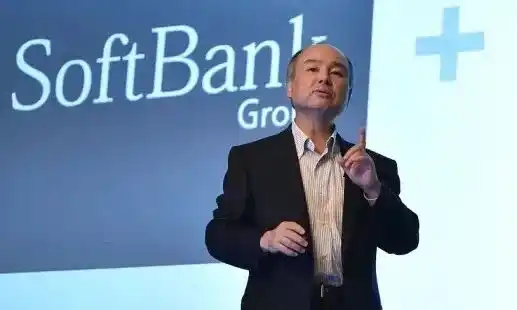
According to "AGBI (Arab Gulf Business Insight)" citing Bloomberg, in February last year, at a roundtable during the Saudi Public Investment Institute Forum in Miami, Son admitted: "I haven't been able to bring him (Mohammed bin Salman) a sufficiently substantial return yet. I still owe him this debt."
This "debt" became Son's motivation, and AI恰好 gave him hope for a comeback. Thus, it's easy to understand why Son dares to make huge bets on OpenAI, gamble heavily on AI, and even go all-in on global AI infrastructure.
In January last year, SoftBank, together with OpenAI and Oracle, planned a total investment of $500 billion to establish "Stargate," building AI data centers in the U.S.; this May, SoftBank announced plans to invest 75 billion euros in building AI data centers in France.
For this, Son once publicly challenged Musk. On June 23, at an internal SoftBank meeting, Son objected to Musk's "space data center" concept, stating that the outcome of the AI race would depend on computing power on Earth, and space data centers were of little value.
After all, computing power is crucial to Son's AI chess game. Computing power, models, chips—Son has gathered the core assets of the AI digital world. To bring AI into physical reality, there is one crucial component left: robots. Thus, Son quietly began preparing his next IPO target.
C
This is how Roze surfaced.
Roze's定位 aligns perfectly with Son's反复提及的 "Physical AI"—combining AI's cognitive abilities with robots' physical execution capabilities.
It is an AI infrastructure platform encompassing data centers, chips, and robotics. According to the Financial Times, Roze's core assets include the data center platform DigitalBridge acquired by SoftBank for $3 billion, chip company Ampere Computing acquired for $6.5 billion, and the robotics division of ABB acquired for $5.4 billion.
By bundling these assets together, Son is betting on "Physical AI," a new trillion-dollar赛道.
As the new trillion-dollar gamble begins,质疑 are again涌向 Son.
The Financial Times reported that despite Son's optimism, some within SoftBank are skeptical about Roze's IPO valuation ($100 billion) and proposed timeline. Some SoftBank executives consider this target overly ambitious, as it relies on rapid expansion of the data center business.
A company "hurriedly拼凑," rushing to go public,难免 seems仓促.
But Son cannot wait. The massive bets on AI are pushing SoftBank's leverage接近极限. A SoftBank insider stated that SoftBank needs to quickly sell or monetize assets to sustain its spending pace. Among these, OpenAI's IPO is a核心 part of Son's plan to reduce leverage.
Roze's上市 carries a similar mission. The investment in OpenAI alone exceeds $64.6 billion,加上 the Stargate project and the trillion-dollar humanoid robot parks—each is an astronomical sum. Son urgently needs Roze to go public to续上 ammunition for this AI gamble.
However, Roze's $100 billion valuation first faces a残酷 reality: at this stage, the valuation of humanoid robots overall is difficult to rise.
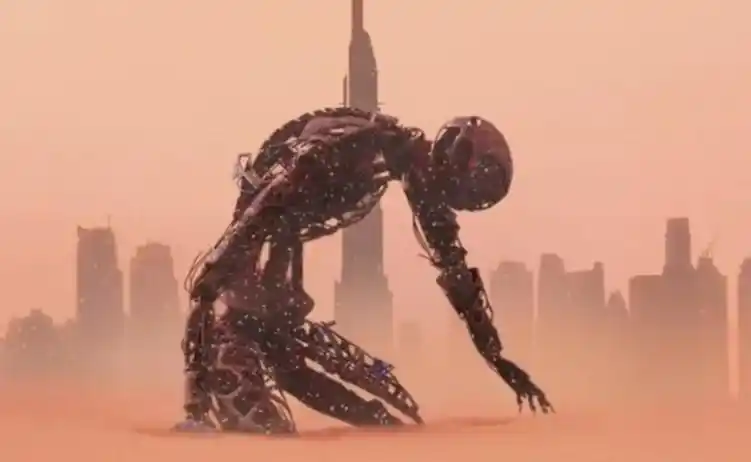
The highest-valued humanoid robot company, Figure AI, has a latest valuation of $39 billion, a 24-fold difference from Anthropic's nearly $1 trillion valuation.
One reason is that AI large models have established clear commercialization paths and foreseeable growth prospects. For example, Anthropic has annualized revenue of $47 billion. Figure AI hasn't reached that stage yet.
A deeper gap lies in the fact that Anthropic has重构 the existing industry格局, taking away most of the market share originally held by the traditional software industry. Humanoid robots, for now, are more like大型摇操玩具, let alone having a颠覆性 impact on industries.
The落地 of Physical AI also faces multiple现实困境, such as the割裂 between brain and body and unclear commercialization paths, all of which require time.
Son's plans are good, just somewhat太遥远. Looking back, we see he waited over a decade for Alibaba, seven years for Arm—each high-stakes gamble involved a long wait. Roze might be the same; the outcome and how long Son must wait remain to be seen.
References:
《SoftBank plans to list new AI and robotics company in the US》Financial Times
《Masayoshi Son's 300-Year Vision: SoftBank Swallows the World》Zhixiang Wang
《SoftBank CEO admits failing to deliver returns to PIF》AGBI
《SoftBank plans $1 trillion investment in U.S. AI robot parks》Nikkei Asia
《OpenAI to file IPO documents, aims for autumn listing, valuation could reach $1 trillion, SoftBank Group's stock price surges 20%》National Business Daily
《Explosive! OpenAI financial report leaked: lost 260 billion last year》Zhidongxi
This article is from the WeChat public account "字母榜" (ID: wujicaijing), author: Xue Yaping, editor: Wang Jing