【Introduction】Recently, Anthropic's valuation has approached $1 trillion, its IPO may surpass SpaceX, and its ARR skyrocketed to $45 billion in just 5 months! It's even joining forces with Goldman Sachs to take on McKinsey. Co-founder warns: AI may begin 'building itself' by 2028. The countdown to the intelligence explosion has officially begun.
Just now, the foreign media Financial Times broke explosive news: Anthropic is considering a deal with a valuation close to $1 trillion!

Founded in 2021, this company is less than 5 years old, yet its valuation has gone from zero to nearly a trillion.
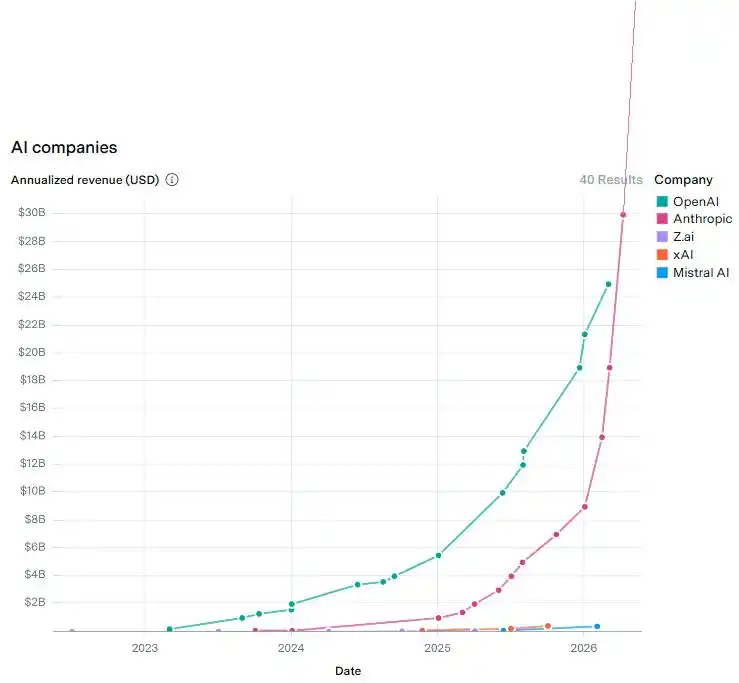
In May of this year, its Annual Recurring Revenue (ARR) had already soared to $45 billion, with revenue growing 500% in just 5 months.
The steep revenue curve shown below is unprecedented in the entire history of technology and business!

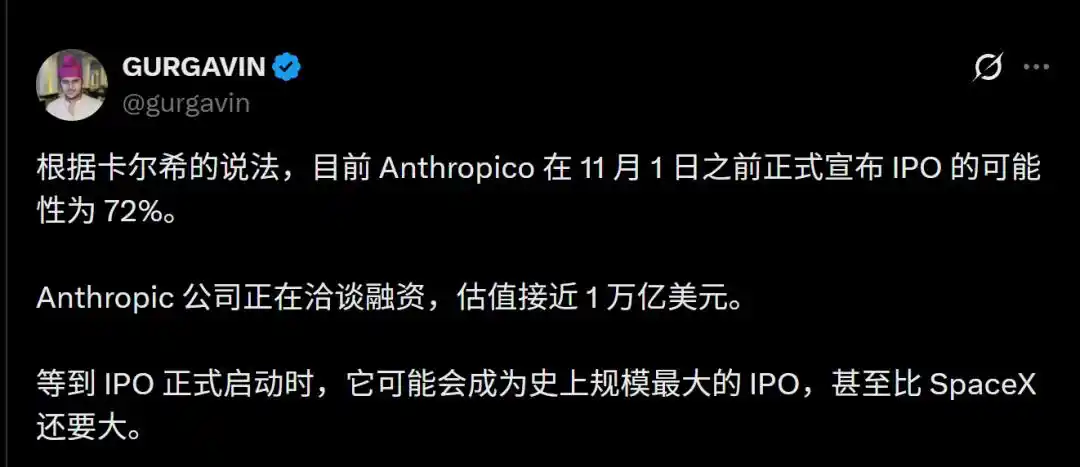
Today, the prediction market platform Kalshi shows that the probability of Anthropic announcing an IPO by November 1st of this year is as high as 72%.
Market rumors suggest its valuation is rushing toward $1 trillion. If it successfully goes public, it would become one of the largest IPOs in history, directly surpassing SpaceX!
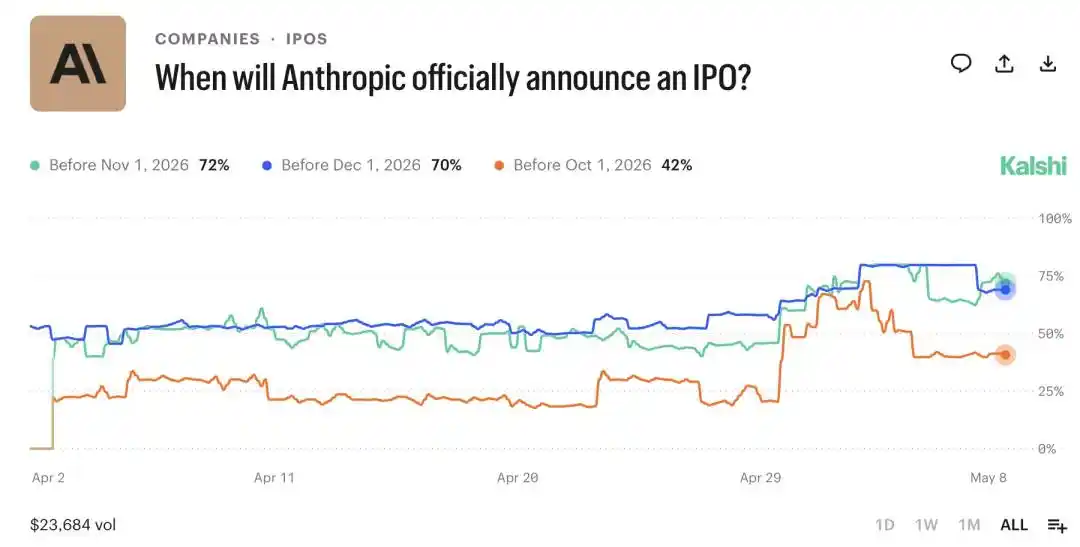
And just two days ago, Anthropic's implied valuation in the on-chain Pre-IPO market had already surged to $1.2 trillion.
This astonishing speed of commercial expansion heralds Anthropic's entry into an era as a market-devouring behemoth.
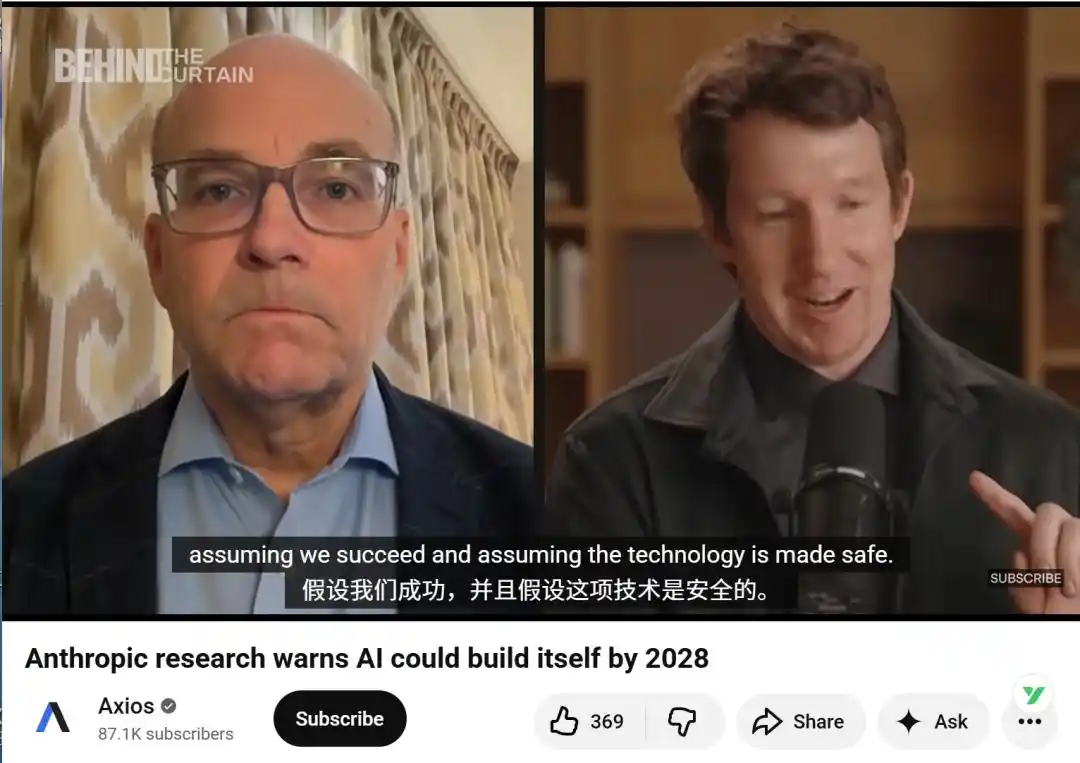
However, what truly makes this story extraordinary is the public prophecy made by co-founder Jack Clark in a recent interview—that AI will achieve self-evolution by the end of 2028.
It can be said that Anthropic's trillion-dollar valuation is the market pricing in the expectation of an intelligence explosion!
Unprecedented, the Growth Curve Goes Vertical
First, let's look at a set of numbers that are already breathtaking enough.
In 2022, Anthropic's revenue was $10 million.
In 2023, it grew to $100 million—an increase that was still considered normal in Silicon Valley.
The real 'absurdity' began in 2025.
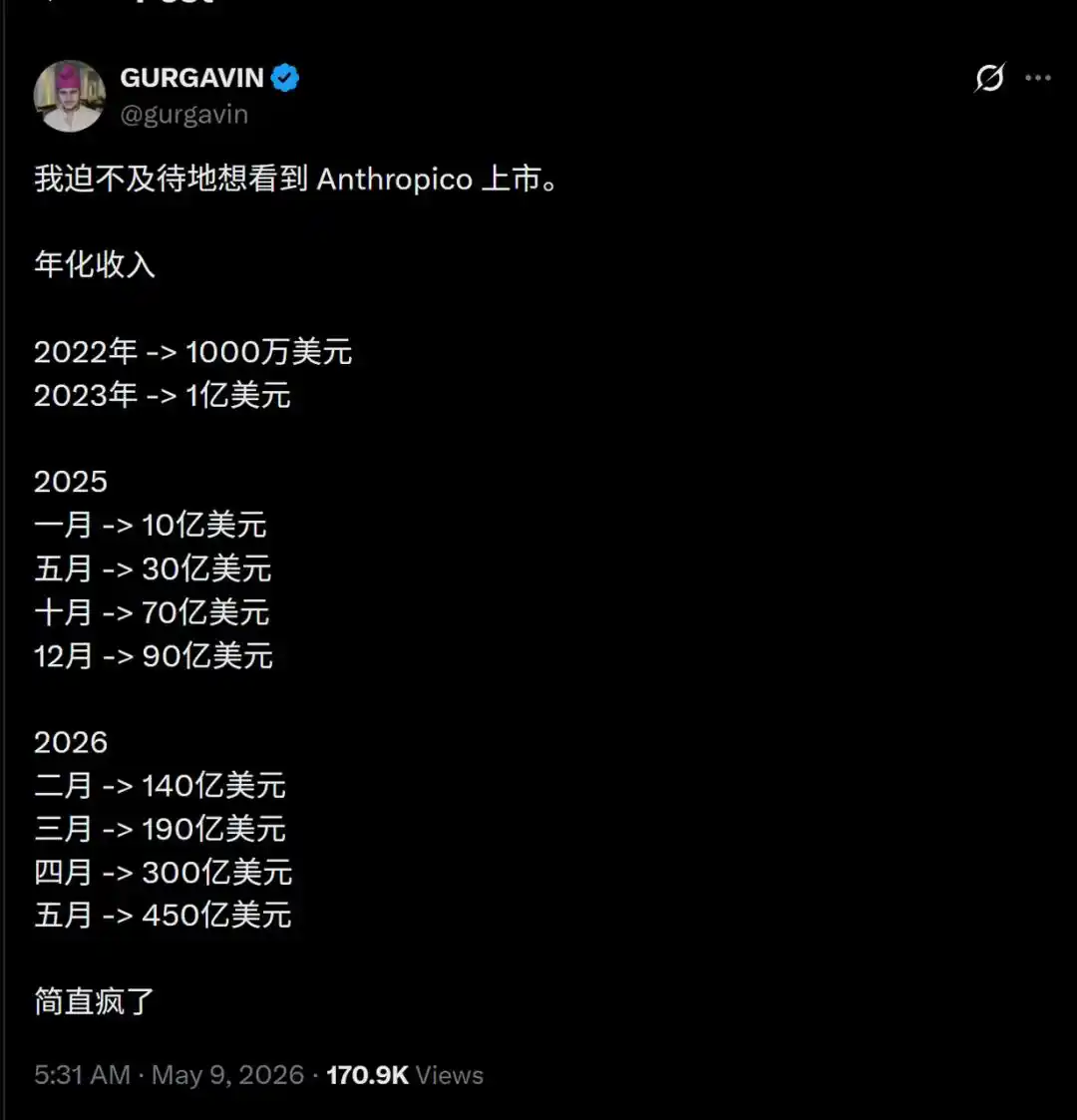
That year, Anthropic's revenue seemed to have a cheat code: from $1 billion in January, it shot directly to $9 billion by year-end. A ninefold increase in a year, with the growth curve noticeably steepening.
Entering 2026, this curve is no longer just steep; it has gone completely 'vertical'!
February: $14 billion
March: $19 billion
April: $30 billion
May: $45 billion
A 500% surge in revenue in just five months.
Calculating from $10 million in 2022, in four and a half years, Anthropic's revenue has multiplied a staggering 4,500 times.
And just in May, CEO Dario Amodei officially announced at a conference: first-quarter revenue and usage grew 80 times year-over-year.
OSS Capital founding partner Joseph Jacks even made a prediction that sounds almost insane: if Anthropic maintains its current growth rate, by mid-2028, its revenue will surpass that of Alphabet, Google's parent company.
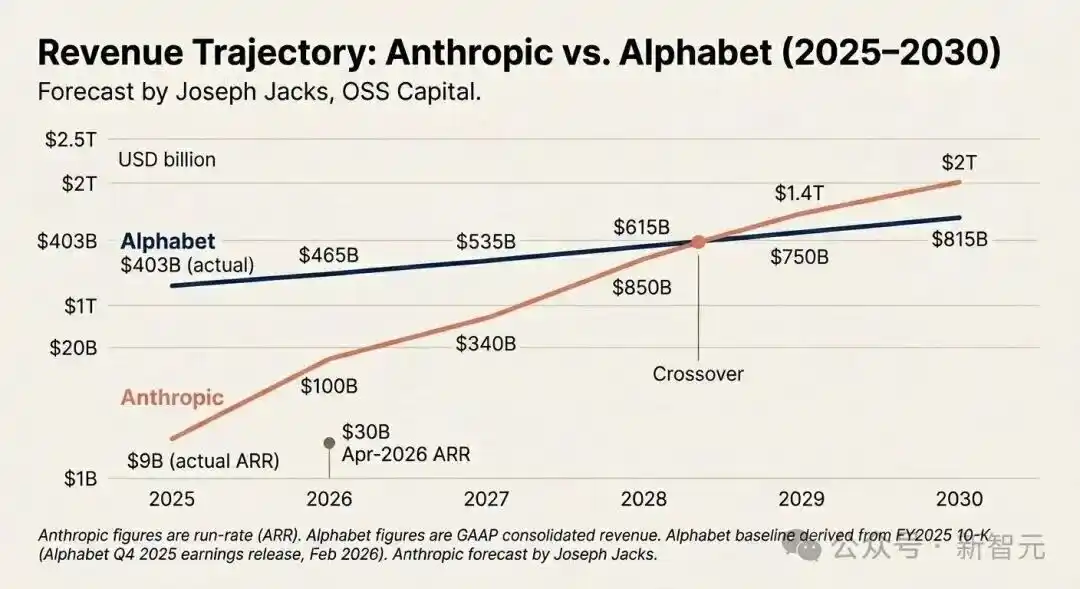
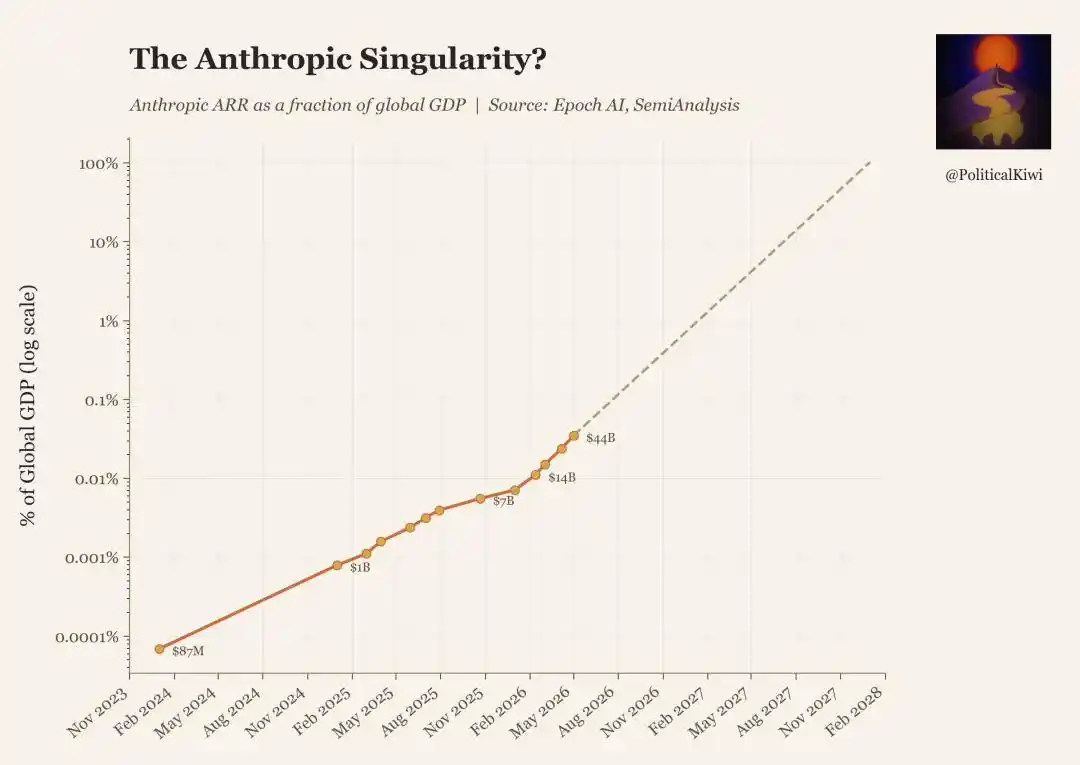
At the current exponential growth rate, Anthropic's annualized revenue will reach 100% of global GDP by early 2028
The Financial Times reports that a new round of financing is already on the way.
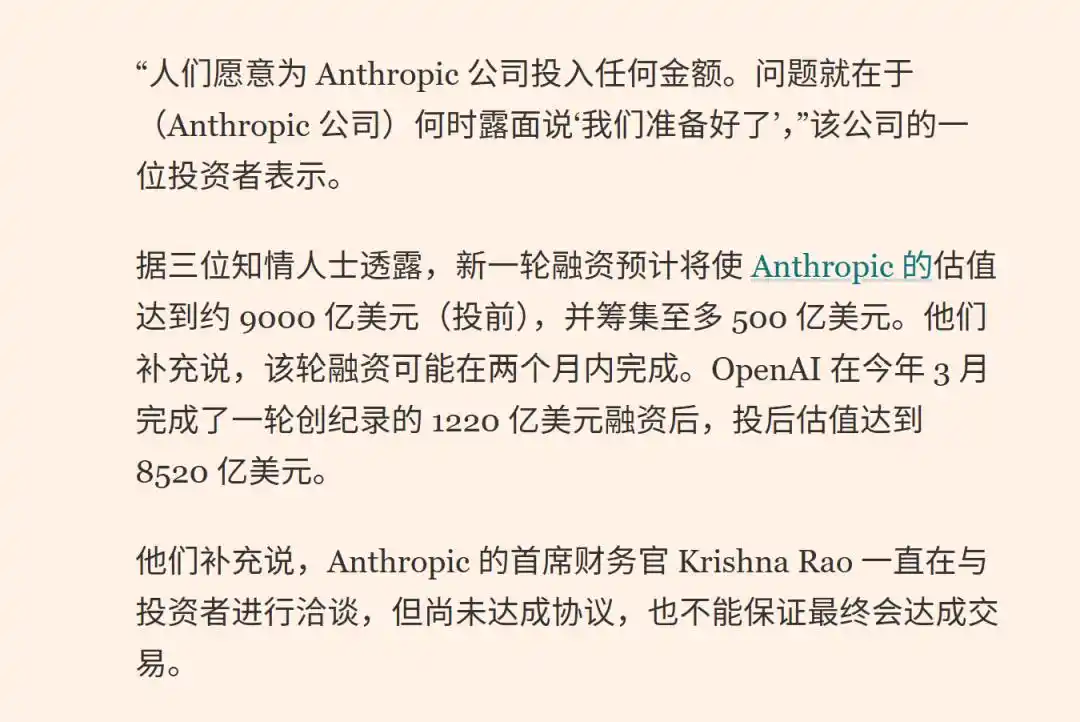
Valuation? Pre-money $900 billion, with a financing scale potentially as high as $50 billion, and it's highly likely to be finalized within two months.
The current situation is that top-tier institutions like Dragoneer, General Catalyst, and Lightspeed are queuing up at the door. Even before the CFO formally kicks off the financing process, existing shareholders have already started 'fighting' over allocations.
One investor told the Financial Times with emotion: It's no longer a question of money now. If Anthropic just looks up and says 'we're ready to take money,' funds from all over the world would immediately pour in.
Why Now? Two Products, Gripping the Throat of the Era
The revenue curve didn't go vertical by luck, but by two flagship products—Claude Code and Cowork.
They perfectly hit the massive explosion in demand for AI coding and intelligent agents in 2026. One handles code, the other handles office collaboration.
While the entire tech industry is cramming AI into development workflows and enterprise collaboration, Anthropic has already become the lifeblood in these two arteries.
But a question arises: If Anthropic were just a company selling APIs and AI tools, its ceiling should be the SaaS ceiling, not a trillion-dollar market cap.
What really made Wall Street change its calculations is another matter—and this matter was precisely laid out completely by Jack Clark in his interview with Axios.
The 2028 Prophecy: When AI Begins Self-Iteration
In this exclusive interview, Jack Clark said something easily overlooked but extremely important:
We have gone from AI systems that could only do basic coding, to AI systems now participating in scientific production itself, and in all the unglamorous but fundamental engineering work involved in any large-scale R&D project.
Here's how to understand it: Previous AI was used to write code, answer questions, and organize documents.
Anthropic's AI today is replacing or accelerating the 'R&D' process itself.
Going a step further, Jack Clark gave a prophecy for 2028.
"My forecast is that by the end of 2028, there's a better than 50% chance that AI systems will be able to, once you tell them to make a better version of themselves, go and do that completely autonomously."
To help people understand what this means, he used an excellent analogy:
All AI companies today are like 3D printer companies. We have a group of extremely talented people researching how to make higher-resolution print heads.
The problem is—what if the 3D printer could print a better print head itself? What if it could start manufacturing better versions of itself?
Humanity has never encountered a technology like this before. Previously, it was always humans, outside the technology, coming up with ideas for improvement and then feeding them back in.
If there is a technology that can generate ideas for improving itself from within itself—this is a completely new concept.
In the interview, Clark formally used the term 'intelligence explosion,' referring to AI systems beginning to improve themselves rapidly and recursively.
When the intelligence explosion begins, the world will simultaneously face unprecedented opportunities and risks: cybersecurity threats, biological weapon risks, economic restructuring, and employment shocks.
And this is the true object being priced by Anthropic's trillion-dollar valuation.


Wall Street's 'Sword': AI Teams Up with Capital to Snipe the Consulting Industry
Once you understand the 2028 prophecy, looking back at Anthropic's formation of a $1.5 billion joint venture with Goldman Sachs and Blackstone, your perception will be completely different.
In May, Anthropic announced the formation of a $1.5 billion joint venture with Goldman Sachs and Blackstone Group.

On the surface: Anthropic plans to use Claude AI and its engineering team to replace traditional consulting giants like McKinsey, Boston Consulting Group, and Deloitte.
But at a deeper level, Jack Clark revealed a key piece of information in the interview:
The future challenge lies in how to widen the extremely narrow 'pipes' in the economy—such as the channels from idea to implementation for new drugs or new strategies.
Why hasn't the consulting industry been disrupted in 100 years? Because the 'pipe' for complex strategic advice is monopolized by a very small number of highly intelligent, highly experienced individuals.
What Anthropic is doing is not deploying Claude as a chat window, but deploying it as a working system for executable strategy.
This is essentially testing an extremely critical question: On the path to self-evolving AI by 2028, can high-order cognitive labor be replaced by AI?
If even McKinsey can be impacted, it means—what Wall Street is betting on is never just a better chatbot, but an intelligent agent capable of systematically replacing high-end intellectual labor, one that is on the verge of self-evolution.

2028, The Countdown Has Begun!
At this point, we understand the crazy numbers from the beginning of the article.
Anthropic's revenue curve went 'vertical' not because the sales team unlocked a cheat code, but because AI has already entered the R&D process itself.
And when AI enters R&D, recursive self-improvement is no longer a question of 'if,' but 'when.'
Jack Clark's warning and Anthropic's meteoric rise present us with a future that is deeply fractured, yet remarkably consistent:
On one side, a valuation approaching $1 trillion; on the other, a potentially uncontrollable intelligence explosion and the restructuring of the economic order.
2028 is no longer just a distant number on the calendar; it's more like a—countdown that has already started.
And Anthropic's cards are not all on the table yet.
References:
https://www.youtube.com/watch?v=sViyNJzf-OQ&t=5s
https://x.com/scaling01/status/2052828949936316605
https://x.com/gurgavin/status/2052888358628499858
https://x.com/EpochAIResearch/status/2052847400650518804
This article comes from the WeChat public account "New Zhiyuan," edited by: Aeneas