The growth myth of Claude Code is shattered!
"Anthropic is done for, there's a massive wave of users frantically canceling subscriptions right now."
A developer's post on X sparked heated discussion in the community.

Latest data shows the early explosive growth phase of Claude Code has officially ended.
Now, new user growth is in the single digits, while old users are defecting in droves.
Many loyal CC users have already switched to its old rival, OpenAI's Codex.
ARR Growth Rate Plummets to 5.2%, the Frenzied Dash Halts
Today, the well-known data tracking platform TickerTrends released a new report, data shows—
Claude Code's growth engine has clearly "stalled."
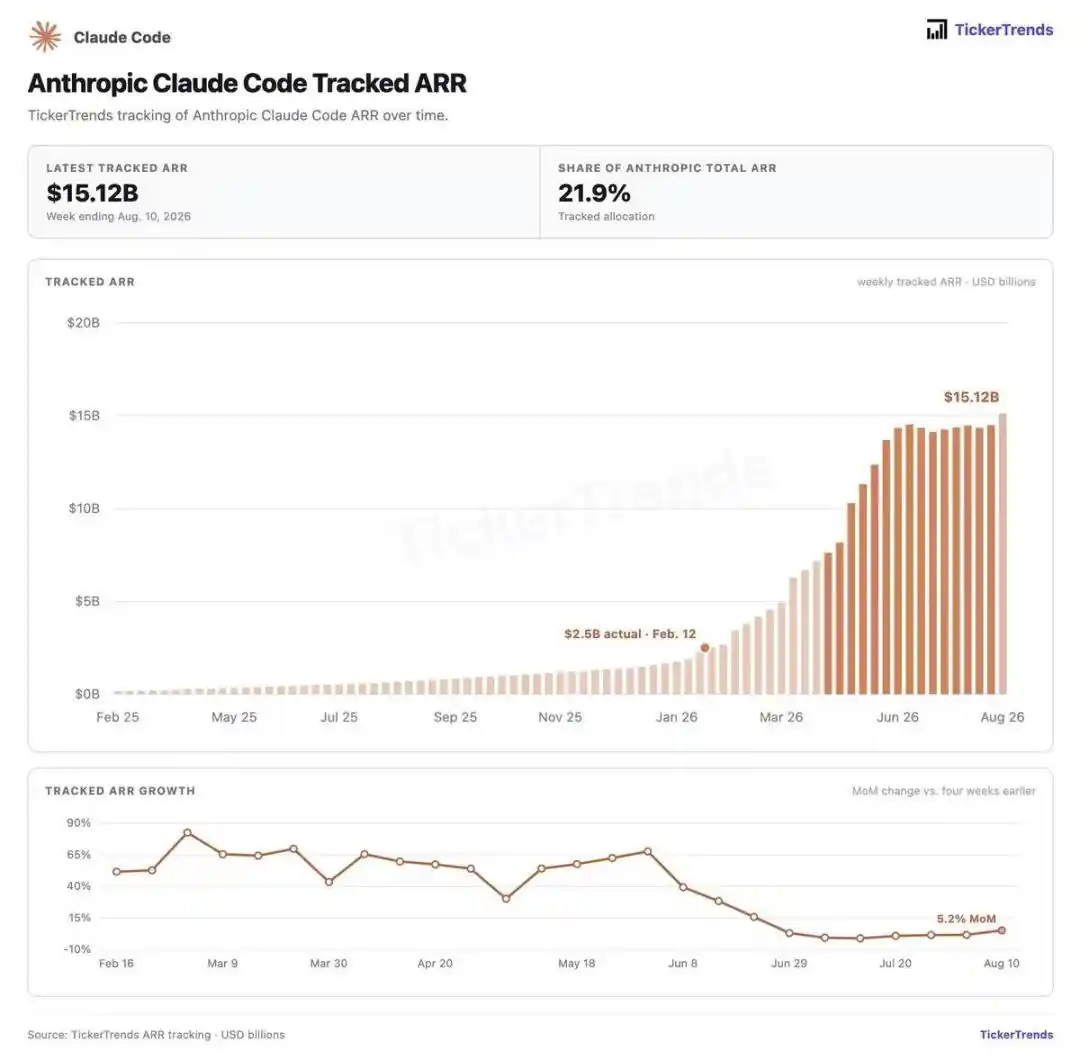
Once, Claude Code had a breathtaking growth curve.
Claude Code's ARR was around $2.5 billion on February 12, 2026; it skyrocketed to $6.3 billion by the end of March; broke through $10.3 billion by the end of April; and by June, that number had exceeded $14 billion.
Nearly a sixfold increase in just a few months!
This is not only a miracle in AI history but a myth in the entire history of the software industry. Investors were ecstatic, and the entire tech world gasped in amazement.
But Claude Code's myth ended in August 2026.
As of August 10th, Claude Code's tracked ARR stalled at $15.12 billion.
At first glance, a $15 billion plate is still massive (accounting for 21.9% of Anthropic's total tracked ARR), but if you look at the month-over-month growth rate, this number has plummeted to 5.2%!
What does 5.2% mean? For an AI unicorn at the forefront of the hype, this number indicates it has prematurely entered the low-growth period of "traditional software."
Data doesn't lie, especially for SaaS and AI subscription products. ARR is the lifeline.
As tech commentator Orange AI pointed out:
The growth myth of Claude Code is shattered.
Entering the harsh reality of single-digit growth mode, programmer penetration is almost done, those who were going to Codex have left, and Cowork is too difficult to use and hasn't captured much of the work market.

Why has growth stalled?
First, penetration among the programmer community is nearing its ceiling.
Globally, the number of core developers willing to pay for advanced AI coding tools is ultimately limited. Those who were going to buy have bought it. Where will the new growth come from?
Second, the Cowork feature, on which Anthropic had placed high hopes to change white-collar workflows, has suffered a resounding failure.
User feedback is almost universal: Cowork is terribly difficult to use, completely failing to bite into the massive Work market as expected.
The product capability didn't keep up with the ambition. The attempt to break into new markets failed, naturally leading to competition within the existing market.

Invisible Watermark Incites Public Outrage, Large-Scale "Cancel Wave" Erupts
Slowing growth is only an internal worry. A more fatal external threat is the "cancel wave" spreading across social networks.
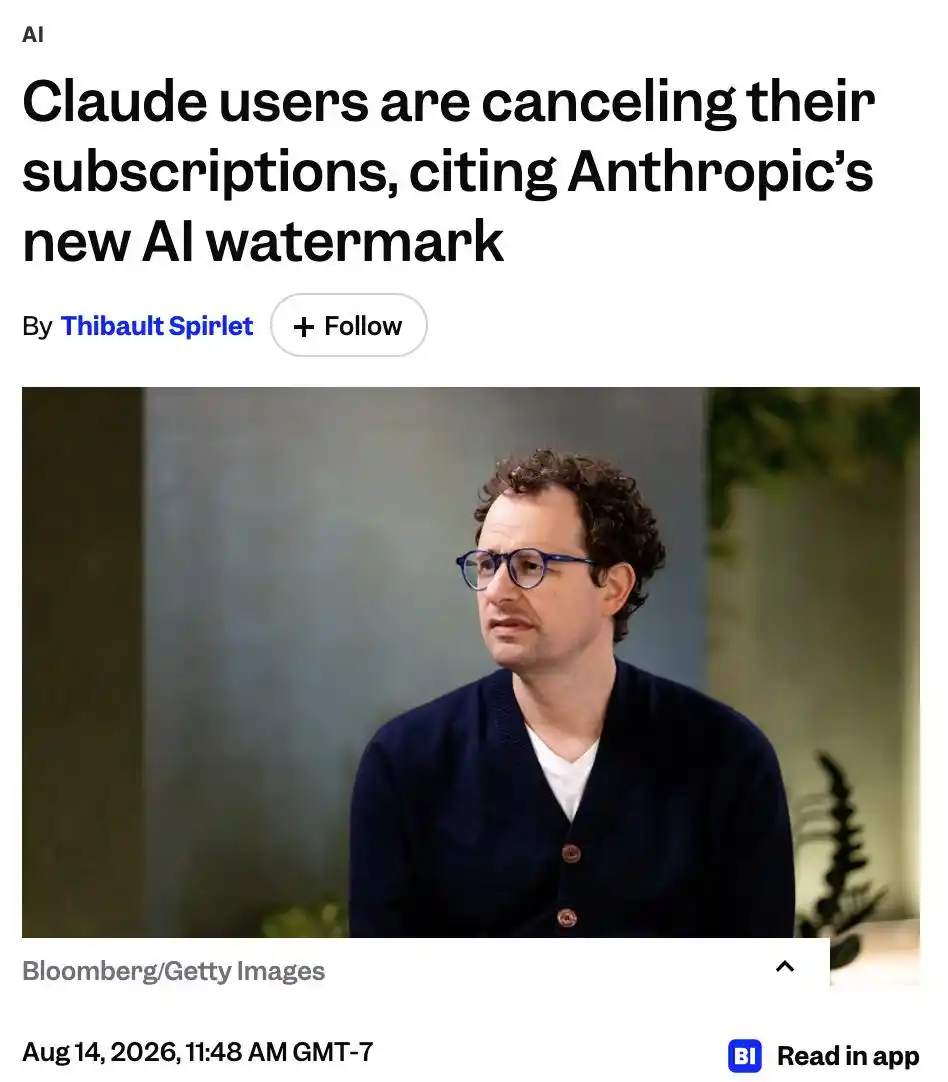
The direct trigger for this subscription cancellation crisis is a new feature rolled out globally in early August 2026—"Invisible Text Watermarking."

It's reported that Anthropic took this step to comply with increasingly stringent EU regulations. However, this move infuriated users.
This watermark silently embeds itself into all text and code generated or processed by Claude, completely enraging programmers and writers.
For many premium users paying around $100 monthly for Claude Pro/Max subscriptions, AI is just an auxiliary tool.
They might put their core code into Claude to find bugs, or toss tens of thousands of words of confidential documents in for light polishing.
Now, anything touched by Claude gets permanently stamped with the "AI-generated" mark on these original works born from human effort.
In interviews with foreign media, several users who angrily canceled expressed their fury: "This pollutes our work!"
Once code is secretly watermarked, indie developers face huge trouble—they work hard to deliver to clients, only to potentially face lawsuits and breach of contract penalties.
Programmers at big companies are even more panicked. If the company's core codebase gets "contaminated" by AI watermarks, and compliance audits find out, their career prospects could be ruined.
And the watermark is just the trigger.
The subsequent official moves piled on the negative effects, thoroughly grinding everyone's patience into the ground.
For instance, the miserly token limits.
Unlike OpenAI's Thibault, who frequently resets limits, Anthropic, after being heavily criticized, reluctantly increased the weekly token limit by 50% (and only until the end of August).
But for heavy users who rely on it daily, this isn't even enough to fill the gaps! The pain of being rate-limited in the middle of coding, who understands?
Additionally, there's the Schrödinger-like model experience.
The previously hyped-up god-tier model Fable 5, after its June launch, kept causing problems.
When writing complex business logic code, its performance is like a lottery—sometimes divine, sometimes idiotic, making it impossible to fully trust.
Since it's expensive, heavily overpriced, and aggressively milking users, it's no surprise users are revolting.
OpenAI Codex's Frenzied Counterattack
Just as Claude Code is mired in trouble and losing users in droves, its arch-nemesis—OpenAI Codex—is feasting.
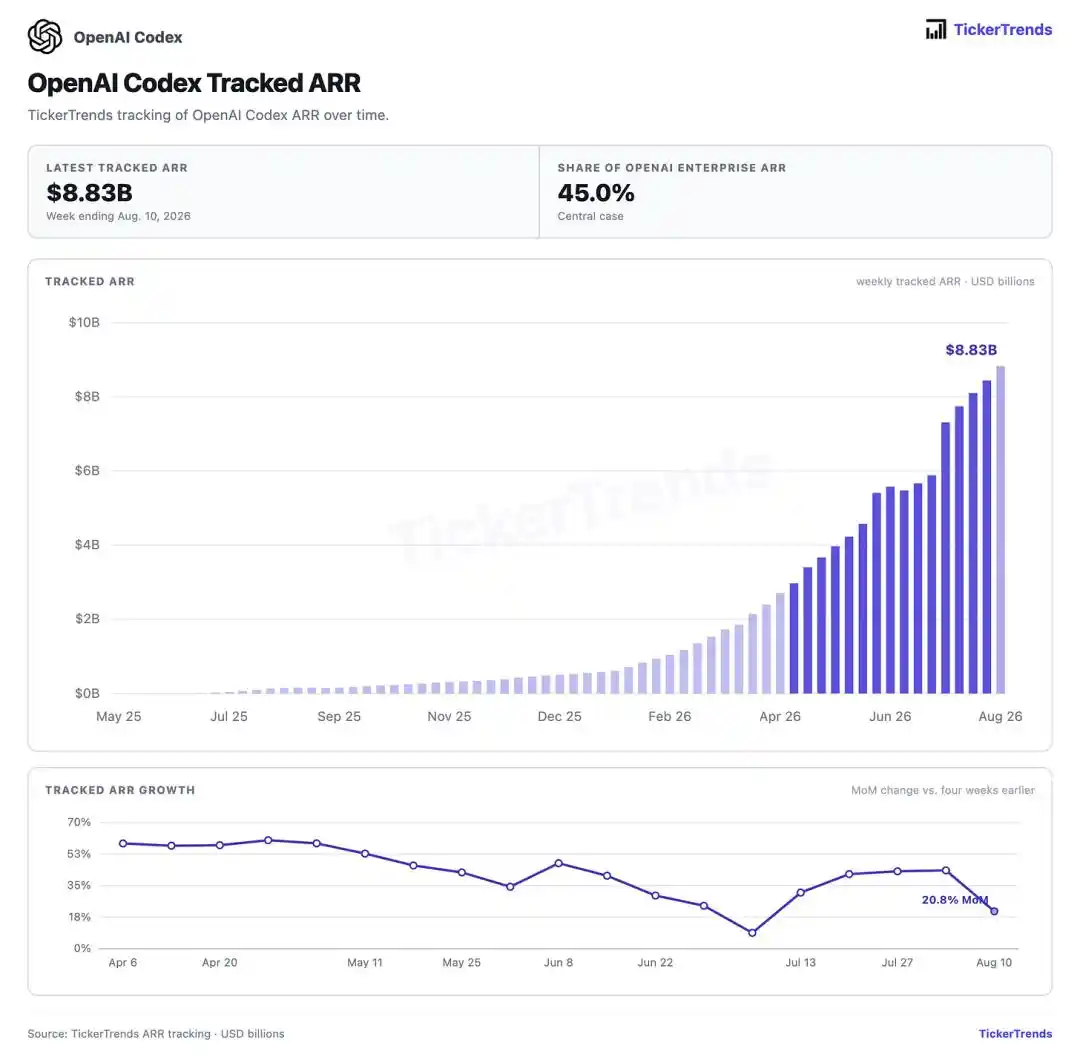
Comparative data from TickerTrends paints a picture of "fire and ice."
In the most recent four weeks ending August 10th, OpenAI Codex's month-over-month growth rate reached a staggering 20.8%, a full four times that of Claude Code (5.2%)!
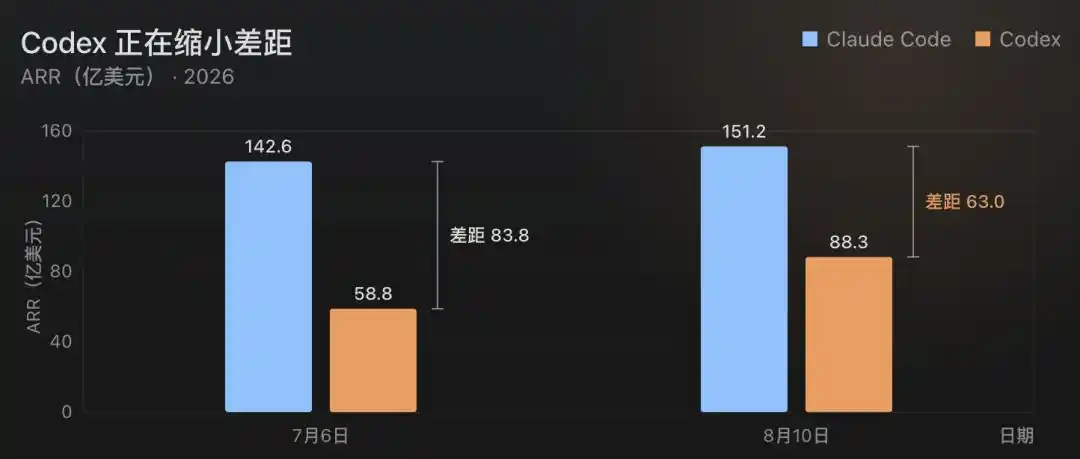
Why is Codex so strong? The answer is simple: it has absorbed a large number of "refugees" from Claude.
On platform X, numerous developers stated that due to the watermark and token limits, they have canceled their Claude subscriptions and fully switched to Codex.

Codex has looser limits, more seamless IDE integration, no disgusting invisible watermarks, and the backing of OpenAI's powerful enterprise sales network (Codex currently accounts for about 45% of OpenAI's enterprise ARR).
As one comment said: "Those who were going to Codex have left." Users are voting with their feet.
Even Cursor, recently acquired by SpaceX, has started a subsidy war, offering a $200 premium subscription directly for a "Claude cancellation screenshot."
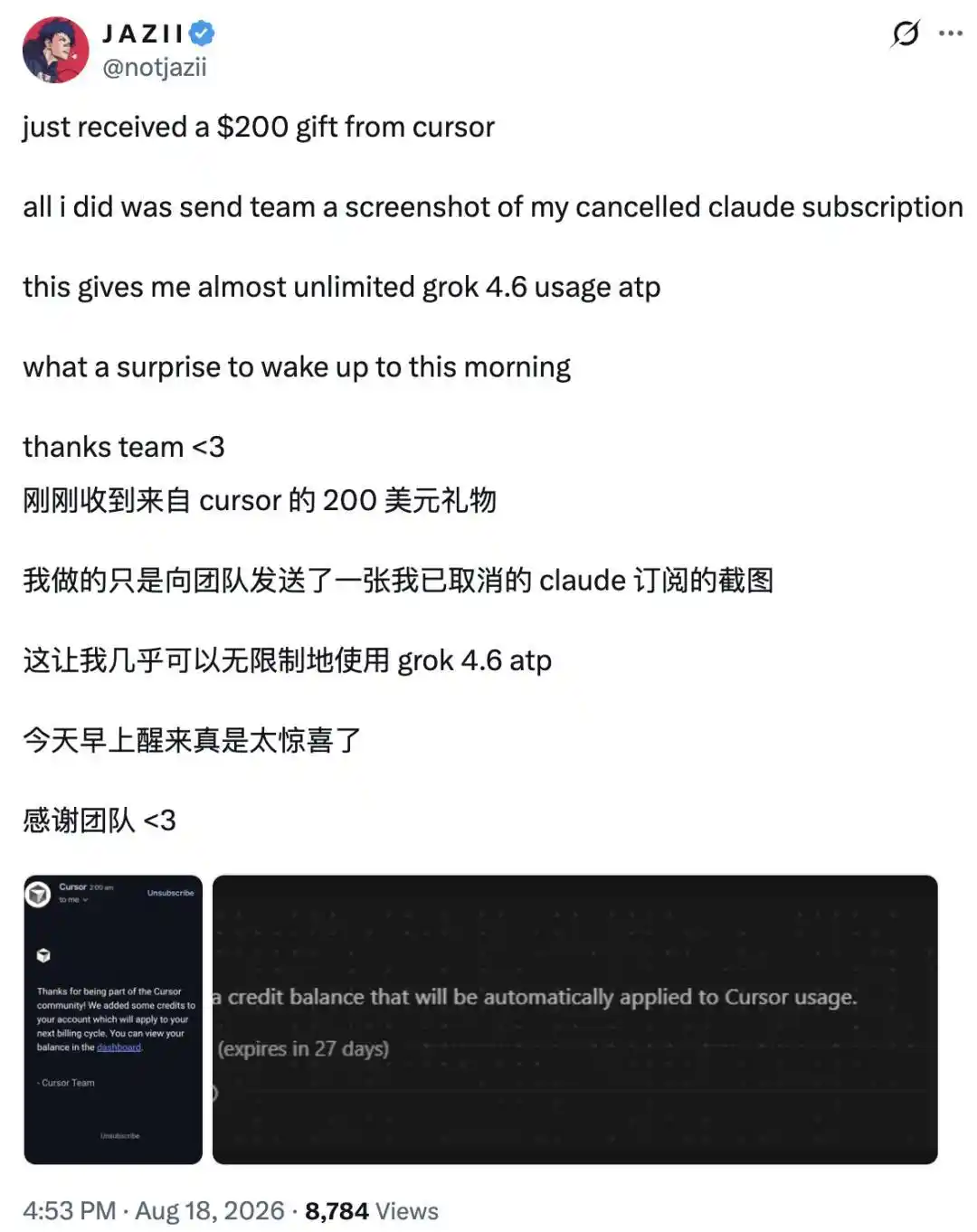

The moat Claude Code built early on with its ultra-long context and impressive zero-shot coding capabilities is being slowly filled in by OpenAI and Cursor with better product experiences and ecosystems.
The Market Enters a Cooling-Off Period, Waking from the "AI Self-Evolution" Dream
Looking back to May and June of this year, how triumphant Anthropic was then.
The Fable 5 model had just been released, team members were touting the new narrative everywhere: "AI has already gained the ability to develop software on its own." "The role of human programmers will be redefined."
At the peak of its ARR surge, all of Silicon Valley was immersed in a frenzy of "AGI is about to arrive, we are building gods."
This narrative is extremely sexy and also extremely easy to make those involved feel "high."
However, just two months later, reality harshly slapped this boastful narrative.
When the tide recedes, companies face the cold, hard business reality—
Corporate budgets are finite; compute is finite; workers' demands are quite humble (they just want the tool to be useful, not cause trouble, and have enough tokens).
What users truly care about is: "Can you stop putting watermarks in my code? Can you raise the hourly message limit a bit? Can you design your Cowork feature to be usable by humans?"
This is precisely the common dilemma facing all AI super-unicorns now.
CC's technical foundation is undoubtedly top-tier, but in product operations, commercialization strategy (like forcefully pushing watermarks), and understanding user psychology (like pricing and limits), it acts like an arrogant novice, leading to backlash.
What truly pushed the discussion to a poignant point is the critique at the capital and narrative level.
Some bluntly stated: Anthropic's roughly $2 trillion IPO valuation is absurd, even higher than SpaceX's.
Yet the reality is, it doesn't own any hardware, has no real moat, and the prospects aren't bright. Serious companies like SpaceX, whose intelligence is nearing and will soon surpass these models, will also see their revenue catch up.
As for the IPO, more people will see it as a tool to quickly offload shares and achieve a graceful exit.
Now, the market has moved from the blind rush period into a cooling-off period.
The days of feasting on hype and early-mover advantages are over.
Although Anthropic still holds a trump card—Fable 5.1—if it continues with the watermark, will users accept it?
One final piece of advice for Anthropic: Please be decent and stay humble.
Don't get too arrogant during growth, because your patrons can overturn the table and leave at any moment.
References:
https://blog.tickertrends.io/p/claude-code-vs-openai-codex-arrhttps://techcrunch.com/2026/08/17/anthropics-annualized-revenue-surges-to-65b/https://x.com/oran_ge/status/2090040293383082085
This article is from the WeChat public account "New Zhiyuan", author: Aeneas David