When AI Traffic Surpasses Humans, How Do You Prove You're Human?

marsbitPublished on 2026-06-12Last updated on 2026-06-12

Abstract

With AI-generated web traffic surpassing human activity, websites face a crisis as AI agents bypass ads, avoid clicks, and scrape data without generating revenue. This disrupts the ad-based internet economy, diverting traffic and reducing site visits. In response, sites are blocking AI crawlers and deploying traps like Cloudflare's "honeypot" pages. Traditional CAPTCHAs are now ineffective against advanced AI. The focus has shifted to behavioral biometrics—analyzing unique human patterns such as cursor movement, typing rhythm, and keystroke dynamics. Companies like IBM and BioCatch use this data to distinguish humans from bots, even detecting fraud through behavioral inconsistencies. Two competing approaches aim to verify human identity centrally. Sam Altman’s World (formerly Worldcoin) uses iris scanning to create unique credentials, though it faces privacy concerns and regulatory bans. Alternatively, cryptographic zero-knowledge proofs offer anonymous verification without revealing personal data, championed by Vitalik Buterin to avoid centralized surveillance. However, both systems have flaws. Centralized solutions risk biometric data misuse, while decentralized models may be exploited through identity rental markets in economically unequal regions. Despite challenges, the author favors cryptographic methods for preserving privacy over pervasive behavioral monitoring that permanently captures and controls personal biometric data.

Author: Vaidik Mandloi

Compiled by: Luffy, Foresight News

Since its launch at the end of 2022, ChatGPT has spawned a vast ecosystem of AI agents. Currently, the total web traffic generated by such programs has surpassed that of all human users worldwide. The online behavior of AI agents is fundamentally different from humans: they don't view ads, click on links, or shop online; they simply crawl web data to complete tasks and leave once finished.

The internet's original architecture and business logic were built around human behavior and usage patterns. Yet today, the vast majority of web visits are not from real people, a situation that deeply troubles many websites. Currently, 2.5 million websites have begun blocking AI crawlers, with platforms like Perplexity getting embroiled in related lawsuits. Cloud service provider Cloudflare has even built "honeypot mazes," using AI-generated nonsensical text to create infinite-loop pages designed to trap various data crawlers.

However, some advanced AI agents have already developed the ability to bypass such protective measures. In the face of escalating human-machine conflict, the industry is now focusing on developing a more reliable human identity verification mechanism. This system needs to accurately identify whether the operator behind the screen is human: real human operators exhibit hesitation, typing errors, and cursor movements with the subtle tremors unique to the human nervous system. This article will analyze the causes behind this transformation, the two mainstream technological solutions, and the choices people will face: either accept centralized biometric monitoring or adopt encrypted zero-knowledge proof technology for anonymous human verification.

AI Disrupts the Internet's Business Model

The root cause of websites blocking AI programs lies in AI undermining the commercial foundation of the internet from both ends. The profitability of the traditional internet is built on user attention: users visit pages, view ads, and content publishers earn revenue. If an AI handles shopping, it might search 5,000 websites at once, whereas an ordinary person typically browses only four or five pages.
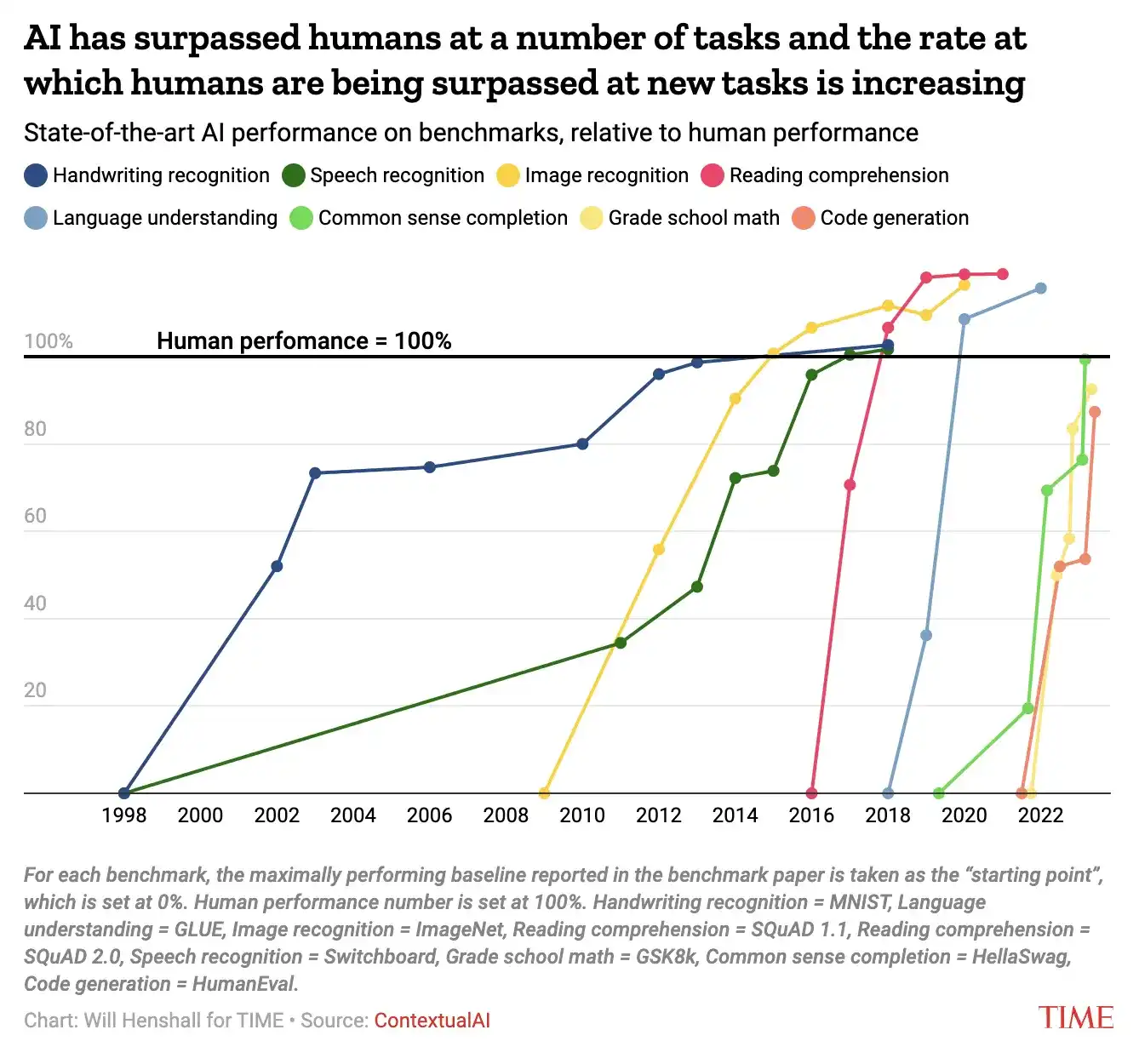
AI reads far faster than humans, capable of comparing prices across the entire web and even placing orders directly within minutes, a process that generates no ad views. This means websites bear server costs without earning any revenue.

Simultaneously, AI search is continuously diverting website traffic. After Google added AI-generated summaries at the top of search results, only 8% of users clicked through to the original webpages, leading to a direct 33% drop in referral traffic for major content sites from Google. Within just a year of its launch, this feature's monthly active users exceeded 1 billion, and platform retrieval volume has doubled every quarter since its debut.

Surely everyone remembers Chegg, the study help platform. It originally operated a homework Q&A business relying on strong search rankings, but has now officially shut down its Q&A section, attributing its demise to the impact of ChatGPT. Content creators are caught in a double bind: crawlers scrape content on one side, while AI summaries intercept traffic before users even reach the website.

The data gap is even more staggering. For every referral visit OpenAI's crawler brings to a partner website, it previously scrapes data from 400 pages; for Anthropic, this ratio reaches 38,000:1. These companies use publicly available data across the web to train AI models for free, then use the finished products to divert traffic that originally belonged to the websites.

In any other industry, such predatory data collection would have sparked countless lawsuits, yet in the AI field, these companies secure valuations in the trillions.

Your Body is the New Password

For the past 25 years, the internet has primarily relied on CAPTCHAs to distinguish humans from machines. People needed to identify traffic signs or input distorted characters. This mechanism worked because machines' image recognition capabilities were far inferior to humans in the past.

Now the situation is completely reversed. OpenAI's agent operations score far higher than humans in Google's human verification system simulations, capable of accurately clicking interfaces and copying/pasting content; AI-generated photos can fool identity verification systems, and deepfake video calls have even been used by criminals to complete bank transfers. The design premise of traditional verification methods—that machines are weaker than humans—no longer holds.

The industry is now forced to focus on areas where AI still struggles to replicate human capabilities: the physical behavioral characteristics displayed when humans operate electronic devices, also known as behavioral biometrics. Companies like IBM and BioCatch are developing related systems. This technology not only verifies identity at login but also monitors user behavior throughout the session, collecting data on cursor movement speed, page scrolling patterns, typing rhythm, keystroke pressure, text editing habits, and even phone holding angles, with the phone's gyroscope recording relevant information throughout.
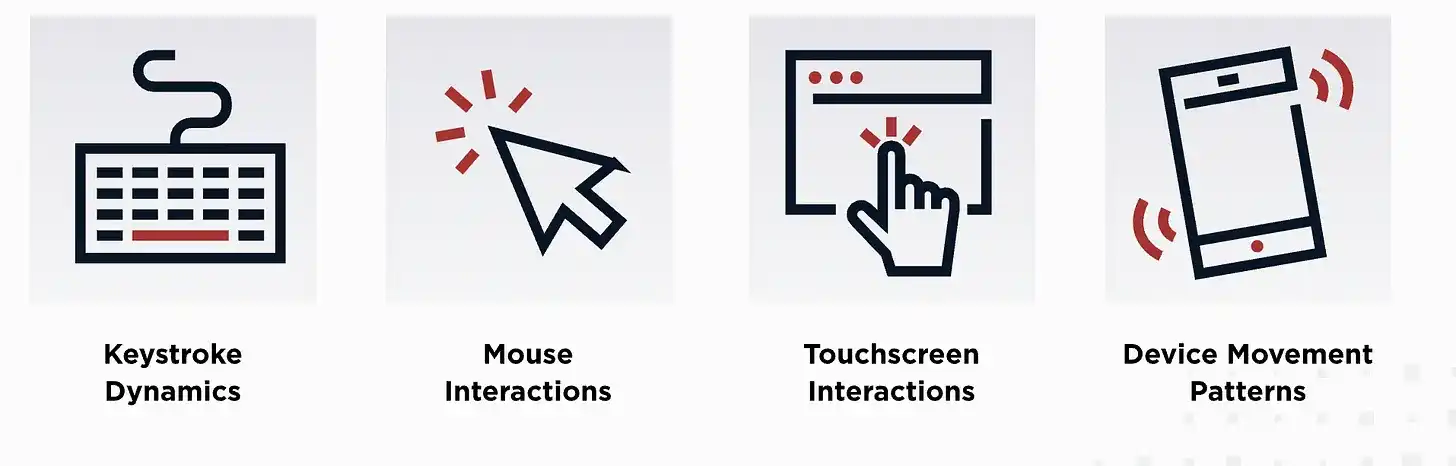
The system can also recognize details like the user's dominant hand and finger sliding trajectory. IBM needs to collect usage data just eight times to establish a unique user behavioral profile, which is then continuously compared against benchmark data for every subsequent operation.

BioCatch's technology can even identify online scam scenarios. When a victim reads out account passwords following a scammer's phone instructions, the panicked and disjointed typing rhythm is precisely captured by the system. Within just one year, the system helped 257 banks identify approximately 2 million money laundering accounts. The EU has also begun piloting gait recognition technology. Just three years into the era of AI agents, EU border personnel are already collecting data on people's walking gaits.
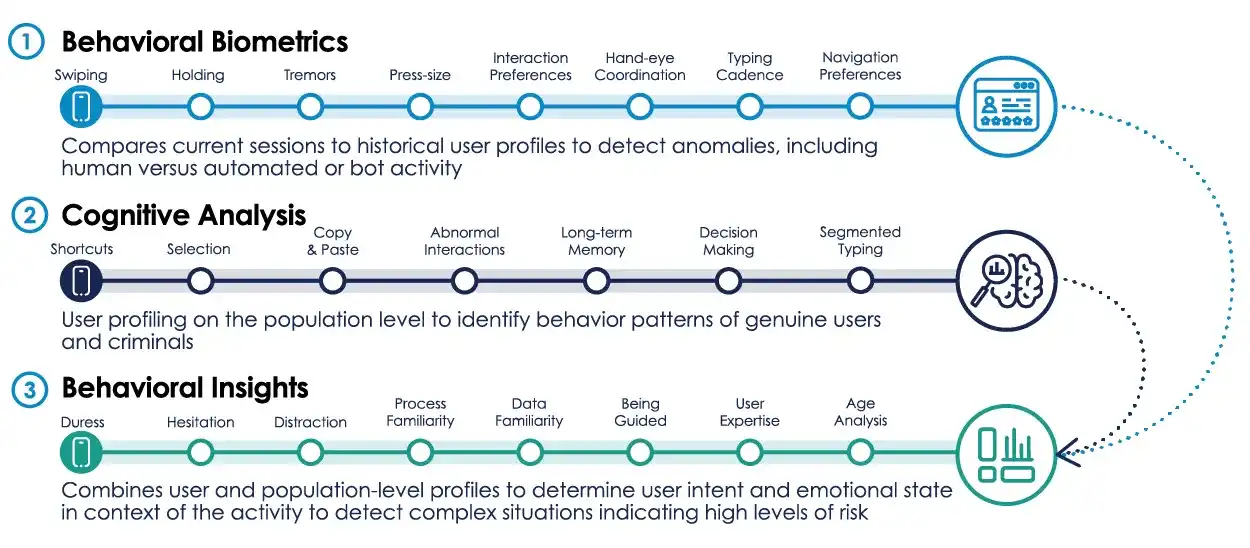
Related research also incorporates the Stroop effect: when the word "blue" is written in green font, the human brain experiences conflict between word meaning and visual color, significantly slowing reaction time, but AI remains unaffected. Research finds this cognitive interference is directly reflected in typing behavior. Platforms may not even need specific test questions; based on keystroke rhythm alone, they can judge whether the operator is human. Human typing habits contain unique characteristics of brain information processing.

Previous web tracking mainly recorded user browsing, clicking, and consumption behaviors. Users could evade this by blocking cookies, using VPNs, or turning off location services. But behavioral biometrics collects instinctive human characteristics: cursor movement patterns and typing rhythms are difficult to consciously alter.

Each person's behavioral characteristics are as unique as fingerprints. Unlike passwords or keys, this biometric profile cannot be changed or reset. Once this technology becomes widespread, major platforms will be forced to adapt. Voice simulation technology can already deceive in phone calls, and video deepfake technology is following closely. If this is the future, the core question emerges: Who will ultimately control this human data?

Who Controls the Human Verification System?

Currently, the industry is divided into two main camps exploring human identity verification solutions.

The first is Sam Altman's World (formerly Worldcoin). Users need to approach a spherical iris-scanning device. The device collects iris information and generates an encrypted credential to prove the user is a unique natural person. Currently, 18 million people across 160 countries have completed iris registration. In April 2026, World formed user verification partnerships with dating app Tinder, video conferencing platform Zoom, and e-signature service DocuSign. It also collaborated with Coinbase to launch the AgentKit tool, allowing users to link their AI agents to their verified identity. Platforms can confirm a human is behind the agent without leaking personal information.
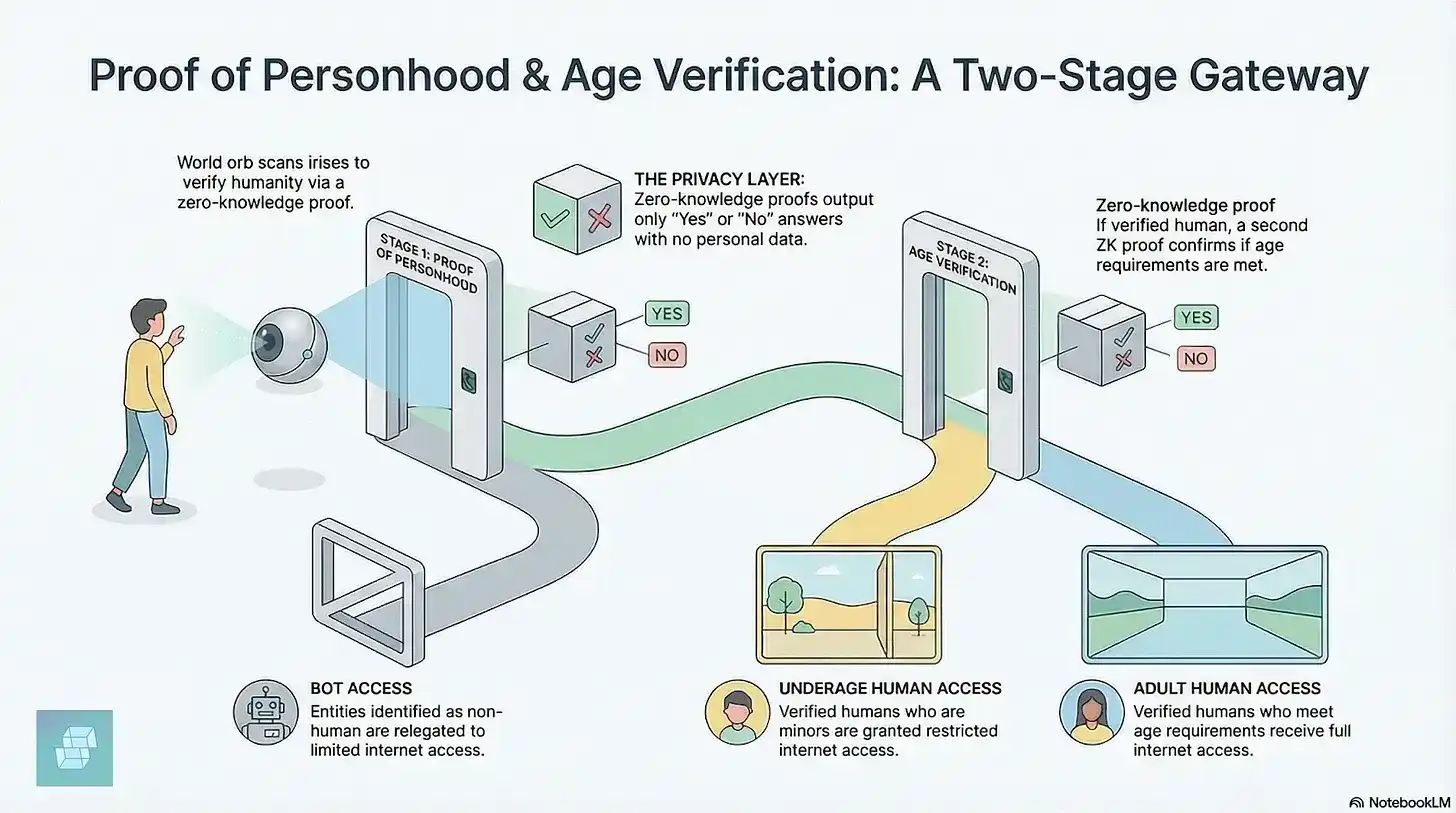
However, iris scanning technology has been explicitly banned by multiple countries. The core reason for this resistance is that the public is unclear about the potential risks of authorizing biometric data collection. An investigation by MIT Technology Review also found that World, without valid authorization, privately collected multiple human vital signs data like heart rate and respiration in addition to iris data.

The second category is zero-knowledge proof based on encryption technology, which allows you to prove you are human without revealing your real identity, location, or appearance. Vitalik Buterin proposed this concept as early as 2023. He argued that if a decentralized human identity system cannot be built, the internet will ultimately move toward centralized identity control. Once identity verification authority is held by companies or governments, surveillance mechanisms will become embedded in the network's foundation.

Decentralized human identity systems have seen large-scale implementation attempts before, but ultimately failed. Idena was among the first blockchain projects promoting "one person, one identity." Within just two years of launch, 40% of network accounts and 48% of rewards were controlled by 23 institutions. Account operation teams in places like India and Russia hired ordinary people to lend their identities for less than a dollar per hour, profiting up to 55 times. Researchers also found that even children's identities were used as puppet accounts.

Vitalik had anticipated such risks earlier. He stated that for human identity verification systems, the lowest-cost attack method is not deepfakes or advanced hacking, but paying people in low-income regions to lend their personal identities. Any human identity verification system requires financial support: iris-scanning devices and on-chain verification nodes need continuous investment.

Yet once identity credentials gain economic value, a black market for identity lending inevitably emerges. In a world of stark wealth inequality, the capital-strong will always control such markets.

"Forcing a one-person-one-vote rule in a system with actual economic incentives will only repeat the failures of 20th-century social experiments."

Objectively, both development paths have clear flaws. Centralized solutions can achieve scale but involve users' biometric data being stored by companies prone to over-collection, companies that themselves benefit from the current bot proliferation. The encryption route theoretically protects privacy but struggles to escape real-world economic imbalances, ultimately being exploited by gray-market industries.

If forced to choose, I'd still bet on the encryption solution. Because behavioral biometrics and centralized iris scanning permanently record your bodily information, and the ownership of this information belongs to whoever deploys the system. Once they have your data, you cannot delete or transfer it; this data is locked with the company that collected it.

Even knowing zero-knowledge proofs might be exploited, they are still worth developing, as this proof can confirm you are human without revealing more information. Conversely, abandoning this path means in the future, every website we visit will retain our physical behavioral data. Currently, this centralized surveillance-based solution is being implemented far faster than the encryption technology route.


Related Questions

QAccording to the article, what is the fundamental reason why many websites are banning AI crawlers?

AThe fundamental reason is that AI disrupts the core business model of the internet. AI traffic generates zero advertising revenue for websites while incurring server costs, and AI search summaries divert human traffic away from the original content sources, leaving websites with no financial return for their content.

QWhat technology is the industry shifting towards to distinguish humans from AI, and what does it measure?

AThe industry is shifting towards behavioral biometrics. It measures unique, subconscious human physical behaviors during device interaction, such as cursor movement speed/patterns, typing rhythm/errors, scrolling style, key pressure, phone tilt, and even gait. These are difficult for AI to perfectly replicate.

QWhat are the two main approaches to human verification discussed in the article, and what are their key challenges?

A1. Centralized biometric systems (e.g., Worldcoin's iris scanning): The key challenge is user privacy and centralized control of sensitive, immutable biological data by corporations or governments. 2. Cryptographic zero-knowledge proof systems: The key challenge is economic attacks, where people in low-income regions can be paid to rent out their verified identities, undermining the 'one-person-one-identity' principle.

QHow does the article describe the impact of AI search summaries on website traffic?

AThe impact is severe. Google's AI overview feature has led to only 8% of users clicking through to the original websites, resulting in a 33% drop in referral traffic from Google to content sites. This creates a 'traffic interception' problem where AI provides answers before users visit the source.

QWhat example does the article give to illustrate the cognitive difference between humans and AI that can be used for verification?

AIt cites the Stroop effect. When a word like 'blue' is written in green ink, a human's brain experiences conflict, slowing their reaction time and affecting their typing rhythm. An AI, which processes text and color separately, shows no such delay. This cognitive dissonance manifests in typing behavior and can be used for passive verification.

Related Reads

Retail Ecology Dwindles, ZKsync Bets on Bank Pilots for a Breakthrough

Amidst declining retail activity, ZKsync is pivoting to target institutional banking as its primary growth strategy. The article explores this shift, contrasting it with the competitive "survival of the fittest" narrative by highlighting a cooperative model inspired by naturalist Peter Kropotkin. ZKsync is developing infrastructure like its private, permissioned Prividium suite for banks (e.g., Deutsche Bank's use case via Memento), enabling private transactions with public verifiability via zero-knowledge proofs. This appeals to institutions needing privacy, compliance, and Ethereum-based settlement security, unlike fully private chains (e.g., JPMorgan's Kinaxis) or consortium models (e.g., R3 Corda). However, this strategic focus has coincided with a steep decline in its public DeFi ecosystem, evidenced by plunging TVL and the departure of major protocols like Aave due to low fees. The network's future now hinges on banking adoption, with upcoming pilots like the Cari Network involving regional banks holding over $600 billion in deposits. A significant challenge is balancing this institutional focus with ZKsync's decentralized governance. Banks must operate on a network where rules and fees (denominated in the volatile ZK token) can be changed via community vote, and where a Security Council holds emergency control—a stark contrast to the predictable, contract-bound environments of traditional finance. The coming 18 months will test whether ZKsync can successfully onboard traditional banks onto a dynamically governed public chain or if institutions will ultimately revert to proprietary solutions.

Foresight News43m ago

Retail Ecology Dwindles, ZKsync Bets on Bank Pilots for a Breakthrough

Foresight News43m ago

The Recursive AI Anthropic Warned About: Tian Yuandong's New Company Has Just Taken the "First Step"

Anthropic recently highlighted the rapid progress toward "recursive self-improvement," where AI systems autonomously design and train their successors. In response, Recursive Superintelligence, a new company co-founded by former Meta researcher Tian Yuan Dong, has publicly demonstrated its first step toward automating AI research. The company released a system designed to autonomously execute the full AI research cycle: generating ideas, implementing code, running experiments, and learning from results. It validated this approach by achieving state-of-the-art results on three diverse benchmarks: 1. **NanoChat Autoresearch:** Optimizing a small language model's validation loss under a fixed 5-minute GPU budget, improving upon the community's best result. 2. **NanoGPT Speedrun:** Reducing the time to train a GPT model to a specific loss on 8 H100 GPUs from 79.7 seconds to 77.5 seconds, beating a highly optimized, human-driven community effort. 3. **SOL-ExecBench:** Improving the overall score on NVIDIA's suite of 235 GPU kernel optimization tasks by 18%, closing the gap to the hardware limit. The system discovered novel optimizations in this highly specialized domain without direct human expertise. Recursive's system operates as a general framework, capable of parallel exploration and cross-task knowledge transfer while incorporating safeguards against reward hacking. The company, backed by $650M in funding and a star-studded team including Richard Socher and Alexey Dosovitskiy, aims to create AI that recursively enhances its own research capabilities. This development represents an early but concrete move toward a new paradigm where AI accelerates its own advancement. It occurs alongside Anthropic's warnings about the need for industry coordination and potential pauses when recursive self-improvement thresholds are reached, highlighting the dual trajectory of rapid technical progress and growing calls for careful stewardship.

marsbit50m ago

The Recursive AI Anthropic Warned About: Tian Yuandong's New Company Has Just Taken the "First Step"

marsbit50m ago

The Gold Buy-on-the-Dip Guide: Watch Interest Rates, Not Just War

"Gold Buying Guide: Focus on Interest Rates, Not Just War" Four months ago, gold buyers likely didn't anticipate buying at a peak that even a war couldn't sustain. After hitting a record high of $5,596 on January 29, gold entered a bear market just 91 days later, its fastest decline since 2008. A key trigger was the Fed's hawkish shift, highlighting that monetary policy, not geopolitics, is the primary driver. The article argues that the traditional "buy gold in turmoil" script has changed. While the US-Iran conflict initially boosted prices, the sustained rally in oil prices heightened inflation fears, forcing central banks to maintain or consider tighter policy. Since gold yields no interest, higher rates increase its opportunity cost, eroding its appeal. This dynamic was evident when gold fell sharply on May 18 despite positive peace talks, as lower oil prices eased inflation and thus rate hike pressures. The recent sell-off is also part of a broader market deleveraging. Correlations between gold, Nasdaq, and Bitcoin spiked as leveraged investors sold liquid assets to cover losses, creating a synchronized downturn. Historically, gold bottoms align with policy shifts, not conflict resolutions. The 2008 and 2022 bear markets ended with shifts to extreme easing and peak inflation expectations, respectively. For potential buyers, the author suggests monitoring three signals: 1) Peak interest rate hike expectations, 2) Reopening of the Strait of Hormuz (to ease oil/inflation pressure), and 3) A return to net inflows for Gold ETFs, indicating the end of forced selling. While predicting the exact bottom is impossible, the author's personal strategy involves scaling into a position across price levels like $4000, $3700, and $3500, committing no more than 30% of the intended total allocation initially, and adding the remainder only if key signals emerge. The core conclusion: In turbulent times, watching interest rates is more crucial than watching wars.

marsbit57m ago

The Gold Buy-on-the-Dip Guide: Watch Interest Rates, Not Just War

marsbit57m ago

Recent On-Chain Review: No Clear Narrative Under U.S. Stock Market Pressure, Just Hype

This article analyzes the current state of the Solana meme coin and community token ecosystem, highlighting a market caught between two dominant forces: attention-based PvP and a gradual return to community-centric projects. The first part explores the "Attention PvP" dynamic, where success is driven by celebrity endorsements, viral events, and speed. Examples include $JOTCHUA, which surged after its meme creator's social media activity, and $WORLDCUP, which outperformed a similar Base chain project ($PITCH) largely due to influencer support. The recent "pump.fun GO" feature, allowing bounty tasks for token promotion, is critiqued for fostering sensationalist and often negative stunts—like people getting token tickers tattooed on their bodies for rewards—reminiscent of old internet shock content. In contrast, the article points to a resurgence of organic, community-driven tokens that survive market volatility through strong holder bases and shared ideology, not just hype. Influencer Ansem is cited, arguing that durable meme coins rely on communities willing to endure losses and promote their core message daily. Examples given are older tokens like $neet (anti-work ethos), $troll, $buttcoin, and $triplet, which have maintained relative price stability. A prime example of this community-build model is the new project $KINS, the token for the browser-based MMORPG Kintara. Its success stems not from advanced graphics but from consistently delivering updates, fostering player trust, and creating genuine engagement (e.g., in-game economies, events, property auctions). It has attracted a growing player base and even notable KOLs as participants, demonstrating that sustainable growth can come from building trust rather than orchestrating pumps. The article concludes by questioning whether the market is ultimately a game of mutual trust or mutual deception, expressing hope that such reflection might lead to a healthier ecosystem.

marsbit57m ago

Recent On-Chain Review: No Clear Narrative Under U.S. Stock Market Pressure, Just Hype

marsbit57m ago

Trading

Spot
Futures

Hot Articles

Discussions

Welcome to the HTX Community. Here, you can stay informed about the latest platform developments and gain access to professional market insights. Users' opinions on the price of AI (AI) are presented below.

活动图片