Bitcoin miner reserves increase 1% despite operational pressure – Why?

ambcryptoPublished on 2026-07-16Last updated on 2026-07-16

Abstract

Bitcoin miner reserves have increased by 1% despite operational pressures, including declining hash rates and stressed revenues as indicated by a Puell Multiple below 1. While mining difficulty has dropped, providing some relief, it also reduces network security. Miner data shows net inflows and accumulation, suggesting they view BTC as undervalued and are not yet distributing their holdings. This accumulation has coincided with a slight BTC price recovery, with the cryptocurrency breaking above a key technical pattern. The outlook suggests that if miner reserves begin to decline while the Puell Multiple remains low, it could trigger forced selling and further price pressure.

Bitcoin [BTC] traded toward the $65,000 price level, having gained over 3% in the past 24 hours. The hash rate, on the other hand, is declining as Bitcoin miners continue moving into AI infrastructure.

How will the mining economics affect the current and future prices of Bitcoin?

Bitcoin miner revenue stressed as hash rate declines

Looking at the Puell Multiple, BTC miner stress is building, but miners remain adamant about selling.

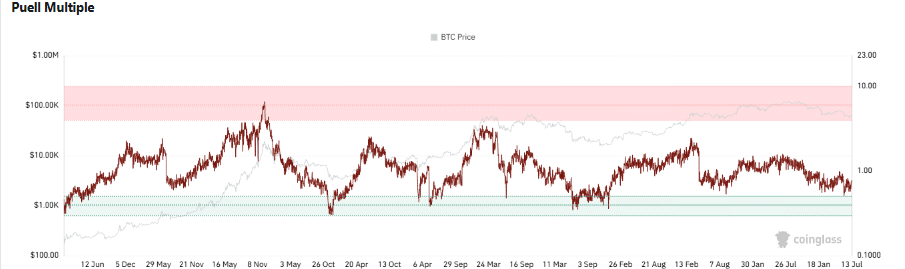
The Puell Multiple has slipped below the 1 mark, with the reading at 0.71, slightly above the accumulation zone. Historically, the accumulation zone marks a tight revenue stress for miners, as it reflects the supply side of the Bitcoin economy.
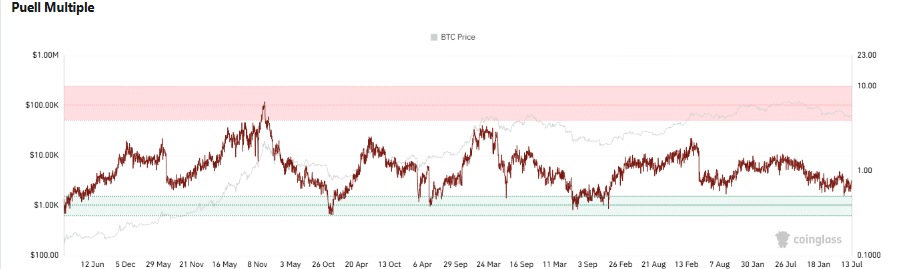
Source: CoinGlass

Moreover, Hash Ribbons have printed yet another capitulation band as hashrate fades from its peak. Over the past year, hashrate has dropped from 1,106,922,137 TH/s last November to 995,460,294 TH/s.
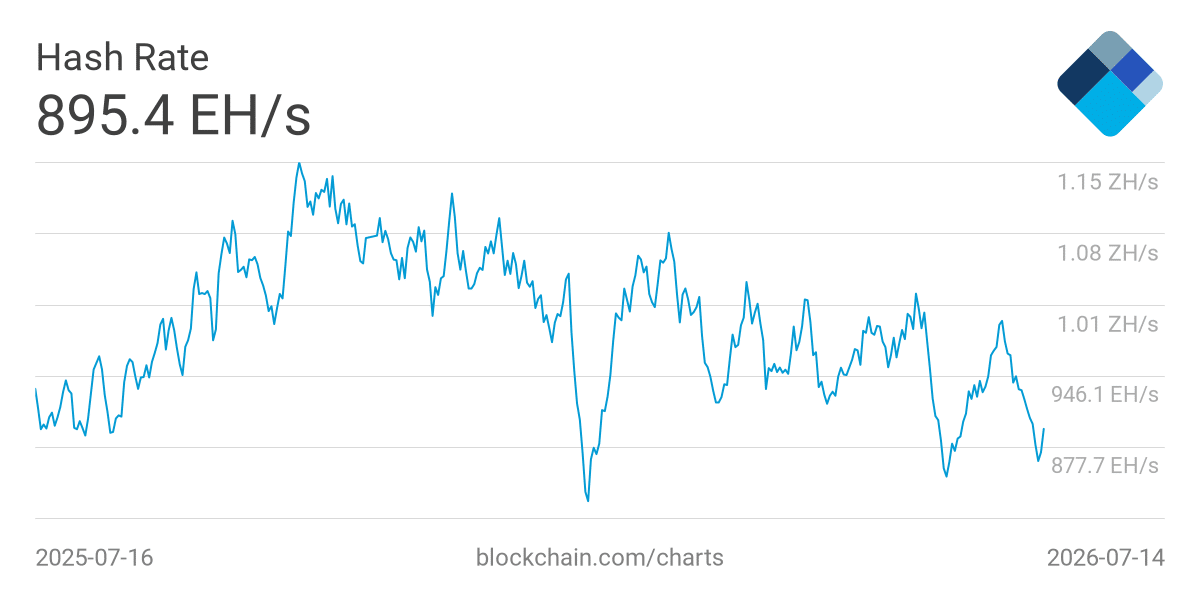
Source: Blockchain.com/charts

Furthermore, Bitcoin mining difficulty has dropped another 5% to 127.17T, which is nearly 17% below the peak of 148.26T seen at the beginning of the year. This indicates miners are getting relief, but it does reduce the network’s security.

With difficulty reducing, a solo miner found a Bitcoin block and earned a full 3.1382 BTC reward worth about $200K. This was somehow luck, as the probability of finding a block with 1 TH/s was roughly 1 in 16,000 years.

Miner reserve flows ticking up...accumulation underway?

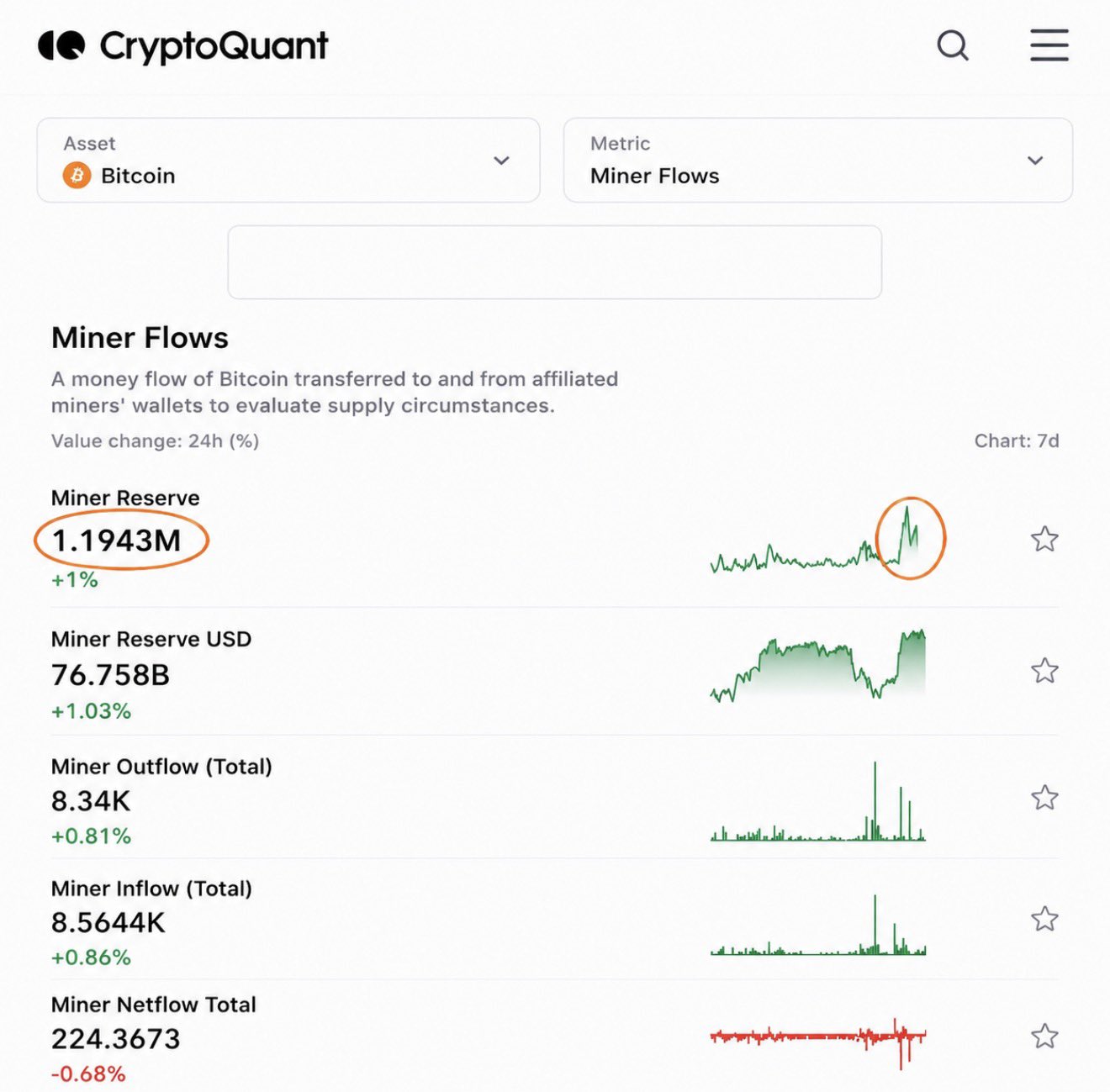
With that in mind, miner flows were ticking up as per CryptoQuant. That is, inflows outweighed outflows, though by a small margin.

The data showed miner reserves held 1.1943 million BTC, equivalent to $76.76 billion. This was a 1% increase, representing a net flow of more than 224 BTC. This data shows accumulation, as BTC is currently undervalued.
Source: CryptoQuant

From the data, it is clear that miners’ wallets are full and distribution has not yet started. The data indicates a supply overhang that is yet to be triggered.

Looking ahead, if miner reserves start bleeding while The Puell Multiple stays depressed, there will be forced selling.

How BTC be affected?

But since the reserves are not bleeding, the price of BTC is showing signs of recovery. It has broken above the neckline of an inverted head-and-shoulders pattern, but the signal is only valid if it can stay above it.
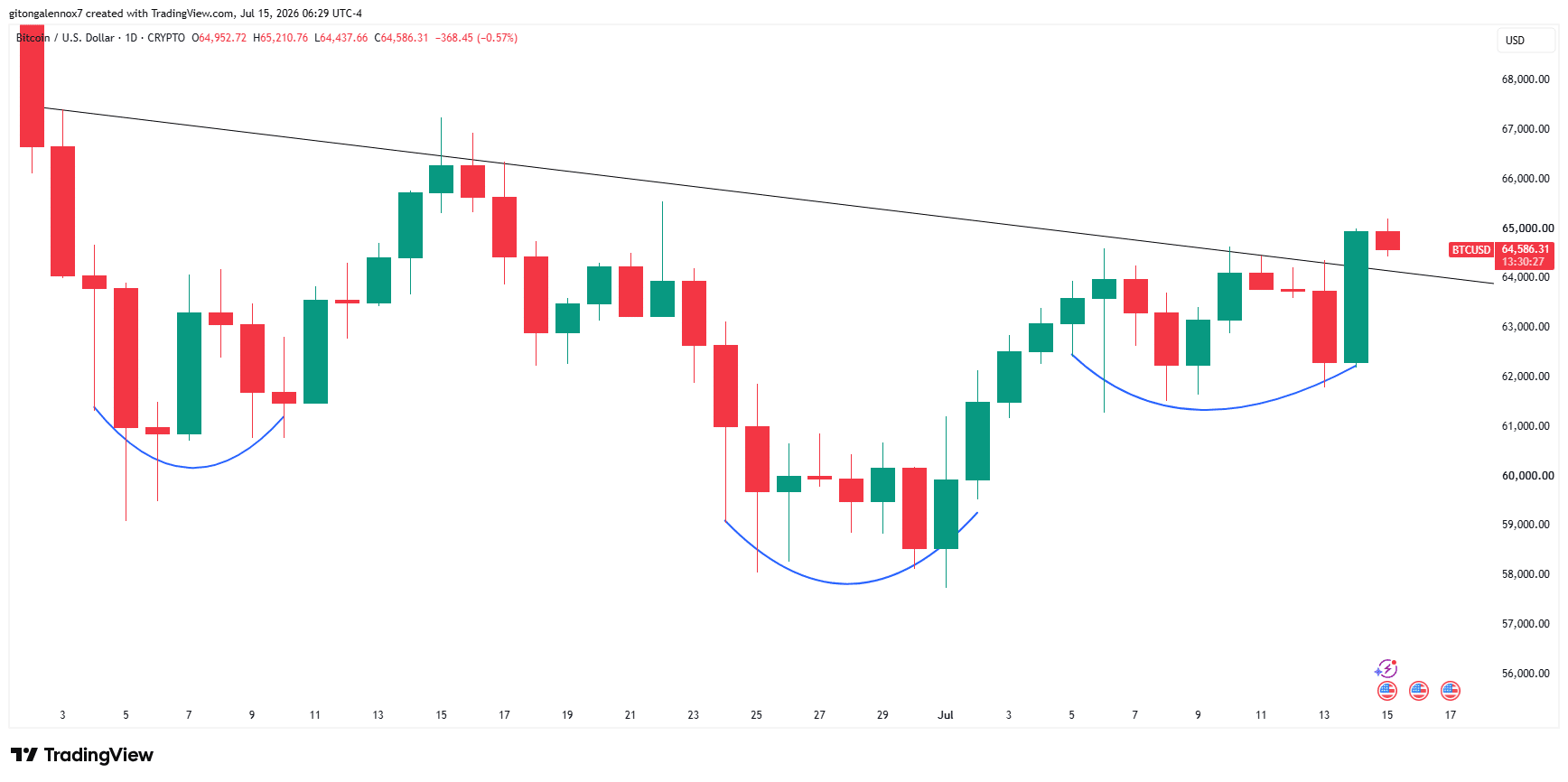
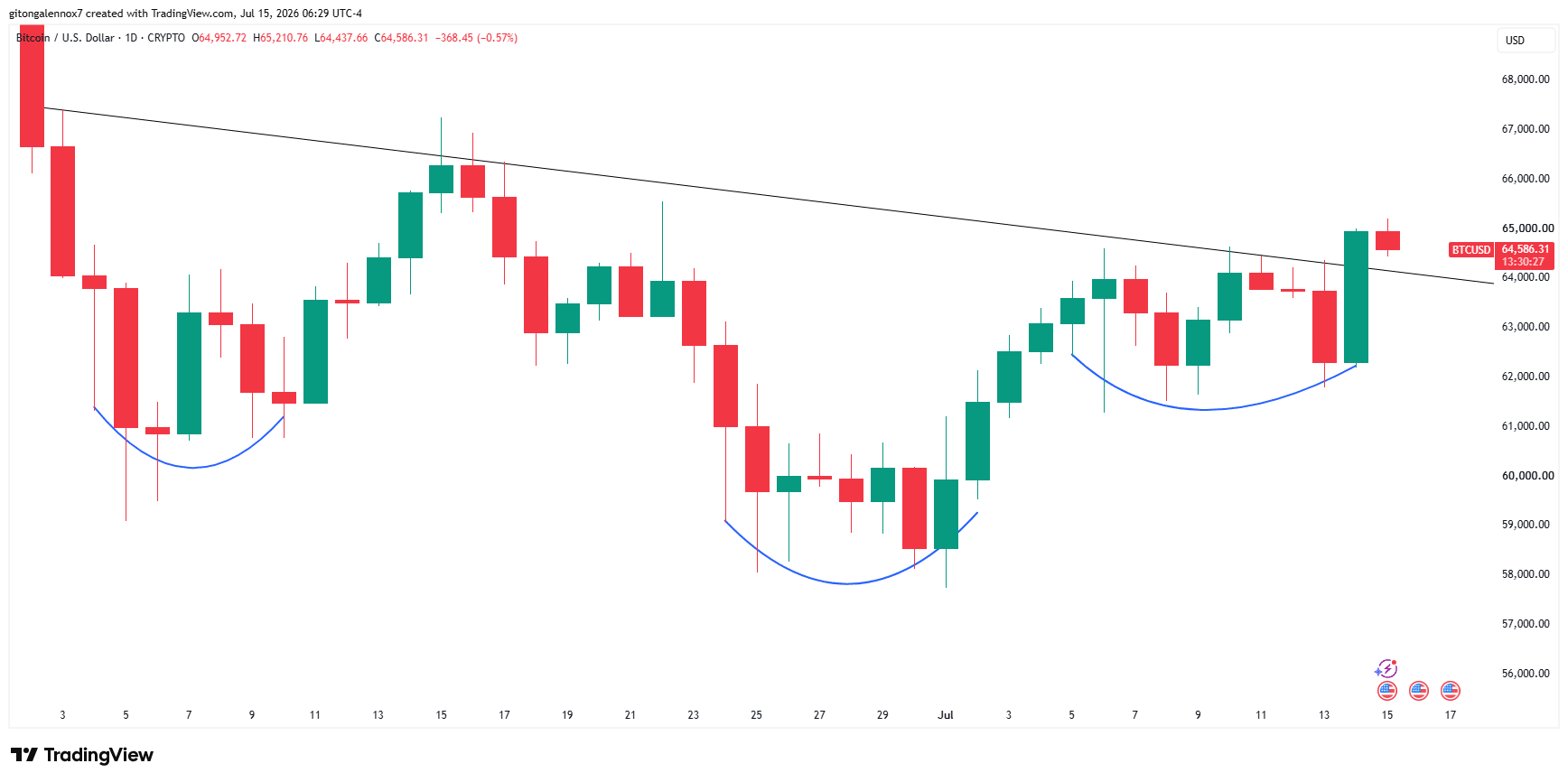
Source: BTC/USD on TradingView

Otherwise, a break below the neckline alongside miner selling would exert more pressure, curtailing the little recovery seen.

Final Summary

  • Bitcoin miners are seeing a decline in revenue, but they continue accumulating, with their reserves growing by 1%.
  • BTC price has seen a slight recovery due to accumulation, breaking above the neckline of a bullish reversal pattern.


Trending Cryptos

Related Questions

QAccording to the article, what is the main reason Bitcoin miner reserves increased by 1% despite operational pressure?

AThe article states that the 1% increase in miner reserves indicates accumulation, as Bitcoin (BTC) is currently considered undervalued. Miner inflows outweighed outflows, showing they are accumulating rather than selling their coins.

QWhat two key metrics mentioned in the article signal stress for Bitcoin miners?

AThe two key metrics signaling miner stress are the Puell Multiple, which has slipped below 1 to 0.71, indicating tight revenue stress, and the Hash Ribbons, which have printed a capitulation band as the network hash rate has declined from its peak.

QWhat does the drop in Bitcoin mining difficulty indicate, and what is a potential consequence for network security?

AThe drop in Bitcoin mining difficulty indicates that miners are getting some operational relief. However, the article notes that this reduction in difficulty also decreases the network's overall security.

QWhat technical price pattern has Bitcoin's price broken above, and what condition is required for this signal to be valid?

ABitcoin's price has broken above the neckline of an inverted head-and-shoulders pattern. The signal is only considered valid if the price can stay above this neckline.

QWhat future scenario could lead to forced selling by Bitcoin miners, according to the article's analysis?

AThe article suggests that forced selling by miners could occur if miner reserves start to decline (bleeding) while the Puell Multiple remains at depressed levels.

Related Reads

Has BlackRock Again 'Withdrawn' $140 Million Worth of Bitcoin, Signaling the Start of an Era of Institutional Accumulation?

BlackRock is suspected of moving approximately 2,152 BTC (worth ~$140 million) from Coinbase Prime to an unknown cold wallet, a transaction widely interpreted by on-chain analysts as institutional asset allocation. This event highlights a shift in market focus from trading volume to institutional fund flows, particularly withdrawals from exchanges. Such moves typically indicate assets are being moved into long-term custody, reducing immediate market supply—a phenomenon known as supply shock. The context is BlackRock's spot Bitcoin ETF, iShares Bitcoin Trust (IBIT), which continues to see significant net inflows, with assets under management surpassing $20 billion. This reflects a broader trend of institutions treating Bitcoin as a long-term allocation tool rather than merely a speculative asset. The growing use of on-chain analytics platforms allows for increased transparency in tracking these institutional movements. While this single transaction doesn't dictate price, it underscores a structural evolution in the Bitcoin market. The increasing participation of long-term institutional capital, facilitated by ETFs, is gradually changing the market's composition from being trade-driven to being more configuration- or allocation-driven. The key question emerging is whether the market is transitioning into an era defined by long-term institutional holding.

marsbit35m ago

Has BlackRock Again 'Withdrawn' $140 Million Worth of Bitcoin, Signaling the Start of an Era of Institutional Accumulation?

marsbit35m ago

Gold Rush Handbook | Rialto Teams Up with Robinhood Crypto, Targeting Order Routing Rights

**Summary** Rialto is positioning itself as an on-chain spot exchange focused on order routing and execution quality for a range of assets, including cryptocurrencies and tokenized stocks/ETFs. It operates primarily on the Robinhood Chain network. Its core mechanism revolves around **propAMMs** – on-chain market makers that use proprietary inventory and pricing logic, referencing external markets (like underlying stock exchanges for tokenized equities) rather than relying solely on automated market maker (AMM) formulas. For each user order, Rialto's aggregator solicits real-time quotes from multiple liquidity sources, including its own propAMM (Rivo Altus) and traditional DEX pools. It then selects and atomically executes the path offering the best net output after costs, potentially splitting orders across sources. Rialto's key competitive claim is turning **order routing control into a service for better execution**. Instead of users manually finding the best liquidity, the system automatically compares and routes to the optimal source(s) for each trade. It has launched a partner program for integrations and its swap API is already used by several protocols. Challenges ahead include expanding the asset base on Robinhood Chain, ensuring Rivo Altus's price competitiveness, attracting diverse external liquidity, and consistently delivering superior net execution compared to manual routing. Success in these areas would see Rialto competing for the crucial "order routing right" in the emerging on-chain market for tokenized real-world assets.

Foresight News1h ago

Gold Rush Handbook | Rialto Teams Up with Robinhood Crypto, Targeting Order Routing Rights

Foresight News1h ago

Trading

Spot

Hot Articles

What is $BITCOIN

DIGITAL GOLD ($BITCOIN): A Comprehensive Analysis Introduction to DIGITAL GOLD ($BITCOIN) DIGITAL GOLD ($BITCOIN) is a blockchain-based project operating on the Solana network, which aims to combine the characteristics of traditional precious metals with the innovation of decentralized technologies. While it shares a name with Bitcoin, often referred to as “digital gold” due to its perception as a store of value, DIGITAL GOLD is a separate token designed to create a unique ecosystem within the Web3 landscape. Its goal is to position itself as a viable alternative digital asset, although specifics regarding its applications and functionalities are still developing. What is DIGITAL GOLD ($BITCOIN)? DIGITAL GOLD ($BITCOIN) is a cryptocurrency token explicitly designed for use on the Solana blockchain. In contrast to Bitcoin, which provides a widely recognized value storage role, this token appears to focus on broader applications and characteristics. Notable aspects include: Blockchain Infrastructure: The token is built on the Solana blockchain, known for its capacity to handle high-speed and low-cost transactions. Supply Dynamics: DIGITAL GOLD has a maximum supply capped at 100 quadrillion tokens (100P $BITCOIN), although details regarding its circulating supply are currently undisclosed. Utility: While precise functionalities are not explicitly outlined, there are indications that the token could be utilized for various applications, potentially involving decentralized applications (dApps) or asset tokenization strategies. Who is the Creator of DIGITAL GOLD ($BITCOIN)? At present, the identity of the creators and development team behind DIGITAL GOLD ($BITCOIN) remains unknown. This situation is typical among many innovative projects within the blockchain space, particularly those aligning with decentralized finance and meme coin phenomena. While such anonymity may foster a community-driven culture, it intensifies concerns about governance and accountability. Who are the Investors of DIGITAL GOLD ($BITCOIN)? The available information indicates that DIGITAL GOLD ($BITCOIN) does not have any known institutional backers or prominent venture capital investments. The project seems to operate on a peer-to-peer model focused on community support and adoption rather than traditional funding routes. Its activity and liquidity are primarily situated on decentralized exchanges (DEXs), such as PumpSwap, rather than established centralized trading platforms, further highlighting its grassroots approach. How DIGITAL GOLD ($BITCOIN) Works The operational mechanics of DIGITAL GOLD ($BITCOIN) can be elaborated on based on its blockchain design and network attributes: Consensus Mechanism: By leveraging Solana’s unique proof-of-history (PoH) combined with a proof-of-stake (PoS) model, the project ensures efficient transaction validation contributing to the network's high performance. Tokenomics: While specific deflationary mechanisms have not been extensively detailed, the vast maximum token supply implies that it may cater to microtransactions or niche use cases that are still to be defined. Interoperability: There exists the potential for integration with Solana’s broader ecosystem, including various decentralized finance (DeFi) platforms. However, the details regarding specific integrations remain unspecified. Timeline of Key Events Here is a timeline that highlights significant milestones concerning DIGITAL GOLD ($BITCOIN): 2023: The initial deployment of the token occurs on the Solana blockchain, marked by its contract address. 2024: DIGITAL GOLD gains visibility as it becomes available for trading on decentralized exchanges like PumpSwap, allowing users to trade it against SOL. 2025: The project witnesses sporadic trading activity and potential interest in community-led engagements, although no noteworthy partnerships or technical advancements have been documented as of yet. Critical Analysis Strengths Scalability: The underlying Solana infrastructure supports high transaction volumes, which could enhance the utility of $BITCOIN in various transaction scenarios. Accessibility: The potential low trading price per token could attract retail investors, facilitating wider participation due to fractional ownership opportunities. Risks Lack of Transparency: The absence of publicly known backers, developers, or an audit process may yield skepticism regarding the project's sustainability and trustworthiness. Market Volatility: The trading activity is heavily reliant on speculative behavior, which can result in significant price volatility and uncertainty for investors. Conclusion DIGITAL GOLD ($BITCOIN) emerges as an intriguing yet ambiguous project within the rapidly evolving Solana ecosystem. While it attempts to leverage the “digital gold” narrative, its departure from Bitcoin's established role as a store of value underscores the need for a clearer differentiation of its intended utility and governance structure. Future acceptance and adoption will likely depend on addressing the current opacity and defining its operational and economic strategies more explicitly. Note: This report encompasses synthesised information available as of October 2023, and developments may have transpired beyond the research period.

830 Total ViewsPublished 2025.05.13Updated 2025.05.13

What is $BITCOIN

Discussions

Welcome to the HTX Community. Here, you can stay informed about the latest platform developments and gain access to professional market insights. Users' opinions on the price of BTC (BTC) are presented below.

活动图片