From Monday to Friday mornings, focusing on macro trends, U.S. stocks, AI, precious metals, crude oil, and more. We review the market with data and seize opportunities with trends. Brought to you by PANews.
Strait Standoff Drives Up Oil Prices, Rate Hike Expectations Return, Gold Hits 2-Month High
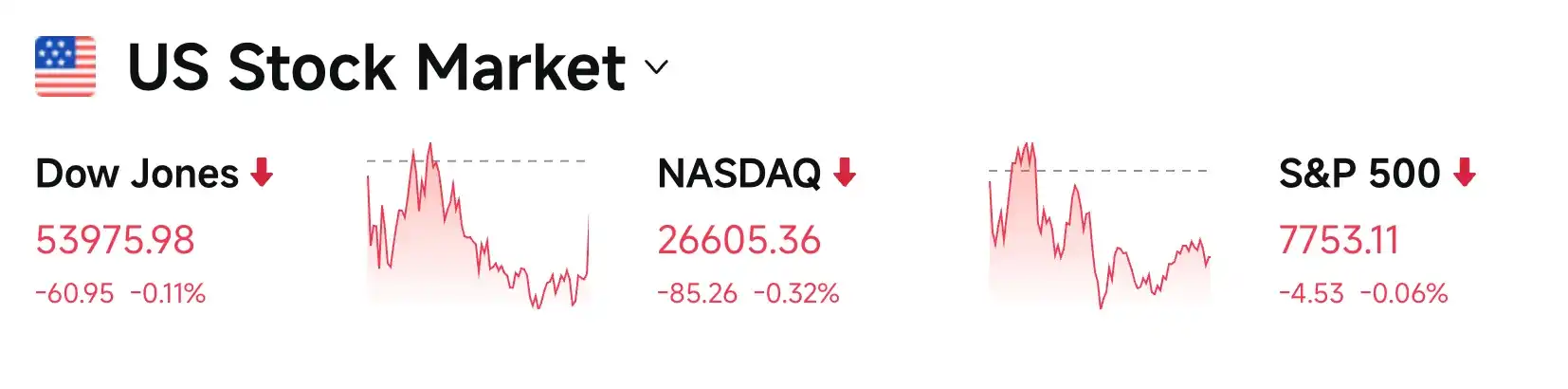
U.S. stocks retreated from record highs on Monday, weighed down by geopolitical risk premiums and doubts about AI financing. The three major indexes closed slightly lower. The Dow fell 0.11%, the Nasdaq fell 0.32%, and the S&P 500 was almost flat, down 0.06%. The dovish impact from Friday's unexpectedly negative non-farm payrolls report was quickly digested by rebounding oil prices, leading to a noticeable cooling in risk appetite.
Expectations for the reopening of the Strait of Hormuz have cooled sharply. Trump publicly demanded that Iran pay reparations for the war and related casualties, stating this demand would be part of future negotiations; Iran insists on conditions including lifting the blockade and receiving compensation for damages, further narrowing the room for negotiation. Jose Torres of Interactive Brokers stated bluntly that the stalled talks are making Wall Street uneasy, and the previous optimistic expectation of a narrowing path to a deal is unraveling.
Brent crude oil surged over 5% at one point, closing above $87, while WTI reclaimed the $82 level, breaking above the 50-day moving average. Refined products also strengthened, with U.S. diesel prices rising and European diesel futures gaining over 10% after settlement. European benchmark natural gas futures rose over 10% intraday. Inventories are only about 59%, far below the five-year average, sharply increasing winter restocking risks.
The U.S. Strategic Petroleum Reserve fell by another 6.1 million barrels last week, with total inventory dropping below 300 million barrels to its lowest level since 1983, nearing the operational floor. The Trump administration, meanwhile, extended the Jones Act shipping waiver for 90 days, hoping to accelerate cross-port energy transportation and mitigate the impact of oil prices on voters and inflation.
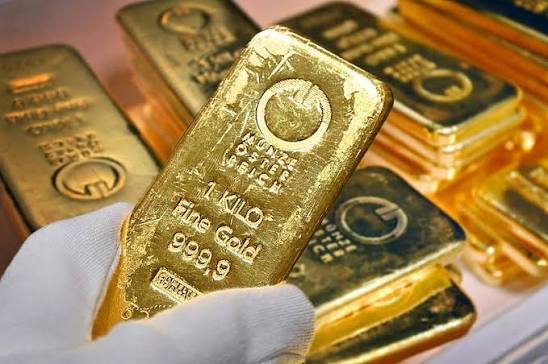
Spot gold broke through $4,400/oz, hitting its highest level since June 5, while silver surpassed $66. LME aluminum rose nearly 2%, marking its sixth consecutive day of gains and hitting a 7-week high. LME copper also rebounded to close at a new high.
The 10-year U.S. Treasury yield rose about 6 basis points to 4.71%, with the 30-year touching 5.25%. The market pushed the probability of a September rate hike back up to around 54%. Cleveland Fed President Hamaker took a hawkish stance, stating one rate hike is far from enough and that "several" may be needed to curb inflation, with the current rate range not yet forming a meaningfully restrictive level. Chris Larkin of Morgan Stanley cautioned that if this week's inflation data fails to come in below expectations, rate hike worries will climb to new highs.
Semiconductors and Optical Communication Hit by 'Crisis of Confidence', Software and Energy Buck the Trend
Semiconductor and AI infrastructure concept stocks suffered a nightmare session. The Philadelphia Semiconductor Index fell nearly 3%, with all 30 component stocks declining, and the Semiconductor ETF fell 2.28%. Optical communication was the worst-performing sub-sector within AI, with Coherent plunging over 14% and Lumentum falling over 8%.
Nvidia became the center of controversy across the market.
According to reports, Nvidia is collaborating with institutions including Apollo, Blackstone, BlackRock's GIP, Brookfield, Goldman Sachs, and KKR to plan the establishment of a financing platform aimed at mobilizing over $500 billion in third-party capital in the future for AI chip, power, and data center construction. The news initially caused Nvidia to fall over 3%. Its 5-year CDS price also rose about 5.3 basis points to 77.215 basis points, marking its largest single-day increase in two weeks. The core market concern is not "whether the $500 billion exists," but whether such massive AI capital could create a cycle reinforcing demand, financing, and valuations.
Nvidia CEO Jensen Huang later explained that the $500 billion figure represents the total amount of third-party capital these platforms plan to mobilize in the future. It is not Nvidia's revenue, the size of a single fund, or committed capital from a single customer. Each financial institution will independently evaluate clients, utilization rates, cash flow, and residual value. Nvidia may provide residual value support of up to about 25% in some projects.
This explanation attempted to steer the market narrative back from "circular financing" to "AI infrastructure asset securitization." However, for traders, what still needs verification is: whether these AI factories can ultimately generate sufficient cash flow to cover their capital costs.
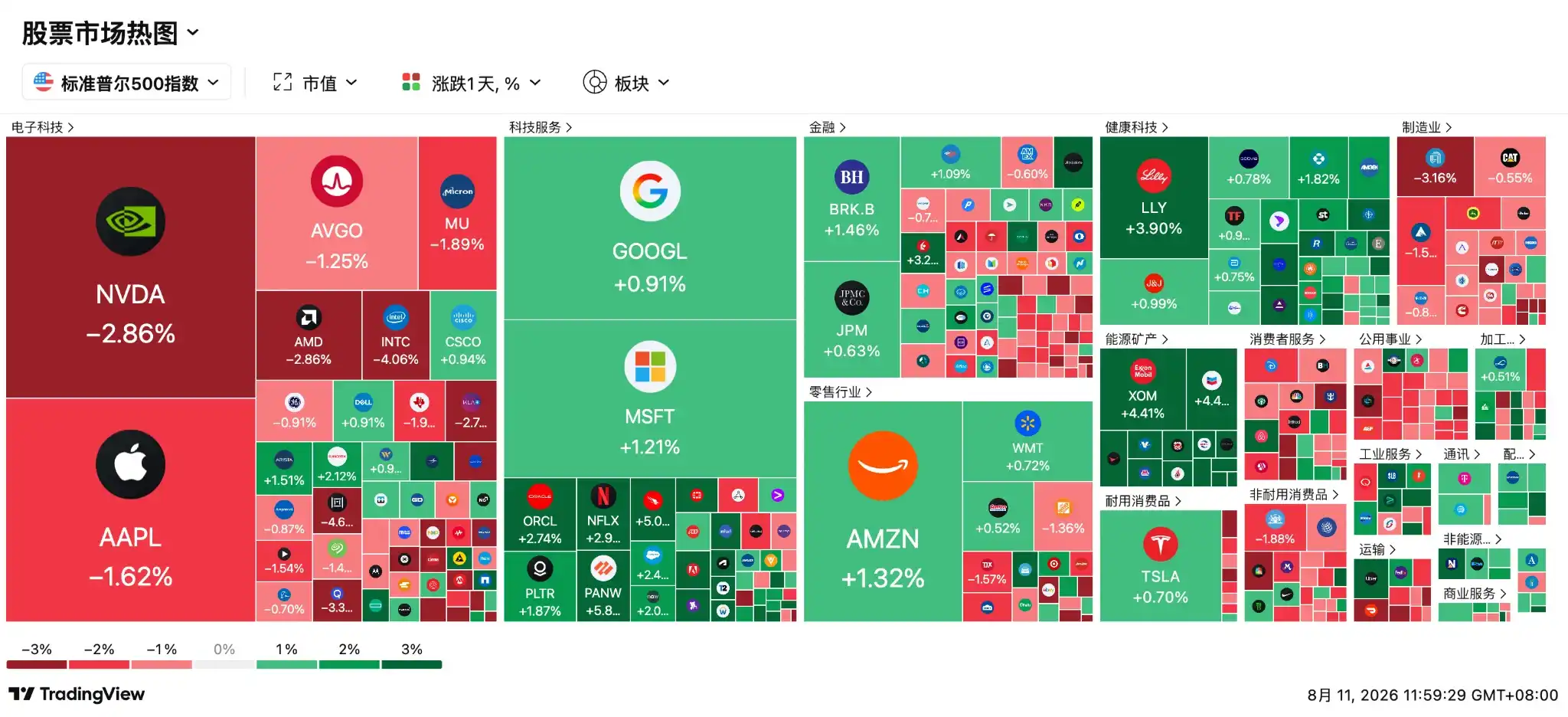
Meanwhile, software bucked the downward trend, with Microsoft up 1.21%, Amazon up 1.32%, and Palantir up 1.85%. The software sector has cumulatively gained over 60% since its April low. The defense and oil sectors saw inflows driven by geopolitical catalysts, with the Energy ETF surging nearly 4.7%.
Specific Project Developments and Stock Price Movements:
-
Nvidia fell 2.86%: The $500 billion AI infrastructure joint financing initiative raised questions about "circular trading" and the authenticity of demand, with CDS spreads widening significantly. Meanwhile, Nvidia also plans to invest up to $3 billion in power infrastructure company Lancium, which is involved in the power supply for the Texas OpenAI and Oracle "Stargate" project.
-
Semiconductor sector under pressure across the board: Rambus down 5.55%, ARM down 5.21%, Marvell down 4.65%, AMD down 2.6%, Micron down 1.89%, Broadcom down 1.25%.
-
Coherent down over 14%: Optical communication sector opened high and closed low, becoming the worst hit AI sub-sector. The sector had seen significant gains previously. Once Nvidia's financing model was questioned, the first to be sold off were optical modules, optical communication, and high-speed transmission link stocks. Lumentum down over 8%, ALAB down 5.07%, CRDO down 3.98%, Corning down over 4%.
-
Intel down over 4%: Announced an offering of approximately $20 billion in common stock, with subscription demand exceeding $100 billion. Semiconductor analysis firm SemiAnalysis pointed out that equity financing is currently the lowest-cost path for Intel to replenish capital to bet on physical AI and advanced packaging, but near-term equity dilution still weighed on the stock price.
-
SpaceX up 4.23%: The stock achieved three consecutive days of strong gains and closed at $138, reclaiming its IPO price, supported by ongoing narratives of self-built power and Starlink.
-
Microsoft up 1.21%: Microsoft plans to launch its next-generation Maia 300 as early as autumn and is in talks with TSMC for a capacity contract for over 300,000 chips in 2027, with a final target possibly exceeding one million chips. Related stocks: Amazon up 1.32%, Google up 0.9%, Meta up 0.48% (Zuckerberg announced the upcoming release of the lightweight 30-billion-parameter open-source model Muse Glimmer).
-
Software sector overall strong: Palantir up 1.85%, Cloudflare up 3.44%, Datadog up 11.48%, ServiceNow up 2.05%, Figma up 9.02%.
-
Rocket Lab down 3.37%, down over 7% in after-hours trading: Q2 revenue grew 62% year-over-year, slightly above expectations. Backlog grew 137% year-over-year to a record $2.36 billion. Non-GAAP gross margin of 41.5% also exceeded expectations. However, the loss per share of $0.08 missed the expected loss of $0.06. Furthermore, Q3 profit guidance fell short of expectations, and hints emerged that the Neutron rocket project might face new delays.
What to Watch Next:
-
Aug 11, 12:30 RBA Interest Rate Decision; 13:30 RBA Governor Bullock Press Conference: The market widely expects the cash rate to remain unchanged at 4.35%. Focus will be on whether cooling inflation, weakening employment, and real estate risks prompt the RBA to signal future rate cuts.
-
Aug 12 Lumentum, CoreWeave, Super Micro Computer to report earnings after the U.S. market close: The earnings and capital expenditure guidance from optical module leader Lumentum and computing power leasing leader CoreWeave will directly test the actual consumption of AI infrastructure. Super Micro Computer's gross margin (expected 15-17%) and order conversion speed will determine sentiment for the computing server sector.