Stack Overflow Is Dying, New Questions Are Fewer Than During the Beta Period

marsbitPublished on 2026-08-17Last updated on 2026-08-17

Abstract

The article discusses the decline of Stack Overflow, the prominent programming Q&A community, noting that new question submissions in July 2026 dropped to just 1,304—far below its peak of 207,000 in March 2014. Official data reveals a steady decline in activity since 2014, exacerbated by the rise of AI coding assistants like ChatGPT, which offer instant, private solutions and reduce the need for public forum posts. While a restrictive community culture that often penalized new users contributed to the downturn, the widespread adoption of AI tools has dramatically accelerated the platform's stagnation. Similar declines are observed in other knowledge-based platforms like Chegg, Fiverr, and Wikipedia, where AI-generated content is displacing human-generated queries and contributions. Research indicates that not only are fewer users asking questions, but high-reputation experts are also leaving the platform at increasing rates—a phenomenon termed "signal compression," where the value of demonstrated expertise diminishes when AI can produce superficially competent answers. This threatens the formation of future human expertise. Although AI models have been trained extensively on Stack Overflow's open corpus, the reduction in new, timely public Q&A content may limit the knowledge available for future AI training. Some suggest that trustworthy human-curated knowledge layers, blogs, and niche communities may regain importance as sources of reliable, attributed information. The sh...

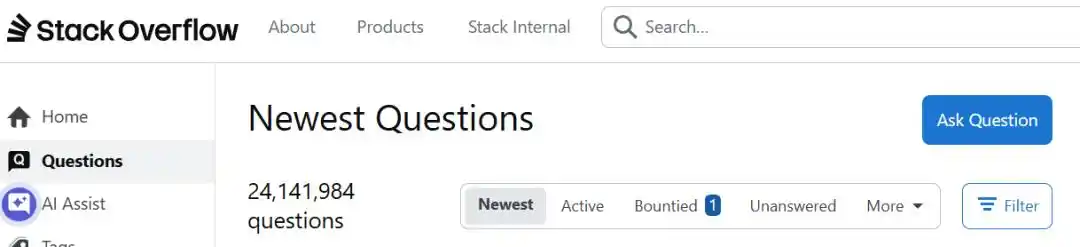
Stack Overflow, hailed as the "programmer's bible," a professional community that has amassed over 24 million questions and the largest programming Q&A corpus on the internet, is dying.
In July 2026, programmers worldwide asked a total of 1304 questions on Stack Overflow.

In March 2014, that number was 207,000.

The other day, developer Daniel Lockyer posted a line chart containing this data on X, lamenting "the end of an era."
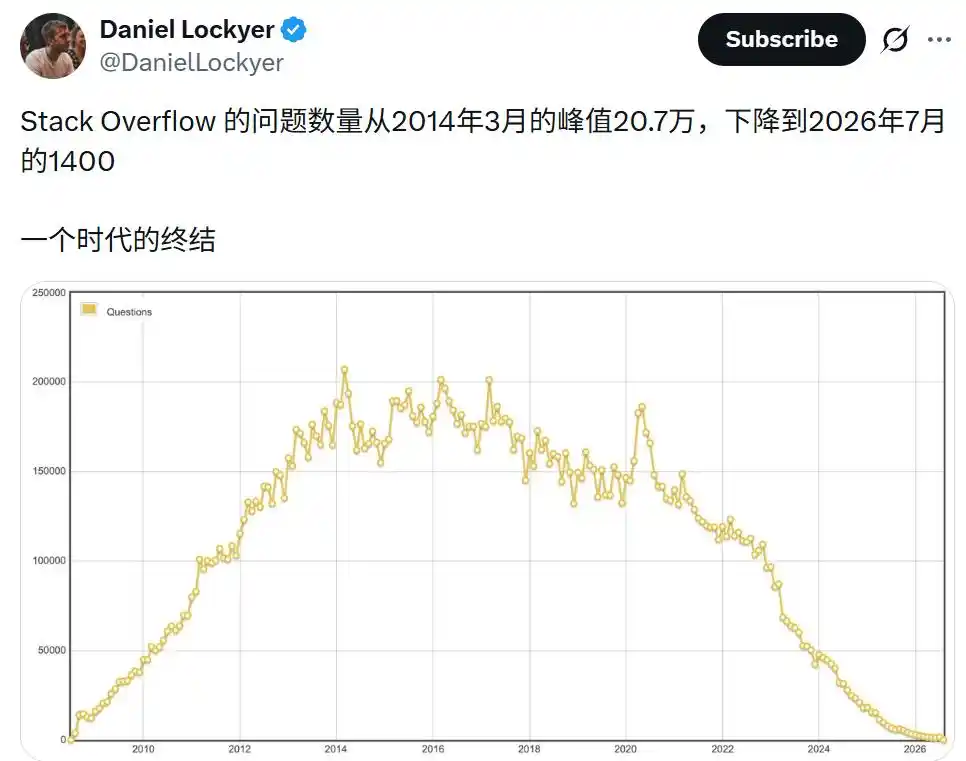
The data is genuine, sourced from Stack Overflow's official public SQL query interface, the Stack Exchange Data Explorer.

The next day, independent developer Pieter Levels (levelsio) reposted this chart, linking it to another topic: if no one asks questions on Stack Overflow anymore, and Reddit is overrun by promotion bots, how much real human-written content remains on the internet? With no new content, what will the next generation of models train on?
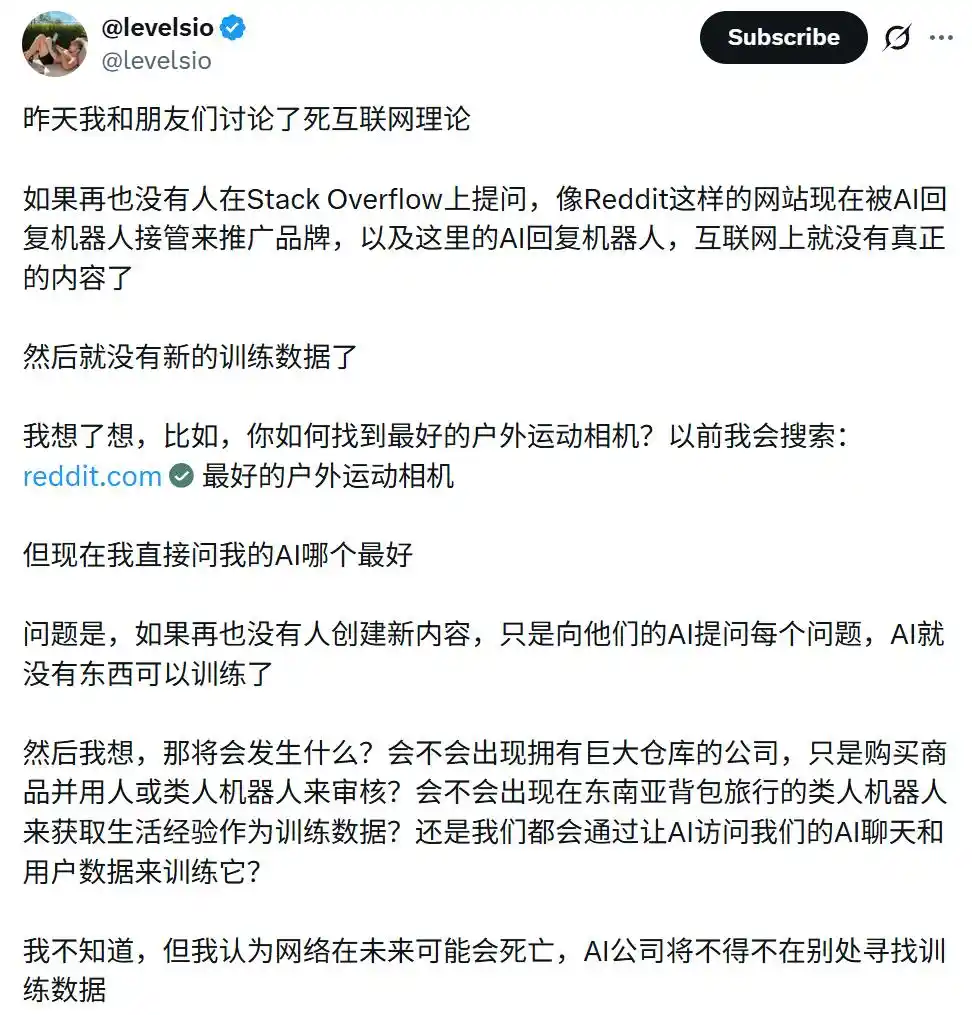
These two tweets sparked widespread discussion. Netizens' attitudes varied greatly, ranging from lamentation and excitement to sorrow... and more.

The Rise and Fall of Stack Overflow

Looking closely at the monthly question volume curve for Stack Overflow above, we can clearly divide it into three segments.

The first segment is growth. In July 2008 during the private beta, there were only 4 questions; 3744 in August; and after the public beta on September 15, it jumped to 14,024 that month. By January 2010, it was already 44,923 per month. The annual question count surpassed one million in 2011 and two million in 2013. This is a textbook hockey stick phenomenon.

The second segment is the plateau. The single-month peak stalled at 207,000 in March 2014, followed by 201,000 in March 2017 and March 2016. The three highest months spread over four years indicate a plateau, not a sharp spike. The annual total remained stable above two million between 2013 and 2017, peaking at 2.18 million in 2016. It began to loosen afterward but didn't collapse: 1.88 million in 2018, 1.75 million in 2019, rebounding to 1.85 million in 2020, with April 2020 alone seeing 180,000 questions.

The third segment is the decline phase. 1.34 million for the whole year in 2022, 790,000 in 2023, 400,000 in 2024, and 110,000 in 2025. The entire 2025 question volume is less than 53% of the single month of March 2014.

Looking more granularly, the compression is even more dramatic. 17,935 in December 2024, 3,312 in December 2025 (an 81.5% year-on-year drop), 2,910 in January 2026, 1,903 in March, 1,229 in May, and 1,072 in June. Excluding the private beta launch month of July 2008 with its 4 questions, June's 1,072 is the lowest full month in the site's entire history. July 2026 saw a slight rebound but remained low at only 1,304 questions.
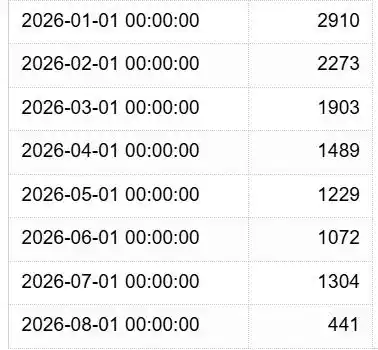
The first seven months of 2026 total about 12,000 questions. Based on the daily question rate of 2016, this is roughly the amount from about two days that year.

Stack Overflow's Decline Is Not Entirely Due to AI

From the graph, Stack Overflow's decline actually started eight years earlier than ChatGPT.

The inflection point appeared in 2014 when Stack Overflow began systematically improving moderation efficiency, more actively closing duplicate questions and queries that "did not meet standards." The site's intention was to preserve the signal-to-noise ratio, at the cost of blocking new users. A 2022 study showed that in a sample of 968 new user posts, 49% encountered at least one of: closure, no replies, or unexplained downvotes.
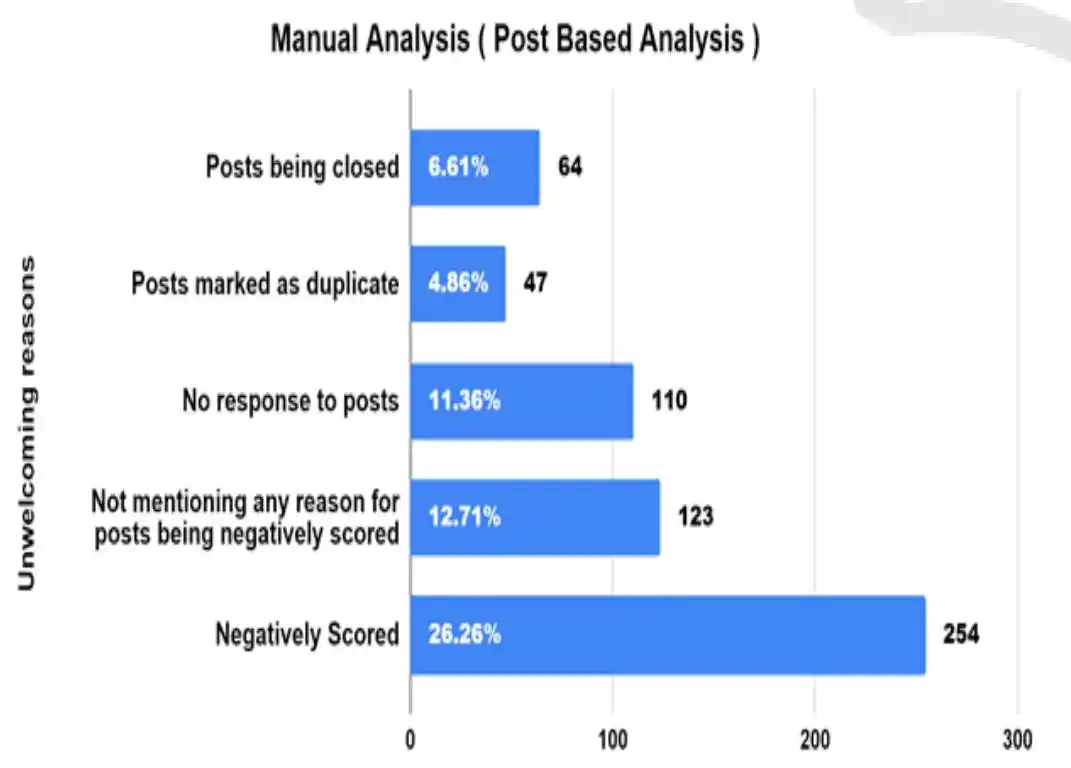
https://www.scitepress.org/PublishedPapers/2022/110811/110811.pdf

This culture has been criticized for a decade. Devclass, reporting on the January data wave, quoted a developer's reaction, roughly stating that AI indeed accelerated the decline, but the root lies in the community long punishing those trying to participate, and people finally have a tool that doesn't say "your question is stupid."

Below Daniel Lockyer's tweet, we can also see many similar criticisms:

The problem is that a hostile culture alone isn't enough to drive annual question volume down to the tens of thousands. Before 2022, that number consistently stayed above 1.3 million. The real cliff is the result of two things combined: ChatGPT reduced the marginal cost of asking to zero, and then AI assistants in IDEs made the act of asking disappear altogether.

Developers no longer need to leave the editor, don't need to formulate the problem into a minimal reproducible example a stranger can understand, and don't need to wait hours.

Stack Overflow's value was once built on "turning one person's problem into everyone's asset." AI assistants do precisely the opposite: they turn public questions back into private conversations.

The site hasn't been idle. In October 2023, it laid off 28% (following 58 layoffs in May), launched OverflowAI, pivoted to data licensing for companies like OpenAI, and erected anti-scraping walls to force platforms back to the negotiating table.
https://stackoverflow.blog/2023/10/16/stack-overflow-company-announcement-october-2023/

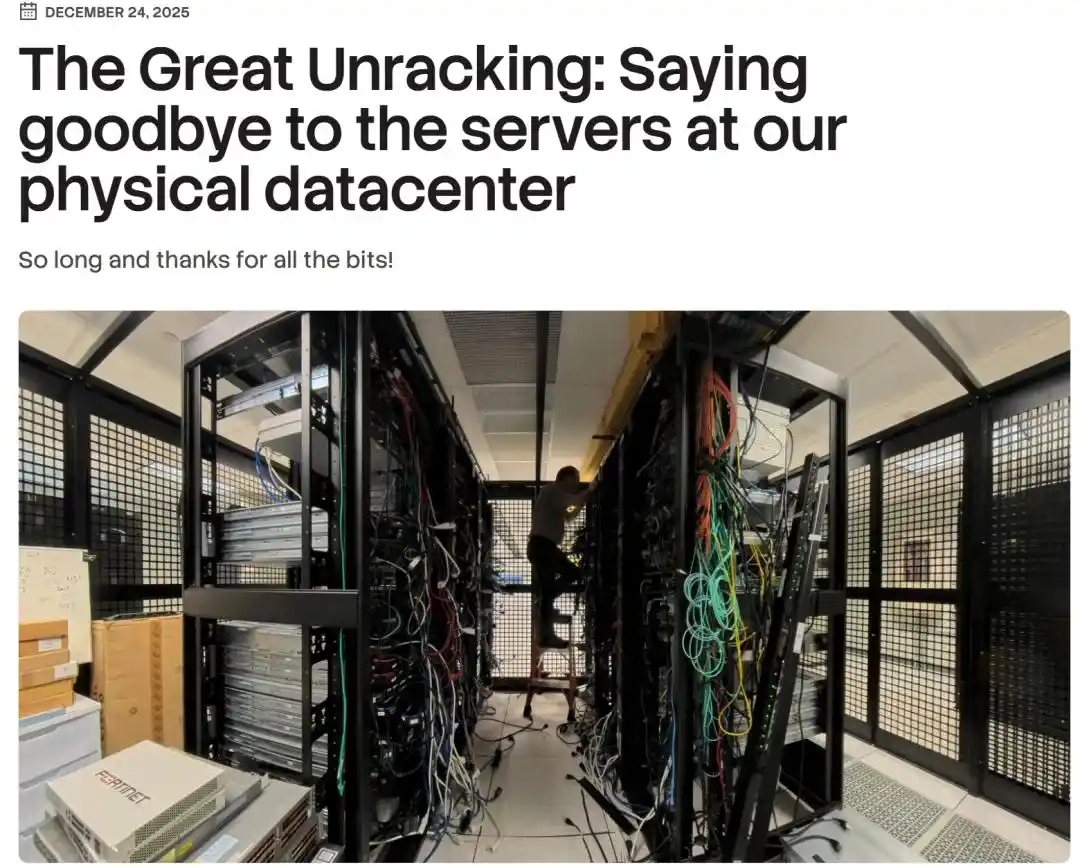
In 2025, it fully migrated to the cloud, decommissioning all ~50 servers from the New Jersey data center (its NYC location was actually NJ), retired the Colorado disaster recovery site in June, and ended the year with the blog post "The Great Unracking," giving this sixteen-year physical infrastructure history a subtitle: "So long, and thanks for all the bits."
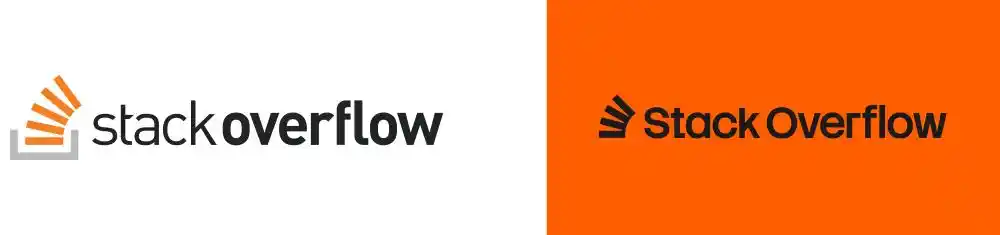
In February 2026, the site underwent a redesign and got a new logo. CEO Prashanth Chandrasekar, in place since 2019, remains, and the company is still owned by Prosus. The $1.8 billion acquisition in June 2021 was completed exactly eighteen months before the steepest decline began.
Not Just Stack Overflow

Stack Overflow looks particularly conspicuous because it clearly publishes question statistics. But in reality, similar curves are appearing in many places with different slopes.

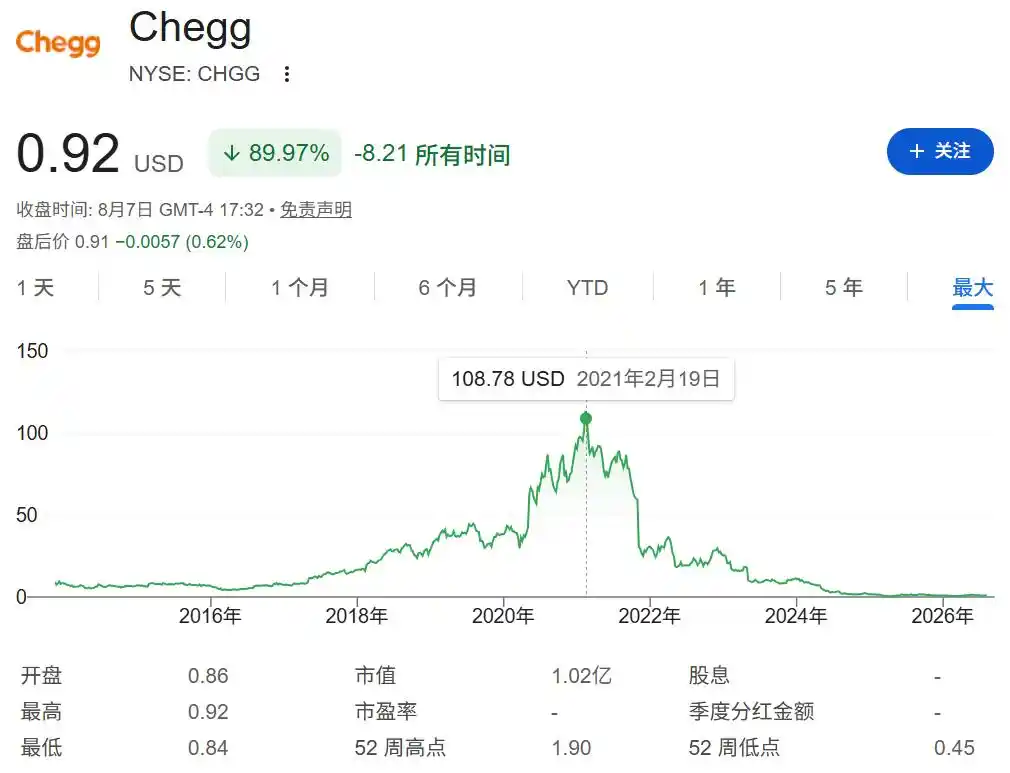
Chegg is widely acknowledged as the fastest to die. This online education company, which started with textbook rentals in 2005 and went public in 2013, relied on the same model: turning homework answers into searchable stock assets, using search engines for traffic, and charging a monthly fee.

After ChatGPT launched, students had no reason to pay anymore. Needham's research showed that in November 2024, 62% of students planned to use ChatGPT, up from 43% in spring 2023; Chegg dropped from 38% to 30% over the same period.

In 2023, it attempted a self-rescue, creating CheggMate using GPT-4 plus its over 100 million academic data points, trying to prove a specialized AI was worth paying for, but students didn't buy it.

In May 2025, it laid off 248 employees (22%) and closed US and Canada offices; in October, it laid off another 388 (45% of remaining staff). By late April 2026, its stock hovered around $1.07, with a market cap of about $125 million in May, roughly 99% evaporated from its peak. From peak to near zero, about 39 months.
Freelance platforms are the second sample, and they show clear stratification. Fiverr's Q2 2026 earnings released on July 29: revenue of $97.8 million, down 10% year-over-year; marketplace revenue from matching transactions fell 15.5% to $63.1 million. The real eye-catcher is buyer count: 2.7 million annual active buyers as of June 30, down 21.9% from 3.4 million a year earlier. But average spend per buyer rose 15.6% to $368 over the same period, take rate increased from 27.6% to 28.0%, and the number of clients completing projects over $1000 grew 13% year-over-year. Management gave the most straightforward annotation on the earnings call: on a TTM basis, the writing and translation categories saw the largest declines, over 24%. Full-year guidance was lowered to $356-$372 million, down 14% to 17% year-over-year, and they stated this transformation might take at least six quarters to show results.

The same logic repeats on Upwork and Freelancer.com.

Upwork's active client count at the end of 2025 was about 785,000, down from about 832,000 in 2024—a drop of about 47,000, its largest contraction since going public.

Freelancer's parent company's FY25 group GMV was 881.5 million AUD, down 7.1% year-over-year.

The raison d'être of these platforms was to commoditize human skills to lower costs; now there's a technology that further commoditizes "output." Research from Manav Raj et al. at the Wharton School of the University of Pennsylvania in 2024 already quantified this displacement: measurable substitution occurred in freelance demand for writing, translation, and basic coding after ChatGPT.

Wikipedia's situation is subtler because it's losing readers, not contributors. In May 2025, the Wikimedia Foundation updated its bot identification system, reclassifying a batch of human-impersonating crawlers, and discovered real human traffic had fallen by about 8% year-over-year.

Senior Director of Product Marshall Miller indicated: fewer visits mean fewer volunteers growing into editors and fewer individual donors. Wikipedia's contributions were already extremely concentrated: research shows 77% of articles were written by 1% of editors. The Foundation's 2026–2027 fiscal year annual plan draft states the judgment: this is not temporary, it's a structural shift.

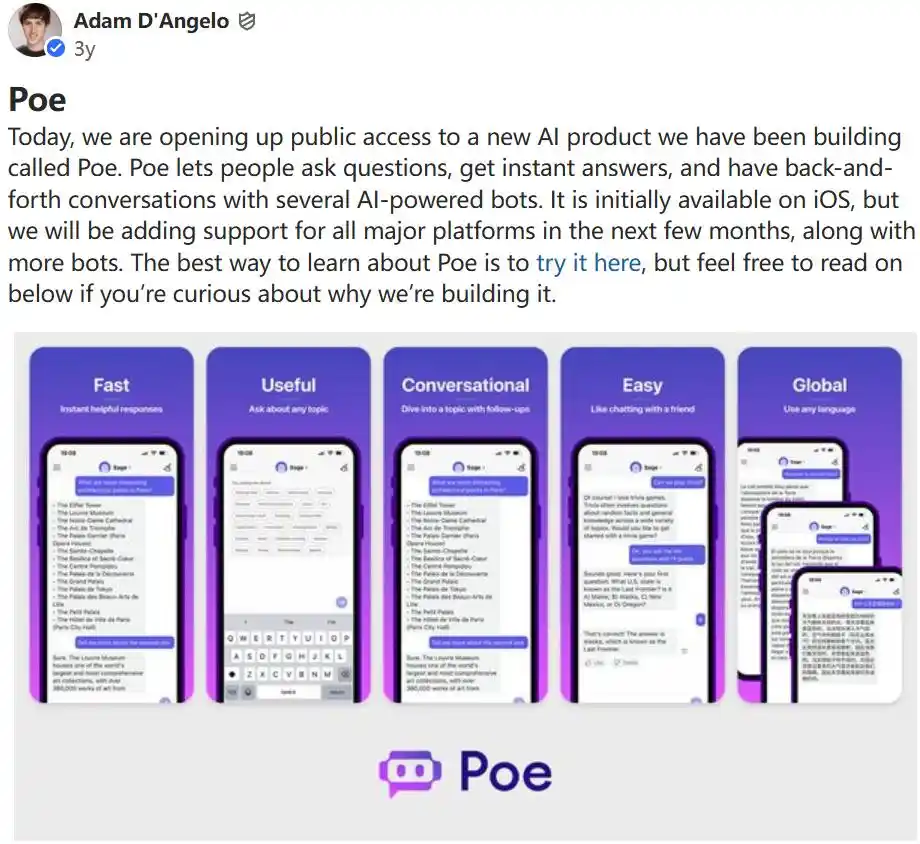
Quora took another path: instead of guarding Q&A, build an AI gateway itself. It poured resources into Poe, securing $75 million in funding from a16z in January 2024 to expand this multi-model aggregation platform. A Q&A community ultimately bet its future on something that replaces Q&A...
One step further out is the entire informational content business. A randomized controlled experiment covering 1065 desktop Chrome users found that when AI Overviews appear, off-site organic clicks drop 39.8%, zero-click searches rise 34.5%, and users show no measurable improvement in experience ratings. Ahrefs' February 2026 research calculated a click-through rate drop of up to 58% for top-ranking pages. Consequences have already manifested in layoffs and site closures: Bauer Media Group announced in April 2026 the closure of its German digital subsidiary, cutting 160 positions; the 21-year-old public reference site Overfishing.org shut down.

To summarize the pattern: the faster the collapse, the more the category is one where "machine-generated answers are functionally equivalent to the original." Reference materials, technical documentation, definitional content, how-to tutorials—all are in this set. Conversely, work requiring long-term relationships, context, and accountability shows little change. Fiverr's earnings also illustrate this: low-value transactions are disappearing, while complex projects over $1000 are growing.

More Troublesome: Experts Are Retreating

If users were merely asking questions elsewhere, the story would be simpler. But Kenny Ching from the University of Auckland Business School, in a working paper released in July 2026, pointed out a more problematic mechanism.

He tracked the behavior of 24,304 contributors on Stack Overflow over 17 months, finding that since 2022, the departure rate of high-reputation users began accelerating, gradually catching up with the faster-departing low-reputation users. In other words, it's not just question-askers leaving, but also answerers, and the more people who spent years accumulating expertise and earning recognition in the community, the more resolutely they are leaving.
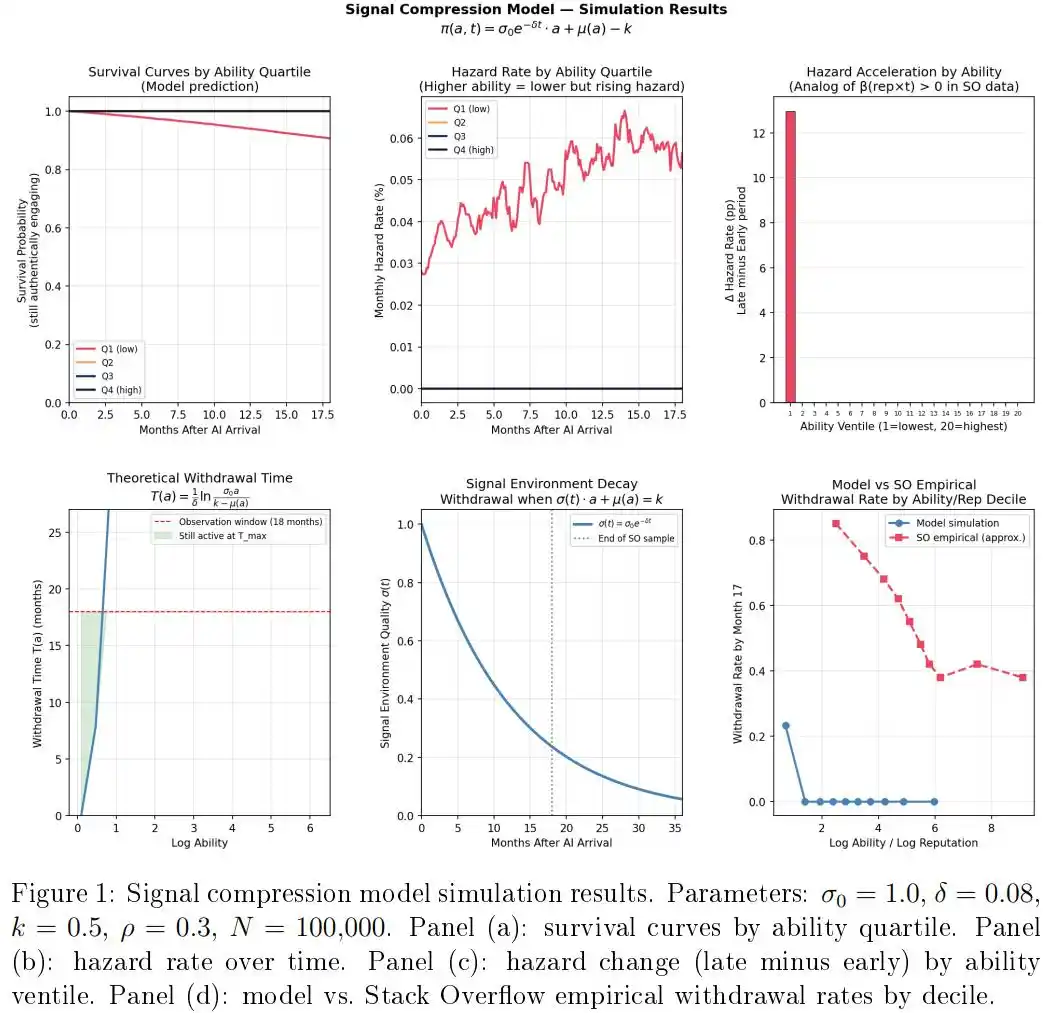
Ching named this mechanism "signal compression." His explanation: these people are leaving because the expertise they painstakingly earned is no longer distinguishable from a chatbot's answer.

When everyone can use AI to produce something that looks decent, the act of putting in genuine effort ceases to be a recognizable signal. In an interview, he extended this logic beyond platforms: the same thing is happening in classrooms, companies, and scientific communities. The long-term risk is that "by destroying the incentive to demonstrate genuine effort, AI may cut off the formation of future human expertise."

This aligns with Stack Overflow's own survey data. The 2025 survey covering about 49,000 developers from 177 countries showed 84% of respondents using or planning to use AI tools (76% in 2024), but only 29% trusted the accuracy of AI output, 46% explicitly distrusted it, and only 3% "highly trusted" it—2.6% among senior developers.
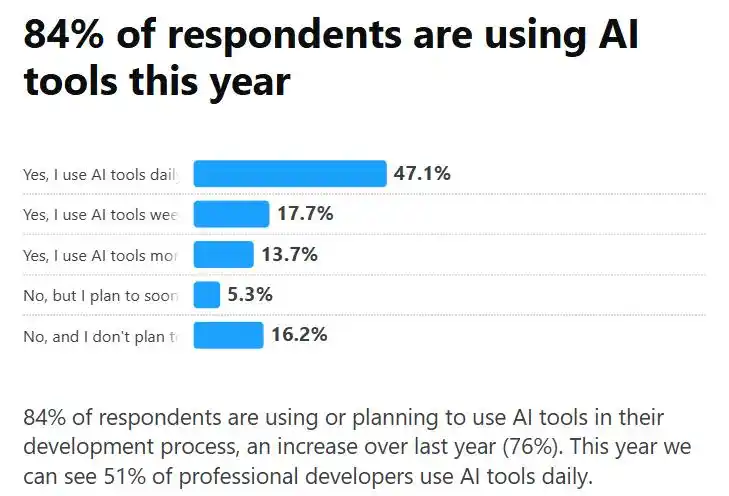
https://survey.stackoverflow.co/2025

The biggest complaint wasn't that AI can't code, but that its output is "almost right, but not quite," with 66% troubled by this and 45% saying they spend significant time debugging AI code. And when they don't trust an AI answer, 75.3% said they would ask a person.
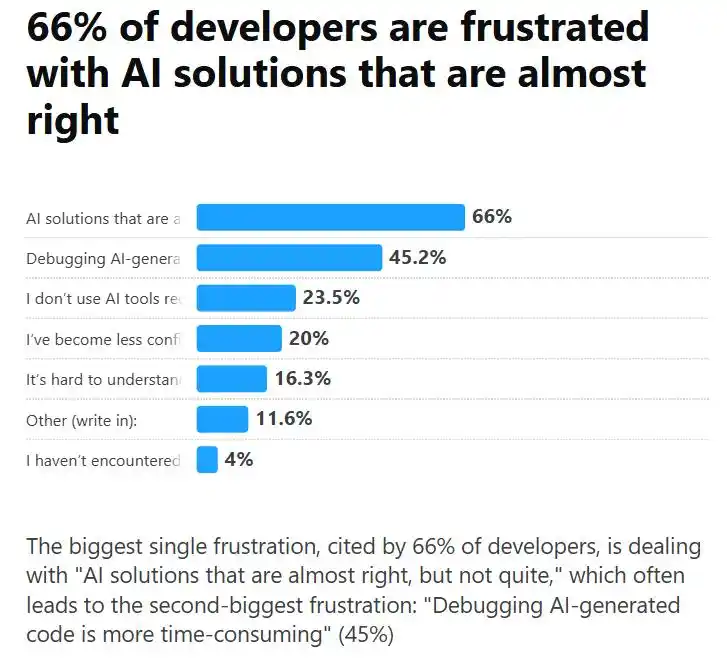
The problem is, that person is leaving.

Conclusion

Now let's synthesize a few things.

Stack Overflow's stock corpus is openly licensed under CC BY-SA, making it one of the most thoroughly scraped technical corpora. The models that ingested it are now the reason for the halt in new contributions.

Stock corpus has timestamps. Answers about jQuery, Python 2, and Angular.js on Stack Overflow will gradually become outdated. Knowledge about new frameworks, breaking changes in new versions, compilation errors of a library used by only three thousand people under a specific CUDA version... This type of knowledge was previously written on a public webpage by the first person to step on the landmine. Now it happens in a private conversation between someone and a model, disappearing after resolution.

The site's answer is the "trusted human intelligence layer." Chandrasekar repeatedly uses this term: AI has risks of misleading, may lack complexity and relevance, so a path relying on curated knowledge bases and responsible data use is critical. This is logically sound, but it requires people willing to continuously supply that layer; but Ching's data says those people are diminishing.

There's also a reverse possibility. Models may not need forum-style Q&A to learn new knowledge: they can learn from code repositories, official documentation, interaction logs with users.

Google opened a documentation API in 2026 covering about 40 million documents with 24-hour re-indexing, clearly meant for machines to read. Framework maintainers are also catching up: Next.js documentation features "Common Errors" sections, written almost like Stack Overflow answers; the Svelte team simply trained its own chatbot based on docs and source code. The site of knowledge production might just be migrating, not disappearing.

But there's an unanswered difference between these two prospects. Forum-style Q&A has a byproduct: it's public, searchable by third parties, and doesn't belong to any single company. Documentation is written by maintainers, interaction logs belong to model vendors. When a programmer's first reaction to a problem shifts from "search if someone asked" to "ask the AI," what's lost isn't just a website's traffic, but a public record anyone can consult and correct.

In the discussion under Lockyer's tweet, developer Mayberry offered a less pessimistic prediction: blogs, niche communities, and personal accounts might regain importance because "people with reputations and sites with reputations for original content will become valuable again."
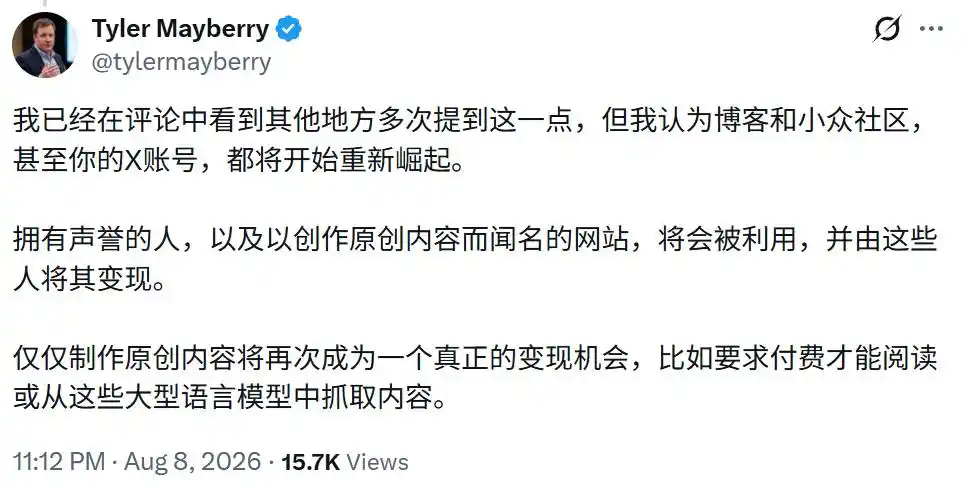
This article is from WeChat public account "Almost Human" (ID: almosthuman2014), author: Panda


Trending Cryptos

Related Questions

QAccording to the article, what is the key data point highlighting Stack Overflow's decline in user activity?

AIn July 2026, users posted only 1,304 new questions on Stack Overflow, which is lower than the number of questions posted during its private beta month in July 2008 (except for the very first month with 4 questions). This is a drastic drop from a peak of 207,000 monthly questions in March 2014.

QWhat are the two main phases of decline discussed, and what primary factor is blamed for the earlier phase starting around 2014?

AThe article discusses two phases of decline. The first phase, beginning around 2014, is primarily attributed to Stack Overflow's increasingly strict moderation culture and policies that aggressively closed 'duplicate' or 'low-quality' questions, which created a hostile environment for new users and stifled participation.

QWhat is the 'signal compression' effect described in the article, and why is it problematic?

A'Signal compression' refers to the phenomenon where the effort and expertise of high-reputation contributors on platforms like Stack Overflow become indistinguishable from AI-generated answers. This devalues their hard-earned professional standing, removing the incentive to contribute and leading experts to leave the platform, which risks cutting off the formation of future human expertise.

QBesides Stack Overflow, what other types of online platforms or businesses does the article mention as being significantly impacted by generative AI?

AThe article mentions several other impacted platforms: educational Q&A services like Chegg, freelance marketplaces for writing/translation/coding (e.g., Fiverr, Upwork), Wikipedia (seeing a decline in human readers), Q&A sites like Quora, and general informational websites/SEO-based content businesses.

QWhat potential future for knowledge sharing does the article suggest, as an alternative to centralized Q&A platforms like Stack Overflow?

AThe article suggests knowledge production might migrate to other venues. This includes official documentation enhanced with troubleshooting guides (like Next.js), framework-specific AI chatbots (like Svelte's), and a potential resurgence of blogs, niche communities, and personal accounts, where reputation and original content from trusted individuals become valuable again.

Related Reads

Deciphering TapeOut: A Child Built a CPU On-Chain

**Title: Understanding TapeOut: A Kid Built a CPU On-Chain** **Summary:** The article explores a remarkable experiment where a young developer named Blonskr has used blockchain technology to build a functional, on-chain CPU. Named "Behemoth," this CPU is based on the 1971 Intel 4004 processor specification. It runs on the BNB Chain, uses block production as its clock (running at a glacial 2.22 Hz), and is perhaps the slowest CPU in existence, yet it represents a novel and intriguing concept in the on-chain space. The core concept is the TapeOut protocol, named after the final "tape out" stage in semiconductor manufacturing. It treats the blockchain as a silicon wafer, with tokens representing fundamental logic components. The protocol's atomic unit is an ERC-1155 token representing a single NAND gate, the fundamental building block of digital logic. Users can visually design circuits on a "canvas," connecting these logic tokens. Once a design is finalized, the underlying tokens are burned, and an ERC-721 NFT representing the permanent, immutable circuit is minted. Blonskr used 2,300 such tokenized NAND gates to construct the Behemoth CPU. Key features of this and any TapeOut circuit include **permanent operation** (running as long as the chain exists), **free, permissionless evaluation** (anyone can query it without gas), and **safe composability** (circuits cannot call external contracts or modify state, making them inherently safe to use). This enables a new form of open, collaborative hardware design, where anyone can build upon and integrate components created by others. While highly niche, TapeOut reimagines the foundations of computation using blockchain's properties of permanence and openness. It pushes the boundaries of what can be built on-chain, potentially enabling future applications like custom mining circuits or decentralized, specialized processors. The experiment demonstrates an exciting combination of extreme technical vision and creative curiosity.

marsbit17m ago

Deciphering TapeOut: A Child Built a CPU On-Chain

marsbit17m ago

Novig Sues Wisconsin as Sports Prediction Market Dispute Heats Up

Novig, a sports event prediction market operator, has filed a lawsuit against Wisconsin's attorney general. The legal dispute centers on whether prediction markets fall under federal derivatives regulations or state gambling laws. The lawsuit, filed in a U.S. district court, seeks a declaratory judgment after Novig began offering event contracts to Wisconsin residents. This case is part of a broader conflict. In April, Wisconsin sued other prediction market platforms like Kalshi and Polymarket, alleging their sports-related contracts violate state gambling laws. Novig argues its contracts are "swaps" regulated exclusively by the federal Commodity Futures Trading Commission (CFTC), under the Commodity Exchange Act. Wisconsin contends they are sports betting. Federal courts have issued conflicting rulings on similar cases, creating legal uncertainty. The outcome is significant as prediction markets are a fast-growing sector, with trading volume reaching $9.5 billion on a single day in August. These markets are also increasingly intertwined with cryptocurrency infrastructure. Simultaneously, Novig is pursuing a nationwide legal strategy, having filed similar lawsuits in four other states. The company also recently secured a marketing partnership with the New York Mets, marking the first such deal with an MLB team. The Wisconsin case's resolution will influence whether prediction markets can operate as national financial products or remain constrained by individual state laws.

cryptonews.ru24m ago

Novig Sues Wisconsin as Sports Prediction Market Dispute Heats Up

cryptonews.ru24m ago

Держатели XRP могут торговать опционами на платформе Derive, используя FXRP в качестве залога

XRP holders can now trade options on the Derive platform using FXRP as collateral, as announced by Flare on August 12. This integration allows users to open positions from self-custody wallets while the underlying XRP backing the FXRP remains on the XRP Ledger. According to DeFi analyst Will Procheska, this provides XRP's dedicated holder base with a permissionless options market for generating yield or hedging. Derive's platform combines protocol-level settlements with an order book managed by Derive Trading Co., enabling users to retain asset control while professional market-makers provide liquidity. XRP options on Derive are cash-settled in USDC, so profits or obligations adjust the trader's USDC balance without transferring XRP or FXRP. The platform's portfolio margin system assesses overall account risk but may still trigger liquidations if margin levels fall below requirements. The launch expands Flare's XRPFi ecosystem. FXRP, introduced via the FAssets system in September 2025, creates an on-chain representation of XRP for use in smart contracts. It has since been integrated into spot trading and, more recently, permissionless lending markets on Morpho. This addition of options on Derive offers XRP holders hedging and premium-earning capabilities comparable to other major assets. While regulated XRP options debuted on CME Group in October 2025, Derive provides a decentralized alternative with USDC settlement and direct wallet access. The platform also supports perpetual futures, offering further trading strategies. Flare and Derive are exploring automated "strategy vaults" to simplify yield-generating options approaches for users.

cryptonews.ru24m ago

Держатели XRP могут торговать опционами на платформе Derive, используя FXRP в качестве залога

cryptonews.ru24m ago

Trading

Spot

Hot Articles

What is SONIC

Sonic: Pioneering the Future of Gaming in Web3 Introduction to Sonic In the ever-evolving landscape of Web3, the gaming industry stands out as one of the most dynamic and promising sectors. At the forefront of this revolution is Sonic, a project designed to amplify the gaming ecosystem on the Solana blockchain. Leveraging cutting-edge technology, Sonic aims to deliver an unparalleled gaming experience by efficiently processing millions of requests per second, ensuring that players enjoy seamless gameplay while maintaining low transaction costs. This article delves into the intricate details of Sonic, exploring its creators, funding sources, operational mechanics, and the timeline of significant events that have shaped its journey. What is Sonic? Sonic is an innovative layer-2 network that operates atop the Solana blockchain, specifically tailored to enhance the existing Solana gaming ecosystem. It accomplishes this through a customised, VM-agnostic game engine paired with a HyperGrid interpreter, facilitating sovereign game economies that roll up back to the Solana platform. The primary goals of Sonic include: Enhanced Gaming Experiences: Sonic is committed to offering lightning-fast on-chain gameplay, allowing players and developers to engage with games at previously unattainable speeds. Atomic Interoperability: This feature enables transactions to be executed within Sonic without the need to redeploy Solana programmes and accounts. This makes the process more efficient and directly benefits from Solana Layer1 services and liquidity. Seamless Deployment: Sonic allows developers to write for Ethereum Virtual Machine (EVM) based systems and execute them on Solana’s SVM infrastructure. This interoperability is crucial for attracting a broader range of dApps and decentralised applications to the platform. Support for Developers: By offering native composable gaming primitives and extensible data types - dining within the Entity-Component-System (ECS) framework - game creators can craft intricate business logic with ease. Overall, Sonic's unique approach not only caters to players but also provides an accessible and low-cost environment for developers to innovate and thrive. Creator of Sonic The information regarding the creator of Sonic is somewhat ambiguous. However, it is known that Sonic's SVM is owned by the company Mirror World. The absence of detailed information about the individuals behind Sonic reflects a common trend in several Web3 projects, where collective efforts and partnerships often overshadow individual contributions. Investors of Sonic Sonic has garnered considerable attention and support from various investors within the crypto and gaming sectors. Notably, the project raised an impressive $12 million during its Series A funding round. The round was led by BITKRAFT Ventures, with other notable investors including Galaxy, Okx Ventures, Interactive, Big Brain Holdings, and Mirana. This financial backing signifies the confidence that investment foundations have in Sonic’s potential to revolutionise the Web3 gaming landscape, further validating its innovative approaches and technologies. How Does Sonic Work? Sonic utilises the HyperGrid framework, a sophisticated parallel processing mechanism that enhances its scalability and customisability. Here are the core features that set Sonic apart: Lightning Speed at Low Costs: Sonic offers one of the fastest on-chain gaming experiences compared to other Layer-1 solutions, powered by the scalability of Solana’s virtual machine (SVM). Atomic Interoperability: Sonic enables transaction execution without redeployment of Solana programmes and accounts, effectively streamlining the interaction between users and the blockchain. EVM Compatibility: Developers can effortlessly migrate decentralised applications from EVM chains to the Solana environment using Sonic’s HyperGrid interpreter, increasing the accessibility and integration of various dApps. Ecosystem Support for Developers: By exposing native composable gaming primitives, Sonic facilitates a sandbox-like environment where developers can experiment and implement business logic, greatly enhancing the overall development experience. Monetisation Infrastructure: Sonic natively supports growth and monetisation efforts, providing frameworks for traffic generation, payments, and settlements, thereby ensuring that gaming projects are not only viable but also sustainable financially. Timeline of Sonic The evolution of Sonic has been marked by several key milestones. Below is a brief timeline highlighting critical events in the project's history: 2022: The Sonic cryptocurrency was officially launched, marking the beginning of its journey in the Web3 gaming arena. 2024: June: Sonic SVM successfully raised $12 million in a Series A funding round. This investment allowed Sonic to further develop its platform and expand its offerings. August: The launch of the Sonic Odyssey testnet provided users with the first opportunity to engage with the platform, offering interactive activities such as collecting rings—a nod to gaming nostalgia. October: SonicX, an innovative crypto game integrated with Solana, made its debut on TikTok, capturing the attention of over 120,000 users within a short span. This integration illustrated Sonic’s commitment to reaching a broader, global audience and showcased the potential of blockchain gaming. Key Points Sonic SVM is a revolutionary layer-2 network on Solana explicitly designed to enhance the GameFi landscape, demonstrating great potential for future development. HyperGrid Framework empowers Sonic by introducing horizontal scaling capabilities, ensuring that the network can handle the demands of Web3 gaming. Integration with Social Platforms: The successful launch of SonicX on TikTok displays Sonic’s strategy to leverage social media platforms to engage users, exponentially increasing the exposure and reach of its projects. Investment Confidence: The substantial funding from BITKRAFT Ventures, among others, emphasizes the robust backing Sonic has, paving the way for its ambitious future. In conclusion, Sonic encapsulates the essence of Web3 gaming innovation, striking a balance between cutting-edge technology, developer-centric tools, and community engagement. As the project continues to evolve, it is poised to redefine the gaming landscape, making it a notable entity for gamers and developers alike. As Sonic moves forward, it will undoubtedly attract greater interest and participation, solidifying its place within the broader narrative of blockchain gaming.

2.4k Total ViewsPublished 2024.04.04Updated 2024.12.03

What is SONIC

What is $S$

Understanding SPERO: A Comprehensive Overview Introduction to SPERO As the landscape of innovation continues to evolve, the emergence of web3 technologies and cryptocurrency projects plays a pivotal role in shaping the digital future. One project that has garnered attention in this dynamic field is SPERO, denoted as SPERO,$$s$. This article aims to gather and present detailed information about SPERO, to help enthusiasts and investors understand its foundations, objectives, and innovations within the web3 and crypto domains. What is SPERO,$$s$? SPERO,$$s$ is a unique project within the crypto space that seeks to leverage the principles of decentralisation and blockchain technology to create an ecosystem that promotes engagement, utility, and financial inclusion. The project is tailored to facilitate peer-to-peer interactions in new ways, providing users with innovative financial solutions and services. At its core, SPERO,$$s$ aims to empower individuals by providing tools and platforms that enhance user experience in the cryptocurrency space. This includes enabling more flexible transaction methods, fostering community-driven initiatives, and creating pathways for financial opportunities through decentralised applications (dApps). The underlying vision of SPERO,$$s$ revolves around inclusiveness, aiming to bridge gaps within traditional finance while harnessing the benefits of blockchain technology. Who is the Creator of SPERO,$$s$? The identity of the creator of SPERO,$$s$ remains somewhat obscure, as there are limited publicly available resources providing detailed background information on its founder(s). This lack of transparency can stem from the project's commitment to decentralisation—an ethos that many web3 projects share, prioritising collective contributions over individual recognition. By centring discussions around the community and its collective goals, SPERO,$$s$ embodies the essence of empowerment without singling out specific individuals. As such, understanding the ethos and mission of SPERO remains more important than identifying a singular creator. Who are the Investors of SPERO,$$s$? SPERO,$$s$ is supported by a diverse array of investors ranging from venture capitalists to angel investors dedicated to fostering innovation in the crypto sector. The focus of these investors generally aligns with SPERO's mission—prioritising projects that promise societal technological advancement, financial inclusivity, and decentralised governance. These investor foundations are typically interested in projects that not only offer innovative products but also contribute positively to the blockchain community and its ecosystems. The backing from these investors reinforces SPERO,$$s$ as a noteworthy contender in the rapidly evolving domain of crypto projects. How Does SPERO,$$s$ Work? SPERO,$$s$ employs a multi-faceted framework that distinguishes it from conventional cryptocurrency projects. Here are some of the key features that underline its uniqueness and innovation: Decentralised Governance: SPERO,$$s$ integrates decentralised governance models, empowering users to participate actively in decision-making processes regarding the project’s future. This approach fosters a sense of ownership and accountability among community members. Token Utility: SPERO,$$s$ utilises its own cryptocurrency token, designed to serve various functions within the ecosystem. These tokens enable transactions, rewards, and the facilitation of services offered on the platform, enhancing overall engagement and utility. Layered Architecture: The technical architecture of SPERO,$$s$ supports modularity and scalability, allowing for seamless integration of additional features and applications as the project evolves. This adaptability is paramount for sustaining relevance in the ever-changing crypto landscape. Community Engagement: The project emphasises community-driven initiatives, employing mechanisms that incentivise collaboration and feedback. By nurturing a strong community, SPERO,$$s$ can better address user needs and adapt to market trends. Focus on Inclusion: By offering low transaction fees and user-friendly interfaces, SPERO,$$s$ aims to attract a diverse user base, including individuals who may not previously have engaged in the crypto space. This commitment to inclusion aligns with its overarching mission of empowerment through accessibility. Timeline of SPERO,$$s$ Understanding a project's history provides crucial insights into its development trajectory and milestones. Below is a suggested timeline mapping significant events in the evolution of SPERO,$$s$: Conceptualisation and Ideation Phase: The initial ideas forming the basis of SPERO,$$s$ were conceived, aligning closely with the principles of decentralisation and community focus within the blockchain industry. Launch of Project Whitepaper: Following the conceptual phase, a comprehensive whitepaper detailing the vision, goals, and technological infrastructure of SPERO,$$s$ was released to garner community interest and feedback. Community Building and Early Engagements: Active outreach efforts were made to build a community of early adopters and potential investors, facilitating discussions around the project’s goals and garnering support. Token Generation Event: SPERO,$$s$ conducted a token generation event (TGE) to distribute its native tokens to early supporters and establish initial liquidity within the ecosystem. Launch of Initial dApp: The first decentralised application (dApp) associated with SPERO,$$s$ went live, allowing users to engage with the platform's core functionalities. Ongoing Development and Partnerships: Continuous updates and enhancements to the project's offerings, including strategic partnerships with other players in the blockchain space, have shaped SPERO,$$s$ into a competitive and evolving player in the crypto market. Conclusion SPERO,$$s$ stands as a testament to the potential of web3 and cryptocurrency to revolutionise financial systems and empower individuals. With a commitment to decentralised governance, community engagement, and innovatively designed functionalities, it paves the way toward a more inclusive financial landscape. As with any investment in the rapidly evolving crypto space, potential investors and users are encouraged to research thoroughly and engage thoughtfully with the ongoing developments within SPERO,$$s$. The project showcases the innovative spirit of the crypto industry, inviting further exploration into its myriad possibilities. While the journey of SPERO,$$s$ is still unfolding, its foundational principles may indeed influence the future of how we interact with technology, finance, and each other in interconnected digital ecosystems.

407 Total ViewsPublished 2024.12.17Updated 2024.12.17

What is $S$

What is AGENT S

Agent S: The Future of Autonomous Interaction in Web3 Introduction In the ever-evolving landscape of Web3 and cryptocurrency, innovations are constantly redefining how individuals interact with digital platforms. One such pioneering project, Agent S, promises to revolutionise human-computer interaction through its open agentic framework. By paving the way for autonomous interactions, Agent S aims to simplify complex tasks, offering transformative applications in artificial intelligence (AI). This detailed exploration will delve into the project's intricacies, its unique features, and the implications for the cryptocurrency domain. What is Agent S? Agent S stands as a groundbreaking open agentic framework, specifically designed to tackle three fundamental challenges in the automation of computer tasks: Acquiring Domain-Specific Knowledge: The framework intelligently learns from various external knowledge sources and internal experiences. This dual approach empowers it to build a rich repository of domain-specific knowledge, enhancing its performance in task execution. Planning Over Long Task Horizons: Agent S employs experience-augmented hierarchical planning, a strategic approach that facilitates efficient breakdown and execution of intricate tasks. This feature significantly enhances its ability to manage multiple subtasks efficiently and effectively. Handling Dynamic, Non-Uniform Interfaces: The project introduces the Agent-Computer Interface (ACI), an innovative solution that enhances the interaction between agents and users. Utilizing Multimodal Large Language Models (MLLMs), Agent S can navigate and manipulate diverse graphical user interfaces seamlessly. Through these pioneering features, Agent S provides a robust framework that addresses the complexities involved in automating human interaction with machines, setting the stage for myriad applications in AI and beyond. Who is the Creator of Agent S? While the concept of Agent S is fundamentally innovative, specific information about its creator remains elusive. The creator is currently unknown, which highlights either the nascent stage of the project or the strategic choice to keep founding members under wraps. Regardless of anonymity, the focus remains on the framework's capabilities and potential. Who are the Investors of Agent S? As Agent S is relatively new in the cryptographic ecosystem, detailed information regarding its investors and financial backers is not explicitly documented. The lack of publicly available insights into the investment foundations or organisations supporting the project raises questions about its funding structure and development roadmap. Understanding the backing is crucial for gauging the project's sustainability and potential market impact. How Does Agent S Work? At the core of Agent S lies cutting-edge technology that enables it to function effectively in diverse settings. Its operational model is built around several key features: Human-like Computer Interaction: The framework offers advanced AI planning, striving to make interactions with computers more intuitive. By mimicking human behaviour in tasks execution, it promises to elevate user experiences. Narrative Memory: Employed to leverage high-level experiences, Agent S utilises narrative memory to keep track of task histories, thereby enhancing its decision-making processes. Episodic Memory: This feature provides users with step-by-step guidance, allowing the framework to offer contextual support as tasks unfold. Support for OpenACI: With the ability to run locally, Agent S allows users to maintain control over their interactions and workflows, aligning with the decentralised ethos of Web3. Easy Integration with External APIs: Its versatility and compatibility with various AI platforms ensure that Agent S can fit seamlessly into existing technological ecosystems, making it an appealing choice for developers and organisations. These functionalities collectively contribute to Agent S's unique position within the crypto space, as it automates complex, multi-step tasks with minimal human intervention. As the project evolves, its potential applications in Web3 could redefine how digital interactions unfold. Timeline of Agent S The development and milestones of Agent S can be encapsulated in a timeline that highlights its significant events: September 27, 2024: The concept of Agent S was launched in a comprehensive research paper titled “An Open Agentic Framework that Uses Computers Like a Human,” showcasing the groundwork for the project. October 10, 2024: The research paper was made publicly available on arXiv, offering an in-depth exploration of the framework and its performance evaluation based on the OSWorld benchmark. October 12, 2024: A video presentation was released, providing a visual insight into the capabilities and features of Agent S, further engaging potential users and investors. These markers in the timeline not only illustrate the progress of Agent S but also indicate its commitment to transparency and community engagement. Key Points About Agent S As the Agent S framework continues to evolve, several key attributes stand out, underscoring its innovative nature and potential: Innovative Framework: Designed to provide an intuitive use of computers akin to human interaction, Agent S brings a novel approach to task automation. Autonomous Interaction: The ability to interact autonomously with computers through GUI signifies a leap towards more intelligent and efficient computing solutions. Complex Task Automation: With its robust methodology, it can automate complex, multi-step tasks, making processes faster and less error-prone. Continuous Improvement: The learning mechanisms enable Agent S to improve from past experiences, continually enhancing its performance and efficacy. Versatility: Its adaptability across different operating environments like OSWorld and WindowsAgentArena ensures that it can serve a broad range of applications. As Agent S positions itself in the Web3 and crypto landscape, its potential to enhance interaction capabilities and automate processes signifies a significant advancement in AI technologies. Through its innovative framework, Agent S exemplifies the future of digital interactions, promising a more seamless and efficient experience for users across various industries. Conclusion Agent S represents a bold leap forward in the marriage of AI and Web3, with the capacity to redefine how we interact with technology. While still in its early stages, the possibilities for its application are vast and compelling. Through its comprehensive framework addressing critical challenges, Agent S aims to bring autonomous interactions to the forefront of the digital experience. As we move deeper into the realms of cryptocurrency and decentralisation, projects like Agent S will undoubtedly play a crucial role in shaping the future of technology and human-computer collaboration.

1.1k Total ViewsPublished 2025.01.14Updated 2025.01.14

What is AGENT S

Discussions

Welcome to the HTX Community. Here, you can stay informed about the latest platform developments and gain access to professional market insights. Users' opinions on the price of S (S) are presented below.

活动图片