Anthropic CEO's In-depth Interview: After AI Becomes a Super Weapon, How to Balance Between Business and Security?

marsbitPublished on 2026-06-24Last updated on 2026-06-24

Abstract

Anthropic CEO Dario Amodei discusses his company's approach to AI development, emphasizing the need to balance rapid commercial progress with safety and ethical considerations. He explains Anthropic's focus on enterprise applications, which aligns with their long-term, trust-based values, and details the intense competition in the AI field. Amodei defends his previous warnings about AI-driven job displacement, clarifying his intent was to spur proactive solutions, not predict doom. He addresses Anthropic's work with government defense agencies, stating it's a necessary response to global threats but is conducted with strict ethical boundaries, such as prohibiting autonomous weapons. A significant portion of the interview focuses on the decision not to publicly release the powerful "Mythos" model due to its advanced, potentially dangerous capabilities in cybersecurity, a move he argues is responsible despite criticism. Amodei concludes by advocating for a measured, incremental approach to AI advancement, supported by both corporate governance structures and sensible government regulation to manage existential risks.

Source: Bloomberg

Compiled by: Felix, PANews

Bloomberg recently conducted an interview with Anthropic CEO Dario Amodei, discussing his entrepreneurial journey in San Francisco, competition with OpenAI, and the ultimate goals of AI.

PANews has compiled the highlights of the interview.
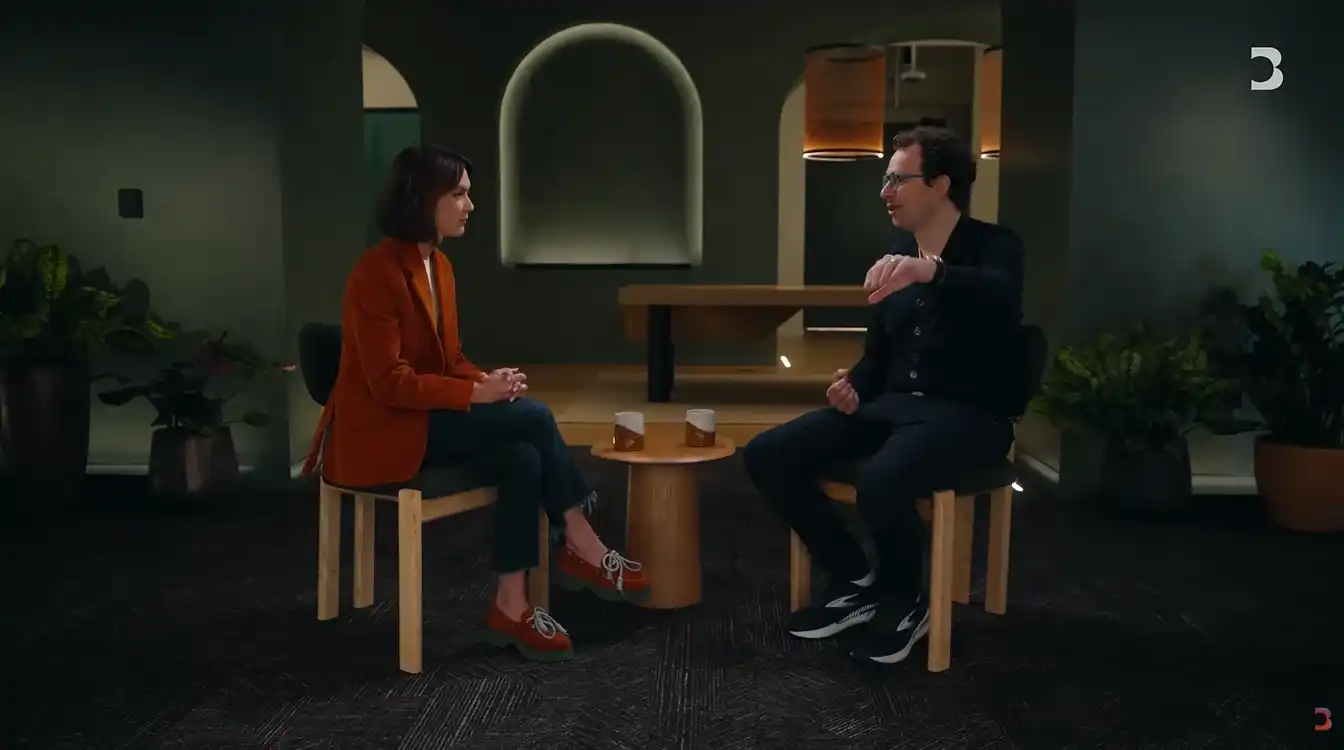
Host: You are currently at the center of the AI universe. How does that feel?

Dario:Throughout my career, especially during my time at Anthropic, what I've experienced is a smooth exponential curve. The feeling of this smooth exponential curve is: nothing happens, nothing happens, a small thing happens, and then 'whoosh'—explosive growth. This is the world's experience, and also the company's scale experience relative to other companies and the world. I looked at this chart for a long time, I used to say 'we'll probably become the AI company with the highest revenue and valuation around this time,' and it indeed happened. So on one hand, I'm not surprised because it's just a smooth line on the chart; but on the other hand, when things actually happen, you see more details and colors, which is absolutely surprising. We always need to keep in mind the most fundamental questions: How to train good models? How to put them into good products? How to ensure safety? How to help people while managing the social risks brought by technology? They are all the same questions, just examined under a larger microscope.

Host: You grew up in San Francisco, what were you like as a child? I know your father was a leather craftsman and your mother worked in a library. How did that influence you?

Dario:The first internet revolution was happening around me at the time, but I had zero interest in it. I was only interested in doing math problems, doodling, understanding the universe, and science fiction. That was my overall environment back then, and I was filled with curiosity about the world.

Host: You grew up in this hub city of technology, and now it's also the center of AI. Has anything about this city influenced your worldview?

Dario:The general spirit of non-conformity, individualism, and 'it's okay to be crazy' here has indeed influenced me. If you go to Europe or even other parts of this country, you'll find that thinking differently or having crazy ideas is not encouraged and is even considered strange. Although I have many criticisms of Silicon Valley, I think one thing it does well is: It's okay even if all the experts are against you. If you have a coherent vision for the world, you should pursue it. Maybe it completely doesn't work, but if it succeeds, it creates a long-tail effect, and you might find huge gold veins in certain ore deposits. I think this spirit is very important.

Host: Your decision to leave OpenAI has become Silicon Valley lore. What actually happened? Besides the rumors, what were the real issues? Where did the disagreements lie?

Dario:Let me put it simply. When developing powerful technology, you face many difficult problems, and Anthropic also faces these dilemmas daily where we don't know if our decisions are right or wrong. So there are many reasonable disagreements on safety issues, and we did have some of those with them, but that alone wasn't enough reason to leave. Even within Anthropic, people have disagreements with me and with each other. However, when you feel you can't trust someone, when you feel their values are not as they claim, when you feel they are dishonest, not acting from the motives they profess, when you see disturbing patterns of deceptive behavior, it's hard to continue working with and trusting that company. Ultimately, if you and others have different visions and don't trust each other, why argue? The solution is to go your separate ways. I am perfectly at peace with us doing things our way, and them doing things theirs. See who wins in the market, who wins in public opinion. That is more telling than any dramatic gossip about who left whom. We are demonstrating an example of how to deploy this technology responsibly. If they disagree, they can present their arguments. I think that's all there is to say.

Host: At the AI summit in India, you and Sam Altman seemed to refuse to hold hands on stage. What happened there?

Dario:The truth is that summit was extremely disorganized. We all went on stage at the last minute, they changed our order on the spot, took a photo, and then suddenly ordered all of us to hold hands. If you've been to these international summits with heads of state, you know they tend to be super chaotic (and I'm not singling out India).

Host: But everyone else held hands.

Dario:I don't know how to explain it to you. Narendra Modi just suddenly called for everyone to hold hands on stage.

Host: Okay. Sam and Elon are suing each other. You don't like Sam. If the people building the world's most important technology can't hold hands on stage, how can we trust you'll collaborate on risks that threaten human existence?

Dario:What I want to tell you is that there are huge differences in the quality and trustworthiness of the people building this technology. That 'nobody trusts anybody' narrative is not correct. I've known Demis Hassabis, who developed the Gemini models, for 15 years; they are competitors to the Claude models, but we've collaborated on many issues. We buy compute from Google, and we often exchange ideas about safety. So I think, first, some actors are indeed more trustworthy than others; second, there are actors outside Anthropic that I trust. What I think needs to happen is for the trustworthy actors to band together, putting the untrustworthy actors in a position where they have no choice but to adopt the same standards. In my experience, some people won't do the right thing on their own, but if most people in the industry are doing the right thing, others don't have much choice. This has two aspects: The positive side is mutual inspiration (i.e., racing to the top), like Demis doing AlphaFold inspired us, we do biological research, and our interpretability research inspires them—it's not zero-sum competition. This is the positive 'carrot' side of the race; and the 'stick' side is that you'll look terrible if you don't do the right thing. They might reluctantly do the right thing while pretending to do something else, even thinking we have some sinister hidden agenda—that's to be expected, but that's precisely how industries align and cooperate.

Host: Early on, others focused on fun, flashy consumer applications, while you bet on coding and the enterprise side. Claude Code and Claude Cowork have been very successful. Why did you make that bet? Was it a values decision or a business decision?

Dario:When we founded Anthropic, the most basic thing was we wanted to do things the right way. But to fund the extremely expensive model creation, it needed a business model. If the business model fundamentally conflicts with your values, you're in a bind: either betray your values or become irrelevant. It's much better to choose a business model compatible with your values. We looked at social media and the consumer world, which often incentivize user engagement and even addiction (like the AI video model mess we see), just to maximize user screen time for ad revenue. In contrast, on the enterprise side, we hope to use AI to cure previously incurable diseases (collaborating with biotech, pharma, and academia), make energy cheaper and more efficient, help education and nonprofits, and promote economic growth. These are inherently enterprise applications. Another factor is that enterprises highly value trust and long-term relationships. The consumer side can sometimes be gimmicky, while the enterprise side requires you to build trust over many years and deliver what you promise. This is very synergistic with our goal of deploying models in a positive, safe manner.

Host: A developer can switch from Claude to ChatGPT or Gemini in an afternoon. Is it really possible to maintain a long-term lead in this industry? How long would it take for a strong competitor to replicate what you've built?

Dario:Model quality is the most important thing. We are far ahead in model quality right now. While there is some switching inertia, I (and Anthropic) have never relied on product 'stickiness' to keep people from switching. You need to have a better model, a better product. We see the growth rate hasn't even turned downwards. At least at the time of this interview recording, if anything, it's still rising. So I tend to think model quality is the most important thing.

Host: Soon after the launch of Claude Cowork, $285 billion in market cap evaporated overnight, with traders calling it 'SaaSpocalypse.' If AI continues to advance at this pace, how much traditional software will be replaced, and how fast?

Dario: It's hard to predict this accurately ahead of time. All traditional software companies have their own moats. Some of those moats will disappear, but others will remain. 'Quickly writing complex software' as a moat will definitely disappear; you can no longer rely on that for defense. But customer relationships, knowledge of how industries work, and unique domain expertise will still matter. My advice to these companies: Don't be complacent. List all your moats, see which ones will disappear, which ones will strengthen, because new moats will also emerge. Those who are flexible will do well, and those who deceive themselves and rest on past laurels will have a hard time. Overall, I think the software industry will get bigger, not smaller, though there will certainly be some big losers.

Host: Explain that.

Dario:Because the 'pie' is getting bigger. If AI raises the industry ceiling by 10x, existing businesses could easily grow 1.5x, even if their relative share of the total pie becomes smaller. But for those who don't adapt, who bury their heads in the sand, they will face tough times or even go out of business.

Host: Your biggest backers are companies like Amazon, Google, Microsoft, and Nvidia. They all have their own agendas, being both partners and competitors. Your huge business milestones are tied to funding rounds. Who is really in charge?

Dario:In many cases, we've been very upfront about what we truly think. We're all adults; we can agree to disagree, collaborate on one thing while disagreeing on another.

Host: There are reports that your valuation is higher than OpenAI's. For a five-year-old startup, a valuation nearing a trillion dollars. How do you make sense of that number? If you're more disciplined on compute and have a faster path to profitability, why do you need that much money?

Dario:The demand for compute is growing incredibly fast. Business fundamentals are good, but you might need three or four times more compute within a year; growth is extremely fast. We fully expect revenue growth to match or even exceed that compute growth. Raising money is to buffer the impact of that uncertainty; it's very rational and results in very little dilution of company equity. It absolutely does not indicate problems with the business fundamentals.

Host: Does it feel good to surpass your main competitor?

Dario:We have many difficult challenges ahead. We are promoting the 'race to the top' idea, trying to pull other companies forward alongside us. Sometimes they don't acknowledge it, sometimes they attack us while copying us, but that pulling effect is incredibly valuable. The value of being the leading company is not merely about beating opponents, but about having the ability to drive the entire ecosystem.

Host: But winning must feel a bit better.

Dario:We certainly always strive to succeed and don't want to fail. I don't think we should shut down this technology; we compete in a free enterprise system and just need to mitigate model risks. We are always seeking balance between the two poles.

Host: Your product development speed is astonishing. How do you do it?

Dario:Two reasons: First, we have a unified culture and organizational efficiency; everyone is aligned. Second, it's Claude itself. We are now using Claude to help develop our models and products, making the process more efficient. This generates a massive and increasingly reliable acceleration effect.

Host: What's the craziest thing you've seen AI do?

Dario:It's all about biology and medicine. I've seen several instances where Claude diagnosed medical issues that senior doctors missed. In biology, models are becoming astonishingly good at drug design or computational chemistry. As a former biologist, I know that requires an extremely high level of specialized training. This is the huge positive side of AI; it will greatly enhance human quality of life. Imagine the scientific progress from 1900 to now over a century, and then imagine if we had another century of progress. If we navigate the current challenges successfully, we'll have a much better world.

Host: I know you love writing. Do you use Claude to help you write?

Dario:Yes, but I haven't had it write full texts for me yet because I'm a bit particular about specific styles. I mainly use Claude for brainstorming, organizing themes, or providing references. It currently plays a supporting role. While it's still some distance from writing better than me, that will come sooner or later.

Host: Writing helps clarify thoughts, involving a lot of critical thinking. If we let Claude do it, do we lose that thinking ability?

Dario:I am somewhat concerned about that, indeed. I insist on writing myself, half for the reader, but equally to clarify my own thoughts. If you just tell it 'write an article about AI risks,' not only will it not produce what I truly want to express, but I also lose that benefit of thinking. In the future, as models get better, we may need to find subtle ways of using them more directly while still retaining the benefits of thinking.

Host: You've been outspoken about job loss, predicting AI might eliminate half of junior white-collar jobs within 1 to 5 years. That was a year ago. Is that proportion 50% now, or higher?

Dario:If you look at the original full video, my actual statement was: I don't know what will happen, but this represents an order of magnitude for how crazy things could get. However, psychology always leans towards clipping out those three seconds of 'doom is coming,' while ignoring all the solutions I simultaneously discussed (like token tax, corporate adjustments, macroeconomic policies, etc.). My message was never 'doom is coming,' but that we need to see it coming, focus on it, and proactively manage it. In the short term, AI will make people more efficient, but this is just a transitional phase. As we've seen in the history of automation, AI may eventually take over those tasks. Take Anthropic's software engineers as an example: right now, AI helps them write most code, making them more efficient, but we're also starting to see cases where it's simply better to let AI directly perform specific tasks. On the other hand, this also creates new demands, like 'applied AI solution architects (frontline deployment engineers)' who combine technical and customer communication skills. Job destruction and job adjustment will happen simultaneously.

Host: You released a chart showing potential job disruption, which ones will disappear, which will be created?

Dario:It's hard to predict precisely, like predicting the stock market. But overall, junior white-collar positions (in banking, finance, etc.) are highly likely to be replaced by AI. In our conversations with enterprise customers, we see them facing a choice: lay off to cut costs, or use the same resources to do more new things? We always try to push them towards a 'positive-sum game': use efficiency gains to do more, not to lay people off. As the 'pie' expands, people might find new places to go; it's a question of matching speed. The scale of disruption will be large, which is why I tried to warn people.

Host: If there's unemployment at that high a scale, wouldn't that be a cause for revolution?

Dario: That is absolutely an outcome we want to avoid. I think several areas will retain opportunities: one is the physical world (because robotics development lags behind AI information processing speed; manufacturing and construction will still require a lot of human labor); another is all human-centric work. Even if AI is more accurate than doctors or better at customer service, people still want and need to talk to other humans and build connections on important matters. Humans will also retain the role of guiding AI values and intent.

Host: Many people have pushed back on your views, like Jensen Huang saying you confuse 'tasks' with 'jobs,' and others calling it 'doom marketing' that benefits Anthropic.

Dario:I want to rebut this clearly. In our reports and papers, we spent five whole pages detailing the distinction between tasks and jobs, explaining why this time is different, and proposed six solutions covering both private and government sectors. But I've found a sickness in Silicon Valley and social media is laziness; people just watch a three-second clip from a year ago and irresponsibly comment. Calling serious intellectual work 'cheap marketing' is itself a cheap marketing tactic and an incredibly lazy refusal to engage in serious discussion.

Host: As a globally leading AI company, you are deeply involved in many areas of US national security. You've had a long-standing anti-war stance since Caltech, but you were among the first AI companies to sign a classified cyber operations contract with the Department of Defense. Please explain.

Dario:The reason is the world is changing. When I see Russia invading Ukraine, I worry about the resurgence of authoritarian blocs. We need to defend ourselves. We absolutely do not want adversaries using AI to analyze intelligence, attack Ukraine, while we are unable to defend. So we are providing support across government departments. By the way, we do this absolutely not for money; running on government networks is actually a big hassle and yields little profit. Precisely because we do it out of 'caring,' there must be clear limits and red lines on the use of the technology, namely: no mass surveillance and no development of fully autonomous weapons. If we abandon our democratic values just to win a competition, that's not worth it. This is the balance and stance we uphold.

Host: You started partnering with Palantir in 2024; their tech is used by US Immigration and Customs Enforcement (ICE), police departments, and even in Gaza. Is Claude being used for surveillance?

Dario:We do not work with ICE and CBP, either directly or through Palantir. To my knowledge, we also do not operate in Gaza. We are very careful to limit our involvement to areas aligned with our values.

Host: So you drew red lines, the President banned some of your federal authorizations, the Pentagon labeled you a supply chain risk, and OpenAI stepped in and signed contracts you wouldn't. What does winning that fight actually look like?

Dario:I don't think of it as a fight to 'win or lose'; it's a societal debate about how governments should properly use AI. We are trying to establish usage precedents concerning worrisome scenarios and have drawn attention to the issue. We see bipartisan efforts in Congress attempting to ban high-risk applications and set up guardrails. If there's a win, it's getting our nation to think more carefully about the appropriate boundaries for using new technology; that's the victory.

Host: Some describe you as an ideological lunatic who shouldn't have this much power, or a left-wing zealot. Does that bother you?

Dario:I get called names often, and much worse than that. People can call me and Anthropic whatever they want. I only care about two things: the company succeeding, and us sticking to our values. It actually makes my life very simple; I've always known where I stand.

Host: Is an AI war more likely to prevent World War III or more likely to cause it?

Dario: Overall, more likely to prevent it. But without usage restrictions, it could cause one. Without proper regulation, both sides could easily erupt into conflict due to misunderstanding. If we have overwhelming superiority in intelligence gathering and response capability, adversaries will think twice before acting. Superior intelligence can effectively deter conflict.

Host: Anthropic is in the headlines almost weekly, recently about the Mythos model. You said Mythos is too powerful to release to the public. What surprised you most about it?

Dario:What surprised me most is that it not only finds vulnerabilities but can also turn them into substantive attack tools; there's been a huge leap in that capability. Some early companies testing it even asked us not to release it, calling it a 'super weapon' that should require a gun license to use. Our decision not to release it publicly isn't about locking it away forever; it's that current cyber defense mechanisms are still too easily 'jailbroken' or bypassed. We need to wait until defense mechanisms are confident enough to handle it before releasing it alongside robust safeguards.

Host: But there's been a lot of pushback: researchers claim cheaper open-source models can replicate it, and others say it's all grand PR and marketing. How do you respond?

Dario:The claim that it can be replicated with open-source models is utterly absurd. The Mythos model discovered 271 new vulnerabilities in the Firefox browser and thousands of new vulnerabilities in many private companies we can't disclose, which previous models simply couldn't find. That person on Twitter who claimed they could replicate it with an open-source model just re-located that specific line of code after we pointed out which line it was. That's not the same thing at all.

As for the 'marketing' claim, not releasing this super-powerful model is a huge commercial loss for us; it could have massively accelerated internal and external R&D. If it helps defenders, it helps attackers equally. So our current strategy is to first give it to defenders to patch system vulnerabilities. Once all the vulnerability 'holes' are plugged, the future internet ecosystem will become extremely secure. Those sniping and doing contrarian takes on X (including certain competitors) fail to take the societal risk trade-offs seriously, showing extreme immaturity.

Host: Have you already made trade-offs you're not entirely comfortable with?

Dario:The entire history of Anthropic is full of trade-offs. In an ideal world, you might spend years studying every pitfall of a chatbot before releasing it. While we did delay the initial version of Claude by a few months, everything is still a trade-off. Now that we are in a leading commercial position, Daniela and I are doing everything we can to nudge the needle further towards 'proceeding cautiously.' That's the intention behind restricting Mythos's release. If you're not a leading player, you can hardly make that decision.

Host: Since this technology is so powerful, why doesn't the government just take you over?

Dario:This is a very serious concern. Throughout history, all unprecedentedly powerful technologies (nuclear weapons, the internet, GPS, cell phones) were initially born in government and federal labs. AI is the first one built entirely in the private sector with the government arriving late, a situation that is actually dangerous and unstable. But the danger of the government not doing it now is arguably greater than the danger of the private sector doing it. So we need checks and balances: we set up the 'Long-Term Benefit Trust,' which has the power to remove the majority of the board and even fire me, introducing an element of public governance.

At the government level, we need the legislative and judicial branches to enforce mandatory pre-release testing and red-line regulation. I fear both a corporate monopoly over it and a government monopoly over it; they must check each other. It's quite ridiculous that there's a group within Silicon Valley who, from being extremely opposed to any regulation or even transparency requirements (saying it kills innovation), upon seeing the first real danger, immediately swing to declaring 'the government should nationalize it.' This reaction of swinging wildly between extreme poles is very immature; what we need is rational middle ground.

Host: Your field always talks about the moment AI gets good enough for 'self-improvement.' Your researchers think it's getting close. How far away specifically?

Dario:I think it's not a specific 'moment' but a continuously accelerating exponential process. We already see AI starting to assist in proposing the architecture for the next generation of AI. A year ago, AI improved total factor productivity by 10-15%; now it might be 20-30%. It won't suddenly go out of control at one moment; instead, on this smooth exponential curve, we need to assess at each node whether we should slow down and apply more control. The sane response is to smoothly escalate our countermeasures as the technology's power grows, not to panic.

Host: You've said there's a 10-25% chance of human civilization collapsing. That's not trivial. Could there be a scenario where something Anthropic builds causes that collapse?

Dario:I certainly hope not. That risk probability stems from the inherent unpredictability of the technology and the complexity of world dynamics. All the measures we take are precisely to reduce, not increase, that collapse probability. It's like the aviation industry: even if you build an airplane ten times safer than others, you can't absolutely guarantee to others it 'will never crash.'

Related reading: OpenAI and Anthropic Collective Change Tune: Is the AI Jobs Apocalypse Narrative No Longer in Vogue?

Trending Cryptos

Related Questions

QWhat were the main reasons Dario Amodei gave for leaving OpenAI and founding Anthropic?

ADario Amodei cited fundamental differences in trust, values, and vision as the primary reasons for leaving OpenAI. He stated that while disagreements on safety issues alone were not enough to leave, a pattern of concerning deceptive behavior and a lack of trust in their stated motives made collaboration impossible. He felt he could not trust the leadership and that their actions did not align with their proclaimed values.

QHow does Anthropic balance the tension between pursuing commercial success and adhering to its safety and ethical values?

AAnthropic balances commercial success with safety and ethics by focusing on an enterprise-focused business model that it believes is inherently more aligned with its values. This model involves long-term trust relationships with businesses in areas like biotech, education, and energy, which aim to create positive societal impact. The company also consciously makes trade-offs, such as delaying the release of powerful models like 'Mythos' to develop adequate safeguards, even at commercial cost, to prioritize safety and responsible deployment.

QAccording to Dario Amodei, what is the most surprising and concerning capability of the unreleased 'Mythos' model?

AThe most surprising and concerning capability of the 'Mythos' model is its significant leap in not just discovering software vulnerabilities but in autonomously transforming those discoveries into practical, functioning attack tools. This ability is so advanced that some early testers described it as a 'superweapon' and suggested it should require a license to use, prompting Anthropic to withhold its public release until defense mechanisms are robust enough to counter it.

QWhat is Dario Amodei's perspective on the potential for AI to cause large-scale job displacement, and how does he propose society should respond?

ADario Amodei believes AI will likely lead to significant displacement of junior white-collar jobs, using the 50% figure as an illustrative magnitude of potential change, not a definitive prediction. He emphasizes this is not a 'doomsday' scenario but a warning that requires proactive management. His proposed solutions include a focus on a 'positive-sum' approach where companies use AI-driven efficiency gains to create new opportunities, policies like a 'token tax' for redistribution, macroeconomic adjustments, and recognizing that human-centric roles and physical-world jobs will remain crucial. He criticizes those who dismiss his warnings as 'marketing' for not engaging with the detailed solutions he has proposed.

QHow does Dario Amodei view the role of competition and collaboration among leading AI companies, especially regarding safety?

ADario Amodei views competition and collaboration as a mechanism for 'racing to the top.' He believes trustworthy companies should collaborate on safety ideas to set high standards, creating a positive 'carrot' effect through mutual inspiration. Simultaneously, this creates a 'stick' effect where less trustworthy actors are pressured to adopt similar standards to avoid appearing irresponsible. He distinguishes between companies he trusts (like Google DeepMind, with whom Anthropic collaborates) and those he does not, advocating for a coalition of trustworthy players to elevate the entire industry's safety practices.

Related Reads

a16z: In the AI Era, Company Competition for Talent Starts with Job Title Naming

The article discusses how companies in the AI era are competing for talent through strategic "title arbitrage," or the renaming of key roles to reflect and attract new, high-value capabilities. It uses Palantir's creation of the "Forward-Deployed Engineer" (FDE) as a prime example. This title reframed client-facing technical work from a peripheral "implementation" role into a core, high-status engineering function. The move was strategic, allowing Palantir to attract talent that blended technical skill with business acumen and to dominate the market's perception of this capability. The piece argues that job titles are an organizational language that signals the value and authority of certain work. Effective new titles, like "Data Scientist" or "Site Reliability Engineer," emerge when a role's strategic importance genuinely outgrows its old name. Conversely, mere title inflation without substantive change is ineffective. For AI companies, particularly in B2B, this is a crucial strategy. AI transformation creates new high-leverage roles (e.g., "Legal Engineer," "GTM Engineer") that combine domain expertise with technical automation. By naming these roles, a company can help clients internally legitimize these change-makers. This, in turn, builds market mindshare, associating the company with the new capability. In conclusion, as AI blurs the lines between product and service, the ability to accurately name and organize the critical, client-adjacent work that defines product learning will be a key competitive advantage. The first to define this new organizational language plants a flag in the market's mind.

marsbit7m ago

a16z: In the AI Era, Company Competition for Talent Starts with Job Title Naming

marsbit7m ago

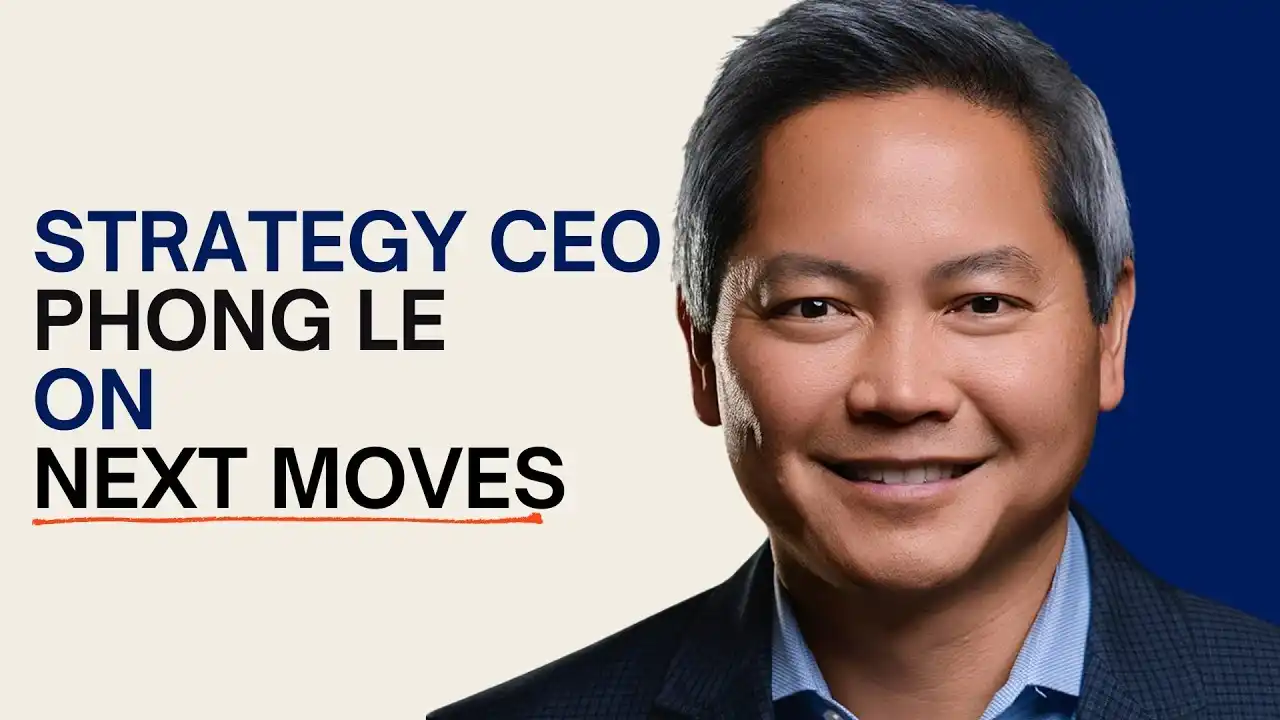
Interview with Strategy CEO: Can STRC Recover After Selling Bitcoin?

Interview with Strategy CEO Phong Le on the recent sale of 32 Bitcoin and its impact. He clarifies the move was a small, strategic action to demonstrate liquidity to debt holders, test internal processes, and prove operational discipline—not a response to fears of a "death spiral" from DeFi protocols leveraging STRC (Strategy's preferred stock product), which he notes holds less than 10% of STRC. Le emphasizes Strategy’s long-term focus as the largest corporate Bitcoin holder, using the adage that markets are a "voting machine" short-term but a "weighing machine" long-term. Decision-making is data-driven, involving the board, complex modeling, and multiple stakeholder considerations, moving beyond a founder-centric model. He outlines various capital options but stresses the strategic importance of "doing nothing" as a valid choice, citing resilience built during the 2022 bear market. Le expresses unwavering belief in Bitcoin's foundational value for global sovereignty and its future role in an AI-driven economy with trillions of autonomous agents. Addressing STRC's current price below its $100 face value, Le explains recent pressure was due to using dollar reserves for bond buybacks. He expects STRC to return to par as reserves are replenished and its semi-monthly dividend payments begin, noting the product is heavily over-collateralized. Finally, Le confirms the company sold Bitcoin the week prior to May 31st, as disclosed in an 8-K filing, leaving prediction market interpretations to others. The overarching philosophy remains "Spread Bitcoin with love," embracing all methods of gaining Bitcoin exposure.

marsbit40m ago

Interview with Strategy CEO: Can STRC Recover After Selling Bitcoin?

marsbit40m ago

IOSG Founder: Ethereum Doesn't Need Another Leap of Technical Faith, It Needs a Musk-style Compromise

Jocy, founder of IOSG Ventures, argues that Ethereum does not need renewed technological faith but a "Musk-like compromise." The recent formation of ETHLabs—funded by major ETH holders like BitMine and Lubin—highlights a market-driven move to fill a gap left by the Ethereum Foundation (EF), signaling a loss of confidence in its decentralized, hands-off approach. The core critique contrasts Vitalik Buterin's (V) idealistic, technology-first vision with Elon Musk's pragmatic, business-driven execution. The author asserts Ethereum's current shortage is not another technical roadmap but a clear, real-world application narrative and a leader willing to engage directly with commercial realities—like Musk. Internal issues are emphasized, citing EF's management problems and talent drain. While the new decentralized model with independent nodes like ETHLabs addresses the single foundation's limitations, it risks fragmentation without cohesive direction. True cohesion, the author suggests, must come from a shared, compelling narrative around ETH's value, not just from aligned financial interests. Independence claims for new entities are seen as aspirational, needing years of transparency to build trust. The ultimate threat is not competitors like Solana, but the broader shift of attention and talent toward AI. Ethereum has a limited window—12 to 18 months—to recapture focus by delivering tangible, real-world applications. The conclusion urges V to shift from abstract ideals to grounded, pragmatic leadership. The time for this crucial pivot is running out.

marsbit1h ago

IOSG Founder: Ethereum Doesn't Need Another Leap of Technical Faith, It Needs a Musk-style Compromise

marsbit1h ago

Trading

Spot
Futures

Hot Articles

What is SONIC

Sonic: Pioneering the Future of Gaming in Web3 Introduction to Sonic In the ever-evolving landscape of Web3, the gaming industry stands out as one of the most dynamic and promising sectors. At the forefront of this revolution is Sonic, a project designed to amplify the gaming ecosystem on the Solana blockchain. Leveraging cutting-edge technology, Sonic aims to deliver an unparalleled gaming experience by efficiently processing millions of requests per second, ensuring that players enjoy seamless gameplay while maintaining low transaction costs. This article delves into the intricate details of Sonic, exploring its creators, funding sources, operational mechanics, and the timeline of significant events that have shaped its journey. What is Sonic? Sonic is an innovative layer-2 network that operates atop the Solana blockchain, specifically tailored to enhance the existing Solana gaming ecosystem. It accomplishes this through a customised, VM-agnostic game engine paired with a HyperGrid interpreter, facilitating sovereign game economies that roll up back to the Solana platform. The primary goals of Sonic include: Enhanced Gaming Experiences: Sonic is committed to offering lightning-fast on-chain gameplay, allowing players and developers to engage with games at previously unattainable speeds. Atomic Interoperability: This feature enables transactions to be executed within Sonic without the need to redeploy Solana programmes and accounts. This makes the process more efficient and directly benefits from Solana Layer1 services and liquidity. Seamless Deployment: Sonic allows developers to write for Ethereum Virtual Machine (EVM) based systems and execute them on Solana’s SVM infrastructure. This interoperability is crucial for attracting a broader range of dApps and decentralised applications to the platform. Support for Developers: By offering native composable gaming primitives and extensible data types - dining within the Entity-Component-System (ECS) framework - game creators can craft intricate business logic with ease. Overall, Sonic's unique approach not only caters to players but also provides an accessible and low-cost environment for developers to innovate and thrive. Creator of Sonic The information regarding the creator of Sonic is somewhat ambiguous. However, it is known that Sonic's SVM is owned by the company Mirror World. The absence of detailed information about the individuals behind Sonic reflects a common trend in several Web3 projects, where collective efforts and partnerships often overshadow individual contributions. Investors of Sonic Sonic has garnered considerable attention and support from various investors within the crypto and gaming sectors. Notably, the project raised an impressive $12 million during its Series A funding round. The round was led by BITKRAFT Ventures, with other notable investors including Galaxy, Okx Ventures, Interactive, Big Brain Holdings, and Mirana. This financial backing signifies the confidence that investment foundations have in Sonic’s potential to revolutionise the Web3 gaming landscape, further validating its innovative approaches and technologies. How Does Sonic Work? Sonic utilises the HyperGrid framework, a sophisticated parallel processing mechanism that enhances its scalability and customisability. Here are the core features that set Sonic apart: Lightning Speed at Low Costs: Sonic offers one of the fastest on-chain gaming experiences compared to other Layer-1 solutions, powered by the scalability of Solana’s virtual machine (SVM). Atomic Interoperability: Sonic enables transaction execution without redeployment of Solana programmes and accounts, effectively streamlining the interaction between users and the blockchain. EVM Compatibility: Developers can effortlessly migrate decentralised applications from EVM chains to the Solana environment using Sonic’s HyperGrid interpreter, increasing the accessibility and integration of various dApps. Ecosystem Support for Developers: By exposing native composable gaming primitives, Sonic facilitates a sandbox-like environment where developers can experiment and implement business logic, greatly enhancing the overall development experience. Monetisation Infrastructure: Sonic natively supports growth and monetisation efforts, providing frameworks for traffic generation, payments, and settlements, thereby ensuring that gaming projects are not only viable but also sustainable financially. Timeline of Sonic The evolution of Sonic has been marked by several key milestones. Below is a brief timeline highlighting critical events in the project's history: 2022: The Sonic cryptocurrency was officially launched, marking the beginning of its journey in the Web3 gaming arena. 2024: June: Sonic SVM successfully raised $12 million in a Series A funding round. This investment allowed Sonic to further develop its platform and expand its offerings. August: The launch of the Sonic Odyssey testnet provided users with the first opportunity to engage with the platform, offering interactive activities such as collecting rings—a nod to gaming nostalgia. October: SonicX, an innovative crypto game integrated with Solana, made its debut on TikTok, capturing the attention of over 120,000 users within a short span. This integration illustrated Sonic’s commitment to reaching a broader, global audience and showcased the potential of blockchain gaming. Key Points Sonic SVM is a revolutionary layer-2 network on Solana explicitly designed to enhance the GameFi landscape, demonstrating great potential for future development. HyperGrid Framework empowers Sonic by introducing horizontal scaling capabilities, ensuring that the network can handle the demands of Web3 gaming. Integration with Social Platforms: The successful launch of SonicX on TikTok displays Sonic’s strategy to leverage social media platforms to engage users, exponentially increasing the exposure and reach of its projects. Investment Confidence: The substantial funding from BITKRAFT Ventures, among others, emphasizes the robust backing Sonic has, paving the way for its ambitious future. In conclusion, Sonic encapsulates the essence of Web3 gaming innovation, striking a balance between cutting-edge technology, developer-centric tools, and community engagement. As the project continues to evolve, it is poised to redefine the gaming landscape, making it a notable entity for gamers and developers alike. As Sonic moves forward, it will undoubtedly attract greater interest and participation, solidifying its place within the broader narrative of blockchain gaming.

1.7k Total ViewsPublished 2024.04.04Updated 2024.12.03

What is SONIC

What is $S$

Understanding SPERO: A Comprehensive Overview Introduction to SPERO As the landscape of innovation continues to evolve, the emergence of web3 technologies and cryptocurrency projects plays a pivotal role in shaping the digital future. One project that has garnered attention in this dynamic field is SPERO, denoted as SPERO,$$s$. This article aims to gather and present detailed information about SPERO, to help enthusiasts and investors understand its foundations, objectives, and innovations within the web3 and crypto domains. What is SPERO,$$s$? SPERO,$$s$ is a unique project within the crypto space that seeks to leverage the principles of decentralisation and blockchain technology to create an ecosystem that promotes engagement, utility, and financial inclusion. The project is tailored to facilitate peer-to-peer interactions in new ways, providing users with innovative financial solutions and services. At its core, SPERO,$$s$ aims to empower individuals by providing tools and platforms that enhance user experience in the cryptocurrency space. This includes enabling more flexible transaction methods, fostering community-driven initiatives, and creating pathways for financial opportunities through decentralised applications (dApps). The underlying vision of SPERO,$$s$ revolves around inclusiveness, aiming to bridge gaps within traditional finance while harnessing the benefits of blockchain technology. Who is the Creator of SPERO,$$s$? The identity of the creator of SPERO,$$s$ remains somewhat obscure, as there are limited publicly available resources providing detailed background information on its founder(s). This lack of transparency can stem from the project's commitment to decentralisation—an ethos that many web3 projects share, prioritising collective contributions over individual recognition. By centring discussions around the community and its collective goals, SPERO,$$s$ embodies the essence of empowerment without singling out specific individuals. As such, understanding the ethos and mission of SPERO remains more important than identifying a singular creator. Who are the Investors of SPERO,$$s$? SPERO,$$s$ is supported by a diverse array of investors ranging from venture capitalists to angel investors dedicated to fostering innovation in the crypto sector. The focus of these investors generally aligns with SPERO's mission—prioritising projects that promise societal technological advancement, financial inclusivity, and decentralised governance. These investor foundations are typically interested in projects that not only offer innovative products but also contribute positively to the blockchain community and its ecosystems. The backing from these investors reinforces SPERO,$$s$ as a noteworthy contender in the rapidly evolving domain of crypto projects. How Does SPERO,$$s$ Work? SPERO,$$s$ employs a multi-faceted framework that distinguishes it from conventional cryptocurrency projects. Here are some of the key features that underline its uniqueness and innovation: Decentralised Governance: SPERO,$$s$ integrates decentralised governance models, empowering users to participate actively in decision-making processes regarding the project’s future. This approach fosters a sense of ownership and accountability among community members. Token Utility: SPERO,$$s$ utilises its own cryptocurrency token, designed to serve various functions within the ecosystem. These tokens enable transactions, rewards, and the facilitation of services offered on the platform, enhancing overall engagement and utility. Layered Architecture: The technical architecture of SPERO,$$s$ supports modularity and scalability, allowing for seamless integration of additional features and applications as the project evolves. This adaptability is paramount for sustaining relevance in the ever-changing crypto landscape. Community Engagement: The project emphasises community-driven initiatives, employing mechanisms that incentivise collaboration and feedback. By nurturing a strong community, SPERO,$$s$ can better address user needs and adapt to market trends. Focus on Inclusion: By offering low transaction fees and user-friendly interfaces, SPERO,$$s$ aims to attract a diverse user base, including individuals who may not previously have engaged in the crypto space. This commitment to inclusion aligns with its overarching mission of empowerment through accessibility. Timeline of SPERO,$$s$ Understanding a project's history provides crucial insights into its development trajectory and milestones. Below is a suggested timeline mapping significant events in the evolution of SPERO,$$s$: Conceptualisation and Ideation Phase: The initial ideas forming the basis of SPERO,$$s$ were conceived, aligning closely with the principles of decentralisation and community focus within the blockchain industry. Launch of Project Whitepaper: Following the conceptual phase, a comprehensive whitepaper detailing the vision, goals, and technological infrastructure of SPERO,$$s$ was released to garner community interest and feedback. Community Building and Early Engagements: Active outreach efforts were made to build a community of early adopters and potential investors, facilitating discussions around the project’s goals and garnering support. Token Generation Event: SPERO,$$s$ conducted a token generation event (TGE) to distribute its native tokens to early supporters and establish initial liquidity within the ecosystem. Launch of Initial dApp: The first decentralised application (dApp) associated with SPERO,$$s$ went live, allowing users to engage with the platform's core functionalities. Ongoing Development and Partnerships: Continuous updates and enhancements to the project's offerings, including strategic partnerships with other players in the blockchain space, have shaped SPERO,$$s$ into a competitive and evolving player in the crypto market. Conclusion SPERO,$$s$ stands as a testament to the potential of web3 and cryptocurrency to revolutionise financial systems and empower individuals. With a commitment to decentralised governance, community engagement, and innovatively designed functionalities, it paves the way toward a more inclusive financial landscape. As with any investment in the rapidly evolving crypto space, potential investors and users are encouraged to research thoroughly and engage thoughtfully with the ongoing developments within SPERO,$$s$. The project showcases the innovative spirit of the crypto industry, inviting further exploration into its myriad possibilities. While the journey of SPERO,$$s$ is still unfolding, its foundational principles may indeed influence the future of how we interact with technology, finance, and each other in interconnected digital ecosystems.

63 Total ViewsPublished 2024.12.17Updated 2024.12.17

What is $S$

What is AGENT S

Agent S: The Future of Autonomous Interaction in Web3 Introduction In the ever-evolving landscape of Web3 and cryptocurrency, innovations are constantly redefining how individuals interact with digital platforms. One such pioneering project, Agent S, promises to revolutionise human-computer interaction through its open agentic framework. By paving the way for autonomous interactions, Agent S aims to simplify complex tasks, offering transformative applications in artificial intelligence (AI). This detailed exploration will delve into the project's intricacies, its unique features, and the implications for the cryptocurrency domain. What is Agent S? Agent S stands as a groundbreaking open agentic framework, specifically designed to tackle three fundamental challenges in the automation of computer tasks: Acquiring Domain-Specific Knowledge: The framework intelligently learns from various external knowledge sources and internal experiences. This dual approach empowers it to build a rich repository of domain-specific knowledge, enhancing its performance in task execution. Planning Over Long Task Horizons: Agent S employs experience-augmented hierarchical planning, a strategic approach that facilitates efficient breakdown and execution of intricate tasks. This feature significantly enhances its ability to manage multiple subtasks efficiently and effectively. Handling Dynamic, Non-Uniform Interfaces: The project introduces the Agent-Computer Interface (ACI), an innovative solution that enhances the interaction between agents and users. Utilizing Multimodal Large Language Models (MLLMs), Agent S can navigate and manipulate diverse graphical user interfaces seamlessly. Through these pioneering features, Agent S provides a robust framework that addresses the complexities involved in automating human interaction with machines, setting the stage for myriad applications in AI and beyond. Who is the Creator of Agent S? While the concept of Agent S is fundamentally innovative, specific information about its creator remains elusive. The creator is currently unknown, which highlights either the nascent stage of the project or the strategic choice to keep founding members under wraps. Regardless of anonymity, the focus remains on the framework's capabilities and potential. Who are the Investors of Agent S? As Agent S is relatively new in the cryptographic ecosystem, detailed information regarding its investors and financial backers is not explicitly documented. The lack of publicly available insights into the investment foundations or organisations supporting the project raises questions about its funding structure and development roadmap. Understanding the backing is crucial for gauging the project's sustainability and potential market impact. How Does Agent S Work? At the core of Agent S lies cutting-edge technology that enables it to function effectively in diverse settings. Its operational model is built around several key features: Human-like Computer Interaction: The framework offers advanced AI planning, striving to make interactions with computers more intuitive. By mimicking human behaviour in tasks execution, it promises to elevate user experiences. Narrative Memory: Employed to leverage high-level experiences, Agent S utilises narrative memory to keep track of task histories, thereby enhancing its decision-making processes. Episodic Memory: This feature provides users with step-by-step guidance, allowing the framework to offer contextual support as tasks unfold. Support for OpenACI: With the ability to run locally, Agent S allows users to maintain control over their interactions and workflows, aligning with the decentralised ethos of Web3. Easy Integration with External APIs: Its versatility and compatibility with various AI platforms ensure that Agent S can fit seamlessly into existing technological ecosystems, making it an appealing choice for developers and organisations. These functionalities collectively contribute to Agent S's unique position within the crypto space, as it automates complex, multi-step tasks with minimal human intervention. As the project evolves, its potential applications in Web3 could redefine how digital interactions unfold. Timeline of Agent S The development and milestones of Agent S can be encapsulated in a timeline that highlights its significant events: September 27, 2024: The concept of Agent S was launched in a comprehensive research paper titled “An Open Agentic Framework that Uses Computers Like a Human,” showcasing the groundwork for the project. October 10, 2024: The research paper was made publicly available on arXiv, offering an in-depth exploration of the framework and its performance evaluation based on the OSWorld benchmark. October 12, 2024: A video presentation was released, providing a visual insight into the capabilities and features of Agent S, further engaging potential users and investors. These markers in the timeline not only illustrate the progress of Agent S but also indicate its commitment to transparency and community engagement. Key Points About Agent S As the Agent S framework continues to evolve, several key attributes stand out, underscoring its innovative nature and potential: Innovative Framework: Designed to provide an intuitive use of computers akin to human interaction, Agent S brings a novel approach to task automation. Autonomous Interaction: The ability to interact autonomously with computers through GUI signifies a leap towards more intelligent and efficient computing solutions. Complex Task Automation: With its robust methodology, it can automate complex, multi-step tasks, making processes faster and less error-prone. Continuous Improvement: The learning mechanisms enable Agent S to improve from past experiences, continually enhancing its performance and efficacy. Versatility: Its adaptability across different operating environments like OSWorld and WindowsAgentArena ensures that it can serve a broad range of applications. As Agent S positions itself in the Web3 and crypto landscape, its potential to enhance interaction capabilities and automate processes signifies a significant advancement in AI technologies. Through its innovative framework, Agent S exemplifies the future of digital interactions, promising a more seamless and efficient experience for users across various industries. Conclusion Agent S represents a bold leap forward in the marriage of AI and Web3, with the capacity to redefine how we interact with technology. While still in its early stages, the possibilities for its application are vast and compelling. Through its comprehensive framework addressing critical challenges, Agent S aims to bring autonomous interactions to the forefront of the digital experience. As we move deeper into the realms of cryptocurrency and decentralisation, projects like Agent S will undoubtedly play a crucial role in shaping the future of technology and human-computer collaboration.

738 Total ViewsPublished 2025.01.14Updated 2025.01.14

What is AGENT S

Discussions

Welcome to the HTX Community. Here, you can stay informed about the latest platform developments and gain access to professional market insights. Users' opinions on the price of S (S) are presented below.

活动图片