Warsh's Latest Speech: The Era We Are In

marsbitPublished on 2026-08-29Last updated on 2026-08-29

Abstract

Federal Reserve Chairman Kevin W. Warsh delivered a speech titled "In Our Time" at the Jackson Hole Economic Policy Symposium. The remarks struck a cautiously hawkish tone, with Warsh emphasizing that inflation remains significantly above the Fed's 2% target and should be the primary focus of monetary policy. He expressed that recent, better-than-expected CPI and PCE data do not yet signal a meaningful improvement in the underlying inflation trend. Warsh outlined core principles for monetary policy, including the firm commitment to the 2% inflation target, the importance of both price stability and maximum employment, and the primary role of short-term interest rates as a policy tool. He also stressed the relevance of monetary aggregates and advocated for a Fed that communicates with greater purpose and restraint. A significant portion of the speech addressed the practice of "forward guidance." Warsh argued that while essential during crises, forward guidance should be limited in normal times. He warned that excessive pre-commitment to future policy paths can constrain the Fed's flexibility and create a "hall-of-mirrors" problem, where markets rely too heavily on Fed signals rather than independently assessing economic fundamentals. On the current economy, Warsh noted impressive resilience, strong business investment (partly driven by AI infrastructure), healthy consumer spending, and a stable labor market with low unemployment. However, he observed that broad financial co...

Author: Cailian Press

At 10:00 PM Beijing Time on Friday, Federal Reserve Chairman Kevin Warsh appeared at the Jackson Hole Annual Meeting, delivering a speech titled "In Our Time".

Overall, Warsh's Jackson Hole speech delivered a relatively clear and cautiously hawkish signal. He believes that the U.S. economy and labor market remain resilient, and the current financial environment can hardly be described as significantly restrictive, while inflation remains notably above the Federal Reserve's 2% target. Therefore, the issue of prices should continue to be the primary focus of monetary policy.

The Federal Reserve Chairman emphasized in his speech: "My criterion is: We must have confidence that underlying inflation is clearly and moving towards our target fast enough. Otherwise, we have more work to do."

Warsh also stated that despite the summer CPI and PCE price data being better than expected, "they have not convinced me that a meaningful improvement in the underlying inflation trend has occurred".

Regarding external criticism of his "persistent refusal to give forward guidance", Warsh took this opportunity to provide an unprecedented and in-depth explanation.

Warsh believes that forward guidance is necessary during crisis periods but should be significantly weakened during normal times. He argues that hinting or even approximating a commitment to future interest rate paths prematurely, while ostensibly enhancing transparency, may actually create new misunderstandings: on one hand, it constrains the Federal Reserve's future space for flexible decision-making based on economic changes; on the other hand, it also causes markets to excessively trade around "guessing the Fed" rather than independently judging economic fundamentals.

He is particularly wary of the resulting "hall-of-mirrors problem"——markets price based on the Fed's guidance, and the Fed in turn references market prices for judgment, potentially causing both sides to overlook new economic changes simultaneously.

Therefore, Warsh neither supports normalized forward guidance nor is willing to provide a mechanical policy "reaction function". In contrast, he prefers reducing pre-commitments, allowing markets to form their own judgments, while the Federal Reserve, based on real-time data, trends, and more robust policy rules, maintains sufficient freedom at each moment when a decision is truly needed.

As of 10:45 PM Beijing Time, after Warsh's speech, the CME "FedWatch Tool" indicated that the probability of a Fed rate hike in September has warmed to nearly 60%, compared to only 35% yesterday. Spot gold plunged by $50 in the short term, with the latest quote falling to around $4,550 per ounce.
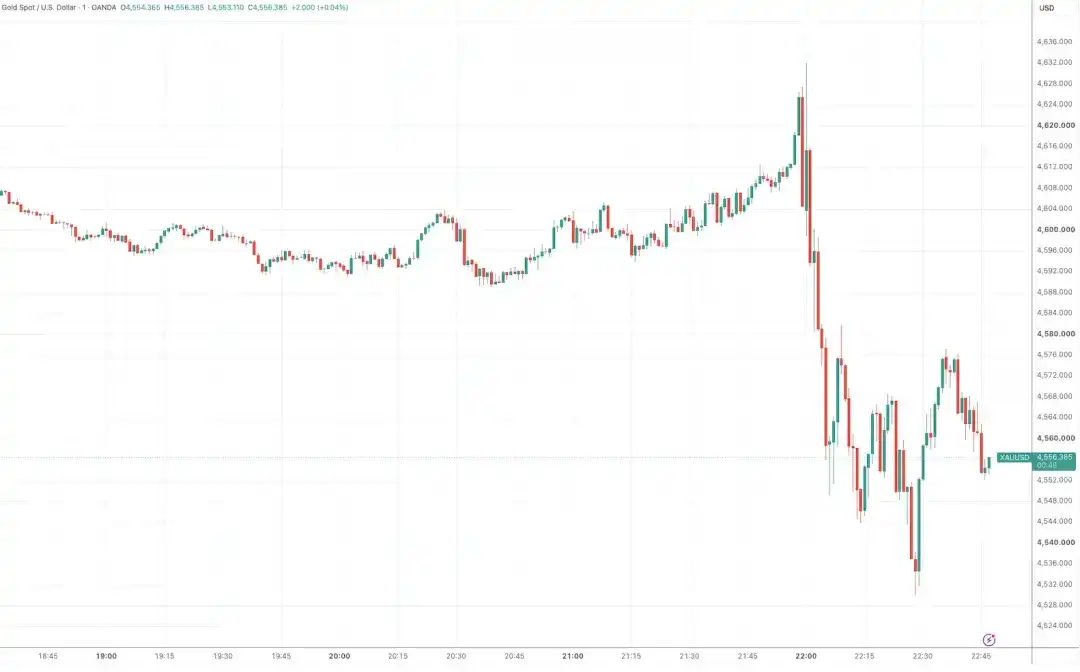
(Source: TradingView)

Below is the full translation of Warsh's speech (The speech transcript source is from the Federal Reserve official website, assisted by AI translation)


"In Our Time"

Federal Reserve Chairman Kevin Warsh

August 28, 2026

Remarks at the Economic Policy Symposium "Financial Innovation: Implications for Payments and Policy" in Jackson Hole, Wyoming. The symposium is hosted by the Federal Reserve Bank of Kansas City.


Thank you. It's great to be back, and great to see so many familiar faces. I've been looking forward to this weekend — where else could be more fitting to mark my 100th day as Chair of the Federal Reserve?

For the gracious hospitality here, each of us owes thanks to Kansas City Fed President Jeff Schmid and his colleagues. Jeff, a sincere thank you to all of you.

Jeff and the other conference organizers have also arranged some recreational activities for later today. I suggest everyone be very careful in their choices.

As I learned years ago, there are two very different kinds of hikes you can take on the trails around Jackson Hole. I can sum up my past hikes with former Fed Vice Chair Don Kohn in two words: I survived. Those marathons of willpower—'death marches'—revealed a side of Don I was utterly unprepared for.

Then there's the other kind of hike—I'd associate that with my old colleague, former Fed Chairman Ben Bernanke. With Ben, the pace is far more leisurely, just a casual stroll along the winding paths of the Rockefeller Preserve.

So, before you set out, check your fitness level, and ask yourself: 'Is it a Kohn day or a Bernanke day?'

One of the best things about this gathering is that it helps us all clear our minds and think more clearly about the world and the era we inhabit. For me, this is the right place, and you are the right audience, to delve into the most important ideas.

"Innovation" is the theme of this conference. I believe that the public and the market, with their collective wisdom, have recognized that innovation in the way the Fed implements policy will help us achieve both maximum employment and price stability.

Let me briefly outline what I will cover this morning. You can call it an outline... or a hiking map... but please don't call it "forward guidance."

First, I'll discuss several long-term issues the Fed is examining, including the latest general-purpose technology—Artificial Intelligence (AI)—and where it might take the economy.

Then, I'll talk about the practice of forward guidance and the interaction between central banks and financial markets.

Next, I'll introduce some core principles that I believe should guide the implementation of monetary policy.

Finally, I'll discuss my assessment of the current economic situation.

Preparing for the Future Policy Environment

Against the backdrop of the ever-constant Teton Mountains, we gather here to examine an economic landscape that is anything but static.

Not so long ago—just before the 2008 crisis and for the subsequent decade—economists and policymakers were discussing "secular stagnation" and "global saving glut." A widely accepted view then was that there simply would not be enough attractive investment opportunities, and excess capital would sit on the sidelines for a long, long time. All the good things had already been invented. Therefore, economic growth would be sluggish and slow.

However, times have indeed changed. We have reached a historical turning point.

Take the most obvious example: Artificial intelligence—a name with 80 years of history now used to refer to the latest technological wave—is advancing even faster than the most enthusiastic proponents predicted just a few years ago.

The potential for significantly higher economic growth is rising. An expanding pool of capital is pouring into all sorts of AI-related infrastructure. A kind of "super Moore's Law" seems to be at play. At the same time, scaling laws are changing the methods and speed of innovation.

Capital is combining with labor to create the large language models at the heart of AI. Users purchase tokens for access to these models. According to reports, the annualized token sales of just two leading AI labs have already exceeded $100 billion, an increase of more than 500% compared to a year ago.

The Federal Reserve is watching all of this closely. We recognize that AI is a new variable—and potentially a new factor of production—that will have implications for the economy and the implementation of monetary policy. This also opens up several major lines of inquiry:

Will the application of AI drive a significant and sustained increase in productivity across the economy? If so, when?

Will the use of tokens primarily complement labor or compete with it? Will the next generation of AI models require even higher capital intensity, or will the models themselves ultimately help design solutions that are less capital-intensive?

Other unresolved questions include what market structure will ultimately emerge. It is unclear where the returns to capital will ultimately accrue, nor how long this process will take. In the early stages, how much of the economic surplus will flow to the owners of scarce assets—AI labs, chip manufacturers, energy producers, and cloud providers? Over time, how much value will ultimately accrue to businesses and consumers? What do these changes mean for workers? And what are the broader implications for the employment goal within the Fed's mandate?

Similarly, we don't yet know what the equilibrium price for tokens will be. Will different types and qualities of tokens emerge in the future, such that people are willing to pay increasingly higher prices for access to the most cutting-edge, best models? Will the price of tokens for older-generation models eventually fall to their marginal cost?

We will delve into these questions with the help of a "Productivity and Employment Working Group." I recently had initial conversations with the leads of this group and four other working groups, and their progress is encouraging.

To be clear, however, recommendations from these groups will be submitted in the future and will not influence decisions we make in the current policy environment. But I believe that investing in such thinking today, for tomorrow's policy challenges, will leave us much better prepared.

Forward Guidance and Alternatives

While these working groups do their work, I have not been idle. I have already begun to foster innovation at the Fed, to truly adapt the institution to its mandate. To give one example, I have taken steps to alter the form and function of what's known as the Federal Reserve Chair's "forward guidance." As you may know, I have long felt uneasy about announcing future policy decisions prematurely. I lean towards a different path... and I'll explain why.

Transparent communication about future policy decisions is not a virtue in itself. Communication must serve the Fed's most important responsibility: getting monetary policy right.

During the global financial crisis, my colleagues and I at the time established forward guidance as a regular practice. At that time, it was essential, and we rolled it out with fanfare. But like other legacies from past crises, I believe this practice has outlived its usefulness.

In normal times, the role of forward guidance should be limited and clearly bounded. Otherwise, it can create confusion in the name of seeking clarity. Excessive disclosure of policy discussions and making too many commitments about future policy decisions can mislead markets, businesses, and households. And I believe that when policymakers make near-commitments about interest rates across the business cycle, we actually limit our freedom to make the right choice at the moment a decision is truly needed.

To get policy right, we must also properly manage the relationship between financial markets and the central bank. The Fed needs clear market signals, and these signals should be as unfiltered as possible... including the internal structure of markets... the level and movement of asset prices across sectors... the price and trading volume of U.S. Treasuries... the foreign exchange value of the dollar... the cost and availability of credit... and the prices of a broad range of commodities.

These and other indicators should help the Fed assess near-term economic activity and inflation prospects throughout the business cycle. They should also reveal the state of broader financial conditions... and the risks and uncertainties within the financial cycle.

At the same time, market participants themselves should be tracking real information across the economy. They should form their own judgments; form their own expectations about output, employment, and inflation; and always pay close attention to risk.

The Fed should be humble but never naive. The Fed plays a crucial role in the economy and markets, and our policy tools are powerful. We determine the path of short-term interest rates. Therefore, market participants will always try to predict our next move. But we should not foster a mechanism where market participants primarily decide their next trade by second-guessing the Fed.

The economics literature has long described this distorting effect: it's known as the "hall-of-mirrors problem." If markets rely heavily on Fed guidance, and the Fed in turn relies on market prices, then we are all more likely to be blind to new developments... more likely to be caught off guard when conditions suddenly shift... and more likely to make policy mistakes.

Ironically, market participants may not bear the greatest cost of the "hall-of-mirrors problem." Those most severely harmed are likely those without financial assets. If the Fed misjudges inflation and misjudges the economy, who suffers the most? Not the high-net-worth individuals in financial markets. The ones who ultimately have to face excessive inflation or suddenly unstable employment are the hard-working ordinary Americans.

So, if forward guidance is not suitable for normal times, shouldn't the new Fed Chair at least promise a clear reaction function? Certainly, he should tell us where rates would go if the data came in clearly hot or cold.

I wish our understanding of the economy were precise enough to offer a mechanical, fail-safe answer—like a simple rule akin to the Taylor rule. But our knowledge is far from that point—at least not yet—and the most important factors determining appropriate monetary policy themselves change over time.

Demonstrating the Fed's reaction function through predictions works better in theory than in practice, better in the lab than in real-world operations. I'm not the only one who has noticed this. For example, the forward guidance of 2021 likely slowed the Fed's subsequent policy response to high inflation.

During my tenure as Chair, my colleagues and I will strive to build more reliable models and more robust rules to guide policy decisions. We will undertake this work on the basis of the recognition that accurate economic forecasting remains a goal. As geopolitics, global supply chains, and technology change at such a rapid pace, humility about what we can and cannot know is wise.

In the same spirit, we should fully listen to a diversity of views on any issue that might influence Federal Reserve monetary policy decisions. If our goal is optimal decision-making, we should not exclude differing views on the economy.

So, what's a better path for policy? In the rest of my remarks, I'll share some core principles that guide my thinking on the proper conduct of monetary policy... and then fulfill my promise to discuss my assessment of the economy.

Core Principles

On to principles...

First, I note that in our business, people often mistake yesterday's news for what is happening right now. The real challenge is distinguishing between the two. In other words, we must constantly test reality to ensure we are not making future-facing policy based on data that is already outdated or inaccurate. Nor should we rely on isolated data points. Trends are what matter most. The Fed is a decision-making institution. We must choose amid uncertainty, so the data we rely on must be as relevant, timely, accurate, and directly usable for decision-making as possible.

Second, the Fed acts to ensure that aggregate demand in the economy roughly aligns with aggregate supply. However, what we can directly observe is only economic activity itself. We can never directly see what is truly happening on the supply side; we can only infer. Therefore, the assessment of the balance between aggregate supply and aggregate demand, both current and future, is inherently imprecise.

Third, this must not be misunderstood in any way: the Fed's 2% price stability target, as measured by the personal consumption expenditures (PCE) price index, is a firm, fixed target. Another aspect of this target must also be made equally clear: price stability is not automatic, and inflation is not inherently mean-reverting. Achieving price stability is the Fed's job.

Fourth, the Fed is equally responsible for achieving maximum employment. Achieving the two goals of the dual mandate over the medium term is not an "either-or" proposition. I do not see the Fed's dual mandate as conflicting. After all, high inflation itself severely undermines economic prosperity.

Fifth, short-term interest rates are the primary policy tool for achieving the dual mandate. Unconventional policies aimed at stimulating economic activity may be appropriate for true crisis periods but should be used sparingly, if at all, in other circumstances.

Sixth, money matters. This view is not currently fashionable, but my view is that there is certainly an important relationship between money and monetary policy. We should pay attention to money created by the central bank, and also to money from the banking and financial system. Indeed, financial innovation and other factors change the mechanism connecting the monetary base, the velocity of money, and the broader economy. But this is no reason to ignore that money ultimately has an impact on financial conditions and prices.

Finally, a quieter, more purposeful Fed in communication will be better able to achieve its goals. And whether we have fulfilled our responsibilities can be held accountable—this is the only true standard for testing our credibility. To borrow a phrase from General Chuck Yeager: "When the moment of truth arrives, there are either explanations or results."

The Current Economic Situation

So, under these principles, how do I assess the economy today? What is really happening out the window?

As you may have seen from the July meeting minutes, the unanimous judgment of the FOMC is: a stable labor market, robust economic output, but inflation remains too high. The majority of my colleagues and I believe the wiser course is to wait for more new information between meetings—especially considering potential new developments in supply chains, investment flows, and geopolitics—before judging whether adjusting interest rate policy is appropriate. At the same time, we have also jointly indicated that we stand ready to act as needed based on the evolving situation.

Personally, I am impressed by the overall performance of the U.S. economy today, and it seems to have strengthened. One standard for judging a strong economy is how well it withstands shocks. From that perspective, both Main Street in the real economy and Wall Street in the financial markets have shown remarkable resilience.

A few observations:

Business capital expenditures—the "seed corn" for future economic growth—are growing rapidly. The four-quarter increase in equipment and intangible assets investment is about 9%, the highest growth rate since 2021. More than half of this year's capital expenditure growth can likely be attributed to AI-related infrastructure construction.

For S&P 500 component companies, profit growth over the past year exceeds 20%. Compared to historical levels, corporate profit margins are quite high. Overall stock market volatility is low. We are closely watching market internals, observing performance across sectors.

Market expectations for future growth in capital expenditures and corporate earnings are quite high. I will continue to observe the changes in their growth rates themselves, the so-called "second derivative." The follow-on effects—including on asset prices, business confidence, consumer income, and consumer spending—are also important.

Credit spreads for both corporate bonds and leveraged loans are near the low end of their historical ranges, and issuance volume in these markets this year has been quite strong. Stepping outside fixed income and looking at banking, the July Senior Loan Officer Opinion Survey shows banks telling us that credit standards for commercial and industrial loans are currently at the relatively easy end of the historical spectrum. This also helps explain why such lending has grown this year. Credit and lending markets show little sign of being constrained by monetary policy.

Certain sectors—such as housing and agriculture—are indeed under pressure. But overall, I would find it difficult to characterize broad financial conditions as "restrictive."

Despite various shocks, real consumer spending remains healthy, growing over 2% in the past four quarters. Combining consumption with the strong investment we observe, private domestic final purchases (PDFP) have also grown. Year-to-date, PDFP growth is close to 3%. Compared to Gross Domestic Product, this indicator typically contains stronger economic signals, and the trend it currently shows is also positive.

On the employment side of the Fed's dual mandate, the U.S. is currently performing well. The labor market is quite stable. The unemployment rate is currently 4.1%, still low by historical standards and has shown little significant change over the past few years. The four-week moving average of initial jobless claims—a time-tested, fairly robust real-time indicator—is currently near multi-decade lows.

In my view, the relatively low labor market turnover rate currently is partly due to a large-scale re-matching between employers and employees following the pandemic.

When labor supply is barely growing, monthly job gains will naturally be lower. There are always areas of the labor market worth watching—such as recently graduated young people. But overall, those who want to work are largely able to keep their jobs or find work. They may certainly worry about potential future disruptions in the labor market, but so far, I consider the U.S. labor market to be consistent with maximum employment.

But on the price stability side of our dual mandate, the data is more concerning. The Fed's preferred inflation gauge—the increase in the PCE price index over the past 12 months—is currently 3.7%, and the increase over the past six months annualized is 4.1%. Comparable measures for the Consumer Price Index (CPI) are also high, and both the core PCE and CPI inflation measures are elevated. None of these indicators is perfect, but they all tell a similar story: inflation remains above our 2% target. Therefore, the Fed's current primary focus should be on prices.

The policymaker's task is to identify underlying trend inflation, that is, the broad-based price changes across the economy after excluding various special, idiosyncratic factors. We need to judge whether underlying inflation is rising, falling, or stagnant. We want to understand not only the direction of change but also its speed. Each of the broad inflation measures mentioned has declined significantly compared to the 2022 peaks. But the progress made over the past two years has been quite limited.

Moreover, although the summer PCE and CPI data were better than expected, these data have not convinced me that a meaningful improvement in the underlying inflation trend has occurred.

The data show that wage growth is currently also moderate. But in tracking underlying inflation, wage growth has long not proven to be a reliable predictor of future inflation.

To assess underlying inflation, I find it very helpful to break down the 199 individual components of the PCE price index. Over the past 12 months, 54% of the items in the PCE basket had price increases exceeding 3%. This proportion is significantly lower than the post-pandemic peak of about 77%, but still well above the 20-year pre-pandemic average of 32%.

Looking at just the last six months, the conclusion is similar: 49% of the items in the PCE basket had annualized price increases exceeding 3%. Again, this is significantly lower than the post-pandemic peak but still at a fairly high level.

The recent rise in overall commodity prices is also noteworthy. We need to judge whether these current trends suggest upside risks to inflation.

Furthermore, whether the persistently elevated inflation data over the past five-plus years has seeped into people's expectations is also very important. The good news is that medium-term inflation expectation indicators overall remain stable. Inflation compensation measures in the swaps market also convey similar and strong signals.

Particularly in light of recent developments, market prices still reflect a confidence—a belief that we can achieve price stability. This reflects both the credibility of the Fed as an institution and aligns with the finest traditions of the Fed. And I can assure you... the market is right.

From the perspective of economic history, market-based inflation expectation measures have a characteristic: before they lose stability, they often appear very resilient, very solid. These expectations do not change easily, and currently they remain well anchored. But we must watch closely. Ensuring that inflation expectations do not become unanchored is the Fed's job.

There is one signal no one should miss: the sustained, elevated inflation over the past 65 months clearly lies at the feet of the central bank. And that is exactly where the responsibility should lie.

My criterion is: We must have confidence that underlying inflation is clearly and moving towards our target fast enough. Otherwise, we have more work to do. This is our work... our mission... and the responsibility we must fulfill.

Conclusion

Standing here today, I commit to a discipline, not to a specific policy decision.

In such a consequential era, my colleagues at the Fed and I are certainly not the first to hold these positions. We are determined to cherish the present and perform our duties to the highest standards we can achieve.

We approach our responsibilities with humility and firm resolve. Much depends on the choices we make. Sound monetary policy can help families and businesses thrive. When monetary policy is effectively implemented, it can expand and deepen the sources of U.S. economic growth... while helping to cement America's leadership in the world. And I know our country needs us to think carefully and act wisely.

It is a profound honor to serve the Federal Reserve again. For the encouragement and valuable counsel from my colleagues... and the support from many of you here today... I am deeply grateful. Thank you, and thank you for your patience this morning.


Trending Cryptos

Related Questions

QAccording to Fed Chair Kevin Walsh's Jackson Hole speech, what is his primary concern regarding the current US economy and the central bank's policy focus?

AFed Chair Kevin Walsh's primary concern is that inflation remains significantly above the Fed's 2% target. He emphasizes that achieving price stability should be the key focus of monetary policy at this time, stating, 'Our primary concern should be prices.' His standard is that the Fed must have confidence that underlying inflation is clearly and quickly moving toward the 2% target, otherwise 'we still have work to do.'

QWhat is Kevin Walsh's critique of 'forward guidance' during normal economic times, and what potential problem does he warn about?

AKevin Walsh argues that while forward guidance was essential during crises, its role should be limited and clearly bounded during normal times. He believes that prematurely signaling or nearly promising future policy paths can create a misleading 'hall-of-mirrors problem.' This is where markets price assets based on Fed guidance, and the Fed in turn looks to market prices for signals, potentially causing both sides to overlook new economic developments and increasing the risk of policy errors.

QBased on the speech, what is Walsh's assessment of current US financial conditions and their restrictiveness?

AWalsh finds it difficult to describe the broad financial environment as 'restrictive.' He points to strong corporate capital expenditures, high profit growth, low equity market volatility, narrow credit spreads, robust issuance in credit markets, and relatively accommodative lending standards per the Senior Loan Officer Opinion Survey. He concludes that credit and lending markets show little sign of being constrained by monetary policy.

QHow does Chairman Walsh view the recent positive CPI and PCE inflation data from the summer?

AWhile acknowledging that the summer CPI and PCE data were better than expected, Walsh states that these data points 'have not convinced me that the underlying inflation trend has improved meaningfully.' He emphasizes the need to look at the broader trend and remains concerned that a high proportion of items in the PCE basket continue to show price increases above 3%.

QWhat long-term economic factor does Fed Chair Walsh highlight as a potential game-changer, and how is the Fed preparing for its impact?

AWalsh highlights Artificial Intelligence (AI) as a potential new factor of production that could significantly impact the economy and monetary policy. He notes the rapid growth in AI-related infrastructure investment and token sales. To prepare, the Fed has established a 'Productivity and Employment Task Force' among other working groups to study AI's effects on productivity, labor markets, market structure, and its implications for future policy challenges.

Related Reads

Access to Active Sessions Instead of Databases: How the Shadow Market in Russia Has Changed

The Russian cybercriminal underground is shifting from selling massive, stolen corporate databases to trading active, short-term access to user accounts, according to a 2026 report. The value of information intercepted directly from infected devices by malware has risen nearly 13% in a year. Attackers now sell packets containing active session tokens (bypassing passwords and two-factor authentication), live email credentials, VPN and cloud storage logins, and corporate network access. A subscription for a steady stream of fresh data costs $250-$300 per month, far exceeding the value of outdated archives. While Russian regulators have successfully penalized companies for data leaks from centralized storage—with no repeat violations recorded after imposing turnover fines—this framework fails against the new threat model. Malware now steals data *after* it leaves the corporate perimeter and is on a user's personal device, a legal grey area. In 2026, 60% of studied web attacks aimed to steal keys for infiltrating corporate infrastructure. The situation mirrors global trends, akin to the Genesis Market shutdown in 2023, and highlights a structural risk: the demand for "fresh" data incentivizes botnet operators to maintain long-term control of infected devices for recurring revenue. This creates a persistent vulnerability layer between personal devices and corporate networks, currently outside the reach of existing regulatory protections.

cryptonews.ru4h ago

Access to Active Sessions Instead of Databases: How the Shadow Market in Russia Has Changed

cryptonews.ru4h ago

SlowMist Flags Fake Qwen 3.8 27B GitHub Repository Concealing StealC Information

SlowMist has identified a fake GitHub repository impersonating Alibaba's Qwen 3.8 27B AI model, which contains an information-stealing virus. The repository, created in August 2026, offered a download file of only 487 KB, far smaller than a legitimate 27-billion-parameter model (over 16 GB). The malicious ZIP file contained a Lua-based script disguised as a certificate, which deploys the StealC malware. Once executed, StealC harvests system data, takes screenshots, and steals browser credentials, cryptocurrency wallet information, and more, sending it to attacker-controlled servers. The malware also includes a backup system that can read new server addresses from the Polygon blockchain if the primary server is taken down. This incident is part of a broader campaign called FakeGit, active since March 2025, which has created thousands of malicious repositories. Approximately 800 of these specifically target AI tools using a method called AgentBaiting, sometimes tricking AI assistants into recommending them. Separate reports detail hundreds of other fake GitHub repositories spreading malware like BoryptGrab and campaigns like Megalodon that generate thousands of clones rapidly. Attackers copy legitimate projects, create convincing documentation, and even list them on public AI registries to appear trustworthy. The fake repositories exploit the high demand for open-source AI capabilities, putting users who run models locally at significant risk of data theft.

cryptonews.ru4h ago

SlowMist Flags Fake Qwen 3.8 27B GitHub Repository Concealing StealC Information

cryptonews.ru4h ago

Trading

Spot

Hot Articles

What is LINON

Linde plc Tokenized Stock (Ondo): Revolutionizing Traditional Equity Access Through Blockchain Innovation The emergence of Linde plc Tokenized Stock (Ondo), represented by the ticker $LINON, signifies a monumental shift in the fusion of traditional financial structures and decentralized finance (DeFi). This innovative financial instrument showcases the tremendous potential of blockchain technology to democratize access to traditional equity markets while ensuring the security and regulatory compliance necessary for institutional-grade financial products. Through Ondo Finance's pioneering tokenization platform, $LINON provides a seamless pathway for global investors to engage with one of the world's leading industrial gas companies, Linde plc, creating a blockchain-native representation of the underlying equity. Introduction to Linde plc Tokenized Stock The landscape of financial markets is witnessing a groundbreaking transformation through the tokenization of real-world assets. Linde plc Tokenized Stock (Ondo) epitomizes this revolutionary approach by bridging the gap between conventional stock ownership and blockchain-enabled financial infrastructure. The $LINON token allows investors to gain exposure to one of the prominent industrial companies worldwide through decentralized technology. Operating within Ondo Finance's comprehensive ecosystem, $LINON symbolizes a practical application of tokenization technology that enhances accessibility, efficiency, and global connectivity in traditional financial markets. By leveraging blockchain infrastructure, this tokenized stock enables international investors to participate in U.S. equity markets, overcoming traditional barriers associated with cross-border investing. The significance of $LINON goes beyond technological innovation; it represents a fundamental shift in asset structuring, distribution, and trading in the digital age. This tokenized stock maintains all the economic benefits associated with traditional Linde plc shares while offering improved liquidity, programmable compliance features, and seamless integration with decentralized finance protocols. The development of $LINON indicates a growing acceptance of blockchain technology as a viable means for traditional finance, exemplifying how even well-established assets like Linde plc can integrate into blockchain systems. This approach preserves the core attributes that appeal to investors while introducing advanced capabilities that enhance the overall investment proposition. Project Overview and Objectives Linde plc Tokenized Stock (Ondo) encapsulates a strategic effort to democratize access to traditional equity markets through advanced blockchain technologies. The primary objective of $LINON is to provide approved global investors seamless access to the economic exposure associated with Linde plc shares, furthering an effort to create a more inclusive financial ecosystem. Beyond the digital representation of traditional assets, $LINON endeavors to eliminate barriers of geography and time zones that limit investor participation. Its design ensures that blockchain technology can elevate traditional investment vehicles without undermining the security or compliance requirements expected by investors. Key goals of the project include enhanced liquidity provision, programmable compliance mechanisms, and interoperability with other blockchain networks. Each $LINON token is fortified by actual Linde plc securities housed at U.S.-registered broker-dealers, allowing holders to reap economic advantages akin to traditional stockholders, such as dividend reinvestment. Furthermore, $LINON aims to establish new industry standards for institutional-grade tokenized securities, paving the way for traditional assets to embrace blockchain technology while remaining compliant with regulatory frameworks. By associating itself with a company as reputable as Linde plc, the project opens avenues for exploring tokenized equities catering to both conservative institutional players and daring retail investors. Project Creator and Development Team The vision for Linde plc Tokenized Stock (Ondo) comes from Nathan Allman, founder and CEO of Ondo Finance. His background in traditional finance coupled with expertise in blockchain technology positions him uniquely to navigate the complexities of asset tokenization. Allman's academic journey began at Brown University, focusing on Economics and Biology, equipping him with valuable analytical skills. His time at Goldman Sachs in the Digital Assets division strengthened his understanding of the interplay between financial institutions and emerging technologies, laying the groundwork for his later endeavors in alternative investment strategies. Under Allman's guidance, Ondo Finance has emerged as a leader in asset tokenization, launching $LINON as a flagship example of the company's larger mission towards revolutionizing traditional financial systems using blockchain technology. His commitment to leveraging blockchain for creating institutional-grade financial products has shaped the landscape of real-world asset tokenization. Investment and Funding Structure The growth of Ondo Finance, the platform powering Linde plc Tokenized Stock (Ondo), is bolstered by robust financial backing from prestigious venture capital firms and strategic investors. This strong investment foundation underpins the development of the key infrastructure essential for compliant tokenized securities like $LINON. In August 2021, Ondo Finance secured $4 million in seed funding led by a major venture capital firm, which enabled the company to commence platform development and establish the necessary regulatory processes for tokenizing real-world assets. This early investment cemented Ondo Finance's credibility within the industry. The Series A funding round followed, garnering $20 million with participation from renowned firms committed to transformative technology companies. This backing demonstrated substantial institutional confidence in Ondo Finance's vision, allowing it to hone its approach to asset tokenization through mechanisms that ensure compliance and accessibility. Noteworthy contributors, including institutional investors and experienced partners, have added significant value to Ondo Finance’s development efforts. Their involvement underscores the confidence across sectors in Ondo Finance's approach to bridging traditional finance with blockchain innovations. Technical Infrastructure and Innovation The technical architecture that underpins Linde plc Tokenized Stock (Ondo) represents a sophisticated melding of traditional finance systems and cutting-edge blockchain technology. The architecture's foundation is built on the Ethereum network, renowned for its security and programmability—both critical for intricate financial instruments. The $LINON tokenization process comprises creating a blockchain-native representation of Linde plc shares that preserves economic benefits while augmenting investor capabilities. Each token corresponds to actual shares held at U.S.-registered broker-dealers, creating a compliant custody structure that legitimizes the asset's existence and value. Automated compliance systems are integrated into the tokenization process, managing critical components such as know-your-customer (KYC) verification and anti-money laundering (AML) protocols. This incorporation of programmable compliance empowers $LINON to uphold regulatory standards essential for institutional proliferation. Cross-chain interoperability characterizes the advanced technical features of $LINON. While initially deployed on Ethereum, the framework is designed for expansion to other networks such as Solana and BNB Chain. This adaptability enhances liquidity and accessibility, allowing investors to select their preferred blockchain ecosystems. Historical Timeline and Development Crafting the history of Linde plc Tokenized Stock (Ondo) unfolds in parallel with the evolution of Ondo Finance's tokenization platform. The timeline's inception dates back to March 2021 when Nathan Allman laid the foundations for creating institutional-grade financial products on blockchain infrastructure. The initial funding round in August 2021 provided crucial resources for developing the platform and establishing partnerships necessary for effective tokenization. By January 2023, Ondo Finance launched its tokenized treasury products, establishing mechanisms that would facilitate future tokenized equities such as $LINON. A pivotal milestone arose in February 2025 when Ondo Chain—a Layer 1 blockchain designed specifically for asset tokenization—was introduced. This infrastructure enhances capabilities vital for institutional markets, demonstrating Ondo Finance's long-term commitment to tokenization. Subsequently, the launch of Ondo Global Markets in September 2025 marked the official debut of $LINON. This milestone showcased the successful transition from development to active trading, enabling investors around the world to access American financial markets seamlessly. Ongoing development plans include a targeted expansion of available tokenized assets to over 1,000 by the end of 2025, pointing to a bright future for Ondo Finance's ecosystem and its mission to broaden tokenized equity accessibility. Regulatory Compliance and Legal Framework The legal architecture governing Linde plc Tokenized Stock (Ondo) emphasizes a sophisticated approach to regulatory compliance, allowing tokenized securities to be implemented within a blockchain-based framework. The legal structure governing $LINON spans multiple jurisdictions while maintaining a robust legal footing. Compliance systems ensure that only eligible investors can access the token, enforced through automated verification that aligns with international regulations. This innovative regulatory technology promises real-time enforcement of complex requirements, considerably enhancing efficiency in operating within the regulatory landscape. The custody framework undergirding $LINON ensures that the underlying shares are securely held at U.S.-registered broker-dealers, complying with necessary regulations while delivering blockchain-driven access to investors. The token maintains its economic equivalency and security through this carefully structured custody arrangement. KYC and AML compliance systems are embedded within the smart contract architecture, ensuring integrity and adherence to regulatory practices while fostering transparency for investors. The jurisdictional restrictions mark a commitment to navigating the evolving landscape of international securities laws. Market Impact and Industry Significance The advent of Linde plc Tokenized Stock (Ondo) holds profound implications for the broader financial landscape, symbolizing a clear shift towards blockchain-enabled markets. $LINON serves as a proof-of-concept for integrating traditional companies into blockchain ecosystems, showcasing the potential benefits such as broader accessibility and improved efficiency. The market's response to $LINON indicates a growing acceptance of tokenization among institutional investors, contributing to the emergence of an expanding sector wherein traditional assets can be interconnected with blockchain innovations. The success of $LINON further solidifies market confidence, indicating an overarching shift towards recognizing asset tokenization as a transformative force in finance. Future Development and Expansion Plans The future trajectory for Linde plc Tokenized Stock (Ondo) centers around the expansion of the tokenization ecosystem and enhanced infrastructure supporting blockchain-enabled financial services. Plans for cross-chain integration usher in new opportunities for liquidity and flexibility within the investment framework, with existing capabilities poised for continuous enhancement. With the introduction of Ondo Chain, Ondo Finance aims to transition $LINON to an optimized blockchain environment specifically designed for asset tokenization. This new infrastructure heralds exciting prospects for the development of institutional-grade financial products, ensuring ongoing compatibility with contemporary investment strategies. Further integration with decentralized finance protocols signifies a commitment to empowering $LINON holders through advanced financial strategies. The anticipated expansion of available tokenized assets promises to broaden investor access, enhancing the utility and appeal of the platform. In alignment with ambitions for regulatory expansion, ongoing efforts to secure approvals for new jurisdictions will enhance investor access, further positioning $LINON at the forefront of the burgeoning tokenization market. Conclusion Linde plc Tokenized Stock (Ondo), as represented by the $LINON token, stands at the intersection of traditional finance and blockchain innovation. It embodies a transformative milestone in how financial assets are structured, distributed, and engaged within modern investment ecosystems. The technical sophistication behind $LINON, combined with its regulatory compliance framework, illustrates that asset tokenization can improve financial infrastructure rather than simply digitizing existing products. This pioneering effort not only enhances investor access to U.S. equity markets but also signifies an evolution of how traditional financial services can integrate blockchain technology. As the asset tokenization market grows exponentially, with prospects suggesting significant valuation increases, $LINON paves the way for a future where tokenized securities become standard fixtures in the financial landscape. The trajectory of $LINON will undoubtedly influence how traditional finance adapts to a transformed, blockchain-powered world.

4.8k Total ViewsPublished 2025.12.05Updated 2025.12.05

What is LINON

What is CRMON

Salesforce Tokenized Stock (Ondo): Revolutionising Traditional Equity Access Through Blockchain Innovation The emergence of Salesforce Tokenized Stock (CRMON) marks a pivotal advancement in integrating traditional financial markets with blockchain technology. This innovative approach offers investors unprecedented access to equity exposure through tokenisation. Developed by Ondo Finance, CRMON provides tokenholders with economic exposure equivalent to holding Salesforce stock (CRM) while automatically reinvesting dividends. This effectively bridges the gap between conventional equity markets and decentralised finance (DeFi). Introduction and Comprehensive Overview of Salesforce Tokenized Stock In recent years, the financial landscape has dramatically transformed due to blockchain technology, fundamentally altering how investors access and interact with traditional assets. The development of Salesforce Tokenized Stock (CRMON) is a prime example of this evolution, representing a sophisticated fusion of conventional equity markets with cutting-edge distributed ledger technology. CRMON is a tokenised version of Salesforce stock, emerging from the innovative work of Ondo Finance, a leading platform in the real-world asset tokenisation sector that positions itself as a bridge between traditional finance and decentralised systems. Designed to provide tokenholders with economic exposure that mirrors the performance of the underlying Salesforce stock, CRMON incorporates automatic dividend reinvestment mechanisms. This eliminates many traditional barriers associated with international equity investment, such as complex brokerage relationships, currency conversion challenges, and restricted trading hours. The tokenisation process reimagines stock ownership as a blockchain-native asset while maintaining its economic equivalence with the underlying security, offering enhanced portability and integration capabilities within decentralised finance ecosystems. CRMON transcends its individual utility as an investment instrument to represent a fundamental shift in how financial markets can operate in an increasingly digital world. By maintaining full backing through U.S.-registered broker-dealers and implementing robust compliance frameworks, CRMON demonstrates that tokenised securities can achieve the regulatory standards necessary for institutional adoption while delivering the technological advantages of blockchain infrastructure. Understanding Tokenized Real-World Assets and CRMON's Strategic Position Tokenised real-world assets signify one of the most significant innovations in modern finance, fundamentally reimagining how traditional securities are represented, traded, and utilised within digital ecosystems. CRMON operates as a tokenised equity instrument correlating directly with Salesforce stock while optimising accessibility and efficiency. This aligns with Ondo Finance's broader mission to democratise access to institutional-grade financial products through innovative tokenisation strategies. The tokenisation process guarantees complete economic equivalence with the underlying Salesforce equity. Each CRMON token represents a proportional claim on Salesforce stock held by qualified custodians, with dividend payments automatically reinvested to maintain continuous exposure to total return performance. This structure simplifies dividend management and ensures that tokenholders receive the full economic benefit of their equity exposure, encompassing both capital appreciation and income generation. Ondo Finance's strategy in tokenising Salesforce stock demonstrates its expertise in creating compliant, institutional-grade products that meet traditional financial markets' stringent requirements. The platform’s focus on merging regulatory compliance with blockchain benefits positions it at the forefront of decentralised finance, captivating both institutional and retail investors seeking blockchain-native solutions. The Technology and Innovation Framework Behind CRMON The technological infrastructure supporting CRMON integrates blockchain technology with traditional financial mechanisms, delivering institutional-grade security and compliance while maintaining the operational advantages of decentralised systems. Built on the Ethereum blockchain, CRMON utilises robust smart contract capabilities to ensure transparent, secure operations. The smart contract architecture incorporates layered security and compliance mechanisms, enabling automated compliance checks and real-time asset backing verification. Integration with oracle services maintains accurate pricing and dividend information, ensuring CRMON reflects the underlying Salesforce stock's accurate performance. This architecture delivers automated dividend reinvestments and other corporate actions, eliminating manual processing requirements and directly enhancing tokenholder benefits. Ondo Finance ensures CRMON's security structure includes daily third-party verification of holdings, independent collateral agents, and a multiple-layer custody system through partnerships with established financial institutions. This framework safeguards tokenholder interests against operational risks while providing robust asset backing. The user interface enhances integration capabilities, allowing seamless interaction between CRMON and various decentralised finance protocols, as well as cryptocurrency exchanges. This interoperability enables users to leverage their tokenised equity across multiple platforms, creating sophisticated investment strategies that marry traditional equity characteristics with blockchain-native innovation. Leadership and Corporate Structure of Ondo Finance The leadership team behind CRMON and Ondo Finance blends expertise from traditional finance and blockchain technology, presenting a robust combination of skills essential for successfully bridging conventional markets with decentralised finance. Nathan Allman, the founder and CEO, emerged from a distinguished financial background before establishing Ondo Finance in 2021. Allman's experience includes notable roles at major financial institutions, including significant contributions to developing cryptocurrency market services. His insights into regulatory compliance were paramount in developing products like CRMON that successfully unify traditional securities with blockchain technology. With a team of professionals boasting substantial experience in both conventional finance and blockchain sectors, Ondo Finance's leadership comprises diverse expertise that covers every aspect of tokenised asset development. Justin Schmidt serves as President and COO, contributing unique operational expertise, while Chris Tyrell brings essential compliance knowledge. Investment Landscape and Funding History The investment landscape surrounding Ondo Finance reflects significant institutional confidence in its mission to tokenise real-world assets. The company has raised substantial funds through various investment rounds, attracting leading venture capital firms and strategic investors that recognise the transformative potential of tokenised securities like CRMON. Notably, Ondo Finance completed a successful Series A funding round in 2022, led by well-known venture capital firms. This funding success validates Ondo Finance's innovative approach to creating compliant, institutional-grade tokenised products. In total, Ondo Finance has successfully secured substantial funding, raising significant capital for product development and market expansion, including a noteworthy token sale that reinforced its governance structure through the establishment of the ONDO token. The diverse composition of investors reflects broad market confidence in Ondo Finance's business model, demonstrating support from both traditional and blockchain-native organisations. Operational Mechanics and Technical Implementation The operational framework supporting CRMON exemplifies sophisticated integration of traditional financial mechanisms with blockchain technology. The technical implementation introduces multiple layers of security, compliance, and operational efficiency to meet institutional standards while enhancing accessibility. The tokenisation process begins by acquiring actual Salesforce stock through U.S.-registered broker-dealers, ensuring each CRMON token maintains direct correlation with the underlying equity performance. Smart contracts automate operational processes, including dividend reinvestment and corporate action processing, facilitating a streamlined user experience. The Minting and redemption processes allow authorised participants to manage CRMON tokens effectively. During U.S. trading hours, institutions can mint new tokens by depositing stablecoins that are used to purchase corresponding Salesforce equity. This structure maintains a tight correlation with underlying assets, enhancing liquidity and price discovery. Additionally, the infrastructure supports twenty-four-hour token transfer capabilities, providing CRMON holders with operations outside traditional market hours. This represents a significant advantage over conventional securities ownership, thus promoting integration with decentralised finance applications. Plans for cross-chain compatibility through partnerships signal further ambitions for CRMON's market reach. By expanding to other blockchain networks, Ondo Finance aims to enhance accessibility and user engagement with tokenised equity products. Timeline and Historical Development of Tokenized Equity Innovation The timeline of CRMON's development and Ondo Finance's broader tokenised capabilities demonstrates a systematic innovation process beginning with the company's founding in 2021. 2021: Ondo Finance is founded by Nathan Allman and co-founders, launching initial products focused on structured vault offerings on the Ethereum blockchain. 2022: The company completes substantial funding rounds—both equity and token sales—totaling significant capital and launching initial tokenised U.S. Treasury products. 2023-2024: Ondo Finance experiences substantial growth, establishing partnerships with major financial institutions while expanding its product offerings beyond fixed-income securities. February 2025: Ondo Global Markets is announced, marking the transition into equity tokenisation with plans for accessing over one hundred U.S. stocks and ETFs. September 2025: The official launch of Ondo Global Markets includes CRMON alongside other tokenised equity offerings, marking a significant evolution in Ondo Finance's product ecosystem. This timeline highlights the organisation's rapid growth and its capability to adapt its technological and compliance frameworks to accommodate different asset classes effectively while maintaining security and regulatory integrity. Regulatory Framework and Compliance Approach Ondo Finance's regulatory framework showcases a sophisticated compliance strategy, essential for achieving institutional adoption in the tokenised securities market. The company's strong partnerships with U.S.-registered broker-dealers promote adherence to Securities and Exchange Commission regulations and apply robust investor protections. Acquisitions, such as Oasis Pro—a registered broker-dealer—significantly enhance Ondo Finance's compliance capabilities, ensuring thorough alignment with existing regulatory structures. The company employs independent verification procedures that foster transparency, aiming for a solid performance standards reputation. Furthermore, Ondo Finance's commitment extends to international regulatory compliance, ensuring token access remains restricted to eligible investors while adhering to pertinent cross-border securities regulations. Comprehensive attention to tax implications and reporting requirements fortifies the security and compliance landscape of CRMON, ensuring that investor obligations remain manageable. Future Prospects and Market Positioning The forward-looking landscape for CRMON and Ondo Finance illustrates substantial growth opportunities driven by institutional adoption of blockchain technology and escalating demand for efficient alternatives to conventional securities ownership. Market projections indicate the tokenised asset sector could value multiple trillion dollars by 2030. With plans to scale CRMON offerings significantly and integrate it with a dedicated blockchain infrastructure—Ondo Chain—Ondo Finance aims to elevate its institutional-grade tokenised asset operations. Additionally, the development of strategic partnerships enhances distribution capabilities while establishing the company's credibility in the financial market. Furthermore, the integration of tokenised equity with decentralised finance protocols offers new potential for innovative financial products and strategies previously impossible with traditional securities. These factors underscore CRMON's positioning to effectively capture increased market share and deliver innovative solutions for international investment exposure. Conclusion Salesforce Tokenized Stock (CRMON) symbolises a transformative development within financial markets, successfully bridging traditional equity ownership with blockchain technology to create unprecedented accessibility for global investors. Through Ondo Finance's sophisticated tokenisation framework, CRMON provides complete economic exposure to Salesforce equity performance while enhancing operational advantages that exceed traditional ownership. The launch of CRMON reflects the broader evolution of financial markets towards blockchain infrastructures that maintain regulatory compliance while delivering increased efficiency. Ondo Finance's extensive approach to regulatory adherence, institutional-grade security, and technological innovation solidifies CRMON as a model for future tokenised securities, delivering access previously unattainable in conventional brokerage structures. As the tokenised asset sector continues to develop, CRMON is well-positioned to address historical inefficiencies in capital markets while providing investors with innovative solutions for accessing traditional securities. The outlook for CRMON looks exceptionally promising, supported by ambitious expansion plans, technological innovations, and strategic partnerships, thereby representing a pioneering model of modern financial infrastructure evolving through blockchain integration.

5.0k Total ViewsPublished 2025.12.05Updated 2025.12.05

What is CRMON

What is SHOPON

Shopify Tokenized Stock (Ondo): A Comprehensive Analysis of Real-World Asset Tokenization in Web3 This article delves into the Shopify Tokenized Stock (Ondo), recognised by its ticker symbol $SHOPON, exploring its implications at the intersection of traditional finance and blockchain technology. As a part of Ondo Finance's tokenized securities platform, Shopify’s tokenized stock exemplifies advancements in democratizing access to global capital markets through innovative digital assets. Introduction and Overview of Shopify Tokenized Stock (Ondo) Shopify Tokenized Stock (Ondo), or $SHOPON, portrays a pivotal innovation in the realm of tokenized securities, allowing investors to gain economic exposure akin to directly owning shares of Shopify Inc. This token, developed under the umbrella of Ondo Finance, not only provides investors with the ability to hold digital representations of the company’s stock but also integrates features such as automatic reinvestment of dividends. This advancement represents a substantial shift in the landscape of decentralized finance (DeFi), linking conventional equity markets with blockchain solutions designed to enhance accessibility, transparency, and liquidity. By eliminating geographical barriers and enabling 24/7 trading capabilities, $SHOPON is positioned as a bridge connecting traditional financial instruments and the emerging Web3 ecosystem. What is Shopify Tokenized Stock (Ondo), $SHOPON? The $SHOPON token serves as a digital manifestation of Shopify Inc.'s shares, engineered to provide a direct correlation to the underlying asset's performance. Through the utilization of blockchain technology, the token gives holders a mechanism to participate in the economic benefits associated with equity ownership, including capital appreciation and dividend distribution. The unique aspect of $SHOPON lies in its automatic dividend reinvestment mechanism, which allows returns to compound without necessitating active management by the investor. This feature inherently enhances its attractiveness as an investment vehicle, particularly for individuals seeking passive income growth alongside exposure to high-performing equities. The tokenization process is facilitated by the custody of actual Shopify shares through regulated intermediaries, ensuring that every $SHOPON token is verifiably backed by real equity. This structure empowers investors with the dual advantages of both traditional financial characteristics and the innovative benefits tied to blockchain technology. Who is the Creator of Shopify Tokenized Stock (Ondo)? The creator of Shopify Tokenized Stock (Ondo), Nathan Allman, is an experienced figure in the finance sector, formerly associated with Goldman Sachs. His rich background includes significant expertise in digital asset development, bridging the gap between traditional finance and cryptocurrencies. Allman’s educational journey, marked by studies at Brown University, provided him with a deep understanding of economics and biology, equipping him with analytical skills that inform his strategic vision. In 2021, he founded Ondo Finance, committing to developing tokenized securities that meet institutional-grade standards while leveraging blockchain's transformative capabilities. Under Allman's leadership, Ondo Finance has focused on creating compliant and innovative financial products that empower a diverse investor base. Who are the Investors of Shopify Tokenized Stock (Ondo)? The investment landscape surrounding Shopify Tokenized Stock (Ondo) is notably robust, underpinned by significant institutional support. Primarily, Pantera Capital stands out as a strategic partner through the Ondo Catalyst initiative, a $250 million commitment aimed at accelerating the development of on-chain capital markets. This partnership not only signifies institutional confidence in the potential of tokenized assets but also reinforces Ondo Finance's operational capabilities and market positioning. The funding pathways have included earlier rounds that amassed millions in seed funding and further structural investments, solidifying relationships with both venture capital firms and private investors. Moreover, the financial framework is complemented by strategic partnerships with established financial institutions and technology companies, enhancing Ondo’s infrastructure and operational expertise. How Does Shopify Tokenized Stock (Ondo), $SHOPON Work? At the core of $SHOPON's operational framework is a sophisticated system integrating traditional finance mechanisms with blockchain technology. The custody of actual Shopify shares ensures that token holders retain authentic economic exposure, safeguarding their investments in line with recognized legal structures. The smart contracts employed in managing $SHOPON handle various functions, including automatic dividend reinvestment and ownership transfer, offering instant settlement and increased liquidity, marking a significant departure from conventional trading systems plagued by multi-day settlement delays. By providing interoperability with other decentralized finance applications, $SHOPON empowers holders with potentially lucrative opportunities for advanced investment strategies, including lending and automated market making. This complex integration presents a unique value proposition, catering to both traditional and crypto-native investors. The innovative structure of $SHOPON also allows for real-time settlements and transactions documented on the blockchain, delivering unparalleled transparency and security—a major advancement over standard equity trading practices. Timeline of Shopify Tokenized Stock (Ondo) March 2021: Nathan Allman establishes Ondo Finance, initially focusing on decentralized finance yield optimization. August 2021: Completion of a $4 million seed funding round led by Pantera Capital. January 2023: Launch of initial tokenized treasury security products, laying the groundwork for future equity tokenization. July 2025: Announcement of the Ondo Catalyst initiative, a strategic investment program valued at $250 million, aimed at propelling the development of tokenization in capital markets. September 3, 2025: Launch of Ondo Global Markets featuring over 100 tokenized U.S. stocks and ETFs, including $SHOPON. Technical Implementation and Blockchain Infrastructure Shopify Tokenized Stock (Ondo) operates on a technical architectural framework that marries blockchain protocols with traditional financial custody arrangements. The ecosystem leverages Ethereum's smart contract capabilities, providing seamless transaction management while ensuring compliance with regulatory standards through established financial custodians. Central to this architecture are security measures and transparent transaction records that affirm the legitimacy of each tokenholder's economic stake. With automated features managed by intricate smart contracts, $SHOPON not only streamlines ownership transfers but also allows for the tactical reinvestment of dividends—a hallmark of modern investment strategies. Moreover, the incorporation of LayerZero technology facilitates cross-chain interoperability, making $SHOPON accessible across multiple blockchain environments while preserving its functional robustness. This forward-thinking technical design positions $SHOPON as an adaptable asset within the larger DeFi milieu. Regulatory Framework and Compliance Architecture $SHOPON's regulatory framework is built upon the meticulous navigation of existing financial regulations that govern securities. The custody arrangements for the underlying Shopify shares are managed by U.S.-regulated broker-dealers, ensuring compliance and protection for investors. By maintaining a separation between the blockchain tokenization process and traditional custody, $SHOPON adheres to legal requirements while offering innovative functionalities that challenge conventional constraints. This dual-layered compliance approach enhances investor confidence and underscores Ondo Finance's commitment to regulatory integrity. Notably, the availability of $SHOPON is tailored to international investors from regions such as Asia-Pacific, Europe, and Africa, as regulatory parameters in the U.S. and U.K. present challenges in accessing tokenized securities. Market Access and Global Distribution Strategy The distribution strategy of $SHOPON is keenly designed to optimize global access while conforming to regulatory standards. The platform aims to establish comprehensive coverage for eligible investors across multiple regions, effectively dismantling traditional barriers through the implementation of blockchain technology. Integration with various cryptocurrency wallets and exchanges also promotes user-friendliness and accessibility, establishing a streamlined experience for investors to manage their holdings. Moreover, the 24/7 trading capabilities afforded by the tokenized model allow participants to react promptly to market shifts, fundamentally transforming how global equities are accessed and traded. Technology Integration and Cross-Chain Functionality The remarkable technological underpinnings of $SHOPON propagate its multi-chain functionality, set to expand its reach beyond Ethereum to networks such as Solana and BNB Chain. Such cross-chain capabilities allow users flexibility when navigating between blockchains, concurrently leveraging distinct network attributes to optimize their trading experience. LayerZero serves as the backbone for ensuring decentralized transfers between networks while providing the requisite security and speed, quintessential for maintaining investor trust. This comprehensive interoperability illustrates $SHOPON's commitment to being a versatile, user-centric asset in the evolving investment landscape. Ecosystem Integration and DeFi Compatibility Incorporating $SHOPON into broader DeFi protocols signifies its potential beyond traditional stock ownership. Token holders can leverage their holdings for various sophisticated strategies and applications, enhancing investment returns and liquidity management. By establishing a presence in lending protocols and automated trading systems, $SHOPON effectively democratizes access to advanced financial strategies previously limited to institutional investors. Such integration contributes to a more competitive and dynamic financial landscape, where individual investors can capitalize on tools typically reserved for larger entities. Risk Management and Security Framework Security remains paramount in the operational infrastructure of $SHOPON. The tokenization framework employs multiple layers of protection—beginning with regulated custody of the underlying Shopify shares. The operational protocols establish rigorous auditing, key management, and transaction monitoring standards, thus safeguarding against potential vulnerabilities. Moreover, meticulous adherence to evolving regulatory requirements provides an extra layer of security, fortifying investor protections and institutional compliance. Market Impact and Industry Implications The introduction of Shopify Tokenized Stock (Ondo) heralds a transformative shift in how financial markets operate, emphasizing the potential of tokenized securities to reshape traditional investment paradigms. The successful integration of $SHOPON encapsulates the efficiencies inherent in blockchain technology and opens avenues for new user demographics previously barred from extensive market participation. The impact extends beyond the immediate benefits to token holders, indicating broader trends that may challenge the status quo of investment services, particularly in addressing geographic restrictions and operational costs typically associated with traditional brokerage platforms. Undeniably, $SHOPON encapsulates the potential for traditional institutions to innovate further, leveraging the increasing demand for seamless blockchain access to complement existing financial infrastructure. Future Development Roadmap and Strategic Vision As Ondo Finance looks forward, the trajectory of $SHOPON rests on ambitious goals aimed at broadening the spectrum of available tokenized assets significantly. Over the next few years, plans are in place to expand to more than 1,000 tokenized securities, further enhancing market participation and investment options for individuals worldwide. Continued integration with traditional financial actors, development of specialized institutional products, and enhancements in automated trading capabilities will ensure that $SHOPON maintains its position at the forefront of financial innovation. Regulatory collaboration will also remain a focal point, establishing a framework that not only supports the compliance requirements but also promotes a healthy environment for tokenized asset proliferation. Conclusion and Market Significance In summary, Shopify Tokenized Stock (Ondo), represented by the ticker $SHOPON, is more than merely a tokenized equity offering; it embodies the innovation possible when traditional finance collides with modern blockchain applications. With a robust technical architecture, a commitment to compliance, and a clear strategic vision, $SHOPON exemplifies the potential for tokenized assets to enhance liquidity, accessibility, and functionality in capital markets. As the global investment landscape evolves, the transformative implications of $SHOPON extend beyond individual investors to revolutionize how financial instruments are perceived, traded, and utilized within both traditional and decentralized frameworks.

4.9k Total ViewsPublished 2025.12.05Updated 2025.12.05

What is SHOPON

Discussions

Welcome to the HTX Community. Here, you can stay informed about the latest platform developments and gain access to professional market insights. Users' opinions on the price of ERA (ERA) are presented below.

活动图片