Three voting proposals have been initiated in the Solana network concerning governance, $SOL disinflation, and restructuring of base fees.
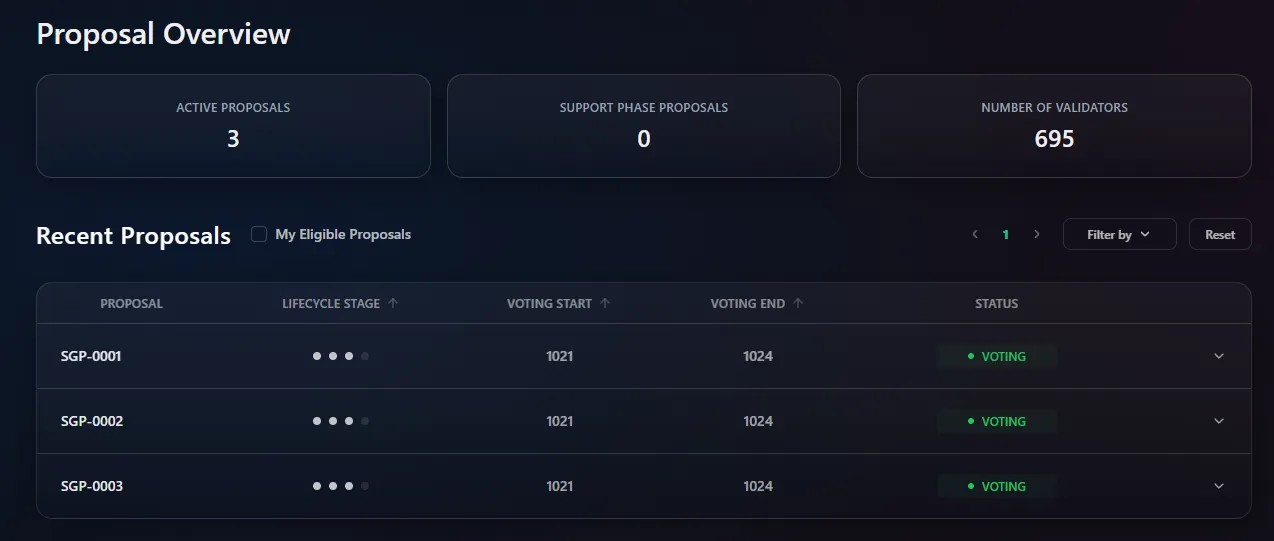
SGP-0001 (The Solana Constitution) proposes ratifying a "constitution" as the foundational governance document for the blockchain. If approved, the already deployed on-chain system svmgov will be activated.
The initiative will also establish two types of proposals: SIMD for technical changes and SGP for decisions on economics and architecture.
The support threshold for a proposal is 15% of coins locked in staking. The minimum stake for a validator-initiator is 100,000 $SOL, and the quorum is 1/3 of the stake. The voting period will last three epochs, and delegators will be able to override their validator's vote.
SGP-0002 (Double Disinflation) proposes accelerating the reduction of $SOL inflation by increasing the annual disinflation rate from 15% to 30%. This is intended to halve the time to reach the terminal inflation rate of 1.5%.
According to the authors' estimates, if the proposal is adopted, the issuance will decrease by approximately 18.9 million $SOL over six years.
SGP-0003 (Resource and Inclusion Fee) envisions restructuring the base fee. Instead of a flat 5000 lamports, it is proposed to split it into a fixed block inclusion fee of 2500 lamports (fully received by the block leader) and a separate resource fee dependent on the transaction's load.
According to the concept, "light" operations will cost less than the current fixed rate, while resource-intensive ones will cost more. The authors estimate that the volume of burned coins could increase from approximately 650 $SOL to 1,500-9,000 $SOL per day.
One of the network's leading validators — DFDV — has already supported all three proposals.
$DFDV is the top validator voting in favor of SIMD SGP-0001, SGP-0002, and SGP-0003
— Parker (@TheOtherParker_) August 23, 2026
Looking forward to seeing the rest of the community come forward to cast their votes pic.twitter.com/z26s88m11x
Recall that on August 21, Solana developers activated the first stage of reducing the average slot time — from 400 to 350 ms — in the mainnet as part of implementing improvement proposal SIMD-0525.
end-content