Chen Danqing: I am in no position to have an opinion on this AI thing

marsbitPublished on 2026-08-19Last updated on 2026-08-19

Abstract

This article is an interview with Chinese artist Chen Danqing, who currently serves as the director of the Mu Xin Art Museum in Wuzhen. He discusses his role in managing the museum, which focuses on literary-themed exhibitions featuring figures like Dostoevsky, Shakespeare, and Chopin, rather than traditional visual art. Chen reflects on the museum's unique position within a tourist town, its challenges in engaging visitors who often seek personal advice rather than discuss exhibitions, and his general detachment from the contemporary art scene. He expresses skepticism about the overemphasis on art market prices, referencing the high auction sale of his early work, and shares his views on the abundance of art information available today. Regarding AI, Chen states he has no strong opinions, doesn't use it for his creative work, and humorously deflects questions expecting him to be an authority on the technology. The interview portrays him as a figure navigating museum management, public perception, and cultural commentary while maintaining a distance from mainstream art world trends.

"I have been painting, but I don't want to hold exhibitions. Apart from those few years of teaching, I have always been outside the 'art world'; the movements within the circle, I know nothing about. The short videos about me on the phone are all for selling products, but are any of the endless art world activities on the phone about me?"

Chen Danqing has been painting, but he no longer wants to hold solo exhibitions. He hasn't held one since 2019. Nowadays, most of his time is spent on "organizing exhibitions for others," or, as he puts it, inviting souls from centuries past to Wuzhen to let everyone have a look.

He and Mu Xin would never have imagined such a thing many years ago. In Chen Danqing's view, Wuzhen thirty-one years ago was a bit like a black-and-white movie, he wrote——"No one in 1995 knew that Wuzhen would undergo great changes."

In January 1995, Mu Xin arrived at his long-lost home—No. 186, Caishen Bay, Dongzha—and took many photographs. That autumn, Chen Danqing returned to China for a visit and also found his way here. At that time, the courtyard was in ruins, with a dilapidated factory building and several old rooms outside the workshop that had been vacant for years; the carved window frames were also brittle.

Chen Xianghong was the person who changed Wuzhen's fate, overseeing the protection of the ancient town and tourism development. After much persuasion from him, Mu Xin returned to Wuzhen in his later years, living in the "Wan Qing Xiao Zhu" built on the soil of his old home, spending the final days of his life there.

Many years later, the Mu Xin Former Residence Memorial was built on the site of his old home in Wuzhen's Dongzha, while about 1 kilometer away, the Mu Xin Art Museum in Xizha has already entered its 11th year.

At the request of Mu Xin and Chen Xianghong, Chen Danqing took on the responsibility of museum director; before this, he knew nothing about "literature exhibitions" or "art museum" affairs. When the Mu Xin Art Museum opened to the public in 2015, it was a period of dense emergence of private contemporary art museums, but Chen Danqing wrote——"I only regarded that as an illusion, observing from the sidelines. When the opening ceremony invited several heads of major museums to join in the fun, with hosts and guests holding wine glasses and mingling around tables, I found myself also entering this highly questionable illusion: what should I do?"

The museum's operation is shouldered by Wuzhen Tourism Company, so Chen Danqing wasn't worried then. The museum's external narrative is a special exhibition concept, partly hidden in *The Literature Memoirs*. What he needed to think about was three-dimensional space, to transform literary legends into exhibitions. Chen Danqing considers himself "not ambitious," but not completely without ambition either. "The real challenge is, I have to produce completely different exhibitions."

The loan fees for original works by Leonardo da Vinci and Cézanne, whom Mu Xin liked, were too expensive; bringing authentic works by Fan Kuan or Ni Yunlin to Wuzhen was also pure fantasy. A new idea emerged—why not follow the example of the Morgan Library & Museum in New York and borrow literary artifacts for exhibition. Thus, Nietzsche's letters, costumes from Shakespeare's plays, Beethoven's death mask... Western objects from centuries past arrived in this Eastern town, creating quite a "postmodern" feel. Visitors walking in can naturally sense their aura.

Art museums are not a "necessity" in people's lives. Located in the bustling Wuzhen, what possible inspiration could the Mu Xin Art Museum offer for people's lives?

Chen Danqing believes: "The inspiration of this museum is that a town can build a decent art museum for its own people. Xizha is a scenic spot, tourists pour in, and they drop by for a look. There's no need to 'persuade' them to come in and see."

Is art niche or mass?

When the Mu Xin Art Museum holds a special exhibition for someone, Chen Danqing likes to say, "So-and-so has arrived." Nietzsche, Lin Fengmian arrived; Shakespeare, Tang Xianzu arrived; Byron, Woolf, Wilde arrived; Tolstoy, Beethoven, Chopin, Pushkin also arrived.

Now the person who has come all the way from the north is Fyodor Dostoevsky—the "cruel genius" in Lu Xun's words, a writer who made Mu Xin feel "despair."

Do young people today still care about these things, events, and people from centuries ago?

"Who can assert: the masses, especially young people, will definitely detest a piece of Oscar Wilde's manuscript, Chopin's musical score, or Repin's portrait of Tolstoy?" In the museum notes, Chen Danqing mentioned his reflection on the "niche." "Currently, 'mass culture' seems 'correct,' while the value of the 'niche' is more like a configuration, and also constitutes a rebuttal. Who gets to define who is 'the masses'?"

He certainly also has moments of frustration. Sometimes, during the Q&A sessions of the museum's various sharing events, the audience doesn't ask questions related to the exhibition, preferring instead to discuss their personal anxieties.

Sometimes he tries hard to answer, sometimes he also shows a hint of irritation, "I hope you come here to ask some questions related to the exhibition." The documentary *Wind, Water, A Bridge* recorded this truthfully.
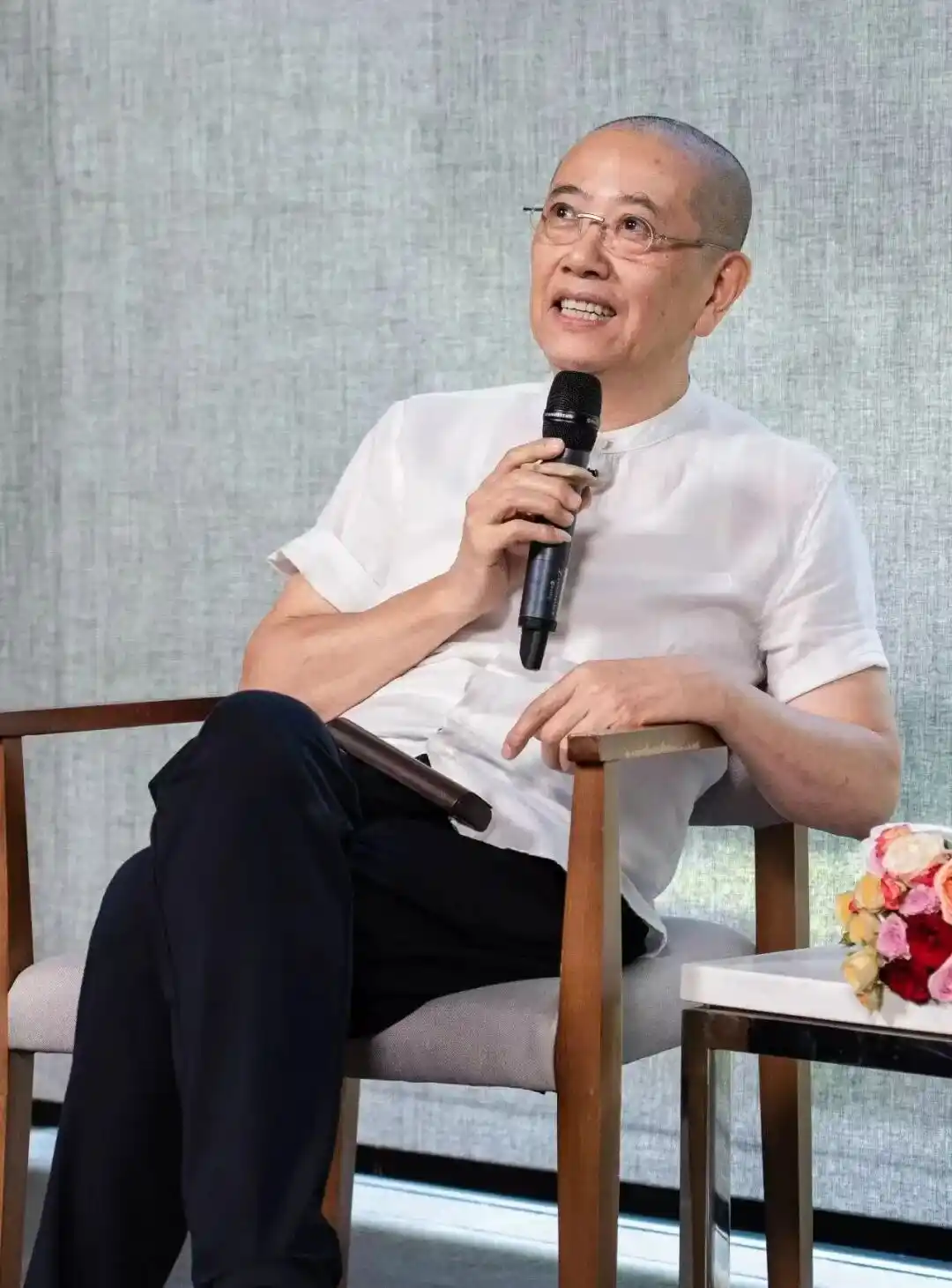
Chen Danqing at the sharing session for the documentary *Wind, Water, A Bridge*. (Photo / Provided by interviewee)

Over the past thirty years, the ecology of art museums has also changed. The present seems to be a "right moment," but also a "not-so-right moment." Art museums are more adequately prepared in terms of hardware and software than before. Traffic brings people to the museums, many focus on labels, check-ins, and their understanding of the content might be slightly lacking.

Meanwhile, the "niche track" of art has also seen various media content emerge. You cannot assert: people don't genuinely want to understand art.

There are many sharers, and Chen Danqing, who is "long out of the art circle," can still offer some fresh perspectives. Thus, he is repeatedly "pulled" and pushed onto the stage.

Before Shanxi's cultural tourism became as hot as it is today, he had already shared some perspectives on viewing Chinese sculpture with the audience. "Chinese sculpture from the 15th century is in no way inferior to Italian sculpture." Mentioning Chinese sculpture, people always seem to think of the Terracotta Army, the Tomb of Huo Qubing, Dunhuang. Chen Danqing shared the art in Shanxi's temples in a program: "When I suddenly saw these completely neglected Ming Dynasty sculptures, I felt that we already had our own mature, sophisticated set of modeling methods long ago, to express our own Chinese appearance."

Art also occasionally suffers misinterpretation during translation between East and West. The filming crew of the BBC documentary *Civilisations* once visited Wuzhen. "I was curious how Schama would interpret Chinese landscape painting from the Northern Song Dynasty onwards, using Mu Xin as the introduction in the 'Scenery' segment. The result, I'm sorry, was a bit off. Song and Yuan landscape painting is a visual system not easily understood by Westerners. I thus thought about the misinterpretations classical Chinese poetry might invite when translated into European languages. Cultural exchange is indeed based on countless misunderstandings. Conversely, I also reflected on how Western art has been misunderstood here." In the museum notes *You Are Still Here*, Chen Danqing reviewed.
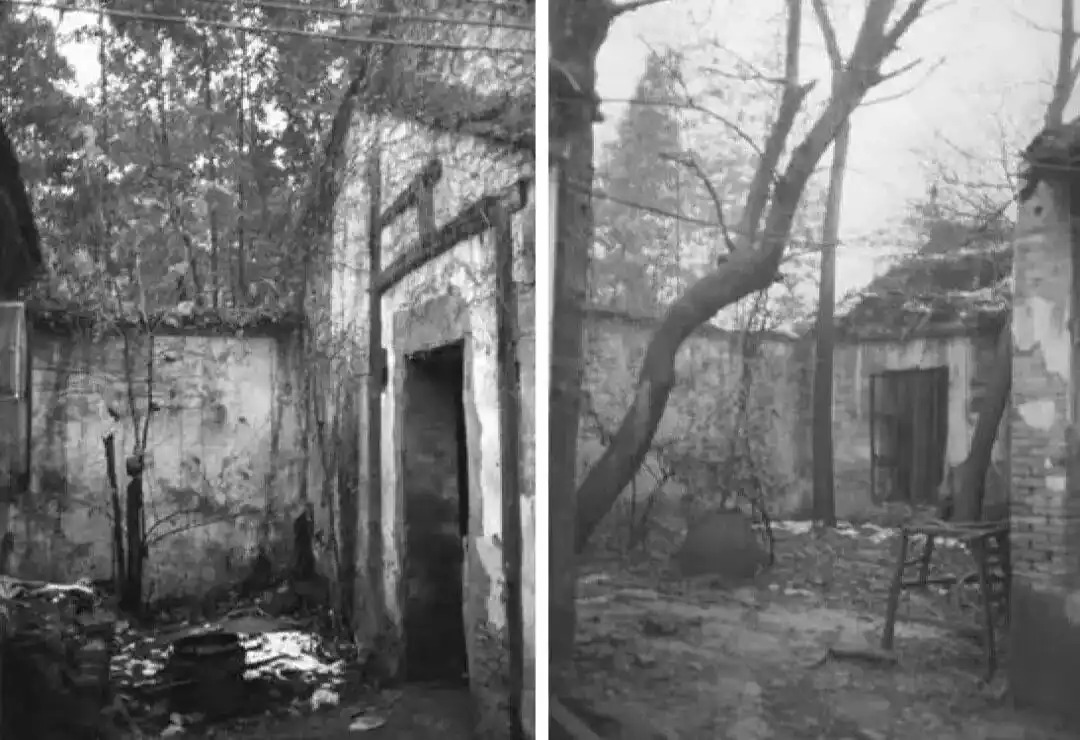
In January 1995, Mu Xin came to his long-separated home and took many photos.

But the point is: all misunderstandings begin with the desire to understand. The *Civilisations* team came to Wuzhen, China from the UK twice in the sweltering heat, which still moved Chen Danqing; the host Simon Schama was already the age Chen Danqing is now.

Operating outside the "art circle," in those years as an "outsider," Chen Danqing was still occasionally thrust into the spotlight, becoming the subject of news.

In 2021, *The Tibetan Series – Shepherd* sold for 161 million RMB at Beijing Poly's spring auction, setting a new auction record for Chinese contemporary art at the time. This painting was created in 1980, an early work by Chen Danqing, and had been sold as early as 2003. The later 160 million had nothing to do with him personally; that was a matter for the art market. But after being excerpted and fragmented by self-media, in the eyes of the public, he became deeply associated with "160 million."

He became one of the targets of gossip. AI arrived, robots arrived—Chen Danqing, who doesn't like browsing self-media, found himself again becoming material in rumors, with AI disguising itself as the voice of someone he knows, fabricating baseless gossip.

If Mu Xin were still here, how do you imagine he would comment? Chen Danqing answered: "Thank heavens, Mu Xin is gone. He couldn't stand this at all."

How do we imagine the meaning and possibilities of an art museum today? What changes have occurred in the content and dissemination of art over these thirty years? What does Chen Danqing think about the surging AI? Below is our written conversation with Chen Danqing.

I will not overestimate, nor dare underestimate, the public's passion

*New Weekly*: Art museums are not a "necessity" in people's lives. The Mu Xin Art Museum is located in a rural town. What is its special feature, or its inspiration for people's lives? How do you persuade people to enter an art museum?

Chen Danqing: The inspiration of this museum is that a town can build a decent art museum for its own people. Xizha is a scenic spot, tourists pour in, and they drop by for a look. There's no need to "persuade."

*New Weekly*: *Wind, Water, A Bridge* records the daily life of curating at the art museum. One episode mentions that you only grasped a bit of the knack for curating later on. What is this knack? From using paintings to tell stories, using *Partial* to tell stories, to using the art museum's space and exhibitions to tell stories, how can the story be told a bit better?

Chen Danqing: No knack, just moving from unfamiliarity to familiarity. Different media tell stories differently, with different effects. *Partial* and the art museum face the public. Whether the story is told well or not, we should ask the audience.

*New Weekly*: Recently, your museum held a special exhibition on Dostoevsky. I think a writer's universe is difficult to fully display in a physical space; displaying the psychological depth Dostoevsky excels at is even harder. In your view, how can you create a genuine connection between the writers you invite and the audience?

Chen Danqing: Yes, a writer's charm lies in their books, which are hard to exhibit. I only care that Dostoevsky actually appeared in Wuzhen—next year it's Kafka—I don't worry about a "genuine connection." I will not overestimate, nor dare underestimate, the public's passion for literature and writers. In my youth, there were no exhibitions at all. In a mountain valley, I secretly read Tolstoy. If an angel gave me a plane ticket and said, go see Tolstoy's former residence, I would have been ecstatic to the point of collapse.

*New Weekly*: The documentary also shows your moments of frustration—audiences come to the exhibition sharing session but don't ask about the exhibition, preferring to discuss their personal anxieties with you. Is this the norm? Are you afraid people treat this place merely as a tourist attraction?

Chen Danqing: Yes, there's no way. The human norm is to like talking about oneself. Fortunately, the art museum is situated in a tourist attraction. If our museum were located in Beijing or Shanghai, no one would come.
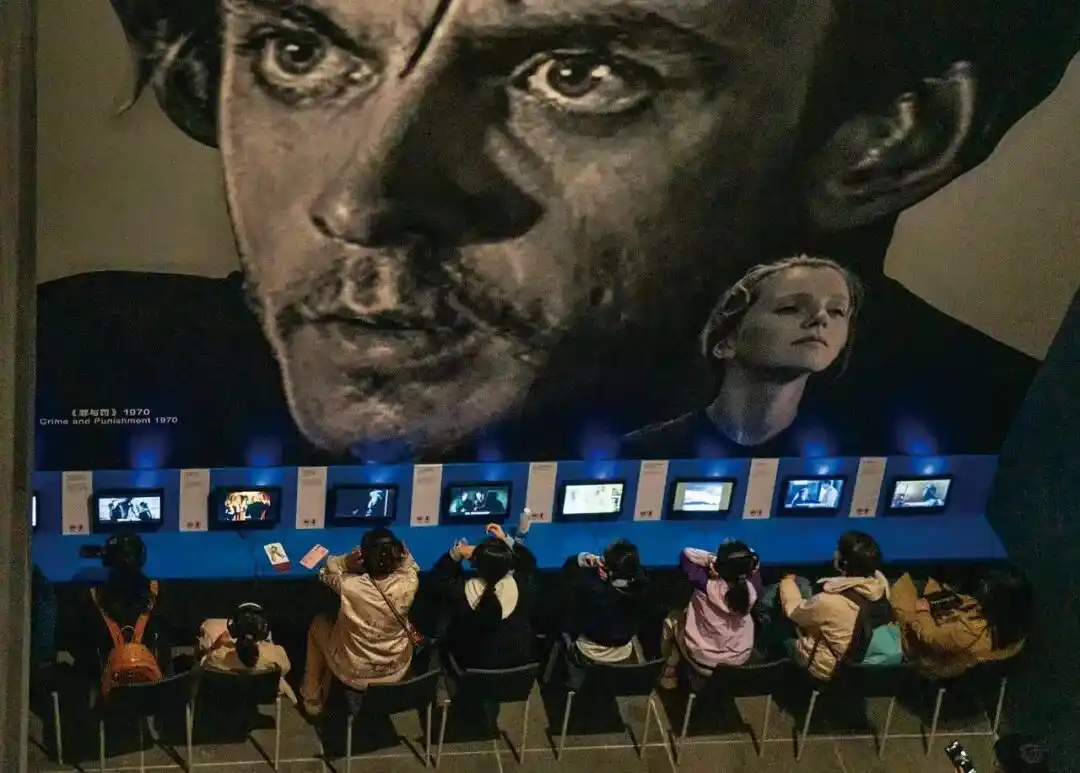
From April to August 2026, the Mu Xin Art Museum held the Dostoevsky Special Exhibition, themed "Dostoevsky: Man is a Riddle." (Photo / Provided by interviewee)

*New Weekly*: The livestream of the *My Brilliant Friend* sharing session was a rather wondrous moment for your museum? Over 2 million people watched the live stream. Did you anticipate such numbers? This also seems to be a rare phenomenon in art museum livestreams? Why Ferrante?

Chen Danqing: That time was due to the (COVID) pandemic, everyone was bored and helpless. It coincided with the popularity of Ferrante's TV drama at that time.

*New Weekly*: Recently, many women have been imitating *Lila in a Wedding Dress* (this image also appears in the special exhibition) to take graduation photos and upload them to social media. They may not be familiar with Lila's story, but want to express "Lila, I think you'd rather wear a graduation gown than a wedding dress" by imitating her. What is your view on this phenomenon?

Chen Danqing: No opinion. If I were a girl, I'd imitate too.

*New Weekly*: Taking it a step further, netizens may not understand art, but imitation itself may also imply an attitude. How do you view people imitating art?

Chen Danqing: Oscar Wilde said, life imitates art. This statement is far more profound than we understand. Wearing an item of Lila's clothing is trivial. Too many imitators of art have lost their lives because of it.

*New Weekly*: You like to say: "Shakespeare has arrived, Wilde has arrived, Woolf has arrived, Chopin has arrived, Repin has arrived, Tolstoy has arrived..." Do you have any ambitions regarding whom Mu Xin might have wanted to "invite" and whom you still want to "invite"?

Chen Danqing: The famous figures we have invited so far are only one percent of those mentioned in *The Literature Memoirs*. I have no ambition, only regret. You absolutely cannot invite half of China's ancient figures—Qu Yuan, Tao Yuanming, Du Fu, Cao Xueqin—not a single artifact remains. Furthermore, domestic museums absolutely refuse to lend us items for exhibition.
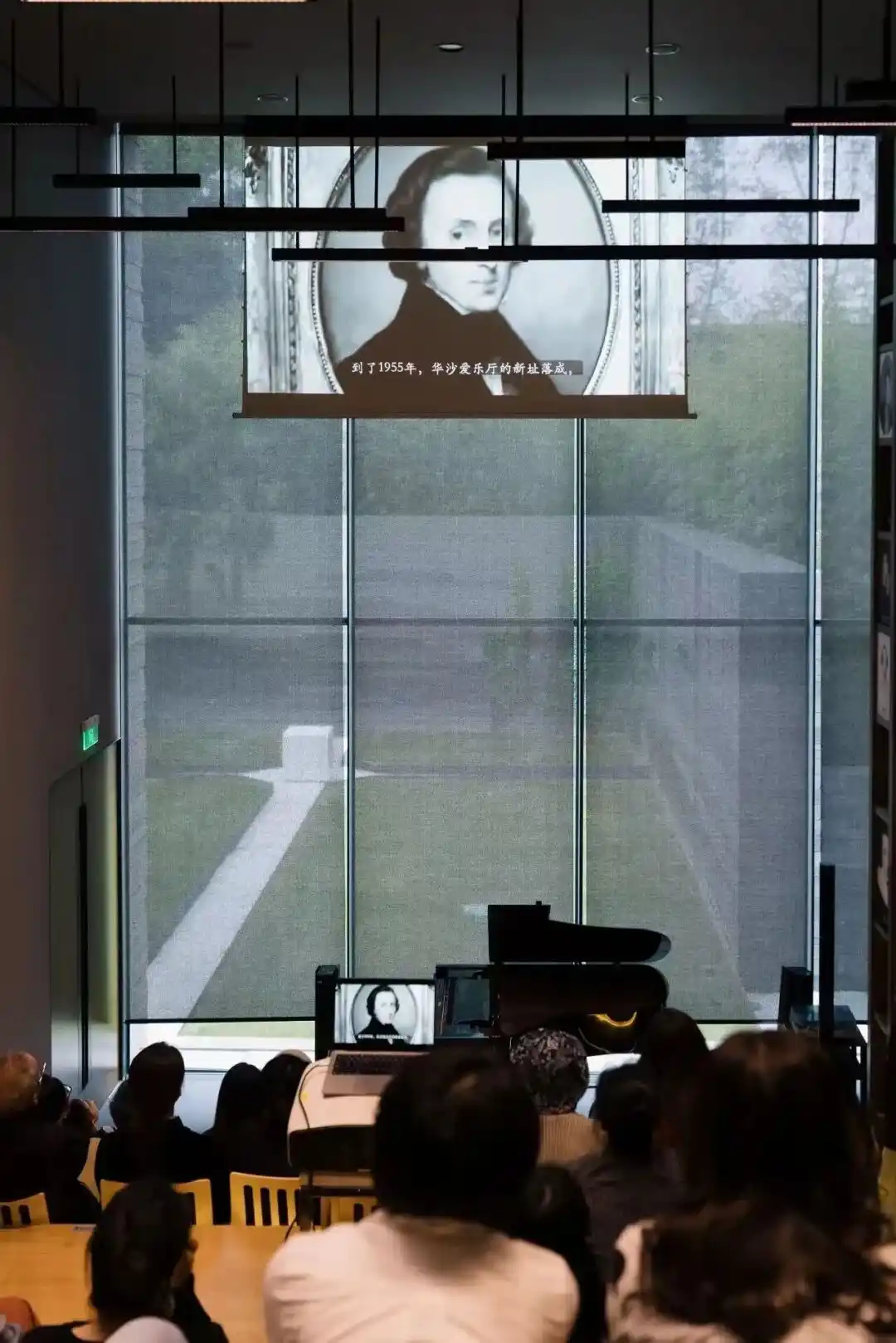
A screening of a documentary on Chopin at the Mu Xin Art Museum. (Photo / Provided by interviewee)

*New Weekly*: There are many lovely small-town/rural art museums in the world, like the Fondation Vincent van Gogh in Arles, the Musée Matisse in Nice. They restore part of the artist's life. Did the conception of the Mu Xin Art Museum refer to an ideal art museum? Or perhaps art museums don't need to be seriously distinguished by "positioning," the most important thing is that they are places for storytelling, for life?

Chen Danqing: My only association is the Morgan Library & Museum in New York, which has held many special exhibitions on world literary figures. There are all kinds of museums in the world—Coca-Cola cans, stamps, toys, dolls—anything you can think of, someone has turned it into a packed museum.

*New Weekly*: Currently, visitors "come for Mu Xin," citing stories fabricated by self-media or words you never said. Does this trouble you? If Mu Xin were still here, how do you imagine he would comment on this phenomenon?

Chen Danqing: It is troubling, but there's absolutely no solution. People like to hear gossip, to fabricate gossip. The era of equal rights, the era of self-media—these two arrived almost simultaneously—satisfying and stimulating a massive gossip discourse field. Thank heavens, Mu Xin is gone. He couldn't stand this at all.

Actually, there's no need for me to talk about art

*New Weekly*: After resigning in 2006, you shared your way of viewing through books and documentaries. *Partial* seems to be a re-viewing and supplement to art history, guiding people to feel the timeless charm of works, rather than a value defined by the market. In your view, is the future of public art education in China relatively optimistic, or far from sufficient?

Chen Danqing: *Partial* is an entertainment program, not an art history lecture, not "art education," let alone "supplementation." Compared to forty or fifty years ago, the changes and progress in the space for art dissemination in China are enormous. Actually, there's no need for me to talk about art. Everyone has a phone. As long as you love to watch and listen, it's overwhelming. There's too much information in the world. I also benefit endlessly.

*New Weekly*: In an interview eighteen years ago, you mentioned keywords for Chinese contemporary art—"ambition," "strength," "imagination." You said: "(From the 80s and 90s of the 20th century to the present), Western contemporary art has become cleaner, more beautiful, smarter, more diverse, but truly lacks wildness. Chinese contemporary art, a latecomer, therefore appears fierce and eye-catching." How do you look back on this comment? If you were to find keywords for art today, what would they be?

Chen Danqing: Things from eighteen years ago, treat them as from eighteen years ago. How popular *New Weekly* was eighteen years ago—who reads periodicals now?—As for contemporary artists, go ask them. They yearn for eighteen years ago, twenty-eight years ago, even thirty-eight years ago. "Yearning for it," that could probably be a keyword.

*New Weekly*: After the emergence of digital painting, what is the significance of hand-painted oil sketches today? If any.

Chen Danqing: Digital painting is digital painting. No opinion.

*New Weekly*: In 2019, after the solo exhibition "Retreat 1968-2019" was held in Beijing, you haven't held a new solo exhibition. Do you still paint these days? Does the title "Retreat" from the solo exhibition seven years ago also point to the distance between you and the art world itself—stepping back to observe?

Chen Danqing: I have been painting all along, but I don't want to hold exhibitions. Except for those few years of teaching, I have always been outside the "art world"; the movements within the circle, I know nothing about. The short videos about me on the phone are all for selling products, but are any of the endless art world activities on the phone about me?

*New Weekly*: In 2021, your work *The Tibetan Series – Shepherd* set an auction record of 161 million RMB. Later in an interview, you indicated that everyone misunderstood this information; some viewers tied your artistic value to the auction figure. It didn't seem to become good news, more like a burden. Did this affect your inner choices?

Chen Danqing: Choices? Choices about what? As mentioned earlier, I am one of the targets of gossip. Recently, AI impersonated the voices of Gao Xiaosong and Wang Shuo, one public account after another, some talking about me, all nonsense, ninth-rate fabrications.
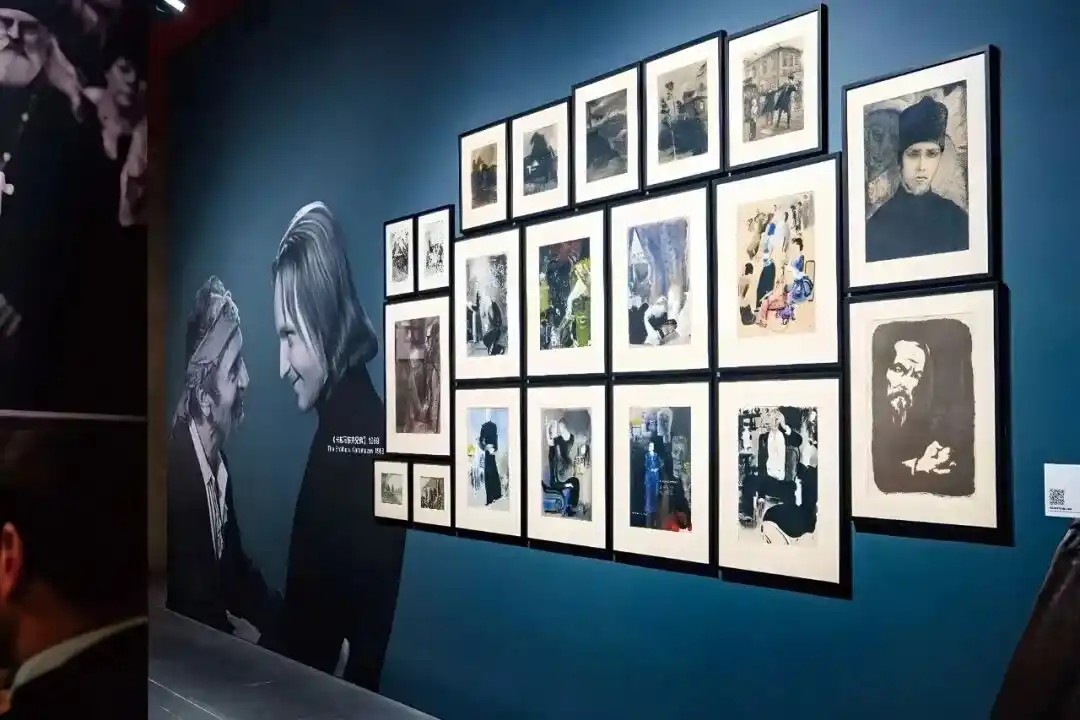
Series of illustrations for *The Brothers Karamazov*. (Photo / Provided by interviewee)

*New Weekly*: Over the past decade, has most of your time been spent on *Partial* and managing the art museum? Leaving the art circle to view purely, and leading others to view art, how does it feel? Have you ever doubted whether people truly need art?

Chen Danqing: *Partial* has long been discontinued. The art museum is my daily work. People certainly need art. In the era I grew up in, the exhibition halls of the National Art Exhibition were as crowded as the Beijing and Shanghai subways. People need something beyond daily life to distract themselves. At the very least, people love spectacles: art is considered a relatively high-level spectacle. Even in the middle of the night, do you know how many people are binge-watching dramas?

*New Weekly*: In the documentary sharing session, you said this might be the "right moment," but also a "not-right moment." Hardware and software are better, traffic has come, but people may lack understanding of the exhibition content itself. If one were to form a "right moment," what is lacking?

Chen Danqing: The country has become prosperous, but not yet prosperous enough to necessarily match art museums. But when real estate boomed, the "moment" was right, and art museums emerged. Now the "moment" is not right; real estate and art museums are declining simultaneously. This is a very Chinese thing.

*New Weekly*: You also pay attention to forgotten Chinese native art. You mentioned that "Chinese sculpture from the 15th century is in no way inferior to Italian sculpture." With the development of domestic cultural tourism, is it now a good time for the protection and re-viewing of Chinese native art? Are there still shortcomings? What other viewing clues are there?

Chen Danqing: It's still much more advanced than forty or fifty years ago. Shortcomings will always exist; take it slowly. Clues for viewing? Too many. Those Song Dynasty stone carvings that squat in the wheat fields of Henan all year round are too magnificent; there are many pushes on the phone.

*New Weekly*: In an article titled *Looking Back at Yuan Yunsheng*, you mentioned that in 1996, Yuan Yunsheng attempted to use the Chinese sculptural tradition to impact and subvert nearly a century of Western modeling basic education (copying Chinese sculptures and placing them in exhibition rooms of ancient Greek and Roman sculptures). This was considered an almost crazy effort at the time. Has the moment come for this "Don Quixote" to be understood?

Chen Danqing: Lao Yuan did the right thing. Han and Tang Dynasty sculptures' replicas should have been placed in all academies long ago. But this cannot change the current situation in any way. Drawing from Western plaster casts is no longer for so-called "basic education"; that's an industrial chain. Lao Yuan will not be understood. Don Quixote is a symbol of not being understood. Calling you "Mr. Quixote" means "Idiot! I don't want to understand you."

Mu Xin Former Residence Memorial. (Photo / Provided by interviewee)

Regarding AI, I am in no position to have an opinion

*New Weekly*: Assuming 2025 officially enters the "Era of Universal AI," what are your warnings and fears about this era (or changes in people)? In your conversation (with Zhong Shu), you mentioned that young people should either use their physical bodies to resist or quickly accept. If they choose the latter, what do you think will happen?

Chen Danqing: Did I say something like that? Whether young people choose or not, I have no opinion. Regarding AI, I am simply in no position to have an opinion. We haven't even seen its form clearly yet.

*New Weekly*: In a certain era, using one's body to collide with the world was a way of survival; the colors of fierce people were also the colors of the era. But now the environment has changed; a massive amount of information floods social media, conflicts become invisible in reality, and people becoming cautious seems to be a manifestation of rationalization and a form of self-protection. Two other colors of personality have emerged: one is called abstraction, the other is called escape. What is your view on these two colors?

Chen Danqing: One is abstraction (don't quite understand), the other is escape (also don't quite understand), and moreover, they are "colors"? Even less understood.

*New Weekly*: Recently, I saw your short video account "Chen Danqing Digressing." How did you decide to make short videos? Did you want to see if you could spread your own voice through short videos (instead of being maliciously edited)? Or were you "kidnapped" by young colleagues?

Chen Danqing: That's a short video account using my name, produced by "Idealist Media." For over twenty years, all the words I've written (those books), all the videos I've made (including *Partial*), have been acts of "kidnapping"—gentle, smiling, repeated "kidnapping." Struggle nine times, succumb once, and it becomes the situation you all see now.

*New Weekly*: Do you still not like browsing short video platforms? Do you use AI? Are you firmly opposed to using AI to assist in writing or artistic creation?

Chen Danqing: I won't let AI assist. Why give the joy of painting and writing to an assistant? The kids helped me download Doubao , I promptly forgot about it, and still haven't opened it to use it. This is the incurable state of an outdated "old-timer," not worth mentioning.

*New Weekly*: The emergence of AI has caused division in the art field. Some strongly oppose it, believing low-cost simulation is a derogation and insult to artists' work; some express that AI can be seen as a high-dimensional creative medium. What is your view?

Chen Danqing: No opinion.

*New Weekly*: What do you think AI can do to help art, culture, or artists and writers?

Chen Danqing: Sorry, looking at this entire interview, do you think I am Doubao ?

This article comes from the WeChat public account "New Weekly" (ID: new-weekly), author: Felicia, editor: You Lei


Trending Cryptos

Related Questions

QWhat is Chen Danqing's main role and focus at the Muxin Art Museum?

AAs the director, Chen Danqing focuses on curating exhibitions, often bringing historical Western literary and artistic figures (like Nietzsche, Shakespeare, Tolstoy) to the museum. He describes it as inviting centuries-old souls to Wuzhen, and his challenge is to create entirely different exhibitions.

QAccording to the article, why does Chen Danqing choose not to hold personal art exhibitions anymore?

AHe states he has been painting continuously but does not want to hold personal exhibitions. He feels he has always been outside the 'art world' and is not involved in its activities. He mentions that short videos about him online are only for marketing purposes.

QWhat is Chen Danqing's view on the public's interest in the historical figures and art featured in the Muxin Art Museum?

AHe believes he should neither overestimate nor underestimate the public's passion. He doesn't worry about whether visitors form a 'true connection' with the exhibitions. He cites his own youthful experience of desperately wanting to see places like Tolstoy's home as an example of genuine, deep-seated interest.

QHow does Chen Danqing respond to the phenomenon of audience members asking personal anxiety-related questions instead of exhibition-related ones during museum events?

AHe acknowledges this as a normal human tendency where people prefer to talk about themselves. While he sometimes tries to answer and other times expresses slight frustration, he accepts it. He is grateful the museum is located in a tourist spot, believing it wouldn't attract visitors if it were in a major city like Beijing or Shanghai.

QWhat is Chen Danqing's stated position on Artificial Intelligence (AI) and its impact on art?

AHe repeatedly states he has no opinion or is not qualified to have an opinion on AI. He says it's too early to see its true form. Personally, he wouldn't use AI to assist in painting or writing because he enjoys the process itself. He finds the suggestions that AI could help artists or writers somewhat amusing, implying he doesn't see himself as needing such a tool.

Related Reads

Frenzy Surrounding Unitree's Humanoid Robots Exceeds Hyperliquid Traders' Expectations

The Chinese robotics company Unitree Robotics made a highly anticipated debut on the Shanghai Stock Exchange on August 19, 2026. Its shares soared 629% above their IPO price, valuing the company at approximately $66 billion at the start of trading. This represents one of the most significant investor frenzies around physical AI—systems combining AI with robots. Prior to the listing, crypto traders on the Hyperliquid platform had already been speculating on the company's value through a perpetual futures contract, pegging its valuation at around $38 billion. The actual debut massively exceeded these crypto market predictions by about 75%. The contract's trading volume reached $64 million. Unitree, specializing in humanoid and quadruped robots, is now mainland China's first publicly listed humanoid robot company. It shipped over 5,500 humanoid units in 2025, leading global sales. The company's 2025 revenue surged to 1.7 billion yuan from 393 million yuan a year earlier, with a net profit of 278 million yuan and gross margins exceeding 60%. The IPO, which raised about 6.1 billion yuan ($905 million), reflects intense investor interest in the physical AI sector. JPMorgan estimates the humanoid robot market could grow from $2 billion in 2025 to $300 billion by 2035, with China holding about 75% of the global market share due to lower production costs. However, analysts warn of potential overvaluation, noting the stock's price far exceeds traditional financial metrics and is driven by retail speculation. The company faces the challenge of translating pilot projects and demonstrations into widespread commercial adoption. Strategic investors in the IPO included AI firm DeepSeek, Tencent, and units of major state-owned companies.

cryptonews.ru1m ago

Frenzy Surrounding Unitree's Humanoid Robots Exceeds Hyperliquid Traders' Expectations

cryptonews.ru1m ago

Why Didn't Oil Prices Stabilize Above $100 as Traffic Through the Strait of Hormuz Plunged Again?

Despite a significant drop in daily oil tanker traffic through the critical Strait of Hormuz in August, Brent crude oil prices have failed to stabilize above $100 per barrel, instead hovering around $90. This contrasts with traditional market logic, where a threat to a chokepoint handling roughly 20 million barrels per day (27% of global seaborne oil) should trigger a sustained supply risk premium. The article explains that the market is pricing in increased transit costs rather than an imminent, complete supply cutoff. Investors currently believe multiple buffers can absorb the shock: strategic and commercial inventories, the potential for coordinated stock releases, available OPEC+ spare capacity, and alternative export routes from the Gulf. Furthermore, workarounds like ship-to-ship transfers outside the Strait and route adjustments by buyers and shippers add resilience, though at a higher cost for insurance, financing, and longer voyages. The underlying U.S.-Iran tensions frame this reassessment as a problem of cost allocation across the supply chain. The price action suggests traders are awaiting clearer signals—such as a military escalation, sustained Iranian attacks, or stricter enforcement of secondary sanctions on buyers—before pricing in a worst-case, long-term disruption scenario. In the longer term, the episode is accelerating investments to reduce dependency on the Strait, such as expanded storage and pipeline infrastructure, which will embed higher costs into the energy system. While Brent may remain range-bound for now, the real-time impact of the Hormuz risk is likely appearing first in freight rates, insurance premiums, and regional product spreads like diesel crack margins. The stability of current prices depends on how much longer these existing buffers can effectively absorb the mounting transit costs and logistical friction.

marsbit51m ago

Why Didn't Oil Prices Stabilize Above $100 as Traffic Through the Strait of Hormuz Plunged Again?

marsbit51m ago

BONK Crypto Treasury Company Has Only $2.14 Million Cash Left, 70% of Revenue Comes from Founder's Own Platform

BONK Inc. (BNKK), the NASDAQ-listed company associated with the Solana meme coin BONK, reported stark financials for the first half of the year. While revenue skyrocketed 6,218% year-over-year to $5.5 million, the company posted a net loss of $7.88 million and its cash reserves plummeted to just $214,000. Its auditors issued a "going concern" warning, citing cumulative losses of $191.4 million, negative operating cash flow, and critically low liquidity. A critical detail is that $3.92 million, or 71%, of its revenue came from an "affiliate revenue share" with LetsBonk.fun, a meme coin launchpad. This platform is linked to founder Mitchell Rudy, whose entity, Lucky Dog Holdings, beneficially owns approximately 40.2% of common stock and all C Series preferred shares. These preferred shares grant the holder the right to elect half of the company's board. The company's financial structure is further intertwined with Rudy; it sold $50 million worth of stock to his entities, accepting payment in BONK tokens. Fluctuations in the value of these and other held digital assets led to an $8.17 million unrealized loss, the primary driver of the net loss. With operating cash outflows of $4.17 million for the half-year, the remaining cash covers roughly nine days of operations at the current burn rate, highlighting severe financial strain despite top-line growth.

marsbit1h ago

BONK Crypto Treasury Company Has Only $2.14 Million Cash Left, 70% of Revenue Comes from Founder's Own Platform

marsbit1h ago

Trading

Spot

Hot Articles

What is LINON

Linde plc Tokenized Stock (Ondo): Revolutionizing Traditional Equity Access Through Blockchain Innovation The emergence of Linde plc Tokenized Stock (Ondo), represented by the ticker $LINON, signifies a monumental shift in the fusion of traditional financial structures and decentralized finance (DeFi). This innovative financial instrument showcases the tremendous potential of blockchain technology to democratize access to traditional equity markets while ensuring the security and regulatory compliance necessary for institutional-grade financial products. Through Ondo Finance's pioneering tokenization platform, $LINON provides a seamless pathway for global investors to engage with one of the world's leading industrial gas companies, Linde plc, creating a blockchain-native representation of the underlying equity. Introduction to Linde plc Tokenized Stock The landscape of financial markets is witnessing a groundbreaking transformation through the tokenization of real-world assets. Linde plc Tokenized Stock (Ondo) epitomizes this revolutionary approach by bridging the gap between conventional stock ownership and blockchain-enabled financial infrastructure. The $LINON token allows investors to gain exposure to one of the prominent industrial companies worldwide through decentralized technology. Operating within Ondo Finance's comprehensive ecosystem, $LINON symbolizes a practical application of tokenization technology that enhances accessibility, efficiency, and global connectivity in traditional financial markets. By leveraging blockchain infrastructure, this tokenized stock enables international investors to participate in U.S. equity markets, overcoming traditional barriers associated with cross-border investing. The significance of $LINON goes beyond technological innovation; it represents a fundamental shift in asset structuring, distribution, and trading in the digital age. This tokenized stock maintains all the economic benefits associated with traditional Linde plc shares while offering improved liquidity, programmable compliance features, and seamless integration with decentralized finance protocols. The development of $LINON indicates a growing acceptance of blockchain technology as a viable means for traditional finance, exemplifying how even well-established assets like Linde plc can integrate into blockchain systems. This approach preserves the core attributes that appeal to investors while introducing advanced capabilities that enhance the overall investment proposition. Project Overview and Objectives Linde plc Tokenized Stock (Ondo) encapsulates a strategic effort to democratize access to traditional equity markets through advanced blockchain technologies. The primary objective of $LINON is to provide approved global investors seamless access to the economic exposure associated with Linde plc shares, furthering an effort to create a more inclusive financial ecosystem. Beyond the digital representation of traditional assets, $LINON endeavors to eliminate barriers of geography and time zones that limit investor participation. Its design ensures that blockchain technology can elevate traditional investment vehicles without undermining the security or compliance requirements expected by investors. Key goals of the project include enhanced liquidity provision, programmable compliance mechanisms, and interoperability with other blockchain networks. Each $LINON token is fortified by actual Linde plc securities housed at U.S.-registered broker-dealers, allowing holders to reap economic advantages akin to traditional stockholders, such as dividend reinvestment. Furthermore, $LINON aims to establish new industry standards for institutional-grade tokenized securities, paving the way for traditional assets to embrace blockchain technology while remaining compliant with regulatory frameworks. By associating itself with a company as reputable as Linde plc, the project opens avenues for exploring tokenized equities catering to both conservative institutional players and daring retail investors. Project Creator and Development Team The vision for Linde plc Tokenized Stock (Ondo) comes from Nathan Allman, founder and CEO of Ondo Finance. His background in traditional finance coupled with expertise in blockchain technology positions him uniquely to navigate the complexities of asset tokenization. Allman's academic journey began at Brown University, focusing on Economics and Biology, equipping him with valuable analytical skills. His time at Goldman Sachs in the Digital Assets division strengthened his understanding of the interplay between financial institutions and emerging technologies, laying the groundwork for his later endeavors in alternative investment strategies. Under Allman's guidance, Ondo Finance has emerged as a leader in asset tokenization, launching $LINON as a flagship example of the company's larger mission towards revolutionizing traditional financial systems using blockchain technology. His commitment to leveraging blockchain for creating institutional-grade financial products has shaped the landscape of real-world asset tokenization. Investment and Funding Structure The growth of Ondo Finance, the platform powering Linde plc Tokenized Stock (Ondo), is bolstered by robust financial backing from prestigious venture capital firms and strategic investors. This strong investment foundation underpins the development of the key infrastructure essential for compliant tokenized securities like $LINON. In August 2021, Ondo Finance secured $4 million in seed funding led by a major venture capital firm, which enabled the company to commence platform development and establish the necessary regulatory processes for tokenizing real-world assets. This early investment cemented Ondo Finance's credibility within the industry. The Series A funding round followed, garnering $20 million with participation from renowned firms committed to transformative technology companies. This backing demonstrated substantial institutional confidence in Ondo Finance's vision, allowing it to hone its approach to asset tokenization through mechanisms that ensure compliance and accessibility. Noteworthy contributors, including institutional investors and experienced partners, have added significant value to Ondo Finance’s development efforts. Their involvement underscores the confidence across sectors in Ondo Finance's approach to bridging traditional finance with blockchain innovations. Technical Infrastructure and Innovation The technical architecture that underpins Linde plc Tokenized Stock (Ondo) represents a sophisticated melding of traditional finance systems and cutting-edge blockchain technology. The architecture's foundation is built on the Ethereum network, renowned for its security and programmability—both critical for intricate financial instruments. The $LINON tokenization process comprises creating a blockchain-native representation of Linde plc shares that preserves economic benefits while augmenting investor capabilities. Each token corresponds to actual shares held at U.S.-registered broker-dealers, creating a compliant custody structure that legitimizes the asset's existence and value. Automated compliance systems are integrated into the tokenization process, managing critical components such as know-your-customer (KYC) verification and anti-money laundering (AML) protocols. This incorporation of programmable compliance empowers $LINON to uphold regulatory standards essential for institutional proliferation. Cross-chain interoperability characterizes the advanced technical features of $LINON. While initially deployed on Ethereum, the framework is designed for expansion to other networks such as Solana and BNB Chain. This adaptability enhances liquidity and accessibility, allowing investors to select their preferred blockchain ecosystems. Historical Timeline and Development Crafting the history of Linde plc Tokenized Stock (Ondo) unfolds in parallel with the evolution of Ondo Finance's tokenization platform. The timeline's inception dates back to March 2021 when Nathan Allman laid the foundations for creating institutional-grade financial products on blockchain infrastructure. The initial funding round in August 2021 provided crucial resources for developing the platform and establishing partnerships necessary for effective tokenization. By January 2023, Ondo Finance launched its tokenized treasury products, establishing mechanisms that would facilitate future tokenized equities such as $LINON. A pivotal milestone arose in February 2025 when Ondo Chain—a Layer 1 blockchain designed specifically for asset tokenization—was introduced. This infrastructure enhances capabilities vital for institutional markets, demonstrating Ondo Finance's long-term commitment to tokenization. Subsequently, the launch of Ondo Global Markets in September 2025 marked the official debut of $LINON. This milestone showcased the successful transition from development to active trading, enabling investors around the world to access American financial markets seamlessly. Ongoing development plans include a targeted expansion of available tokenized assets to over 1,000 by the end of 2025, pointing to a bright future for Ondo Finance's ecosystem and its mission to broaden tokenized equity accessibility. Regulatory Compliance and Legal Framework The legal architecture governing Linde plc Tokenized Stock (Ondo) emphasizes a sophisticated approach to regulatory compliance, allowing tokenized securities to be implemented within a blockchain-based framework. The legal structure governing $LINON spans multiple jurisdictions while maintaining a robust legal footing. Compliance systems ensure that only eligible investors can access the token, enforced through automated verification that aligns with international regulations. This innovative regulatory technology promises real-time enforcement of complex requirements, considerably enhancing efficiency in operating within the regulatory landscape. The custody framework undergirding $LINON ensures that the underlying shares are securely held at U.S.-registered broker-dealers, complying with necessary regulations while delivering blockchain-driven access to investors. The token maintains its economic equivalency and security through this carefully structured custody arrangement. KYC and AML compliance systems are embedded within the smart contract architecture, ensuring integrity and adherence to regulatory practices while fostering transparency for investors. The jurisdictional restrictions mark a commitment to navigating the evolving landscape of international securities laws. Market Impact and Industry Significance The advent of Linde plc Tokenized Stock (Ondo) holds profound implications for the broader financial landscape, symbolizing a clear shift towards blockchain-enabled markets. $LINON serves as a proof-of-concept for integrating traditional companies into blockchain ecosystems, showcasing the potential benefits such as broader accessibility and improved efficiency. The market's response to $LINON indicates a growing acceptance of tokenization among institutional investors, contributing to the emergence of an expanding sector wherein traditional assets can be interconnected with blockchain innovations. The success of $LINON further solidifies market confidence, indicating an overarching shift towards recognizing asset tokenization as a transformative force in finance. Future Development and Expansion Plans The future trajectory for Linde plc Tokenized Stock (Ondo) centers around the expansion of the tokenization ecosystem and enhanced infrastructure supporting blockchain-enabled financial services. Plans for cross-chain integration usher in new opportunities for liquidity and flexibility within the investment framework, with existing capabilities poised for continuous enhancement. With the introduction of Ondo Chain, Ondo Finance aims to transition $LINON to an optimized blockchain environment specifically designed for asset tokenization. This new infrastructure heralds exciting prospects for the development of institutional-grade financial products, ensuring ongoing compatibility with contemporary investment strategies. Further integration with decentralized finance protocols signifies a commitment to empowering $LINON holders through advanced financial strategies. The anticipated expansion of available tokenized assets promises to broaden investor access, enhancing the utility and appeal of the platform. In alignment with ambitions for regulatory expansion, ongoing efforts to secure approvals for new jurisdictions will enhance investor access, further positioning $LINON at the forefront of the burgeoning tokenization market. Conclusion Linde plc Tokenized Stock (Ondo), as represented by the $LINON token, stands at the intersection of traditional finance and blockchain innovation. It embodies a transformative milestone in how financial assets are structured, distributed, and engaged within modern investment ecosystems. The technical sophistication behind $LINON, combined with its regulatory compliance framework, illustrates that asset tokenization can improve financial infrastructure rather than simply digitizing existing products. This pioneering effort not only enhances investor access to U.S. equity markets but also signifies an evolution of how traditional financial services can integrate blockchain technology. As the asset tokenization market grows exponentially, with prospects suggesting significant valuation increases, $LINON paves the way for a future where tokenized securities become standard fixtures in the financial landscape. The trajectory of $LINON will undoubtedly influence how traditional finance adapts to a transformed, blockchain-powered world.

4.5k Total ViewsPublished 2025.12.05Updated 2025.12.05

What is LINON

What is CRMON

Salesforce Tokenized Stock (Ondo): Revolutionising Traditional Equity Access Through Blockchain Innovation The emergence of Salesforce Tokenized Stock (CRMON) marks a pivotal advancement in integrating traditional financial markets with blockchain technology. This innovative approach offers investors unprecedented access to equity exposure through tokenisation. Developed by Ondo Finance, CRMON provides tokenholders with economic exposure equivalent to holding Salesforce stock (CRM) while automatically reinvesting dividends. This effectively bridges the gap between conventional equity markets and decentralised finance (DeFi). Introduction and Comprehensive Overview of Salesforce Tokenized Stock In recent years, the financial landscape has dramatically transformed due to blockchain technology, fundamentally altering how investors access and interact with traditional assets. The development of Salesforce Tokenized Stock (CRMON) is a prime example of this evolution, representing a sophisticated fusion of conventional equity markets with cutting-edge distributed ledger technology. CRMON is a tokenised version of Salesforce stock, emerging from the innovative work of Ondo Finance, a leading platform in the real-world asset tokenisation sector that positions itself as a bridge between traditional finance and decentralised systems. Designed to provide tokenholders with economic exposure that mirrors the performance of the underlying Salesforce stock, CRMON incorporates automatic dividend reinvestment mechanisms. This eliminates many traditional barriers associated with international equity investment, such as complex brokerage relationships, currency conversion challenges, and restricted trading hours. The tokenisation process reimagines stock ownership as a blockchain-native asset while maintaining its economic equivalence with the underlying security, offering enhanced portability and integration capabilities within decentralised finance ecosystems. CRMON transcends its individual utility as an investment instrument to represent a fundamental shift in how financial markets can operate in an increasingly digital world. By maintaining full backing through U.S.-registered broker-dealers and implementing robust compliance frameworks, CRMON demonstrates that tokenised securities can achieve the regulatory standards necessary for institutional adoption while delivering the technological advantages of blockchain infrastructure. Understanding Tokenized Real-World Assets and CRMON's Strategic Position Tokenised real-world assets signify one of the most significant innovations in modern finance, fundamentally reimagining how traditional securities are represented, traded, and utilised within digital ecosystems. CRMON operates as a tokenised equity instrument correlating directly with Salesforce stock while optimising accessibility and efficiency. This aligns with Ondo Finance's broader mission to democratise access to institutional-grade financial products through innovative tokenisation strategies. The tokenisation process guarantees complete economic equivalence with the underlying Salesforce equity. Each CRMON token represents a proportional claim on Salesforce stock held by qualified custodians, with dividend payments automatically reinvested to maintain continuous exposure to total return performance. This structure simplifies dividend management and ensures that tokenholders receive the full economic benefit of their equity exposure, encompassing both capital appreciation and income generation. Ondo Finance's strategy in tokenising Salesforce stock demonstrates its expertise in creating compliant, institutional-grade products that meet traditional financial markets' stringent requirements. The platform’s focus on merging regulatory compliance with blockchain benefits positions it at the forefront of decentralised finance, captivating both institutional and retail investors seeking blockchain-native solutions. The Technology and Innovation Framework Behind CRMON The technological infrastructure supporting CRMON integrates blockchain technology with traditional financial mechanisms, delivering institutional-grade security and compliance while maintaining the operational advantages of decentralised systems. Built on the Ethereum blockchain, CRMON utilises robust smart contract capabilities to ensure transparent, secure operations. The smart contract architecture incorporates layered security and compliance mechanisms, enabling automated compliance checks and real-time asset backing verification. Integration with oracle services maintains accurate pricing and dividend information, ensuring CRMON reflects the underlying Salesforce stock's accurate performance. This architecture delivers automated dividend reinvestments and other corporate actions, eliminating manual processing requirements and directly enhancing tokenholder benefits. Ondo Finance ensures CRMON's security structure includes daily third-party verification of holdings, independent collateral agents, and a multiple-layer custody system through partnerships with established financial institutions. This framework safeguards tokenholder interests against operational risks while providing robust asset backing. The user interface enhances integration capabilities, allowing seamless interaction between CRMON and various decentralised finance protocols, as well as cryptocurrency exchanges. This interoperability enables users to leverage their tokenised equity across multiple platforms, creating sophisticated investment strategies that marry traditional equity characteristics with blockchain-native innovation. Leadership and Corporate Structure of Ondo Finance The leadership team behind CRMON and Ondo Finance blends expertise from traditional finance and blockchain technology, presenting a robust combination of skills essential for successfully bridging conventional markets with decentralised finance. Nathan Allman, the founder and CEO, emerged from a distinguished financial background before establishing Ondo Finance in 2021. Allman's experience includes notable roles at major financial institutions, including significant contributions to developing cryptocurrency market services. His insights into regulatory compliance were paramount in developing products like CRMON that successfully unify traditional securities with blockchain technology. With a team of professionals boasting substantial experience in both conventional finance and blockchain sectors, Ondo Finance's leadership comprises diverse expertise that covers every aspect of tokenised asset development. Justin Schmidt serves as President and COO, contributing unique operational expertise, while Chris Tyrell brings essential compliance knowledge. Investment Landscape and Funding History The investment landscape surrounding Ondo Finance reflects significant institutional confidence in its mission to tokenise real-world assets. The company has raised substantial funds through various investment rounds, attracting leading venture capital firms and strategic investors that recognise the transformative potential of tokenised securities like CRMON. Notably, Ondo Finance completed a successful Series A funding round in 2022, led by well-known venture capital firms. This funding success validates Ondo Finance's innovative approach to creating compliant, institutional-grade tokenised products. In total, Ondo Finance has successfully secured substantial funding, raising significant capital for product development and market expansion, including a noteworthy token sale that reinforced its governance structure through the establishment of the ONDO token. The diverse composition of investors reflects broad market confidence in Ondo Finance's business model, demonstrating support from both traditional and blockchain-native organisations. Operational Mechanics and Technical Implementation The operational framework supporting CRMON exemplifies sophisticated integration of traditional financial mechanisms with blockchain technology. The technical implementation introduces multiple layers of security, compliance, and operational efficiency to meet institutional standards while enhancing accessibility. The tokenisation process begins by acquiring actual Salesforce stock through U.S.-registered broker-dealers, ensuring each CRMON token maintains direct correlation with the underlying equity performance. Smart contracts automate operational processes, including dividend reinvestment and corporate action processing, facilitating a streamlined user experience. The Minting and redemption processes allow authorised participants to manage CRMON tokens effectively. During U.S. trading hours, institutions can mint new tokens by depositing stablecoins that are used to purchase corresponding Salesforce equity. This structure maintains a tight correlation with underlying assets, enhancing liquidity and price discovery. Additionally, the infrastructure supports twenty-four-hour token transfer capabilities, providing CRMON holders with operations outside traditional market hours. This represents a significant advantage over conventional securities ownership, thus promoting integration with decentralised finance applications. Plans for cross-chain compatibility through partnerships signal further ambitions for CRMON's market reach. By expanding to other blockchain networks, Ondo Finance aims to enhance accessibility and user engagement with tokenised equity products. Timeline and Historical Development of Tokenized Equity Innovation The timeline of CRMON's development and Ondo Finance's broader tokenised capabilities demonstrates a systematic innovation process beginning with the company's founding in 2021. 2021: Ondo Finance is founded by Nathan Allman and co-founders, launching initial products focused on structured vault offerings on the Ethereum blockchain. 2022: The company completes substantial funding rounds—both equity and token sales—totaling significant capital and launching initial tokenised U.S. Treasury products. 2023-2024: Ondo Finance experiences substantial growth, establishing partnerships with major financial institutions while expanding its product offerings beyond fixed-income securities. February 2025: Ondo Global Markets is announced, marking the transition into equity tokenisation with plans for accessing over one hundred U.S. stocks and ETFs. September 2025: The official launch of Ondo Global Markets includes CRMON alongside other tokenised equity offerings, marking a significant evolution in Ondo Finance's product ecosystem. This timeline highlights the organisation's rapid growth and its capability to adapt its technological and compliance frameworks to accommodate different asset classes effectively while maintaining security and regulatory integrity. Regulatory Framework and Compliance Approach Ondo Finance's regulatory framework showcases a sophisticated compliance strategy, essential for achieving institutional adoption in the tokenised securities market. The company's strong partnerships with U.S.-registered broker-dealers promote adherence to Securities and Exchange Commission regulations and apply robust investor protections. Acquisitions, such as Oasis Pro—a registered broker-dealer—significantly enhance Ondo Finance's compliance capabilities, ensuring thorough alignment with existing regulatory structures. The company employs independent verification procedures that foster transparency, aiming for a solid performance standards reputation. Furthermore, Ondo Finance's commitment extends to international regulatory compliance, ensuring token access remains restricted to eligible investors while adhering to pertinent cross-border securities regulations. Comprehensive attention to tax implications and reporting requirements fortifies the security and compliance landscape of CRMON, ensuring that investor obligations remain manageable. Future Prospects and Market Positioning The forward-looking landscape for CRMON and Ondo Finance illustrates substantial growth opportunities driven by institutional adoption of blockchain technology and escalating demand for efficient alternatives to conventional securities ownership. Market projections indicate the tokenised asset sector could value multiple trillion dollars by 2030. With plans to scale CRMON offerings significantly and integrate it with a dedicated blockchain infrastructure—Ondo Chain—Ondo Finance aims to elevate its institutional-grade tokenised asset operations. Additionally, the development of strategic partnerships enhances distribution capabilities while establishing the company's credibility in the financial market. Furthermore, the integration of tokenised equity with decentralised finance protocols offers new potential for innovative financial products and strategies previously impossible with traditional securities. These factors underscore CRMON's positioning to effectively capture increased market share and deliver innovative solutions for international investment exposure. Conclusion Salesforce Tokenized Stock (CRMON) symbolises a transformative development within financial markets, successfully bridging traditional equity ownership with blockchain technology to create unprecedented accessibility for global investors. Through Ondo Finance's sophisticated tokenisation framework, CRMON provides complete economic exposure to Salesforce equity performance while enhancing operational advantages that exceed traditional ownership. The launch of CRMON reflects the broader evolution of financial markets towards blockchain infrastructures that maintain regulatory compliance while delivering increased efficiency. Ondo Finance's extensive approach to regulatory adherence, institutional-grade security, and technological innovation solidifies CRMON as a model for future tokenised securities, delivering access previously unattainable in conventional brokerage structures. As the tokenised asset sector continues to develop, CRMON is well-positioned to address historical inefficiencies in capital markets while providing investors with innovative solutions for accessing traditional securities. The outlook for CRMON looks exceptionally promising, supported by ambitious expansion plans, technological innovations, and strategic partnerships, thereby representing a pioneering model of modern financial infrastructure evolving through blockchain integration.

4.6k Total ViewsPublished 2025.12.05Updated 2025.12.05

What is CRMON

What is SHOPON

Shopify Tokenized Stock (Ondo): A Comprehensive Analysis of Real-World Asset Tokenization in Web3 This article delves into the Shopify Tokenized Stock (Ondo), recognised by its ticker symbol $SHOPON, exploring its implications at the intersection of traditional finance and blockchain technology. As a part of Ondo Finance's tokenized securities platform, Shopify’s tokenized stock exemplifies advancements in democratizing access to global capital markets through innovative digital assets. Introduction and Overview of Shopify Tokenized Stock (Ondo) Shopify Tokenized Stock (Ondo), or $SHOPON, portrays a pivotal innovation in the realm of tokenized securities, allowing investors to gain economic exposure akin to directly owning shares of Shopify Inc. This token, developed under the umbrella of Ondo Finance, not only provides investors with the ability to hold digital representations of the company’s stock but also integrates features such as automatic reinvestment of dividends. This advancement represents a substantial shift in the landscape of decentralized finance (DeFi), linking conventional equity markets with blockchain solutions designed to enhance accessibility, transparency, and liquidity. By eliminating geographical barriers and enabling 24/7 trading capabilities, $SHOPON is positioned as a bridge connecting traditional financial instruments and the emerging Web3 ecosystem. What is Shopify Tokenized Stock (Ondo), $SHOPON? The $SHOPON token serves as a digital manifestation of Shopify Inc.'s shares, engineered to provide a direct correlation to the underlying asset's performance. Through the utilization of blockchain technology, the token gives holders a mechanism to participate in the economic benefits associated with equity ownership, including capital appreciation and dividend distribution. The unique aspect of $SHOPON lies in its automatic dividend reinvestment mechanism, which allows returns to compound without necessitating active management by the investor. This feature inherently enhances its attractiveness as an investment vehicle, particularly for individuals seeking passive income growth alongside exposure to high-performing equities. The tokenization process is facilitated by the custody of actual Shopify shares through regulated intermediaries, ensuring that every $SHOPON token is verifiably backed by real equity. This structure empowers investors with the dual advantages of both traditional financial characteristics and the innovative benefits tied to blockchain technology. Who is the Creator of Shopify Tokenized Stock (Ondo)? The creator of Shopify Tokenized Stock (Ondo), Nathan Allman, is an experienced figure in the finance sector, formerly associated with Goldman Sachs. His rich background includes significant expertise in digital asset development, bridging the gap between traditional finance and cryptocurrencies. Allman’s educational journey, marked by studies at Brown University, provided him with a deep understanding of economics and biology, equipping him with analytical skills that inform his strategic vision. In 2021, he founded Ondo Finance, committing to developing tokenized securities that meet institutional-grade standards while leveraging blockchain's transformative capabilities. Under Allman's leadership, Ondo Finance has focused on creating compliant and innovative financial products that empower a diverse investor base. Who are the Investors of Shopify Tokenized Stock (Ondo)? The investment landscape surrounding Shopify Tokenized Stock (Ondo) is notably robust, underpinned by significant institutional support. Primarily, Pantera Capital stands out as a strategic partner through the Ondo Catalyst initiative, a $250 million commitment aimed at accelerating the development of on-chain capital markets. This partnership not only signifies institutional confidence in the potential of tokenized assets but also reinforces Ondo Finance's operational capabilities and market positioning. The funding pathways have included earlier rounds that amassed millions in seed funding and further structural investments, solidifying relationships with both venture capital firms and private investors. Moreover, the financial framework is complemented by strategic partnerships with established financial institutions and technology companies, enhancing Ondo’s infrastructure and operational expertise. How Does Shopify Tokenized Stock (Ondo), $SHOPON Work? At the core of $SHOPON's operational framework is a sophisticated system integrating traditional finance mechanisms with blockchain technology. The custody of actual Shopify shares ensures that token holders retain authentic economic exposure, safeguarding their investments in line with recognized legal structures. The smart contracts employed in managing $SHOPON handle various functions, including automatic dividend reinvestment and ownership transfer, offering instant settlement and increased liquidity, marking a significant departure from conventional trading systems plagued by multi-day settlement delays. By providing interoperability with other decentralized finance applications, $SHOPON empowers holders with potentially lucrative opportunities for advanced investment strategies, including lending and automated market making. This complex integration presents a unique value proposition, catering to both traditional and crypto-native investors. The innovative structure of $SHOPON also allows for real-time settlements and transactions documented on the blockchain, delivering unparalleled transparency and security—a major advancement over standard equity trading practices. Timeline of Shopify Tokenized Stock (Ondo) March 2021: Nathan Allman establishes Ondo Finance, initially focusing on decentralized finance yield optimization. August 2021: Completion of a $4 million seed funding round led by Pantera Capital. January 2023: Launch of initial tokenized treasury security products, laying the groundwork for future equity tokenization. July 2025: Announcement of the Ondo Catalyst initiative, a strategic investment program valued at $250 million, aimed at propelling the development of tokenization in capital markets. September 3, 2025: Launch of Ondo Global Markets featuring over 100 tokenized U.S. stocks and ETFs, including $SHOPON. Technical Implementation and Blockchain Infrastructure Shopify Tokenized Stock (Ondo) operates on a technical architectural framework that marries blockchain protocols with traditional financial custody arrangements. The ecosystem leverages Ethereum's smart contract capabilities, providing seamless transaction management while ensuring compliance with regulatory standards through established financial custodians. Central to this architecture are security measures and transparent transaction records that affirm the legitimacy of each tokenholder's economic stake. With automated features managed by intricate smart contracts, $SHOPON not only streamlines ownership transfers but also allows for the tactical reinvestment of dividends—a hallmark of modern investment strategies. Moreover, the incorporation of LayerZero technology facilitates cross-chain interoperability, making $SHOPON accessible across multiple blockchain environments while preserving its functional robustness. This forward-thinking technical design positions $SHOPON as an adaptable asset within the larger DeFi milieu. Regulatory Framework and Compliance Architecture $SHOPON's regulatory framework is built upon the meticulous navigation of existing financial regulations that govern securities. The custody arrangements for the underlying Shopify shares are managed by U.S.-regulated broker-dealers, ensuring compliance and protection for investors. By maintaining a separation between the blockchain tokenization process and traditional custody, $SHOPON adheres to legal requirements while offering innovative functionalities that challenge conventional constraints. This dual-layered compliance approach enhances investor confidence and underscores Ondo Finance's commitment to regulatory integrity. Notably, the availability of $SHOPON is tailored to international investors from regions such as Asia-Pacific, Europe, and Africa, as regulatory parameters in the U.S. and U.K. present challenges in accessing tokenized securities. Market Access and Global Distribution Strategy The distribution strategy of $SHOPON is keenly designed to optimize global access while conforming to regulatory standards. The platform aims to establish comprehensive coverage for eligible investors across multiple regions, effectively dismantling traditional barriers through the implementation of blockchain technology. Integration with various cryptocurrency wallets and exchanges also promotes user-friendliness and accessibility, establishing a streamlined experience for investors to manage their holdings. Moreover, the 24/7 trading capabilities afforded by the tokenized model allow participants to react promptly to market shifts, fundamentally transforming how global equities are accessed and traded. Technology Integration and Cross-Chain Functionality The remarkable technological underpinnings of $SHOPON propagate its multi-chain functionality, set to expand its reach beyond Ethereum to networks such as Solana and BNB Chain. Such cross-chain capabilities allow users flexibility when navigating between blockchains, concurrently leveraging distinct network attributes to optimize their trading experience. LayerZero serves as the backbone for ensuring decentralized transfers between networks while providing the requisite security and speed, quintessential for maintaining investor trust. This comprehensive interoperability illustrates $SHOPON's commitment to being a versatile, user-centric asset in the evolving investment landscape. Ecosystem Integration and DeFi Compatibility Incorporating $SHOPON into broader DeFi protocols signifies its potential beyond traditional stock ownership. Token holders can leverage their holdings for various sophisticated strategies and applications, enhancing investment returns and liquidity management. By establishing a presence in lending protocols and automated trading systems, $SHOPON effectively democratizes access to advanced financial strategies previously limited to institutional investors. Such integration contributes to a more competitive and dynamic financial landscape, where individual investors can capitalize on tools typically reserved for larger entities. Risk Management and Security Framework Security remains paramount in the operational infrastructure of $SHOPON. The tokenization framework employs multiple layers of protection—beginning with regulated custody of the underlying Shopify shares. The operational protocols establish rigorous auditing, key management, and transaction monitoring standards, thus safeguarding against potential vulnerabilities. Moreover, meticulous adherence to evolving regulatory requirements provides an extra layer of security, fortifying investor protections and institutional compliance. Market Impact and Industry Implications The introduction of Shopify Tokenized Stock (Ondo) heralds a transformative shift in how financial markets operate, emphasizing the potential of tokenized securities to reshape traditional investment paradigms. The successful integration of $SHOPON encapsulates the efficiencies inherent in blockchain technology and opens avenues for new user demographics previously barred from extensive market participation. The impact extends beyond the immediate benefits to token holders, indicating broader trends that may challenge the status quo of investment services, particularly in addressing geographic restrictions and operational costs typically associated with traditional brokerage platforms. Undeniably, $SHOPON encapsulates the potential for traditional institutions to innovate further, leveraging the increasing demand for seamless blockchain access to complement existing financial infrastructure. Future Development Roadmap and Strategic Vision As Ondo Finance looks forward, the trajectory of $SHOPON rests on ambitious goals aimed at broadening the spectrum of available tokenized assets significantly. Over the next few years, plans are in place to expand to more than 1,000 tokenized securities, further enhancing market participation and investment options for individuals worldwide. Continued integration with traditional financial actors, development of specialized institutional products, and enhancements in automated trading capabilities will ensure that $SHOPON maintains its position at the forefront of financial innovation. Regulatory collaboration will also remain a focal point, establishing a framework that not only supports the compliance requirements but also promotes a healthy environment for tokenized asset proliferation. Conclusion and Market Significance In summary, Shopify Tokenized Stock (Ondo), represented by the ticker $SHOPON, is more than merely a tokenized equity offering; it embodies the innovation possible when traditional finance collides with modern blockchain applications. With a robust technical architecture, a commitment to compliance, and a clear strategic vision, $SHOPON exemplifies the potential for tokenized assets to enhance liquidity, accessibility, and functionality in capital markets. As the global investment landscape evolves, the transformative implications of $SHOPON extend beyond individual investors to revolutionize how financial instruments are perceived, traded, and utilized within both traditional and decentralized frameworks.

4.6k Total ViewsPublished 2025.12.05Updated 2025.12.05

What is SHOPON

Discussions

Welcome to the HTX Community. Here, you can stay informed about the latest platform developments and gain access to professional market insights. Users' opinions on the price of F (F) are presented below.

活动图片