WSJ: Fake Websites, Fake Trades, Real Promotion: Polymarket's Traffic Scam

marsbitPublished on 2026-06-23Last updated on 2026-06-23

Abstract

The Wall Street Journal investigation reveals that prediction market platform Polymarket hired dozens of creators, primarily students, to produce and disseminate deceptive promotional content on social media. These creators used fake, near-identical clone websites (like "poiymarket.com") to simulate placing bets and winning large sums—totaling $1.9 million in fake wagers and nearly $900,000 in fake winnings across over 1,100 analyzed videos—without disclosing their paid partnership with Polymarket, as required by federal advertising regulations. The videos, often promoting unrealistic "free money" claims, were amplified by a coordinated "army" of social media accounts managed by a marketing contractor to target U.S. users, despite Polymarket's crypto platform being barred from serving the U.S. since a 2022 settlement. Polymarket stated it is committed to fair and transparent markets and plans a comprehensive audit of its promotional content. The article also notes internal discussions about potentially overturning the 2022 settlement to reintroduce its crypto platform in the U.S.

Original article from WSJ, by Katherine Long, Caitlin Ostroff, Neil Mehta and Brenna T. Smith

Compiled by|Odaily Planet Daily Qin Xiaofeng(@QinXiaofeng 888 )

Editor's Note: A recent Wall Street Journal investigation found that prediction market platform Polymarket paid dozens of creators to make fake trades and profit videos on simulated websites, and used social media "water armies" for viral marketing to attract U.S. users. None of these videos disclosed the paid relationships as required by federal regulations, and the "handsome returns" shown were entirely fabricated. Polymarket stated it is committed to maintaining accurate, fair, and transparent markets and plans to conduct a comprehensive audit of its promotional content.

The following is the WSJ investigation article, compiled by Odaily Planet Daily. Enjoy~

————————

From George Makihara's videos, it appeared he had a lucrative side hustle: placing bets on Polymarket.

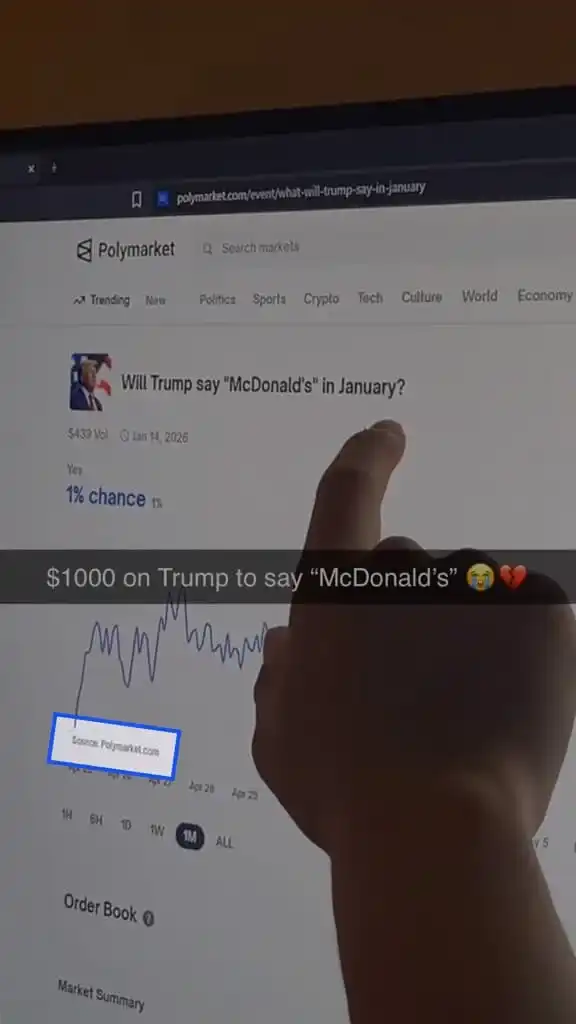
In January of this year, this college student posted a video showing he won $100,000 by betting that President Trump would publicly say the word "McDonald's" that month.

According to his videos, from January to mid-May, George Makihara seemingly placed 145 bets on the Polymarket website – with a total amount close to $410,000.

But according to a Wall Street Journal investigation, none of those trades were real.

George Makihara jumps when Trump says the word "McDonald's"; however, Trump never publicly said that phrase that month, this video was filmed two months ago

Based on the Journal's analysis of over 1,100 videos, related instructional materials, and interviews with creators who have worked with the company, George Makihara is one of dozens of creators paid by Polymarket, mostly college students, who film themselves making fake trades and sometimes showcasing fake profits. George Makihara declined to comment.

Public data shows that on Polymarket's actual website in January, over 50 accounts participated in the "McDonald's" bet. All of these accounts lost money.

To attract users to its unregulated platform, Polymarket flooded social media with videos like George Makihara's that appear genuine at first glance. In reality, Polymarket created near-perfect clones of its website and then instructed creators to make simulated trades on these virtual sites, while concealing that they were paid by Polymarket.

To make the videos go viral, Polymarket recruited a social media "army" to duplicate and repost the creators' content. Even though this New York-based company has been banned from offering its core crypto platform services in the U.S. since 2022, these social media creators, paid for their work, specifically targeted U.S. users – who can still access the site via virtual private networks (VPNs).

Polymarket said in a statement, "the company is committed to maintaining accurate, fair, and transparent markets. We are part of a fast-growing industry and are constantly evaluating how to improve how we engage and earn the trust of our audience." The company said it plans to conduct a comprehensive review of its existing promotional content.

Polymarket hired and worked closely with a marketing contractor to promote the site. In a message reviewed by the Journal, the contractor told its social media "army" to focus on reposting content from 10 Polymarket creators, including George Makihara. These creators initially did not label themselves as paid partners of Polymarket, though one provided a $20 referral code in their social media bio. After the Journal began asking the company about the marketing operation, these creators started adding "@polymarket partner" labels to their bios.

The Journal reviewed 1,105 videos posted between late December 2025 and mid-May by 10 creators endorsed by Polymarket's contractor. In 70% of the videos, the creators placed bets; clues in the videos indicate all these bets – totaling $1.9 million – were fake. Most videos just showed the betting process, but 118 videos showed creators reacting to winning, collectively winning nearly $900,000 in prizes – actually from fake trades; if you had actually placed those bets, you would have lost over $166,000.(Note: Polymarket has a data partnership with Dow Jones & Company, publisher of the Wall Street Journal. The Journal used only public data in this analysis.)

According to creators who have worked with the company, Polymarket instructed creators not to disclose they were paid. They said compensation typically accumulated to between $2,000 and $3,000 per month.

Investigating Fake Trades

One of the earliest videos showing signs of fake trades was posted to social media in June 2025, filmed at Polymarket's New York office. Someone placed a $100,000 bet that Powell would say "good afternoon" at a press conference, with a caption calling the bet a "valid manhood test."

The Journal investigation found over a dozen differences between the real Polymarket website and the simulated one.
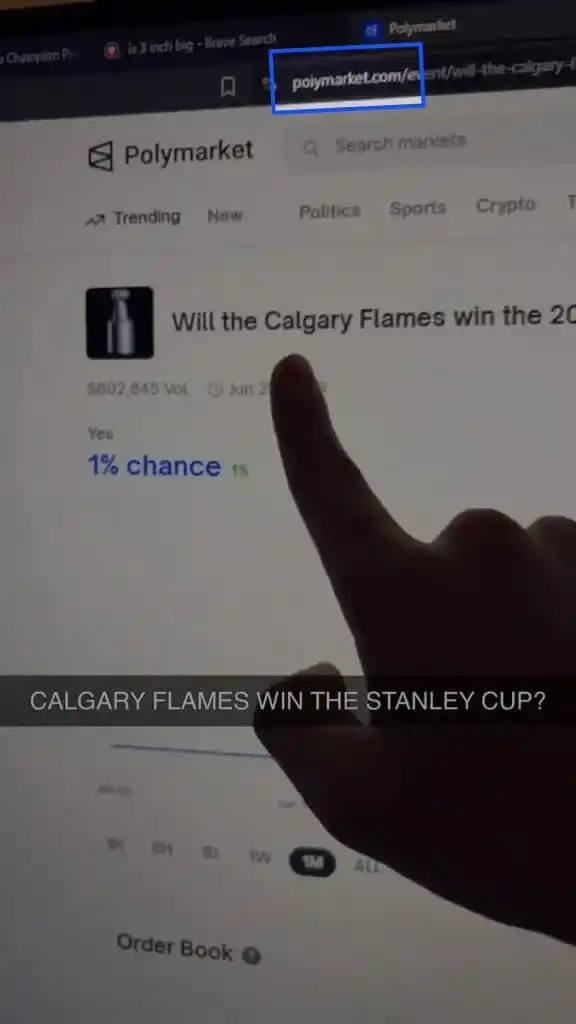
The fake simulated website was called "poiymarket.com"; when the "i" was capitalized, it was indistinguishable from polymarket.com. According to a person familiar with the matter, the site was built by Polymarket. Price charts on the site were labeled as sourced from "Polymarket.com." But Polymarket's real official website does not display any source information.
Additionally, the fake website sometimes had errors. For example, buttons would show "YES" and "NIR," while the real site has "YES" and "NO."
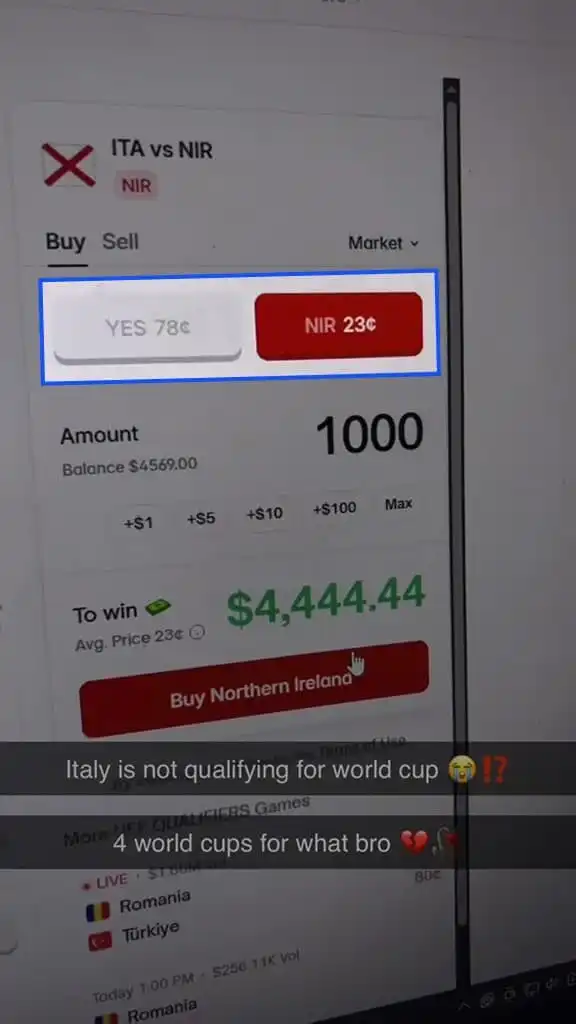
Several videos reviewed by the Journal also briefly flashed URL addresses, revealing the sites were test environments for Polymarket engineers. After the Journal contacted Polymarket for comment, the fake "poiymarket" website was taken down.

Federal advertising law requires brands to make truthful claims in their promotions and requires individuals paid to endorse products to disclose their connections; though there remains some gray area about what is permissible. Commodity laws governing prediction markets also prohibit deceptive and misleading conduct.

A spokesperson for the Federal Trade Commission, which enforces advertising laws, declined to comment on the Journal's findings, citing the agency's policy of not commenting on potential investigations.

Razeen Khan, a California college student who worked as a Polymarket creator for several months until March, compared the videos to fast-food commercials – where the food looks more appealing than it actually is.

"We're showing what actually happens," he said. "You're still going to buy that burger."

Creators said they would send finished videos to Polymarket for approval. If a video wasn't engaging enough or was obviously fake, Polymarket would ask for a reshoot.

Haian Nguyen was one of Polymarket's top-performing creators, filming her trades on the platform from a bedroom in San Francisco. In a video posted to Instagram, Haian Nguyen celebrated winning $60,000 after betting Trump would say "Olympics."

In another video of her dancing on a beach by the Golden Gate Bridge, the text overlay read "Polymarket funds my life."

Haian Nguyen declined to comment and cleared all videos from her profile after the Journal contacted her.

These promotional videos all followed the same template: the creator opens Polymarket, places a bet, and calls the profit "free money." Dozens of social media creators posted videos in nearly identical formats. According to creators who have worked with the company and a recruitment site, Polymarket sent creators bullet-pointed talking points.

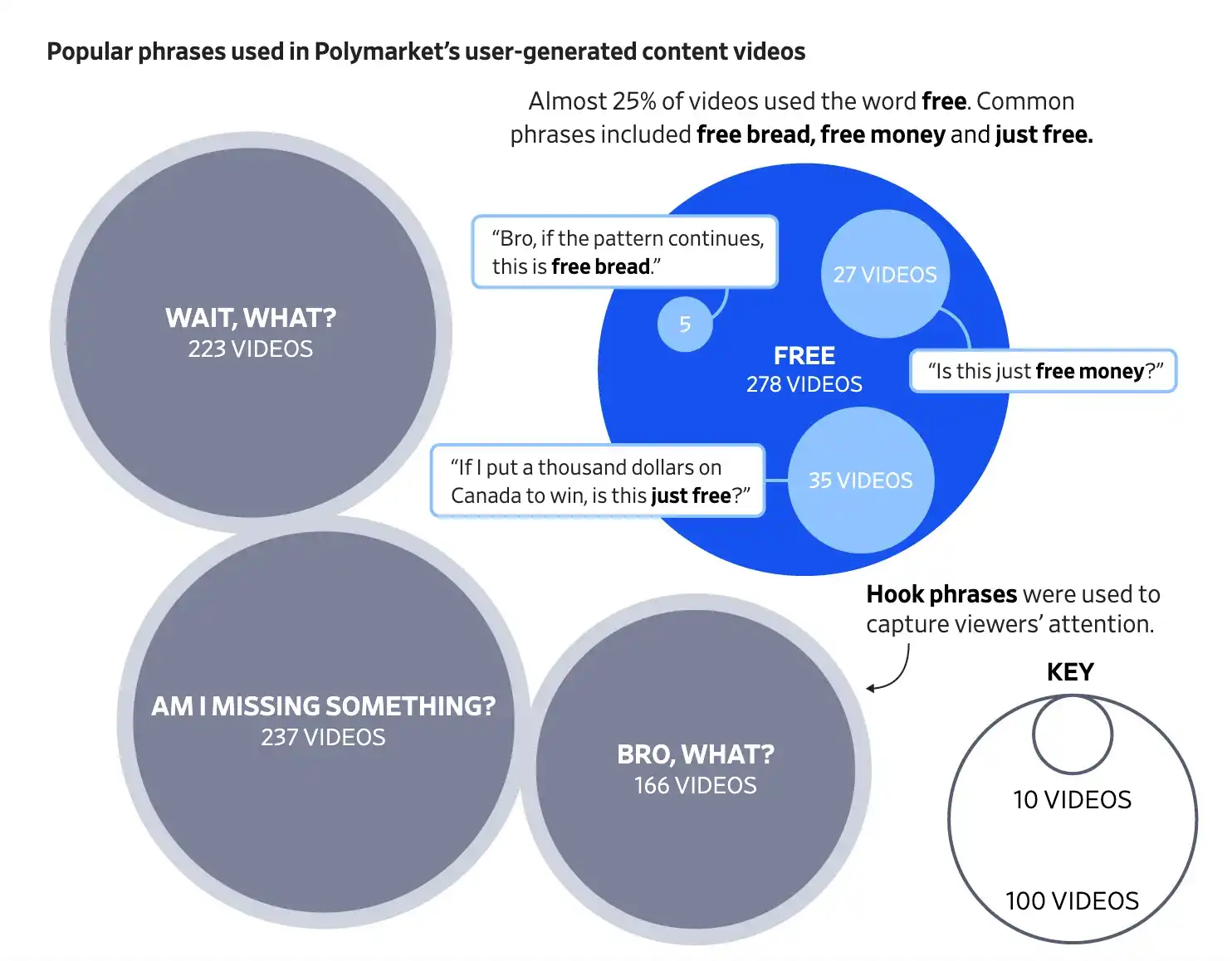
Common catchphrases in Polymarket user-generated content videos were:

Nearly 25% of videos used the word "free." Common phrases included "free bread," "free money," and "just free."

  • "Bro, if this trend continues, this is free bread." – 27 videos
  • "Wait, what?" – 223 videos
  • Free – 278 videos
  • "Isn't this free money?"
  • "If I bet a thousand dollars on Canada to win, isn't this free?" – 35 videos
  • "Am I missing something?" – 237 videos
  • "Bro, what?" – 166 videos
  • "Wait" – 100 videos

Source: Wall Street Journal analysis of 1,105 Polymarket creator videos on TikTok

The U.S. Commodity Futures Trading Commission (CFTC), which regulates prediction markets, has previously taken enforcement actions against companies using simulated trades to market products and making unrealistic profit promises.

The Trump administration has taken a permissive stance on regulating prediction markets. The CFTC has filed multiple lawsuits to stop states from regulating and taxing prediction markets. Trump recently posted on Truth Social that it is "critical" the CFTC has exclusive jurisdiction over prediction markets so they can flourish, calling politicians who want states to regulate them "scum." Trump's son, Donald Trump Jr., is an investor in Polymarket and a paid adviser to rival Kalshi.

A White House spokesperson said there was no conflict of interest and that Trump's actions were in the best interest of the American public. A CFTC spokesperson, in response to the Journal's reporting, said it is important to bring offshore prediction markets back to the U.S. so regulators can oversee them more effectively.

The Hype Machine

For Polymarket, virality is everything.

According to two people familiar with his thinking, founder Shayne Coplan told Polymarket's growth team to make the company impossible to ignore online. His close friend since high school, Matthew Modabber, oversees Polymarket's growth as chief marketing officer.

In 2024, Matthew Modabber (left) with Polymarket founder Shayne Coplan (right)

Polymarket is striving to attract more trading volume than its main competitor – the U.S.-regulated prediction market Kalshi. Polymarket was initially ahead; for most of 2025, both grew in sync; but in recent months, Kalshi has taken the lead. According to data provider The Block, last month Kalshi's trading volume was roughly double that of Polymarket.
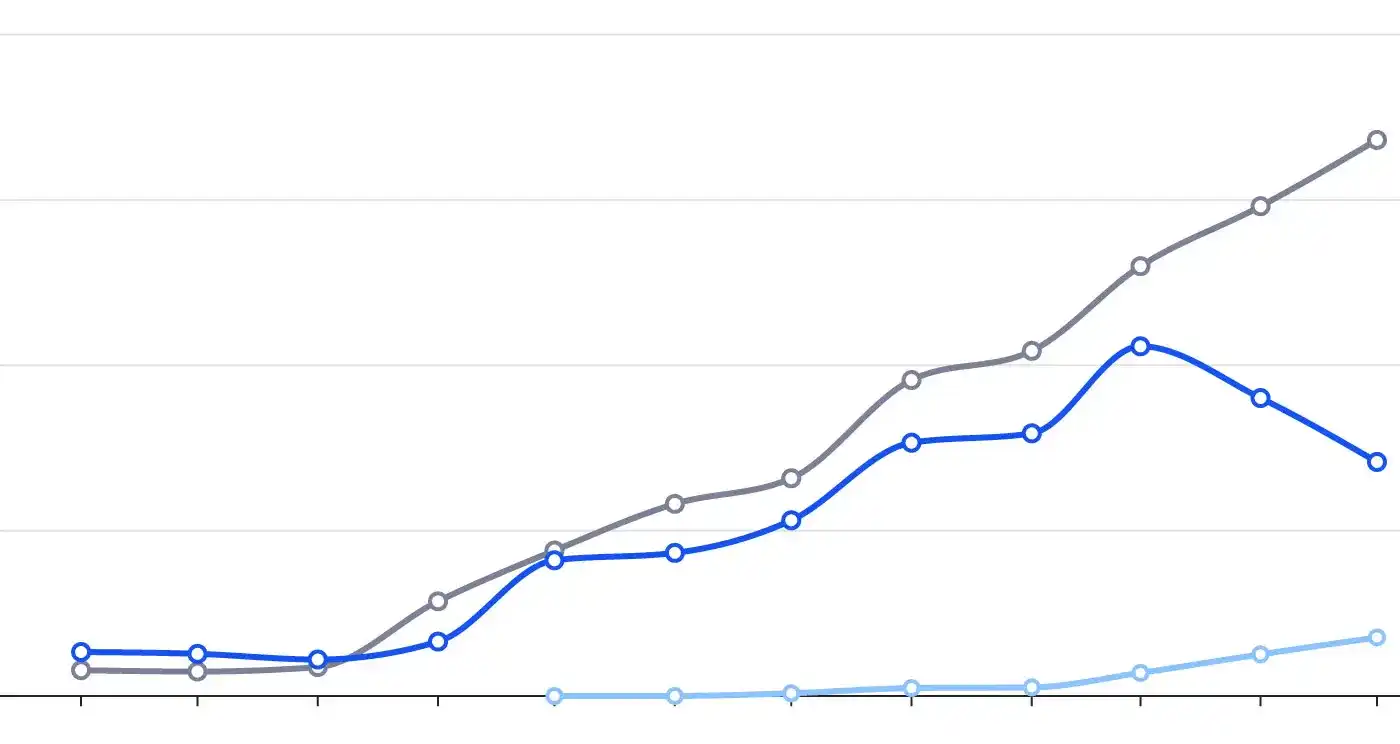
Monthly Trading Volume of Prediction Markets, data as of end of May 2026; Source: The Block

In 2022, Polymarket settled allegations of operating an unregistered options exchange, agreeing to stop offering its crypto-based trading services to U.S. customers and formally re-registering in Panama. Late last year, it launched a regulated U.S. version, available only as a mobile app. The app's trading volume is only a fraction of the offshore crypto exchange.

According to a person familiar with the matter, Polymarket is now seeking to overturn the outcome of the 2022 settlement and bring its crypto platform back to the U.S.

In the meantime, it is turning to social media to draw Americans to Polymarket.

Polymarket's Social Media "Army"

Polymarket's strategy leverages three groups of social media producers to portray the platform as a source of quick, easy money, gaining viral attention.

  • Streamers: Online personalities stream for hours on platforms like Twitch and Kick, discussing Polymarket and sometimes trading.
  • Creators: Social media users, mostly college students, make short videos talking about or trading on Polymarket.
  • Editors (known domestically as "slicers"): People around the world – especially teens in Asia – repost videos from streamers and creators.
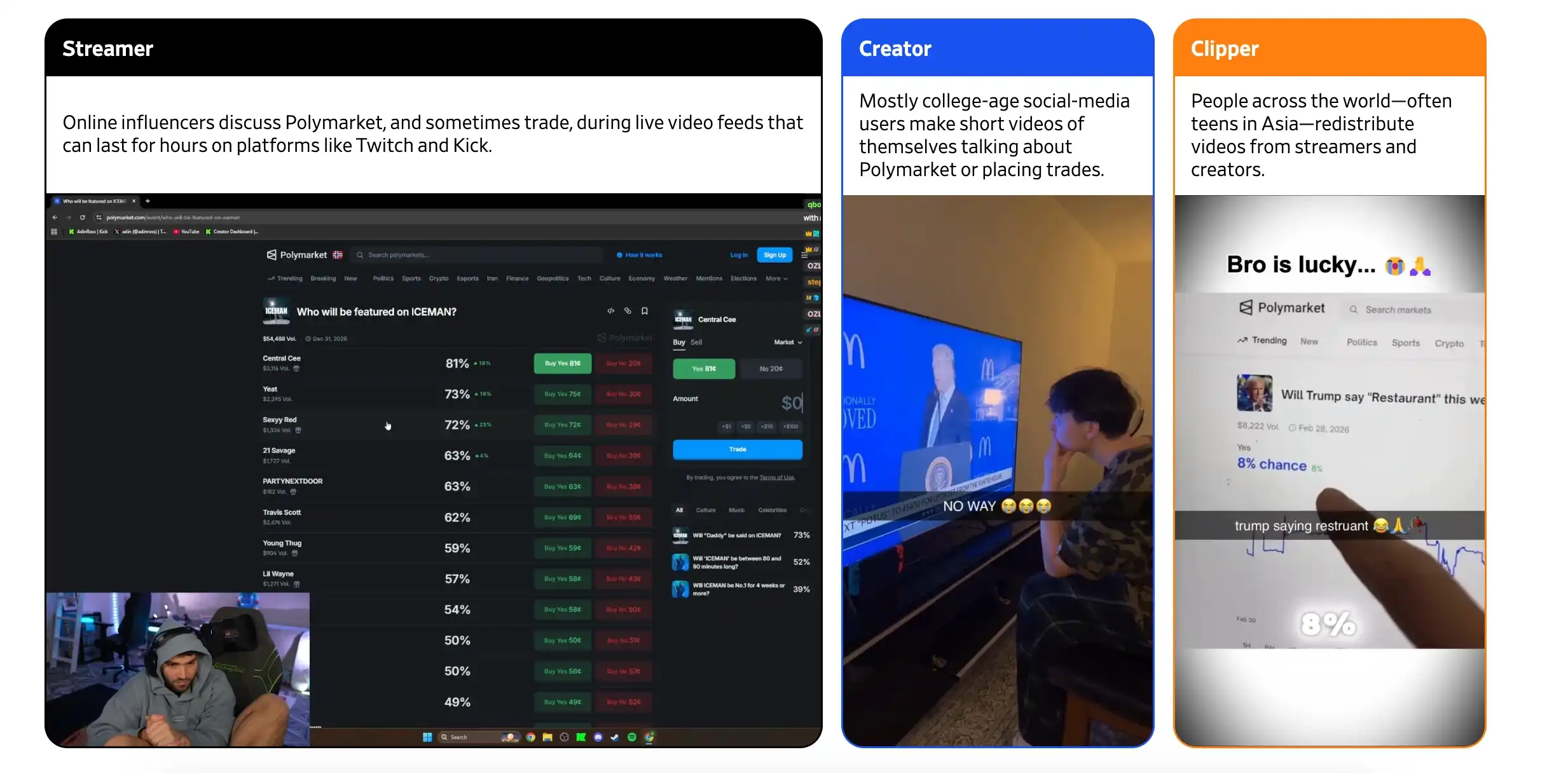
Polymarket hired marketing company Virality to manage the "slicer" team. Their promotional campaigns targeted Americans: according to instructional materials, as of early June, the slicer team could only get paid if at least 60% of their audience was U.S.-based.

Polymarket publicly distances itself from these ads. Based on the Journal's review of nearly 20,000 messages in a chat group for Polymarket's online content creator contractors, as well as instructional files and videos prepared for them, Virality asked the slicer team's posts to look "personal and natural."

"Everyone, if your account name contains 'Polymarket,' please rename and delete as soon as possible," a Virality employee told a group of slicers in the group chat. "Continued use would violate our guidelines and could lead to submissions being rejected. Not even 'poly' is allowed, change that too." Virality declined to comment.

Virality's editing promotion campaigns brought significant results.

A video posted by a Polymarket creator on TikTok had only received 151 views by mid-May. The slicer team reposted his video using secondary accounts, but most reposts were virtually unnoticed, with minimal view counts. But Polymarket works with many video editors to increase the odds of its videos going viral. Eventually, one video would always break through.

According to analytics provider Tubular, Polymarket's viral editing promotion campaigns have accumulated over 140 million views on TikTok, YouTube, and Instagram combined.

A TikTok U.S. spokesperson said several accounts identified by the Journal and other related accounts had been restricted for violating platform rules. A YouTube spokesperson said creators and brands must comply with legal obligations, otherwise YouTube may take action against them. A Meta spokesperson said while the platform requires creators to disclose if they are paid to promote or endorse products, it could not confirm if these specific contents violated its policies, as it had not independently verified whether these creators were paid by Polymarket.

Influencer Livestream Endorsements

Polymarket and Virality targeted dozens of videos by Adin Ross for promotion. Ross is a 25-year-old "manosphere" influencer with millions of followers. According to a person familiar with the negotiations, Ross has a multi-million dollar deal with Polymarket, averaging about half an hour per week browsing Polymarket and commenting on potential trades during his livestreams.

In at least five videos, Ross pointed out how he could trade on the platform using inside information.

In one promotional video, Ross said he could easily use inside information to trade on the release date of rapper Drake's (an acquaintance of Ross) upcoming new album.

Representatives for Ross and Drake declined to comment.

Internal materials show Polymarket and Virality promoted videos showcasing how easy it is to engage in insider trading on the platform. Polymarket has paid editors to promote at least 19 videos discussing opportunities to manipulate the market using insider information or other means.

Polymarket stated it "prohibits trading based on information obtained through theft, unlawful insider information, or in breach of trust, confidentiality, or other legal obligations." It added, "Polymarket's market integrity framework includes trade monitoring, on-chain transparency, reporting channels, and escalation processes to detect, review, and respond to suspicious activity. Where appropriate, we cooperate with regulators and law enforcement to maintain the integrity of our markets."

As the World Cup approached, some of Polymarket's creators turned to filming themselves trading on the company's newly launched, CFTC-regulated U.S. app.

Initially, these trades also looked legitimate. The app interface shown in social media videos was almost identical to that of Polymarket's U.S. app.

But a closer look revealed differences. For example, a market on the official app was "26 World Cup," while on the simulated Polymarket U.S. app it was "2026 FIFA World Cup."

The fake simulated trades continued.

Trending Cryptos

Related Questions

QAccording to the WSJ investigation, how did Polymarket attract U.S. users to its platform despite being barred from the U.S. market?

APolymarket hired dozens of creators, mostly college students, to create videos showing fake trades and profits on simulated websites. These videos were then virally promoted by a social media army, specifically targeting U.S. audiences who could still access the site via VPN.

QWhat were some of the key differences between the fake 'poiymarket' simulation website and the real Polymarket website as identified in the article?

AKey differences included the fake URL (poiymarket.com vs polymarket.com), the fake site attributing price charts to 'Polymarket.com' (whereas the real site showed no source), occasional typos on buttons like 'NIR' instead of 'NO', and the fake site sometimes showing URLs for test environments used by Polymarket engineers.

QWhat actions did Polymarket announce it would take in response to the WSJ's findings about its promotional activities?

APolymarket stated it was committed to maintaining accurate, fair, and transparent markets and announced plans to conduct a comprehensive audit of its existing promotional content.

QHow much fake winnings and losses were shown in the 1105 videos analyzed by The Wall Street Journal, and what was the actual outcome for those bets if placed on the real platform?

AThe videos showed creators placing fake bets totaling $1.9 million, with 118 videos depicting fake wins of nearly $900,000. If those bets had actually been placed on the real Polymarket platform, they would have resulted in losses of over $166,000.

QWhat was the role of the marketing firm Virality in Polymarket's promotional strategy, and what specific requirement did it have for the 'slicer' team's content?

AVirality was hired by Polymarket to manage a 'slicer' team that reposted and promoted creator videos. Virality required that the slicer team's posts appear 'personal and natural' and specifically mandated that their accounts must not contain 'Polymarket' or even 'poly' in the username. Furthermore, to get paid, the slicers' content needed to have an audience with at least 60% U.S. users.

Related Reads

The Final Piece of Franklin Templeton's Crypto Ambition

Franklin Templeton Completes Crypto Ambition with Acquisition of 250 Digital On June 22, Franklin Templeton announced the acquisition of 250 Digital and established Franklin Crypto, a new division focused on actively managed cryptocurrency strategies for institutional investors. The unit is led by Christopher Perkins and Seth Ginns. This acquisition marks a key piece in Franklin Templeton's multi-year crypto strategy, which began in 2018 with a digital assets team. The firm's crypto product suite now spans three layers: tokenized funds like the blockchain-based money market fund BENJI (~$831M AUM); a series of passive ETFs including Bitcoin (EZBC, ~$368M), Ethereum (EZET), XRP (XRPZ, ~$252M), Solana (SOEZ), and a multi-crypto index fund (EZPZ); and the newly added active management strategies from Franklin Crypto. The company has also expanded its crypto ecosystem through investments in projects like Ethena and Crossmint, and collaborations with blockchains such as Aptos and Sui. With approximately $18B in digital asset AUM and a total firm AUM of ~$1.78T, Franklin Templeton is positioning itself as a comprehensive crypto asset manager for pensions and sovereign wealth funds. In contrast, competitor Fidelity Investments has taken a different path, focusing early on building its own custody and trading infrastructure. Fidelity's Bitcoin ETF (FBTC) holds over $11B, significantly larger than Franklin Templeton's equivalent offering. Both giants' moves underscore the deepening trend of traditional finance entering the crypto space.

Foresight News19m ago

The Final Piece of Franklin Templeton's Crypto Ambition

Foresight News19m ago

Trading

Spot
Futures

Hot Articles

What is SONIC

Sonic: Pioneering the Future of Gaming in Web3 Introduction to Sonic In the ever-evolving landscape of Web3, the gaming industry stands out as one of the most dynamic and promising sectors. At the forefront of this revolution is Sonic, a project designed to amplify the gaming ecosystem on the Solana blockchain. Leveraging cutting-edge technology, Sonic aims to deliver an unparalleled gaming experience by efficiently processing millions of requests per second, ensuring that players enjoy seamless gameplay while maintaining low transaction costs. This article delves into the intricate details of Sonic, exploring its creators, funding sources, operational mechanics, and the timeline of significant events that have shaped its journey. What is Sonic? Sonic is an innovative layer-2 network that operates atop the Solana blockchain, specifically tailored to enhance the existing Solana gaming ecosystem. It accomplishes this through a customised, VM-agnostic game engine paired with a HyperGrid interpreter, facilitating sovereign game economies that roll up back to the Solana platform. The primary goals of Sonic include: Enhanced Gaming Experiences: Sonic is committed to offering lightning-fast on-chain gameplay, allowing players and developers to engage with games at previously unattainable speeds. Atomic Interoperability: This feature enables transactions to be executed within Sonic without the need to redeploy Solana programmes and accounts. This makes the process more efficient and directly benefits from Solana Layer1 services and liquidity. Seamless Deployment: Sonic allows developers to write for Ethereum Virtual Machine (EVM) based systems and execute them on Solana’s SVM infrastructure. This interoperability is crucial for attracting a broader range of dApps and decentralised applications to the platform. Support for Developers: By offering native composable gaming primitives and extensible data types - dining within the Entity-Component-System (ECS) framework - game creators can craft intricate business logic with ease. Overall, Sonic's unique approach not only caters to players but also provides an accessible and low-cost environment for developers to innovate and thrive. Creator of Sonic The information regarding the creator of Sonic is somewhat ambiguous. However, it is known that Sonic's SVM is owned by the company Mirror World. The absence of detailed information about the individuals behind Sonic reflects a common trend in several Web3 projects, where collective efforts and partnerships often overshadow individual contributions. Investors of Sonic Sonic has garnered considerable attention and support from various investors within the crypto and gaming sectors. Notably, the project raised an impressive $12 million during its Series A funding round. The round was led by BITKRAFT Ventures, with other notable investors including Galaxy, Okx Ventures, Interactive, Big Brain Holdings, and Mirana. This financial backing signifies the confidence that investment foundations have in Sonic’s potential to revolutionise the Web3 gaming landscape, further validating its innovative approaches and technologies. How Does Sonic Work? Sonic utilises the HyperGrid framework, a sophisticated parallel processing mechanism that enhances its scalability and customisability. Here are the core features that set Sonic apart: Lightning Speed at Low Costs: Sonic offers one of the fastest on-chain gaming experiences compared to other Layer-1 solutions, powered by the scalability of Solana’s virtual machine (SVM). Atomic Interoperability: Sonic enables transaction execution without redeployment of Solana programmes and accounts, effectively streamlining the interaction between users and the blockchain. EVM Compatibility: Developers can effortlessly migrate decentralised applications from EVM chains to the Solana environment using Sonic’s HyperGrid interpreter, increasing the accessibility and integration of various dApps. Ecosystem Support for Developers: By exposing native composable gaming primitives, Sonic facilitates a sandbox-like environment where developers can experiment and implement business logic, greatly enhancing the overall development experience. Monetisation Infrastructure: Sonic natively supports growth and monetisation efforts, providing frameworks for traffic generation, payments, and settlements, thereby ensuring that gaming projects are not only viable but also sustainable financially. Timeline of Sonic The evolution of Sonic has been marked by several key milestones. Below is a brief timeline highlighting critical events in the project's history: 2022: The Sonic cryptocurrency was officially launched, marking the beginning of its journey in the Web3 gaming arena. 2024: June: Sonic SVM successfully raised $12 million in a Series A funding round. This investment allowed Sonic to further develop its platform and expand its offerings. August: The launch of the Sonic Odyssey testnet provided users with the first opportunity to engage with the platform, offering interactive activities such as collecting rings—a nod to gaming nostalgia. October: SonicX, an innovative crypto game integrated with Solana, made its debut on TikTok, capturing the attention of over 120,000 users within a short span. This integration illustrated Sonic’s commitment to reaching a broader, global audience and showcased the potential of blockchain gaming. Key Points Sonic SVM is a revolutionary layer-2 network on Solana explicitly designed to enhance the GameFi landscape, demonstrating great potential for future development. HyperGrid Framework empowers Sonic by introducing horizontal scaling capabilities, ensuring that the network can handle the demands of Web3 gaming. Integration with Social Platforms: The successful launch of SonicX on TikTok displays Sonic’s strategy to leverage social media platforms to engage users, exponentially increasing the exposure and reach of its projects. Investment Confidence: The substantial funding from BITKRAFT Ventures, among others, emphasizes the robust backing Sonic has, paving the way for its ambitious future. In conclusion, Sonic encapsulates the essence of Web3 gaming innovation, striking a balance between cutting-edge technology, developer-centric tools, and community engagement. As the project continues to evolve, it is poised to redefine the gaming landscape, making it a notable entity for gamers and developers alike. As Sonic moves forward, it will undoubtedly attract greater interest and participation, solidifying its place within the broader narrative of blockchain gaming.

1.7k Total ViewsPublished 2024.04.04Updated 2024.12.03

What is SONIC

What is $S$

Understanding SPERO: A Comprehensive Overview Introduction to SPERO As the landscape of innovation continues to evolve, the emergence of web3 technologies and cryptocurrency projects plays a pivotal role in shaping the digital future. One project that has garnered attention in this dynamic field is SPERO, denoted as SPERO,$$s$. This article aims to gather and present detailed information about SPERO, to help enthusiasts and investors understand its foundations, objectives, and innovations within the web3 and crypto domains. What is SPERO,$$s$? SPERO,$$s$ is a unique project within the crypto space that seeks to leverage the principles of decentralisation and blockchain technology to create an ecosystem that promotes engagement, utility, and financial inclusion. The project is tailored to facilitate peer-to-peer interactions in new ways, providing users with innovative financial solutions and services. At its core, SPERO,$$s$ aims to empower individuals by providing tools and platforms that enhance user experience in the cryptocurrency space. This includes enabling more flexible transaction methods, fostering community-driven initiatives, and creating pathways for financial opportunities through decentralised applications (dApps). The underlying vision of SPERO,$$s$ revolves around inclusiveness, aiming to bridge gaps within traditional finance while harnessing the benefits of blockchain technology. Who is the Creator of SPERO,$$s$? The identity of the creator of SPERO,$$s$ remains somewhat obscure, as there are limited publicly available resources providing detailed background information on its founder(s). This lack of transparency can stem from the project's commitment to decentralisation—an ethos that many web3 projects share, prioritising collective contributions over individual recognition. By centring discussions around the community and its collective goals, SPERO,$$s$ embodies the essence of empowerment without singling out specific individuals. As such, understanding the ethos and mission of SPERO remains more important than identifying a singular creator. Who are the Investors of SPERO,$$s$? SPERO,$$s$ is supported by a diverse array of investors ranging from venture capitalists to angel investors dedicated to fostering innovation in the crypto sector. The focus of these investors generally aligns with SPERO's mission—prioritising projects that promise societal technological advancement, financial inclusivity, and decentralised governance. These investor foundations are typically interested in projects that not only offer innovative products but also contribute positively to the blockchain community and its ecosystems. The backing from these investors reinforces SPERO,$$s$ as a noteworthy contender in the rapidly evolving domain of crypto projects. How Does SPERO,$$s$ Work? SPERO,$$s$ employs a multi-faceted framework that distinguishes it from conventional cryptocurrency projects. Here are some of the key features that underline its uniqueness and innovation: Decentralised Governance: SPERO,$$s$ integrates decentralised governance models, empowering users to participate actively in decision-making processes regarding the project’s future. This approach fosters a sense of ownership and accountability among community members. Token Utility: SPERO,$$s$ utilises its own cryptocurrency token, designed to serve various functions within the ecosystem. These tokens enable transactions, rewards, and the facilitation of services offered on the platform, enhancing overall engagement and utility. Layered Architecture: The technical architecture of SPERO,$$s$ supports modularity and scalability, allowing for seamless integration of additional features and applications as the project evolves. This adaptability is paramount for sustaining relevance in the ever-changing crypto landscape. Community Engagement: The project emphasises community-driven initiatives, employing mechanisms that incentivise collaboration and feedback. By nurturing a strong community, SPERO,$$s$ can better address user needs and adapt to market trends. Focus on Inclusion: By offering low transaction fees and user-friendly interfaces, SPERO,$$s$ aims to attract a diverse user base, including individuals who may not previously have engaged in the crypto space. This commitment to inclusion aligns with its overarching mission of empowerment through accessibility. Timeline of SPERO,$$s$ Understanding a project's history provides crucial insights into its development trajectory and milestones. Below is a suggested timeline mapping significant events in the evolution of SPERO,$$s$: Conceptualisation and Ideation Phase: The initial ideas forming the basis of SPERO,$$s$ were conceived, aligning closely with the principles of decentralisation and community focus within the blockchain industry. Launch of Project Whitepaper: Following the conceptual phase, a comprehensive whitepaper detailing the vision, goals, and technological infrastructure of SPERO,$$s$ was released to garner community interest and feedback. Community Building and Early Engagements: Active outreach efforts were made to build a community of early adopters and potential investors, facilitating discussions around the project’s goals and garnering support. Token Generation Event: SPERO,$$s$ conducted a token generation event (TGE) to distribute its native tokens to early supporters and establish initial liquidity within the ecosystem. Launch of Initial dApp: The first decentralised application (dApp) associated with SPERO,$$s$ went live, allowing users to engage with the platform's core functionalities. Ongoing Development and Partnerships: Continuous updates and enhancements to the project's offerings, including strategic partnerships with other players in the blockchain space, have shaped SPERO,$$s$ into a competitive and evolving player in the crypto market. Conclusion SPERO,$$s$ stands as a testament to the potential of web3 and cryptocurrency to revolutionise financial systems and empower individuals. With a commitment to decentralised governance, community engagement, and innovatively designed functionalities, it paves the way toward a more inclusive financial landscape. As with any investment in the rapidly evolving crypto space, potential investors and users are encouraged to research thoroughly and engage thoughtfully with the ongoing developments within SPERO,$$s$. The project showcases the innovative spirit of the crypto industry, inviting further exploration into its myriad possibilities. While the journey of SPERO,$$s$ is still unfolding, its foundational principles may indeed influence the future of how we interact with technology, finance, and each other in interconnected digital ecosystems.

63 Total ViewsPublished 2024.12.17Updated 2024.12.17

What is $S$

What is AGENT S

Agent S: The Future of Autonomous Interaction in Web3 Introduction In the ever-evolving landscape of Web3 and cryptocurrency, innovations are constantly redefining how individuals interact with digital platforms. One such pioneering project, Agent S, promises to revolutionise human-computer interaction through its open agentic framework. By paving the way for autonomous interactions, Agent S aims to simplify complex tasks, offering transformative applications in artificial intelligence (AI). This detailed exploration will delve into the project's intricacies, its unique features, and the implications for the cryptocurrency domain. What is Agent S? Agent S stands as a groundbreaking open agentic framework, specifically designed to tackle three fundamental challenges in the automation of computer tasks: Acquiring Domain-Specific Knowledge: The framework intelligently learns from various external knowledge sources and internal experiences. This dual approach empowers it to build a rich repository of domain-specific knowledge, enhancing its performance in task execution. Planning Over Long Task Horizons: Agent S employs experience-augmented hierarchical planning, a strategic approach that facilitates efficient breakdown and execution of intricate tasks. This feature significantly enhances its ability to manage multiple subtasks efficiently and effectively. Handling Dynamic, Non-Uniform Interfaces: The project introduces the Agent-Computer Interface (ACI), an innovative solution that enhances the interaction between agents and users. Utilizing Multimodal Large Language Models (MLLMs), Agent S can navigate and manipulate diverse graphical user interfaces seamlessly. Through these pioneering features, Agent S provides a robust framework that addresses the complexities involved in automating human interaction with machines, setting the stage for myriad applications in AI and beyond. Who is the Creator of Agent S? While the concept of Agent S is fundamentally innovative, specific information about its creator remains elusive. The creator is currently unknown, which highlights either the nascent stage of the project or the strategic choice to keep founding members under wraps. Regardless of anonymity, the focus remains on the framework's capabilities and potential. Who are the Investors of Agent S? As Agent S is relatively new in the cryptographic ecosystem, detailed information regarding its investors and financial backers is not explicitly documented. The lack of publicly available insights into the investment foundations or organisations supporting the project raises questions about its funding structure and development roadmap. Understanding the backing is crucial for gauging the project's sustainability and potential market impact. How Does Agent S Work? At the core of Agent S lies cutting-edge technology that enables it to function effectively in diverse settings. Its operational model is built around several key features: Human-like Computer Interaction: The framework offers advanced AI planning, striving to make interactions with computers more intuitive. By mimicking human behaviour in tasks execution, it promises to elevate user experiences. Narrative Memory: Employed to leverage high-level experiences, Agent S utilises narrative memory to keep track of task histories, thereby enhancing its decision-making processes. Episodic Memory: This feature provides users with step-by-step guidance, allowing the framework to offer contextual support as tasks unfold. Support for OpenACI: With the ability to run locally, Agent S allows users to maintain control over their interactions and workflows, aligning with the decentralised ethos of Web3. Easy Integration with External APIs: Its versatility and compatibility with various AI platforms ensure that Agent S can fit seamlessly into existing technological ecosystems, making it an appealing choice for developers and organisations. These functionalities collectively contribute to Agent S's unique position within the crypto space, as it automates complex, multi-step tasks with minimal human intervention. As the project evolves, its potential applications in Web3 could redefine how digital interactions unfold. Timeline of Agent S The development and milestones of Agent S can be encapsulated in a timeline that highlights its significant events: September 27, 2024: The concept of Agent S was launched in a comprehensive research paper titled “An Open Agentic Framework that Uses Computers Like a Human,” showcasing the groundwork for the project. October 10, 2024: The research paper was made publicly available on arXiv, offering an in-depth exploration of the framework and its performance evaluation based on the OSWorld benchmark. October 12, 2024: A video presentation was released, providing a visual insight into the capabilities and features of Agent S, further engaging potential users and investors. These markers in the timeline not only illustrate the progress of Agent S but also indicate its commitment to transparency and community engagement. Key Points About Agent S As the Agent S framework continues to evolve, several key attributes stand out, underscoring its innovative nature and potential: Innovative Framework: Designed to provide an intuitive use of computers akin to human interaction, Agent S brings a novel approach to task automation. Autonomous Interaction: The ability to interact autonomously with computers through GUI signifies a leap towards more intelligent and efficient computing solutions. Complex Task Automation: With its robust methodology, it can automate complex, multi-step tasks, making processes faster and less error-prone. Continuous Improvement: The learning mechanisms enable Agent S to improve from past experiences, continually enhancing its performance and efficacy. Versatility: Its adaptability across different operating environments like OSWorld and WindowsAgentArena ensures that it can serve a broad range of applications. As Agent S positions itself in the Web3 and crypto landscape, its potential to enhance interaction capabilities and automate processes signifies a significant advancement in AI technologies. Through its innovative framework, Agent S exemplifies the future of digital interactions, promising a more seamless and efficient experience for users across various industries. Conclusion Agent S represents a bold leap forward in the marriage of AI and Web3, with the capacity to redefine how we interact with technology. While still in its early stages, the possibilities for its application are vast and compelling. Through its comprehensive framework addressing critical challenges, Agent S aims to bring autonomous interactions to the forefront of the digital experience. As we move deeper into the realms of cryptocurrency and decentralisation, projects like Agent S will undoubtedly play a crucial role in shaping the future of technology and human-computer collaboration.

738 Total ViewsPublished 2025.01.14Updated 2025.01.14

What is AGENT S

Discussions

Welcome to the HTX Community. Here, you can stay informed about the latest platform developments and gain access to professional market insights. Users' opinions on the price of S (S) are presented below.

活动图片