十大加密货币上周表现总结,BTC在圣诞节前将获得+20%的收益?

老雅痞Published on 2022-12-20Last updated on 2022-12-20

Abstract

上周我们可以看到整个市场以良好的势头回归。然而从周日开始,整个市场开始回落,BTC 在周一早上回落至 17,000 美元的定价之下。

上周我们可以看到整个市场以良好的势头回归。然而从周日开始,整个市场开始回落,BTC 在周一早上回落至 17,000 美元的定价之下。altcoin市场也可以看到增长,一些币突破了之前的历史高点,但在周一早上再次回落。
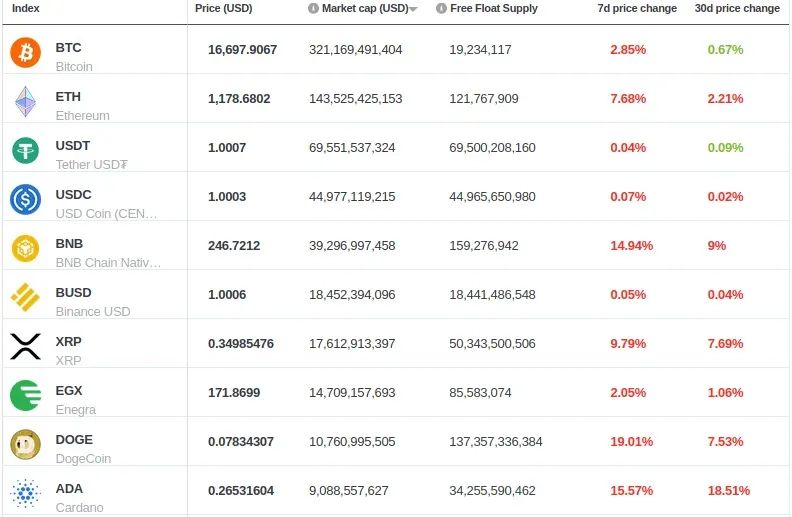
十大加密货币的市值一路下跌。DogeCoin(DOGE)、Cardano(ADA)和Binance-coin(BNB)受到的打击最大:每个都有两位数的跌幅。

Onchain分析服务Glassnode跟踪了FTX的崩溃对全球主要交易所Binance的影响,并注意到几个重要的问题:随着用户将保管权掌握在自己手中,出现了重大的净流出。仅在12月13日,该交易所就出现了该交易所历史上最大的美元价值的BTC被撤回。同一天,ETH也录得类似的净流出,在30天内,超过32亿美元的USDT、USDC、BUSD和DAI从该交易所撤出。

上周发生:

比特币(BTC)的价格在上周结束时比前一周下降了2.9%,目前位于US$16.7K左右。以太币(ETH)有7.7%的跌幅,目前在US$1.18K左右。Binance-coin (BNB)有近15%的跌幅,目前交易价格约为US$247左右。

2022年开始,加密货币行业仍处于刚刚突破历史价格高点的欣喜若狂的体验中。比特币的价格在2021年11月达到约6.8万美元。到2022年1月1日,它已经跌到了4.8万美元,这个价格在2022年只在3月短暂出现过一次。5月8日,随着Terra/LUNA倒下,从那时开始,多米诺骨牌一张接一张地倒下。

很快就会发现,该领域的许多参与者参与了高风险的借贷、过度杠杆化和部分保留加密资产,而这些资产本来就不应该被部分保留 (例如,比特币的layer1不允许在链上进行部分保留,现实世界或layer2实际发生的情况又是另一回事)。
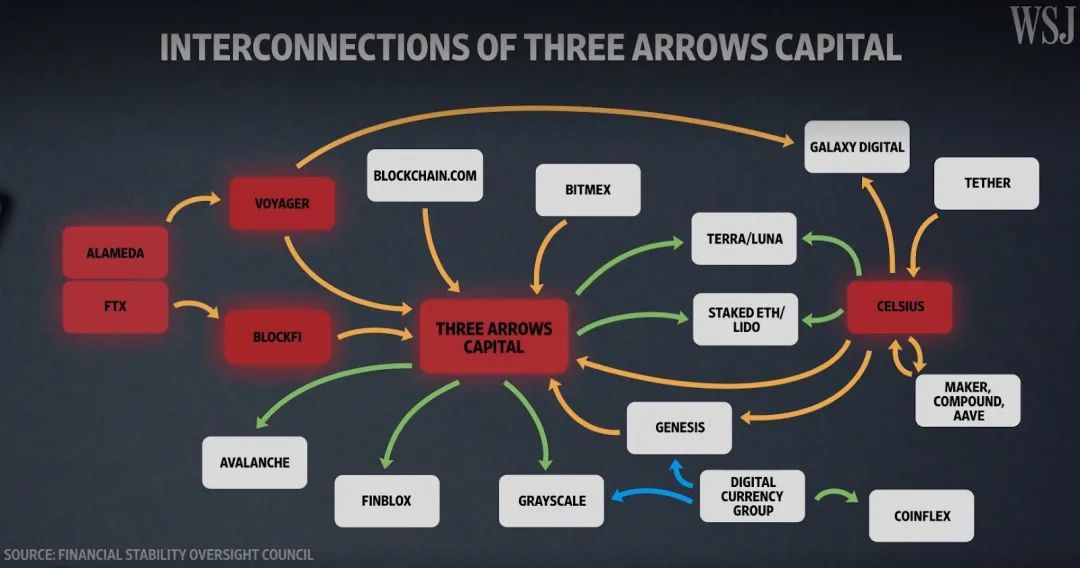
2022年用一整年的价格表现提醒我们,适用于其他地方的经济学知识仍然适用于Web3行业。我们学到了问“这个收益从何而来”的重要性,要求提供储备证明,进行自我监管,以及加密货币资产被中央银行的通货膨胀货币政策所支撑,就像住房、股市和商品一样。

BTC在圣诞节前将获得+20%的收益?

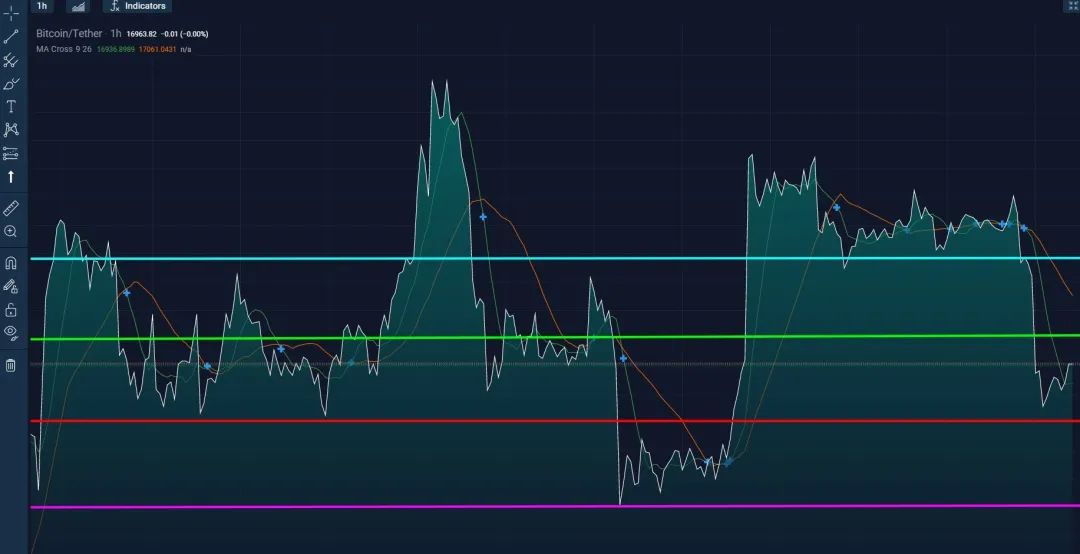
一直以来,BTC都是加密货币市场的“老大哥”。无论山寨币如何试图摆脱下跌趋势,BTC 最终都会引领潮流。由于FTX的问题,整个市场被拉低。但并不是看不到任何希望,如果我们查看图表历史记录,BTC通常会在圣诞节假期回归。通常,投资公司希望有一个好的季度,这样可以“拉动”年底的市场。
三个考虑点:

超级央行周带来的波动。由于央行继续向通胀威胁斗争,预计加息速度将放缓。作为回应,加密货币市场可能会继续波动。这意味着智能交易可以提供利润。

CEX用户报告了异常的Altcoin、ETH和BTC交易活动。这可能是源自大户之前的积累,或者是有人试图清算做市商。

Realized HODL Ratio将很快出现双底, Realized HODL Ratio 是一个市场指标,它使用 Realized Cap HODL Waves 的比率。特别是RHODL 比率采用1周和1-2年 RCap HODL频段之间的比率。此外,它通过按总市场年龄对比率进行加权来解释增加的供应量。高比率表明市场过热,可用于确定周期顶部的时间。
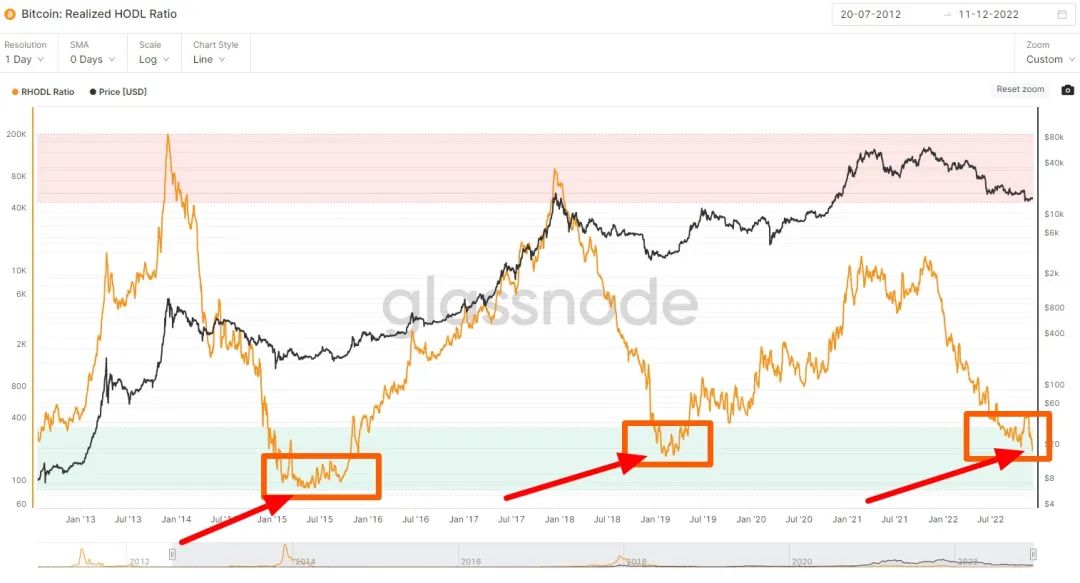
BTC: The Realized HODL Ratio

技术分析:我们需要根据不同的场景应用智能交易策略,因为市场很可能会出现波动:

情形1:在 17,000 美元开多仓,然后在 17,250 美元应用止盈,然后将其移至 17,940 美元,止损可以考虑在 16,880 美元。

情形2:在 16,840 美元开空头头寸,应用止盈至 16,700 美元,然后将其移至 16,180 美元,止损为 16,920。

只有当我们看到强烈的反弹时才会在16,680美元重新启动多头交易,并使用上述交易目标。

Trending Cryptos

Related Reads

Securitize's First Post-IPO Financial Report Bombshell: Is the 'Compliant Tokenization' Narrative Failing to Sell?

Securitize, a tokenization platform, released its first earnings report since going public in July 2026, revealing disappointing Q2 results. Revenue fell 5% year-over-year to $14.43 million, missing estimates, while the net loss widened significantly to $21.68 million. Despite achieving record tokenized assets under management of $4.3 billion and a 147% surge in platform trading volume, overall assets under administration declined by 20%. The company's stock (SECZ) dropped over 20% in after-hours trading following the report. The article highlights a key concern: Securitize's revenue declined despite substantial trading growth, suggesting either compressed fees or an unclear business model. While Securitize maintains its focus on regulatory compliance—securing key partnerships with entities like Computershare and NYSE, and obtaining an SEC investment advisor registration—its tangible progress in the new tokenized stock business has been slow. Apart from tokenizing its own stock (SECZ) upon listing, it has not launched other tokenized equities. Analysts note that SECZ's high on-chain market capitalization is misleading, as it resulted from a one-time distribution to shareholders rather than organic investor demand. The market's patience is waning as investors prioritize real business metrics like market share and user adoption over the "compliant tokenization" narrative. Securitize's market value has fallen 36% from its debut, reflecting growing concerns over its shrinking revenue and the delayed execution of its tokenized stock initiatives.

Odaily星球日报8m ago

Securitize's First Post-IPO Financial Report Bombshell: Is the 'Compliant Tokenization' Narrative Failing to Sell?

Odaily星球日报8m ago

Why Every Investor Needs to Pay Attention to the Federal Reserve

Why Every Investor Should Follow the Federal Reserve Key developments on August 12, 2026, demonstrate how crucial the Fed is. Following the CPI report that matched expectations, markets instantly repriced stocks, bonds, and currencies, adjusting the probability of a September Fed rate hike. The Federal Reserve controls the federal funds rate, the anchor for all borrowing costs. Its "dual mandate" is to maintain stable prices and maximum employment. The current policy rate is 3.50%-3.75% after a series of cuts from 2024-2025. Understanding Fed actions is vital for your portfolio: - **Rate Hikes:** Slow the economy to fight inflation. They pressure growth/tech stocks (due to higher discount rates) and lower bond prices but can initially benefit banks. - **Rate Cuts:** Stimulate the economy. They typically boost growth stocks and bond prices while lowering borrowing costs for consumers and businesses. - **Holding Steady:** Still impactful. Current restrictive policy, with positive real interest rates, continues to weigh on the economy. Market-moving signals now come more from economic data than official guidance. A key change is new Fed Chair Kevin Warsh, who has reduced forward guidance, making each data release (CPI, PCE, jobs reports, GDP) more critical for predicting Fed moves. In this environment, investors should track key reports, compare data to market expectations, and understand what is already "priced in." The focus now is on the September 15-16 FOMC meeting. The August CPI (due Sep 11) and jobs report (Sep 5) will be decisive. Ultimately, interest rates are a powerful, continuous force on all assets. Learning to interpret the data that drives Fed policy is an essential skill for navigating today's markets.

marsbit12m ago

Why Every Investor Needs to Pay Attention to the Federal Reserve

marsbit12m ago

MicroStrategy Sells BTC Without a Price Drop, Is STRC's Rebound Truly Good News?

The cryptocurrency market is currently experiencing extreme quiet, with BTC weekly trading volume at its lowest since 2023 and implied volatility hitting bottom. Liquidity is thin, as evidenced by a muted price reaction to CPI data. The market's primary issue is a lack of active participants, not just news. Options data shows traders are pricing in higher short-term downside risks. Market makers' gamma positioning suggests a critical support zone between $61,000 and $60,000; a break below could accelerate a downturn. Two developments are being interpreted bullishly: MicroStrategy (MSTR) selling a small portion of its BTC without causing a price crash, and the rebound of its preferred shares (STRC) from lows near $73 to over $95. However, an alternative bearish interpretation exists. The low liquidity means large entities cannot exit sizable positions easily. A STRK recovery towards $100 could provide the buying pressure these sellers need to finally offload BTC, making the apparent利好 (positive news) actually improve selling conditions. STRC faces a structural ceiling at $100 because MSTR has signaled it will issue new shares around that price, capping upside and inviting short sellers. While recent buybacks boosted the price, they haven't solved this core problem. If STRK cannot sustainably break $100, concerns will grow about MSTR needing to sell BTC for funding. Finally, the Bitfinex Long positions indicator, which typically moves inversely to BTC price, has become ineffective and flat-lined near multi-year lows, offering no directional signal. Large traders are not accumulating on dips as they once did.

marsbit13m ago

MicroStrategy Sells BTC Without a Price Drop, Is STRC's Rebound Truly Good News?

marsbit13m ago

Silicon Valley Tech Giants No Longer Need Ethicists

Silicon Valley tech giants are once again sidelining ethicists. Chloé Bakalar, OpenAI's dedicated AI Ethics Lead, left the company in July, a departure emblematic of a broader trend where ethics teams are being disbanded or marginalized in the race for AI dominance. Bakalar's career highlights the tensions between ethical governance and commercial speed. She first made her mark at Meta (formerly Facebook), where she pioneered "embedded ethics," developing tools like checklists to translate abstract principles like fairness and transparency into concrete engineering steps. Her framework aimed to embed ethical considerations throughout a product’s lifecycle—from initial design and data handling to user interaction and deployment. However, this approach faced significant internal resistance. At Meta, her Responsible AI team was eventually disbanded as the company prioritized rapid development, especially in the generative AI race with OpenAI. Bakalar then joined OpenAI in 2025, hoping to influence cutting-edge model development directly. Yet, as the company's sole dedicated ethicist, she reportedly struggled with limited influence and resources amidst intense commercial pressures, leading to her departure after roughly a year. Her exit is not isolated. Similar patterns have emerged across Silicon Valley, with ethics and safety teams at Twitter (post-Musk acquisition) and OpenAI's own "superalignment" team being dissolved. These departures reveal five core, unresolved tensions: 1) the fatal conflict between commercialization speed and ethical caution; 2) the role mismatch where ethicists have prestige but little real decision-making power; 3) the dilution of responsibility when ethics is decentralized as "everyone's job"; 4) the inevitable "translation loss" when complex philosophical values are reduced to quantifiable engineering metrics; and 5) the fundamental clash between academic independence and corporate secrecy. Bakalar’s trajectory suggests that embedding meaningful ethical oversight within hyper-competitive tech companies is profoundly difficult. Lasting change may require external regulatory pressure, like the EU's AI Act, or a fundamental reimagining of the ethicist's role from an internal auditor to a cross-disciplinary builder with genuine authority.

marsbit42m ago

Silicon Valley Tech Giants No Longer Need Ethicists

marsbit42m ago

Trading

Spot

Hot Articles

What is $BITCOIN

DIGITAL GOLD ($BITCOIN): A Comprehensive Analysis Introduction to DIGITAL GOLD ($BITCOIN) DIGITAL GOLD ($BITCOIN) is a blockchain-based project operating on the Solana network, which aims to combine the characteristics of traditional precious metals with the innovation of decentralized technologies. While it shares a name with Bitcoin, often referred to as “digital gold” due to its perception as a store of value, DIGITAL GOLD is a separate token designed to create a unique ecosystem within the Web3 landscape. Its goal is to position itself as a viable alternative digital asset, although specifics regarding its applications and functionalities are still developing. What is DIGITAL GOLD ($BITCOIN)? DIGITAL GOLD ($BITCOIN) is a cryptocurrency token explicitly designed for use on the Solana blockchain. In contrast to Bitcoin, which provides a widely recognized value storage role, this token appears to focus on broader applications and characteristics. Notable aspects include: Blockchain Infrastructure: The token is built on the Solana blockchain, known for its capacity to handle high-speed and low-cost transactions. Supply Dynamics: DIGITAL GOLD has a maximum supply capped at 100 quadrillion tokens (100P $BITCOIN), although details regarding its circulating supply are currently undisclosed. Utility: While precise functionalities are not explicitly outlined, there are indications that the token could be utilized for various applications, potentially involving decentralized applications (dApps) or asset tokenization strategies. Who is the Creator of DIGITAL GOLD ($BITCOIN)? At present, the identity of the creators and development team behind DIGITAL GOLD ($BITCOIN) remains unknown. This situation is typical among many innovative projects within the blockchain space, particularly those aligning with decentralized finance and meme coin phenomena. While such anonymity may foster a community-driven culture, it intensifies concerns about governance and accountability. Who are the Investors of DIGITAL GOLD ($BITCOIN)? The available information indicates that DIGITAL GOLD ($BITCOIN) does not have any known institutional backers or prominent venture capital investments. The project seems to operate on a peer-to-peer model focused on community support and adoption rather than traditional funding routes. Its activity and liquidity are primarily situated on decentralized exchanges (DEXs), such as PumpSwap, rather than established centralized trading platforms, further highlighting its grassroots approach. How DIGITAL GOLD ($BITCOIN) Works The operational mechanics of DIGITAL GOLD ($BITCOIN) can be elaborated on based on its blockchain design and network attributes: Consensus Mechanism: By leveraging Solana’s unique proof-of-history (PoH) combined with a proof-of-stake (PoS) model, the project ensures efficient transaction validation contributing to the network's high performance. Tokenomics: While specific deflationary mechanisms have not been extensively detailed, the vast maximum token supply implies that it may cater to microtransactions or niche use cases that are still to be defined. Interoperability: There exists the potential for integration with Solana’s broader ecosystem, including various decentralized finance (DeFi) platforms. However, the details regarding specific integrations remain unspecified. Timeline of Key Events Here is a timeline that highlights significant milestones concerning DIGITAL GOLD ($BITCOIN): 2023: The initial deployment of the token occurs on the Solana blockchain, marked by its contract address. 2024: DIGITAL GOLD gains visibility as it becomes available for trading on decentralized exchanges like PumpSwap, allowing users to trade it against SOL. 2025: The project witnesses sporadic trading activity and potential interest in community-led engagements, although no noteworthy partnerships or technical advancements have been documented as of yet. Critical Analysis Strengths Scalability: The underlying Solana infrastructure supports high transaction volumes, which could enhance the utility of $BITCOIN in various transaction scenarios. Accessibility: The potential low trading price per token could attract retail investors, facilitating wider participation due to fractional ownership opportunities. Risks Lack of Transparency: The absence of publicly known backers, developers, or an audit process may yield skepticism regarding the project's sustainability and trustworthiness. Market Volatility: The trading activity is heavily reliant on speculative behavior, which can result in significant price volatility and uncertainty for investors. Conclusion DIGITAL GOLD ($BITCOIN) emerges as an intriguing yet ambiguous project within the rapidly evolving Solana ecosystem. While it attempts to leverage the “digital gold” narrative, its departure from Bitcoin's established role as a store of value underscores the need for a clearer differentiation of its intended utility and governance structure. Future acceptance and adoption will likely depend on addressing the current opacity and defining its operational and economic strategies more explicitly. Note: This report encompasses synthesised information available as of October 2023, and developments may have transpired beyond the research period.

1.8k Total ViewsPublished 2025.05.13Updated 2025.05.13

What is $BITCOIN

Discussions

Welcome to the HTX Community. Here, you can stay informed about the latest platform developments and gain access to professional market insights. Users' opinions on the price of BTC (BTC) are presented below.

活动图片