预警!下一个FTX级别的地震可能要来!

BiteyePublished on 2022-11-25Last updated on 2022-11-25

Abstract

在过去的 24 小时里,我一直在研究 wBTC。我给出的建议是,暂时避开任何包装资产(Wrapped assets)。

在过去的 24 小时里,我一直在研究 wBTC。我给出的建议是,暂时避开任何包装资产(Wrapped assets)。

(译者注:包装资产也称包装代币,它是另一种加密货币的代币化版本。它锚定特定资产的价值,通常支持随时赎回(去包装)所锚定的资产。包装代币代表的资产通常不在其所处的区块链中发行。)

在下面的推文中,我将说一下我自己对包装资产的担忧,同时也希望能够消除一些围绕资产托管和流动性方面的一些困扰。
我不是 wBTC 或者包装资产方面的专家,所以对此持保留态度。只是分享一下我最近的发现,如果有说得不对的地方,欢迎大家指正。

说起我的研究,最开始还是从 wBTC/BTC 的脱锚后开始的。我发现它们竟然脱锚 2% 了,这是一个不寻常的现象。
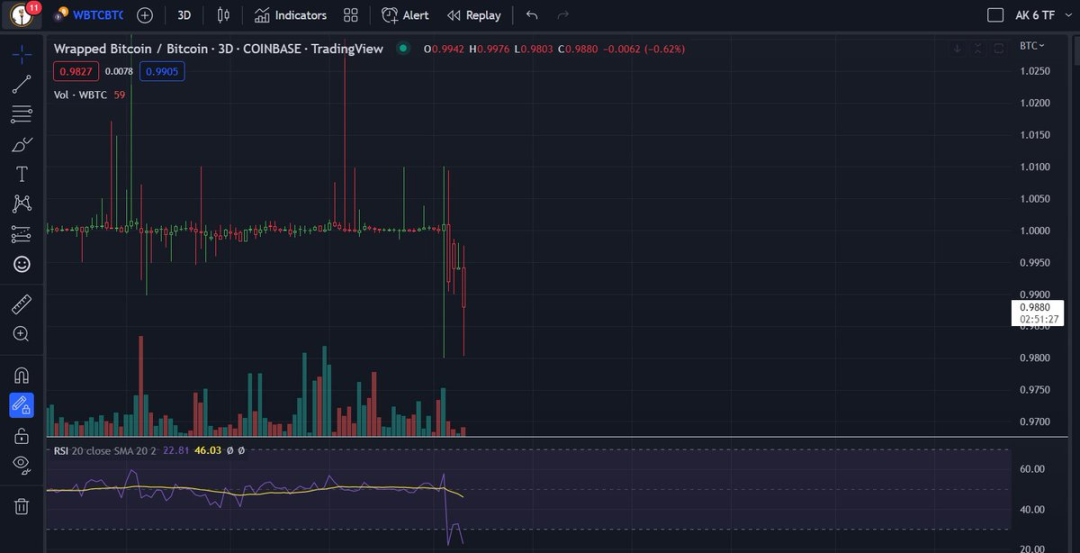
这个交易对通常这是大鲸鱼用来免费套利的,为什么现在会发生脱锚这种情况?

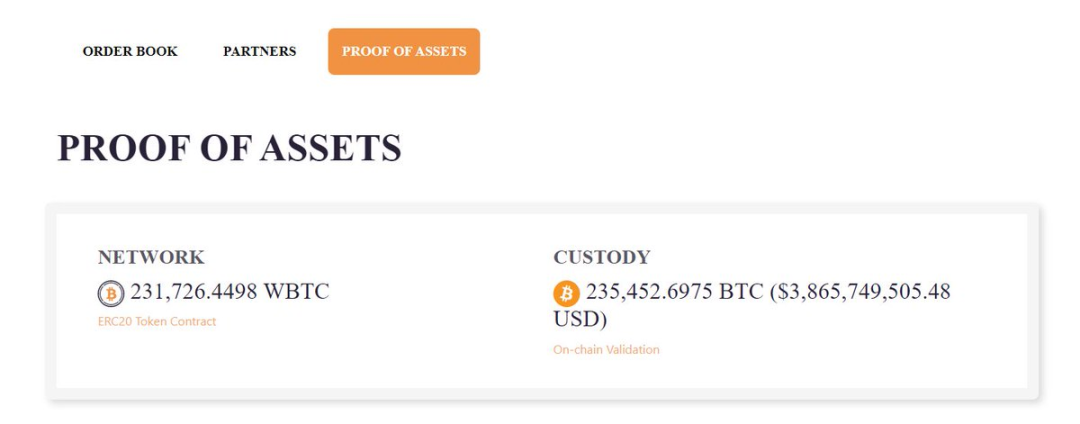
wBTC 网站及其资产证明显示它是超额抵押的,那么问题出在哪里?下面我们来深入了解一下资产托管。

01

资产托管
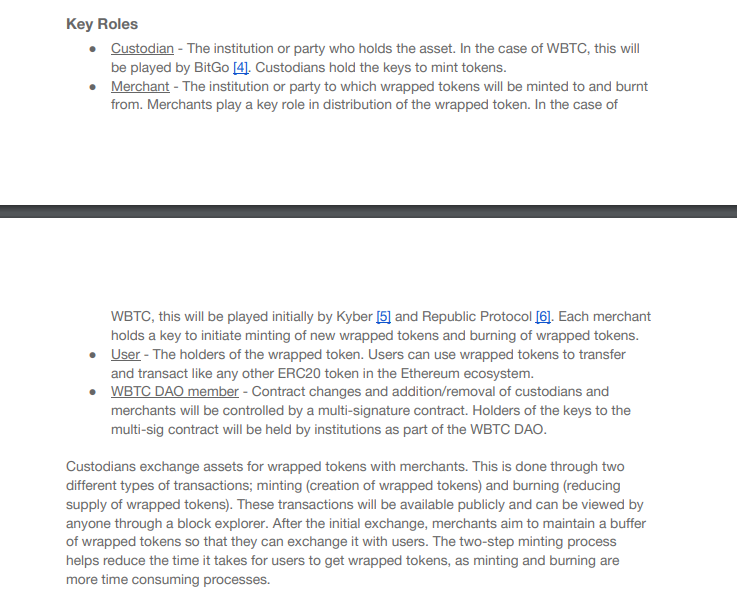
在研究 wBTC 时,你可以看到两个角色:

托管人——持有 BTC 以支撑 wBTC 的价值,拥有铸造代币的密钥

商家——发送或者接收 BTC 以铸造或者销毁 wBTC 的主要一方

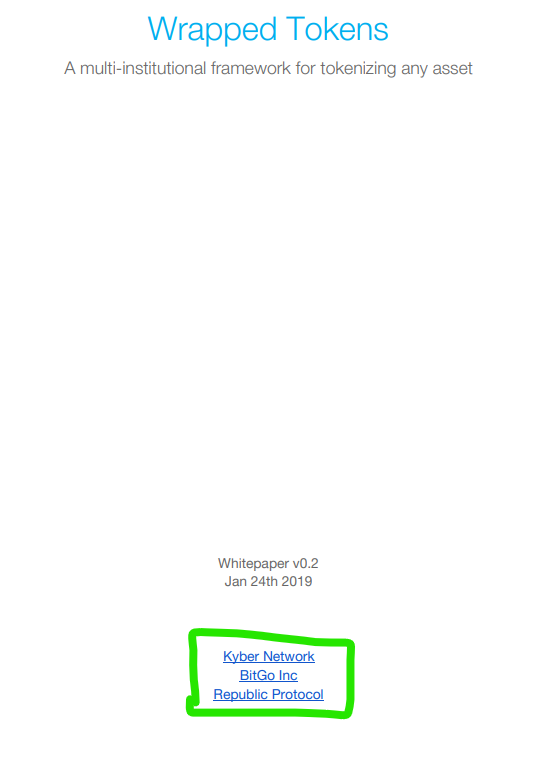
在这种情况下,BitGo 是托管人,而商家是由 60 多个合作伙伴组成的。
在调查 BitGo 的时候,首先看到的就 Mike belshe(BitGo CEO)的推文,虽然他表示 BitGo「没有 Alameda 或 FTX 风险敞口」,但是他们现在却忙着筹集资金去了,这令人诧异!
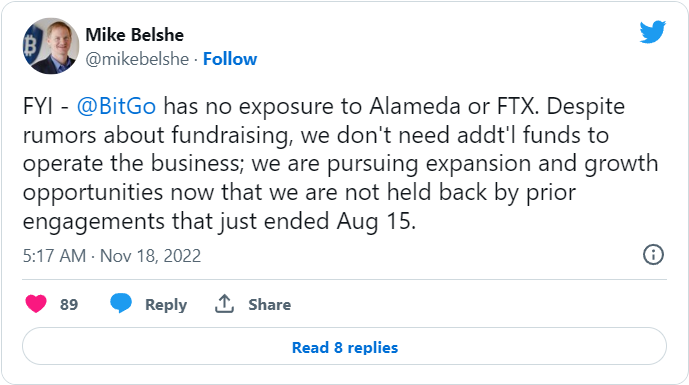
本来很想给他们发送私信询问一下情况,但是很可惜,他们都关闭了私信。

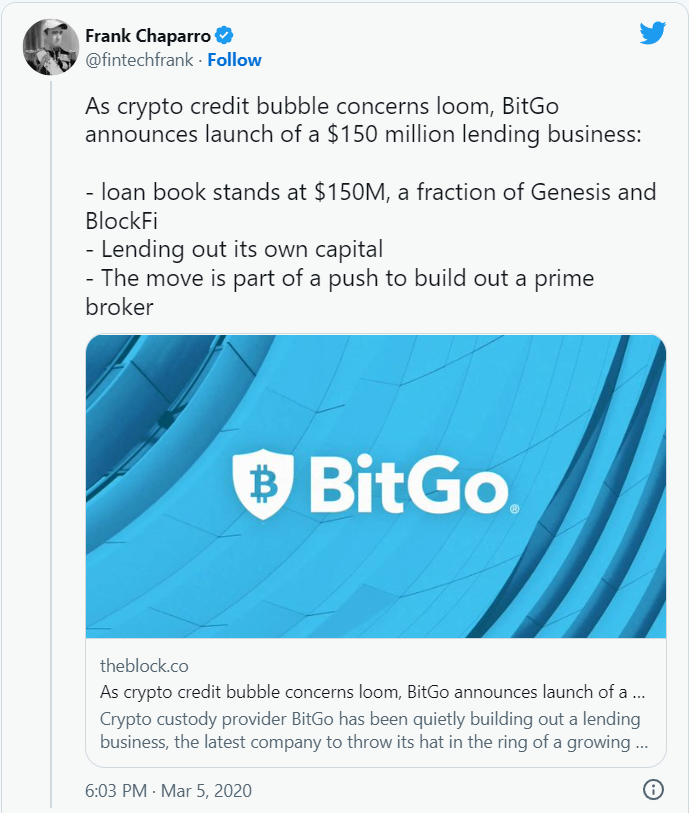
调查 BitGo 是因为他们拥有 BTC 的托管权,事实证明他们早在 2020 年就为机构客户推出了 1.5 亿美元的贷款业务。

虽然他们声称自己对 FTX 或者 Alameda 的风险敞口为零,但这不代表他们没有向其它公司提供过贷款,例如那些现在看起来已经资不抵债的公司。
在 FTX 崩溃仅四天后,他们就以 12 亿美元的估值寻求融资,这看起来像是一个危险信号。他们声称不需要资金,但如果真是这样,现在又跑去融资,这个操作让人觉得有些糟糕。

我担心的是,如果 BitGo 资不抵债,那么 wBTC 的持有人可能不会被视为 BitGo 债权人。当然,这只是我自己的想法。

他们保管着数十亿美元的 BTC,万一 BitGo 或商家破产了,那会发生什么?

除了托管人 BigGo,还有负责为客户燃烧和铸造 wBTC 的商家,他们通常是做市商。目前有超过 60 多个合作伙伴有能力铸造和销毁 wBTC。

这些合作伙伴包括 3AC、Nexo、Ren Protocol、Crypto.com、Coinlist 等等机构。

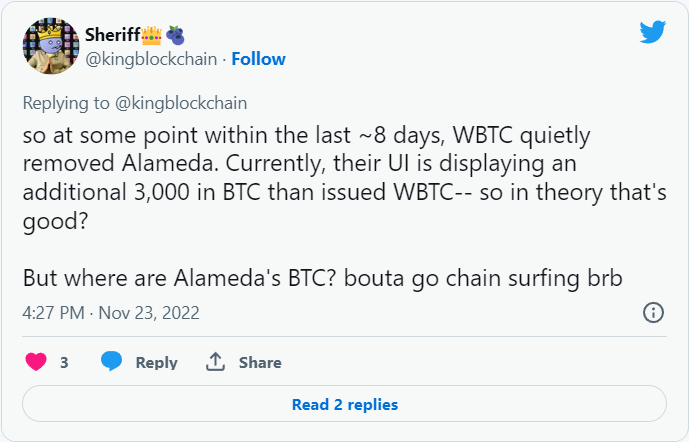
如您所知,其中一些机构已经申请破产,而另一些机构也被人们各种猜测。Alameda 是唯一一个从名单中删除的机构。

(译者注:因为 Alameda 的破产已经是板上钉钉了,所以被踢出合作伙伴列表是毫无疑问的。)
请记住,这些只是燃烧和铸造 wBTC 的商家,并不是BitGo这样的托管人。这意味着他们可以进行销毁和铸造,但是也有可能持有极少量的原生 BTC(如果他们有的话)。

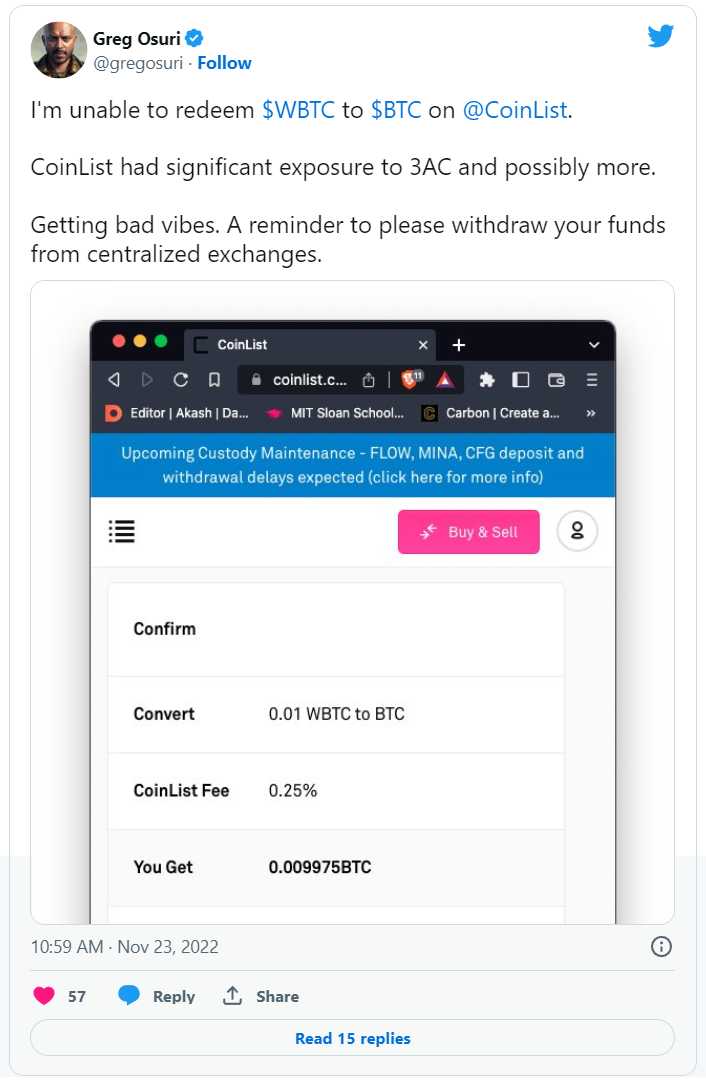
我认为这里的问题将是破产申请和可能的资产收回。自 FTX 暴雷事件发生以来,多家发行人一直在努力解决销毁和铸造问题。

在一个健康的市场中,做市商会以足够快的速度铸造和销毁代币,以保持 wbtc 与 btc 在汇率上 1:1 兑换。但当前的脱锚却让我们看清楚,做市商们并没有在做事。
03

FTX 铸造的 wBTC

Sheriff 强调的另一件事是,FTX 能够直接在自家交易所内铸造 wBTC。随着 Alameda 从合作伙伴列表中被删除,这也是令人担忧的一件事。
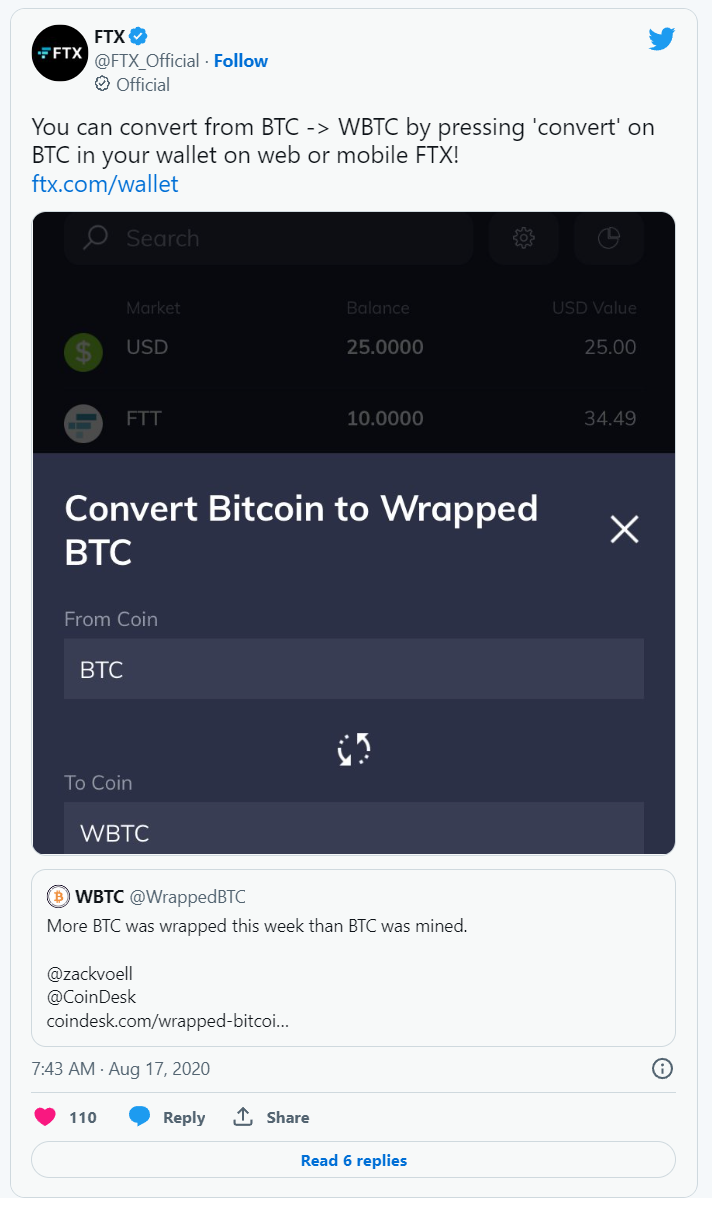
FTX US 在他们的文档中表示,大部分客户资产都存储在 BitGo Trust 中,而且还有 1 亿美元的保单作担保。

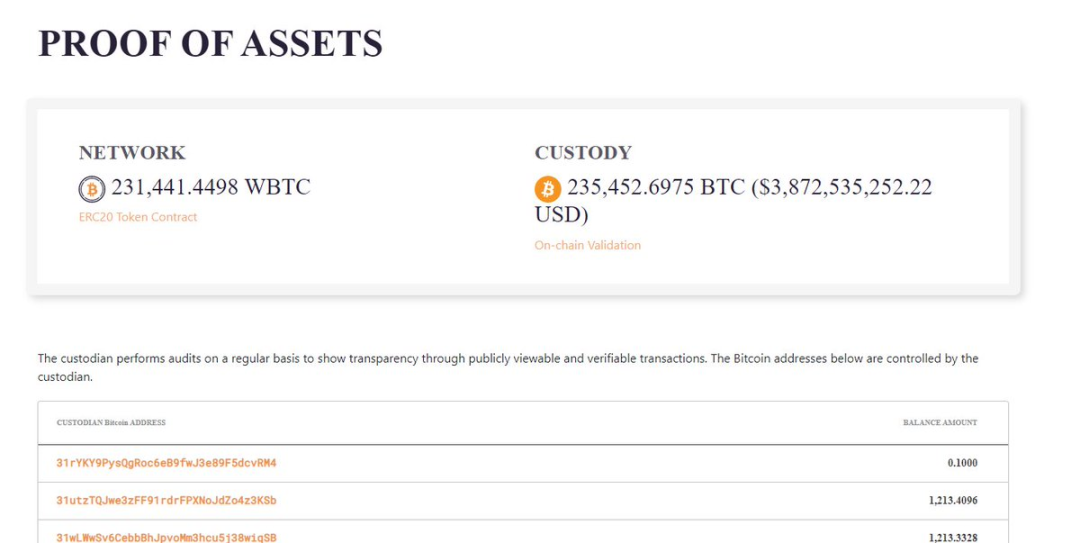
理想情况下,我希望能够验证「托管」中的所有的 BTC(23.5 万个)都保存在由 BitGo 控制的钱包中。但链上资产证明只是有帮助,我们仍旧无法判断这些是否会与法律程序挂钩。

链上分析师应该进一步分析他们托管钱包。
如果 Alameda 发行了这些 wBTC 并最终由 BitGo 保管,那么这些BTC最终由FTX美国的债权人持有,而不是支撑 wBTC。难道不是这样子吗?

也就是说,一旦这些标的 BTC 跟着 Alameda 一块破产,那么最终可能是 wBTC 持有人对这些债务负责。

04

Ren Protocol 的窘境

另一位用户还提到了 Ren protocol,如果你对这个协议不熟悉,那么 REN代币和 renBTC 你一定听说过。

REN 是一个原生的 BTC 桥,最近由于卷入 FTX 暴雷事件,而频频出现在各种头条新闻中。
REN 实际上也是归 Alameda 所有。

由于他们和 Alameda 的这层关系,导致开发团队的资金只能坚持到今年年底。目前团队正在筹集新的资金,同时加快新 Ren 2.0 桥的计划,而 Ren v1 将在 30 天后停用。

Solana 上一堆由 Alameda 支撑价值的代币都已跌到脱锚,而根据 Ren Protocol 的公开信息显示,他们的资产目前已得到妥善抵押。希望他们没事。

以上这些资产如果在接下来的 30 天内不销毁处理的话,将会面临很大风险。

Ren protocol 当前的目标是摆脱 Alameda 并转向 Ren 2.0,但在此之前,他们必须融到最够的资金以支撑运营。
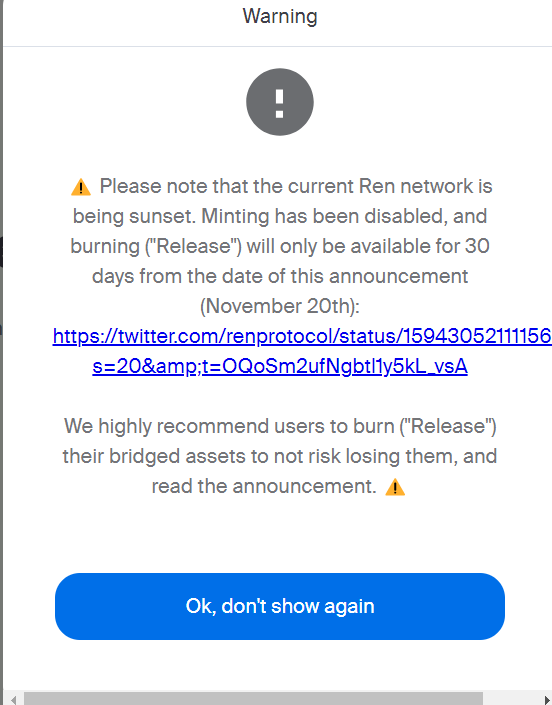
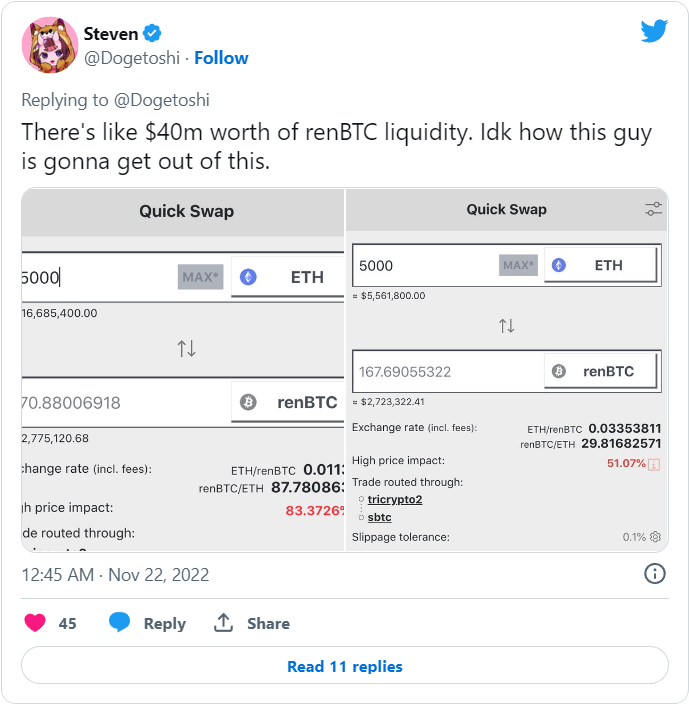
renBTC 的流动性也是一个大问题,因为链上一些地址一直在交换 ETH > wBTC > renBTC > 原生 BTC。

这正在消耗 renBTC 的桥接资产,但是团队表示他们不会补充这些资产。
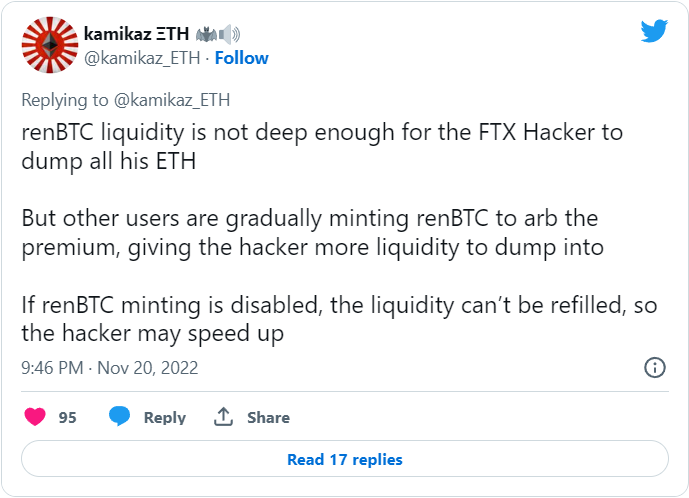
黑客仍然有超过 8 位数的资金,他们正试图在没有流动性的情况下,将这些资产转移到桥上。

如果黑客是 FTX 内部人员,他们是否会在知道包装资产将受到影响的情况下加强流动性紧缩?
说到这里,Alameda 对着《破产法第十一章》提出破产的画面又浮现在了我的眼前。

我不太清楚 Ren 1.0 上是不是有什么明确的类似案例,来指导我们下一步应该怎么办,为了安全起见,还是不要相信第三方为好。
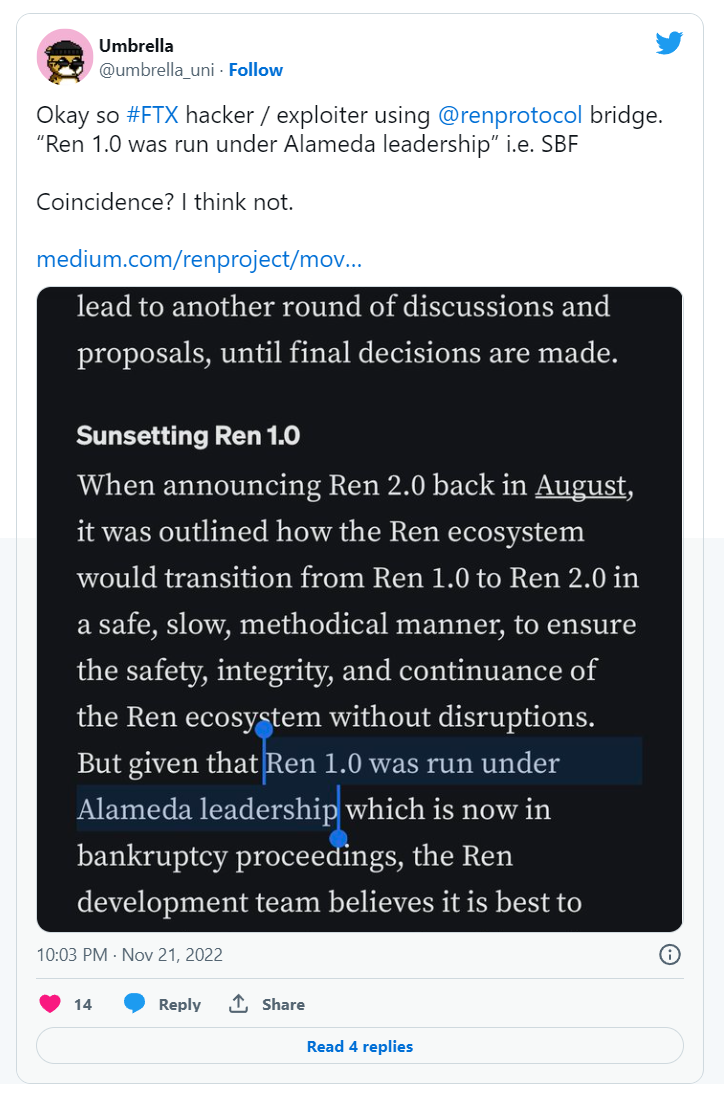
从 REN 的角度来看,桥接流动性和 FTX 黑客是我一直关注的两个主要风险因素。

在此之前,我没有使用过 Ren Protocol,所以如果有熟悉 Ren 的朋友,也欢迎你们做进一步补充。

许多人正在做空 ETH,期望 FTX 黑客采取行动,但由于流动性限制,他们在很大程度上会被困在 ETH 中。

随着黑客进一步寻找返回原生 BTC 的途径,这可能会导致包装资产出现其它问题。
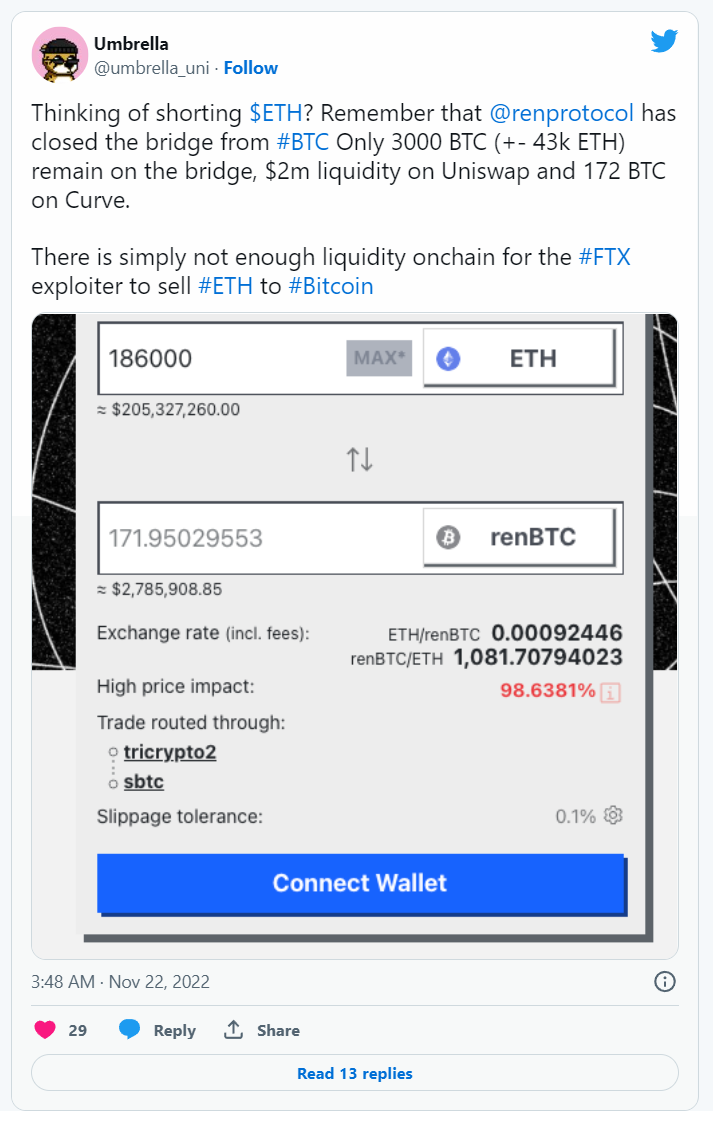
我给你的建议是,尽量持有原生资产,不要相信任何第三方。

暂时我会卖掉而所有的 renBTC、wBTC、wETH 等包装资产,直到我确认它们安全为止。

如果你被困在 wBTC 中,我建议使用 THOR 或 kraken 换成原生的 BTC 以确保安全。

这其实很麻烦,如果 wBTC 出现了问题,那么中心化交易所和预言机都会受到影响,那么你持有的 wBTC 将会变成一笔坏账。

如果这些资产不能 1:1 兑换,进而严重脱钩,那么存储了包装资产的 DeFi 协议可能也会跟着倒霉,因此请注意这些协议的安全性。

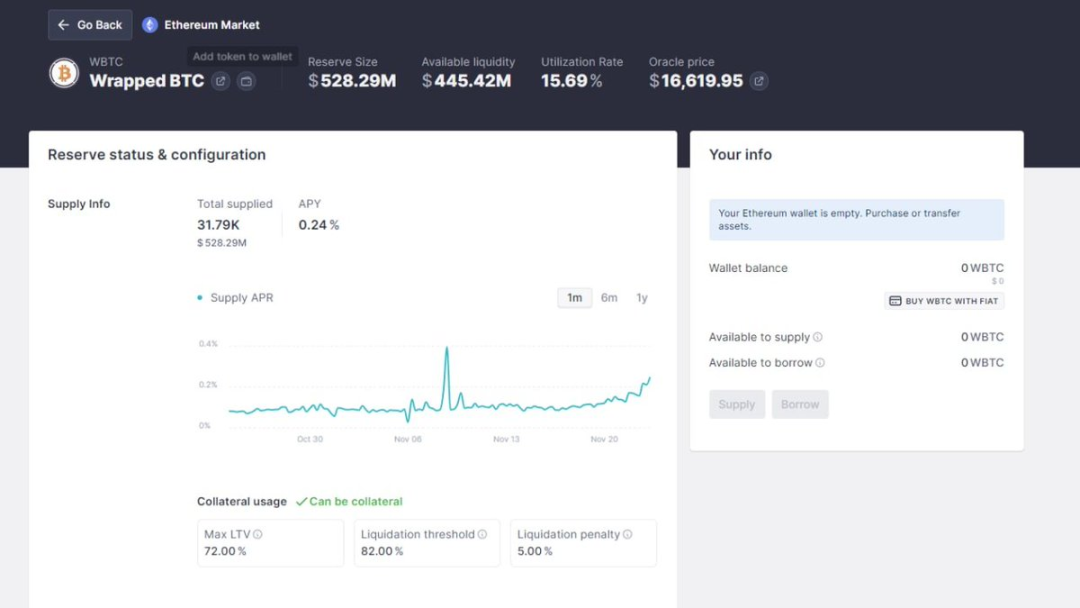
Aave 上最近 wBTC 的使用率大幅上升,这可能是由于 Avraham Eisenberg 对于 CRV 的攻击,亦或是是用户在做空 wBTC。

(译者注:Avraham Eisenberg 是上次在 mango market 套出 1 亿美金的操盘手,在此次攻击事件中,他抵押了 6360 万枚 USDC,借出 9200 万枚 CRV 去做空,最终攻击失败被爆仓。)

到目前为止,这在很大程度上感觉像是做市商的失败,这也是为什么 wBTC 的价格始终负溢价 1% 左右,而不是 1:1 完全兑换。
05

小结

个人觉得哪里有烟,哪里就有火,特别是在加密领域,我是真的怀疑绝大多数 wBTC 和 renBTC 都处于危险边缘的。

任何时候请记住,无私钥则无资产!希望大家都能注意资产安全,同时也希望我的这篇推文会带来一些新的发现和讨论。

最后,强烈要求第三方透明公开!

Trending Cryptos

Related Reads

Soaring Export Data for Memory Chips, Market Is Redefining the Valuation Anchor for Memory Stocks

Korean storage export data for the first 20 days of June shows substantial year-on-year increases in both value and price-per-kilogram for categories like DRAM, NAND, and SSDs. This signals a potential shift beyond simple demand recovery, indicating rising prices and a product mix shift towards higher-value items, possibly influenced by AI infrastructure needs. A key point is that the surge in price-per-kilogram is not simply a uniform chip price hike. It reflects a combination of actual price increases and, more importantly, an export structure increasingly dominated by high-value-density products like HBM (High-Bandwidth Memory) and advanced DRAM, which are critical for AI servers. This suggests AI-driven demand may be spilling over from just HBM into broader memory markets. SK Hynix stands to benefit directly due to its leading HBM position. For Samsung and Micron, the implication is potential for greater margin elasticity if the tightness in high-end memory spreads to enterprise SSD and NAND prices. However, the storage sector remains cyclical. Risks include supply expansion, inventory changes, and potential slowdowns in broader AI capital expenditure. Ultimately, while the strong export data supports upward revisions for storage company earnings and fuels discussion of an "AI infrastructure bottleneck premium," a definitive valuation shift from a cyclical to a structural story depends on upcoming quarterly reports. Investors need confirmation from SK Hynix, Samsung, and Micron that improvements in average selling prices, product mix, and, crucially,毛利率 are sustained over multiple quarters.

marsbit1h ago

Soaring Export Data for Memory Chips, Market Is Redefining the Valuation Anchor for Memory Stocks

marsbit1h ago

Why Does SpaceX Have Such a High Valuation Ceiling? The Answer Lies in Musk's Business Blueprint

SpaceX achieved a record-breaking IPO on June 12, 2026, with its market cap surging past $2.1 trillion. This valuation reflects its central role within Elon Musk's expansive, interconnected technological ecosystem. The article details how four core components form a synergistic closed-loop system: 1) **The "Brain" (xAI & Orbital Compute):** xAI provides AI models and massive ground/space-based supercomputing for simulation and decision-making across the system. 2) **The "Neural Logistics Core" (Starlink & Starship):** Starlink's low-latency satellite network enables global data transmission, while Starship's low-cost, reusable launch capacity aims to make large-scale space deployment economically viable. 3) **The "Physical Body" (Tesla & Optimus):** Tesla's manufacturing prowess and energy products support hardware production and power, pivoting toward mass-producing the Optimus humanoid robot for terrestrial and potential space-based labor. 4) **The "Human Interface" (Neuralink & X):** Neuralink seeks direct brain-computer communication, and the X platform provides real-time societal data. Together, these elements create three reinforcing "flywheels": manufacturing/logistics, data-driven iteration, and energy/compute/network synergy. This integrated approach promises lower costs, faster innovation cycles, and potential infrastructure-as-a-service offerings. However, it also concentrates technical, regulatory, and corporate governance risks. Ultimately, SpaceX's high valuation stems from its position as the indispensable infrastructural backbone—handling space transport, global communications, and future orbital computing—tying together Musk's entire vision for a self-reinforcing technological empire.

marsbit1h ago

Why Does SpaceX Have Such a High Valuation Ceiling? The Answer Lies in Musk's Business Blueprint

marsbit1h ago

Snap, Unprofitable for Nine Years, and a Decade-Long AR Obsession Without Return

Snap's AR Obsession: A Decade of Betting Against the Odds On June 16, Snap CEO Evan Spiegel unveiled the new AR glasses, Specs, priced at $2,195, causing the company's stock (SNAP) to plummet nearly 10%. The launch was met with intense criticism online, with investors questioning why a consistently unprofitable company would stake its future on an expensive product its core young user base can't afford. Snapchat, known for pioneering features like ephemeral Stories and popular AR lenses (like the iconic dog filter), has a history of innovation often copied by rivals like Instagram and Meta. Despite this, it has struggled to translate first-mover advantage into commercial success. Since its 2017 IPO, Snap has reported annual net losses, with a Q1 2026 loss of $89 million. Its stock is down 94% from its 2021 peak, hampered by iOS privacy changes, competition, and a young demographic less attractive to major advertisers. In this challenging context, Spiegel is doubling down on AR. He calls 2026 a "crucible moment," having recently laid off 16% of staff while reportedly investing over $3.5 billion cumulatively in its AR glasses line over nearly a decade. The new Specs represent a significant leap from the 2016 camera-focused Spectacles, offering true AR overlays, gesture control, and standalone operation. However, at $2,195, it faces tough comparisons. While more advanced than Meta's $799 Ray-Ban smart glasses, critics point to its heavier weight, short battery life, and features largely replicable by a smartphone. Facing pressure from investors to cut losses on the Specs project, Spiegel has refused, framing it as essential to Snap's long-term vision. The company finds itself in a paradoxical position: cutting costs while heavily funding a decade-long, unproven bet. Some see Specs as an awkward but necessary step in AR's evolution, akin to early mobile phones. Whether Spiegel is a visionary outlier or a gambler destined to fail remains an open question, highlighting the tension between long-term ambition and short-term market demands.

marsbit1h ago

Snap, Unprofitable for Nine Years, and a Decade-Long AR Obsession Without Return

marsbit1h ago

Annualized Revenue Exceeds $20 Billion, Kalshi Aims to Become the First Prediction Platform IPO?

Kalshi, a leading U.S. prediction markets platform, is reportedly in early, informal discussions for an Initial Public Offering (IPO). The company's annualized revenue now exceeds $2 billion, fueled by its dominance of over 90% of the domestic prediction market activity. This growth stems from a surge in trading volume—reaching a total of $52.7 billion—and an increase in fee rates, largely driven by sports event contracts like the NBA playoffs and the 2026 FIFA World Cup. Monthly active users are approximately 2 million. Kalshi recently raised $1 billion in a funding round led by Coatue Management, valuing the company at $22 billion. It has also expanded its offerings to include Bitcoin perpetual contracts and plans to launch a dedicated trading platform, Kalshi Pro. However, Kalshi's path to an IPO faces significant regulatory hurdles. The core risk involves jurisdictional conflicts, as multiple U.S. states are challenging its operations under local gambling laws. For instance, Arizona has filed criminal charges against the platform, while states like Kentucky have filed lawsuits. Kalshi and the Commodity Futures Trading Commission (CFTC) argue that its event contracts fall under exclusive federal jurisdiction as "swaps." The outcomes of these ongoing legal battles could critically impact Kalshi's core revenue and its IPO timeline. Analysts suggest that while an IPO could theoretically occur by late 2026, a more likely timeframe is late 2027 or 2028, contingent on resolving legal issues and favorable market conditions. If successful, its fundraising could significantly exceed $1 billion, given its current valuation and revenue multiple.

Foresight News2h ago

Annualized Revenue Exceeds $20 Billion, Kalshi Aims to Become the First Prediction Platform IPO?

Foresight News2h ago

Trading

Spot
Futures

Hot Articles

What is $BITCOIN

DIGITAL GOLD ($BITCOIN): A Comprehensive Analysis Introduction to DIGITAL GOLD ($BITCOIN) DIGITAL GOLD ($BITCOIN) is a blockchain-based project operating on the Solana network, which aims to combine the characteristics of traditional precious metals with the innovation of decentralized technologies. While it shares a name with Bitcoin, often referred to as “digital gold” due to its perception as a store of value, DIGITAL GOLD is a separate token designed to create a unique ecosystem within the Web3 landscape. Its goal is to position itself as a viable alternative digital asset, although specifics regarding its applications and functionalities are still developing. What is DIGITAL GOLD ($BITCOIN)? DIGITAL GOLD ($BITCOIN) is a cryptocurrency token explicitly designed for use on the Solana blockchain. In contrast to Bitcoin, which provides a widely recognized value storage role, this token appears to focus on broader applications and characteristics. Notable aspects include: Blockchain Infrastructure: The token is built on the Solana blockchain, known for its capacity to handle high-speed and low-cost transactions. Supply Dynamics: DIGITAL GOLD has a maximum supply capped at 100 quadrillion tokens (100P $BITCOIN), although details regarding its circulating supply are currently undisclosed. Utility: While precise functionalities are not explicitly outlined, there are indications that the token could be utilized for various applications, potentially involving decentralized applications (dApps) or asset tokenization strategies. Who is the Creator of DIGITAL GOLD ($BITCOIN)? At present, the identity of the creators and development team behind DIGITAL GOLD ($BITCOIN) remains unknown. This situation is typical among many innovative projects within the blockchain space, particularly those aligning with decentralized finance and meme coin phenomena. While such anonymity may foster a community-driven culture, it intensifies concerns about governance and accountability. Who are the Investors of DIGITAL GOLD ($BITCOIN)? The available information indicates that DIGITAL GOLD ($BITCOIN) does not have any known institutional backers or prominent venture capital investments. The project seems to operate on a peer-to-peer model focused on community support and adoption rather than traditional funding routes. Its activity and liquidity are primarily situated on decentralized exchanges (DEXs), such as PumpSwap, rather than established centralized trading platforms, further highlighting its grassroots approach. How DIGITAL GOLD ($BITCOIN) Works The operational mechanics of DIGITAL GOLD ($BITCOIN) can be elaborated on based on its blockchain design and network attributes: Consensus Mechanism: By leveraging Solana’s unique proof-of-history (PoH) combined with a proof-of-stake (PoS) model, the project ensures efficient transaction validation contributing to the network's high performance. Tokenomics: While specific deflationary mechanisms have not been extensively detailed, the vast maximum token supply implies that it may cater to microtransactions or niche use cases that are still to be defined. Interoperability: There exists the potential for integration with Solana’s broader ecosystem, including various decentralized finance (DeFi) platforms. However, the details regarding specific integrations remain unspecified. Timeline of Key Events Here is a timeline that highlights significant milestones concerning DIGITAL GOLD ($BITCOIN): 2023: The initial deployment of the token occurs on the Solana blockchain, marked by its contract address. 2024: DIGITAL GOLD gains visibility as it becomes available for trading on decentralized exchanges like PumpSwap, allowing users to trade it against SOL. 2025: The project witnesses sporadic trading activity and potential interest in community-led engagements, although no noteworthy partnerships or technical advancements have been documented as of yet. Critical Analysis Strengths Scalability: The underlying Solana infrastructure supports high transaction volumes, which could enhance the utility of $BITCOIN in various transaction scenarios. Accessibility: The potential low trading price per token could attract retail investors, facilitating wider participation due to fractional ownership opportunities. Risks Lack of Transparency: The absence of publicly known backers, developers, or an audit process may yield skepticism regarding the project's sustainability and trustworthiness. Market Volatility: The trading activity is heavily reliant on speculative behavior, which can result in significant price volatility and uncertainty for investors. Conclusion DIGITAL GOLD ($BITCOIN) emerges as an intriguing yet ambiguous project within the rapidly evolving Solana ecosystem. While it attempts to leverage the “digital gold” narrative, its departure from Bitcoin's established role as a store of value underscores the need for a clearer differentiation of its intended utility and governance structure. Future acceptance and adoption will likely depend on addressing the current opacity and defining its operational and economic strategies more explicitly. Note: This report encompasses synthesised information available as of October 2023, and developments may have transpired beyond the research period.

416 Total ViewsPublished 2025.05.13Updated 2025.05.13

What is $BITCOIN

Discussions

Welcome to the HTX Community. Here, you can stay informed about the latest platform developments and gain access to professional market insights. Users' opinions on the price of BTC (BTC) are presented below.

活动图片