14个指标掌握过去90天蓝筹DeFi市场变化

PanewsPublished on 2022-10-14Last updated on 2022-10-14

Abstract

加密熊市中,尽管很多事情看起来波澜不惊,但其实有些地方其实暗潮汹涌,比如DeFi生态系统,其中蓝筹DeFi市场的状况可能会让你大吃一惊。

加密熊市中,尽管很多事情看起来波澜不惊,但其实有些地方其实暗潮汹涌,比如DeFi生态系统,其中蓝筹DeFi市场的状况可能会让你大吃一惊。

接下来,就让我们从下面这14个指标中看懂过去90天蓝筹DeFi市场发生了哪些变化吧。

1、价格

对于大多数头部DeFi项目来说,过去的一年日子都不太好过,按照美元计价,不少DeFi项目价格都出现了不同程度的下跌,比如:

Compound: -82%

Yearn Finance: -77%

Balancer: -76%

Aave: -74%

Uniswap: -74%

Curve: -69%

Convex: -65%

Lido:- 64%

Maker: -61%

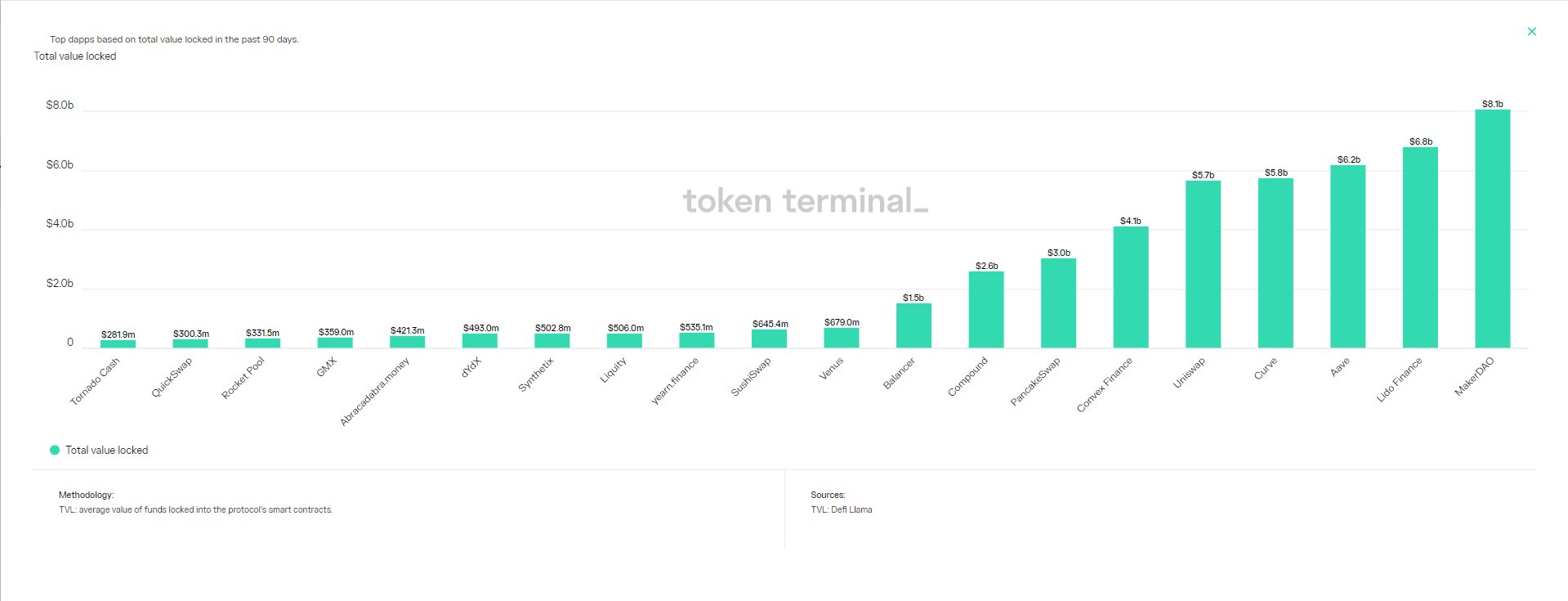
2、总锁仓量

截至10月14日,DeFi总锁仓量约为513.5亿美元,过去90天锁仓量排名前十的Dapp如下:

Maker:81亿美元

Lido: 68亿美元

Aave: 62亿美元

Curve: 58亿美元

Uniswap: 57亿美元

Convex: 41亿美元

PancakeSwap:30亿美元

Compound:26亿美元

Balancer: 15亿美元
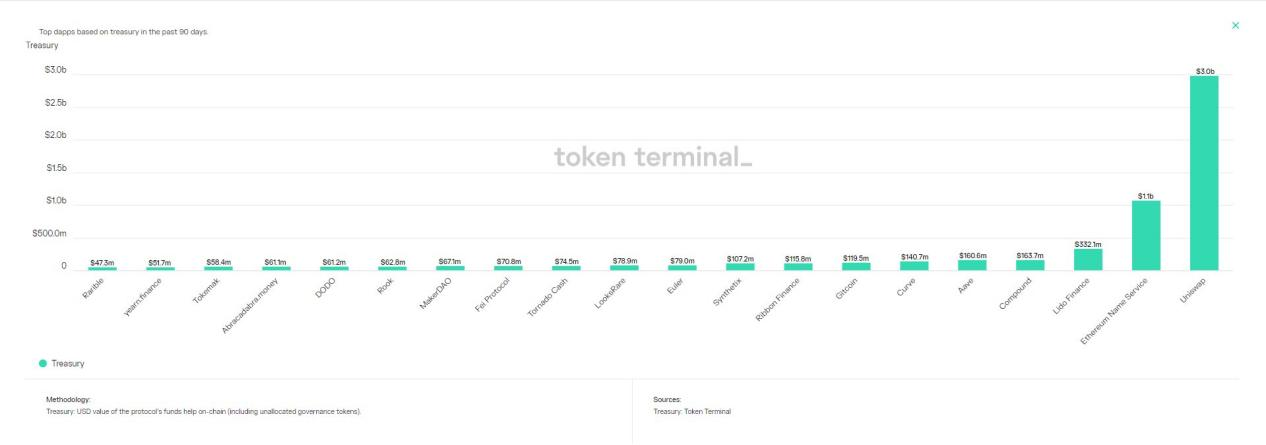
3、储备金库

储备金库(Treasury)是协议链上持有资金的美元总价值(包括未分配的治理代币),目前储备金库规模最大的是UniSwap,在过去90天时间里其储备金库规模平均值约为30亿美元。其次是ENS为11亿美金,LidoFinance为3.3亿美金,Compound和Aave都为1.6亿美金。
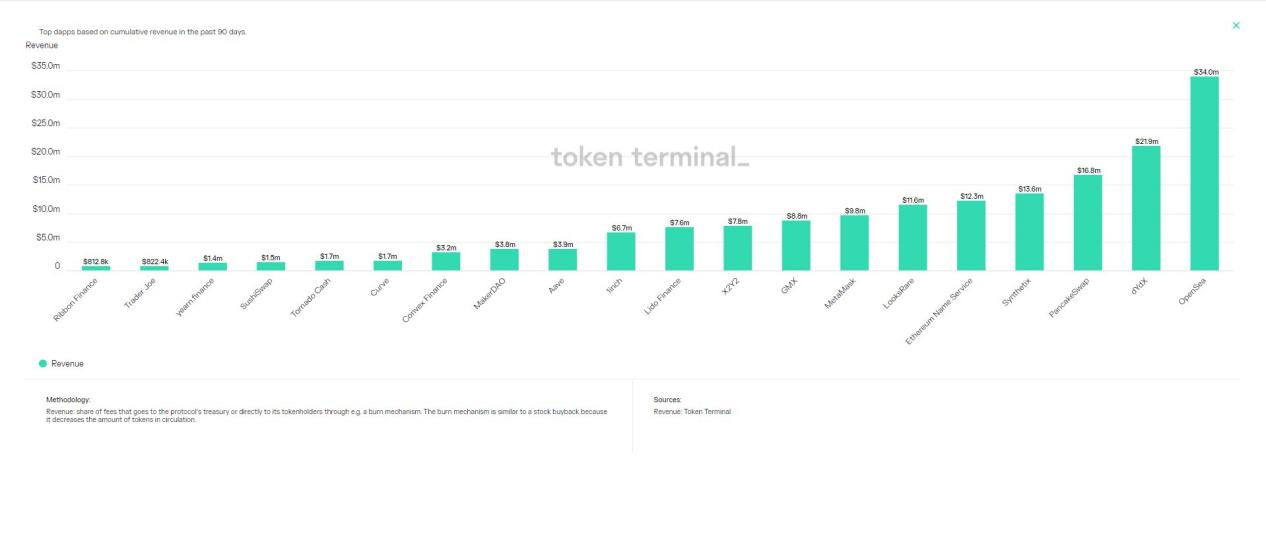
4、Dapp收入

收入是指进入协议储备金库或直接进入代币持有人的费用收入份额,在过去的90天里:

OpenSea以3400万美元收入排名第一

DYDX:2200 万美元

PancakeSwap:1700 万美元

SNX:1400 万美元

ENS:1200 万美元
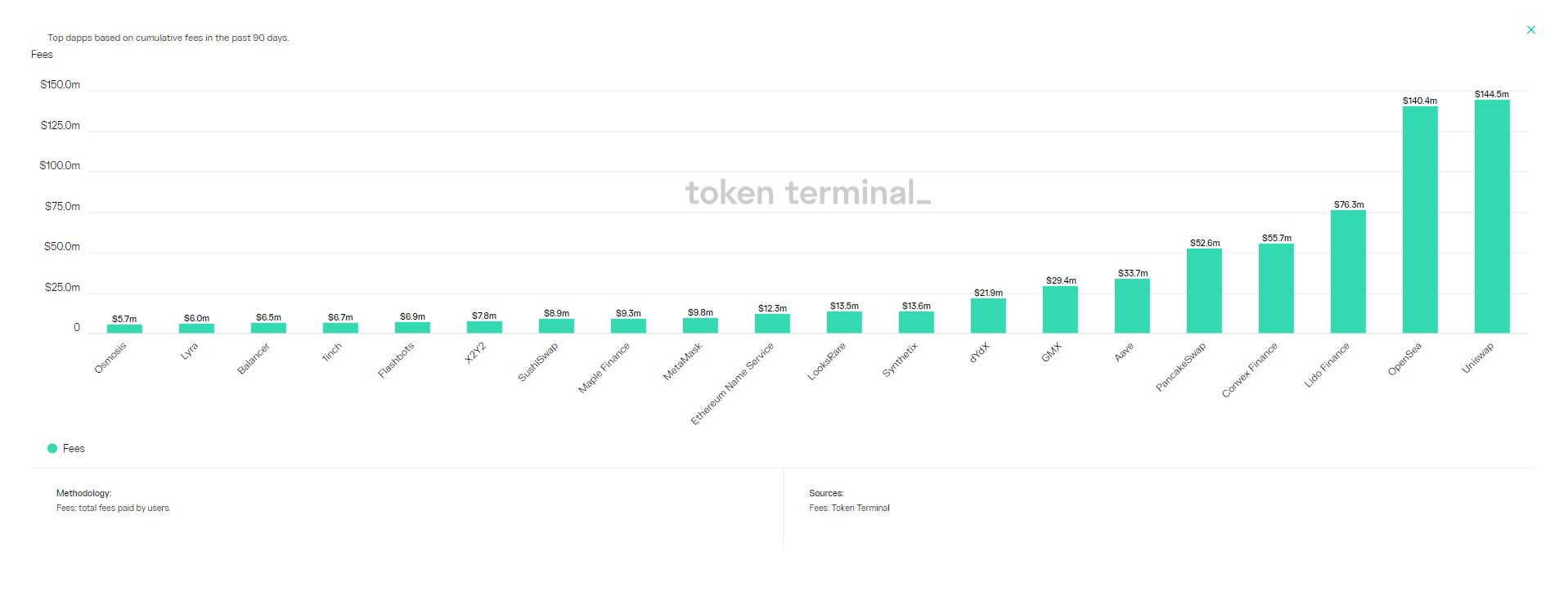
5、DApp费用

在过去的 3 个月中,以下DApp用户支付的费用数量分别是:

Uniswap:1.44 亿美元

OpenSea:1.4 亿美元

Lido:7600万美元

Convex:5600 万美元

PancakeSwap:5200 万美元

Aave:3300万美元

GMX:2900 万美元

DYDX:2200 万美元

Synthetix:1400 万美元
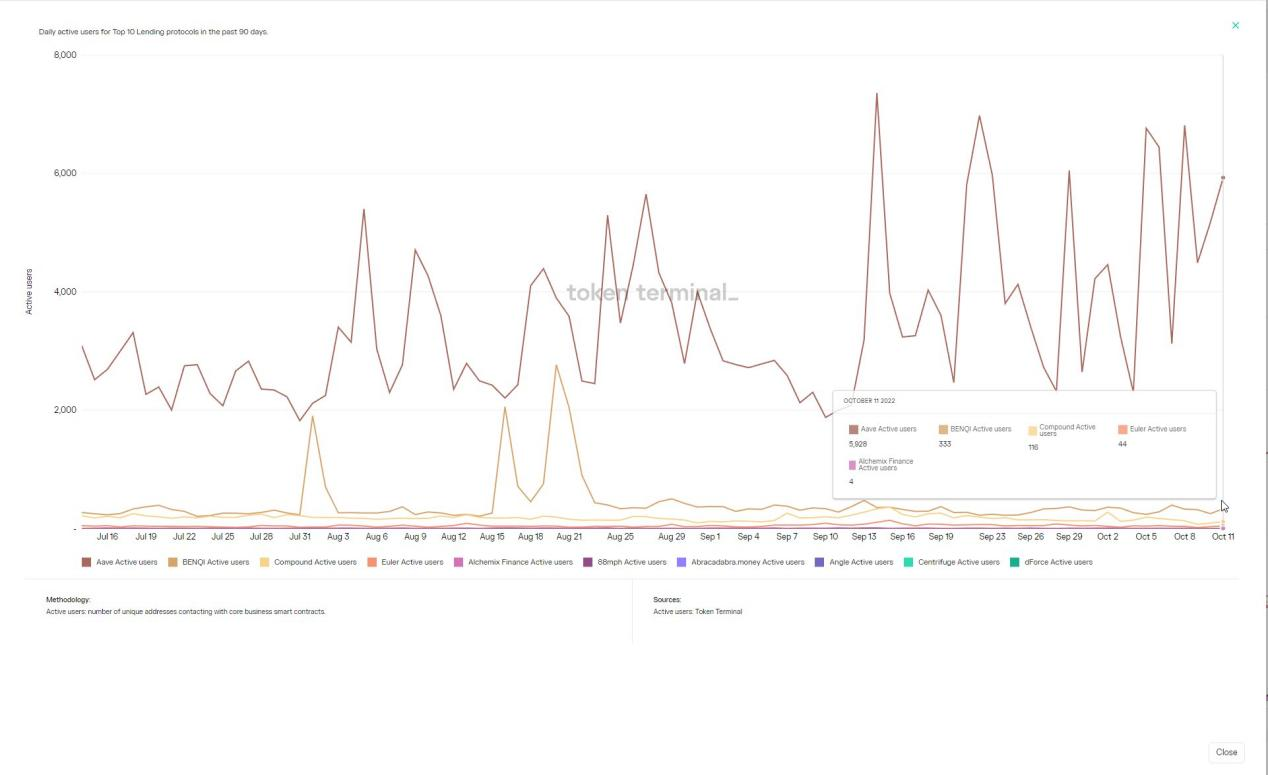
6、借贷协议的活跃用户(过去 90 天)

在过去的3个月中,与借贷协议交互的唯一地址数量增长了77%,从3,626个用户增加到 6,425 个。
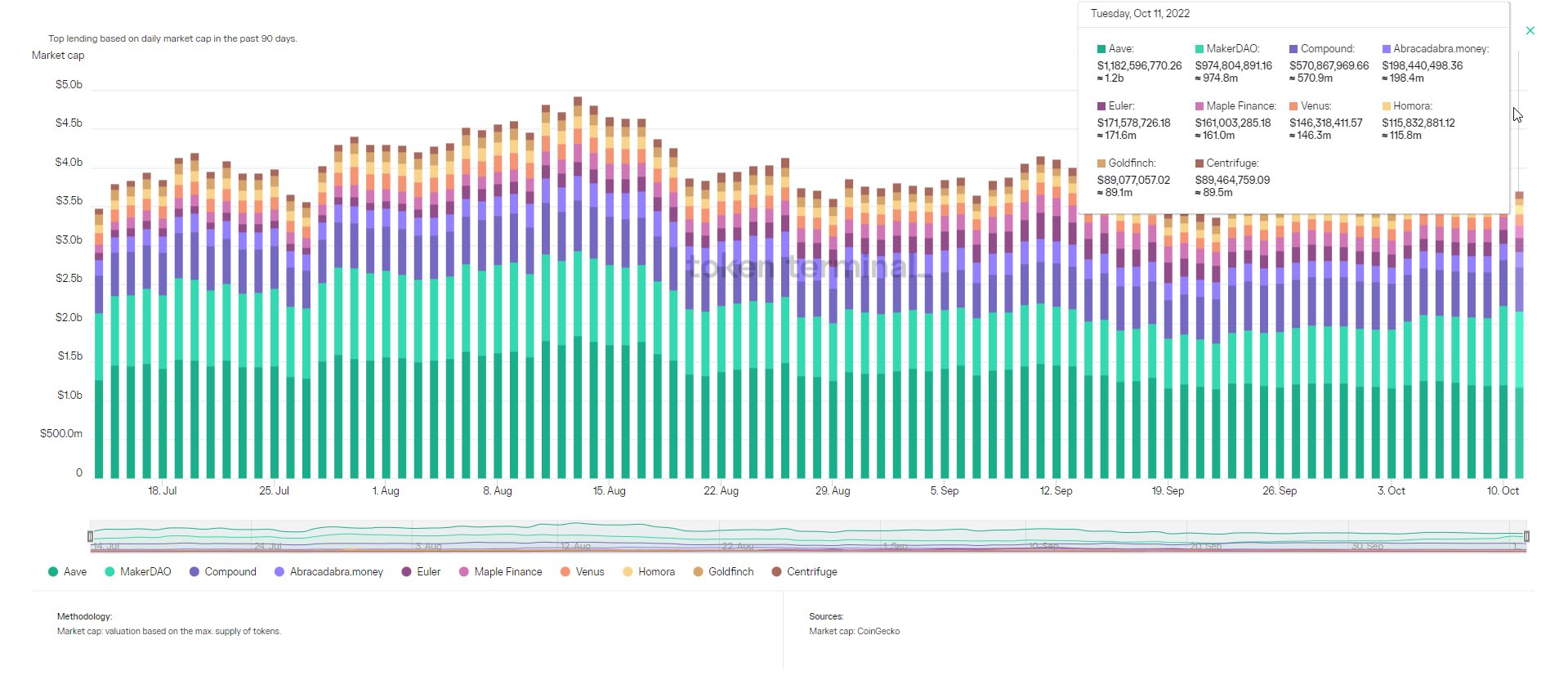
7、借贷协议市值

当前跨借贷协议的总市值约为37.5亿美元,各协议市值如下:

Aave:12亿美元

Maker:9.74亿美元

Compound:5.7亿美元

Abracadabra money:2亿美元

Euler:1.71亿美元

Maple:1.61亿美元

Venus:1.46亿美元

Homora:1.15亿美元

Goldfinch:8900万美元

Centrifuge:8900万美元
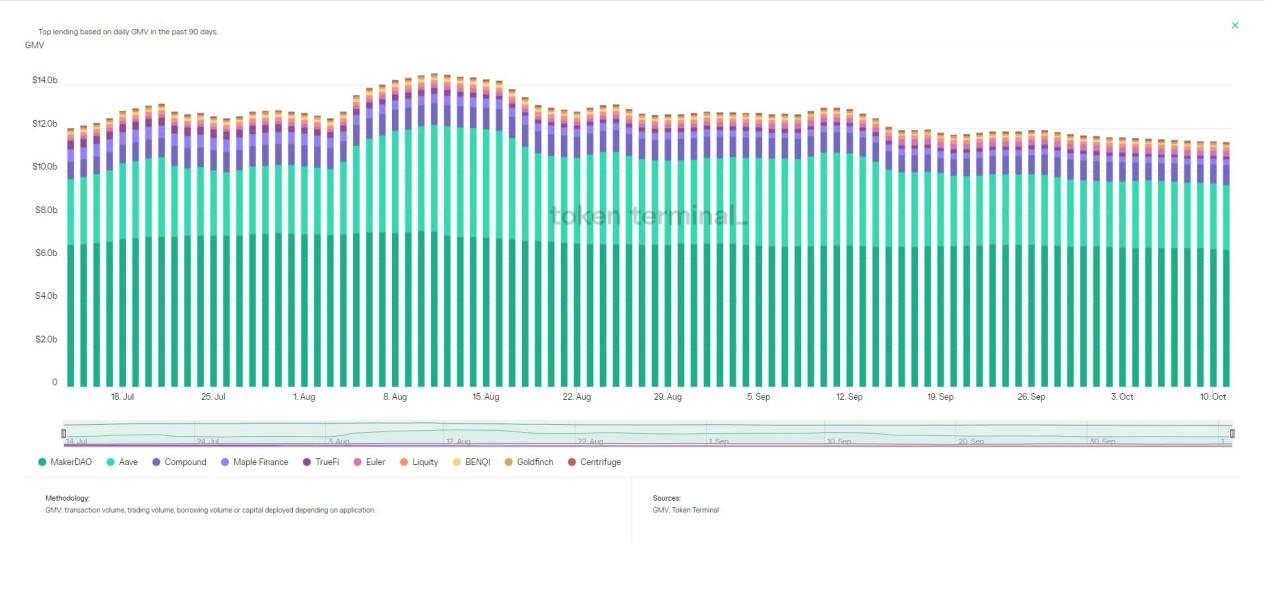
8、头部借贷协议借款额

当前跨贷款协议的未偿还借款金额如下:

Maker:64亿美元

Aave:30亿美元

Compound:9亿美元

Maple:2.75亿美元

TrueFi:1.22亿美元

Euler:2.55亿美元

Liquity:1.74亿美元

BENQI:6800万美元

Goldfinch:9900万美元

Centrifuge:7900万美元
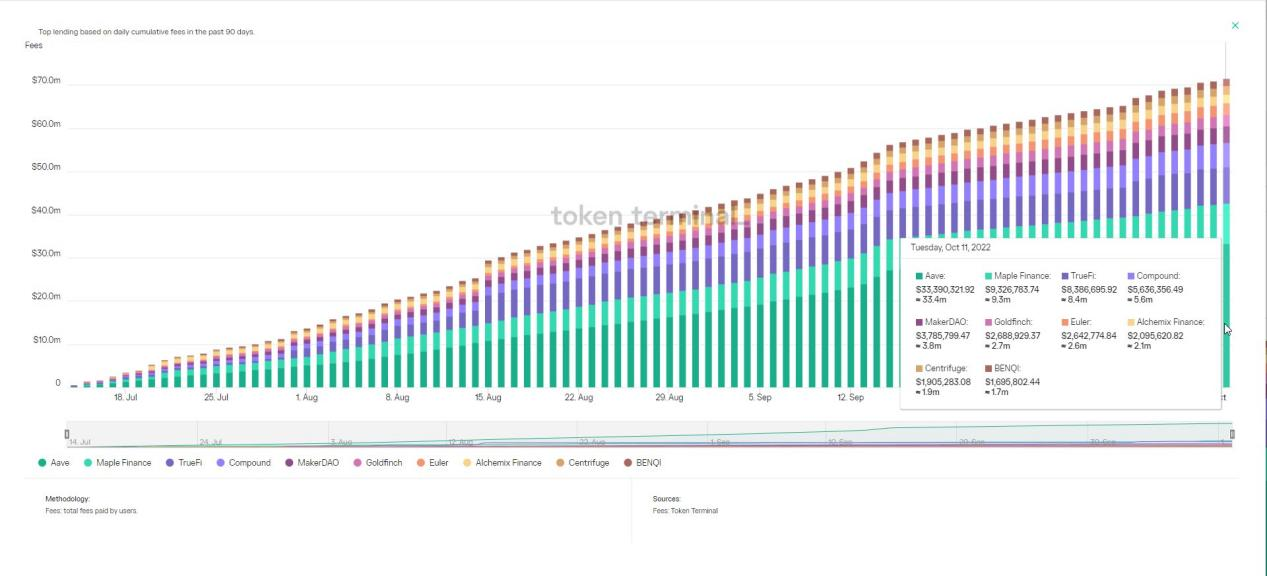
9、用户在借贷协议上累计支付的费用总额(过去90天)

各协议累计支付的费用总额如下:

Aave:3300万美元

Maple:930万美元

TrueFi:840万美元

Compound:560万美元

Maker:380万美元

Goldfinch:270万美元

Euler:260万美元

Alchemix:210万美元

Centrifuge:190万美元

BENQI:170万美元
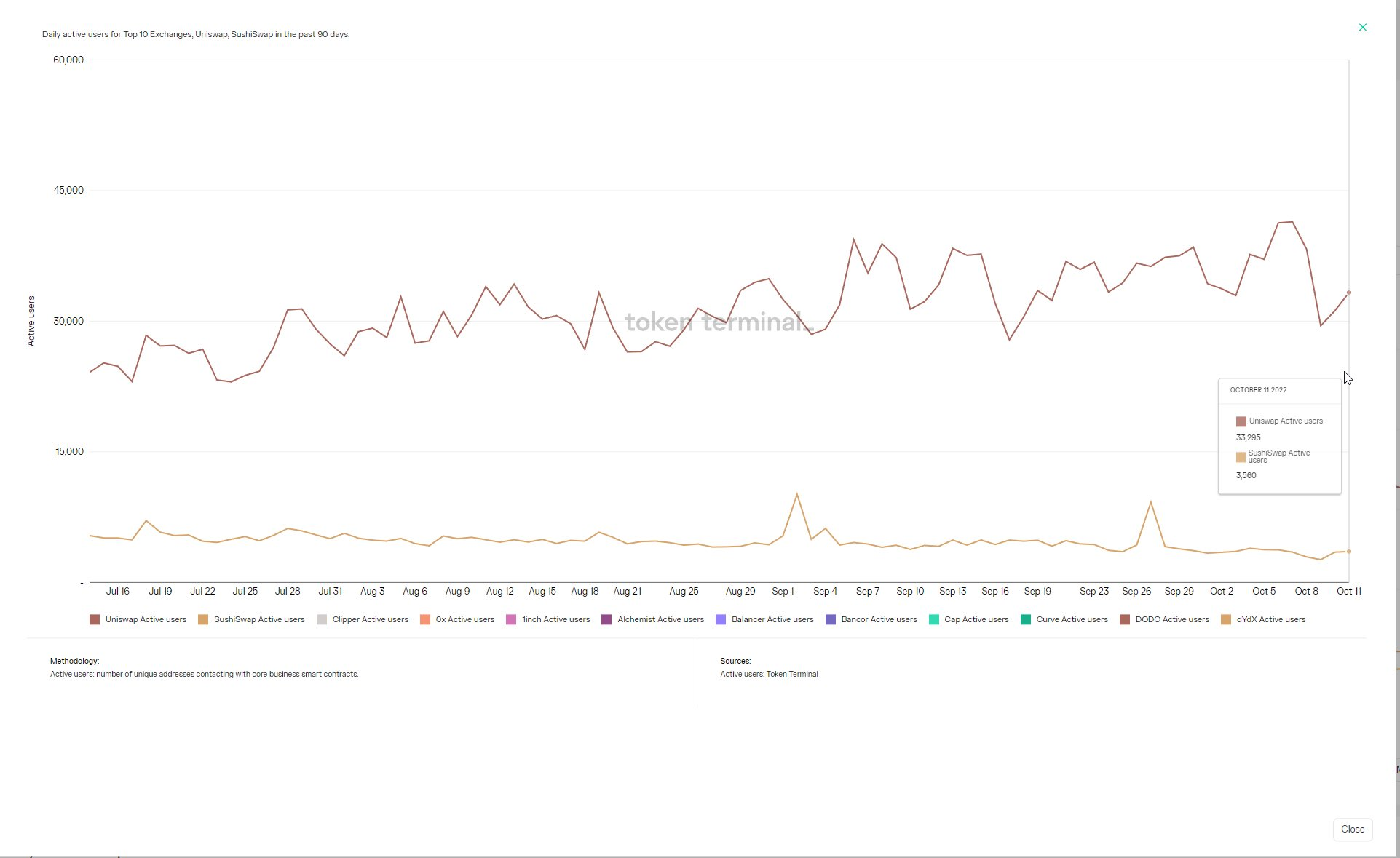
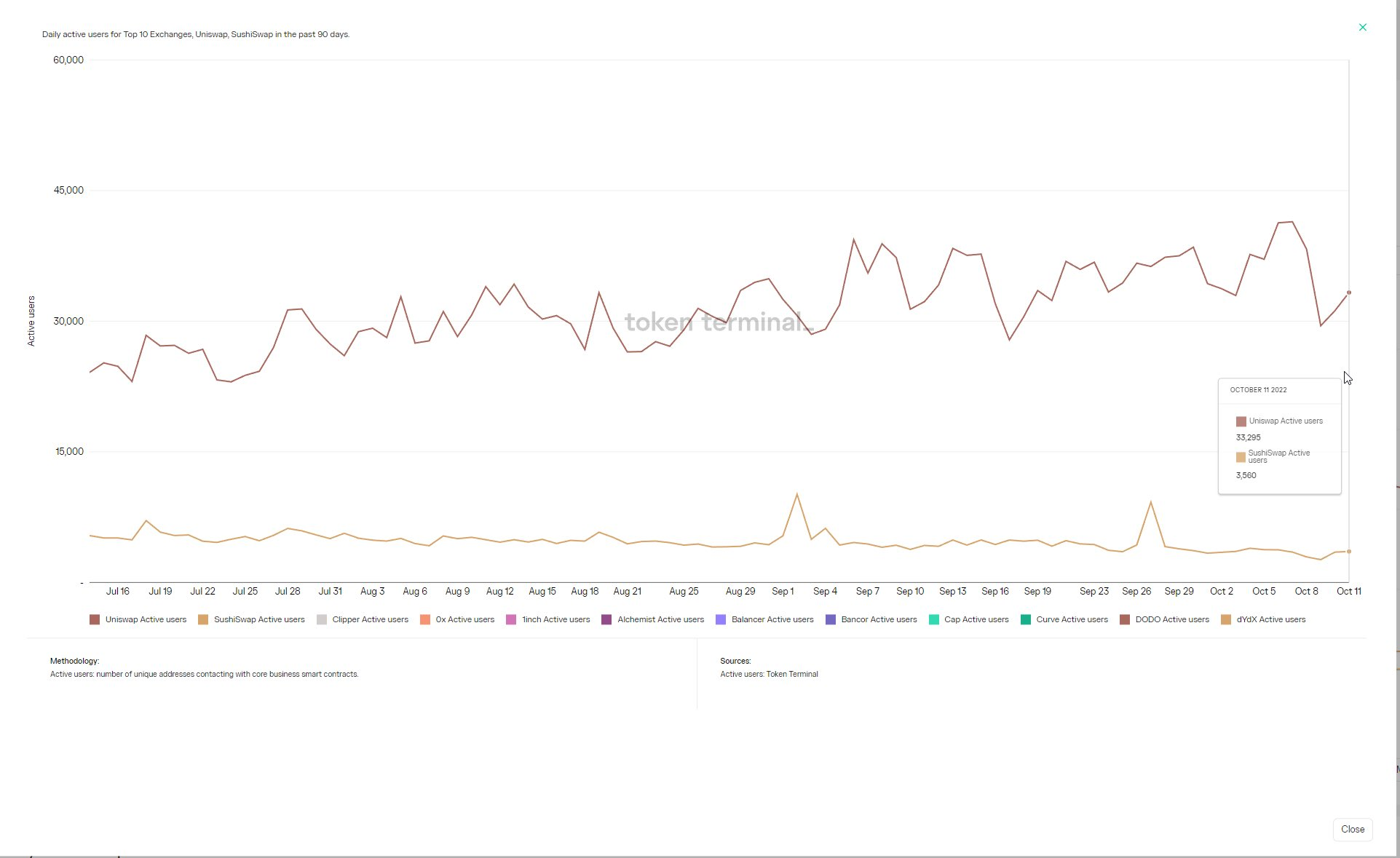
10、SushiSwap和Uniswap的活跃用户区块(过去90天)

SushiSwap和Uniswap一样,都在努力留住用户。目前,Uniswap拥有33295名活跃用户。比3个月前增长了38%。SushiSwap情况则有所不同,目前拥有3560名活跃用户,比3个月前下降了34%。
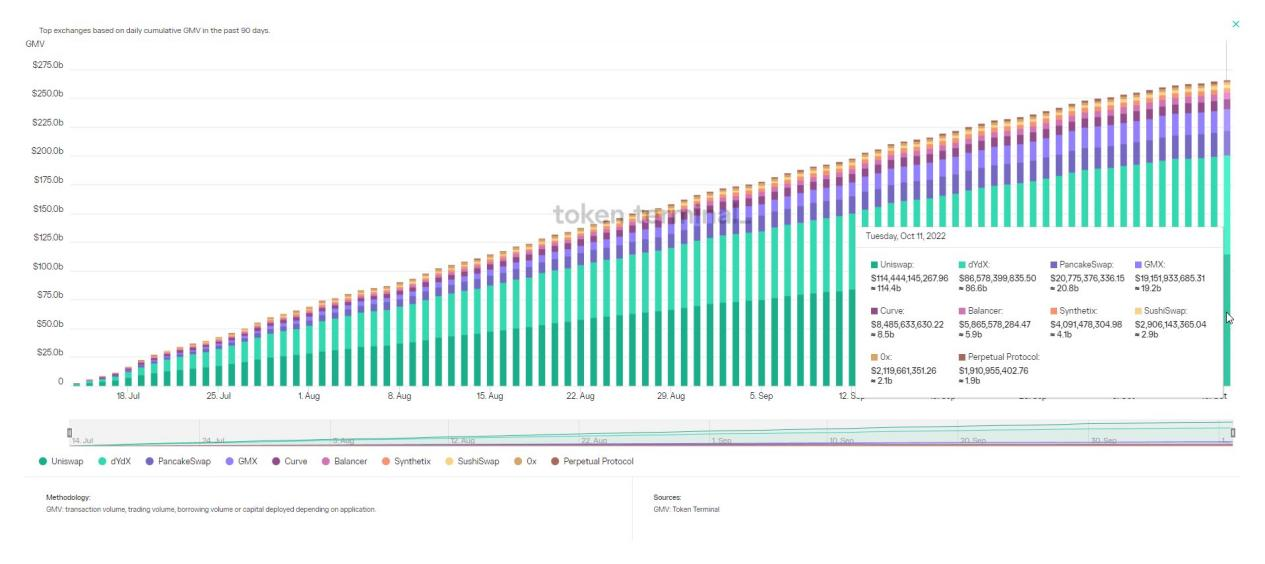
11、头部DEX累计交易额(过去90天)

Uniswap: 1150亿美元

dYdX: 860亿美元

PancakeSwap: 210亿美元

GMX: 190亿美元

Curve:85亿美元

Balancer: 60亿美元

Synthetix: 41亿美元

SushiSwap: 29亿美元

0x: 21亿美元

Perpetual Protocol: 19亿美元
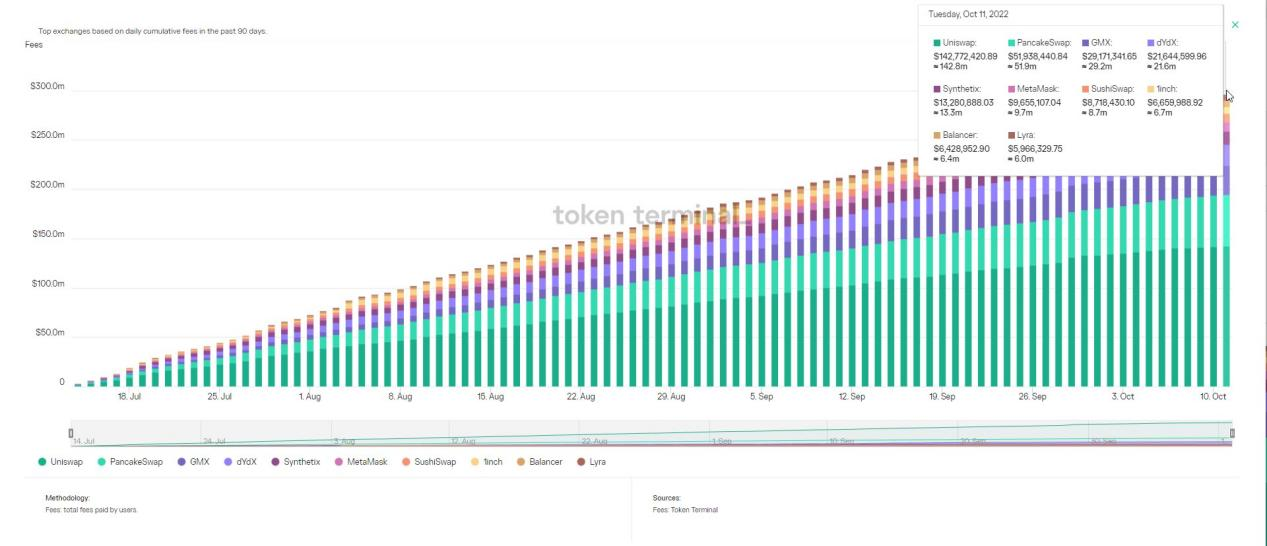
12、用户在DEX上累计支付的费用(过去90天)

Uniswap:1.42亿美元

PancakeSwap:5200万美元

GMX:2900万美元

dYdX:2200万美元

Synthetix:1300万美元

MetaMask:970万美元

SushiSwap:900万美元

1inch:670万美元

Balancer:640万美元

Lyra:600万美元
13、交易总额(过去90天)

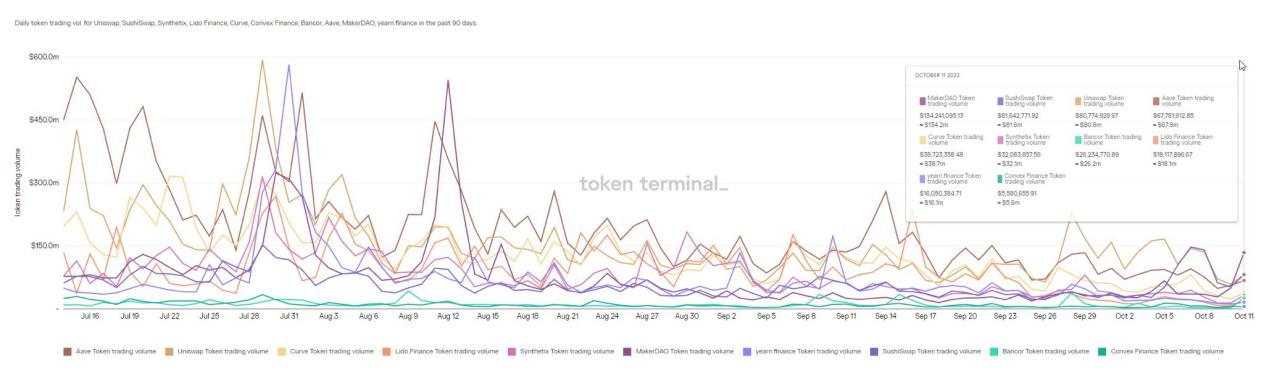
正如预期的那样,随着加密市场大盘波动不断加剧,DeFi代币交易额也出现大幅下降。在过去的90天时间里,头部DeFi代币交易额已从13亿美元暴跌至5亿美元,跌幅高达62%。
14、代币持有人数量(过去90天)

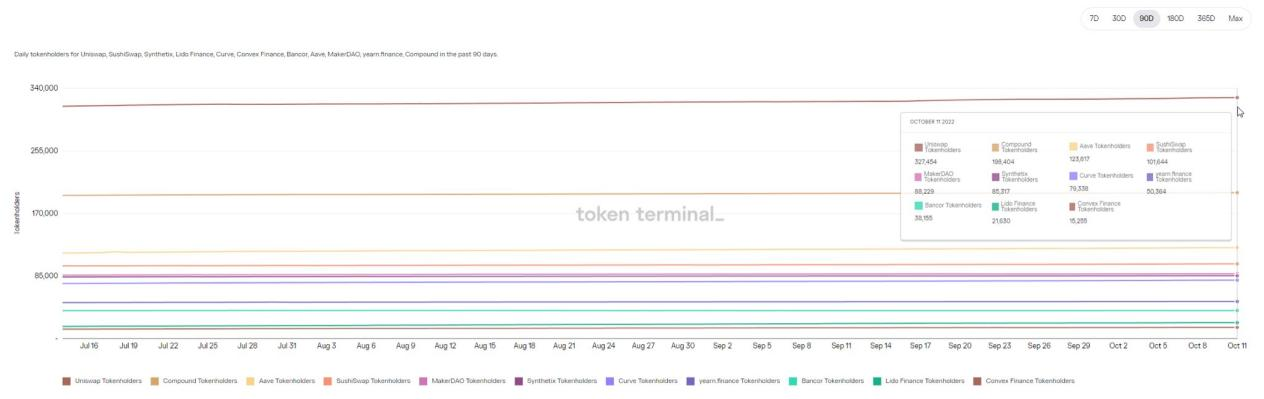
尽管过去3个月代币价格和波动性均有所下降,但热门DeFi项目中的代币持有者数量仍保持稳定上升趋势,如下图所示:
Trending Cryptos

Related Reads

Chip Stocks Lead U.S. Market Decline: Is AI Trading Being Hit by Both Interest Rates and Returns?

Chip stocks led a broad decline in US markets, with the Nasdaq dropping 2.2% and the S&P 500 falling 1.4%. This selloff reflects a dual challenge for the once-high-flying AI hardware trade: rising interest rate expectations and growing investor impatience for clear returns from massive AI capital expenditures. The pressure was most acute on hardware leaders. Nvidia fell about 4%, dipping below a $5 trillion market cap, while Micron plunged 13.2% ahead of its earnings report. Declines across memory, storage, AI, and mobile chips indicated a sector-wide retreat. The selloff spread globally, with South Korea's KOSPI index dropping nearly 10% as key suppliers SK Hynix and Samsung recorded double-digit losses. Investors appeared to be taking profits from the most crowded trades first. Macro headwinds intensified as market expectations shifted toward a more aggressive Federal Reserve. Forecasts for multiple rate hikes in 2026 pressured high-valuation tech stocks, which rely on long-term growth projections that become less attractive as discount rates rise. Concurrently, investors are scrutinizing the profit potential of the immense AI spending by cloud giants like Alphabet, Amazon, and Meta. While these expenditures drive demand for chips and hardware, the market is now questioning whether AI services will generate sufficient returns to justify the ongoing costs. This adjustment is not necessarily a bubble burst but a recalibration. AI demand fundamentals remain, but the narrative of endless growth can no longer fully offset concerns over higher interest rates and a longer path to profitability. Near-term direction may hinge on Micron's upcoming earnings guidance and incoming inflation data, which will influence both the AI demand outlook and the Fed's policy path. The market is transitioning from blindly buying growth to demanding clearer visibility on returns.

marsbit48m ago

Chip Stocks Lead U.S. Market Decline: Is AI Trading Being Hit by Both Interest Rates and Returns?

marsbit48m ago

OpenAI's New Paper: How to Train an AI that "Doesn't Deteriorate Under Pressure"?

OpenAI's new paper "Reinforcement Learning Towards Broadly and Persistently Beneficial Models" explores training AI to maintain safe, helpful, and honest behavior even under pressure, in unseen scenarios, or after being fine-tuned for harmful purposes. Moving beyond simple rule-based "don'ts," the research focuses on cultivating "beneficial traits" like honesty, risk-awareness, corrigibility, and transparency. It investigates if reinforcement learning (RL), often prone to "reward hacking" where models exploit loopholes, can instead be used to instill robust, generalized positive behaviors. Researchers created a multi-domain synthetic dialogue dataset covering areas like healthcare and law. They trained a model by replacing 5% of standard RL data with "beneficial trait" data. This model outperformed the baseline in 83% of 53 evaluations, showing average gains of 9.1% in alignment, safety, and helpfulness. Crucially, improvements generalized: a model trained only on healthcare "good behavior" data also performed better in 17 out of 19 non-healthcare alignment tests. The paper also tests "alignment persistence." When subjected to adversarial prompts or harmful fine-tuning, the beneficial trait model showed greater resilience, with smaller performance drops and less "spillover" of bad behavior to unrelated tasks. While not a complete solution, this work suggests a shift from post-hoc correction to proactively shaping robust, principled AI behavior, a critical step for deploying models in high-stakes, complex decision-making scenarios.

marsbit51m ago

OpenAI's New Paper: How to Train an AI that "Doesn't Deteriorate Under Pressure"?

marsbit51m ago

Semiconductor Stock Rebound: Is the Technical Correction Over or a Trend Reversal?

The core of recent semiconductor stock volatility is not about daily price swings, but rather the market questioning whether AI-driven semiconductor pricing has entered a new phase. Following a sharp sell-off in Korean stocks on June 23rd, led by Samsung and SK Hynix, a subsequent rebound is seen more as a technical positioning adjustment rather than a confirmed trend reversal. The key variable is HBM (High Bandwidth Memory), essential for AI chips. Its supply-demand imbalance granted memory makers significant pricing power. The current market focus is on whether this dynamic remains strong enough to justify elevated valuations. All eyes are on Micron's upcoming earnings report. The critical factor is not whether results meet already high expectations, but whether the company's guidance confirms that AI memory pricing power, order visibility, and future margins are still expanding. Micron's outlook will serve as a crucial test for the broader AI semiconductor chain, including Samsung, SK Hynix, and other infrastructure players. The recent bounce appears to be a pre-earnings positioning repair. For it to evolve into a sustained uptrend, concrete evidence is needed that the AI infrastructure expansion cycle's fundamentals—particularly for high-end memory—remain robust and can continue to surpass elevated market expectations. The risk is that strong demand alone may not be sufficient if future guidance hints at peaking momentum or increasing supply-side pressures.

marsbit1h ago

Semiconductor Stock Rebound: Is the Technical Correction Over or a Trend Reversal?

marsbit1h ago

Trading

Spot
Futures

Hot Articles

How to Buy UNI

Welcome to HTX.com! We've made purchasing Uniswap (UNI) simple and convenient. Follow our step-by-step guide to embark on your crypto journey.Step 1: Create Your HTX AccountUse your email or phone number to sign up for a free account on HTX. Experience a hassle-free registration journey and unlock all features.Get My AccountStep 2: Go to Buy Crypto and Choose Your Payment MethodCredit/Debit Card: Use your Visa or Mastercard to buy Uniswap (UNI) instantly.Balance: Use funds from your HTX account balance to trade seamlessly.Third Parties: We've added popular payment methods such as Google Pay and Apple Pay to enhance convenience.P2P: Trade directly with other users on HTX.Over-the-Counter (OTC): We offer tailor-made services and competitive exchange rates for traders.Step 3: Store Your Uniswap (UNI)After purchasing your Uniswap (UNI), store it in your HTX account. Alternatively, you can send it elsewhere via blockchain transfer or use it to trade other cryptocurrencies.Step 4: Trade Uniswap (UNI)Easily trade Uniswap (UNI) on HTX's spot market. Simply access your account, select your trading pair, execute your trades, and monitor in real-time. We offer a user-friendly experience for both beginners and seasoned traders.

7.2k Total ViewsPublished 2024.03.29Updated 2026.06.02

How to Buy UNI

Discussions

Welcome to the HTX Community. Here, you can stay informed about the latest platform developments and gain access to professional market insights. Users' opinions on the price of UNI (UNI) are presented below.

活动图片