Is Disney About to Make its Big Crypto Move into NFT, Metaverse and DeFi?

CryptonewsPublished on 2022-09-26Last updated on 2022-09-26

Abstract

Disney is looking to hire a transaction lawyer to explore emerging technology opportunities.

Source: AdobeStock / Acento Creativo
Though it wouldn’t be its first step in this direction, there is yet another suggestion that the media giant the Walt Disney Company may be gearing up for a major move into the realms of the metaverse, non-fungible tokens (NFTs), and decentralized finance (DeFi).
Disney is looking to hire a transaction lawyer to explore emerging technology opportunities, including NFTs, blockchain, metaverse, and DeFi, according to a job ad on LinkedIn posted over the weekend. 
This would be "an experienced corporate attorney" who'd work for the company's Corporate Transactions Group, within the Legal Department. 
The hire would 
“Partner with business teams as they plan new global emerging technology projects, typically on an accelerated and aggressive timeline."
Furthermore, they'd be required to provide legal advice and support for global NFT products, and closely collaborate with other Disney attorneys and business stakeholders, including Disney Media and Entertainment Distribution and Disney Parks, Experiences and Products, the ad said.
They would need to ensure NFT product compliance with the applicable US and international laws and regulations, as well as, 
"Assist in performing due diligence for NFT, blockchain, third party marketplace and cloud provider projects, and negotiating and drafting complex agreements for those projects."
The hire would further be required to give day-to-day legal advice on crypto-related matters, including reviewing marketing and advertising disclosures, as well as evaluating securities law issues related to the promotion and sale of NFTs.
The ad also states that the lawyer would
"Provide thought leadership and strategic direction on products involving digital currency and blockchain technology, while providing advice on related legal and regulatory issues."
This person needs to have a minimum of 5-8 years of experience in managing and running complex corporate transactions, while experience in the NFT, cryptocurrency, and web3 space is preferred, including having knowledge of legal considerations and issues related to this space.
Corporate lawyers typically structure transactions, draft documents, negotiate deals, and work to ensure that the provisions of an agreement are clear, unambiguous, and would not cause problems for their clients in the future.  
Next-gen storytelling
Meanwhile, earlier this month, at the D23 Expo fan convention, as reported by Deadline, Disney CEO Bob Chapek talked about the company's plans when it comes to Disney’s metaverse, saying: 
"We call it next-gen storytelling. We tend not to use the M word too often, because it has a lot of hair on it. But yes, Disney+ will not just be a movie-service platform, but it’s going to become an experiential lifestyle platform. A platform for the whole company to embody both the physical things that you might be able to experience in a theme park, but also the digital experiences that you can get through media." 
The CEO went on to shortly discuss the company's plans to enable everybody, including those unable to visit Disney properties and events, to virtually experience "something that’s akin to a physical experience", mentioning a potential existence of "an experiential platform."
Back in February this year, the company created a specialized unit of senior employees and executives to oversee its move into the metaverse. It was decided that Mike White, an executive who has been with Disney for over a decade, would oversee the team that included senior leaders. White was also appointed Senior Vice President of Next Generation Storytelling and Consumer Experiences, per an internal memo at the time. 
Disney also launched its own Valentine’s Day-themed NFT offerings this year, and moved to hire an NFT “expert” manager. 
Before that, in November 2021, Chapek told attendees at a quarterly earnings call that “in our own Disney Metaverse,” the firm would “be able to connect the physical and digital worlds even more closely, allowing for storytelling without boundaries.”
Around a month later, it was granted a patent in the United States for a “virtual-world simulator in a real-world venue.”

Trending Cryptos

Related Reads

Beyond the Model Lies the Harness: Deepseek Enters the Arena, Why Has the Main Battlefield of China's AI Competition Shifted?

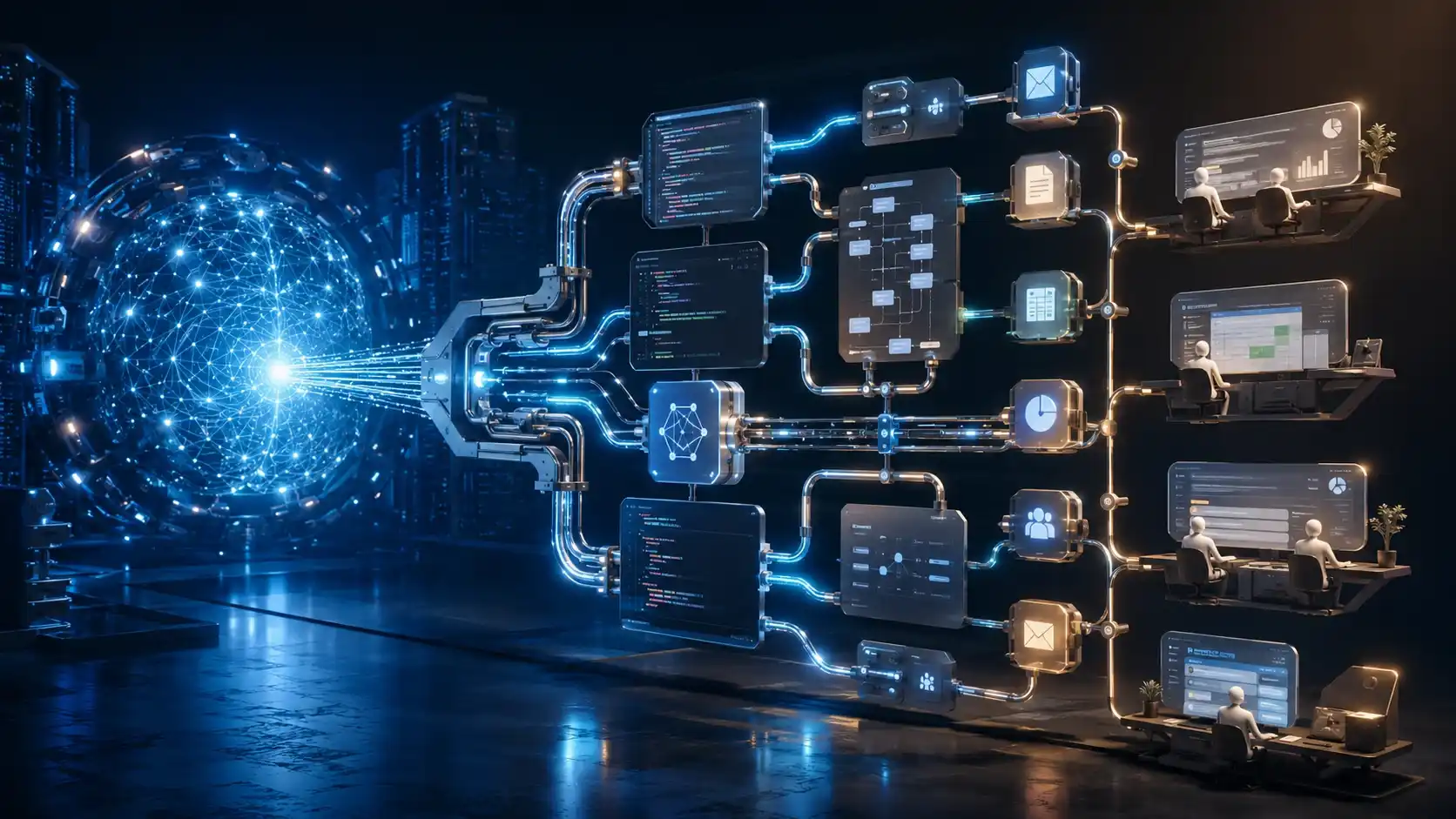
In mid-to-late May 2026, Deepseek internally established a new Harness team focused on code agent products, internally benchmarked against Anthropic's Claude Code. This move, marked by the formula "Model + Harness = Agent" in their job postings, signals a major shift in China's AI competition: the main battlefield is transitioning from developing large models to building toolchains and achieving workplace integration. Deepseek's direct involvement in Harness development aims to secure control over interface design and training data feedback loops, moving beyond open-sourcing powerful models. Harness, the runtime infrastructure for AI agents, handles everything beyond model reasoning—task orchestration, tool calling, context management, safety checks, and error recovery. It is crucial because agent products are not just outputs of model capability but also training grounds for it. Real-world task failures recorded by Harness can feed back into model training, creating a flywheel effect. Engineering Harness is more critical than optimizing prompts, as poor context management or error handling can drastically reduce agent success rates in multi-step, real-world scenarios. This shift is not isolated. Other major Chinese tech companies are also pursuing differentiated toolchain strategies. Tencent leverages its enterprise ecosystem (WeChat Work, Tencent Cloud) to build connectors for organizational-level AI collaboration and complex task delivery. Alibaba focuses on lowering automation barriers on the web with a front-end, browser-based GUI Agent framework, PageAgent. This diversification shows the industry recognizes that success lies not in a perfect general agent, but in vertically focused solutions built with robust engineering. The trend is validated by overseas success, such as Poland's Viktor, an AI coworker on Slack achieving $20M ARR by autonomously executing complex, multi-step tasks. This proves a shift in enterprise willingness to pay—from "AI-assisted generation" to "AI-autonomous execution." As Harness matures to provide safety guards and reliability, AI transitions from a human-supervised intern to an independent outsourcer. The competition now faces key engineering challenges: preventing "token explosion" through intelligent context compression, and building "thick frameworks" with features like sandbox isolation and checkpoint recovery for enterprise-grade stability. Geopolitical restrictions on tools like Claude Code further create a significant market vacuum for domestic solutions like Deepseek's Harness. For enterprises and developers, the focus must shift from comparing model benchmarks to evaluating a vendor's engineering capabilities, error recovery mechanisms, context management, and ecosystem compatibility when choosing AI products and platforms.

marsbit40m ago

Beyond the Model Lies the Harness: Deepseek Enters the Arena, Why Has the Main Battlefield of China's AI Competition Shifted?

marsbit40m ago

Soaring Export Data for Memory Chips, Market Is Redefining the Valuation Anchor for Memory Stocks

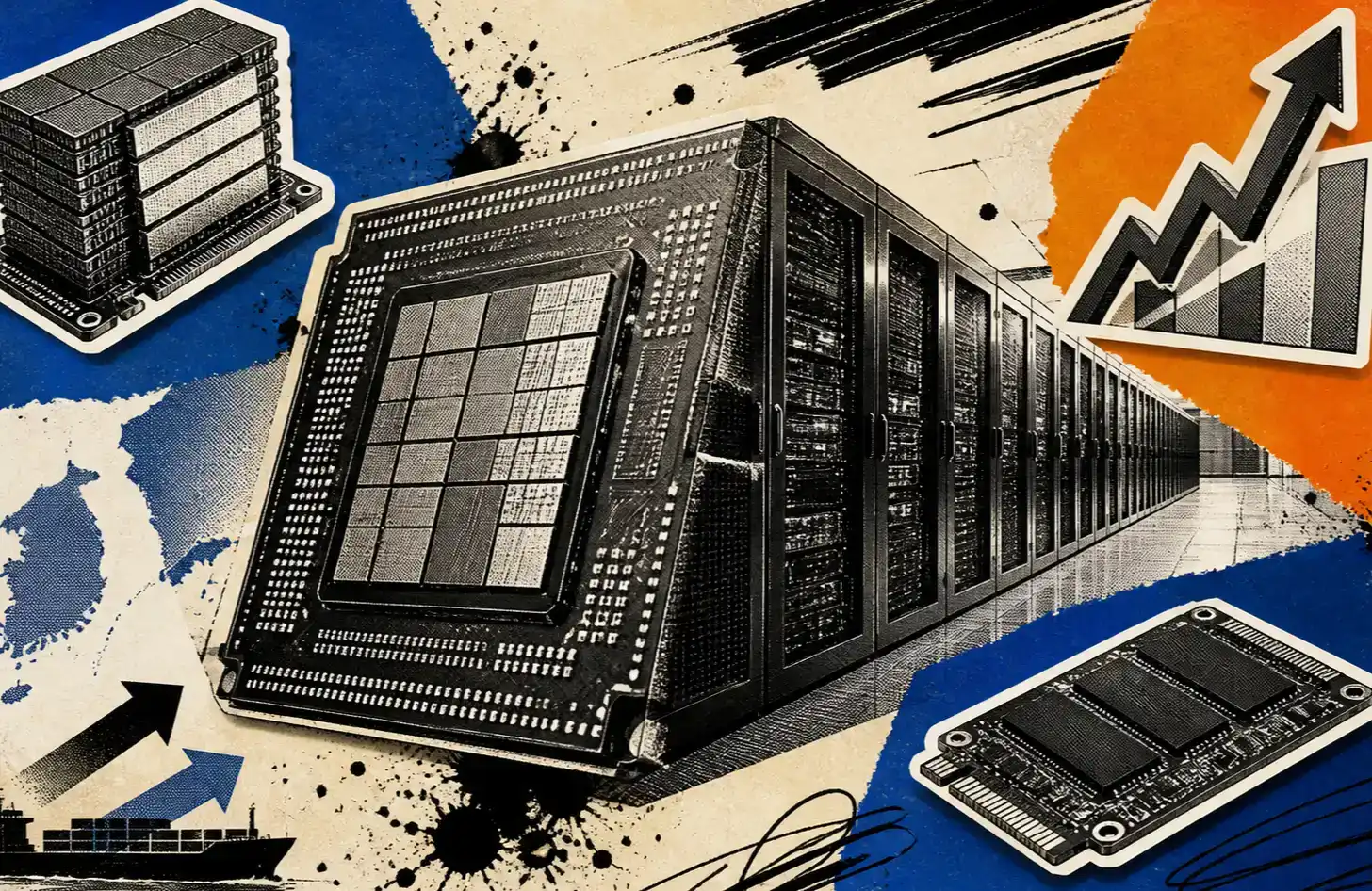
Korean storage export data for the first 20 days of June shows substantial year-on-year increases in both value and price-per-kilogram for categories like DRAM, NAND, and SSDs. This signals a potential shift beyond simple demand recovery, indicating rising prices and a product mix shift towards higher-value items, possibly influenced by AI infrastructure needs. A key point is that the surge in price-per-kilogram is not simply a uniform chip price hike. It reflects a combination of actual price increases and, more importantly, an export structure increasingly dominated by high-value-density products like HBM (High-Bandwidth Memory) and advanced DRAM, which are critical for AI servers. This suggests AI-driven demand may be spilling over from just HBM into broader memory markets. SK Hynix stands to benefit directly due to its leading HBM position. For Samsung and Micron, the implication is potential for greater margin elasticity if the tightness in high-end memory spreads to enterprise SSD and NAND prices. However, the storage sector remains cyclical. Risks include supply expansion, inventory changes, and potential slowdowns in broader AI capital expenditure. Ultimately, while the strong export data supports upward revisions for storage company earnings and fuels discussion of an "AI infrastructure bottleneck premium," a definitive valuation shift from a cyclical to a structural story depends on upcoming quarterly reports. Investors need confirmation from SK Hynix, Samsung, and Micron that improvements in average selling prices, product mix, and, crucially,毛利率 are sustained over multiple quarters.

marsbit2h ago

Soaring Export Data for Memory Chips, Market Is Redefining the Valuation Anchor for Memory Stocks

marsbit2h ago

Trading

Spot
Futures

Hot Articles

Discussions

Welcome to the HTX Community. Here, you can stay informed about the latest platform developments and gain access to professional market insights. Users' opinions on the price of ETH (ETH) are presented below.

活动图片