Grayscale reevalúa Zcash: En la era de la vigilancia de IA, ¿cuánto vale la privacidad financiera?

marsbitPublished on 2026-08-24Last updated on 2026-08-24

Abstract

En el contexto de la creciente trazabilidad en las finanzas digitales debido a las stablecoins, los pagos en cadena y las herramientas de análisis con IA, Grayscale Research reexamina Zcash. El informe plantea si la privacidad financiera seguirá siendo un nicho o se convertirá en un atributo central del dinero digital. Zcash, una criptomoneda con una oferta máxima similar a Bitcoin, permite a los usuarios elegir entre transacciones transparentes o blindadas (shielded) usando pruebas de conocimiento cero. Esto otorga a los usuarios control sobre la información, a diferencia del libro público de Bitcoin. Aunque Zcash opera desde 2016, su adopción ha estado limitada por la usabilidad. Actualizaciones recientes como Sapling, NU5 y la mejora de billeteras como Zodl buscan reducir costos y complejidad. Datos de julio de 2026 indican que el 90% de las transacciones son blindadas, con un 25% de la oferta circulante en el grupo blindado. La tesis de inversión de Grayscale no se basa en la adopción actual, sino en una posible revalorización futura si el mercado repreciara la privacidad. Un escenario hipotético sugiere que si Zcash alcanzara una cuota de mercado del 5% en su categoría, su valoración podría multiplicarse aproximadamente por nueve. Sin embargo, existen riesgos clave: incertidumbres regulatorias y de aceptación por exchanges, posibles vulnerabilidades en el protocolo (como la brecha de solidez en Orchard, ya parcheada), la amenaza a largo plazo de la computación cuánti...

Nota del editor: Las stablecoins, los pagos en cadena y la IA están transformando simultáneamente el sistema financiero. Por un lado, los flujos de capital son más rápidos y transparentes; por otro, la combinación de libros contables públicos, etiquetado de direcciones y herramientas de análisis de IA también facilita el seguimiento continuo de saldos de cuentas, contrapartes de transacciones y relaciones comerciales.

En este contexto, Grayscale Research vuelve a poner a Zcash en la mira de los inversores. No se trata de si "las monedas de privacidad están experimentando una nueva ronda de especulación", sino de una pregunta más fundamental: a medida que aumenta la trazabilidad de las finanzas digitales, ¿la privacidad seguirá siendo una necesidad de nicho o se convertirá nuevamente en un atributo central del dinero?
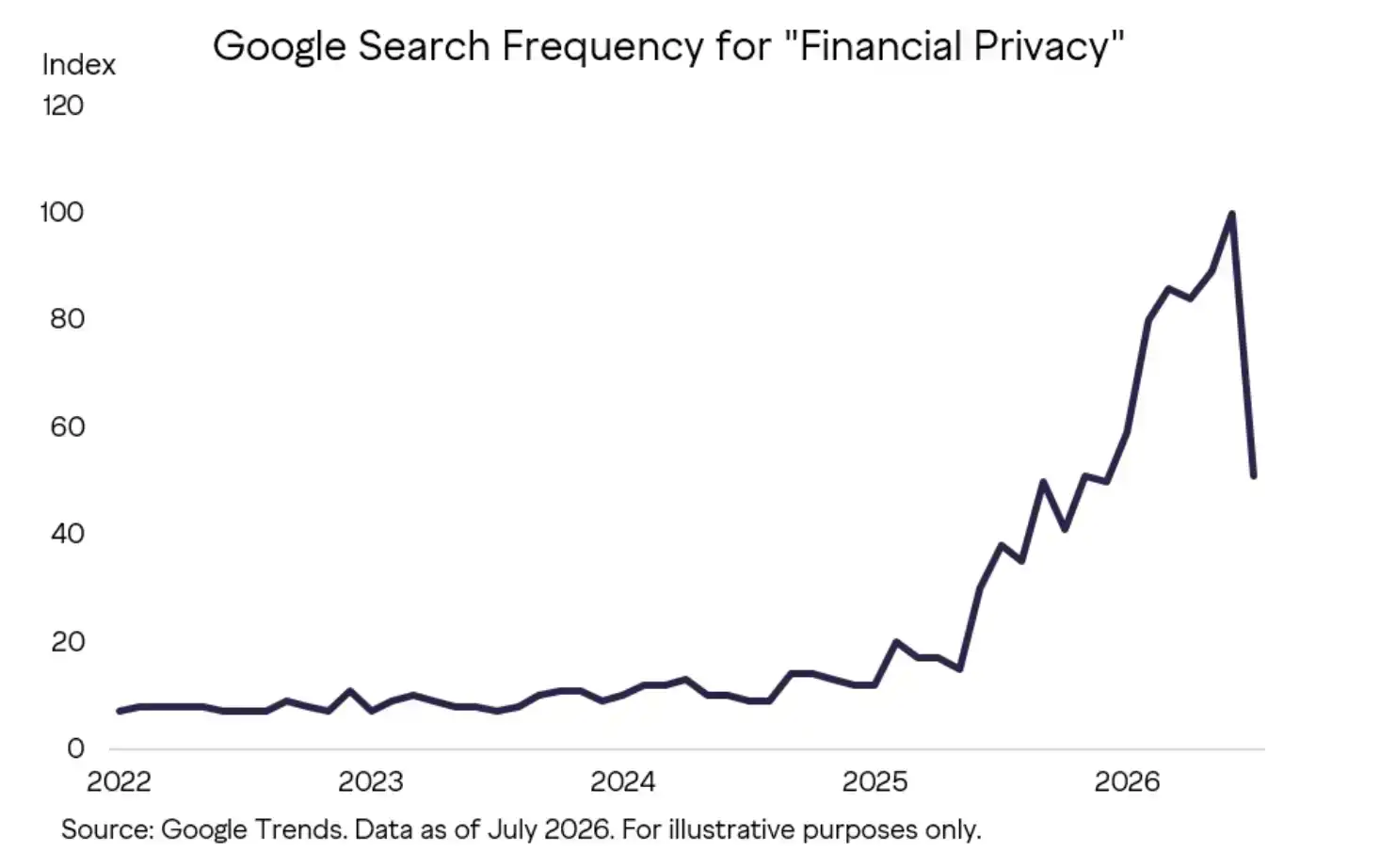
Grayscale cree que el desarrollo de las stablecoins, las blockchains públicas y las herramientas de análisis de IA está impulsando que la privacidad financiera vuelva al debate público.

Michael Zhao, investigador de Grayscale, argumenta en el informe que la IA podría impulsar la privacidad financiera hacia un tercer ciclo de atención, tras la digitalización bancaria y la popularización de internet. Zcash lleva operando casi una década, y recientemente han mejorado las transacciones blindadas, las carteras y la infraestructura minera, pero su cuota de mercado sigue siendo baja. Si el mercado comienza a revalorizar la privacidad, ZEC podría experimentar una reevaluación.

Sigue siendo una lógica de inversión con una postura evidente. Todavía no se ha verificado si la IA aumentará significativamente la demanda de monedas de privacidad, si la función de blindaje se traducirá en un uso sostenido, o si los intercambios y los reguladores estarán dispuestos a apoyar este tipo de activos. La oportunidad y el riesgo de Zcash provienen precisamente de esta enorme brecha.

A continuación, la traducción del texto original:

La privacidad financiera no es una función accesoria del dinero, sino parte de su uso normal.

El efectivo posee naturalmente este atributo: las transacciones no son públicas por defecto para todos. En el sistema bancario, las cuentas personales y los movimientos de fondos tampoco suelen ser consultables directamente por el público, y las agencias de la ley generalmente requieren procedimientos legales para acceder a dicha información.

El progreso tecnológico altera constantemente este equilibrio. En la década de 1970, la digitalización de los registros financieros y la implementación de la Ley de Secreto Bancario en EE.UU. suscitaron un nuevo debate sobre la privacidad financiera; con la popularización de internet y la banca online, los riesgos de filtraciones de datos y vigilancia en línea impulsaron que herramientas de seguridad como el cifrado y la autenticación de dos factores se volvieran comunes.
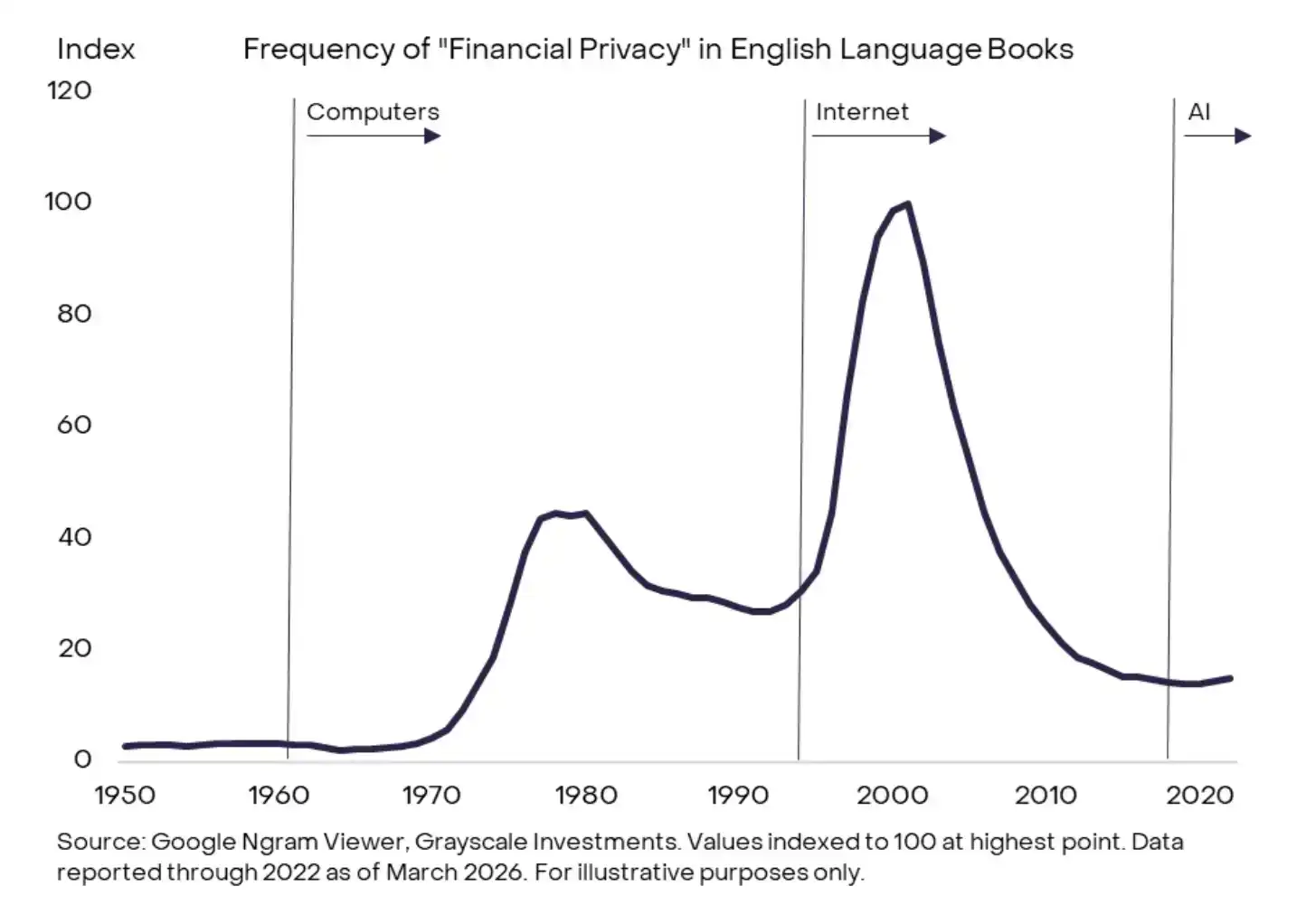
Desde la digitalización de registros bancarios y las finanzas por internet hasta el análisis con IA, el progreso tecnológico, al mejorar la eficiencia financiera, también cambia constantemente el equilibrio entre privacidad y trazabilidad.

Grayscale cree que el desarrollo de las stablecoins, las aplicaciones blockchain y la IA podría desencadenar un tercer ciclo de debate sobre privacidad financiera. Especialmente en blockchains públicas, la IA puede combinar direcciones, registros de intercambios, comportamientos de carteras e información de contrapartes para identificar de forma continua a usuarios en cadena que originalmente solo eran "seudónimos".

Bajo esta premisa, el valor de Zcash no proviene solo de una función criptográfica, sino de su capacidad para convertirse en un "efectivo digital privado" alternativo al libro contable público.

Bitcoin resolvió la escasez digital, pero no la privacidad de las transacciones

Bitcoin estableció la escasez digital verificable a través de un libro público, pero esta transparencia también limita su uso en ciertos escenarios de pago.

En blockchains públicas, los saldos, contrapartes e historiales de transacciones pueden conservarse indefinidamente. Incluso si los usuarios utilizan direcciones que no revelan directamente su identidad, las cuentas en intercambios, las contrapartes de transferencias, los hábitos de uso de carteras y las herramientas de análisis on-chain pueden gradualmente vincularlos a identidades reales.

Esto no solo afecta a usuarios individuales. Las empresas generalmente no desean que proveedores, nóminas, movimientos de capital o relaciones con clientes sean conocidos en tiempo real por la competencia; las instituciones tampoco necesariamente quieren hacer públicos sus esquemas de carteras o estrategias de trading. Por lo tanto, la privacidad financiera no equivale a anonimato total, sino a menudo simplemente a la confidencialidad necesaria para la actividad comercial normal.

Zcash comparte una estructura monetaria similar a Bitcoin: un suministro máximo de 21 millones de monedas, mecanismo de prueba de trabajo, y transferencia de valor peer-to-peer como uso principal. La diferencia más importante es que Zcash permite a los usuarios elegir si hacer pública la información de la transacción.
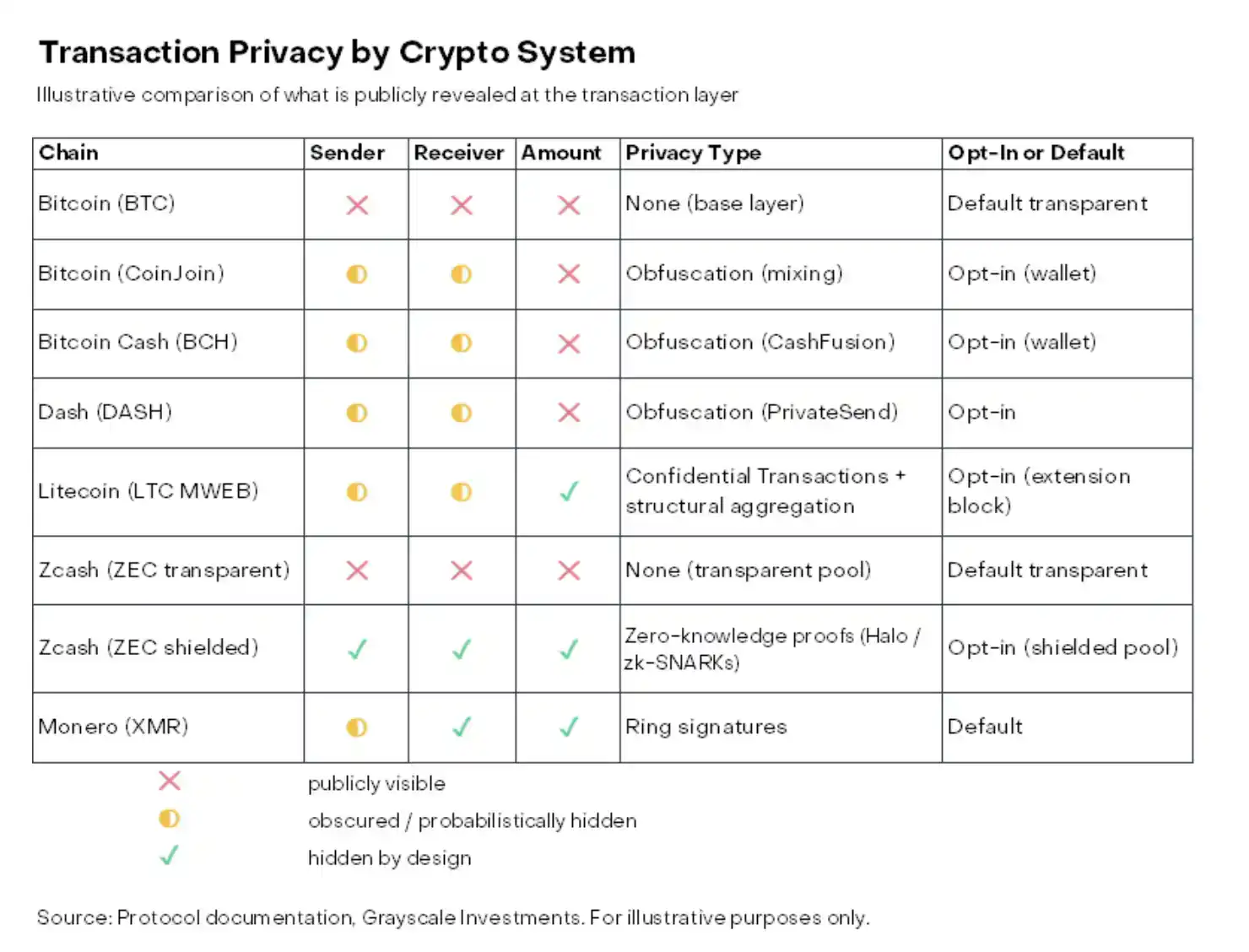
Mecanismos como CoinJoin aumentan principalmente la dificultad de rastreo, Monero oculta por defecto información clave, mientras que Zcash permite a los usuarios elegir entre transacciones transparentes o blindadas.

Zcash admite dos tipos de transacciones:

1. Transacciones transparentes: Emisor, receptor y cantidad son públicos, similar a las transacciones de Bitcoin.

2. Transacciones blindadas: La red puede confirmar que la transacción es válida, pero no hace públicos emisor, receptor ni cantidad.

La herramienta subyacente es la prueba de conocimiento cero, donde un usuario puede probar que una transacción cumple las reglas sin revelar la información original utilizada para completar la verificación. La red puede confirmar que el pagador tiene derecho a usar los fondos, que el monto se mantiene antes y después de la transacción y que no se han creado monedas de la nada, sin necesidad de ver el contenido específico de la transacción.

Zcash también permite la divulgación selectiva mediante claves de visualización. Los usuarios pueden abrir registros de transacciones blindadas específicas a auditores, contrapartes u otros terceros designados. Por lo tanto, el diseño de Zcash no es hacer las transacciones imposibles de ver, sino devolver el control sobre la divulgación de información del libro público al usuario.

La tecnología lleva funcionando diez años, el verdadero cuello de botella sigue siendo la usabilidad

Zcash se lanzó en 2016, siendo uno de los primeros proyectos en intentar aplicar pruebas de conocimiento cero directamente a una moneda digital base. Sin embargo, su problema inicial no era si las transacciones privadas podían realizarse, sino su alto costo de uso.

Las primeras transacciones blindadas requerían tiempos largos de generación de pruebas y mucha memoria, dificultando una experiencia fluida en carteras comunes y dispositivos móviles. Las múltiples actualizaciones posteriores se han centrado en reducir estas barreras:

La actualización Sapling (2018) redujo significativamente el tiempo y memoria necesarios para transacciones blindadas.

La actualización NU5 (2022) introdujo el protocolo de blindaje Orchard y Halo 2, eliminando la dependencia de configuración confiable para nuevos grupos blindados.

Las direcciones unificadas mejoraron la interacción entre direcciones transparentes y blindadas.

La cartera Zodl comenzó a admitir intercambio entre activos, recepción entre activos y almacenamiento en frío de saldos blindados, intentando mantener a los usuarios en un estado de privacidad durante todo el flujo de transacción.

La infraestructura minera también se está expandiendo. En marzo de 2026, Foundry anunció el lanzamiento de un grupo minero de Zcash en EE.UU. dirigido a instituciones y empresas mineras públicas, proporcionando soporte operativo y de cumplimiento más estandarizado para la red.

Grayscale cree que estos cambios podrían significar que Zcash está entrando en una nueva fase de desarrollo. Pero la mejora de funcionalidades de carteras y la expansión de grupos mineros solo indican que la infraestructura ha mejorado, no demuestran directamente un aumento masivo de la demanda de usuarios finales.

Lo siguiente más crucial es si "la privacidad puede escalar". Tachyon pretende reducir el costo computacional y de sincronización de las transacciones blindadas; Crosslink mejora principalmente la finalidad de las transacciones y la fiabilidad de la red; si se avanza nuevamente con esquemas de activos blindados, la funcionalidad de privacidad de Zcash podría extenderse desde el ZEC nativo a otros activos.

La mayoría de estos proyectos aún implican desarrollo técnico complejo y coordinación de red, y su cronograma y efectos reales no están completamente definidos.

¿El 90% de transacciones blindadas demuestra suficiente demanda real?

La evidencia central de Grayscale proviene del uso en cadena.

Según la metodología del informe, hasta el 20 de julio de 2026, las transacciones blindadas representaban aproximadamente el 90% del número total de transacciones de Zcash; el grupo blindado contenía unos 4.2 millones de ZEC, equivalentes a aproximadamente el 25% del suministro en circulación en ese momento.
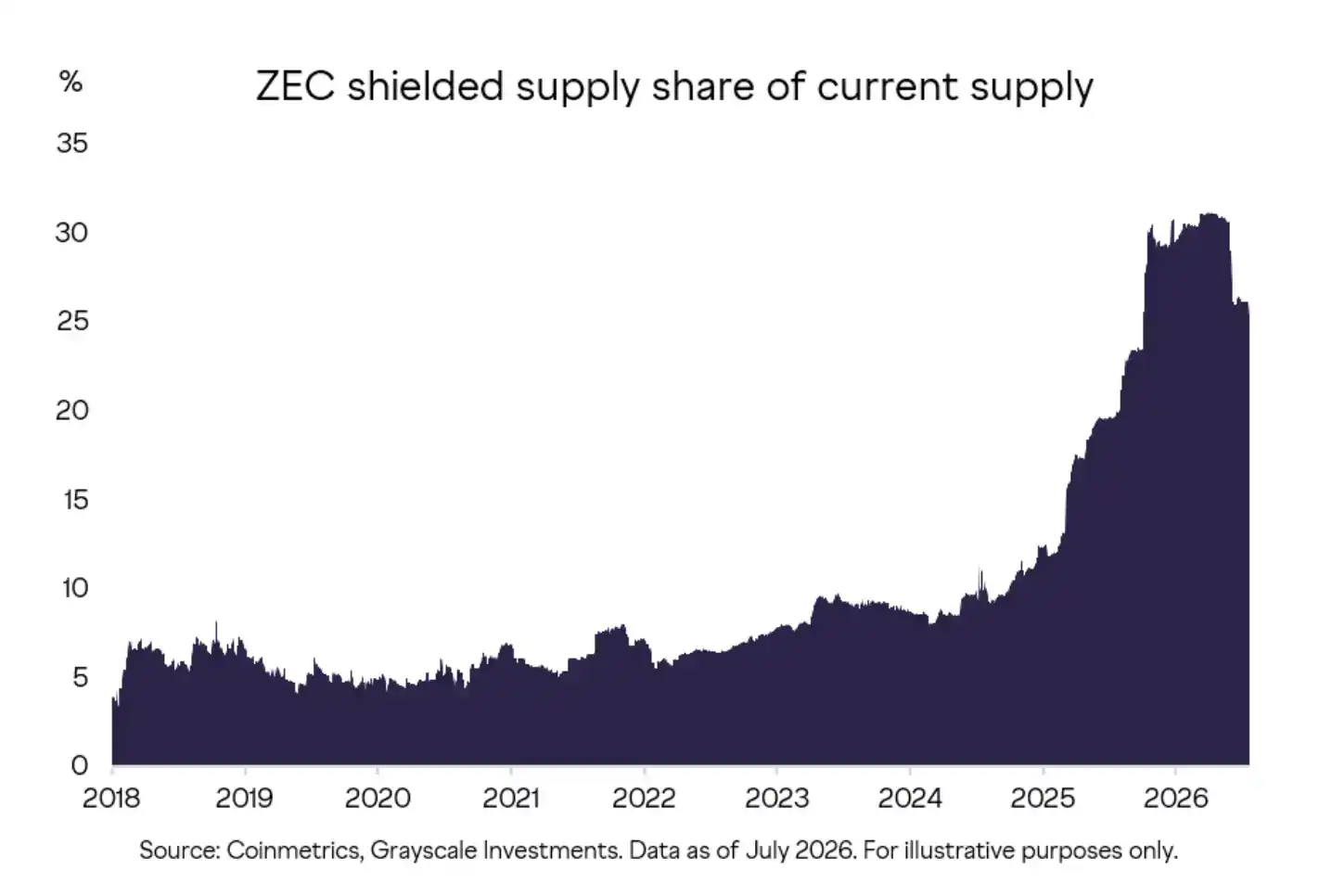
Hasta la fecha de estadísticas utilizada en el informe de Grayscale, aproximadamente 4.2 millones de ZEC estaban en el grupo blindado, alrededor del 25% del suministro en circulación.

Esto indica que la función de blindaje no se queda solo en la narrativa del producto, sino que ha generado un comportamiento observable en cadena. Pero estos datos deben interpretarse con cautela: diferentes plataformas de estadísticas pueden tener metodologías de clasificación para "transacciones blindadas", fechas de recopilación y criterios sobre si agrupar múltiples grupos blindados, lo que puede dar lugar a porcentajes diferentes. Un aumento en el número de transacciones blindadas tampoco equivale necesariamente a un crecimiento simultáneo en el número de usuarios, volumen de pagos o actividad económica.

Lo que Grayscale realmente apuesta no es a que Zcash haya logrado ya una adopción masiva, sino a que el mercado podría cambiar en el futuro su valoración de la privacidad. Hasta los datos de julio de 2026 utilizados en el informe, la capitalización total del segmento "monedas digitales" definido por Grayscale era de aproximadamente 1.4 billones de dólares, donde Bitcoin representaba alrededor del 90%, y ZEC tenía una capitalización de unos 8 mil millones de dólares, aproximadamente el 0.6% de ese segmento.
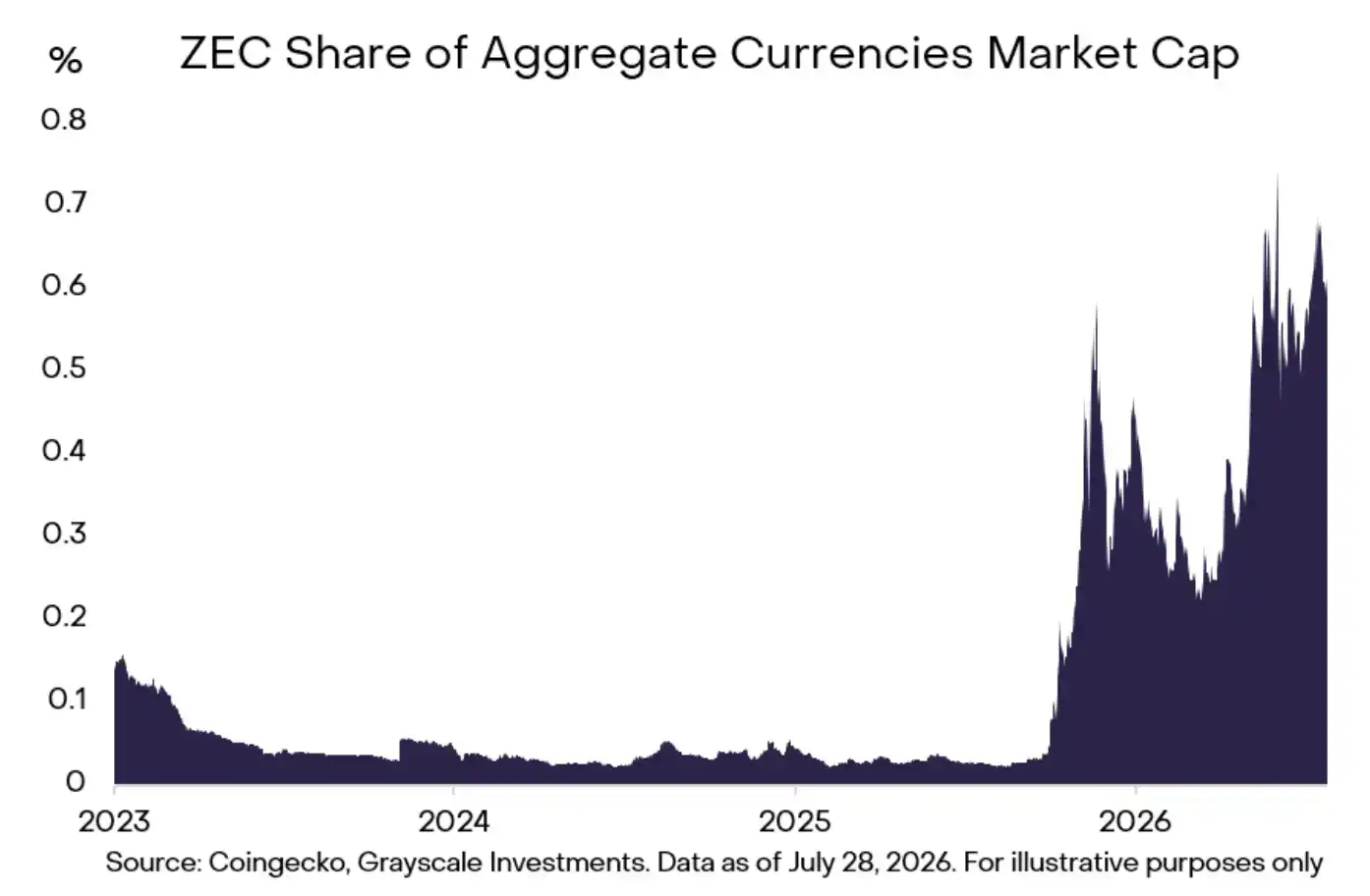
Según la metodología de Grayscale, la capitalización de ZEC representa aproximadamente el 0.6% del segmento de monedas digitales; "alcanzar el 5% corresponde a una valoración aproximadamente 9 veces mayor" es solo un escenario hipotético de cuota de mercado, no un precio objetivo.

Con base en esto, el informe construye un escenario hipotético: si ZEC pudiera alcanzar en el futuro una cuota de mercado del 5% en este segmento, correspondería a una capitalización de aproximadamente 70 mil millones de dólares, unas 8.75 veces su capitalización de entonces, redondeando aproximadamente 9 veces.

Esto no es un precio objetivo, ni significa que Grayscale espere que ZEC suba inevitablemente 9 veces. Es solo un análisis de sensibilidad basado en cambios en la cuota de mercado, que además asume simplificaciones como que la capitalización total del segmento de monedas digitales se mantiene constante y que el suministro de ZEC y el panorama competitivo no cambian significativamente.

Más precisamente, Grayscale cree que la valoración actual refleja la expectativa de que "la privacidad seguirá siendo un mercado marginal". Si en el futuro los inversores están dispuestos a considerar la privacidad como un atributo base de las monedas digitales, la baja cuota de mercado de ZEC podría ofrecer elasticidad en su valoración.

Un aumento en la demanda de privacidad no garantiza que Zcash se beneficie

Esta lógica de inversión enfrenta primero riesgos regulatorios y de distribución.

Las claves de visualización de Zcash pueden ayudar a los usuarios a divulgar registros de transacciones a entidades específicas, proporcionando cierta herramienta para auditorías de cumplimiento. Pero la información sigue siendo divulgada a elección del usuario, no equivale a la trazabilidad por defecto de una blockchain pública. Al mismo tiempo, el Grupo de Acción Financiera Internacional (GAFI/FATF) exige continuamente a los proveedores de servicios de activos virtuales que apliquen diligencia debida del cliente, conservación de registros, informes de transacciones sospechosas y la "regla de viaje".

Por lo tanto, la divulgación selectiva puede reducir parte de la fricción normativa, pero no garantiza que los intercambios, custodios y reguladores estén dispuestos a apoyar transacciones blindadas. Cuanto más fuerte sea la protección de la privacidad, más probable es que ZEC enfrente limitaciones en la inclusión en intercambios, custodia, integración en carteras y canales de entrada/salida de moneda fiduciaria.

El segundo riesgo proviene de la seguridad del protocolo.

En 2026, los desarrolladores descubrieron una vulnerabilidad de solidez en el circuito Orchard original, que teóricamente podría usarse para crear ZEC falsificados indetectables. NU6.2 corrigió dicho circuito, y el nuevo grupo blindado Ironwood, lanzado posteriormente, restringió aún más que los fondos ingresaran al antiguo grupo Orchard, y restauró la verificación de la integridad del suministro blindado mediante un mecanismo de migración de fondos.

Es importante enfatizar que se trata de una vulnerabilidad teórica, no significa que se hayan encontrado ZEC falsificados en la práctica. Ironwood mejora la estructura de seguridad futura, pero el antiguo grupo blindado y su migración de fondos siguen constituyendo un riesgo residual que requiere observación continua.

La computación cuántica es un problema a más largo plazo. El mecanismo introducido por Ironwood ayuda a preservar una ruta de recuperación para una futura migración resistente a la cuántica, pero la propuesta técnica oficial deja claro que este cambio en sí mismo no dota a Zcash de una capacidad completa de resistencia cuántica.

Finalmente, está el riesgo de ejecución. La lógica de inversión en Zcash aún depende de mejoras simultáneas en la experiencia de la cartera, la escalabilidad del protocolo y la distribución del ecosistema. Cualquier retraso en una actualización, fallo de coordinación o falta de adopción por parte de los usuarios podría debilitar la narrativa del "escalado de la privacidad".

El siguiente paso es ver si la privacidad se convierte en una necesidad, no solo en un tema de conversación

La lógica alcista de Zcash no requiere que reemplace a Bitcoin. Grayscale apuesta por otra posibilidad: a medida que los flujos de capital en cadena sean cada vez más transparentes y las capacidades de análisis de IA sigan mejorando, el mercado podría empezar a pagar una prima por dinero digital que sea "verificable pero no público".

Para verificar esta hipótesis, lo que hay que observar a continuación no es si el precio de ZEC sigue subiendo, sino varios indicadores más concretos: si los fondos en el grupo blindado y los usuarios reales aumentan continuamente, si las carteras pueden reducir las barreras de uso para flujos de transacción privados completos, si actualizaciones como Tachyon se implementan según lo planeado, y si los intercambios y custodios amplían en lugar de reducir su apoyo.

Si el uso de la privacidad crece, pero la liquidez y los canales regulatorios siguen deteriorándose, Zcash podría seguir teniendo dificultades para formar un mercado más grande. Por el contrario, si el uso, la infraestructura y el acceso al mercado mejoran simultáneamente, ZEC podría pasar de ser una "vieja moneda de privacidad" a convertirse en un instrumento de valoración para la demanda de privacidad en las finanzas digitales.

La brecha de valoración actual de Zcash corresponde esencialmente no a una historia de crecimiento ya determinada, sino a una opción que aún no se ha verificado suficientemente: en la era de la IA, ¿cuánto valdrá realmente la privacidad financiera?

Trending Cryptos

Related Questions

QSegún el análisis de Grayscale, ¿qué tres fases de evolución tecnológica han llevado a un mayor escrutinio y discusión sobre la privacidad financiera?

ASegún el informe de Grayscale, la privacidad financiera ha entrado en tres ciclos principales de atención: primero, la digitalización de los registros bancarios y la implementación de leyes como la Ley de Secreto Bancario de EE.UU. en la década de 1970; segundo, la popularización de Internet y la banca en línea, que introdujo riesgos de filtraciones de datos y vigilancia; y tercero, el desarrollo actual de las stablecoins, las aplicaciones blockchain y las herramientas de análisis de IA, que pueden hacer que las transacciones en cadena sean más transparentes y rastreables.

Q¿En qué se diferencian fundamentalmente las transacciones 'blindadas' (shielded) de Zcash de las transacciones transparentes de Bitcoin?

ALas transacciones transparentes de Bitcoin (y las similares en Zcash) hacen públicos el remitente, el receptor y el monto en el libro mayor. En cambio, las transacciones blindadas de Zcash utilizan pruebas de conocimiento cero (zero-knowledge proofs) para verificar que una transacción es válida sin revelar información alguna sobre las direcciones involucradas o la cantidad transferida. La red confirma la legitimidad, pero los detalles permanecen privados, otorgando al usuario el control sobre la divulgación de la información.

Q¿Qué indicadores clave sugiere el artículo que deben observarse para evaluar si la demanda de privacidad financiera basada en Zcash es real y sostenible?

AEl artículo sugiere observar indicadores específicos más allá del precio de ZEC: 1) El aumento constante de fondos en el grupo blindado (shielded pool) y de usuarios reales. 2) La capacidad de las carteras para reducir la fricción y el costo de realizar transacciones completamente privadas. 3) La implementación exitosa y a tiempo de actualizaciones clave del protocolo como Tachyon. 4) Si los intercambios (exchanges) y los proveedores de custodia amplían, en lugar de restringir, su soporte para activos con funciones de privacidad como Zcash.

QAdemás de los riesgos regulatorios, ¿cuáles son los dos principales riesgos tecnológicos o de ejecución que amenazan la tesis de inversión en Zcash según el análisis de Grayscale?

AAdemás del riesgo regulatorio, el análisis identifica dos riesgos principales: 1) Riesgo de seguridad del protocolo: aunque se han parcheado vulnerabilidades teóricas (como la descubierta en el circuito Orchard), persisten riesgos residuales en la migración de fondos desde grupos blindados antiguos. 2) Riesgo de ejecución: la lógica de inversión depende de que múltiples mejoras (experiencia de usuario en carteras, escalabilidad del protocolo, expansión del ecosistema) avancen de manera sincronizada. Cualquier retraso, fallo de coordinación o falta de adopción podría debilitar la narrativa de la 'escalabilidad de la privacidad'.

QEl informe de Grayscale presenta un cálculo hipotético de que ZEC podría multiplicar su valor por 9. ¿En qué supuesto clave se basa este escenario y qué aclara el artículo sobre la naturaleza de este cálculo?

AEste cálculo de un aumento de 9 veces se basa en un escenario hipotético en el que ZEC pasara a capturar el 5% de la capitalización de mercado del segmento de 'monedas digitales' (definido por Grayscale), en lugar del 0.6% actual, asumiendo que la capitalización total del segmento se mantiene constante. El artículo aclara enfáticamente que esto NO es un precio objetivo ni una predicción, sino un simple análisis de sensibilidad que ilustra el potencial de revalorización si el mercado cambia su valoración de la privacidad. Depende de supuestos simplificados que pueden no materializarse.

Related Reads

Zhong Shanshan Invests in Liang Wenfeng

Chinese billionaire Zhong Shanshan, known for his low-profile and solitary investment style, has made a rare foray into the red-hot AI sector by indirectly investing approximately 350 million RMB into AI startup DeepSeek. This investment was executed through his private equity firm, Guānzī Venture Capital, as part of DeepSeek's first funding round in June, which also attracted major players like CATL, Tencent, JD.com, and state funds. Zhong, the founder of Nongfu Spring and a controlling shareholder of Wantai Biological, typically focuses his investments in pharmaceuticals and new materials through his investment vehicles under the Yangshengtang umbrella. These include Guānzī Venture Capital, Qiantang New Materials Laboratory, and the Kunshan Gewu Zhizhi Fund. His investment in DeepSeek marks a significant expansion into AI large models, following a previous investment in the AI optical chip company, X-Chip. The article highlights a growing trend of "Old Money" — successful entrepreneurs from traditional industries like consumer goods, healthcare, and apparel — entering the AI and hard tech investment arena. Examples from the same DeepSeek funding round include Jiuan Medical, By-Health, and Septwolves' Zhou Shaoxiong, who are all deploying capital from their industrial empires into next-generation tech companies. This shift illustrates how established wealth is seeking new growth vectors and aligning with the technological epoch, moving beyond their original sectors as those mature.

marsbit40m ago

Zhong Shanshan Invests in Liang Wenfeng

marsbit40m ago

Jackson Hole Becomes a Critical Battle for U.S. Treasuries, BofA Warns: If Warsh Doesn't Signal Rate Hikes, 30-Year Yield May Surge to 5.5%

The Jackson Hole Economic Policy Symposium is shaping up as a crucial battle for the US Treasury market, with the spotlight on Federal Reserve Chair Warsh's upcoming speech. Markets view this as the most critical near-term risk event for bond yields and the US dollar. A key concern is whether Warsh will provide clear signals on the Fed's willingness to resume interest rate hikes should inflation fail to improve. American Bank warns that if he avoids offering such forward guidance, the 30-year Treasury yield could surge toward or above 5.5%, putting further downward pressure on the dollar. This heightened sensitivity stems from fragile market conditions, including the Treasury's recent increased long-end bond buybacks and a string of weaker economic data. Analysts note that Warsh has historically been resistant to providing specific policy guidance, but sustained bond market pressure may force a shift in communication strategy. The market anticipates a framework outlining potential policy responses based on incoming inflation data. Barclays economists assign over a 50% probability to Warsh delivering a hawkish message. Historically, Jackson Hole speeches have had limited lasting market impact, but analysts suggest this year could be an exception due to the unique confluence of pressures, making Warsh's credibility and clarity paramount for stabilizing expectations.

marsbit50m ago

Jackson Hole Becomes a Critical Battle for U.S. Treasuries, BofA Warns: If Warsh Doesn't Signal Rate Hikes, 30-Year Yield May Surge to 5.5%

marsbit50m ago

Trading

Spot

Hot Articles

What is LINON

Linde plc Tokenized Stock (Ondo): Revolutionizing Traditional Equity Access Through Blockchain Innovation The emergence of Linde plc Tokenized Stock (Ondo), represented by the ticker $LINON, signifies a monumental shift in the fusion of traditional financial structures and decentralized finance (DeFi). This innovative financial instrument showcases the tremendous potential of blockchain technology to democratize access to traditional equity markets while ensuring the security and regulatory compliance necessary for institutional-grade financial products. Through Ondo Finance's pioneering tokenization platform, $LINON provides a seamless pathway for global investors to engage with one of the world's leading industrial gas companies, Linde plc, creating a blockchain-native representation of the underlying equity. Introduction to Linde plc Tokenized Stock The landscape of financial markets is witnessing a groundbreaking transformation through the tokenization of real-world assets. Linde plc Tokenized Stock (Ondo) epitomizes this revolutionary approach by bridging the gap between conventional stock ownership and blockchain-enabled financial infrastructure. The $LINON token allows investors to gain exposure to one of the prominent industrial companies worldwide through decentralized technology. Operating within Ondo Finance's comprehensive ecosystem, $LINON symbolizes a practical application of tokenization technology that enhances accessibility, efficiency, and global connectivity in traditional financial markets. By leveraging blockchain infrastructure, this tokenized stock enables international investors to participate in U.S. equity markets, overcoming traditional barriers associated with cross-border investing. The significance of $LINON goes beyond technological innovation; it represents a fundamental shift in asset structuring, distribution, and trading in the digital age. This tokenized stock maintains all the economic benefits associated with traditional Linde plc shares while offering improved liquidity, programmable compliance features, and seamless integration with decentralized finance protocols. The development of $LINON indicates a growing acceptance of blockchain technology as a viable means for traditional finance, exemplifying how even well-established assets like Linde plc can integrate into blockchain systems. This approach preserves the core attributes that appeal to investors while introducing advanced capabilities that enhance the overall investment proposition. Project Overview and Objectives Linde plc Tokenized Stock (Ondo) encapsulates a strategic effort to democratize access to traditional equity markets through advanced blockchain technologies. The primary objective of $LINON is to provide approved global investors seamless access to the economic exposure associated with Linde plc shares, furthering an effort to create a more inclusive financial ecosystem. Beyond the digital representation of traditional assets, $LINON endeavors to eliminate barriers of geography and time zones that limit investor participation. Its design ensures that blockchain technology can elevate traditional investment vehicles without undermining the security or compliance requirements expected by investors. Key goals of the project include enhanced liquidity provision, programmable compliance mechanisms, and interoperability with other blockchain networks. Each $LINON token is fortified by actual Linde plc securities housed at U.S.-registered broker-dealers, allowing holders to reap economic advantages akin to traditional stockholders, such as dividend reinvestment. Furthermore, $LINON aims to establish new industry standards for institutional-grade tokenized securities, paving the way for traditional assets to embrace blockchain technology while remaining compliant with regulatory frameworks. By associating itself with a company as reputable as Linde plc, the project opens avenues for exploring tokenized equities catering to both conservative institutional players and daring retail investors. Project Creator and Development Team The vision for Linde plc Tokenized Stock (Ondo) comes from Nathan Allman, founder and CEO of Ondo Finance. His background in traditional finance coupled with expertise in blockchain technology positions him uniquely to navigate the complexities of asset tokenization. Allman's academic journey began at Brown University, focusing on Economics and Biology, equipping him with valuable analytical skills. His time at Goldman Sachs in the Digital Assets division strengthened his understanding of the interplay between financial institutions and emerging technologies, laying the groundwork for his later endeavors in alternative investment strategies. Under Allman's guidance, Ondo Finance has emerged as a leader in asset tokenization, launching $LINON as a flagship example of the company's larger mission towards revolutionizing traditional financial systems using blockchain technology. His commitment to leveraging blockchain for creating institutional-grade financial products has shaped the landscape of real-world asset tokenization. Investment and Funding Structure The growth of Ondo Finance, the platform powering Linde plc Tokenized Stock (Ondo), is bolstered by robust financial backing from prestigious venture capital firms and strategic investors. This strong investment foundation underpins the development of the key infrastructure essential for compliant tokenized securities like $LINON. In August 2021, Ondo Finance secured $4 million in seed funding led by a major venture capital firm, which enabled the company to commence platform development and establish the necessary regulatory processes for tokenizing real-world assets. This early investment cemented Ondo Finance's credibility within the industry. The Series A funding round followed, garnering $20 million with participation from renowned firms committed to transformative technology companies. This backing demonstrated substantial institutional confidence in Ondo Finance's vision, allowing it to hone its approach to asset tokenization through mechanisms that ensure compliance and accessibility. Noteworthy contributors, including institutional investors and experienced partners, have added significant value to Ondo Finance’s development efforts. Their involvement underscores the confidence across sectors in Ondo Finance's approach to bridging traditional finance with blockchain innovations. Technical Infrastructure and Innovation The technical architecture that underpins Linde plc Tokenized Stock (Ondo) represents a sophisticated melding of traditional finance systems and cutting-edge blockchain technology. The architecture's foundation is built on the Ethereum network, renowned for its security and programmability—both critical for intricate financial instruments. The $LINON tokenization process comprises creating a blockchain-native representation of Linde plc shares that preserves economic benefits while augmenting investor capabilities. Each token corresponds to actual shares held at U.S.-registered broker-dealers, creating a compliant custody structure that legitimizes the asset's existence and value. Automated compliance systems are integrated into the tokenization process, managing critical components such as know-your-customer (KYC) verification and anti-money laundering (AML) protocols. This incorporation of programmable compliance empowers $LINON to uphold regulatory standards essential for institutional proliferation. Cross-chain interoperability characterizes the advanced technical features of $LINON. While initially deployed on Ethereum, the framework is designed for expansion to other networks such as Solana and BNB Chain. This adaptability enhances liquidity and accessibility, allowing investors to select their preferred blockchain ecosystems. Historical Timeline and Development Crafting the history of Linde plc Tokenized Stock (Ondo) unfolds in parallel with the evolution of Ondo Finance's tokenization platform. The timeline's inception dates back to March 2021 when Nathan Allman laid the foundations for creating institutional-grade financial products on blockchain infrastructure. The initial funding round in August 2021 provided crucial resources for developing the platform and establishing partnerships necessary for effective tokenization. By January 2023, Ondo Finance launched its tokenized treasury products, establishing mechanisms that would facilitate future tokenized equities such as $LINON. A pivotal milestone arose in February 2025 when Ondo Chain—a Layer 1 blockchain designed specifically for asset tokenization—was introduced. This infrastructure enhances capabilities vital for institutional markets, demonstrating Ondo Finance's long-term commitment to tokenization. Subsequently, the launch of Ondo Global Markets in September 2025 marked the official debut of $LINON. This milestone showcased the successful transition from development to active trading, enabling investors around the world to access American financial markets seamlessly. Ongoing development plans include a targeted expansion of available tokenized assets to over 1,000 by the end of 2025, pointing to a bright future for Ondo Finance's ecosystem and its mission to broaden tokenized equity accessibility. Regulatory Compliance and Legal Framework The legal architecture governing Linde plc Tokenized Stock (Ondo) emphasizes a sophisticated approach to regulatory compliance, allowing tokenized securities to be implemented within a blockchain-based framework. The legal structure governing $LINON spans multiple jurisdictions while maintaining a robust legal footing. Compliance systems ensure that only eligible investors can access the token, enforced through automated verification that aligns with international regulations. This innovative regulatory technology promises real-time enforcement of complex requirements, considerably enhancing efficiency in operating within the regulatory landscape. The custody framework undergirding $LINON ensures that the underlying shares are securely held at U.S.-registered broker-dealers, complying with necessary regulations while delivering blockchain-driven access to investors. The token maintains its economic equivalency and security through this carefully structured custody arrangement. KYC and AML compliance systems are embedded within the smart contract architecture, ensuring integrity and adherence to regulatory practices while fostering transparency for investors. The jurisdictional restrictions mark a commitment to navigating the evolving landscape of international securities laws. Market Impact and Industry Significance The advent of Linde plc Tokenized Stock (Ondo) holds profound implications for the broader financial landscape, symbolizing a clear shift towards blockchain-enabled markets. $LINON serves as a proof-of-concept for integrating traditional companies into blockchain ecosystems, showcasing the potential benefits such as broader accessibility and improved efficiency. The market's response to $LINON indicates a growing acceptance of tokenization among institutional investors, contributing to the emergence of an expanding sector wherein traditional assets can be interconnected with blockchain innovations. The success of $LINON further solidifies market confidence, indicating an overarching shift towards recognizing asset tokenization as a transformative force in finance. Future Development and Expansion Plans The future trajectory for Linde plc Tokenized Stock (Ondo) centers around the expansion of the tokenization ecosystem and enhanced infrastructure supporting blockchain-enabled financial services. Plans for cross-chain integration usher in new opportunities for liquidity and flexibility within the investment framework, with existing capabilities poised for continuous enhancement. With the introduction of Ondo Chain, Ondo Finance aims to transition $LINON to an optimized blockchain environment specifically designed for asset tokenization. This new infrastructure heralds exciting prospects for the development of institutional-grade financial products, ensuring ongoing compatibility with contemporary investment strategies. Further integration with decentralized finance protocols signifies a commitment to empowering $LINON holders through advanced financial strategies. The anticipated expansion of available tokenized assets promises to broaden investor access, enhancing the utility and appeal of the platform. In alignment with ambitions for regulatory expansion, ongoing efforts to secure approvals for new jurisdictions will enhance investor access, further positioning $LINON at the forefront of the burgeoning tokenization market. Conclusion Linde plc Tokenized Stock (Ondo), as represented by the $LINON token, stands at the intersection of traditional finance and blockchain innovation. It embodies a transformative milestone in how financial assets are structured, distributed, and engaged within modern investment ecosystems. The technical sophistication behind $LINON, combined with its regulatory compliance framework, illustrates that asset tokenization can improve financial infrastructure rather than simply digitizing existing products. This pioneering effort not only enhances investor access to U.S. equity markets but also signifies an evolution of how traditional financial services can integrate blockchain technology. As the asset tokenization market grows exponentially, with prospects suggesting significant valuation increases, $LINON paves the way for a future where tokenized securities become standard fixtures in the financial landscape. The trajectory of $LINON will undoubtedly influence how traditional finance adapts to a transformed, blockchain-powered world.

4.7k Total ViewsPublished 2025.12.05Updated 2025.12.05

What is LINON

What is CRMON

Salesforce Tokenized Stock (Ondo): Revolutionising Traditional Equity Access Through Blockchain Innovation The emergence of Salesforce Tokenized Stock (CRMON) marks a pivotal advancement in integrating traditional financial markets with blockchain technology. This innovative approach offers investors unprecedented access to equity exposure through tokenisation. Developed by Ondo Finance, CRMON provides tokenholders with economic exposure equivalent to holding Salesforce stock (CRM) while automatically reinvesting dividends. This effectively bridges the gap between conventional equity markets and decentralised finance (DeFi). Introduction and Comprehensive Overview of Salesforce Tokenized Stock In recent years, the financial landscape has dramatically transformed due to blockchain technology, fundamentally altering how investors access and interact with traditional assets. The development of Salesforce Tokenized Stock (CRMON) is a prime example of this evolution, representing a sophisticated fusion of conventional equity markets with cutting-edge distributed ledger technology. CRMON is a tokenised version of Salesforce stock, emerging from the innovative work of Ondo Finance, a leading platform in the real-world asset tokenisation sector that positions itself as a bridge between traditional finance and decentralised systems. Designed to provide tokenholders with economic exposure that mirrors the performance of the underlying Salesforce stock, CRMON incorporates automatic dividend reinvestment mechanisms. This eliminates many traditional barriers associated with international equity investment, such as complex brokerage relationships, currency conversion challenges, and restricted trading hours. The tokenisation process reimagines stock ownership as a blockchain-native asset while maintaining its economic equivalence with the underlying security, offering enhanced portability and integration capabilities within decentralised finance ecosystems. CRMON transcends its individual utility as an investment instrument to represent a fundamental shift in how financial markets can operate in an increasingly digital world. By maintaining full backing through U.S.-registered broker-dealers and implementing robust compliance frameworks, CRMON demonstrates that tokenised securities can achieve the regulatory standards necessary for institutional adoption while delivering the technological advantages of blockchain infrastructure. Understanding Tokenized Real-World Assets and CRMON's Strategic Position Tokenised real-world assets signify one of the most significant innovations in modern finance, fundamentally reimagining how traditional securities are represented, traded, and utilised within digital ecosystems. CRMON operates as a tokenised equity instrument correlating directly with Salesforce stock while optimising accessibility and efficiency. This aligns with Ondo Finance's broader mission to democratise access to institutional-grade financial products through innovative tokenisation strategies. The tokenisation process guarantees complete economic equivalence with the underlying Salesforce equity. Each CRMON token represents a proportional claim on Salesforce stock held by qualified custodians, with dividend payments automatically reinvested to maintain continuous exposure to total return performance. This structure simplifies dividend management and ensures that tokenholders receive the full economic benefit of their equity exposure, encompassing both capital appreciation and income generation. Ondo Finance's strategy in tokenising Salesforce stock demonstrates its expertise in creating compliant, institutional-grade products that meet traditional financial markets' stringent requirements. The platform’s focus on merging regulatory compliance with blockchain benefits positions it at the forefront of decentralised finance, captivating both institutional and retail investors seeking blockchain-native solutions. The Technology and Innovation Framework Behind CRMON The technological infrastructure supporting CRMON integrates blockchain technology with traditional financial mechanisms, delivering institutional-grade security and compliance while maintaining the operational advantages of decentralised systems. Built on the Ethereum blockchain, CRMON utilises robust smart contract capabilities to ensure transparent, secure operations. The smart contract architecture incorporates layered security and compliance mechanisms, enabling automated compliance checks and real-time asset backing verification. Integration with oracle services maintains accurate pricing and dividend information, ensuring CRMON reflects the underlying Salesforce stock's accurate performance. This architecture delivers automated dividend reinvestments and other corporate actions, eliminating manual processing requirements and directly enhancing tokenholder benefits. Ondo Finance ensures CRMON's security structure includes daily third-party verification of holdings, independent collateral agents, and a multiple-layer custody system through partnerships with established financial institutions. This framework safeguards tokenholder interests against operational risks while providing robust asset backing. The user interface enhances integration capabilities, allowing seamless interaction between CRMON and various decentralised finance protocols, as well as cryptocurrency exchanges. This interoperability enables users to leverage their tokenised equity across multiple platforms, creating sophisticated investment strategies that marry traditional equity characteristics with blockchain-native innovation. Leadership and Corporate Structure of Ondo Finance The leadership team behind CRMON and Ondo Finance blends expertise from traditional finance and blockchain technology, presenting a robust combination of skills essential for successfully bridging conventional markets with decentralised finance. Nathan Allman, the founder and CEO, emerged from a distinguished financial background before establishing Ondo Finance in 2021. Allman's experience includes notable roles at major financial institutions, including significant contributions to developing cryptocurrency market services. His insights into regulatory compliance were paramount in developing products like CRMON that successfully unify traditional securities with blockchain technology. With a team of professionals boasting substantial experience in both conventional finance and blockchain sectors, Ondo Finance's leadership comprises diverse expertise that covers every aspect of tokenised asset development. Justin Schmidt serves as President and COO, contributing unique operational expertise, while Chris Tyrell brings essential compliance knowledge. Investment Landscape and Funding History The investment landscape surrounding Ondo Finance reflects significant institutional confidence in its mission to tokenise real-world assets. The company has raised substantial funds through various investment rounds, attracting leading venture capital firms and strategic investors that recognise the transformative potential of tokenised securities like CRMON. Notably, Ondo Finance completed a successful Series A funding round in 2022, led by well-known venture capital firms. This funding success validates Ondo Finance's innovative approach to creating compliant, institutional-grade tokenised products. In total, Ondo Finance has successfully secured substantial funding, raising significant capital for product development and market expansion, including a noteworthy token sale that reinforced its governance structure through the establishment of the ONDO token. The diverse composition of investors reflects broad market confidence in Ondo Finance's business model, demonstrating support from both traditional and blockchain-native organisations. Operational Mechanics and Technical Implementation The operational framework supporting CRMON exemplifies sophisticated integration of traditional financial mechanisms with blockchain technology. The technical implementation introduces multiple layers of security, compliance, and operational efficiency to meet institutional standards while enhancing accessibility. The tokenisation process begins by acquiring actual Salesforce stock through U.S.-registered broker-dealers, ensuring each CRMON token maintains direct correlation with the underlying equity performance. Smart contracts automate operational processes, including dividend reinvestment and corporate action processing, facilitating a streamlined user experience. The Minting and redemption processes allow authorised participants to manage CRMON tokens effectively. During U.S. trading hours, institutions can mint new tokens by depositing stablecoins that are used to purchase corresponding Salesforce equity. This structure maintains a tight correlation with underlying assets, enhancing liquidity and price discovery. Additionally, the infrastructure supports twenty-four-hour token transfer capabilities, providing CRMON holders with operations outside traditional market hours. This represents a significant advantage over conventional securities ownership, thus promoting integration with decentralised finance applications. Plans for cross-chain compatibility through partnerships signal further ambitions for CRMON's market reach. By expanding to other blockchain networks, Ondo Finance aims to enhance accessibility and user engagement with tokenised equity products. Timeline and Historical Development of Tokenized Equity Innovation The timeline of CRMON's development and Ondo Finance's broader tokenised capabilities demonstrates a systematic innovation process beginning with the company's founding in 2021. 2021: Ondo Finance is founded by Nathan Allman and co-founders, launching initial products focused on structured vault offerings on the Ethereum blockchain. 2022: The company completes substantial funding rounds—both equity and token sales—totaling significant capital and launching initial tokenised U.S. Treasury products. 2023-2024: Ondo Finance experiences substantial growth, establishing partnerships with major financial institutions while expanding its product offerings beyond fixed-income securities. February 2025: Ondo Global Markets is announced, marking the transition into equity tokenisation with plans for accessing over one hundred U.S. stocks and ETFs. September 2025: The official launch of Ondo Global Markets includes CRMON alongside other tokenised equity offerings, marking a significant evolution in Ondo Finance's product ecosystem. This timeline highlights the organisation's rapid growth and its capability to adapt its technological and compliance frameworks to accommodate different asset classes effectively while maintaining security and regulatory integrity. Regulatory Framework and Compliance Approach Ondo Finance's regulatory framework showcases a sophisticated compliance strategy, essential for achieving institutional adoption in the tokenised securities market. The company's strong partnerships with U.S.-registered broker-dealers promote adherence to Securities and Exchange Commission regulations and apply robust investor protections. Acquisitions, such as Oasis Pro—a registered broker-dealer—significantly enhance Ondo Finance's compliance capabilities, ensuring thorough alignment with existing regulatory structures. The company employs independent verification procedures that foster transparency, aiming for a solid performance standards reputation. Furthermore, Ondo Finance's commitment extends to international regulatory compliance, ensuring token access remains restricted to eligible investors while adhering to pertinent cross-border securities regulations. Comprehensive attention to tax implications and reporting requirements fortifies the security and compliance landscape of CRMON, ensuring that investor obligations remain manageable. Future Prospects and Market Positioning The forward-looking landscape for CRMON and Ondo Finance illustrates substantial growth opportunities driven by institutional adoption of blockchain technology and escalating demand for efficient alternatives to conventional securities ownership. Market projections indicate the tokenised asset sector could value multiple trillion dollars by 2030. With plans to scale CRMON offerings significantly and integrate it with a dedicated blockchain infrastructure—Ondo Chain—Ondo Finance aims to elevate its institutional-grade tokenised asset operations. Additionally, the development of strategic partnerships enhances distribution capabilities while establishing the company's credibility in the financial market. Furthermore, the integration of tokenised equity with decentralised finance protocols offers new potential for innovative financial products and strategies previously impossible with traditional securities. These factors underscore CRMON's positioning to effectively capture increased market share and deliver innovative solutions for international investment exposure. Conclusion Salesforce Tokenized Stock (CRMON) symbolises a transformative development within financial markets, successfully bridging traditional equity ownership with blockchain technology to create unprecedented accessibility for global investors. Through Ondo Finance's sophisticated tokenisation framework, CRMON provides complete economic exposure to Salesforce equity performance while enhancing operational advantages that exceed traditional ownership. The launch of CRMON reflects the broader evolution of financial markets towards blockchain infrastructures that maintain regulatory compliance while delivering increased efficiency. Ondo Finance's extensive approach to regulatory adherence, institutional-grade security, and technological innovation solidifies CRMON as a model for future tokenised securities, delivering access previously unattainable in conventional brokerage structures. As the tokenised asset sector continues to develop, CRMON is well-positioned to address historical inefficiencies in capital markets while providing investors with innovative solutions for accessing traditional securities. The outlook for CRMON looks exceptionally promising, supported by ambitious expansion plans, technological innovations, and strategic partnerships, thereby representing a pioneering model of modern financial infrastructure evolving through blockchain integration.

4.8k Total ViewsPublished 2025.12.05Updated 2025.12.05

What is CRMON

What is SHOPON

Shopify Tokenized Stock (Ondo): A Comprehensive Analysis of Real-World Asset Tokenization in Web3 This article delves into the Shopify Tokenized Stock (Ondo), recognised by its ticker symbol $SHOPON, exploring its implications at the intersection of traditional finance and blockchain technology. As a part of Ondo Finance's tokenized securities platform, Shopify’s tokenized stock exemplifies advancements in democratizing access to global capital markets through innovative digital assets. Introduction and Overview of Shopify Tokenized Stock (Ondo) Shopify Tokenized Stock (Ondo), or $SHOPON, portrays a pivotal innovation in the realm of tokenized securities, allowing investors to gain economic exposure akin to directly owning shares of Shopify Inc. This token, developed under the umbrella of Ondo Finance, not only provides investors with the ability to hold digital representations of the company’s stock but also integrates features such as automatic reinvestment of dividends. This advancement represents a substantial shift in the landscape of decentralized finance (DeFi), linking conventional equity markets with blockchain solutions designed to enhance accessibility, transparency, and liquidity. By eliminating geographical barriers and enabling 24/7 trading capabilities, $SHOPON is positioned as a bridge connecting traditional financial instruments and the emerging Web3 ecosystem. What is Shopify Tokenized Stock (Ondo), $SHOPON? The $SHOPON token serves as a digital manifestation of Shopify Inc.'s shares, engineered to provide a direct correlation to the underlying asset's performance. Through the utilization of blockchain technology, the token gives holders a mechanism to participate in the economic benefits associated with equity ownership, including capital appreciation and dividend distribution. The unique aspect of $SHOPON lies in its automatic dividend reinvestment mechanism, which allows returns to compound without necessitating active management by the investor. This feature inherently enhances its attractiveness as an investment vehicle, particularly for individuals seeking passive income growth alongside exposure to high-performing equities. The tokenization process is facilitated by the custody of actual Shopify shares through regulated intermediaries, ensuring that every $SHOPON token is verifiably backed by real equity. This structure empowers investors with the dual advantages of both traditional financial characteristics and the innovative benefits tied to blockchain technology. Who is the Creator of Shopify Tokenized Stock (Ondo)? The creator of Shopify Tokenized Stock (Ondo), Nathan Allman, is an experienced figure in the finance sector, formerly associated with Goldman Sachs. His rich background includes significant expertise in digital asset development, bridging the gap between traditional finance and cryptocurrencies. Allman’s educational journey, marked by studies at Brown University, provided him with a deep understanding of economics and biology, equipping him with analytical skills that inform his strategic vision. In 2021, he founded Ondo Finance, committing to developing tokenized securities that meet institutional-grade standards while leveraging blockchain's transformative capabilities. Under Allman's leadership, Ondo Finance has focused on creating compliant and innovative financial products that empower a diverse investor base. Who are the Investors of Shopify Tokenized Stock (Ondo)? The investment landscape surrounding Shopify Tokenized Stock (Ondo) is notably robust, underpinned by significant institutional support. Primarily, Pantera Capital stands out as a strategic partner through the Ondo Catalyst initiative, a $250 million commitment aimed at accelerating the development of on-chain capital markets. This partnership not only signifies institutional confidence in the potential of tokenized assets but also reinforces Ondo Finance's operational capabilities and market positioning. The funding pathways have included earlier rounds that amassed millions in seed funding and further structural investments, solidifying relationships with both venture capital firms and private investors. Moreover, the financial framework is complemented by strategic partnerships with established financial institutions and technology companies, enhancing Ondo’s infrastructure and operational expertise. How Does Shopify Tokenized Stock (Ondo), $SHOPON Work? At the core of $SHOPON's operational framework is a sophisticated system integrating traditional finance mechanisms with blockchain technology. The custody of actual Shopify shares ensures that token holders retain authentic economic exposure, safeguarding their investments in line with recognized legal structures. The smart contracts employed in managing $SHOPON handle various functions, including automatic dividend reinvestment and ownership transfer, offering instant settlement and increased liquidity, marking a significant departure from conventional trading systems plagued by multi-day settlement delays. By providing interoperability with other decentralized finance applications, $SHOPON empowers holders with potentially lucrative opportunities for advanced investment strategies, including lending and automated market making. This complex integration presents a unique value proposition, catering to both traditional and crypto-native investors. The innovative structure of $SHOPON also allows for real-time settlements and transactions documented on the blockchain, delivering unparalleled transparency and security—a major advancement over standard equity trading practices. Timeline of Shopify Tokenized Stock (Ondo) March 2021: Nathan Allman establishes Ondo Finance, initially focusing on decentralized finance yield optimization. August 2021: Completion of a $4 million seed funding round led by Pantera Capital. January 2023: Launch of initial tokenized treasury security products, laying the groundwork for future equity tokenization. July 2025: Announcement of the Ondo Catalyst initiative, a strategic investment program valued at $250 million, aimed at propelling the development of tokenization in capital markets. September 3, 2025: Launch of Ondo Global Markets featuring over 100 tokenized U.S. stocks and ETFs, including $SHOPON. Technical Implementation and Blockchain Infrastructure Shopify Tokenized Stock (Ondo) operates on a technical architectural framework that marries blockchain protocols with traditional financial custody arrangements. The ecosystem leverages Ethereum's smart contract capabilities, providing seamless transaction management while ensuring compliance with regulatory standards through established financial custodians. Central to this architecture are security measures and transparent transaction records that affirm the legitimacy of each tokenholder's economic stake. With automated features managed by intricate smart contracts, $SHOPON not only streamlines ownership transfers but also allows for the tactical reinvestment of dividends—a hallmark of modern investment strategies. Moreover, the incorporation of LayerZero technology facilitates cross-chain interoperability, making $SHOPON accessible across multiple blockchain environments while preserving its functional robustness. This forward-thinking technical design positions $SHOPON as an adaptable asset within the larger DeFi milieu. Regulatory Framework and Compliance Architecture $SHOPON's regulatory framework is built upon the meticulous navigation of existing financial regulations that govern securities. The custody arrangements for the underlying Shopify shares are managed by U.S.-regulated broker-dealers, ensuring compliance and protection for investors. By maintaining a separation between the blockchain tokenization process and traditional custody, $SHOPON adheres to legal requirements while offering innovative functionalities that challenge conventional constraints. This dual-layered compliance approach enhances investor confidence and underscores Ondo Finance's commitment to regulatory integrity. Notably, the availability of $SHOPON is tailored to international investors from regions such as Asia-Pacific, Europe, and Africa, as regulatory parameters in the U.S. and U.K. present challenges in accessing tokenized securities. Market Access and Global Distribution Strategy The distribution strategy of $SHOPON is keenly designed to optimize global access while conforming to regulatory standards. The platform aims to establish comprehensive coverage for eligible investors across multiple regions, effectively dismantling traditional barriers through the implementation of blockchain technology. Integration with various cryptocurrency wallets and exchanges also promotes user-friendliness and accessibility, establishing a streamlined experience for investors to manage their holdings. Moreover, the 24/7 trading capabilities afforded by the tokenized model allow participants to react promptly to market shifts, fundamentally transforming how global equities are accessed and traded. Technology Integration and Cross-Chain Functionality The remarkable technological underpinnings of $SHOPON propagate its multi-chain functionality, set to expand its reach beyond Ethereum to networks such as Solana and BNB Chain. Such cross-chain capabilities allow users flexibility when navigating between blockchains, concurrently leveraging distinct network attributes to optimize their trading experience. LayerZero serves as the backbone for ensuring decentralized transfers between networks while providing the requisite security and speed, quintessential for maintaining investor trust. This comprehensive interoperability illustrates $SHOPON's commitment to being a versatile, user-centric asset in the evolving investment landscape. Ecosystem Integration and DeFi Compatibility Incorporating $SHOPON into broader DeFi protocols signifies its potential beyond traditional stock ownership. Token holders can leverage their holdings for various sophisticated strategies and applications, enhancing investment returns and liquidity management. By establishing a presence in lending protocols and automated trading systems, $SHOPON effectively democratizes access to advanced financial strategies previously limited to institutional investors. Such integration contributes to a more competitive and dynamic financial landscape, where individual investors can capitalize on tools typically reserved for larger entities. Risk Management and Security Framework Security remains paramount in the operational infrastructure of $SHOPON. The tokenization framework employs multiple layers of protection—beginning with regulated custody of the underlying Shopify shares. The operational protocols establish rigorous auditing, key management, and transaction monitoring standards, thus safeguarding against potential vulnerabilities. Moreover, meticulous adherence to evolving regulatory requirements provides an extra layer of security, fortifying investor protections and institutional compliance. Market Impact and Industry Implications The introduction of Shopify Tokenized Stock (Ondo) heralds a transformative shift in how financial markets operate, emphasizing the potential of tokenized securities to reshape traditional investment paradigms. The successful integration of $SHOPON encapsulates the efficiencies inherent in blockchain technology and opens avenues for new user demographics previously barred from extensive market participation. The impact extends beyond the immediate benefits to token holders, indicating broader trends that may challenge the status quo of investment services, particularly in addressing geographic restrictions and operational costs typically associated with traditional brokerage platforms. Undeniably, $SHOPON encapsulates the potential for traditional institutions to innovate further, leveraging the increasing demand for seamless blockchain access to complement existing financial infrastructure. Future Development Roadmap and Strategic Vision As Ondo Finance looks forward, the trajectory of $SHOPON rests on ambitious goals aimed at broadening the spectrum of available tokenized assets significantly. Over the next few years, plans are in place to expand to more than 1,000 tokenized securities, further enhancing market participation and investment options for individuals worldwide. Continued integration with traditional financial actors, development of specialized institutional products, and enhancements in automated trading capabilities will ensure that $SHOPON maintains its position at the forefront of financial innovation. Regulatory collaboration will also remain a focal point, establishing a framework that not only supports the compliance requirements but also promotes a healthy environment for tokenized asset proliferation. Conclusion and Market Significance In summary, Shopify Tokenized Stock (Ondo), represented by the ticker $SHOPON, is more than merely a tokenized equity offering; it embodies the innovation possible when traditional finance collides with modern blockchain applications. With a robust technical architecture, a commitment to compliance, and a clear strategic vision, $SHOPON exemplifies the potential for tokenized assets to enhance liquidity, accessibility, and functionality in capital markets. As the global investment landscape evolves, the transformative implications of $SHOPON extend beyond individual investors to revolutionize how financial instruments are perceived, traded, and utilized within both traditional and decentralized frameworks.

4.8k Total ViewsPublished 2025.12.05Updated 2025.12.05

What is SHOPON

Discussions

Welcome to the HTX Community. Here, you can stay informed about the latest platform developments and gain access to professional market insights. Users' opinions on the price of ERA (ERA) are presented below.

活动图片